Walking Tours in Wellington
30 Landmarks in Wellington
Ataturk Memorial
Tarakena Bay Reserve, Breaker Bay Road
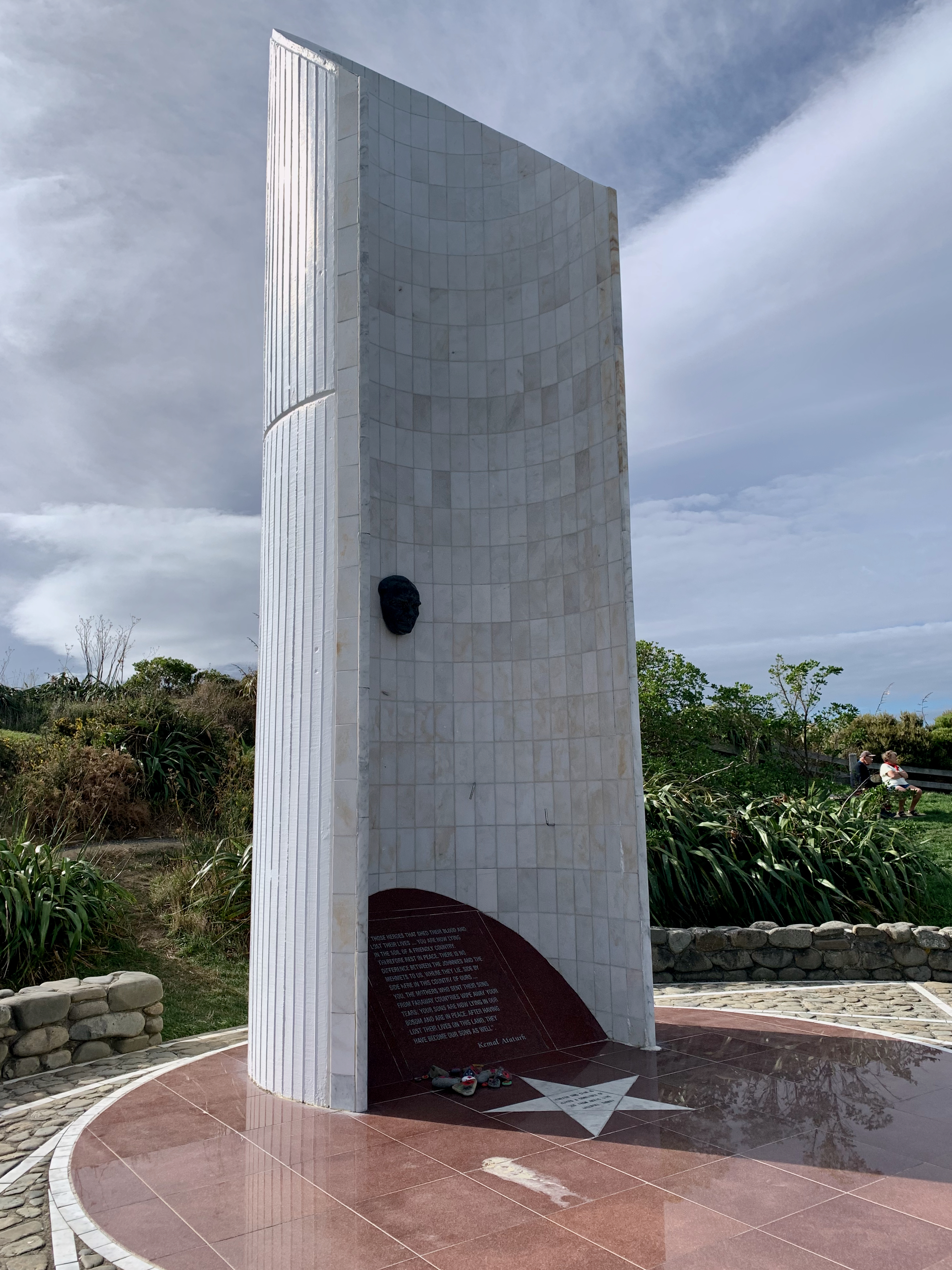
On a windswept ridge above Tarakena Bay, overlooking the harbour entrance, there is a memorial to the man who killed the ANZACs. Mustafa Kemal Ataturk was the Turkish commander at Gallipoli. He led the defence that pinned down the Australian and New Zealand forces on the beaches and ridgelines, and ultimately drove them back into the sea. Thousands of ANZACs died under his command. And yet here, in the city that sent many of those soldiers to war, Wellington built him a memorial. The site was chosen because the landscape resembles the Gallipoli peninsula. It was designed by Ian Bowman and unveiled on the twenty-sixth of April, nineteen ninety, by the Turkish Minister of Agriculture. An ANZAC Day service is held here annually. Inscribed on the memorial is one of the most famous wartime quotes in New Zealand and Australian history: Those heroes that shed their blood and lost their lives, you are now lying in the soil of a friendly country. Therefore rest in peace. The words are attributed to Ataturk. They've been quoted by prime ministers, printed on memorials, taught in schools. They are beautiful and they are almost certainly fabricated. Significant research — particularly from the Honest History project in Australia — has concluded that Ataturk never said or wrote these words. The quote appears to have been cobbled together in nineteen seventy-seven when an ANZAC veteran met a retired Turkish schoolteacher at Gallipoli, who showed him words from a guidebook. The attribution stuck. It became canon. Nobody checked. So here is a memorial to the enemy commander, inscribed with a quote he never said, on a hill chosen because it looks like the place where the killing happened. And every year, people gather here and find it genuinely moving. Whether that makes it more meaningful or less is something you'll have to decide for yourself.
Bolton Street Cemetery
Bolton St, Wellington Central, Wellington, 6011, New Zealand
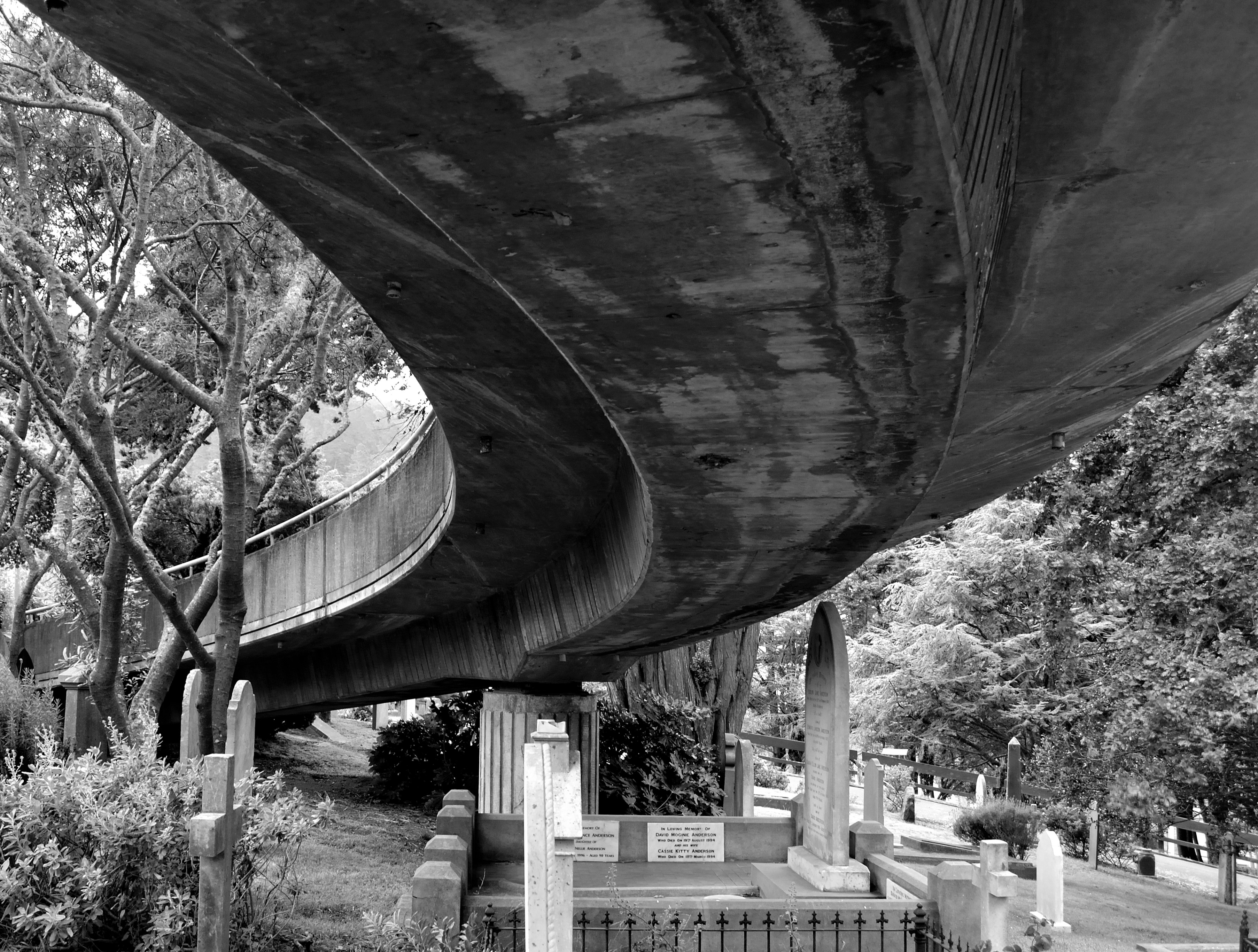
Wellington's oldest cemetery opened in eighteen-forty, the same year European settlers arrived. For over a century, this hillside was where the city buried its dead — from colonial governors to cholera victims, from soldiers to stillborn babies. Around eight and a half thousand people were interred here. Then, in the nineteen-sixties, the government decided to build a motorway through it. The Wellington Urban Motorway needed a route from the Terrace to the northern suburbs, and that route went directly through Bolton Street Cemetery. Approximately three thousand seven hundred graves were exhumed and relocated. Most of the remains were reinterred in a mass vault beneath the park lawn — a communal burial for people who had been individually mourned. Of the eight and a half thousand originally buried here, only one thousand three hundred and thirty-four headstones were ever traced. The rest were lost. The Friends of Bolton Street Cemetery protested. They could not stop it. The motorway opened in nineteen seventy-eight, and the cemetery was renamed Memorial Park the same year. Today, if you drive the motorway through Thorndon, you are literally driving over a former cemetery. The grassy strip beside the road sits above the vault where thousands of remains were consolidated. Samuel Duncan Parnell — the man who established the eight-hour working day in New Zealand — is buried here, metres from speeding traffic. So are Edward Gibbon Wakefield and William Wakefield, founders of the Wellington settlement, and Prime Minister Richard Seddon. Thirty-five of the surviving headstones are made of wood — extremely rare survivors from early colonial Wellington. They're fragile, fading, and irreplaceable. The whole place is a quiet rebuke to the idea that anything in a city is permanent.
Bucket Fountain
Cuba St, Te Aro, Wellington, 6011, New Zealand
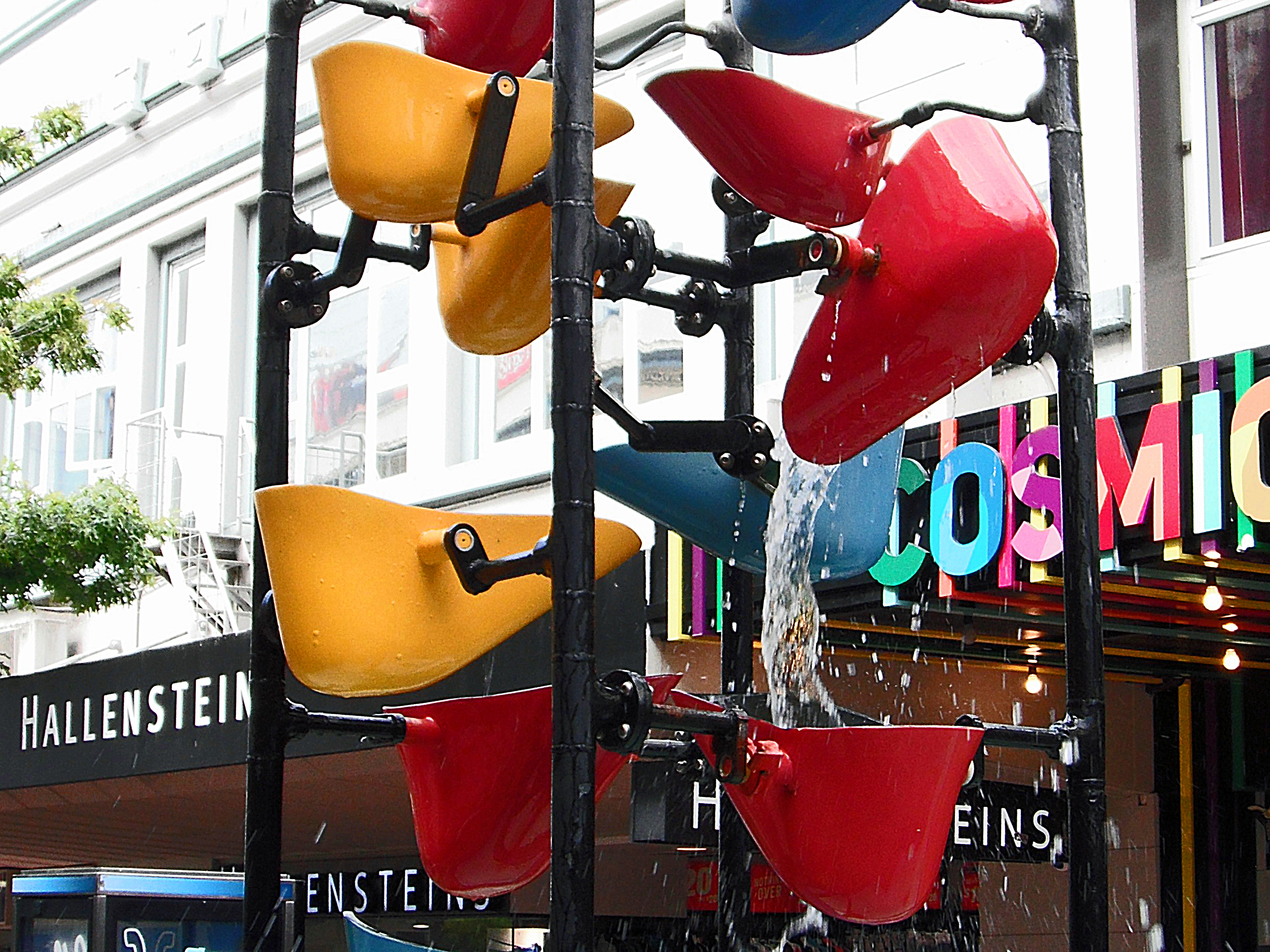
The Bucket Fountain — Wellington's most unlikely icon. Designed by Burren and Keen, erected in nineteen sixty-nine to mark the pedestrianisation of Cuba Street, and it cost two thousand dollars. Even in nineteen sixty-nine, that was basically nothing. The original name was the Water Mobile. Nobody calls it that. The critics hated it. They called it a monstrosity, an engineering joke, an eyesore. The buckets — originally all painted yellow — are designed to fill with water, tip unpredictably, and splash everything within range. There's no pattern to it. You can't predict which bucket will dump next. It just does its thing, and if you're standing too close, you get wet. On a windy day — and this is Wellington — the spray goes everywhere. But here's what happened. Over the decades, Wellingtonians fell completely in love with this ridiculous contraption. It became the unofficial heart of Cuba Street, then the unofficial symbol of the whole city. When it was damaged or threatened with removal, people protested. It showed up on T-shirts, in songs, in art. In Taika Waititi and Jemaine Clement's film What We Do in the Shadows — set and filmed in Wellington — the Bucket Fountain appears as a shrine and gateway to the underworld. Which, honestly, feels about right. Every Friday and Saturday night, someone adds dish soap. The suds build up and spill across the mall in great foaming drifts. Nobody knows who does it. Nobody tries very hard to stop it. It's an open secret and a minor act of civic joy. The Bucket Fountain is, in the end, the most Wellington thing in Wellington. Cheap, impractical, slightly broken, windswept, and absolutely beloved.
Carmen Rupe and Courtenay Place
Courtenay Place, Te Aro
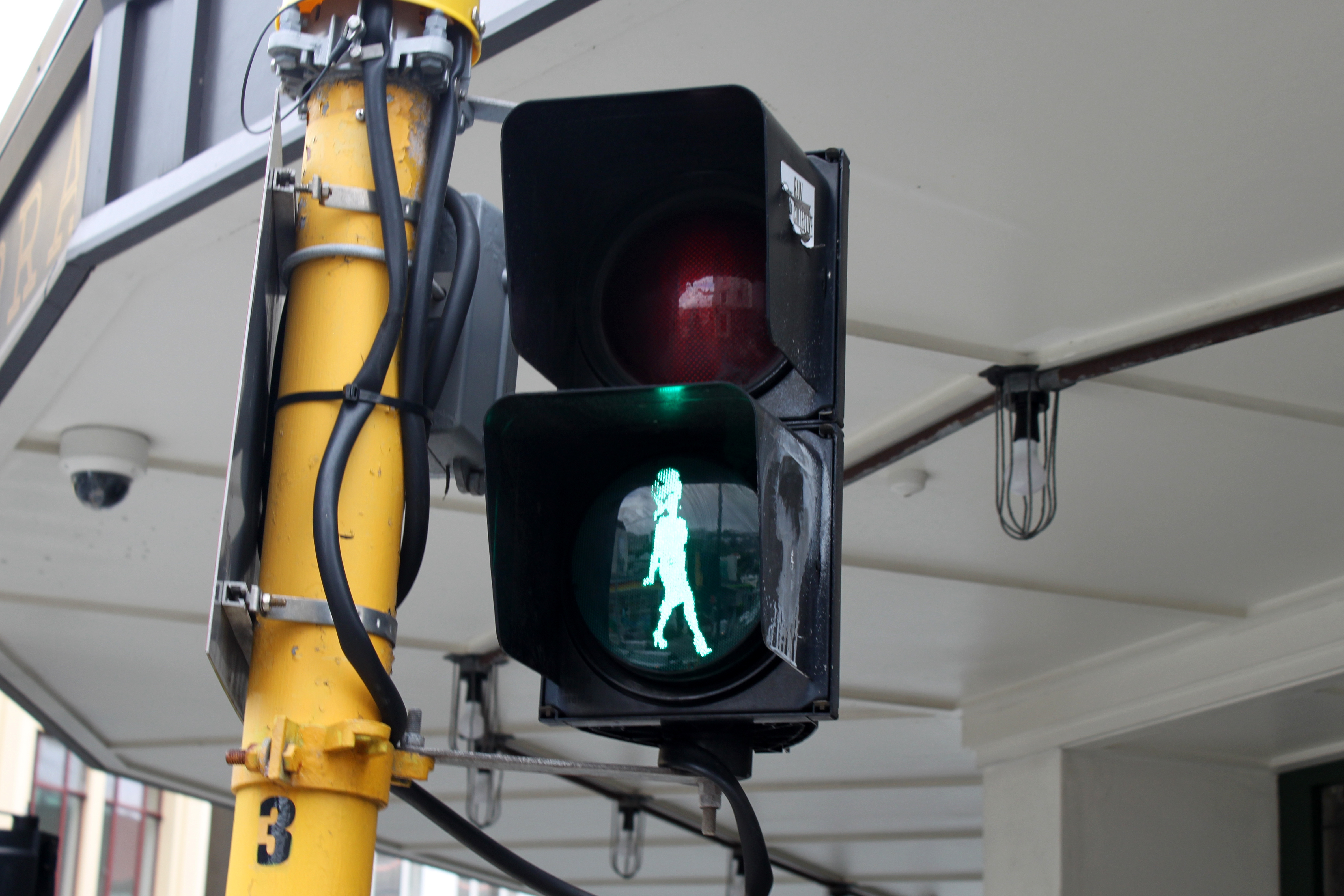
You're on Courtenay Place — Wellington's entertainment strip. Every second doorway is a bar or restaurant, and on a Friday night this whole boulevard heaves. But two hundred years ago, this was swamp. It was the eighteen fifty-five earthquake — the same one that stranded Plimmer's ship and lifted the harbour — that drained and raised this land. Courtenay Place exists because of a magnitude eight point two earthquake. Wellington is like that. The earthquake keeps showing up in this city's story. But this stop is really about one person. If you've crossed Cuba Street at a pedestrian crossing, you may have noticed the traffic lights. Instead of the standard green walking figure, four crossings show the silhouette of a woman in high heels and a feathered hat. That's Carmen Rupe. Carmen was born in nineteen thirty-six in Taumarunui. She was Maori, she was transgender, and she became New Zealand's first celebrity drag queen at a time when being any one of those things could get you arrested. From the nineteen-fifties, Carmen ran a string of venues on Cuba Street — Carmen's International Coffee Lounge was the most famous. It was a place where sex workers, drag queens, bohemians, and anyone who didn't fit the rigid conformity of mid-century New Zealand could find a seat and a coffee. The police raided it regularly. Carmen kept it open. In nineteen seventy-seven, she ran for mayor of Wellington. Her platform included legal sex work, extended bar hours, and marriage equality — issues that wouldn't become mainstream for decades. She came fourth with one thousand six hundred and eighty-six votes. The crossing lights were installed in twenty-sixteen, coinciding with the thirtieth anniversary of the Homosexual Law Reform Act. Carmen didn't live to see them — she died in twenty-eleven. But her silhouette is now walked over by thousands of people every day, which feels exactly right for someone who spent her life making space for others to walk through.
City to Sea Bridge
City to Sea Bridge, Wellington Central, Wellington, 6011, New Zealand
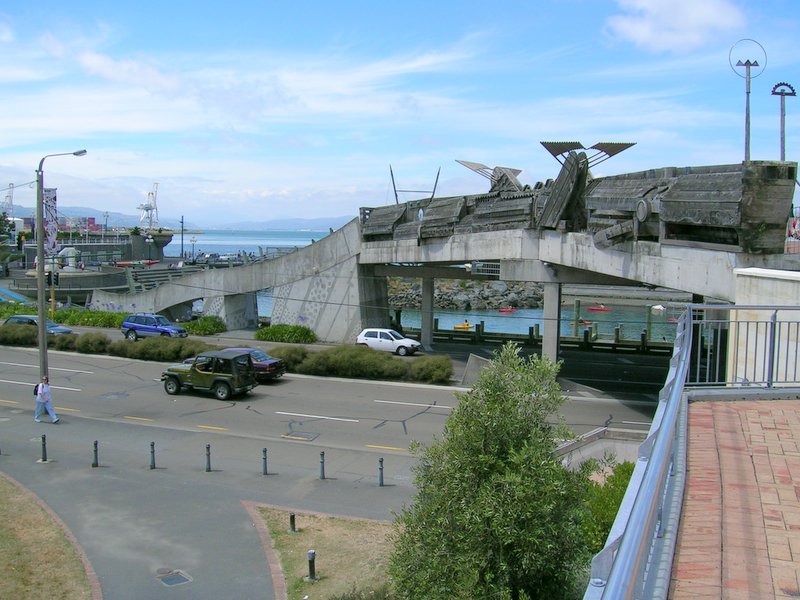
You're standing on the City to Sea Bridge, which opened on the thirty-first of October, nineteen ninety-three. It connects the Civic Centre behind you to the waterfront, and it's one of the most symbolically dense pieces of architecture in Wellington — though you'd never know it just by walking over it. The bridge was designed by John Gray and Rewi Thompson, but the real stars are the sculptures. Look at the large wooden figures on either side. These are taniwha — specifically Ngake and Whataitai, from the Maori creation story of Wellington Harbour. The story goes like this. Long ago, the harbour was a lake, sealed off from the sea by hills. Two taniwha lived in it — Ngake, the restless one, and Whataitai, the contemplative one. Ngake grew frustrated and charged the hills at what is now the harbour entrance, smashing through to the sea and creating the gap between the Miramar Peninsula and the mainland. The ocean rushed in, turning the lake into a harbour. Whataitai tried to follow but got stuck in the shallows. When it died, its body became the ridge we now call Hataitai. The sculptural works are by Paratene Matchitt — the large taniwha forms — and Matt Pine, who created the celestial poles representing stars and navigation. The whole bridge is a spatial retelling of that creation story, layered into something most people just walk across to get coffee. Behind you is Te Ngakau Civic Square — te ngakau meaning the heart, a name gifted in twenty-eighteen by Taranaki Whanui ki Te Upoko o Te Ika. Above the square hangs Neil Dawson's Ferns — a three-point-four-metre sphere of fern shapes, suspended fourteen metres up. The Town Hall on the square's edge opened in nineteen-oh-four and is the oldest building in the precinct.
Cuba Street
Corner of Cuba Street and Dixon Street
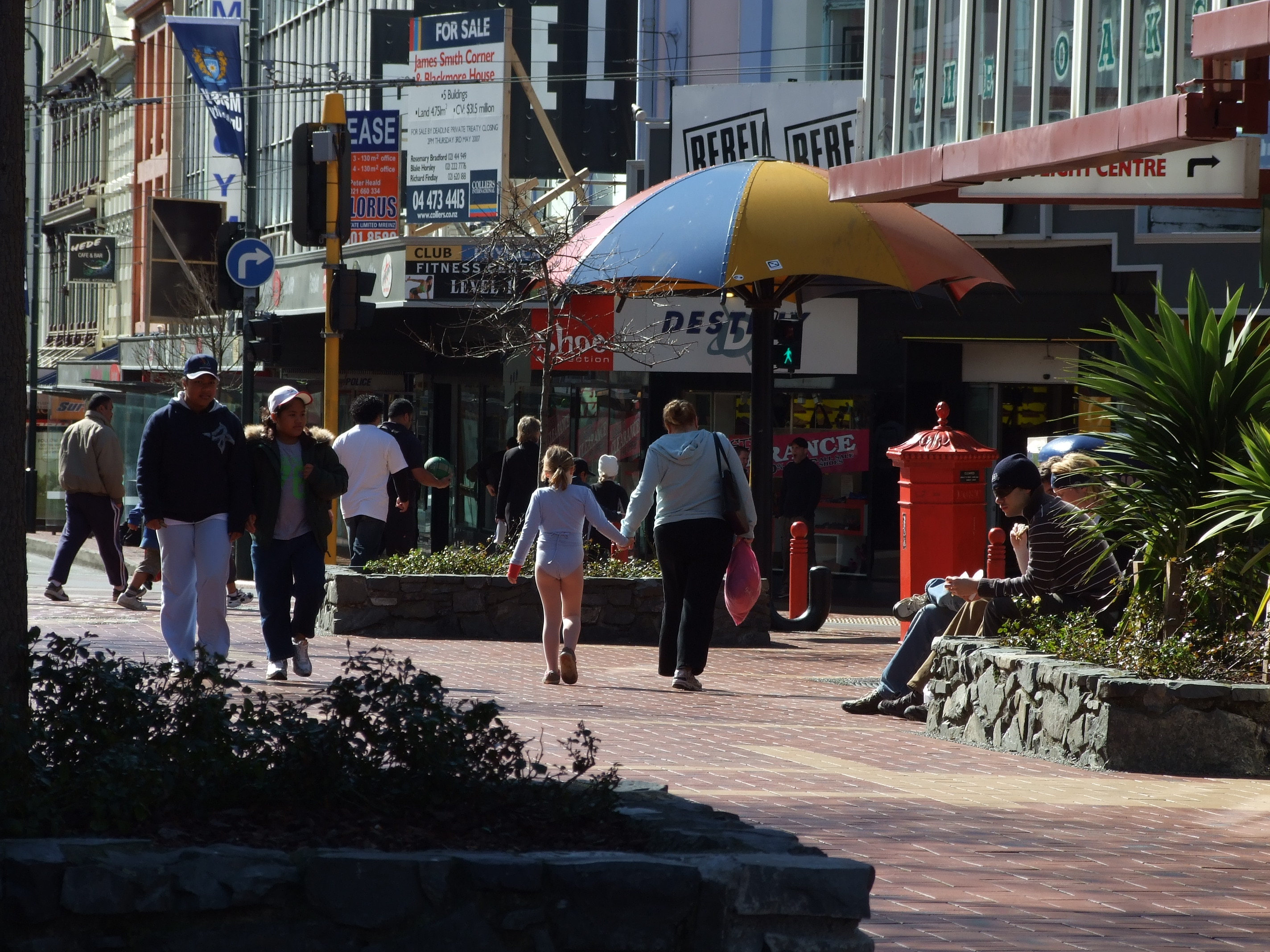
Welcome to Cuba Street, and the first thing you should know is that it has absolutely nothing to do with the Caribbean. It's named after the ship Cuba, which sailed into Wellington Harbour in January eighteen-forty carrying a survey party led by Captain William Mein Smith, New Zealand's first Surveyor General. A ship, not an island. Most streets in this part of Wellington are named after early colonial ships — Tory, Aurora, Cuba — though the ships are long forgotten and the streets have taken on lives of their own. Now here's something most Wellingtonians don't know. Charlotte Bronte's best friend ran a shop right here. Mary Taylor — who'd been close to Charlotte since they were teenagers at school in Yorkshire — emigrated to Wellington in the eighteen-forties and opened a general store with her cousin Ellen at the corner of Cuba and Dixon Street. Right about where you're standing. She stayed for fifteen years, running a successful business in a rough colonial town, before returning to England. Imagine it — the author of Jane Eyre sitting in a Yorkshire parsonage, writing letters to her closest friend who was running a shop in one of the remotest cities on Earth. Taylor later wrote a novel of her own, Miss Miles, based partly on her Wellington years. Cuba Street was pedestrianised in nineteen sixty-nine — the first street in New Zealand closed to through traffic. Before that, electric trams ran up it from nineteen-oh-four until nineteen sixty-four. By the sixties and seventies it had become Wellington's bohemian quarter — artists, musicians, second-hand shops, cheap rent. It was also, for a time, the red-light district. Today it's a registered Historic Area with over forty buildings of significance, and it remains the part of Wellington that most stubbornly refuses to become generic.
Embassy Theatre
10 Kent Terrace, Mount Victoria
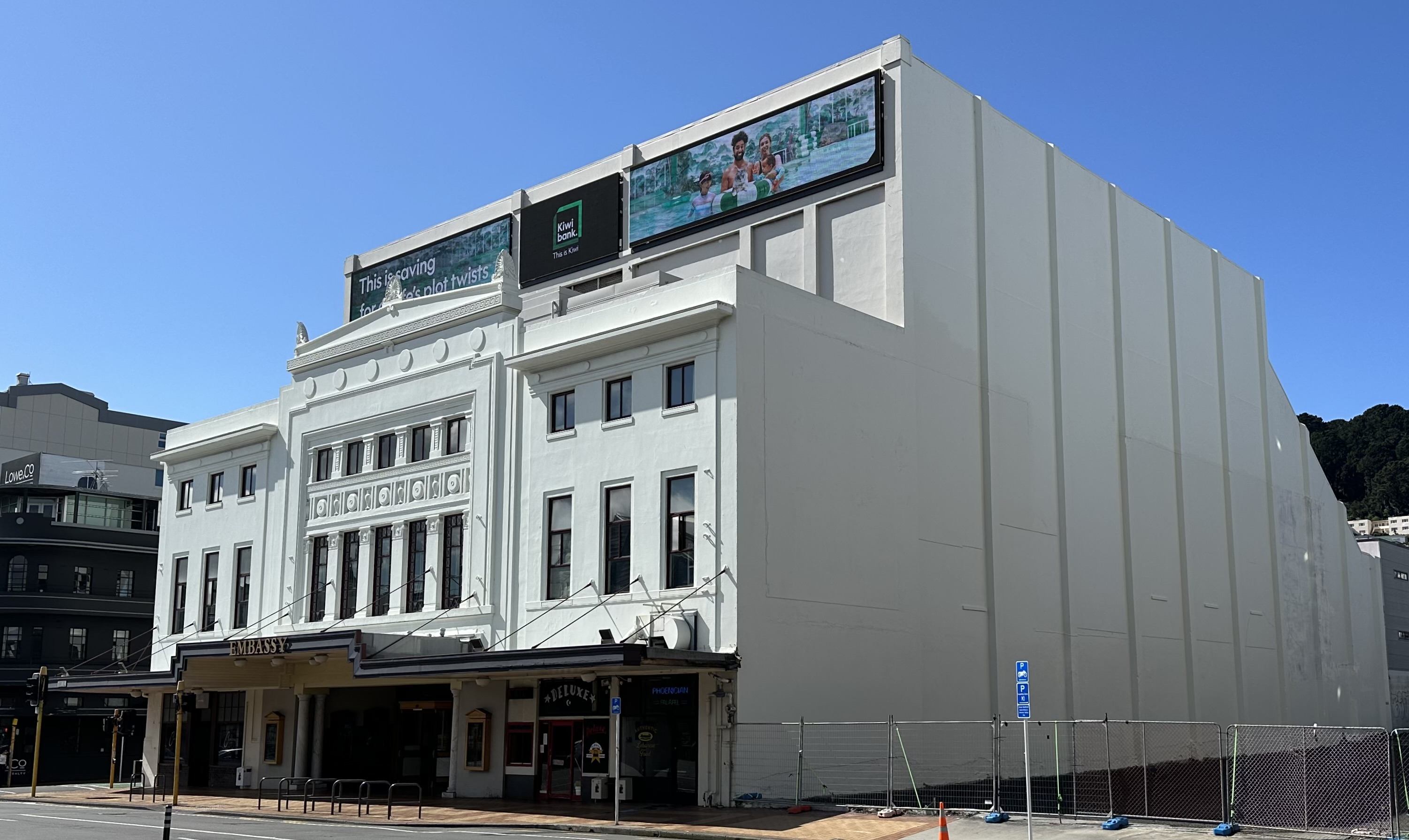
This is the Embassy Theatre — the only custom-built nineteen-twenties cinema still operating in New Zealand. Designed by Llewellyn Williams, it opened on the thirty-first of October, nineteen twenty-four, as De Luxe Theatres, seating one thousand seven hundred and forty-nine. It was renamed The Embassy in nineteen forty-five. For eighty years, it's been showing films. But one night made it legendary. On the first of December, two thousand and three, the world premiere of The Lord of the Rings: The Return of the King was held right here. Wellington City Council had underwritten a four-and-a-half-million-dollar renovation specifically for the event, on the condition that ownership of the building transfer to the council. They essentially bought a cinema so hobbits could walk a red carpet. And the city turned out. Over a hundred thousand people packed into Courtenay Place and the surrounding streets. The red carpet ran the length of the boulevard. Peter Jackson — who grew up in the Wellington suburb of Pukerua Bay and built his entire filmmaking empire in nearby Miramar — reportedly took thirty minutes just to walk the carpet. At the time, it was one of the largest public gatherings in New Zealand history. For a movie premiere. Wellington's film industry grew up around Jackson. Weta Workshop was founded in Miramar in nineteen eighty-seven by Richard Taylor and Tania Rodger. Jackson joined in ninety-three. Weta FX, Stone Street Studios, Park Road Post — they're all within a few kilometres of where you're standing. Taika Waititi grew up here too, studied theatre at Victoria University, and met Jemaine Clement at uni. The two of them shared the Billy T Award in nineteen ninety-nine before going on to make Flight of the Conchords, What We Do in the Shadows, and — in Waititi's case — a Marvel film. Wellington isn't Hollywood. It's something weirder and smaller and more interesting than that.
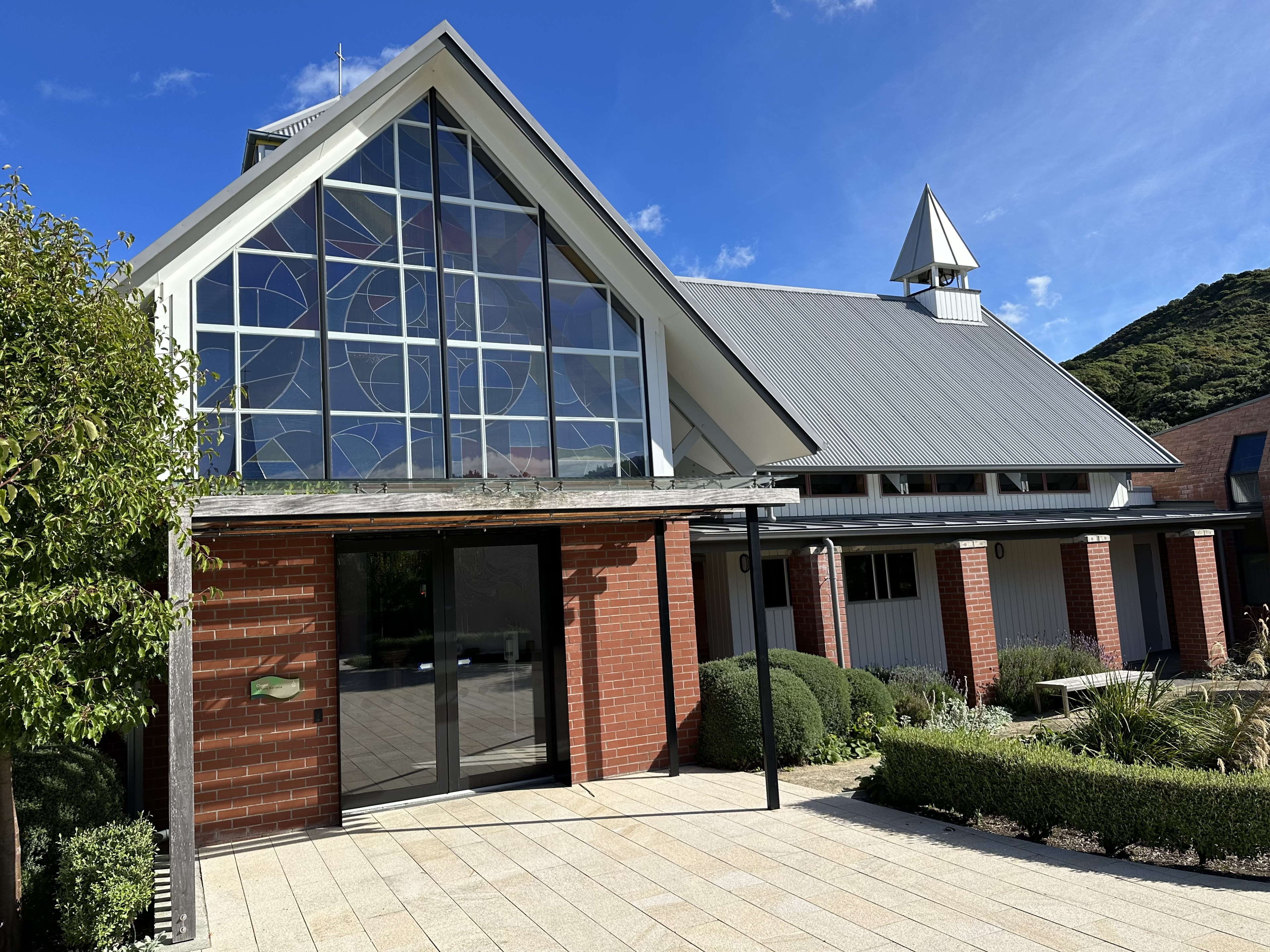
Erskine College Chapel
Avon St, Island Bay, Wellington, 6023, New Zealand
Peter Jackson filmed a ghost movie at this building. Then the ghosts apparently stayed. Erskine College was a Catholic girls' boarding school that operated from nineteen-oh-six until nineteen eighty-five. The four-storey Gothic Revival convent and its Chapel of the Sacred Heart, both designed by John Sydney Swan, sit on a ridge overlooking Island Bay. The chapel, completed in nineteen thirty, is regarded as one of the finest Gothic Revival interiors in New Zealand. In nineteen ninety-six, Jackson used the college as a filming location for The Frighteners — a horror comedy starring Michael J. Fox about a man who can see ghosts. The crumbling convent, with its long corridors and empty dormitories, was perfect. The building has persistent ghost stories that predate the film. Apparitions of the old Mother Superior have been reported in the hallways. A bloodstain on the chapel floor allegedly reappears after cleaning. Unexplained sounds echo through the empty rooms. Whether you believe any of this is up to you, but the building has been attracting paranormal investigators for decades. In twenty-eighteen, the Wellington Company controversially demolished all the college buildings except the chapel to build ninety-six townhouses. The chapel was restored and reopened in twenty-twenty-three at a cost of approximately seven million dollars. So the ghosts lost their convent but kept their chapel. Island Bay is a decent bus ride from the city centre, but if you're out that way, the chapel is worth seeing. It sits incongruously among new townhouses — a Gothic spire rising above contemporary rooflines, the last piece of a building that Peter Jackson once filled with fictional ghosts, in a place that may have already had real ones.
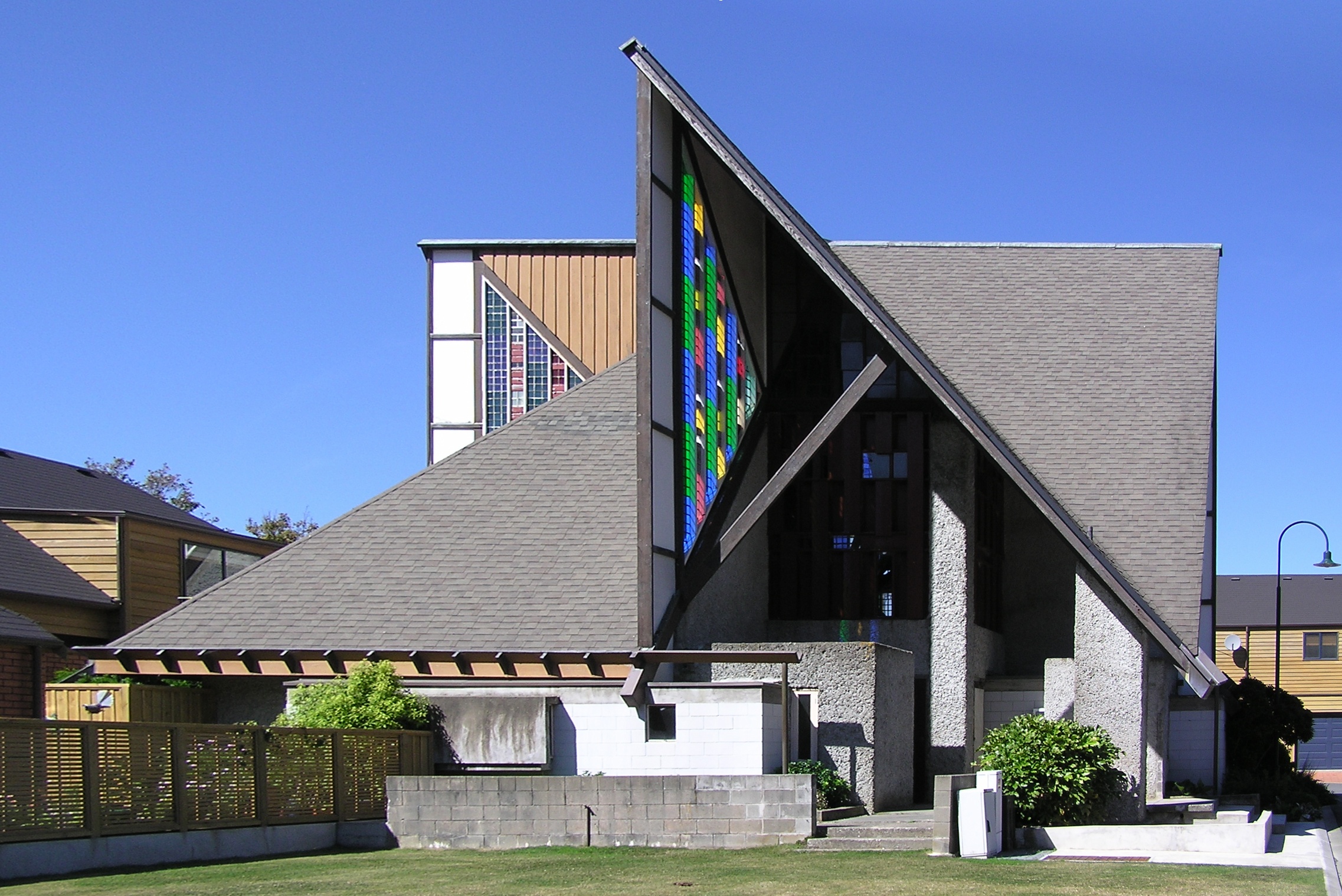
Futuna Chapel
67 Friend St, Karori, Wellington, 6012, New Zealand
New Zealand's most awarded building is a tiny chapel in suburban Karori that most Wellingtonians have never heard of. Futuna Chapel was designed in nineteen fifty-eight by architect John Scott and completed in nineteen sixty-one. It fuses modernist architecture with the structural language of the Maori wharenui — a central timber post, rib-like rafters, low eaves — combined with the influence of Le Corbusier's raw concrete work. The result is something that feels simultaneously ancient and radical. Light enters through narrow slits and coloured glass, falling across rough concrete and warm timber in a way that changes through the day. The building was constructed by the Society of Mary brothers themselves. The only sub-contractor was an electrician. Monks, building a chapel, by hand, in Karori. It won the NZIA Gold Medal in nineteen sixty-eight and the Twenty-Five Year Award in nineteen eighty-six — the two highest honours in New Zealand architecture. In two thousand, the Society of Mary sold the property. The surrounding buildings were demolished for housing. The chapel was only saved because it was protected by the Wellington District Plan. For years it sat abandoned and deteriorating, surrounded by new townhouses. The Friends of Futuna Trust acquired it in two thousand and six and have been restoring it since. During the years of neglect, a wooden Crucifixion sculpture by artist Jim Allen went missing from the chapel. In twenty-twelve, it was found on a farm in Taranaki. Nobody has ever explained how it got there. It was restored and reinstalled in twenty-thirteen. If you visit — and you should — you'll find it on a quiet residential street. There's no sign announcing it as anything special. It looks, from the outside, like a modest community hall. Step inside and it's one of the most powerful spaces in the country.
Hannahs Laneway
Eva St, Te Aro, Wellington, 6011, New Zealand
You've stepped into Hannahs Laneway, and the big brick building above you is the reason it exists. This was the R. Hannah and Company boot factory, built in nineteen twenty-three. Hannah's dominated New Zealand's footwear market for over a century — at their peak, if you were wearing shoes in this country, there was a decent chance they made them. The factory closed, as factories do, and for years this corner of Te Aro was dead space — loading docks and empty warehouses. Then in the mid-nineties, developer Ian Cassels hired Sir Ian Athfield — arguably New Zealand's most famous and most eccentric architect — to convert the factory into loft-style apartments. It was one of the first warehouse conversions in the country, and it transformed these laneways from industrial dead-ends into what you see now. Athfield was a character. His own house in Khandallah is a sprawling, multi-level structure that grew organically over decades — part Gaudi, part mad scientist's lair. He brought that same energy here, keeping the industrial bones while carving out light and living space. He died in twenty-fifteen, but his fingerprints are all over this part of the city. What fills the old factory now is excellent. Wellington Chocolate Factory has been making bean-to-bar chocolate here since twenty-thirteen — they import raw cacao from the Pacific and roast it on site. If you're here during the day, you can watch through the window. Fix and Fogg, the peanut butter company that's somehow become a national institution, started in this laneway too. Leeds Street Bakery does some of the best pastries in the city. And if it's evening, Golding's Free Dive is right here for craft beer in a converted warehouse. This is the Wellington that doesn't make the tourist brochures. Old industrial bones filled with people who actually make things.
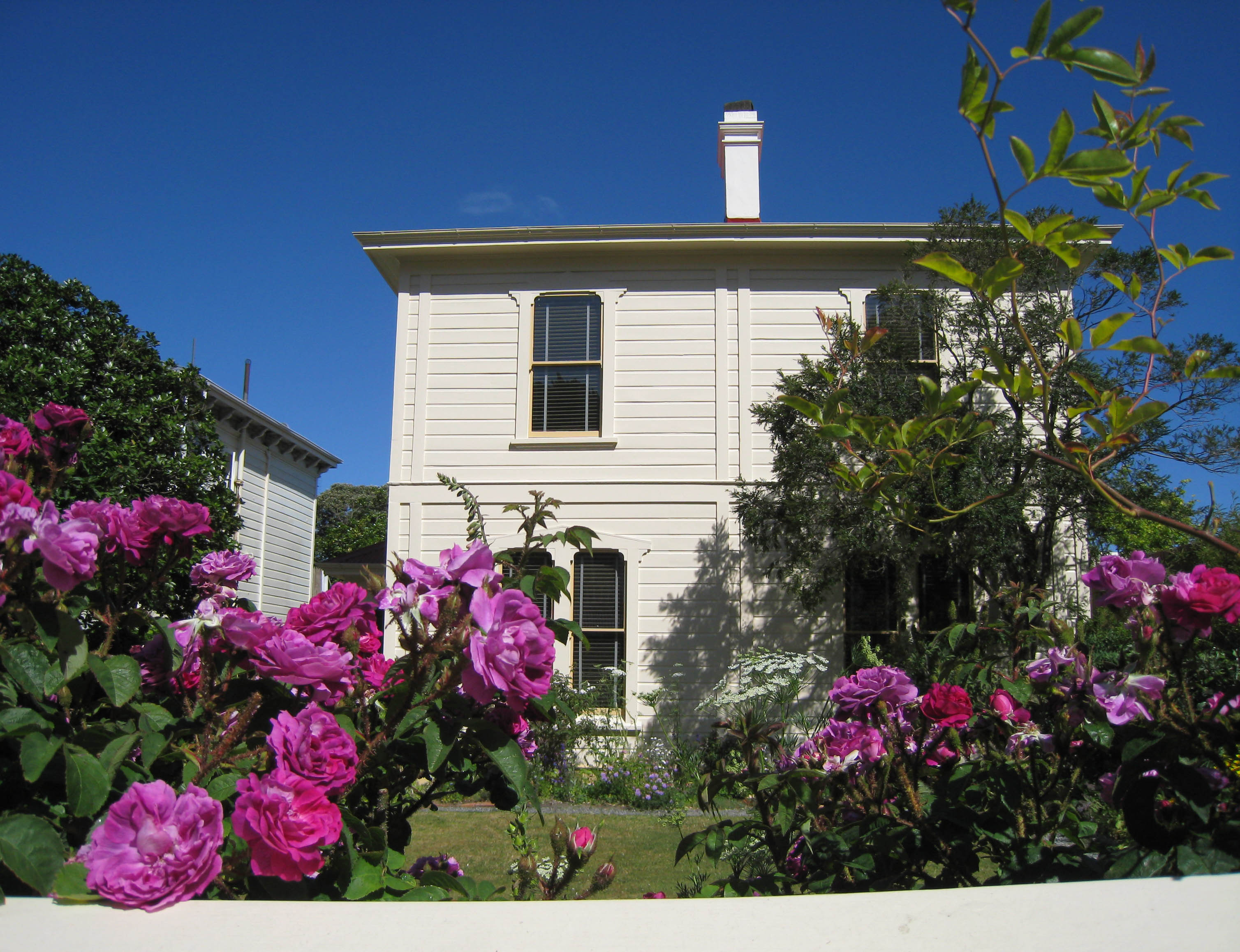
Katherine Mansfield Birthplace
25 Tinakori Rd, Thorndon, Wellington, 6011, New Zealand
This modest villa on Tinakori Road is where Kathleen Mansfield Beauchamp was born on the fourteenth of October, eighteen eighty-eight. She would become Katherine Mansfield — New Zealand's most celebrated author, a modernist pioneer who influenced Virginia Woolf, and a woman who died of tuberculosis in France at thirty-four. The house was built the same year she was born. Mansfield spent her early childhood here before the family moved to Karori, then she left for London at nineteen and never came back. Her short stories — The Garden Party, Bliss, Prelude — drew heavily on her Wellington childhood. Prelude is set in a house based directly on the family's Karori home. She wrote about New Zealand with the clarity and ache of someone who knew she'd never return. But here's the strange detail about this house. State Highway One — the main arterial road running the length of New Zealand — passes directly beneath it in a deep trench. The motorway literally runs under Katherine Mansfield's birthplace. The country's most famous literary house sits atop a concrete canyon of speeding traffic. The house has another surprising connection. Dr Frederick Truby King, founder of the Plunket Society — the organisation that transformed infant welfare in New Zealand and whose blue-covered baby health book has been in practically every New Zealand home for a century — lived in this same house from nineteen twenty-one to nineteen twenty-four. Two of the country's most significant figures, decades apart, under the same roof.
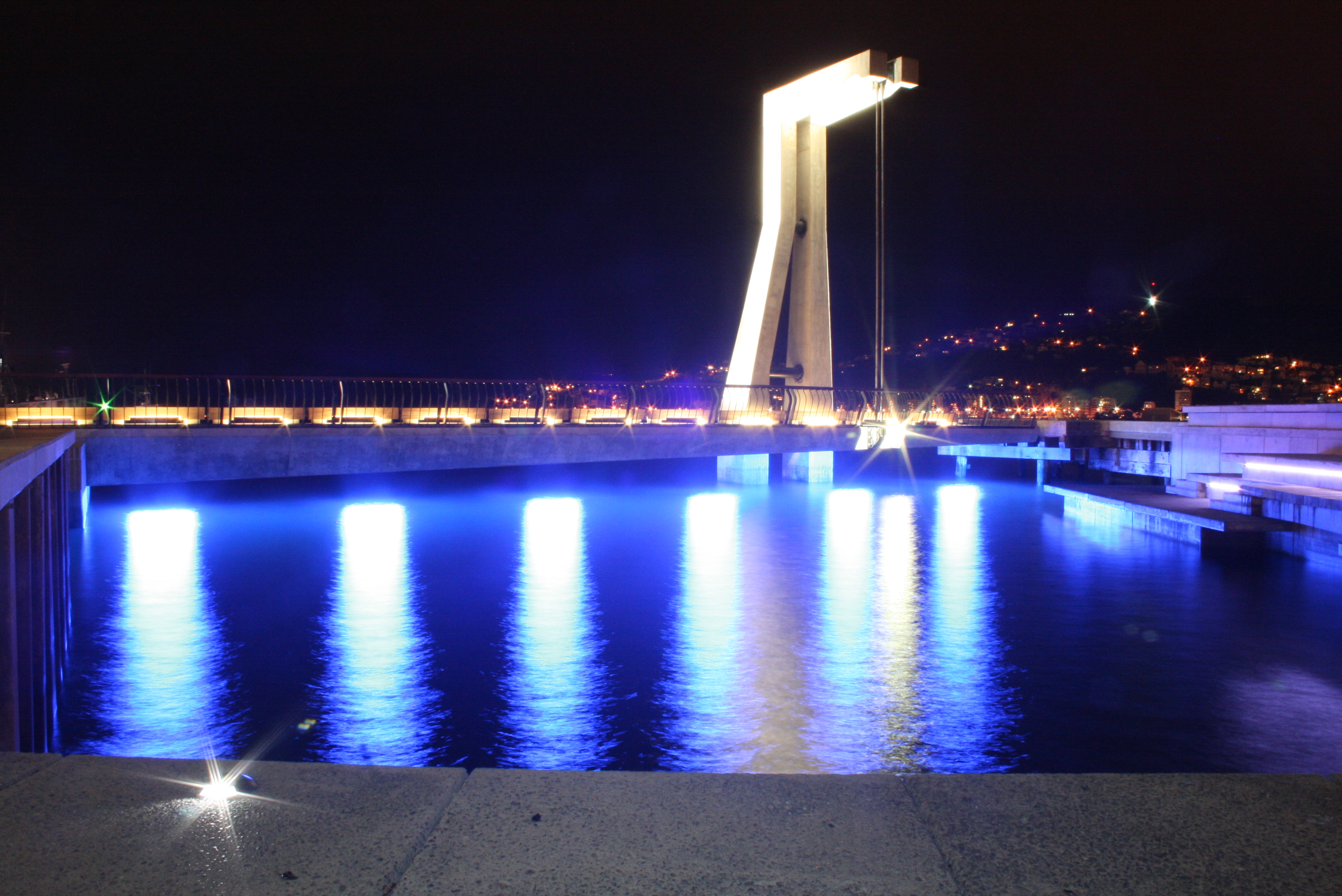
Kumutoto Stream
Woodward St, Wellington Central, Wellington, 6011, New Zealand
You're standing on top of a hidden river. Kumutoto Stream once flowed openly from The Terrace down what is now Woodward Street, across Lambton Quay and into the harbour. It was the heart of early Wellington — Kumutoto Pa, a Maori settlement founded at the stream's mouth by Wi Piti Pomare of Ngati Mutunga in eighteen twenty-four, was one of the first communities in what would become the city. The stream was culverted and buried in eighteen sixty-six — the first stream in Wellington to be put underground. But it's still running beneath the concrete. After heavy rain, you can sometimes hear water through the storm drains. The city was built on top of its rivers, not instead of them. In the Woodward Street pedestrian subway, artist Kedron Parker's sound installation plays the sounds of trickling water and native birdsong, imagining the area before concrete took over. It became the first permanent media-based artwork in Wellington's public art collection. If you walk through the subway, stop and listen. The river is speaking. This is one of at least a dozen buried streams under central Wellington. Te Aro Stream, which once ran through the suburb of Te Aro, is another. The city systematically buried its waterways during the nineteenth century, turning them into storm drains. Today there's a growing movement to daylight some of these streams — to bring them back to the surface. Whether that happens remains to be seen, but the streams themselves aren't going anywhere. They've been here far longer than the buildings above them.
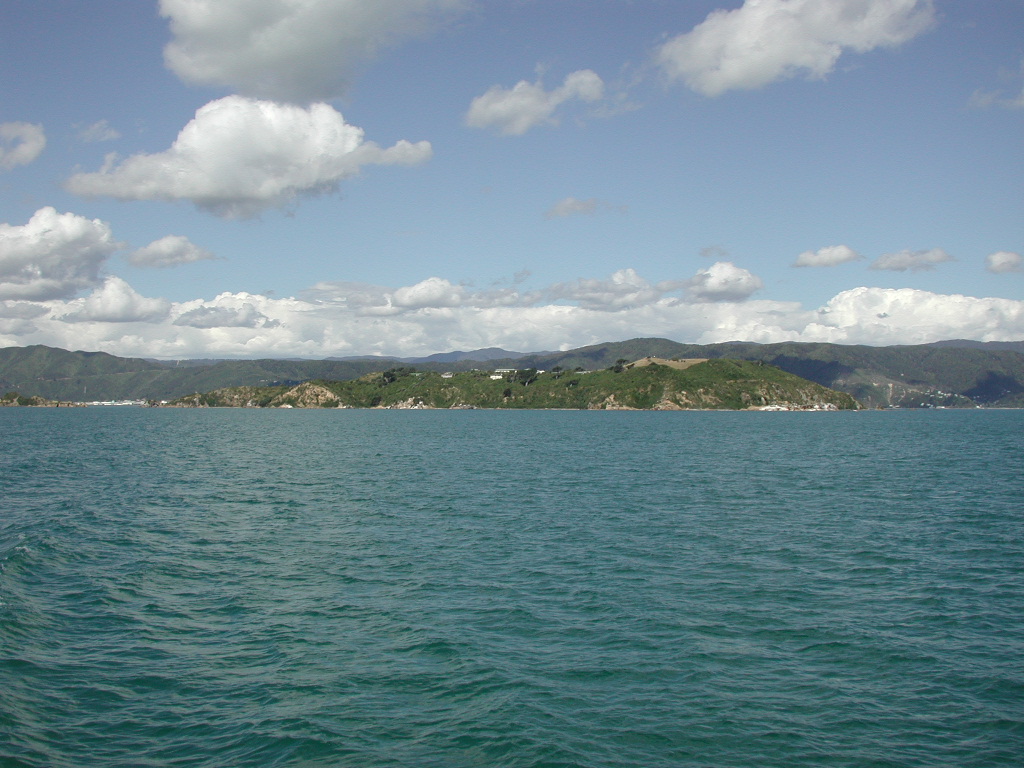
Matiu / Somes Island
New Zealand
Matiu / Somes Island is a predator-free island sanctuary in Wellington Harbour accessible by ferry — a DOC-managed reserve where native birds (little blue penguins, wētā, tuatara) thrive in an environment free of the introduced predators that threaten them on the mainland. The island also served as a quarantine station and WWII internment camp.
Mount Victoria Lookout
Lookout Rd, Mount Victoria, Wellington, 6011, New Zealand
Mount Victoria is Wellington's best viewpoint — a 196-metre hill in the suburb of the same name that provides a 360-degree panorama of the city, the harbour, the Rimutaka Range, and on clear days the snow-capped Kaikōura Ranges across Cook Strait. The walk up from Oriental Bay takes 20 minutes through native bush, and the summit was a filming location for Lord of the Rings.
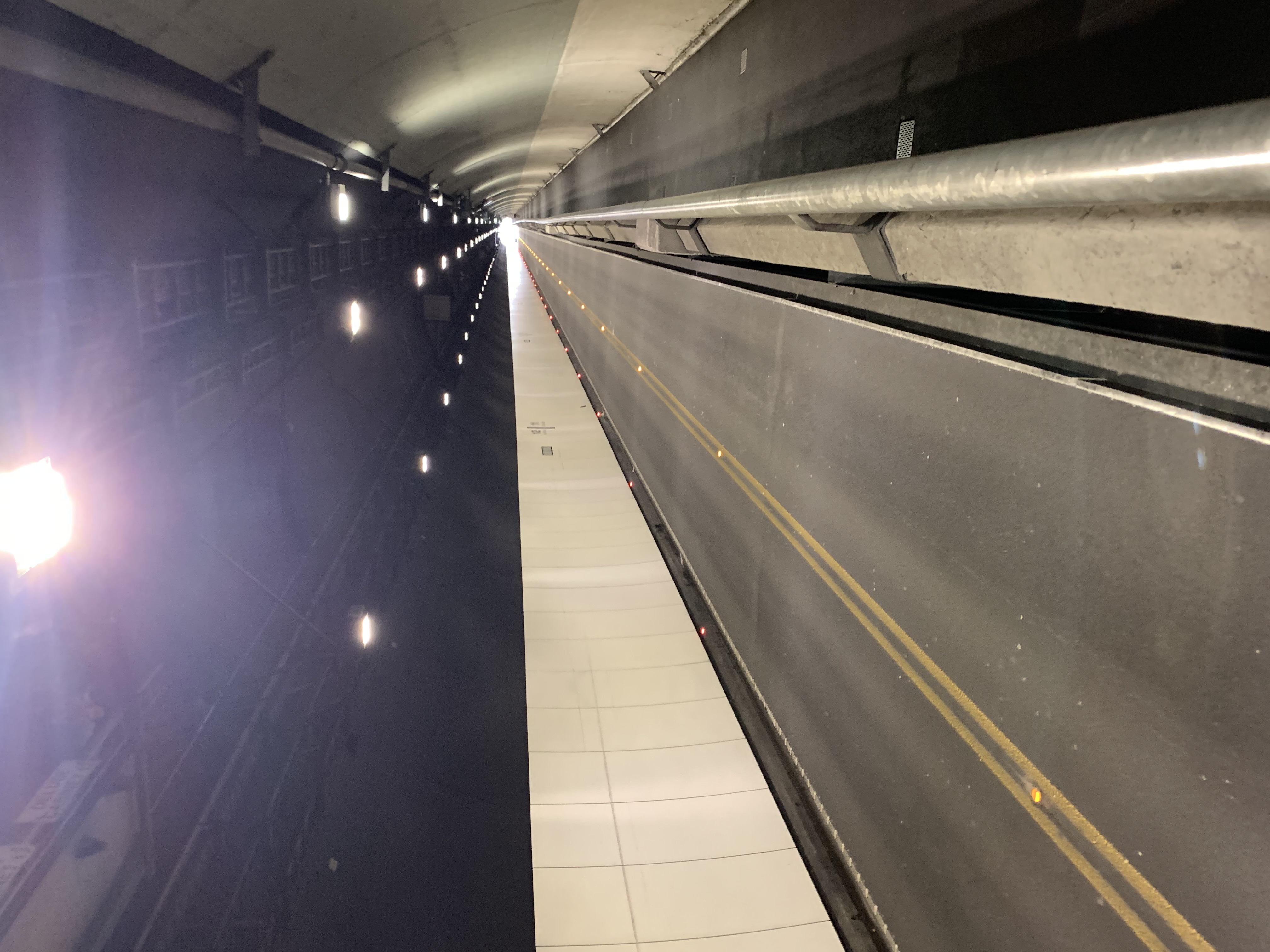
Mount Victoria Tunnel
Mount Victoria Tunnel, Mount Victoria, Wellington, 6011, New Zealand
If you've ever driven through the Mount Victoria Tunnel, you've probably honked your horn. Everyone does. It's a Wellington tradition so embedded that it has its own nickname — the Toot Tunnel. Kids demand it. Adults comply. The tunnel fills with a rolling cacophony of horns, forty-five thousand vehicles a day. Most people think the tooting is just for fun, or that it's a superstition about holding your breath through the tunnel. The real story is darker. The tunnel was built between nineteen twenty-nine and nineteen thirty-one — six hundred and twenty-three metres through the rock of Mount Victoria. During construction, a seventeen-year-old pregnant woman named Phyllis Avis Symons was murdered by George Errol Coats, a twenty-nine-year-old relief worker on the tunnel project. He buried her body in the tunnel excavation fill. Police had to dig through the construction material to recover her remains. The tradition of tooting is widely believed to be a tribute to Phyllis — or, depending on who you ask, a way to ward off her ghost. The story featured in the TV show Wellington Paranormal, which tells you something about how deeply it sits in the city's consciousness. The tunnel opened on the twelfth of October, nineteen thirty-one, after fifteen months of construction at a cost of a hundred and thirty-two thousand pounds. It's a perfectly ordinary-looking tunnel. Concrete walls, fluorescent lights, a steady stream of traffic. There's nothing to mark what happened here. No plaque, no memorial. Just the sound of forty-five thousand cars a day honking for a girl most of them have never heard of.
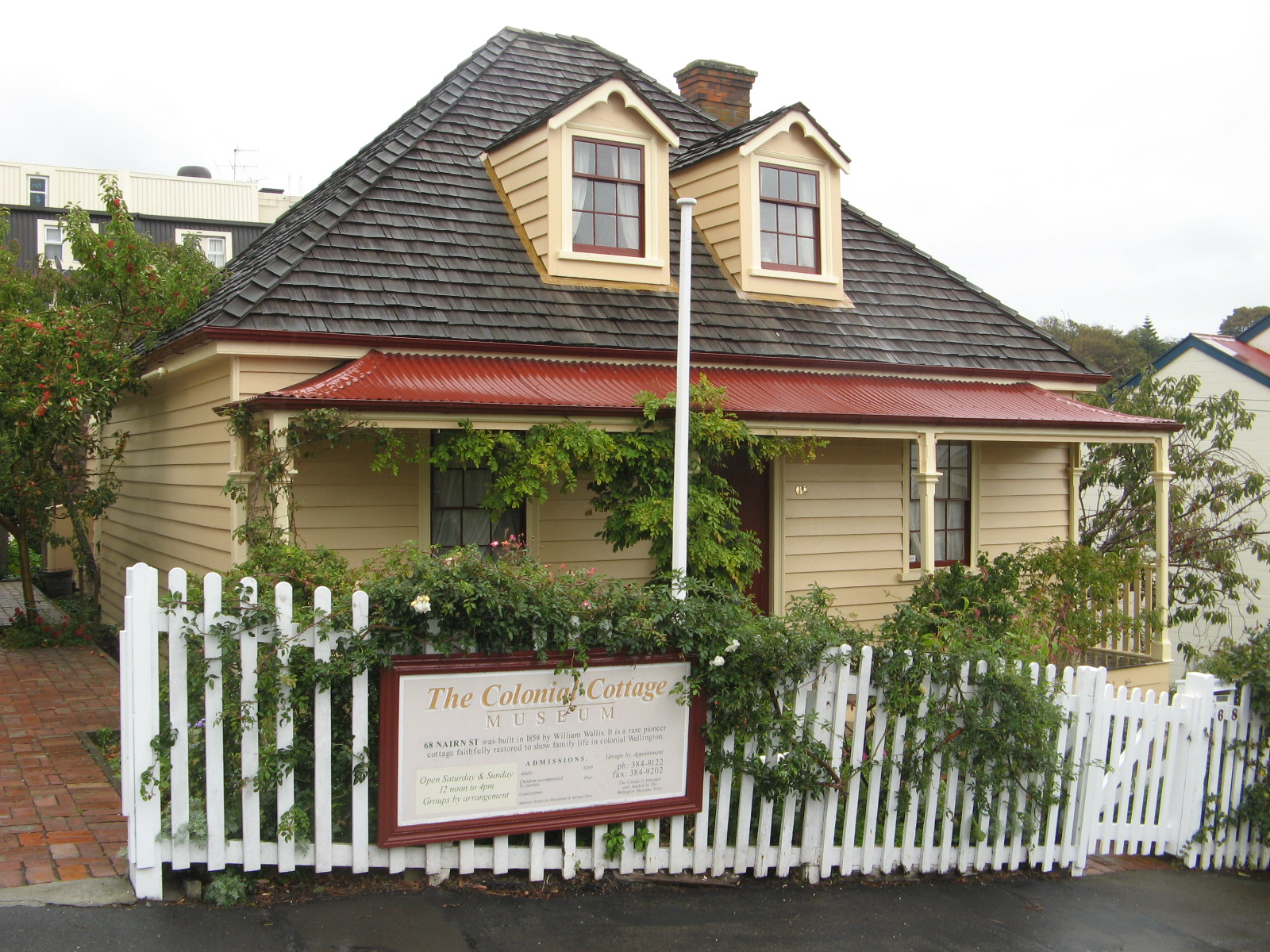
Nairn Street Cottage
68 Nairn St, Mount Cook, Wellington, 6011, New Zealand
This is the oldest surviving original house in Wellington, still on its original site. It was built in eighteen fifty-eight by William Wallis — a carpenter who had worked on the Crystal Palace in London for the Great Exhibition of eighteen fifty-one, and who built field hospitals during the Crimean War. Wallis chose this specific spot because of a nearby stream. The eighteen fifty-five Wairarapa earthquake had contaminated much of Wellington's water supply, and three years later, clean water was still hard to find. So a man who'd helped build one of the most ambitious structures in human history — the Crystal Palace, a glass and iron exhibition hall covering nineteen acres — came to the other side of the world and built a tiny wooden cottage next to a creek because he needed drinking water. The Wallis family lived here for a hundred and twenty-seven years, across multiple generations. In nineteen seventy-four, Wellington City Council acquired the property under the Public Works Act. The plan was to demolish it and build council flats. William Wallis's own granddaughter, Winifred Turner, fought the demolition. She won. The Colonial Cottage Museum Society saved the building, and it opened as a museum in nineteen eighty. It's Heritage New Zealand Category One. Inside, the rooms are furnished as they would have been in the eighteen-sixties. It's small, it's quiet, and it nearly became a car park. The distance between the Crystal Palace and a cottage in Mount Cook is about as far as a Victorian craftsman could travel, and this is where he stopped.
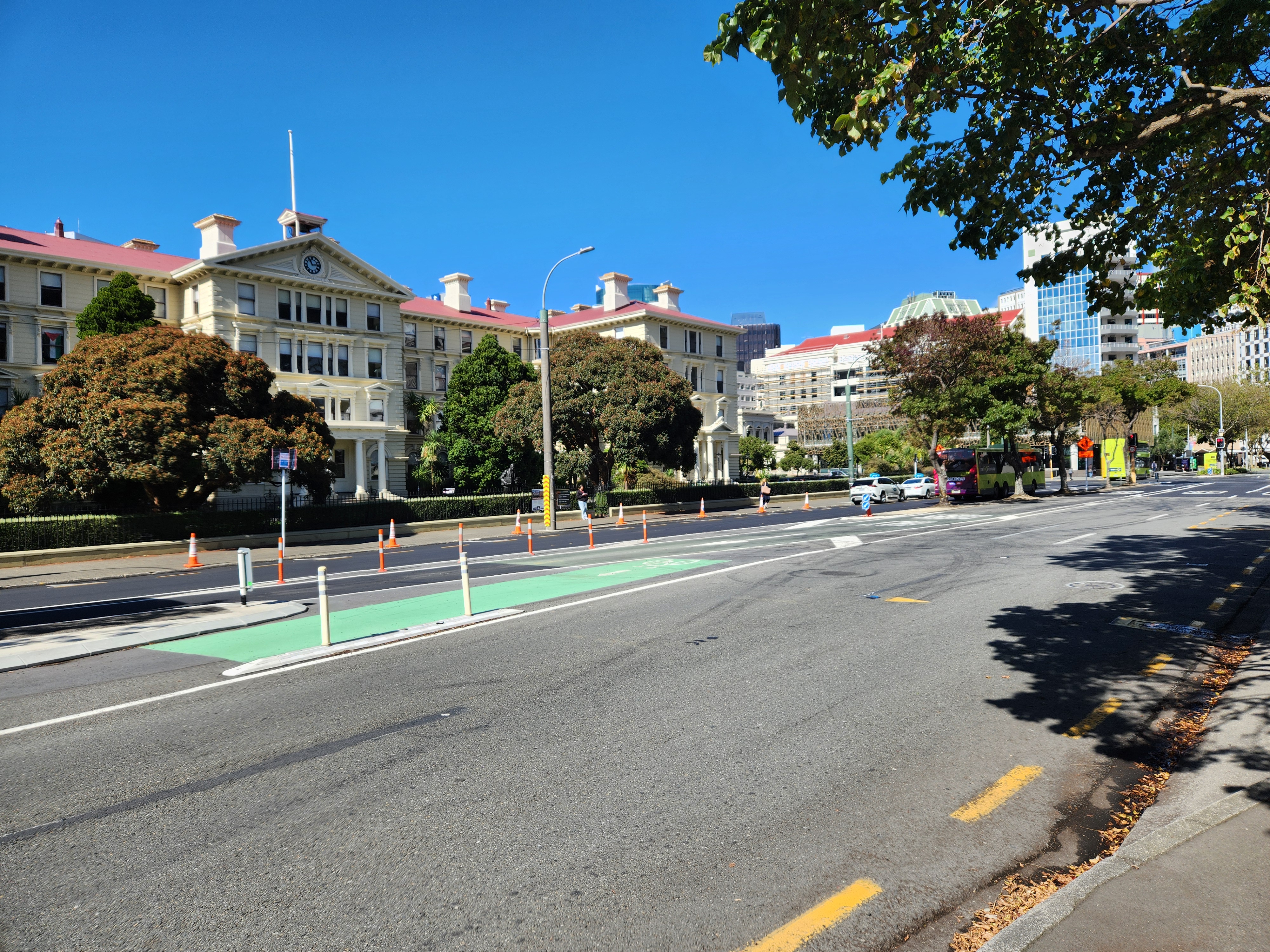
Old Government Buildings
55 Lambton Quay, Pipitea, Wellington, 6011, New Zealand
Look at this building. Sandstone facade. Italian palazzo proportions. Classical columns and arches. Clearly built from stone, right? Wrong. Every centimetre of it is wood. This is the second-largest wooden building in the world — after the Todai-ji temple in Nara, Japan — and the largest wooden building in the Southern Hemisphere. And it's been fooling people on Lambton Quay since eighteen seventy-six. The architect, William Clayton, designed it to look like stone because stone was what serious government buildings were made of. But New Zealand didn't have a quarrying industry to match, and what it did have was an almost unlimited supply of native kauri timber. So Clayton built the entire thing from wood — a hundred and forty-three rooms, sixty-four toilets, a hundred and twenty-six fireplaces, and twenty-two chimneys — then had the exterior painted and scored to mimic stone. The deception was so convincing that most people walking past today still don't know. It was built on reclaimed harbour land in just twenty-two months for thirty-nine thousand pounds. And here's a detail that feels very ahead of its time: it was the first building in New Zealand with a smoke-free policy, implemented at opening in eighteen seventy-six. In a country where practically everyone smoked, in a building made entirely of wood, this was less progressive politics and more basic fire safety. By the nineteen-nineties the building was deteriorating badly. A twenty-five-million-dollar restoration ran from nineteen ninety-four to ninety-six, and it now houses the Victoria University of Wellington Faculty of Law. The last of its eight hundred and four sash windows were restored in twenty-twenty-one. Eight hundred and four wooden windows, in a wooden building pretending to be stone, still standing a hundred and fifty years later. It's one of the greatest architectural confidence tricks in the Southern Hemisphere.
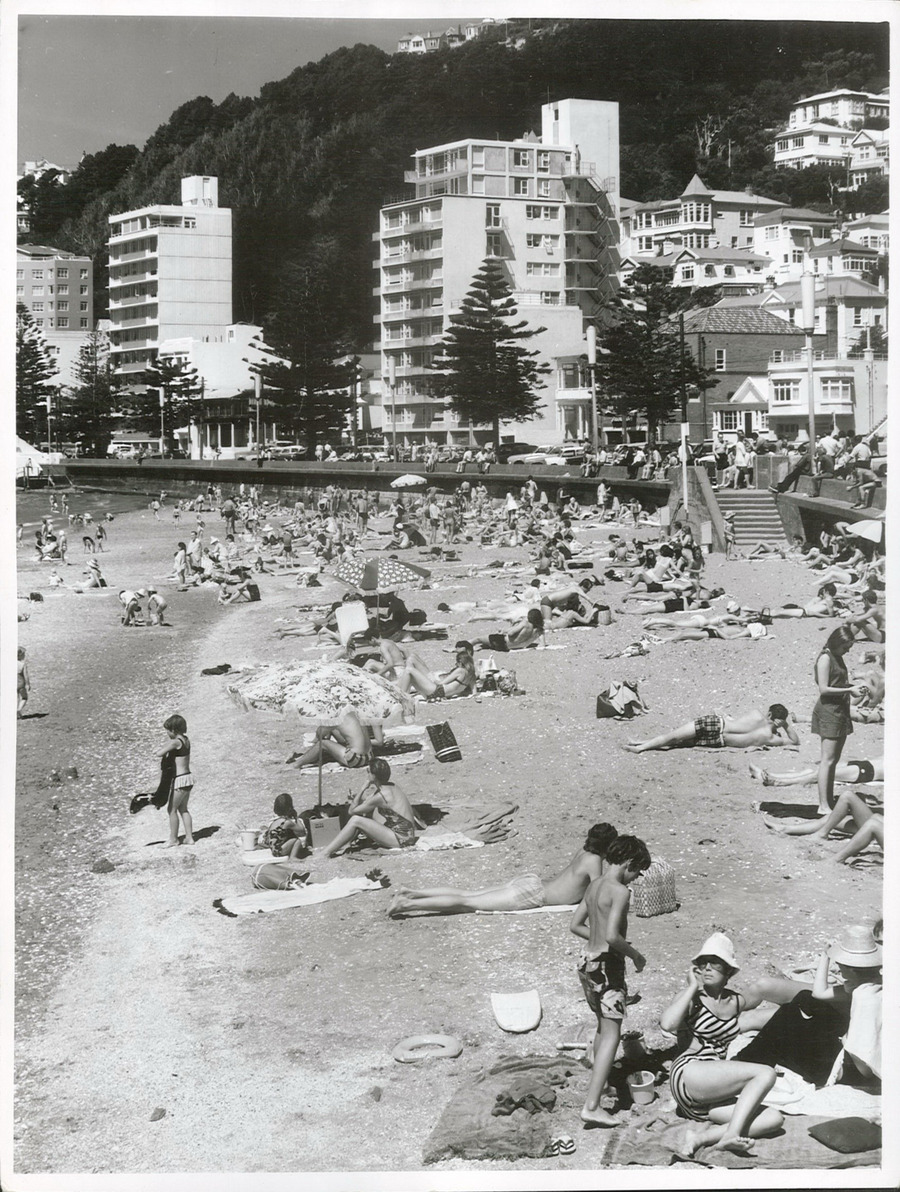
Oriental Bay
Oriental Pde, Oriental Bay, Wellington, 6011, New Zealand
Oriental Bay is Wellington's urban beach — a crescent of imported golden sand on the harbour a 10-minute walk from the CBD, lined with apartment buildings, cafés, and the art deco Carter Fountain that shoots water 18 metres into the harbour. The waterfront promenade connecting Oriental Bay to the CBD is Wellington's most popular walking and cycling route.
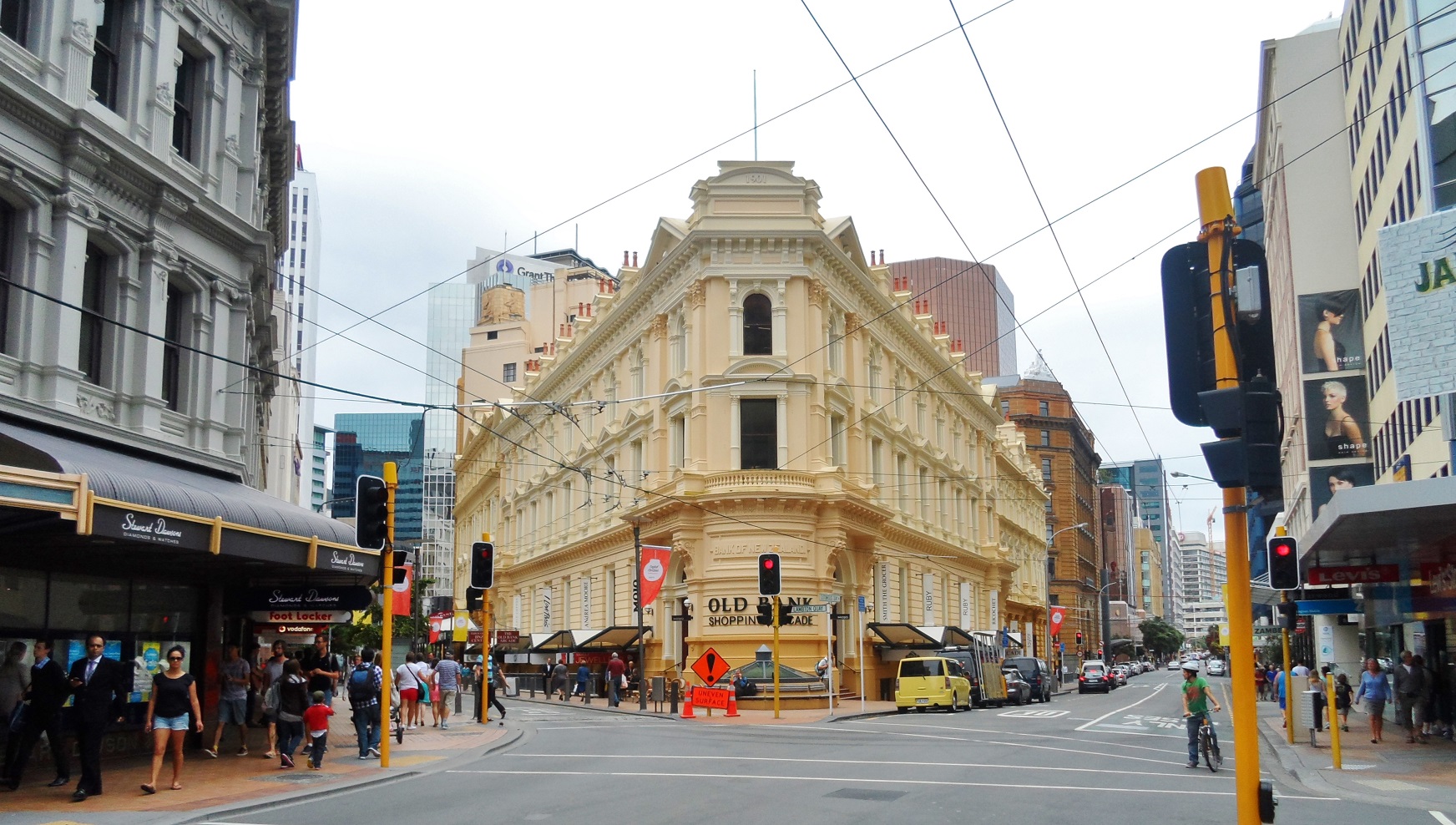
Plimmer's Ark and the Vanished Shoreline
233 Lambton Quay, Wellington Central, Wellington, 6011, New Zealand
Look at the curve of Lambton Quay beneath your feet. That gentle arc isn't a design choice. It's the original eighteen-forties shoreline. Right here — right where you're standing — was the beach. Everything between you and the harbour is reclaimed land. Over a hundred and fifty-five hectares of it, added between eighteen fifty-two and nineteen seventy-three. If you'd stood here in eighteen-forty, you'd be ankle-deep in salt water. The big accelerator was the Wairarapa earthquake of eighteen fifty-five — magnitude eight point two, the most powerful quake recorded in New Zealand. In a single violent event, it lifted the harbour bed by one to two metres. Suddenly there was all this new dry land, and Wellingtonians immediately started filling in the rest. Now step inside the Old Bank Arcade behind you. Head toward the escalator and look down. Under the glass floor, you'll see dark, weathered timbers. Those are the remains of the ship Inconstant, which ran aground in the harbour around eighteen-fifty. A man named John Plimmer — who liked to call himself the Father of Wellington — bought the wrecked hull, dragged it to the foreshore, roofed it over, and turned it into a warehouse. People called it Plimmer's Ark. When the earthquake hit, the land rose and the ship was stranded inland. As the city grew over reclaimed ground, the Ark was buried and forgotten. A hundred and forty years later, when this arcade was being redeveloped in the late nineties, archaeologists dug down and found it. Still here. Still in position. The grand building above is Thomas Turnbull's design for the Bank of New Zealand, completed in nineteen-oh-one. Beautiful building. But the real treasure is beneath your feet.
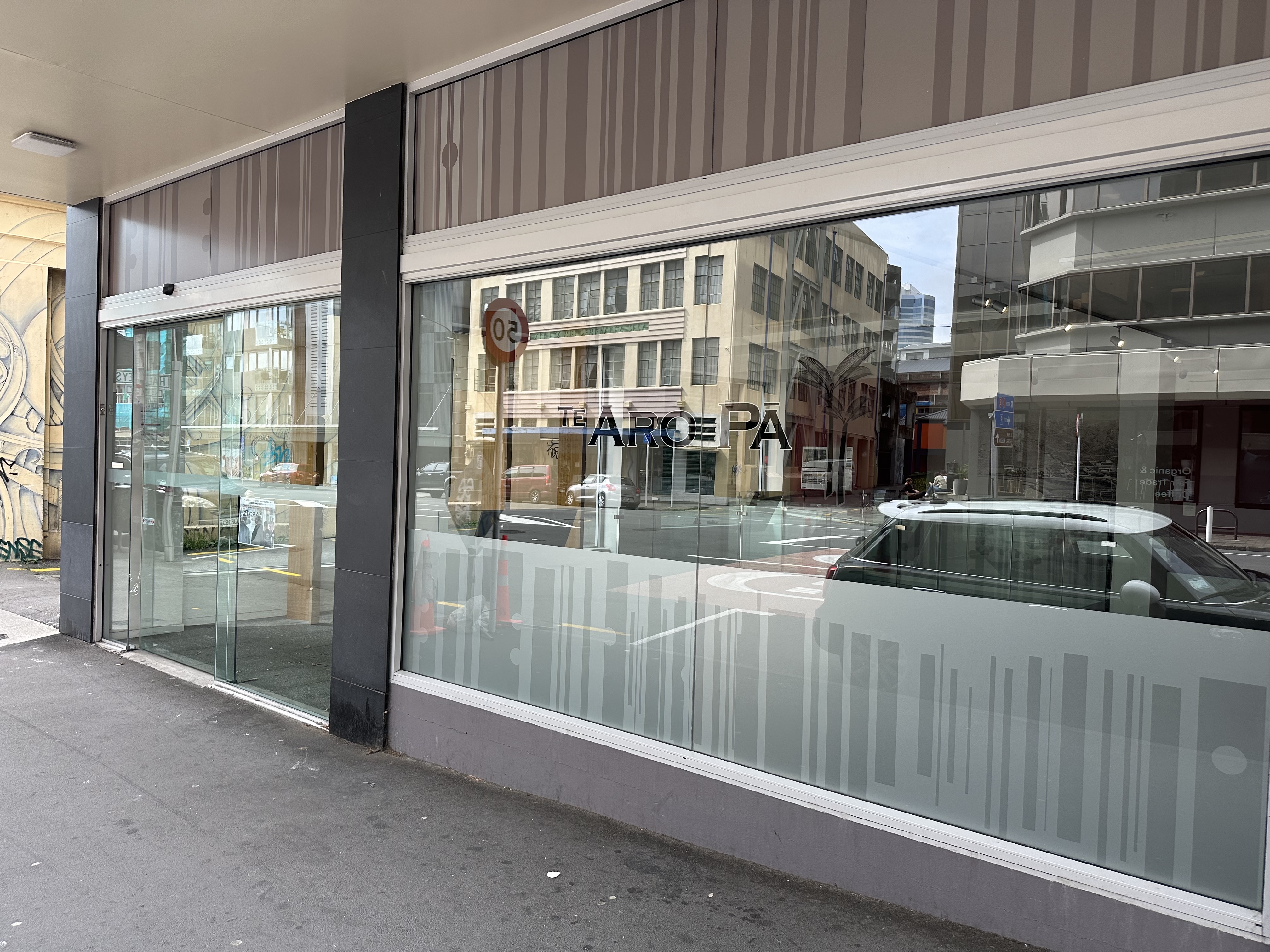
Te Aro Pa
Te Aro, Wellington, New Zealand
You're standing in front of what looks like a fairly ordinary modern building on Taranaki Street. But beneath it, preserved in a purpose-built enclosure, sit the only surviving pre-European Maori dwelling foundations in any New Zealand city. Te Aro Pa was established in the eighteen-twenties by Ngati Mutunga at what is now the intersection of Taranaki Street and Courtenay Place. At its peak, it supported nearly two hundred people. This was a thriving settlement years before the European ships arrived — a pa with cultivations, storage pits, and whare built from local materials. In two thousand and five, archaeologists working on the site discovered the preserved foundations of two whare ponga — sleeping and storage houses — dating from the eighteen-forties Te Atiawa settlement. The whare were built using trunks of tree ferns, which would normally decompose within a few years. But these didn't. They survived because they were buried undisturbed beneath a building for over a hundred and fifty years. Nobody dug there. Nobody knew they were there. The preservation was entirely accidental and entirely remarkable. As far as anyone knows, these are the only whare ponga foundations from this period to have survived anywhere. You can visit the site for free during the day. It's a small, quiet space. Most people walk past it. But stop and look, and you're seeing something that connects directly to a Wellington that existed before the streets, before the ships, before the name Wellington itself. This matters because so much of the pre-European history of this city has been built over, reclaimed, paved, and forgotten. Te Aro Pa is a reminder that the ground you've been walking on has been home to people for much longer than the last hundred and eighty years.
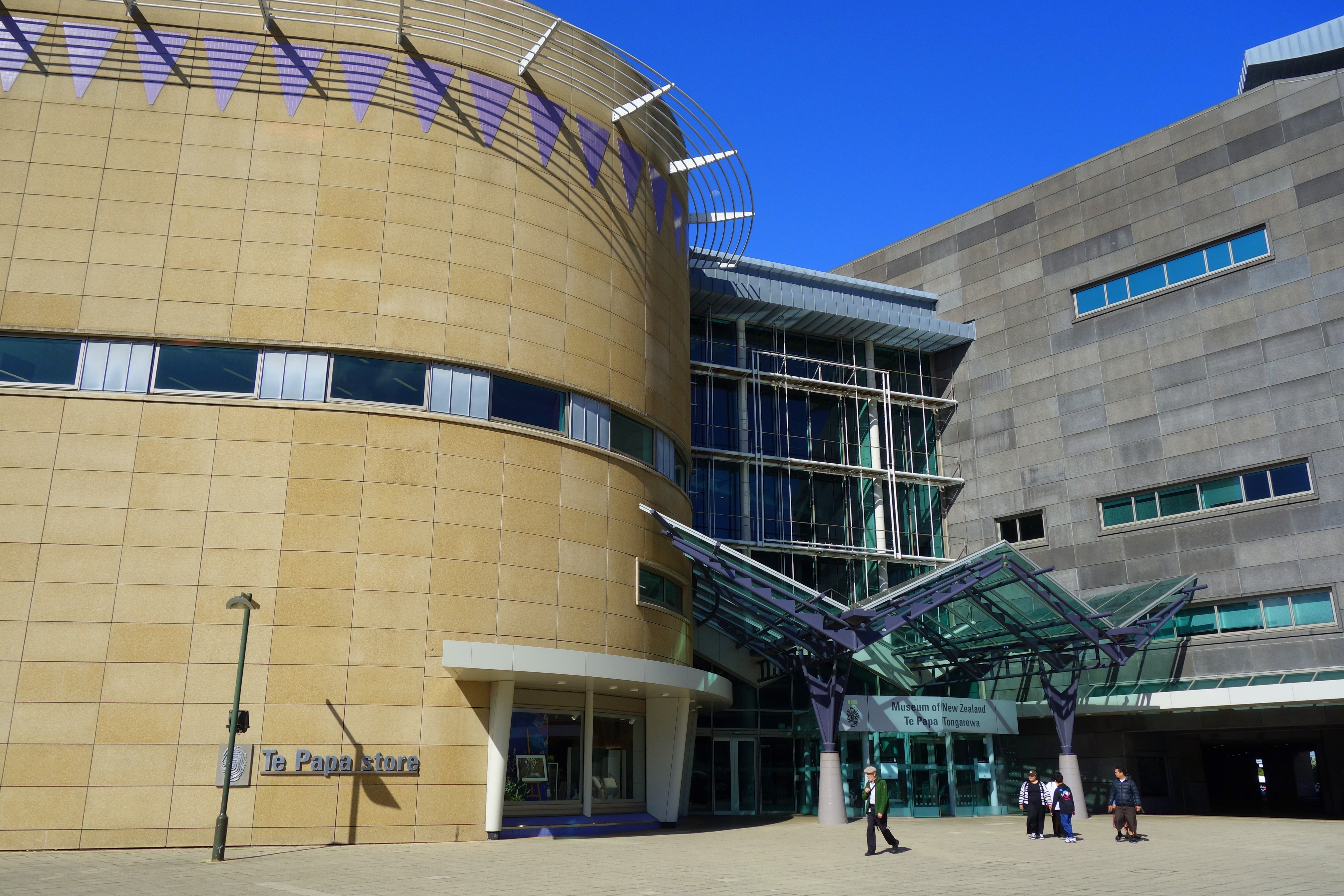
Te Papa Tongarewa
55 Cable St, Te Aro, Wellington, 6011, New Zealand
Te Papa Tongarewa — container of treasures in te reo Maori. This is New Zealand's national museum, and it opened on Valentine's Day, nineteen ninety-eight. Thirty-five thousand people showed up on the first day. The building is thirty-six thousand square metres across six floors, and on a windy day it genuinely feels like it might blow into the harbour. The institution is much older than the building. It started life as the Colonial Museum in eighteen sixty-five, making it over a hundred and sixty years old. Through name changes — Dominion Museum, National Museum — it eventually became Te Papa, and the government decided to build something ambitious on the waterfront. The result cost over three hundred million dollars. It's now the most visited attraction in New Zealand, pulling in over a million visitors a year. And it's free. The opening ceremony has a good story. Prime Minister Jenny Shipley invited Sir Peter Blake — the legendary yachtsman, fresh from winning the America's Cup — to do the honours. At noon, Blake and two children, five-year-old Tama Whiting and eight-year-old Grace Sweeney, jointly declared Te Papa open. Blake would be murdered three years later by pirates on the Amazon River while on an environmental expedition. He was fifty-three. Now here's what you need to know about what's inside. Somewhere in this building, in a custom-built tank, sits the largest colossal squid ever caught. Hauled out of the Ross Sea in two thousand and seven by a New Zealand longliner fishing for toothfish. It weighed roughly four hundred and ninety-five kilograms frozen. Its eyes are the size of dinner plates. It has rotating hooks on its tentacle clubs. It is genuinely one of the most terrifying animals on Earth, and you can see it for free.
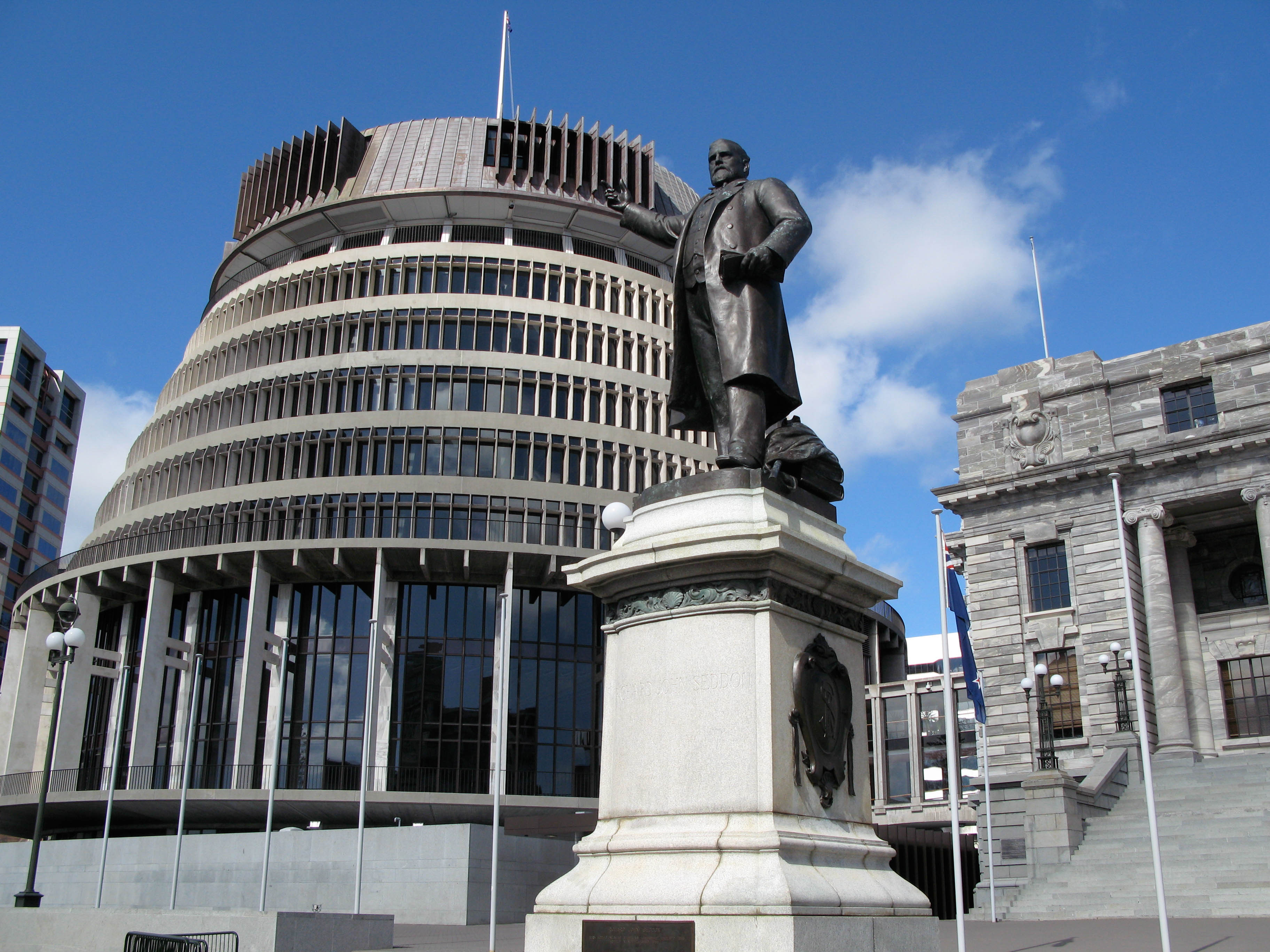
The Beehive
Molesworth St, Thorndon, Wellington, 6011, New Zealand
You're standing in front of what might be the most divisive building in New Zealand. The Beehive — officially the Executive Wing of Parliament — started life as a sketch by Scottish architect Sir Basil Spence during a visit in nineteen sixty-four. The story goes that he drew it on a napkin, though whether that's true or just a good yarn is anyone's guess. What's certain is that government architect Fergus Sheppard and the Ministry of Works turned Spence's concept into reality, and construction ran from nineteen sixty-nine until it was formally opened in nineteen seventy-seven. Wellingtonians hated it from day one. The shape — modelled on a traditional beehive skep — was called everything from a monstrosity to a wedding cake. In two thousand and nine, a travel website ranked it the third ugliest building on Earth. But love it or hate it, you can't ignore it, which is maybe the whole point of political architecture. The older building beside it — Parliament House, the grand stone-faced one — was completed in nineteen twenty-two, though MPs were so desperate to leave their previous quarters that they moved in four years early while it was still unfinished. Behind both buildings sits the Parliamentary Library, the oldest surviving part of the complex, dating from eighteen ninety-nine. It's the only piece that survived a catastrophic fire in nineteen-oh-seven that gutted everything else. Now here's the thing about this ground. In eighteen ninety-three, right here, New Zealand became the first self-governing country in the world to grant women the right to vote. The petition that made it happen carried over twenty-five thousand signatures on a single sheet — nearly a quarter of all adult European women in the country. It's now a UNESCO Memory of the World document. You can see it at the National Library's He Tohu exhibition, about ten minutes' walk from here. Unrolled, the petition stretches three hundred metres.
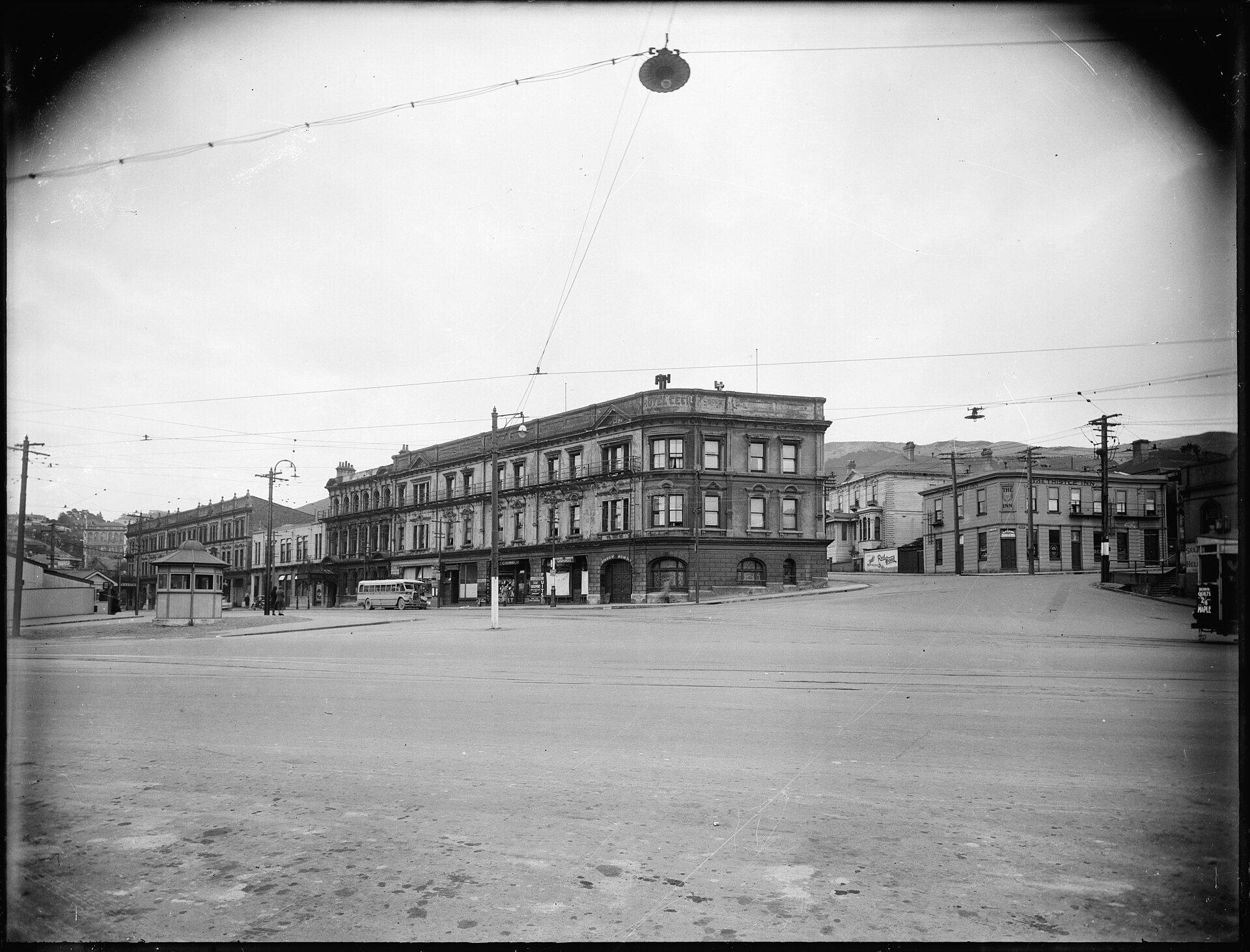
Thistle Hall
293 Cuba St, Te Aro, Wellington, 6011, New Zealand
This unassuming building at two-ninety-three Cuba Street is Thistle Hall, and it has refused to die for over a hundred years. It was built originally to store groceries and tea, then became a dance hall in the early twentieth century. Since then it's been a venue for everything from weddings to punk gigs, political rallies to community theatre. Since the late nineteen-twenties, the hall has repeatedly faced demolition. Developers wanted the land. The council wasn't interested in saving it. What kept it alive was stubbornness — specifically, a group of local women who volunteered to clean and manage the building through the nineteen-eighties and nineties for almost nothing. They booked events, mopped floors, and fought every attempt to knock it down. In the eighties and nineties, Thistle Hall became ground zero for Wellington's punk music scene. It was also a headquarters for protests against the inner city bypass — a motorway project that carved through this part of Cuba Street and demolished several historic buildings. The bypass went ahead, but Thistle Hall survived. It's one of the few remaining public halls in central Wellington. Today it hosts markets, art shows, dance classes, and community events. It's not grand. It's not famous. But it's a building that exists because ordinary people decided it mattered enough to save, again and again, for a century. In a city that tears things down as fast as it builds them, that's worth knowing about.
Wahine Disaster Memorial
Wellington, New Zealand
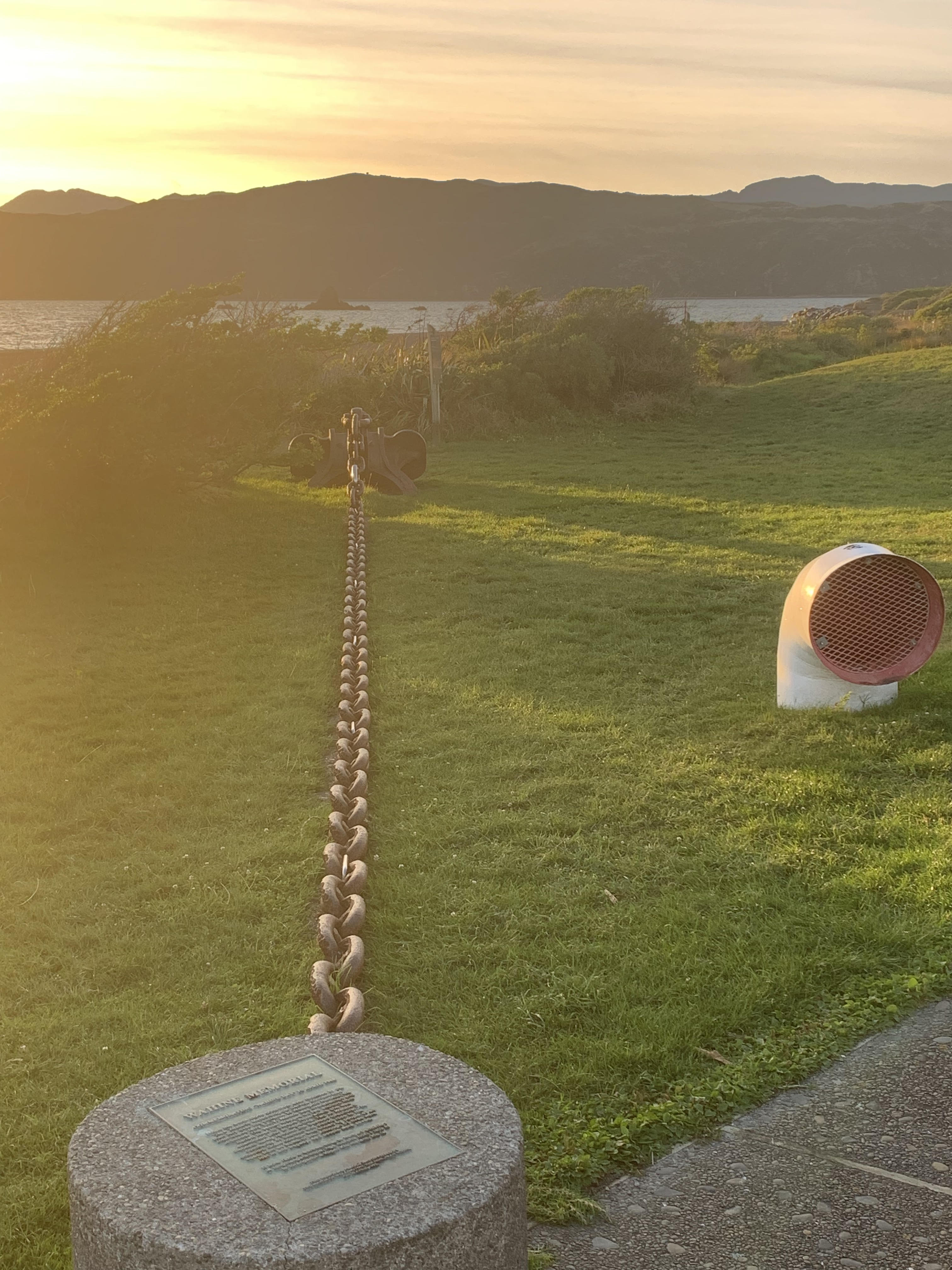
On the tenth of April, nineteen sixty-eight, the inter-island ferry TEV Wahine entered Wellington Harbour carrying seven hundred and thirty-three people. It sailed into the worst storm ever recorded by the New Zealand Met Service — two weather systems colliding head-on. Cyclone Giselle from the north met an Antarctic front from the south, producing wind gusts over two hundred and fifty kilometres per hour. The Wahine lost engine power, drifted onto Barrett Reef, and began taking on water through the vehicle deck. The ship had thirteen watertight compartments, but the flooding of the open car deck created what engineers call the free surface effect — water sloshing freely across a flat surface, destabilising the vessel. The ferry capsized and sank within sight of the shore. Fifty-three people died. It remains New Zealand's worst modern maritime disaster. The horror of it was compounded by proximity — Wellingtonians could see the ship from the hills. People on shore watched passengers struggling in the water and could do almost nothing. The Wahine's remains are scattered across the city like pieces of a broken story. The ship's mast stands at Frank Kitts Park on the waterfront — most people walk past it without knowing what it is. The salvaged anchor and chain sit at a memorial in Churchill Park, Seatoun, positioned to point toward Steeple Rock where the ferry came to rest. A bow propeller sits separately at Breaker Bay on Moa Point Road, almost completely unknown. If you're at the waterfront, look for the mast. It's tall, weathered, and unmarked in any obvious way. Fifty-three people died, and the memorial is a thing most Wellingtonians use as a meeting point without ever looking up.
Wellington Cable Car
280 Lambton Quay, Wellington Central, Wellington, 6011, New Zealand
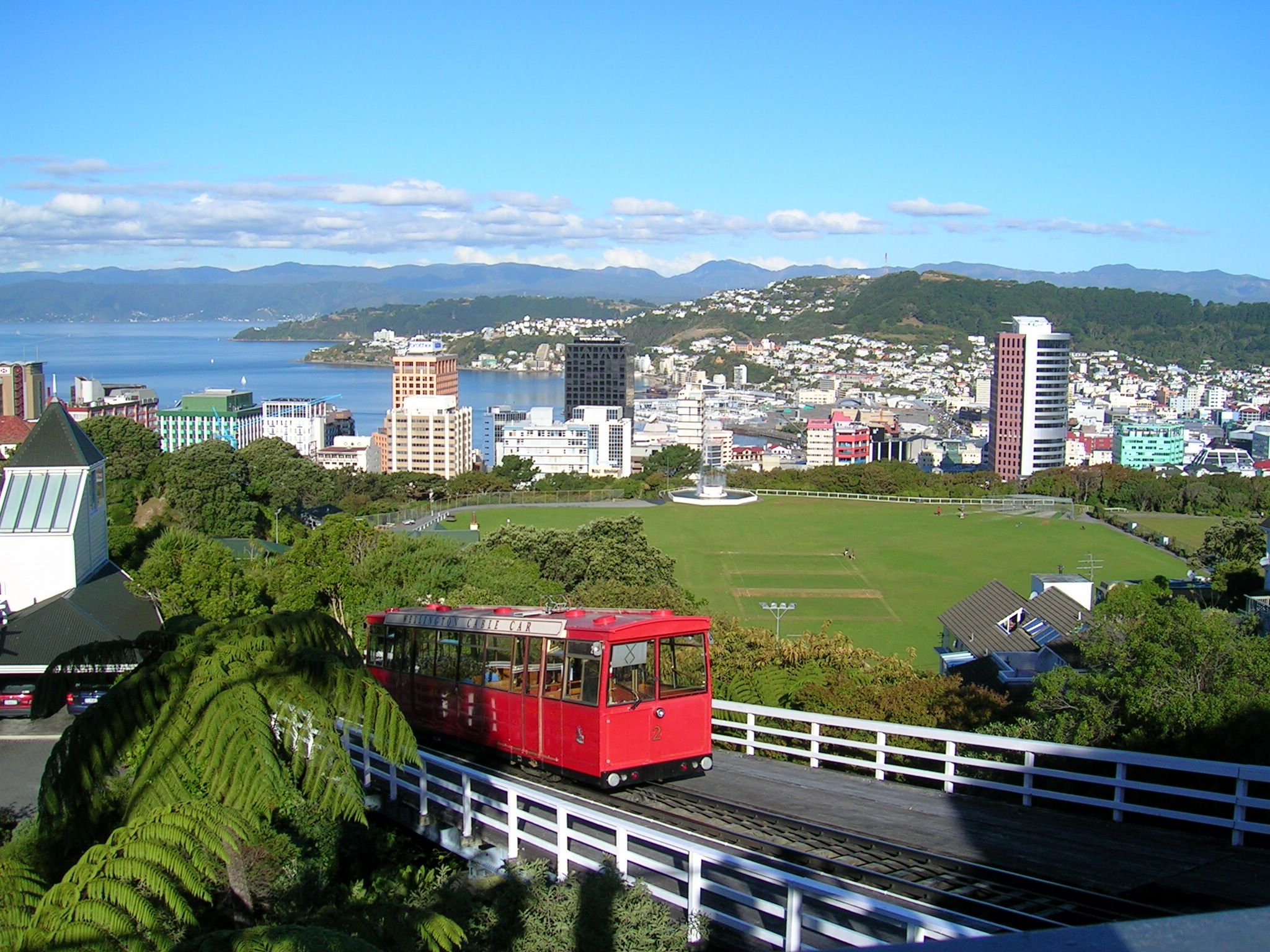
The Wellington Cable Car is the city's most photographed attraction, but almost nobody knows it was built as a real estate scam. In eighteen ninety-eight, the Kelburn and Karori Tramway Company was formed by shareholders of the Upland Estate Company, who owned land in the hills above the city and needed a way to get buyers up there. The cable car was the marketing hook — early property buyers in nineteen-oh-two received free cable car passes with their land purchase. Build it and they will come, except in this case, build it and they will buy houses. It opened on the twenty-second of February, nineteen-oh-two, and was an instant success — over four hundred and twenty-five thousand passenger trips in the first year. The engineer, Dunedin-born James Fulton, designed something globally unusual: a hybrid between a cable car and a funicular, using both a continuous loop haulage cable with a San Francisco-style gripper and a funicular balance cable. It was the only system of its kind in the world. Then came the university. Charles Pharazyn, a wealthy sheep farmer with a major stake in the tramway company, offered a thousand-pound donation to Victoria University — on the condition it be built in Kelburn, so that students would ride the cable car daily. The university took the deal, and Victoria University of Wellington has been up that hill ever since. A city's major university, located where it is, because of a cable car investor's business interests. The original wooden cars — nicknamed the Red Rattlers for the noise they made through the three tunnels — were retired in nineteen seventy-eight despite public protests. The line was rebuilt by Swiss firm Habegger as a standard funicular. It climbs a hundred and twenty metres over six hundred and twelve metres of track, at a gradient of one in five. At the top: the Botanic Garden, the Cable Car Museum in the original winding house, and views that explain why someone would build a railway up a cliff to sell houses.
Wellington Railway Station
Wellington, New Zealand
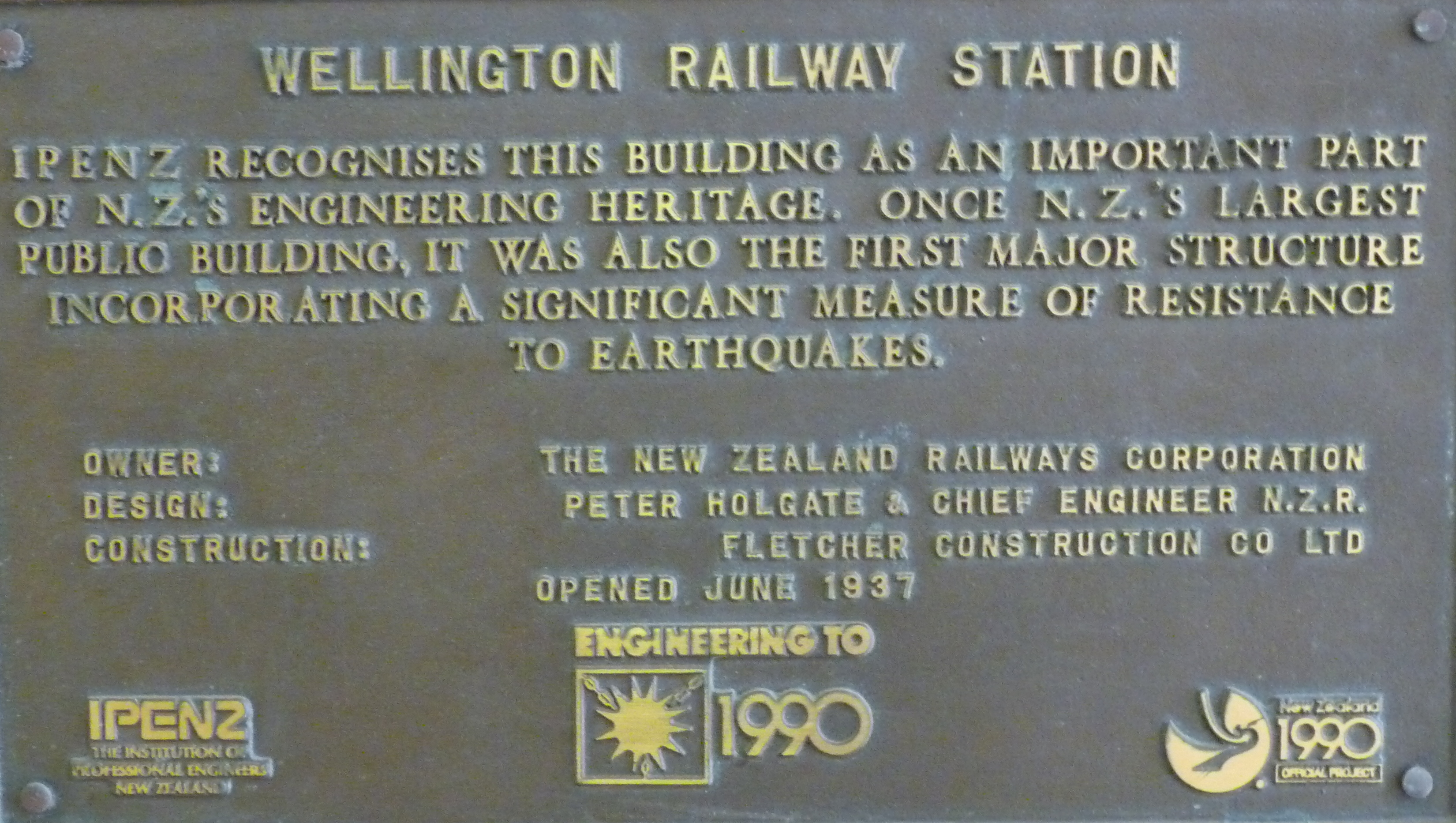
Wellington Railway Station opened in June nineteen thirty-seven, and when it did, it was the largest building in New Zealand. It covers over half a hectare, with a combined floor area of two hectares. But the really remarkable thing about this building is what's inside it — or rather, what it's designed to survive. This was one of New Zealand's first seismically-proofed structures. The architect, W. Gray Young, designed it in a stripped Classical style with reinforced concrete specifically engineered to flex during an earthquake rather than crack. In a city that sits on multiple fault lines and had been devastated by the eighteen fifty-five quake, this was not an academic exercise. This building was designed to stay standing when the ground moved. The station sits on sixty-eight acres of reclaimed land — the Thorndon reclamation that began in nineteen twenty-three. It replaced two earlier termini, Lambton and Thorndon, which had served the city since the eighteen-seventies. Look at the facade. The clean lines and symmetrical arches are classic inter-war architecture — grand enough to announce that you've arrived somewhere important, but restrained enough to feel distinctly New Zealand rather than borrowed from London or Washington. The station has been a backdrop to some of Wellington's most significant moments. It was part of the funeral cortege route for Prime Minister Michael Joseph Savage. During World War Two, it served as a coordination point for home-front defence. And during the Wahine disaster of nineteen sixty-eight — when the inter-island ferry sank in the harbour during a catastrophic storm, killing fifty-three people — the station was used as a casualty treatment centre. Tens of thousands of commuters pass through here every day without thinking about any of this.
Wellington Waterfront
86 Jervois Quay, Wellington Central, Wellington, 6011, New Zealand
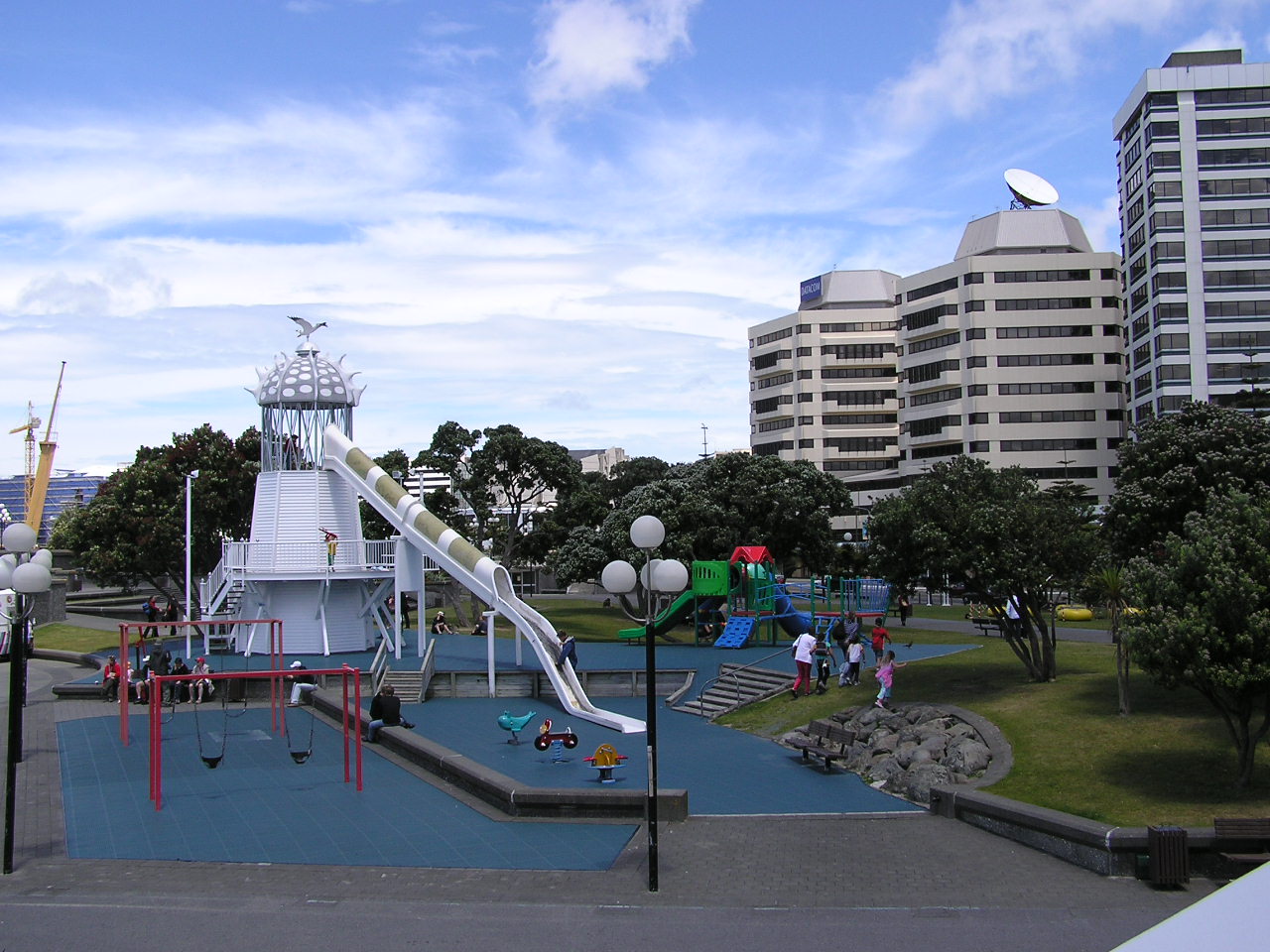
Take a breath. Look out at the harbour. On a good day — and in Wellington, good is relative — you can see right across to the Hutt Valley and the Rimutaka Range beyond. On a bad day, the southerly will try to take your face off. This is the windiest city in the world, or at least it fights for the title, and the harbour acts like a funnel, channelling gales straight through the gap between the hills. Wellingtonians don't fight it. They lean into it. Literally. Everything you can see between Lambton Quay and the water was harbour when the first European settlers arrived in eighteen-forty. You're standing on land that humans manufactured. Wellington's problem was always the same: steep hills on three sides, water on the fourth, not enough flat ground to build a city. So they filled in the water. Wharf by wharf, earthquake by earthquake, truck-load by truck-load, until over a hundred and fifty hectares of new city appeared. For most of the twentieth century, this waterfront was industrial. Cranes, containers, warehouses, the smell of diesel and salt. The public weren't welcome. Then in the late nineteen-eighties, the shipping industry moved to CentrePort further north, and this stretch of harbour edge was ripe for reinvention. What you see now — the boardwalk, the lagoon, the restaurants and public art — is thirty-odd years of that transformation. If you look toward the water at Whairepo Lagoon, you might spot a dark shape gliding through the shallows. That's an eagle ray — a whai repo in te reo Maori. The lagoon was officially named Whairepo in twenty-fifteen because the rays, considered kaitiaki or guardians, keep coming back through a channel to the open harbour. They're not trapped. They just like it here.
Wētā Workshop Unleashed
1 Camperdown Rd, Miramar, Wellington, 6022, New Zealand
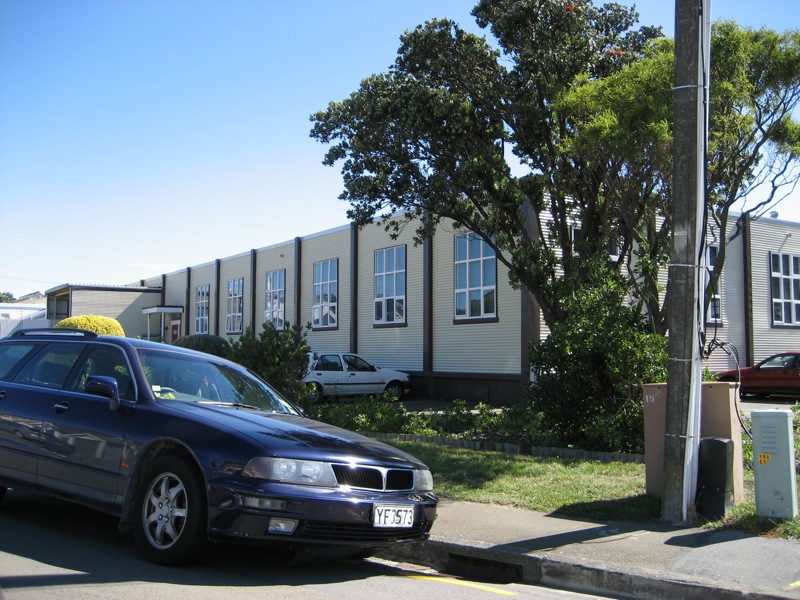
Wētā Workshop is the Academy Award-winning special effects company founded by Richard Taylor and Tania Rodger that created the creatures, armour, and prosthetics for The Lord of the Rings, Avatar, and dozens of other films. The immersive Unleashed experience takes visitors through the creative process with hands-on workshops and behind-the-scenes exhibits.
Wrights Hill Fortress
Wrights Hill Rd, Karori, Wellington, 6012, New Zealand
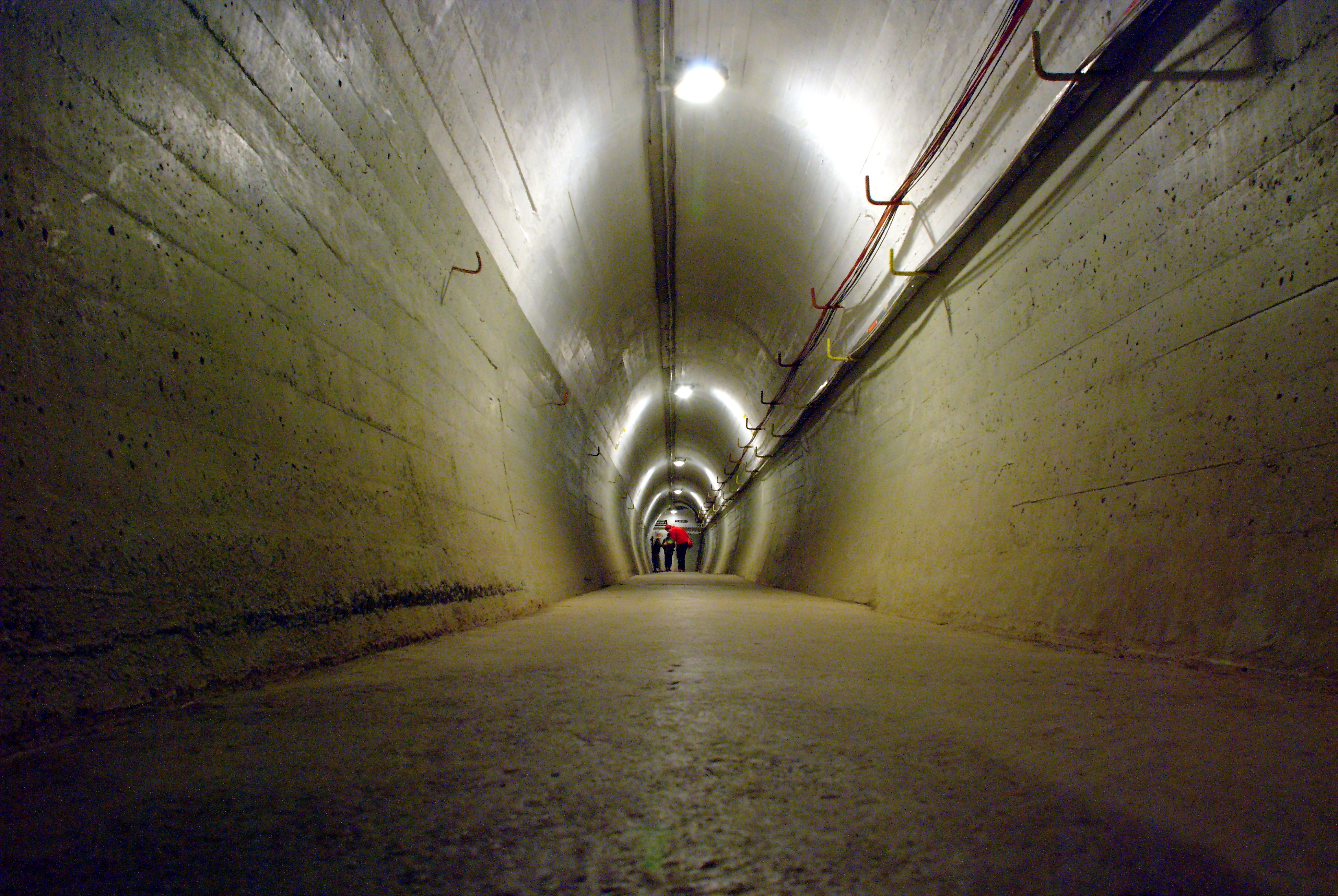
In suburban Karori, under a hillside that most Wellingtonians walk their dogs over, there is a Second World War fortress with six hundred and twenty metres of underground tunnels. Wrights Hill Fortress was built between nineteen forty-two and forty-four to defend Wellington Harbour from Japanese naval attack. Three gun pits were carved into the hilltop, connected by tunnels to magazines, plotting rooms, engine rooms, and crew quarters — at points over fifty feet underground. The nine-point-two-inch guns could hurl a hundred-and-seventy-two-kilogram shell thirty kilometres out to sea. The fortress was designed for a hundred and ninety-five personnel. It never had more than twenty at any one time. Only two of the three planned guns were ever installed. They were never fired in anger. The Japanese navy never came. After decommissioning in the nineteen-fifties, the guns were cut up for scrap in nineteen-sixty and sold to Japan. The guns built to fight Japan were bought by Japan. Nobody involved seems to have appreciated the irony. But here's the detail that connects Wrights Hill to modern Wellington. When Peter Jackson's team was working on The Lord of the Rings: The Fellowship of the Ring, the sound designers needed a specific kind of reverberating echo for the Mines of Moria sequences. They came to the tunnels of Wrights Hill Fortress. The booming, cavernous sound of Moria — one of the most memorable audio environments in film history — was recorded in a forgotten military bunker in Karori. The fortress opened to the public on ANZAC Day nineteen eighty-nine. You can walk the tunnels. It's dark, it's cold, and it sounds exactly like the Mines of Moria. Because it is.
Zealandia Te Māra a Tāne
53 Waiapu Rd, Karori, Wellington, 6012, New Zealand
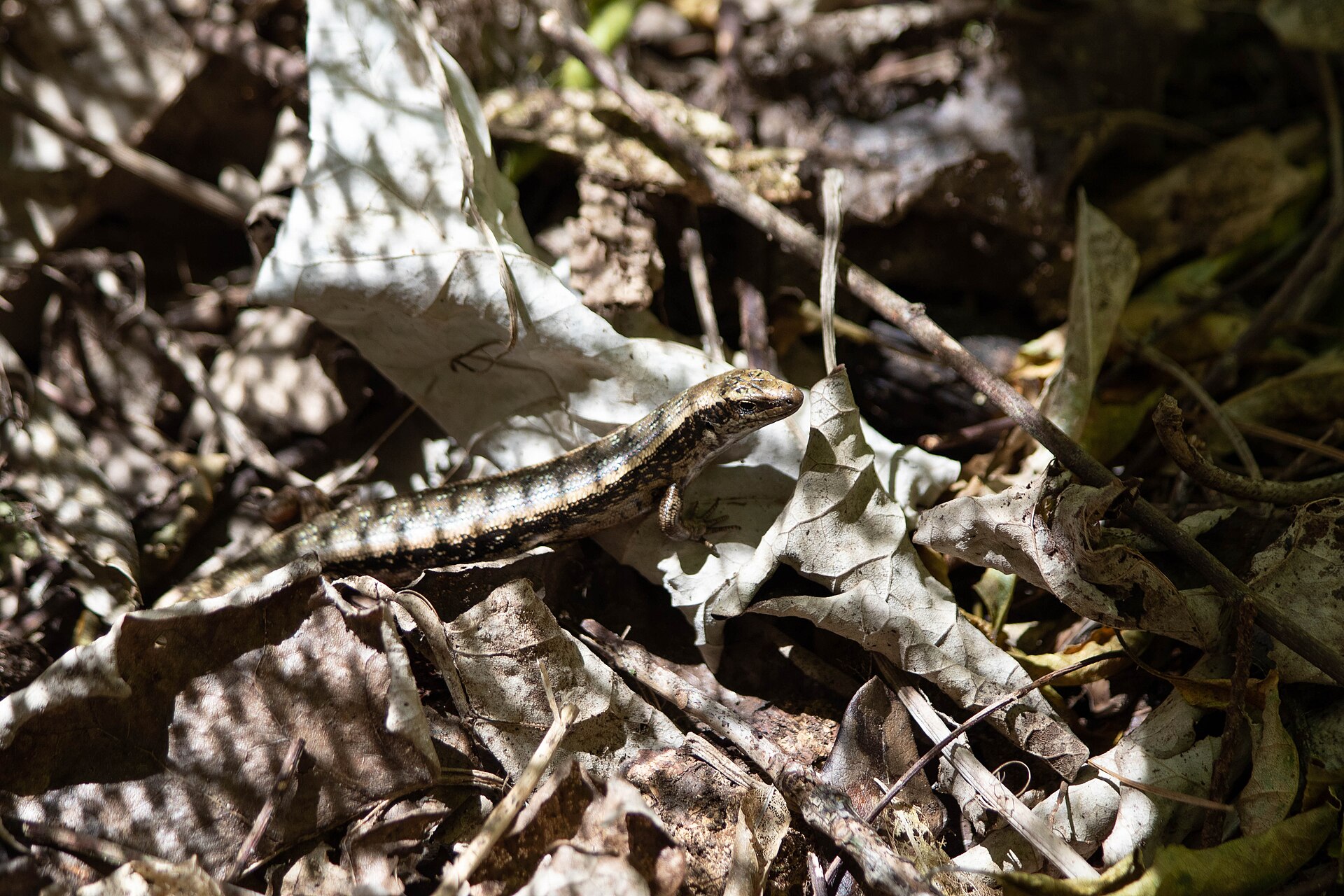
Zealandia is the world's first fully fenced urban ecosanctuary — a 225-hectare valley in Karori that has been predator-fenced and restored to native bush, reintroducing species like kiwi, tuatara, saddleback, and takahē that had been absent from the mainland for over a century. Night tours to see kiwi in the wild are the highlight.