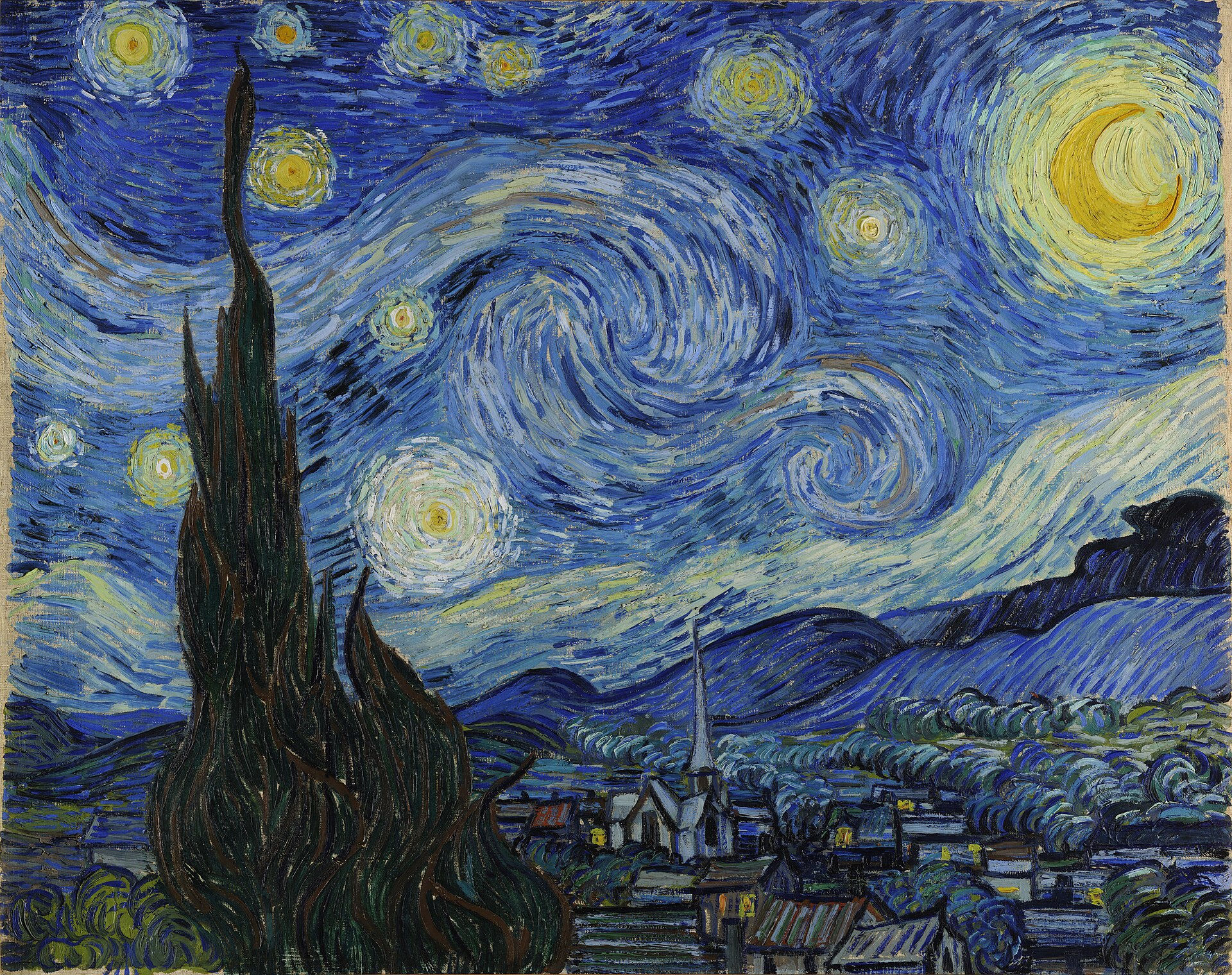
Vincent van Gogh sold exactly one painting during his lifetime. Just one — The Red Vineyard, for 400 francs. He died in 1890 at thirty-seven, believing himself a failure. His younger brother Theo, who had financially supported Vincent for years, died six months later. Theo's widow, Johanna van Gogh-Bonger, inherited the entire collection and spent decades promoting Vincent's work, loaning pieces to exhibitions and carefully building his reputation from scratch. Without her, the world's most recognizable painter might have been forgotten.
The museum that bears his name opened in 1973 in a building designed by Gerrit Rietveld, a member of the De Stijl movement — the same artistic circle that produced Mondrian's colored grids. Rietveld died before construction finished, and his building is deliberately austere: clean lines, natural light, no distractions from the paintings. A curving exhibition wing designed by Japanese architect Kisho Kurokawa was added in 1999.
Inside is the largest Van Gogh collection in the world: 200 paintings, 400 drawings, and 700 letters. You can trace his entire trajectory — from the dark, earthy peasant scenes of his Dutch period through the explosion of color after he moved to Paris and then Arles. The Potato Eaters, Sunflowers, Almond Blossom, Wheatfield with Crows — they're all here, along with nine self-portraits that document his face like a visual diary.
The letters are arguably the most intimate part of the collection. Vincent wrote to Theo constantly, and these letters reveal a man who was deeply thoughtful, frequently desperate, and painfully aware of how his mental health was deteriorating. Reading them changes how you see every painting on the walls.
Verified Facts
The museum houses the world's largest Van Gogh collection: 200 paintings, 400 drawings, and 700 letters
The main building was designed by Gerrit Rietveld of the De Stijl movement and opened in 1973
Van Gogh sold only one painting during his lifetime — The Red Vineyard — for 400 francs
The exhibition wing was designed by Japanese architect Kisho Kurokawa and added in 1999
Get walking directions
Museumplein 6, 1071 DJ Amsterdam