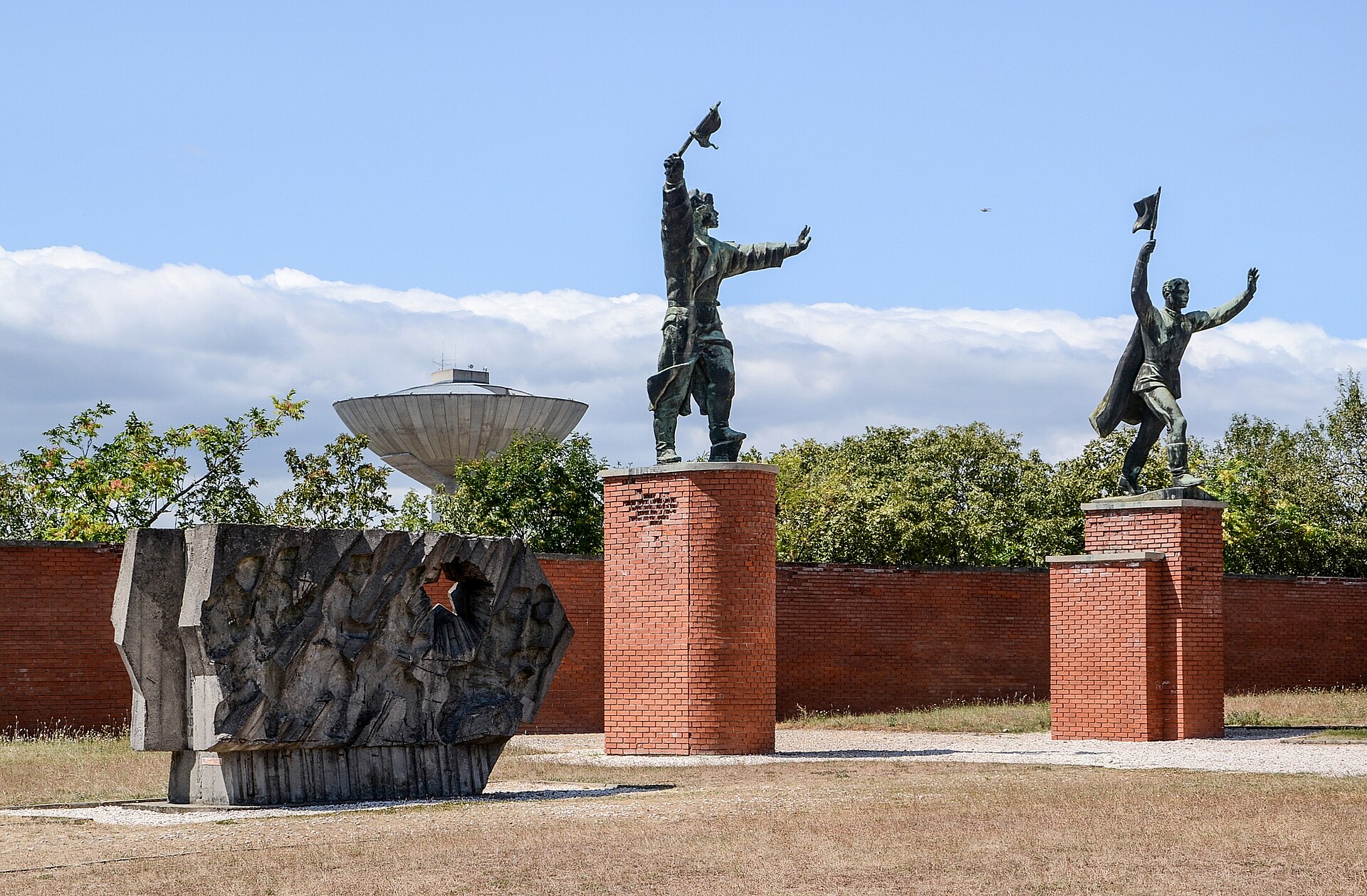
When the Communist regime fell in 1989, Hungarian cities were left with a practical problem: what do you do with forty-two giant bronze and stone statues of Lenin, Marx, Engels, and assorted Communist heroes? Most Eastern European countries melted them down or smashed them. Hungary, with characteristic dark humour, gathered them all up and put them in a field on the outskirts of town. Memento Park opened on June 29, 1993, exactly two years after the last Soviet soldier left Hungarian soil.
The park was designed by architect Ákos Eleőd, who won a public competition for the project. His concept is brilliantly sardonic: the entrance is a grand replica of a Communist-era tribune — the kind of platform where party leaders would wave at marching crowds — but it leads to nothing. Inside, 42 statues stand in five semicircles, stripped of their original context and left to mean whatever they mean now. There are soldiers charging, workers striding, Red Army officers saluting, and Communist leaders pointing toward a future that never arrived.
The most famous piece is not even a real statue. It is a replica of Stalin's boots — all that remained after Budapest's eight-metre-tall Stalin statue was torn down by crowds during the 1956 Revolution on October 23. The original boots sat on the empty pedestal for weeks, a sarcastic monument to failed power. In 2006, Eleőd recreated the tribune with the broken boots on top. It is not historically accurate, but it is perfect.
The park is about 10 kilometres from the city centre and feels deliberately isolated — these statues were exiled, not preserved. A gift shop sells Communist-era souvenirs, canned air labelled "Last Breath of Communism," and ironic propaganda posters.
Verified Facts
Opened June 29, 1993, exactly two years after the last Soviet troops left Hungary
Contains 42 Communist-era statues arranged in five semicircles, designed by architect Ákos Eleőd
The original eight-metre Stalin statue was torn down during the 1956 Revolution on October 23
The park is not about honouring communism but about documenting its fall — deliberately neutral in tone
Get walking directions
Balatoni út, District XXII, Budapest, 1223, Hungary