This basilica took fifty-four years to build, collapsed once during construction, and houses the mummified right hand of a thousand-year-old king. It is the largest church in Budapest, and at 96 metres tall it matches the Parliament building exactly — a deliberate architectural statement that church and state stand as equals.
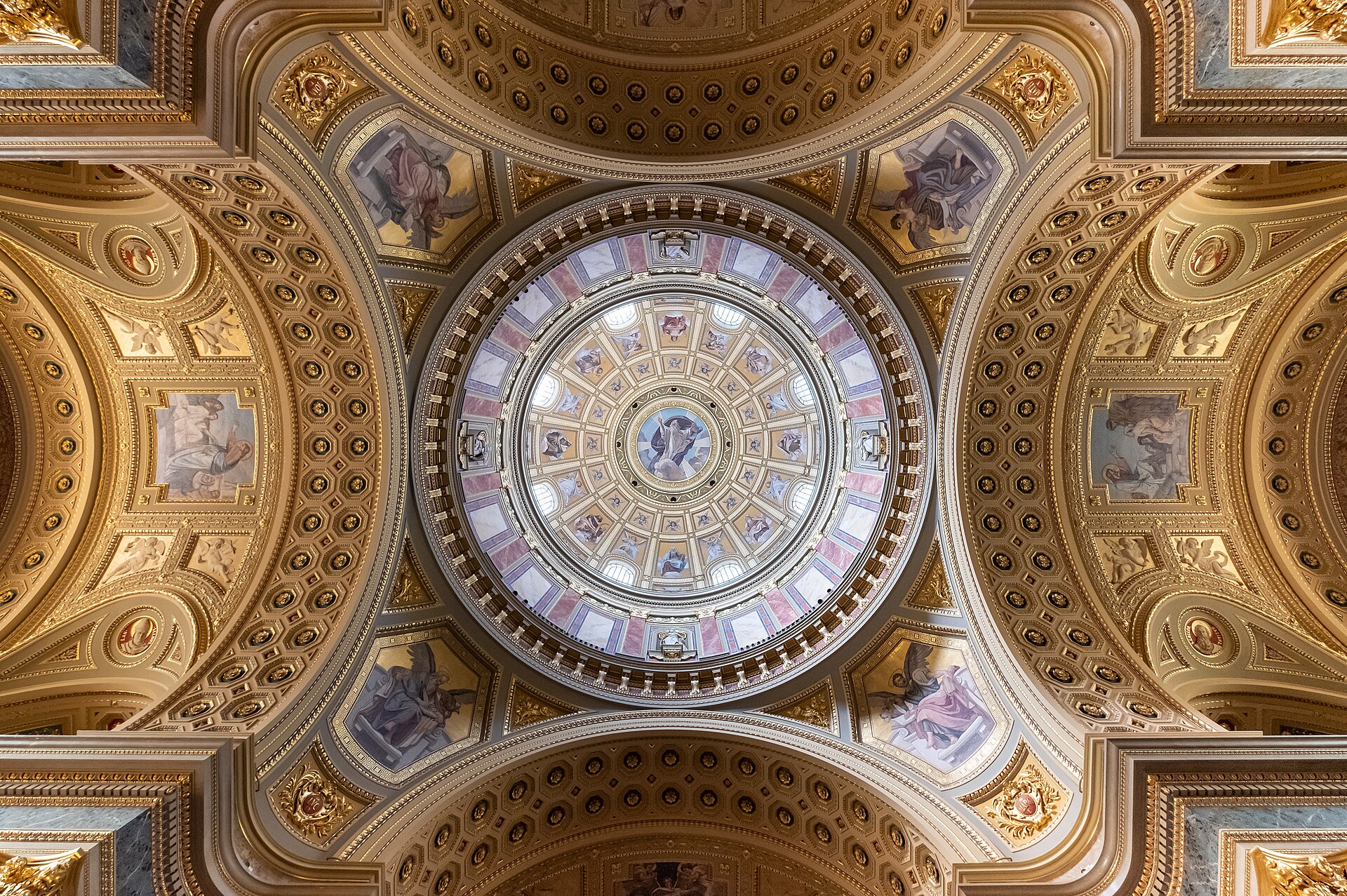
Construction began in 1851 under architect József Hild, who died before the dome was finished. His replacement, Miklós Ybl, took one look at the nearly completed dome and declared it structurally unsound. He was right: in 1868, the dome collapsed. Ybl essentially rebuilt the church from the ground up in a neo-Renaissance style, only to die himself before completion. The third architect, József Kauser, finally finished the basilica in 1905. Three architects, fifty-four years, one catastrophic collapse.
The church's most famous resident is not alive and technically never has been — at least not as a basilica attraction. In a gold reliquary behind the altar sits the Holy Right Hand of Saint Stephen, the mummified right hand of Hungary's first king, who died in 1038. When his body was exhumed for canonisation in 1083, the right hand was reportedly found completely intact. Drop a coin in the slot and the reliquary lights up for about a minute, illuminating a thousand-year-old body part in a glass case. Every August 20th, on St. Stephen's Day, the hand is paraded through the streets in a solemn procession.
Climb the 364 steps to the observation deck — or take the lift — for a 360-degree panorama of Budapest. On a clear day, the view stretches from Buda Castle to the Danube Bend.
Verified Facts
At 96 metres tall, it matches the Parliament building exactly — symbolising equality of church and state
The dome collapsed during construction in 1868 and was rebuilt by architect Miklós Ybl
Houses the Holy Right Hand of Saint Stephen, Hungary's first king who died in 1038
Construction took 54 years (1851-1905) under three successive architects
Get walking directions
Szent István tér 1, 1051 Budapest