In 1377, while the rest of Europe was still blaming plague on bad smells and divine punishment, the Republic of Ragusa did something revolutionary: it invented quarantine. The Major Council decreed that all travellers and goods arriving from plague-affected areas must be isolated for 30 days before entering the city — a period later extended to 40 days, which is where the word "quarantine" comes from (quaranta giorni, forty days in Italian). It was one of the most important public health innovations in human history, and Dubrovnik did it first.
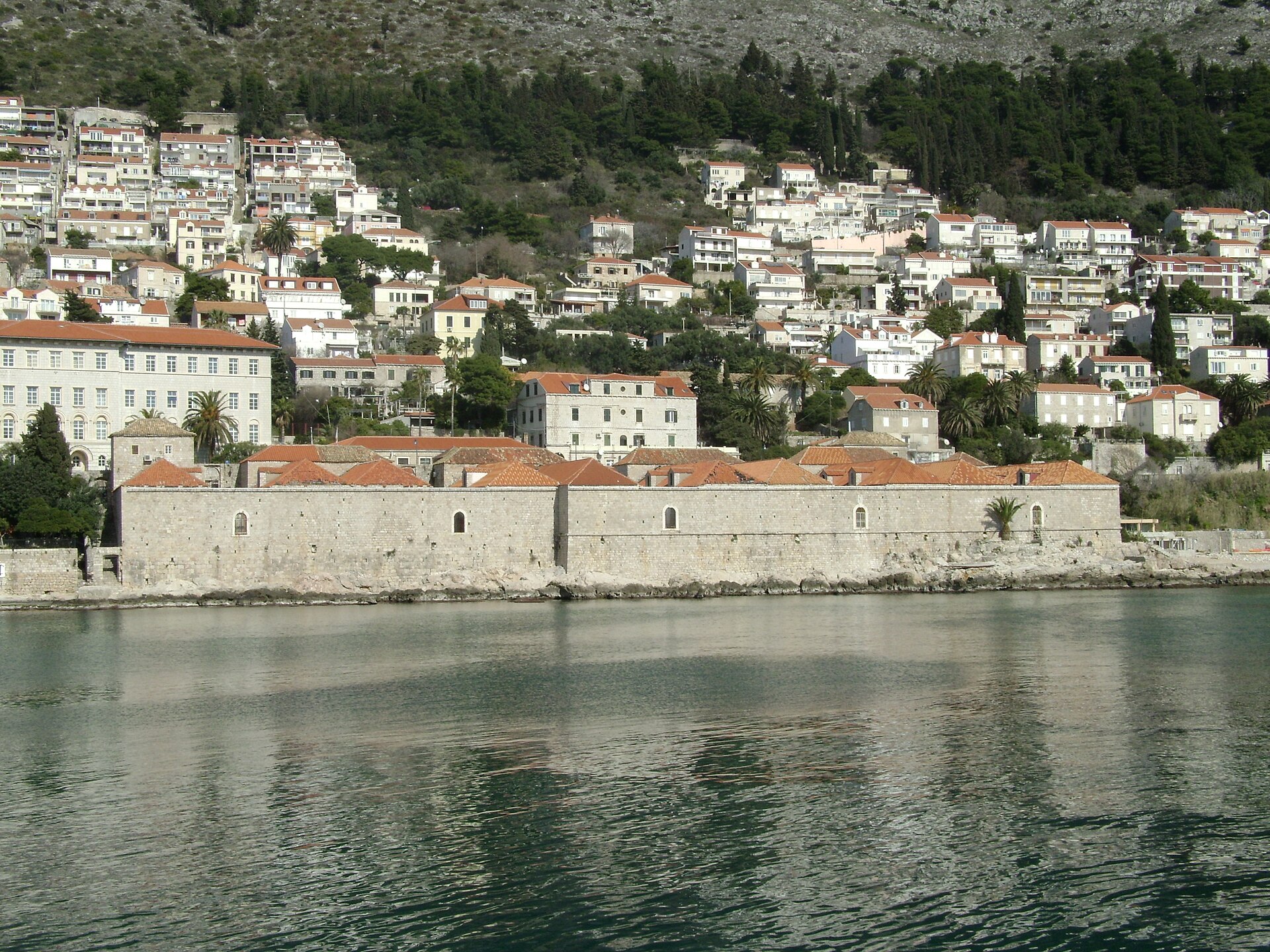
The Lazareti complex — built between 1627 and 1647, though the quarantine system itself predates the buildings by 250 years — is a row of ten multi-storey buildings connected by five interior courtyards, all surrounded by high walls. The name comes from the Biblical Lazarus, whom Jesus raised from the dead, though the connection between resurrection and plague containment requires some creative theology. Located just outside the Ploče Gate, the complex was positioned to intercept caravans arriving from Ottoman territories and ships docking at the nearby port.
Merchants, sailors, and their goods were held here under observation. The system was remarkably thorough: separate buildings for people and goods, separate courtyards to prevent cross-contamination, and a staff of guards and doctors who monitored everything. It worked. While plague ravaged other Mediterranean cities, Ragusa kept its death toll comparatively low.
After centuries of disuse, the complex was extensively restored and reopened in 2019 as a cultural centre. Today it hosts art exhibitions, concerts, and performances by the Linđo folklore ensemble. The buildings that once confined plague-suspect traders now host DJ sets and gallery openings. The Republic would probably approve of the adaptation — they were always pragmatists.
Verified Facts
The Republic of Ragusa established the world's first institutionalised quarantine system in 1377
The Lazareti complex was built between 1627 and 1647, containing 10 buildings connected by 5 courtyards
The word "quarantine" derives from quaranta giorni (forty days), the isolation period established by Ragusa
The complex was restored and reopened in 2019 as a cultural centre hosting exhibitions and performances
Get walking directions
8 Ulica Frana Supila, Ploče iza Grada, Dubrovnik, 20000, Croatia