The main street of Dubrovnik's Old Town was once a shallow sea channel. That's not a metaphor — until roughly the 11th century, a marshy stretch of water separated the original island settlement of Ragusa from the Slavic community on the mainland. When they filled it in, they created the 300-metre limestone boulevard that would become the heart of one of the wealthiest city-states in the Mediterranean.
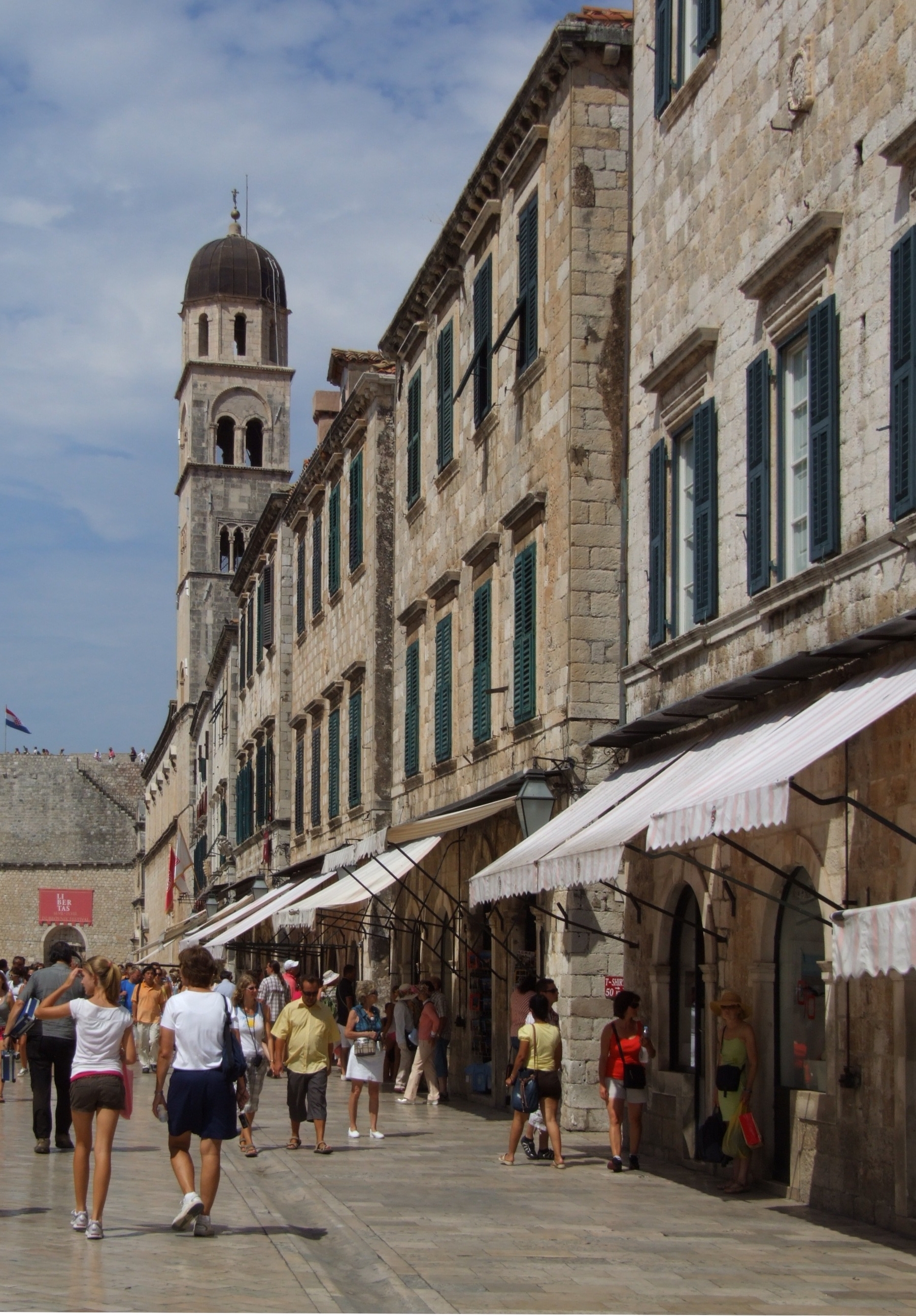
Stradun — also called Placa — runs in a perfect straight line from Pile Gate in the west to Luža Square in the east. After the catastrophic earthquake of 1667 destroyed nearly everything, the Republic rebuilt the street with uniform Baroque facades on both sides: ground-floor shops with a doorway and a window, identical arched openings, all the same height. It's one of the earliest examples of coordinated urban planning in Europe, centuries before Haussmann did the same thing in Paris.
The limestone beneath your feet has been polished to a mirror shine by millions of footsteps over centuries. After rain, it gleams like ice. Every morning, delivery workers haul goods through the narrow side alleys because vehicles are banned. Every evening, the korzo begins — the Mediterranean tradition of the slow evening stroll, where locals dress up and parade the length of the street, stopping to gossip, flirt, and drink coffee that costs twice what it should.
At the western end stands the Large Onofrio Fountain, built in 1438 as the terminus of a 12-kilometre aqueduct that brought fresh water from the Šumet spring. At the eastern end, Orlando's Column marks the spot where public decrees were once read aloud. Between them, Stradun holds the entire social life of the city — it always has, and it probably always will.
Verified Facts
Stradun was originally a shallow sea channel separating the island of Ragusa from the mainland until roughly the 11th century
After the 1667 earthquake, the street was rebuilt with uniform Baroque facades on both sides
The street runs 300 metres from Pile Gate to Luža Square
The Large Onofrio Fountain at the western end was built in 1438 as the terminus of a 12km aqueduct from the Šumet spring
Get walking directions
Stradun, 20000 Dubrovnik