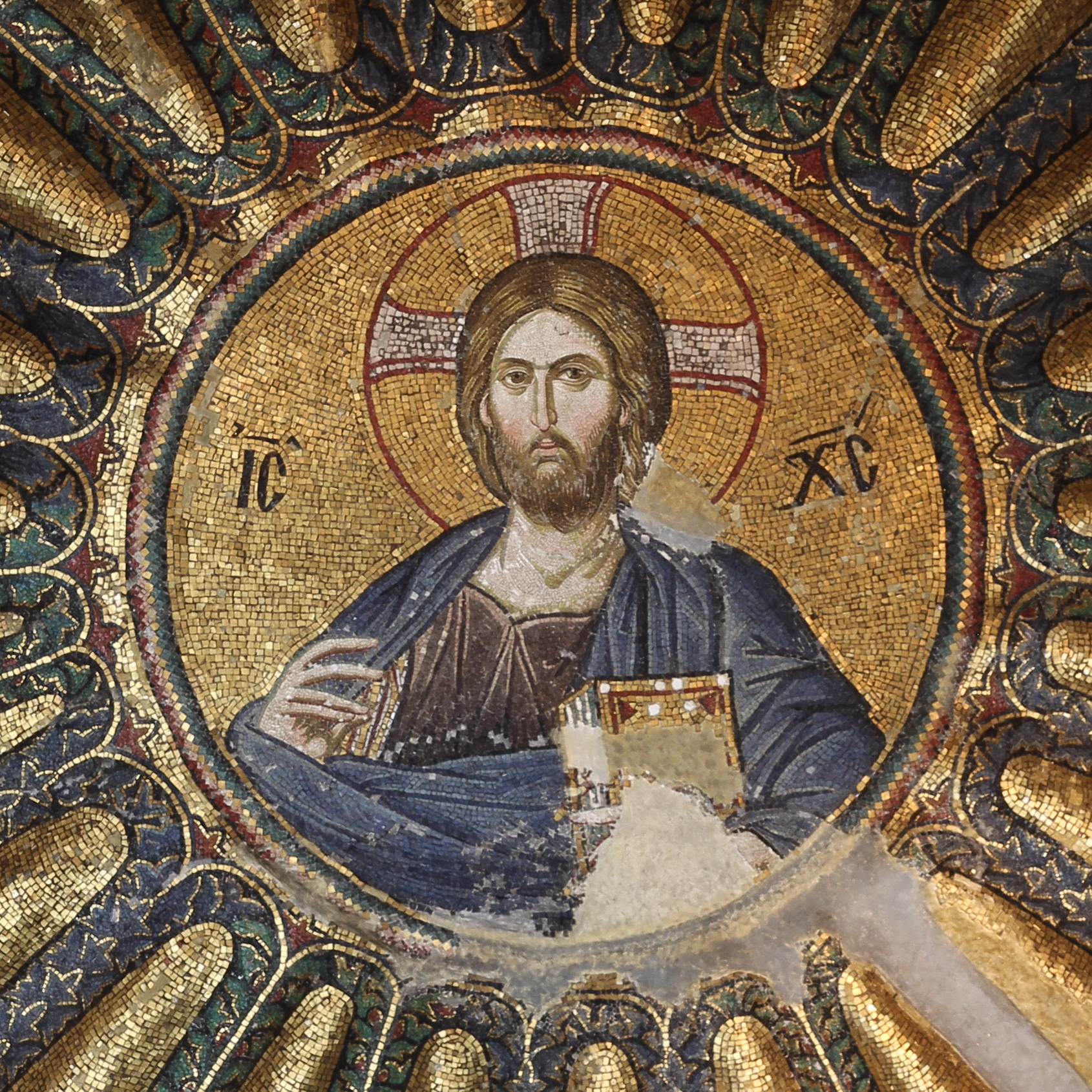
If the Hagia Sophia is Istanbul's most famous Byzantine interior, Chora is its most beautiful. Tucked away in the old city walls, far from the tourist cluster of Sultanahmet, this modest-looking church contains what many art historians consider the finest surviving Byzantine mosaics and frescoes in the world — a visual explosion that rivals anything in Ravenna or Rome.
The decoration you see today was commissioned between 1310 and 1320 by Theodore Metochites, a poet, astronomer, and politician who served as the Byzantine Empire's prime minister. He poured his personal fortune into covering nearly every surface with gold-backed mosaics depicting the lives of Christ and the Virgin Mary. The figures are rendered with a naturalism and emotional depth that was revolutionary for the period — art historians call it the Palaeologian Renaissance, a final burst of creative genius before Constantinople fell to the Ottomans in 1453.
Metochites himself appears in a mosaic above the entrance, kneeling to offer a model of the church to Christ. It is one of the great self-portraits in art history — a man literally presenting his life's work for divine judgment. When the Ottomans converted the church to a mosque in the 16th century, the mosaics were plastered over but never destroyed. American conservators from the Byzantine Institute painstakingly uncovered and restored them beginning in 1947.
The name "Chora" means "in the country" — the church originally stood outside Constantinople's city walls in open fields. The walls were later extended to enclose it, but the name stayed, making this a church that is perpetually "in the countryside" despite being in the middle of one of the world's largest cities. It was reconverted to a mosque in 2020, with some mosaics now covered during prayer times.
Verified Facts
The mosaics and frescoes were commissioned between 1310-1320 by Theodore Metochites, a Byzantine prime minister, poet, and astronomer.
The artwork represents the Palaeologian Renaissance, considered the finest surviving example of late Byzantine mosaic work.
The name "Chora" means "in the country" because the church was originally built outside the city walls of Constantinople.
American conservators from the Byzantine Institute began uncovering the plastered-over mosaics in 1947, a restoration project that took decades.
Get walking directions
18 Kariye Bostani Sk., Kariye, Fatih, 34087, Türkiye