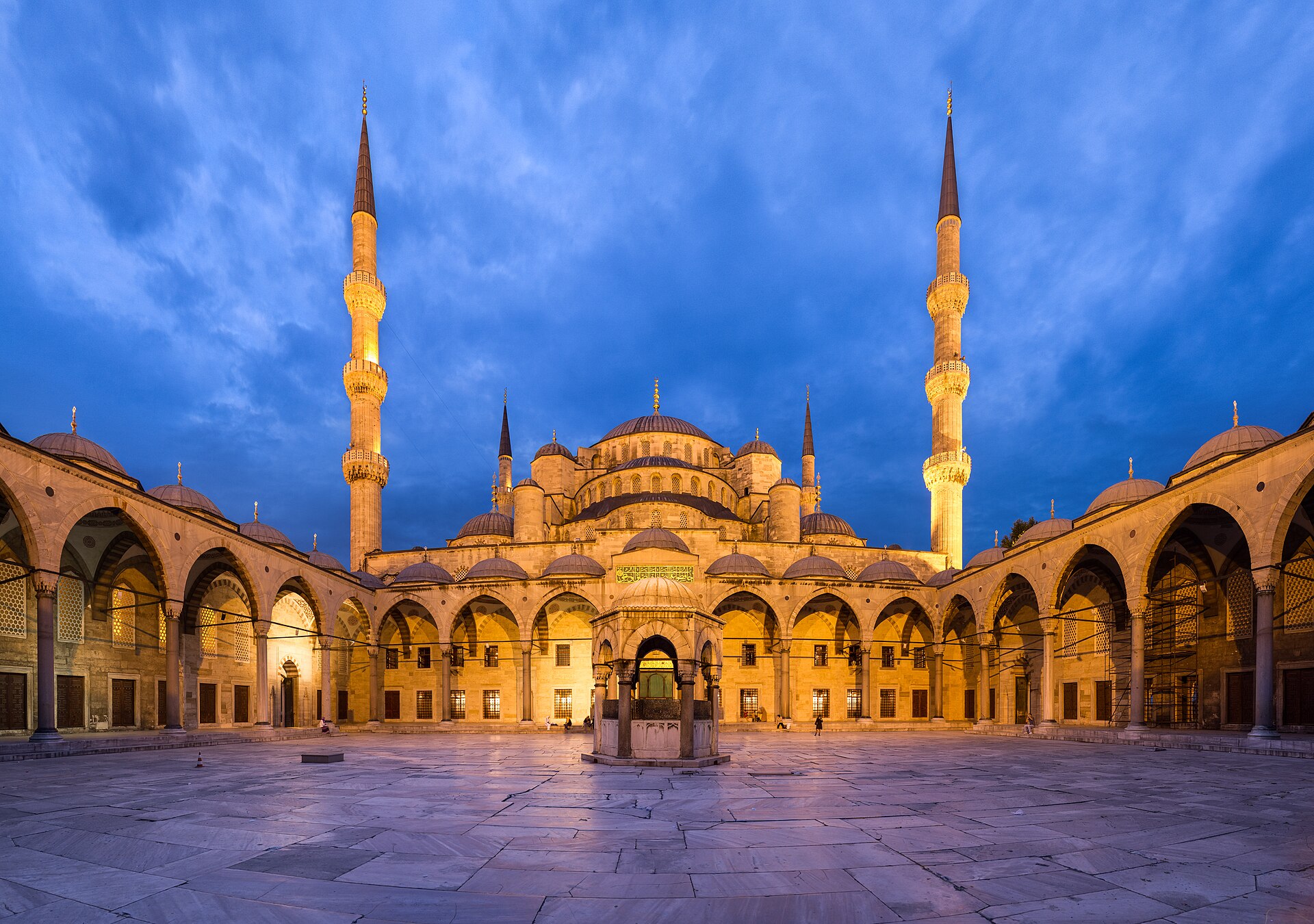
Outside of Mecca, Medina, and Jerusalem, this may be the holiest site in the Islamic world. The Eyüp Sultan Mosque was built around the supposed burial site of Abu Ayyub al-Ansari — the standard-bearer of the Prophet Muhammad who died during the first Arab siege of Constantinople in 674-678 AD. His tomb was "discovered" shortly after the Ottoman conquest of 1453, conveniently providing Sultan Mehmed II with both a sacred site and a powerful piece of political legitimacy.
The discovery story has the texture of legend: Mehmed's spiritual advisor, Akşemseddin, allegedly had a vision revealing the exact burial location. Whether the vision was genuine, politically motivated, or somewhere in between, the effect was the same — Mehmed immediately built a mosque and tomb complex on the spot, and for centuries afterward, Ottoman sultans were ceremonially girded with the Sword of Osman here, the equivalent of a coronation.
The current mosque dates from 1798, rebuilt after an earthquake destroyed the original. But the real draw is the atmosphere. This is not a tourist mosque — it is one of Istanbul's most actively used places of worship, filled with pilgrims who come to pray at Abu Ayyub's tomb, tie prayer ribbons, and leave handwritten petitions on the ornate grillwork. The courtyard is always crowded, always quiet, always charged with a kind of intensity that you rarely find at more famous religious sites.
The surrounding cemetery climbs up the hillside toward Pierre Loti Hill, a vast necropolis of Ottoman-era tombs shaded by cypress trees. The gravestones, many topped with carved turbans or fezzes to indicate the deceased's rank, form a silent biography of five centuries of Ottoman society. Walking through them at sunset, with the Golden Horn below, is one of Istanbul's most moving experiences.
Verified Facts
The mosque was built around the supposed tomb of Abu Ayyub al-Ansari, the standard-bearer of the Prophet Muhammad who died during the first Arab siege of Constantinople (674-678 AD).
Ottoman sultans were ceremonially girded with the Sword of Osman at this mosque, the equivalent of a coronation ceremony.
The current mosque dates from 1798, rebuilt after the original was destroyed by an earthquake.
Get walking directions
Eyüp Sultan, Camii Kebir Cd., Eyüpsultan