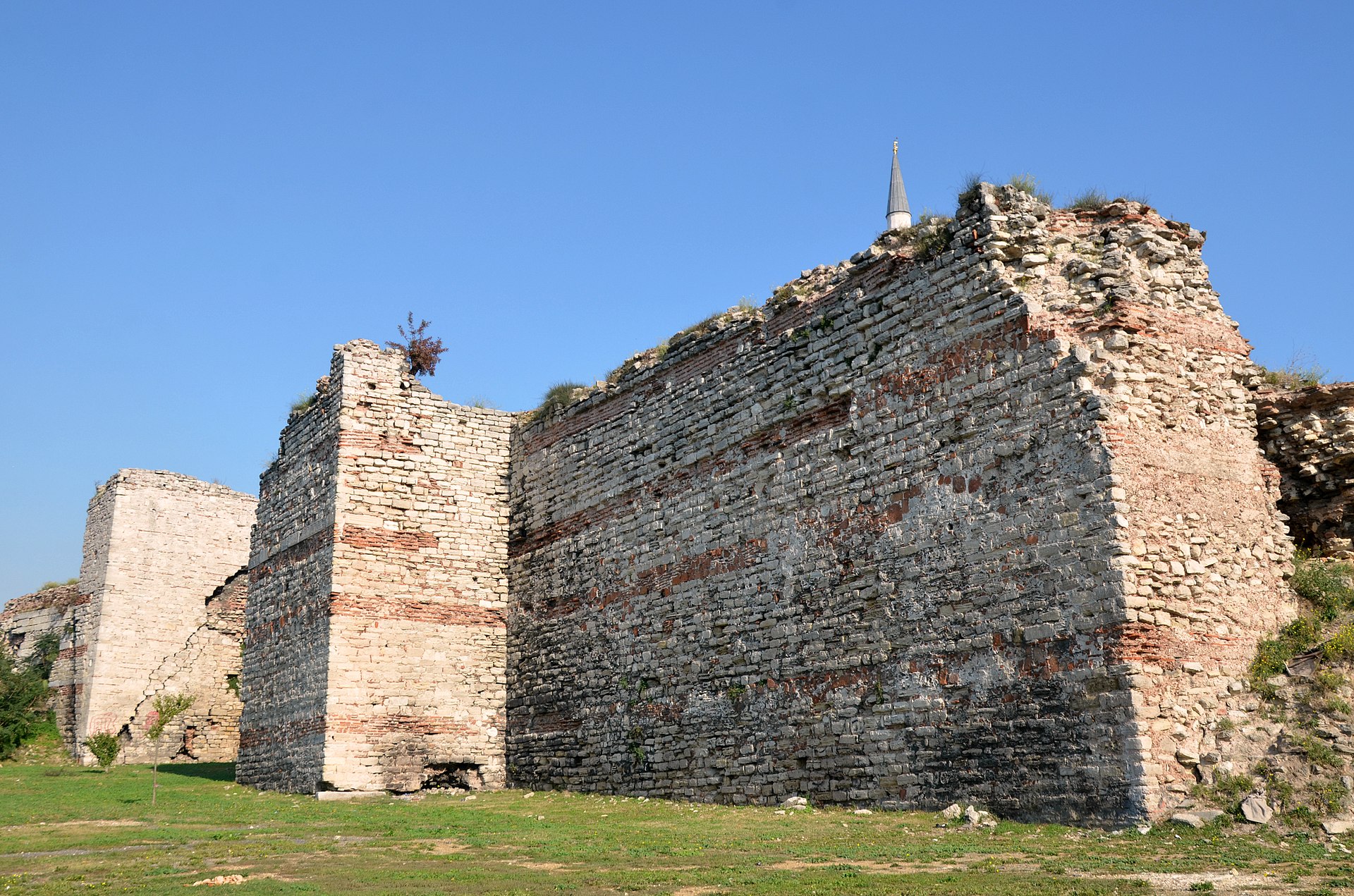
For a thousand years, these walls were the most formidable fortification system in the world, and they worked. Built under Emperor Theodosius II beginning in 408 AD, the triple-layered defense system — a moat, an outer wall, and a massive inner wall reaching up to 12 meters high with towers every 55 meters — turned Constantinople into a city that no army could take by force. The Huns couldn't do it. The Arabs tried multiple times and failed. The Bulgars broke their armies against these walls. Only the Fourth Crusade in 1204, using treachery rather than siege, managed to breach them.
The walls stretch for 6.5 kilometers from the Sea of Marmara to the Golden Horn, and at their peak, they included 96 towers and multiple fortified gates. Behind these walls, Constantinople survived as the last outpost of the Roman Empire for a millennium after Rome itself had fallen — a feat of endurance that is almost entirely attributable to the quality of Theodosius's engineers.
The end came on May 29, 1453, when Sultan Mehmed II deployed a weapon the walls had never been designed to resist: the Great Bombard, a cannon so large it required 60 oxen and 200 men to transport. The cannon could hurl stone balls weighing over 500 kilograms, and after weeks of bombardment, a section of wall near the Topkapı Gate finally crumbled. Constantinople fell, and the Roman Empire — which had begun with Augustus in 27 BC — finally, truly ended.
Today the walls are in varying states of repair, some sections beautifully restored, others crumbling into neighborhood gardens. Walking alongside them is one of Istanbul's great unsung experiences — you pass through working-class neighborhoods, vegetable plots planted in the old moat, and stretches of ruin that feel more like the countryside than one of Europe's largest cities.
Verified Facts
The walls were built beginning in 408 AD under Emperor Theodosius II and stretch 6.5 kilometers from the Sea of Marmara to the Golden Horn.
The triple-layered defense system included a moat, outer wall, and inner wall up to 12 meters high with 96 towers spaced roughly 55 meters apart.
The walls were finally breached on May 29, 1453, by Sultan Mehmed II using the Great Bombard cannon, which could fire stone balls weighing over 500 kilograms.
For over 1,000 years, the walls successfully repelled every army that attempted to take Constantinople by force, including the Huns, Arabs, and Bulgars.
Get walking directions
Topkapı, Fatih