Covent Garden was London's first piazza, designed by Inigo Jones in the 1630s on land owned by the Earl of Bedford. Jones had studied in Italy and modelled it after the Piazza Grande in Livorno and the recently completed Place des Vosges in Paris — a radical idea for a city that had never seen an open public square. It was meant to attract the aristocracy. Instead, it attracted fruit sellers, coffee houses, taverns, and prostitutes, and the wealthy tenants fled.
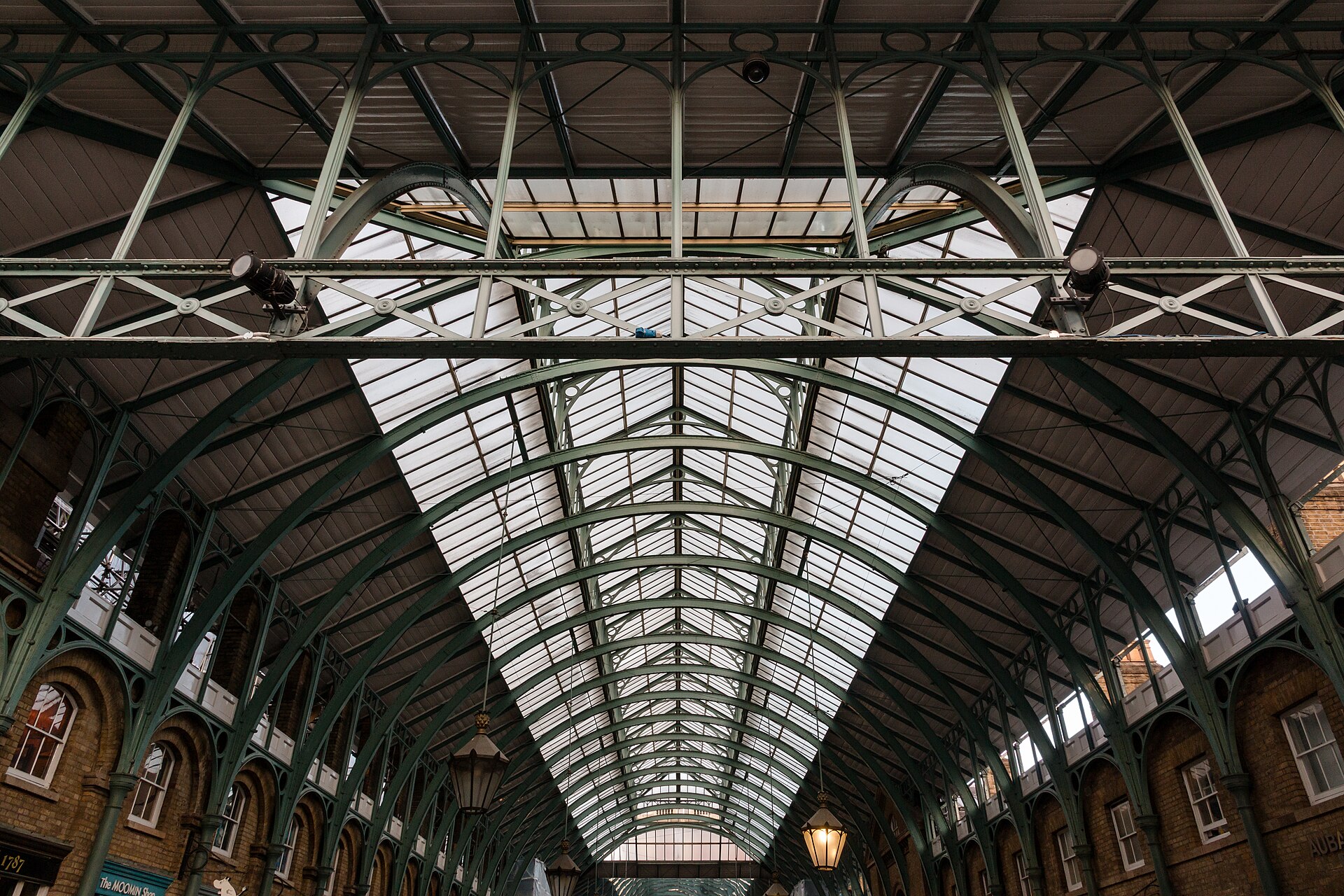
For over 300 years, Covent Garden held London's principal fruit, flower, and vegetable market. The neoclassical market building at its heart, designed by Charles Fowler and commissioned by the 6th Duke of Bedford, went up in 1830. The market grew increasingly chaotic and congested, and in 1974 it was relocated to Nine Elms in Vauxhall. The empty market hall was saved from demolition by a fierce local campaign and reopened in 1980 as the shopping and cultural destination it is today.
The Royal Opera House has stood on its site since 1732, when it opened as the Covent Garden Theatre. Handel premiered many of his operas and oratorios here. The building has burned down twice — in 1808 and 1856 — and the current structure dates from 1858, though a £178 million renovation in the 1990s modernised everything behind the Victorian facade.
Today the piazza is one of London's most popular gathering places. The rules for buskers are surprisingly strict — performers must audition for a spot and are allocated specific pitches and time slots. The quality shows. Covent Garden's street performers are among the best in the world, which is fitting for a place that has been staging entertainment in one form or another for four centuries.
Verified Facts
Designed by Inigo Jones in the 1630s as London's first piazza, modelled after Italian and French squares
Held London's principal fruit, flower and vegetable market for over 300 years until relocating to Nine Elms in 1974
The Royal Opera House opened in 1732 and hosted premieres of many Handel operas; the building burned down in 1808 and 1856
Charles Fowler designed the neoclassical market building in 1830, commissioned by the 6th Duke of Bedford
Get walking directions
City of Westminster, London, United Kingdom