Portobello Road Market
Portobello Road was a country lane through farmland in the 1700s, named after Portobello Farm, which itself was named after the British navy's 1739 victory at Porto Bello in Panama. It's one of the few London streets that can trace its identity from a naval battle in Central America to a Hugh Grant film, via gypsies, hippies, and the largest antiques market in the world.
The road became an urban street in the Victorian era when the farmhouse was demolished in 1862 and its 170 acres sold for housing development. The market grew organically — herbs and produce first, then general goods. The antiques arrived after World War II, largely thanks to the closure of Islington's notorious Caledonian Market, which was famous for fencing stolen goods alongside legitimate antiques. When it shut down, some of the more reputable dealers migrated west to Portobello.
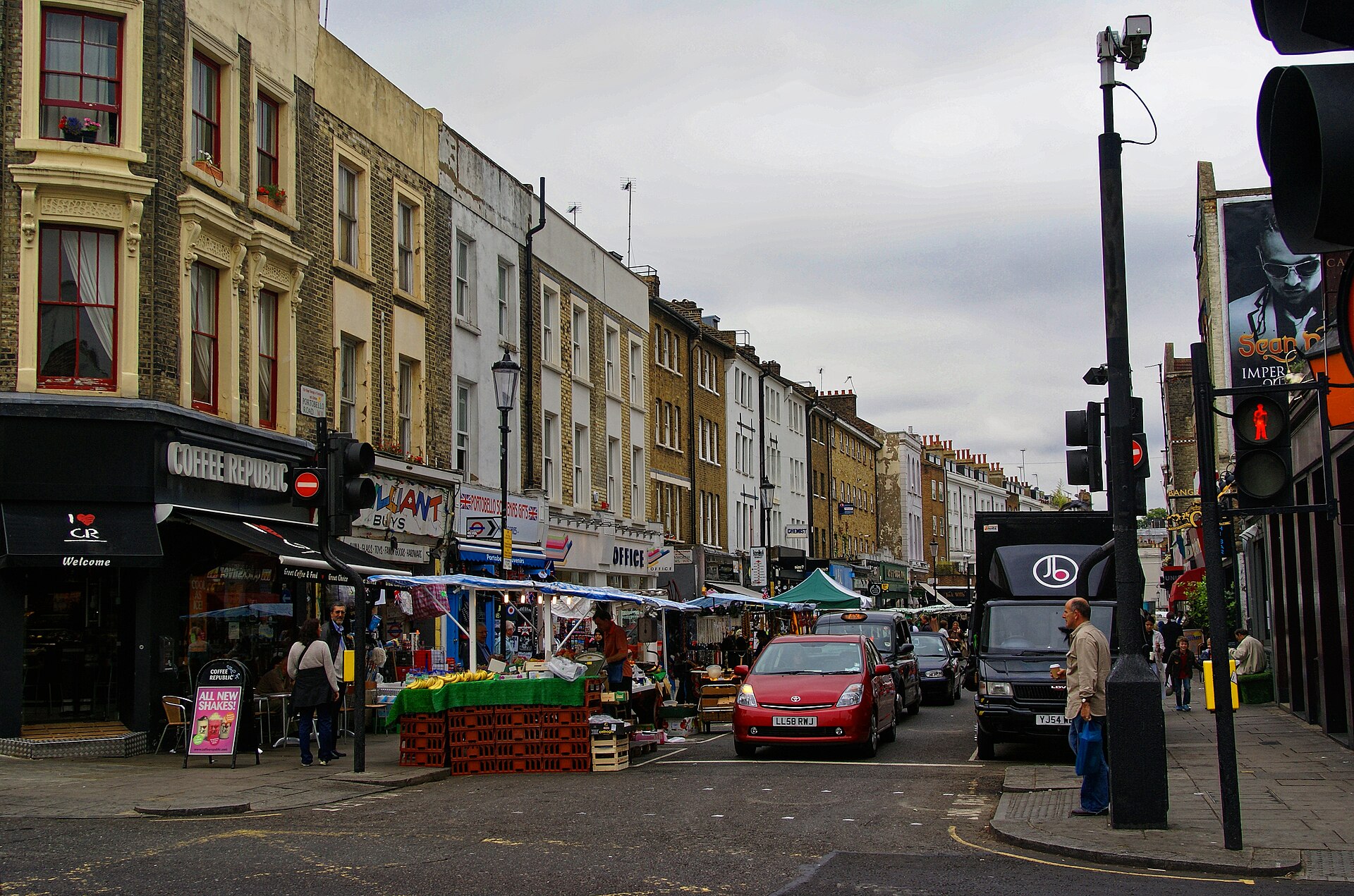
The Saturday market is the main event: roughly a thousand vendors stretching along Portobello Road and Golborne Road, split into five distinct sections covering antiques, fashion, household goods, fruit and vegetables, and second-hand items. The antiques section at the southern end is where serious dealers and casual browsers collide, with prices ranging from a few pounds to several thousand for Georgian silverware or Art Deco jewellery.
Since 1966, the streets around Portobello Road have hosted the Notting Hill Carnival, the largest street festival in Europe and a celebration of Caribbean culture that draws over a million people each August Bank Holiday weekend. The road is equally famous from film — the 1999 movie Notting Hill immortalised the blue door at 280 Westbourne Park Road, turning a quiet residential street into a pilgrimage site.
Verified Facts
Named after Portobello Farm, itself named after the British naval victory at Porto Bello, Panama in 1739
Antiques dealers arrived after WWII from the closed Caledonian Market in Islington
Around 1,000 vendors split into five sections make it the largest antiques market in the UK
The Portobello farmhouse was demolished in 1862 and its 170 acres sold for development
Get walking directions
Portobello Road & Golborne Road, Kensington and Chelsea, London, W11 1AN, United Kingdom