St Bartholomew the Great
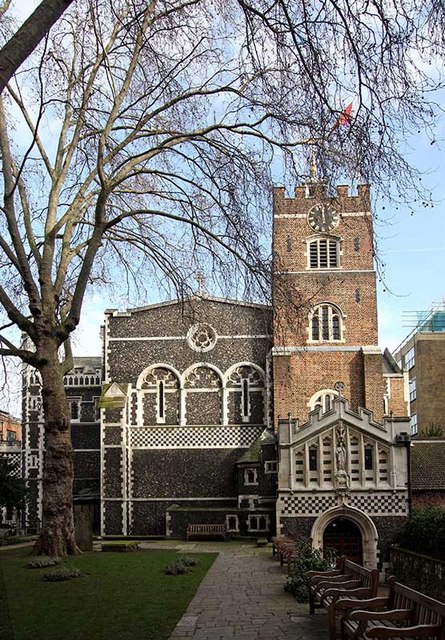
London's oldest church with continuous services was founded by a jester who had a fever dream. In eleven twenty-three, a man named Rahere — variously described as a court jester, minstrel, and courtier to King Henry the First — fell desperately ill on a pilgrimage to Rome. In his delirium, he dreamed that a winged beast carried him to a high ledge over an abyss, and Saint Bartholomew appeared and told him to build a church. He survived, came home to London, and did exactly that.
The Norman chancel and apse you see inside date from that original eleven twenty-three construction. They're some of the finest Romanesque architecture in London — heavy round arches, massive cylindrical columns, that particular weight and solidity that Norman builders loved. This is nine hundred years old, and it feels it.
Then Henry the Eighth dissolved the monasteries. The priory was shut down. The nave was demolished. And the surviving parts of the building were put to uses the monks would have found bewildering. Parts became a blacksmith's forge. Parts became a stable. Parts became a factory. The Lady Chapel was used as a printing shop, and a young Benjamin Franklin worked here during his time in London in the seventeen twenties.
The half-timbered Tudor gatehouse you walked through to enter — the one that looks like something from a fairy tale — is actually Elizabethan, dating from fifteen ninety-five. It was built over the remains of the original thirteenth-century south entrance to the nave. The doorway underneath is medieval. The timber framing above is Tudor. That's eight hundred years of construction in one facade.
Film fans might recognise the interior. It's appeared in Four Weddings and a Funeral, Shakespeare in Love, and The Other Boleyn Girl. Nine hundred years old, and still getting screen time.
Verified Facts
Founded in 1123 by Rahere, a jester/courtier to Henry I, after a fever dream in which St Bartholomew told him to build a church
London's oldest church with continuous services; Norman chancel and apse survive from 1123
After the Dissolution, parts became a blacksmith's forge, stable, and factory; Benjamin Franklin worked in a print shop here
Get walking directions
West Smithfield, City of London, London, EC1A 9DS, United Kingdom