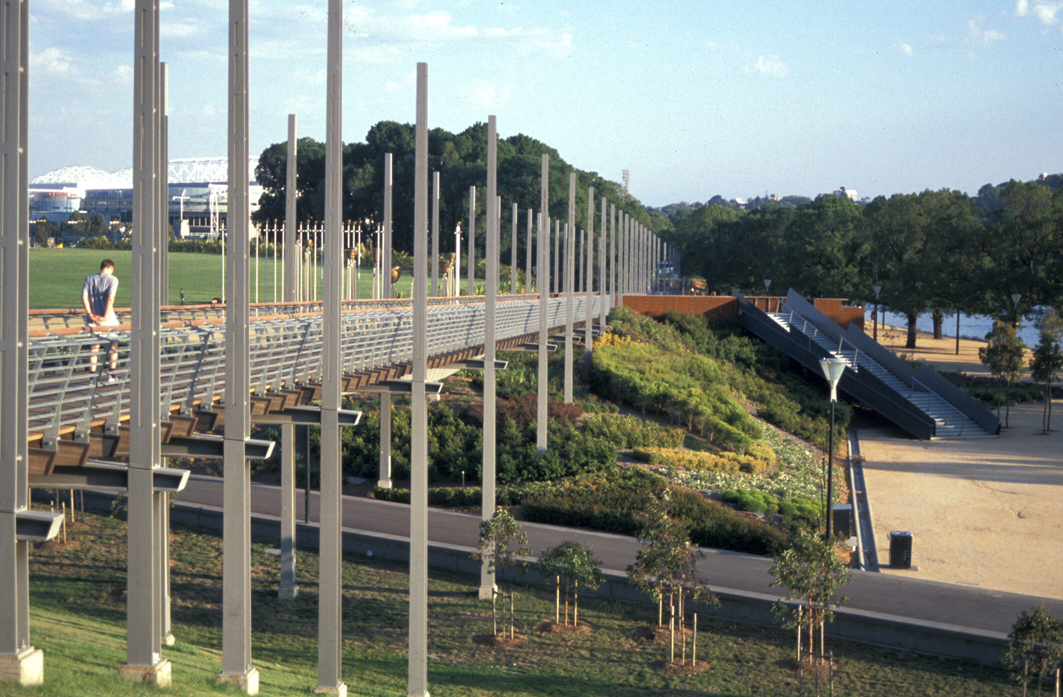
This is Melbourne's newest major park, opened in two thousand and two, and its name is one of the most significant acts of cultural recognition in the city's history. Birrarung Marr means the bank of the Birrarung in the Woiwurrung language of the Wurundjeri people. Birrarung translates as river of mists. The Yarra River's English name is actually a colonial mishearing. The Wurundjeri word for the river was always Birrarung.
Walk through the park and you will find the Birrarung Wilam art installation, which is one of the most important indigenous cultural sites in urban Australia. A winding pathway shaped like an eel acknowledges the significance of eels as a traditional food source for the Kulin people, who engineered sophisticated aquaculture systems in this region for thousands of years. A semicircle of metal shields represents each of the five language groups of the Kulin Nation: the Wurundjeri, Boonwurrung, Taungurung, Dja Dja Wurrung, and Wathaurong.
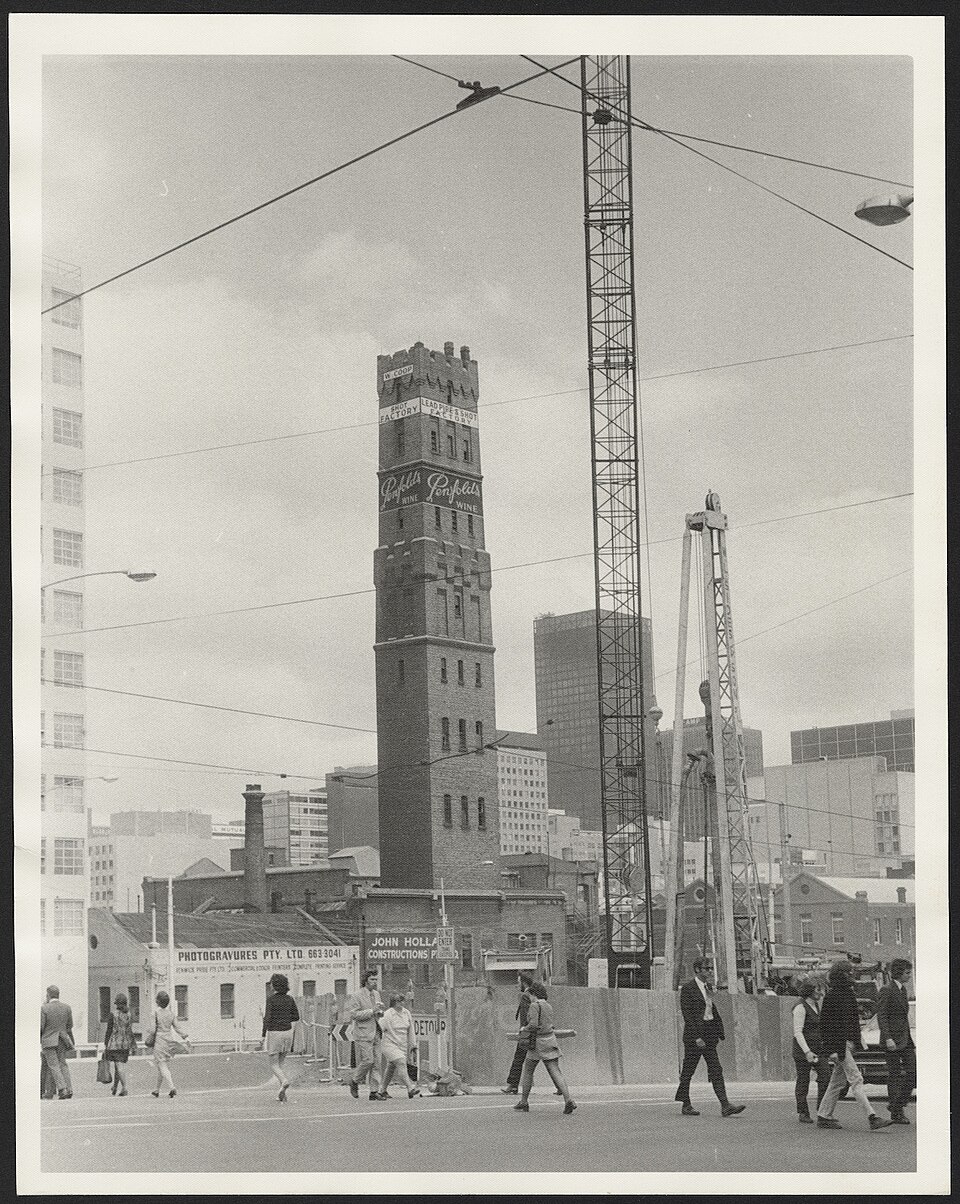
For most of the twentieth century, this eight-hectare site was a tangle of rail yards and industrial wasteland. The public was not welcome here. When the rail lines were rationalised and the site cleared, the City of Melbourne invested fifteen point six million dollars to design and build the park, and the State Government funded the rail clearance. Before European settlement, this stretch of riverbank was a meeting place for the Wurundjeri. Thousands of years of indigenous gatherings happened here before the trains came, and now, with the trains gone, the park has returned this land to something closer to its original purpose: a place where people come together. The William Barak bridge at the park's edge is named after the Wurundjeri diplomat and artist who spent his life advocating for his people's rights.
Verified Facts
Birrarung Marr means 'bank of the river of mists' in Woiwurrung language
Park opened 2002, 8 hectares, cost $15.6 million
Birrarung Wilam installation has eel-shaped pathway and five Kulin Nation shields
William Barak bridge named after Wurundjeri diplomat and artist
Site was rail yards and industrial wasteland for most of 20th century
Get walking directions
Batman Ave, Melbourne City, Melbourne, 3000, Australia