Castel Nuovo (Maschio Angioino)
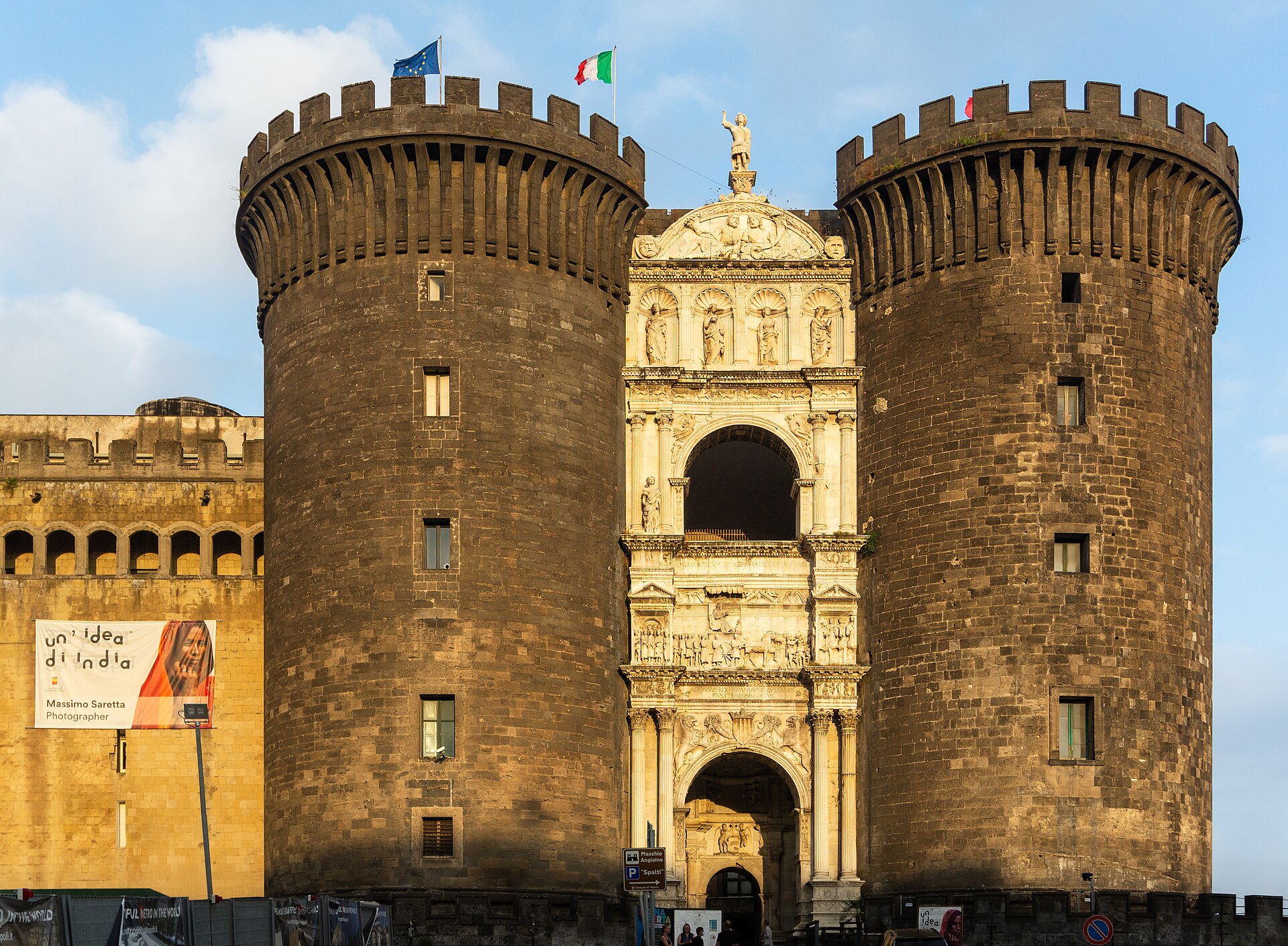
The white marble triumphal arch wedged between the dark towers of this castle is one of the strangest architectural collisions in Italy. On one side you have a brooding medieval fortress with five massive cylindrical towers, built in 1279 by Charles I of Anjou as a royal residence and statement of military dominance. On the other, you have a delicate Renaissance arch celebrating Alfonso V of Aragon's triumphal entry into Naples in 1443, carved with classical reliefs and cherubs. It's like someone glued a wedding cake to a prison.
But that's Naples in a nutshell — brutal power and astonishing beauty sharing the same address. Castel Nuovo has been a throne room, a parliament, a fortress, and a cultural salon, sometimes all at once. Under King Robert of Anjou in the early 14th century, the castle hosted Petrarch, Boccaccio, and Giotto, who painted frescoes in the Palatine Chapel — the only part of the original interior that survives. Giotto's frescoes were largely destroyed in later renovations, though fragments remain in the chapel's Gothic vaulted ceiling.
The castle saw some of Naples' most violent episodes. In 1486, King Ferrante I invited a group of rebellious barons to a feast in the great hall, then had them arrested and executed — an event known as the Conspiracy of the Barons. The Sala dei Baroni, where it happened, is now used for Naples city council meetings, which locals find darkly appropriate.
Today the castle houses the Civic Museum with paintings and sculptures from the 14th to 19th centuries. But most people come just to stand in front of it and gawk at those towers and that improbable arch, which somehow work together despite every rule of architecture saying they shouldn't.
Verified Facts
Castel Nuovo was founded in 1279 by Charles I of Anjou as a new royal residence
The white marble triumphal arch was added in 1470 to commemorate Alfonso V of Aragon's entry into Naples in 1443
Giotto painted frescoes in the Palatine Chapel around 1332 under the patronage of King Robert of Anjou
In 1486, King Ferrante I lured rebellious barons to a feast in the Sala dei Baroni and had them arrested and executed
Get walking directions
Via Vittorio Emanuele Terzo, Municipalità 1, Naples, 80133, Italy