On August 24, 79 AD, Mount Vesuvius erupted and buried an entire Roman city under six meters of volcanic ash and pumice. Roughly 2,000 people died — many of them preserved in the exact positions they were in when the pyroclastic surge hit: shielding children, clutching valuables, curled against walls. When archaeologists began systematic excavation in 1748, they discovered something unprecedented: a complete Roman city frozen in time, from its bakeries to its brothels, its election graffiti to its plumbing.
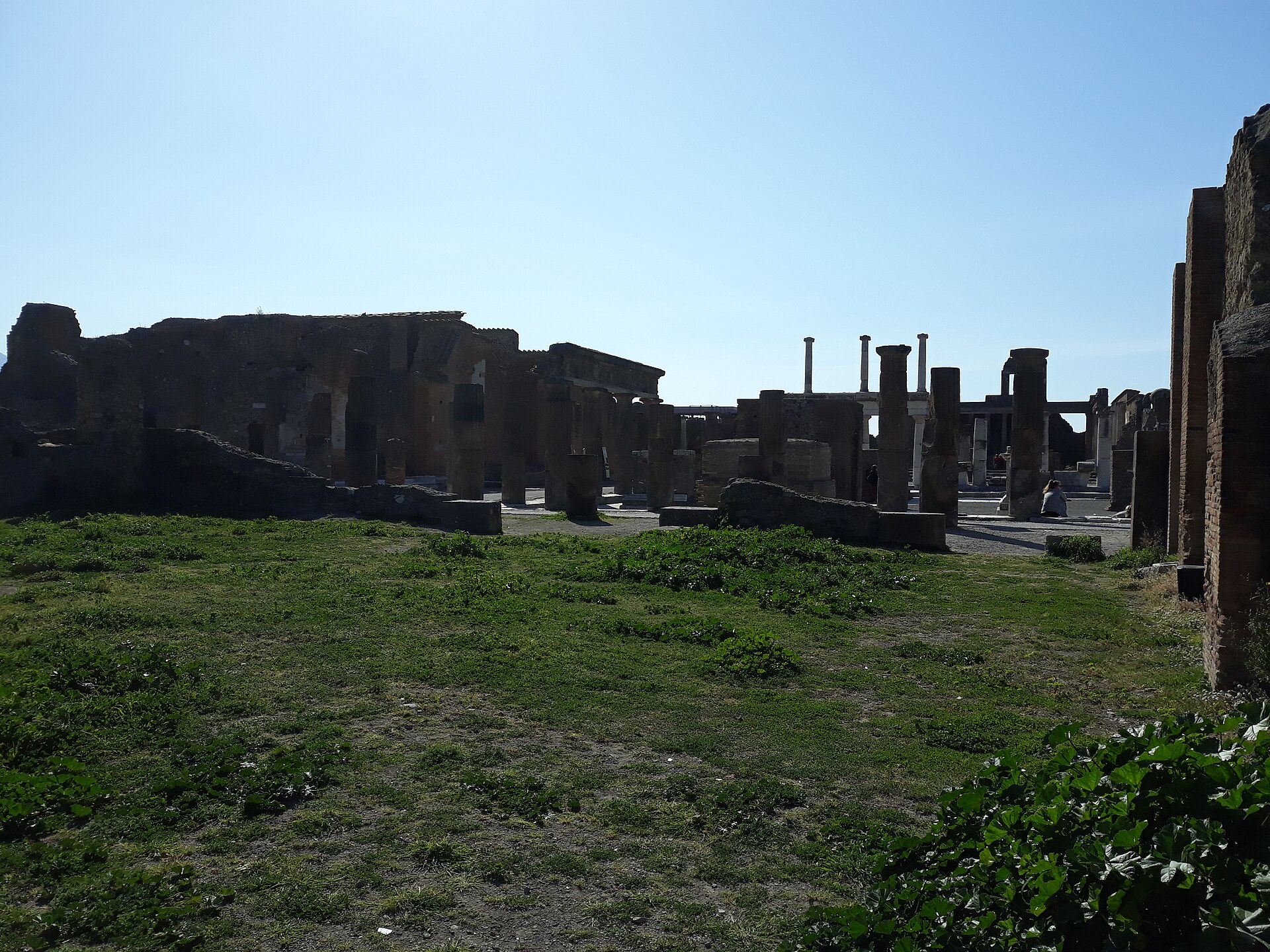
Pompeii is the single most important archaeological site for understanding daily Roman life. The preserved streets still show chariot ruts worn into the stone, and the stepping stones at crossroads (designed to keep pedestrians out of the sewage that ran in the gutters) are still in place. The House of the Faun, one of the largest private residences in the Roman world, had the Alexander Mosaic on its floor — now at the Naples Archaeological Museum. The Lupanar (brothel) has explicit frescoes above each room that served as a pictorial menu. The Forum was the beating heart of civic life, surrounded by temples, markets, and government buildings.
The site is enormous — 44 hectares of excavated city, with about a third still unexcavated. You could spend an entire day and still miss major structures. The Villa of the Mysteries, near the northwest entrance, contains some of the finest surviving Roman wall paintings, depicting what appear to be the initiation rites of a Dionysian mystery cult in vivid, unsettling detail.
Pompeii is 25 minutes from Naples by the Circumvesuviana train. Roughly 2.5 million visitors come each year, making it Italy's most visited archaeological site after the Colosseum. Go early, bring water, and wear good shoes — you'll be walking on 2,000-year-old stone streets.
Verified Facts
Mount Vesuvius erupted on August 24, 79 AD, burying Pompeii under approximately 6 meters of ash and pumice
Systematic excavation began in 1748 under the Bourbon King Charles III
The excavated area covers 44 hectares, with roughly one-third of the ancient city still unexcavated
It is a UNESCO World Heritage Site and receives approximately 2.5 million visitors annually
The Villa of the Mysteries contains some of the finest surviving Roman wall paintings
Get walking directions
Porta Marina, Via Villa dei Misteri, 80045 Pompei