Beneath City Hall is the most beautiful subway station in New York, and it has been closed since nineteen forty-five.
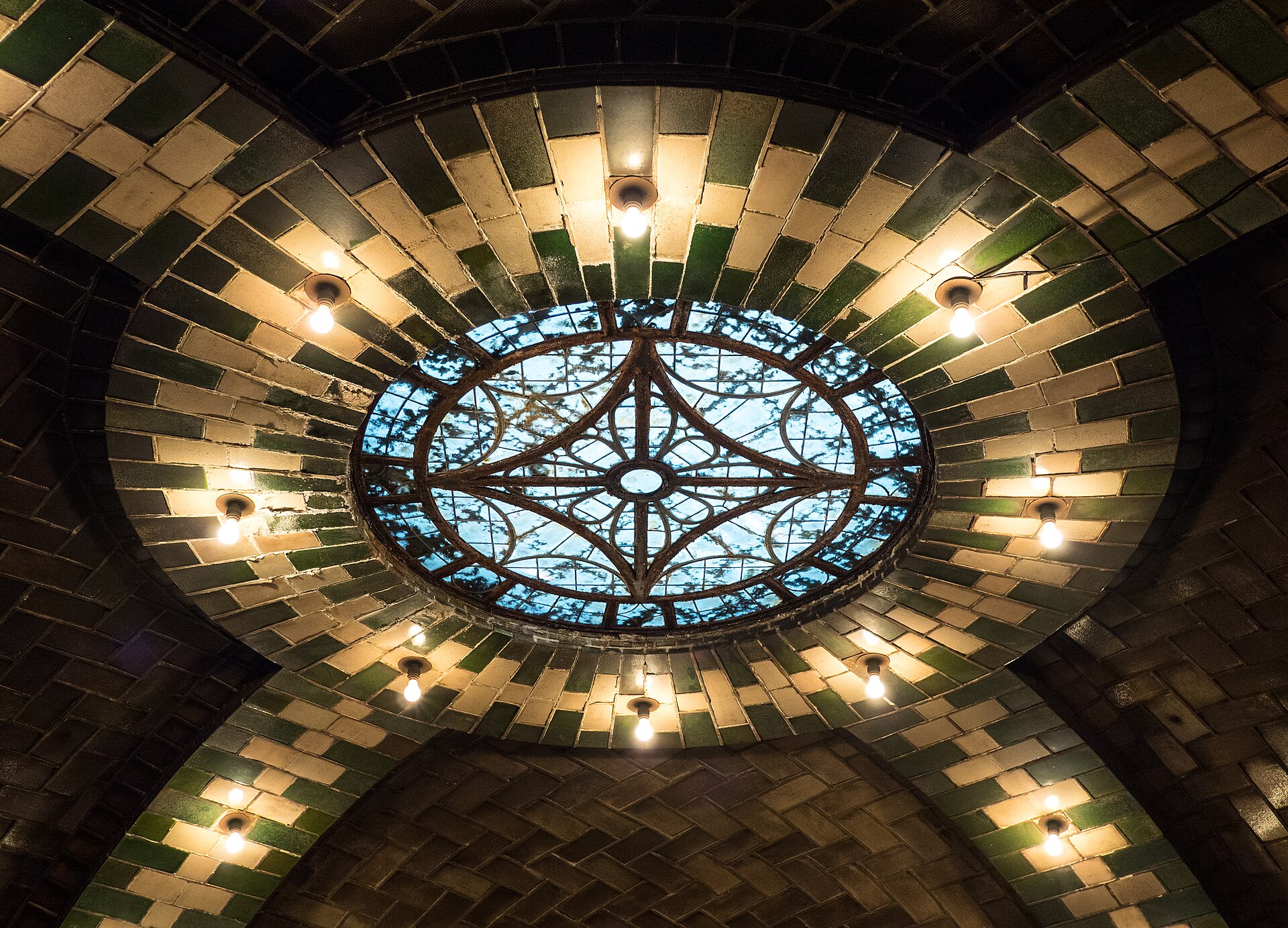
City Hall station opened on October twenty-seventh, nineteen oh four, as one of the original twenty-eight stations of the New York City Subway. It was designed to be the showpiece of the system — Guastavino vaulted ceilings in muted red, green, and cream tiles, stained-glass skylights, large brass chandeliers, and herringbone tilework. Rafael Guastavino, the same Catalan architect whose tilework appears in Grand Central's Whispering Gallery and the catacombs of Old St. Patrick's, designed the ceilings here using timbrel vaulting — thin terracotta tiles bonded with mortar into a self-supporting arch.
The station was closed on December thirty-first, nineteen forty-five, because the platform was too short. It sits on a tight curve, just over two hundred feet long, and could not be extended to accommodate modern ten-car trains. The nearby Brooklyn Bridge station absorbed its passengers.
Unlike most abandoned subway stations, City Hall has remained in remarkably good condition — little graffiti, little dust, though only one of the original skylights survives. You cannot walk through it, but you can glimpse it: stay on the downtown 6 train past its last stop at Brooklyn Bridge and the train loops through the old City Hall station before heading back uptown. Look out the windows.
Verified Facts
Opened October 27, 1904 as one of the original 28 stations of the NYC Subway
Closed December 31, 1945 because the curved platform (just over 200 feet) could not accommodate ten-car trains
Features Guastavino vaulted ceilings, stained-glass skylights, brass chandeliers, and herringbone tilework
Rafael Guastavino designed the ceilings using timbrel vaulting — thin terracotta tiles bonded with mortar
Get walking directions
Manhattan, New York, United States