The Akerselva is the only industrial river in Europe that starts and finishes within the same capital city. It runs 9.8 kilometers from the lake Maridalsvannet to the Oslofjord, dropping through over twenty waterfalls along the way. Its Old Norse name was Frysja — "the frothing one" — and for most of its modern history, the frothing was less picturesque than it sounds.
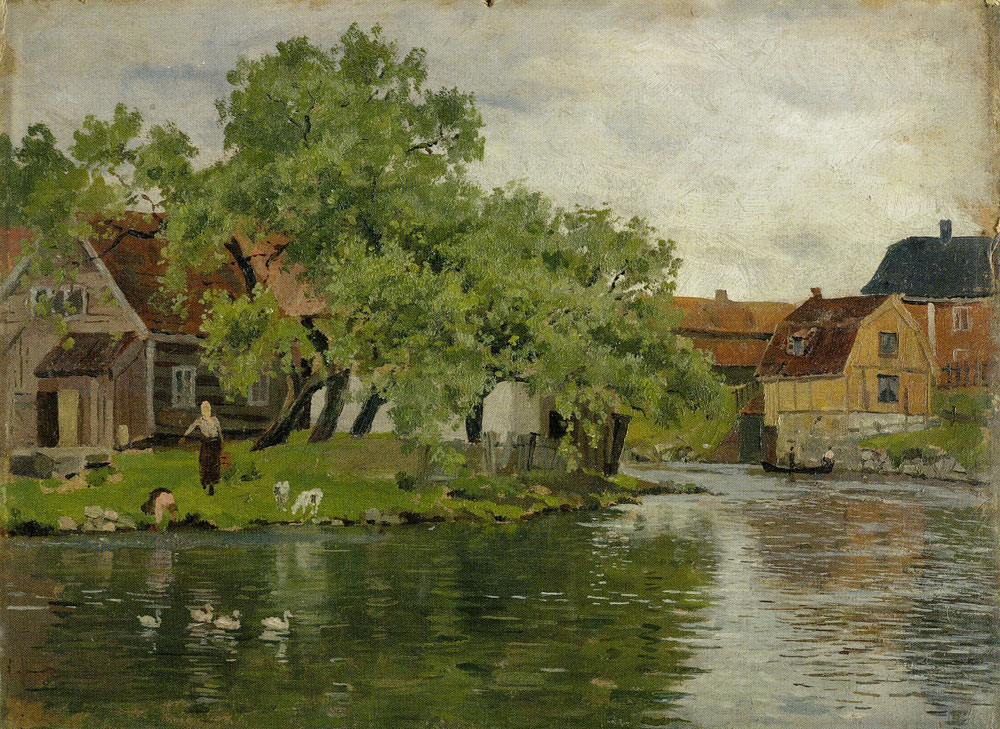
In the 1840s, the river became Oslo's engine room. Textile mills, metal plants, and factories lined both banks, powered by the waterfalls that had attracted monks centuries earlier (the Hovedøya monastery ran a mill here). The Akerselva also became the city's great social divider: affluent west Oslo on one side, working-class east Oslo on the other. That divide persists to this day — ask any Norwegian about the cultural difference between east and west Oslo and watch them get animated.
By the mid-twentieth century, the river was so polluted with industrial runoff and sewage that it was effectively dead. Cleanup began in the 1980s, and the transformation has been remarkable. Salmon now return to spawn in the upper reaches every autumn — a fish ladder was built to help them navigate upstream, and in October and November you can watch them jump. In March 2011, a chlorine tank rupture at the Oset water treatment plant dumped 6,000 liters of chlorine into the headwaters, temporarily killing virtually everything in the river. The alarm system had been turned off. It recovered faster than the two-year minimum that experts predicted.
Walk the full route from Maridalsvannet to the Opera House and you pass through forests, waterfalls, converted factories, Grünerløkka's cafe scene, and the Vulkan food hall. It's Oslo's green spine — 9.8 kilometers that compress the city's industrial rise, ecological crisis, and urban reinvention into a single afternoon stroll.
Verified Facts
The only industrial river in Europe whose source and mouth are both within the same capital city, running 9.8km
In March 2011, a chlorine tank rupture dumped 6,000 liters into the river, temporarily killing virtually all aquatic life
The river traditionally divides affluent west Oslo from working-class east Oslo — a social divide that persists today
Salmon have returned to spawn in the upper reaches, with a fish ladder enabling upstream passage in October-November
Get walking directions
Sagene, Oslo, Norway