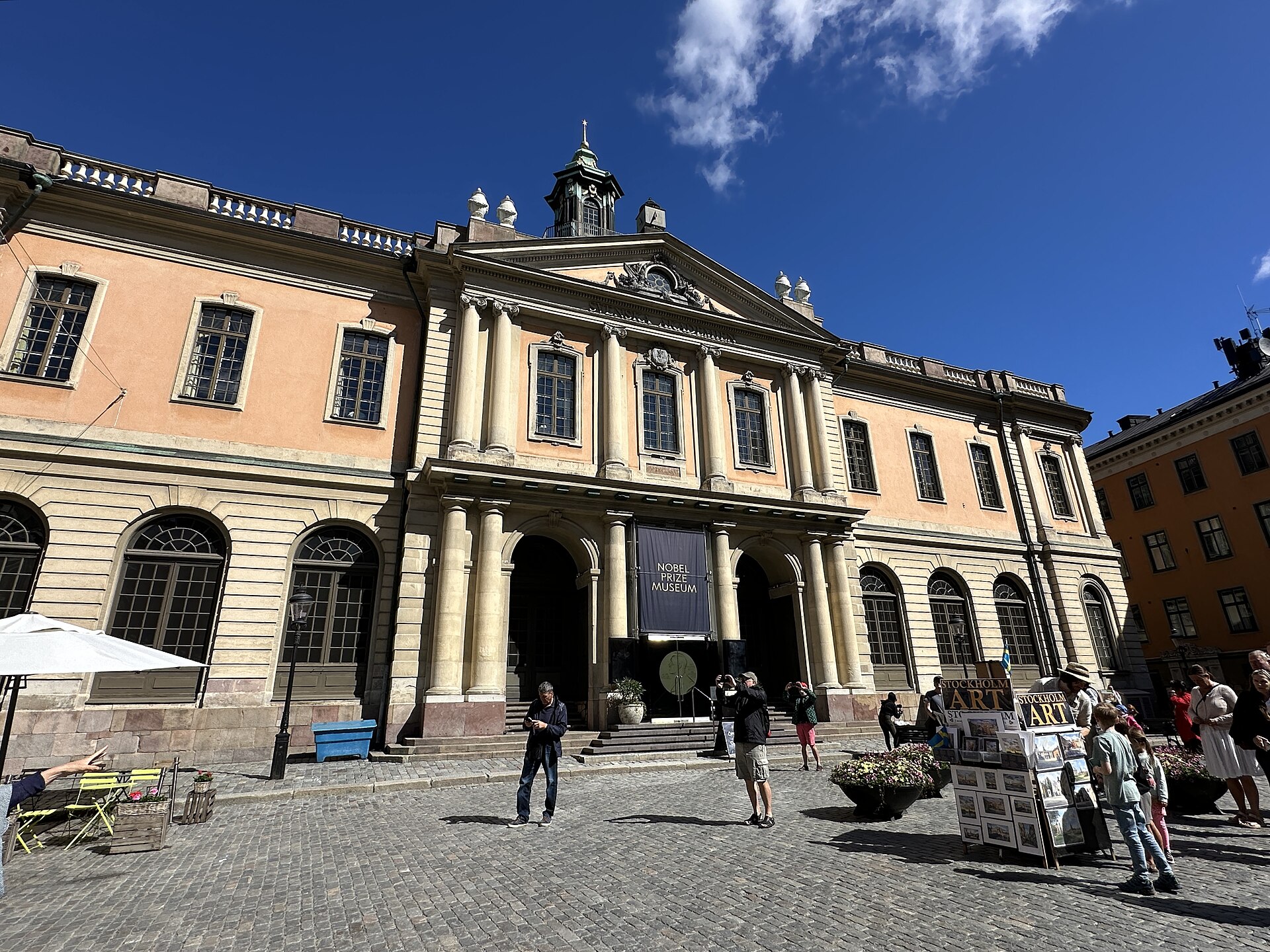
The Nobel Prize Museum occupies the former stock exchange building on Stortorget in Gamla Stan — the small square that is the oldest in Stockholm and the site where Alfred Nobel's legacy of honouring achievement in physics, chemistry, medicine, literature, and peace has been celebrated since the first prizes were awarded in 1901. The museum tells the story of the prize, its laureates, and the ideas that changed the world through interactive exhibits, personal artifacts, and the 'culture cable' — a moving rail system that transports portraits and artifacts of every laureate through the ceiling above visitors' heads.
Alfred Nobel, the Swedish chemist who invented dynamite and held 355 patents, established the prizes in his will in 1895, directing that the interest from his fortune (approximately SEK 31 million, the equivalent of about $250 million today) be divided annually among the five prizes. The museum's exhibits on Nobel himself — his laboratory work, his explosive invention, and the moral complexity of a man who became wealthy from weapons but wanted to be remembered for peace — provide context that the prize ceremony's grandeur tends to obscure.
The museum's café has a tradition worth knowing: the underside of every chair bears the signature of a Nobel laureate who has visited. The chairs are periodically turned over during events for the signatures to be added, creating a collection of autographs that is one of the more unusual artifacts in any museum. The Nobel Banquet, held annually on December 10 (the anniversary of Nobel's death) at Stockholm City Hall, is the ceremonial climax of the Nobel season.
Verified Facts
The first Nobel Prizes were awarded in 1901
Alfred Nobel established the prizes in his 1895 will
Nobel held 355 patents including the patent for dynamite
Nobel laureates sign the underside of the museum café chairs
Get walking directions
Stortorget 2, Gamla Stan, Stockholm