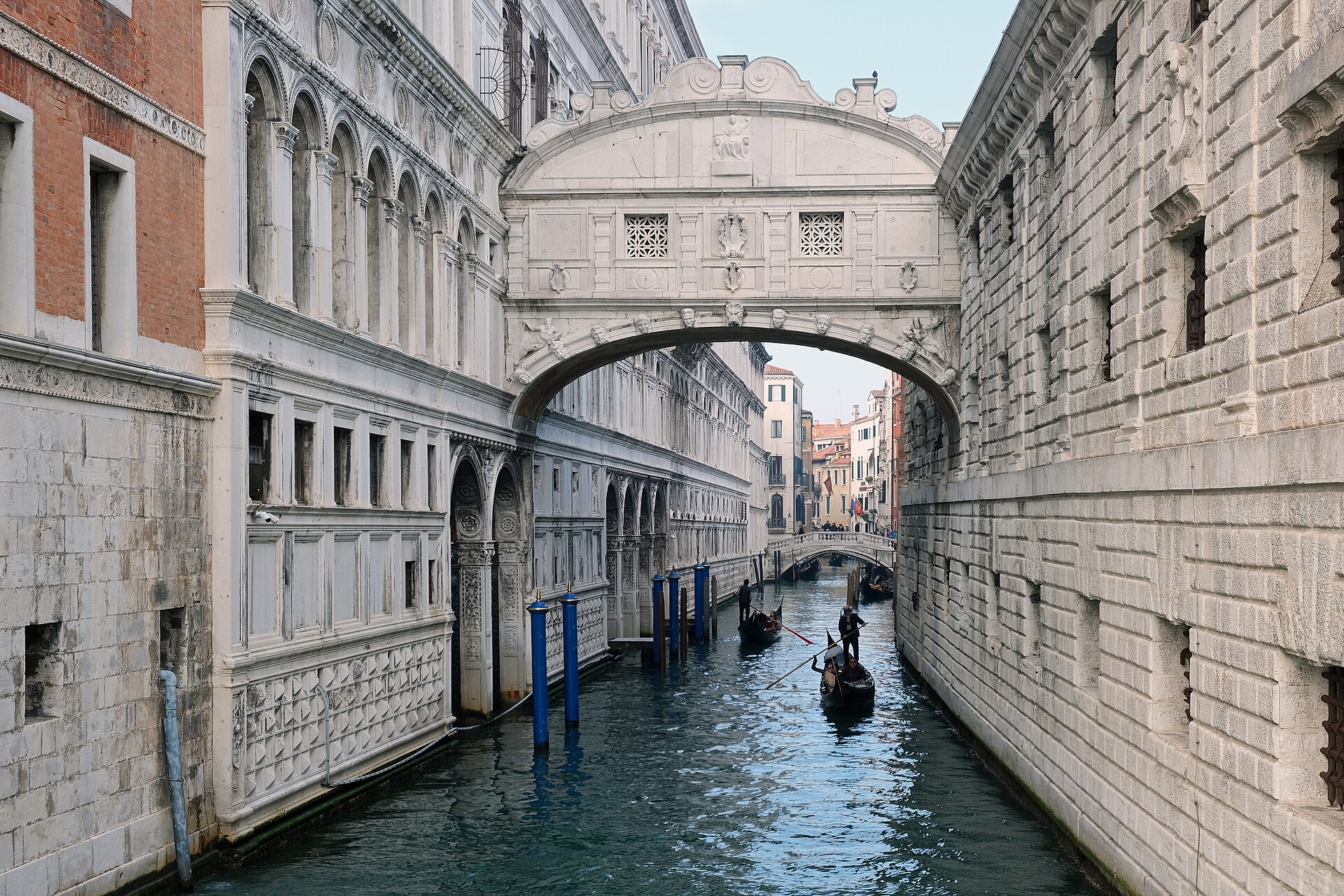
It might be the most romanticised piece of infrastructure in the world, but the Bridge of Sighs was built for an entirely unromantic purpose: shuttling prisoners from the interrogation rooms in the Doge's Palace to the cells in the New Prison across the canal. The name came from Lord Byron's 1812 poem, where he imagined convicts taking one last wistful look at the lagoon through the bridge's stone-barred windows before disappearing into captivity.
Designed by Antonio Contin — nephew of Antonio da Ponte, who built the Rialto Bridge — the enclosed white limestone bridge was completed in 1600. It's a family business, building Venice's most famous crossings. The Baroque design features small windows cut into the limestone walls. Stand inside and you'll see that the view of the lagoon is actually quite narrow — a sliver of blue water and sky, which somehow makes Byron's conceit even more poignant.
The romantic myth has taken on a life of its own. Legend has it that couples who kiss in a gondola beneath the bridge at sunset, as the bells of San Giorgio toll, will enjoy eternal love. This tradition was likely invented by gondoliers looking to charge more for the sunset ride, but it works — the canal beneath the bridge is one of the most congested waterways in Venice during golden hour.
In reality, by the time the bridge was built, the Venetian Republic's justice system had softened considerably. Most prisoners crossing it faced sentences for debt or petty crime, not the dramatic imprisonments of the medieval era. The one famous exception is Casanova, who crossed it en route to his cell before making his legendary escape in 1755.
Verified Facts
Designed by Antonio Contin, nephew of Rialto Bridge architect Antonio da Ponte, completed in 1600
Lord Byron named the bridge in his 1812 work, translating the Italian "Ponte dei Sospiri"
The bridge connects the Doge's Palace interrogation rooms to the Prigioni Nuove (New Prison)
Get walking directions
Piazza San Marco, Venice