18 stops
GPS-guided
75 min
Duration
Free
No tickets
About this tour
A 18-stop walking tour through the heart of Czech Republic. Visit National Museum, Walking Wenceslas Square, Velvet Revolution, and Lucerna Arcade — with narrated stories at every stop.
18 stops on this tour
Welcome to Prague
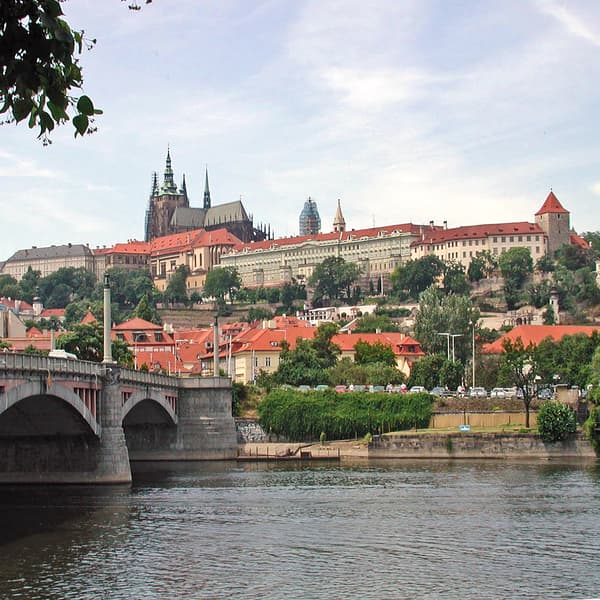
Welcome to Prague. Few cities can match Prague for over-the-top romance and evocative old-world charm. Having been spared the ravages of 20th-century wars, it remains a place of proud medieval towers, lively cafes, and a thousand years of history. Hi, I'm Rick Steves.
Thanks for joining me on this guided walk through Prague. Nestled in the bend of a river, Prague is easily walkable. We'll start at historic Wenceslas Square in the new town, wander through the old town, and end at the river on the Charles Bridge, one of the most atmospheric spots in all of Europe. Along the way, we'll see both the urban bustle of modern Prague and the pedestrian-friendly lanes of its old town.
Read more...Show less
We'll see Baroque statues, Art Nouveau facades, and a curious old clock. And we'll learn the story of how the Czech people have courageously fought against foreign oppression from Habsburgs to Nazis to Soviet communists. Allow two or three hours for this walk. Keep in mind, it's a great overview of sites you may want to visit in more depth later.
Now, let's get going as we visit the charming, historic, and forward-thinking city of Prague. ♪♪♪ ♪♪♪ ♪♪♪ ♪♪♪ ♪♪♪ To help us along the way, I've invited a good friend and virtual travel buddy. Welcome, Lisa. Hi, Rick.
Lisa will give us helpful directions and sightseeing tips throughout the tour. And my first tip is to be sure you get our tour updates. Just press the icon at the lower right of your device. You'll find any updates and helpful instructions unique to this tour.
Things like closures, opening hours, and reservation requirements. There's also tips on how to use this opportunity, audio tour, and even the full printed script. Yes, so pause for just a moment right now to review our updates and special tips. It's okay.
We'll wait. And then... Let the tour begin. ♪♪♪
Tour Begins: Wenceslas Square
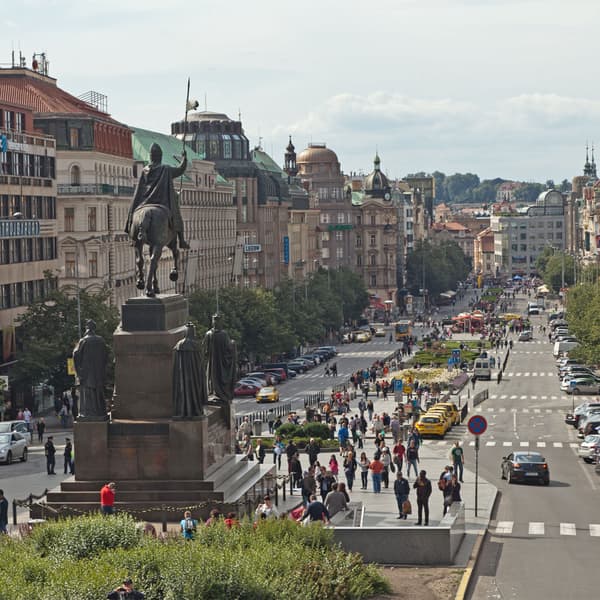
The tour begins. Wenceslas Square. Start at the top of Wenceslas Square at the metro stop named Museum. Stand under the huge statue of good King Wenceslas, on a horse.
Join King Wenceslas as he gazes proudly down this long, broad square. It's actually more like a boulevard, busy with cars, with a park-like median right down the middle. It's a huge expanse, covering more than 10 acres. Stand here and take in the essence of modern Prague, a city of 1.3 million people and the capital of the Czech Republic.
Read more...Show less
Think of how this place, Wenceslas Square, has served as a kind of national stage, for important events in the history of the Czech people. In 1918, it was here that jubilant crowds gathered to celebrate the end of World War I and the subsequent creation of modern Czechoslovakia. During World War II, this was the scene of Nazi occupation and then rioting Czechs who drove the Nazis out. Then came the next occupation, the Soviets.
In 1968, ironically, on the 50th anniversary of the birth of Czechoslovakia, Soviet tanks rumbled into Prague and suppressed huge popular demonstrations in the square. In 1989, more than 300,000 Czechs and Slovaks converged right here to reclaim their freedom once again. Which brings us to today. Survey the square for a snapshot of the now.
You'll see business people, families, dumpster divers, security guards, the Pepsi generation, and security guards. Students. It sums up the changes and rapid transformation of society here over the last hundred years. But let's start our tour of Prague at the very beginning.
Turn your attention now to the big equestrian statue. Good King Wenceslas looked out on the Feast of Stephen. Sing it with me, Lisa. When the snow lay round about deep and crisp and even, King Wenceslas I was the good king of Christmas carol fame.
He was a wise and benevolent 10th-century duke who united the Czech people back when this land was known as Bohemia. A rare example of a well-educated and literate ruler, Wenceslas was credited by his people for Christianizing his nation and lifting the culture. He astutely allied the powerless Czechs with Saxony rather than Bavaria. This gave the Czechs a chance to become the best in the world.
This gave the Czechs a vote when the Holy Roman Emperor was selected and therefore more political clout. It was around the time of Wenceslas that Prague's castle, which we'll view from the bridge at the end of this walk, became the fortified center of Czech government. After his murder in 929, Wenceslas was canonized as a saint. He became a symbol of Czech nationalism and statehood, and he remains an icon of Czech unity whenever the nation has to rally.
Like King Arthur in England, he's more legend than history, but he symbolizes the country's birth. Study the statue. Wenceslas on the horse is surrounded by the four other Czech patron saints. Notice the focus on books.
A small nation without great military power, the Czech Republic chose national heroes who enriched the culture by thinking rather than by fighting. Nowadays, he's featured on the 20 Karuna coin. This statue is a symbol of the Czech Republic. It is a popular meeting point.
Locals like to say, I'll see you under the horse's a- Rick! I mean, under the horse's tail. Okay. Now, turn your attention to the impressive building at the top of Wenceslas Square, the National Museum. The National Museum.
National Museum
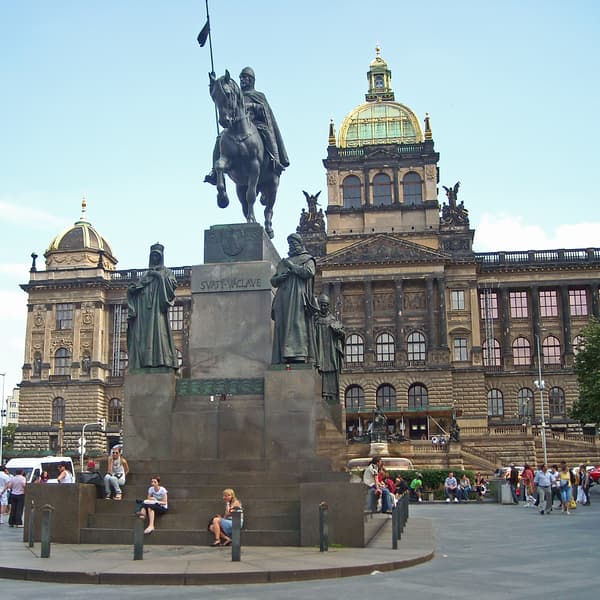
The building is grand, and the interior is rich, though the collection itself is pretty dull. The building stands, and the style is Neo-Renaissance. It dates from the revival of Czech culture in the 19th century. Back then, there was no unified Czech nation.
In fact, that was true for much of Europe. It was just a collection of small dukedoms. The 19th century was a time of national resurgence when many modern nations were formed. This impressive building was a way to show the world that the Czech people had a distinct culture, a heritage of precious artifacts, and that they deserved their own nation.
Read more...Show less
Now look close at the building's facade. The light-colored patches in the museum's columns are from an intentionally sloppy plaster repair job. They fill holes where Soviet bullets hit during the crackdown against the 1968 Prague Spring Uprising. Masons defied their communist bosses who wanted the damage plastered over and forgotten.
They showed their Czech spirit by mismatching their patches on purpose. During the Soviet occupation, which lasted from 1968 until 1989, the Russians left their mark on Wenceslas Square. The nearby metrostop, Museum, is the crossing point of two metro lines built with Russian know-how back in the 1970s. To the left of the National Museum, as you face it, is a communist-era building.
Soviet buildings are actually quite rare in Prague. Because there was almost no World War II bombing in the city center, the communists had little opportunity to rebuild. That's why Prague was spared the ugly, Soviet-style look of heavily bombed cities like Dresden and Warsaw. This particular structure once housed the rubber-stamped Czechoslovakian parliament back when it voted in lockstep with Moscow.
At its base is a statue from those days in the style known as social realism. As was typical of social realism, it shows not just a worker, but a triumphant worker. The busy street that separates the towering National Museum from the square was also built by the Soviets. Their plan was to connect the inner city here with outer freeway rings by running this busy thoroughfare right through the heart of the city.
Fortunately, they only completed a small portion of the grandiose plan that otherwise would have ruined the charm of Prague. The vision for the future of Wenceslas Square is a matter of controversy. The city hopes to turn it into a long, tree-lined pedestrian road, a pedestrian mall. Trams would run up and down the middle, as actually they once did.
And the noisy arterial? They'd bury it underground. Now, let's start walking down Wenceslas Square. Lisa.
Our next stop is the Grand Hotel Europa. It's the yellow and ornate building about 300 yards down Wenceslas Square on the right. Start walking, and let Rick point out some things along the way. ♪♪ ♪♪
Walking Wenceslas Square
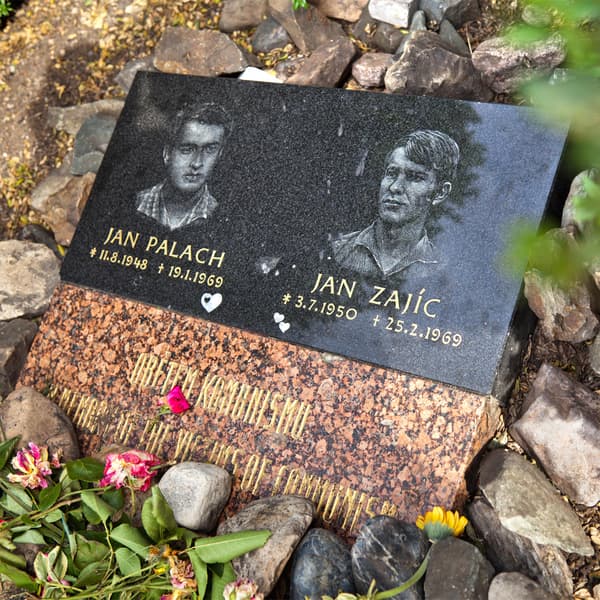
Walking down Wenceslas Square, the new town. As you walk downhill from the horse statue, pause about 30 yards along. There's a small, round patch of greenery with a big message. This memorial commemorates victims of communism.
After the Russian crackdown of 1968, a group of patriots wanted to stand up to the powerful Soviet occupation. One was a young philosophy student named Jan Palak. He decided that the best way to stoke the flame of independence was to set himself on fire. On January 16, 1969, Palak stood on the steps of the National Museum and set his body on fire for the cause of Czech independence.
Read more...Show less
He died a few days later in a hospital ward. A month later, another student did the same thing, followed by another. Czechs are keen on anniversaries, and 20 years after Palak's brave and patriotic act in 1989, Czechs gathered here in a huge demonstration. An uprising swept through the city, and these protests led, 10 months later, to the overthrow of the Czech communist government in 1989 and to freedom.
When you're ready to move on, continue down Wenceslas Square. As you walk, you're walking through the real people, of Prague. Not tourists, but local citizens. Wenceslas Square is part of Prague's new town.
The city is traditionally divided into four quarters, the new town, the old town. That's the part we'll see in just a bit beyond the bottom of Wenceslas Square, the castle quarter and the little quarter. This part of Prague, the new town, dates from the 14th century. Back then, Prague's old town was bursting at the seams, constrained within a medieval wall and moat.
King Charles IV expanded old Prague outward, tripling the size of the city. Wenceslas Square, a central feature of the new town, was originally founded as a thriving horse market. As you continue walking, notice the architecture. Unlike the historic old town, nearly everything here is from the last two centuries.
Wenceslas Square is a good introduction to some of the architectural styles we'll see on this walk. You'll see Neo-Gothic, Neo-Renaissance, and Neo-Baroque, all from the 19th century. There's curvaceous Art Nouveau from around the year 1900, and there's the modernist response to Art Nouveau, functionalism, from the mid-20th century, where the watchword was form follows function, and beauty took a back seat to practicality. You'll see what's nicknamed Stalin Gothic from the 1950s communist era.
A good example of that is the Hotel Yalta building halfway up the street. And there are forgettable glass and steel buildings, mostly dating from the 1970s. Continue walking, keeping an eye out for the Grand Hotel Europa, a yellow Art Nouveau building just ahead on the right. Over the course of this audio tour, we'll be seeing elements from every period of Czech history.
We've already talked of the nation's birth at the statue of King Wenceslas, who unified the Czech people 1,100 years ago. Later in the walk, we'll see Prague's medieval golden age, the 13th century, when the old town boomed under Charles IV, who built many of the city's best-known monuments. We'll also see how, over the centuries, Prague has suffered under the thumb of foreign rulers, like the Habsburgs of Austria. In the 1400s, the Czech people rose up defiantly behind the religious reformer Jan Hus.
Over the next centuries, the Czechs continued to fight popes and Habsburgs for self-rule. Then, in the historic year 1918, when World War I ended, the modern nation of Czechoslovakia was created. Unfortunately, that nation was trampled yet again, first by the Nazis, then by the communist Soviet Union. In fact, much of Czech history has been a fight for the tiny Czech nation to survive amid more powerful nations.
So, imagine the joy when, after over a thousand years of struggles, the Czech people could finally celebrate their freedom once again. That happened right here on Wenceslas Square in 1989 at our next stop. Lisa, take us there. On the right-hand side of Wenceslas Square is the Grand Hotel Europa.
It's the one with the dazzling yellow Art Nouveau exterior and plush café interior full of tourists. Stop for a moment to consider the events of November 1989. The Velvet Revolution
Velvet Revolution
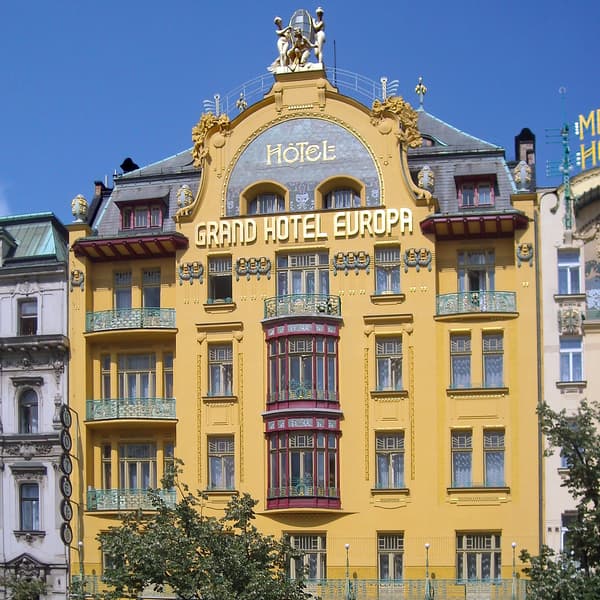
Picture the scene on this square on a cold November night in 1989. Czechoslovakia has been oppressed for the previous 20 years by communist Russia. But now the Soviet empire is beginning to crumble and the Czechs get a whiff of freedom. Night after night, this huge square was filled with more than 300,000 people.
Static Czechs and Slovaks who believed freedom was at hand. Each night, they would jangle their keychains in the air as if saying to their communist leaders, it's time for you to go home now. Finally, they gathered and found that their communist overlords had left and freedom was theirs. Now, focus your attention not on the Hotel Europa, but on the building directly across from the hotel.
Read more...Show less
Look for the Marx and Spencer sign. See the balcony of that building? On that November night, it was a building that was built in 1989 when they finally won their freedom. As thousands filled this square, a host of famous people appeared on that balcony to greet the crowd.
There was a well-known priest and a rock star famous for his rebellion against authority. There was Aleksandr Dubček, the hero of the resistance back in 1968. And there was Václav Havel. The charismatic playwright had spent years in prison becoming a symbol of resistance.
He was kind of a Czech Nelson Mandela. Now he was free. Havel's voice boomed over the gathered masses. He proclaimed the resignation of the Politburo and the imminent freedom of the Republic of Czechoslovakia.
Havel pulled out a ring of keys and jingled it. Thousands of keys jingled back in response. It was their symbolic way of saying the communists have packed up and left and now we're free to unlock our chains. In previous years, the communist authorities would have sent in tanks to crush the impudent masses.
But by 1989, the Soviet empire was collapsing and the Czech government was shaky. Locals think that Soviet head of state, Mikhail Gorbachev, might have made a phone call recommending a non-violent response. Whatever happened, the communist regime was overthrown without hardly any blood being spilled. It was done through sheer people power, especially the masses of defiant Czechs who gathered here peacefully on Wenceslas Street and Wenceslas Square.
They called it the Velvet Revolution. And I thought that was a 60s band. Let's continue on. First, look downhill to the bottom of Wenceslas Square.
We'll be heading there eventually, but we'll get there by taking a few side streets to the left with some interesting things to see. So, immediately opposite Grand Hotel Europa is a shopping mall called the Lutserna Arcade. Find the entry marked Passage Rokoko. It's a few doors up from Marks and Spencer. Enter the Passage Rokoko and walk straight in. The Lutserna Arcade.
Lucerna Arcade
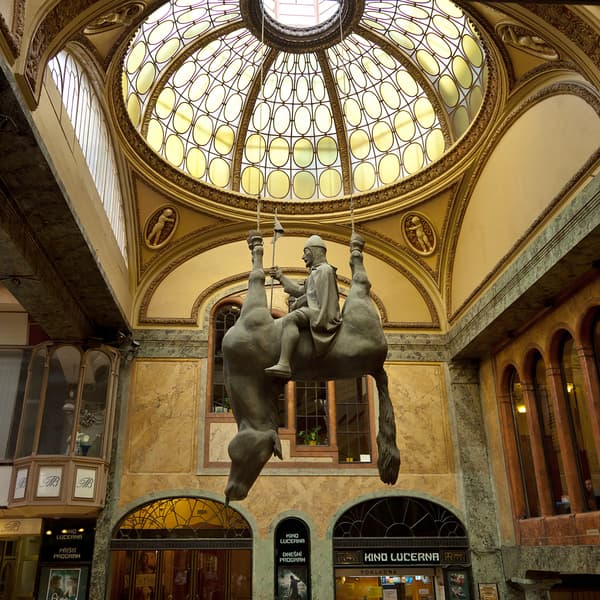
As you enter the mall, continue straight until you find a horse hanging from the ceiling. That sounds pretty hard to miss. This grand mall retains some of its art deco glamour from the 1930s and the 1930s. With shops, theaters, a ballroom in the basement, and the fine Lutserna Café upstairs.
You'll see a sculpture called Wenceslas Riding an Upside-Down Horse hanging like a swing from a glass dome. David Czerny, who created the statue in 1999, is one of the Czech Republic's most original contemporary artists. Inside the gallery, you'll find a TicketPro box office, which is a good resource for concerts and events. There's a lavish 1930s Prague cinema located under the Upside-Down Horse.
Read more...Show less
It shows films in their original language with Czech subtitles. And in the basement, there's the popular Lutserna Music Bar. They host 1980s and 90s video parties on Friday and Saturday and concerts on other nights. But we've got to move on.
From the horse, turn right and head for the exit. Along the way, you'll pass the entrance to the Lutserna Music Bar on the left. Just keep going until you exit the mall. Once you exit into the open air, turn right.
Okay, exiting the mall, out onto the street, turning right. Got it. Now, go a few doors down. Down the street, just a few doors.
Look across the busy street, where you'll see the entrance to another mall. The sign above it says Kino Svetozor. Okay, Kino Svetozor. Yeah, there it is.
Cross the street and head for that sign. This marks the entrance to the Svetozor Mall. Go on in. As you enter the Svetozor Mall, look up at the glass window from the 1930s advertising Tesla, a now-defunct Czech radio manufacturer.
The window lends a retro-brightness to the place. In front of the sign, pause at the always-busy World of Fruit Bar Svetozor. This is every local's favorite ice cream shop. Ice cream joint.
Make mine banana strawberry. I hear that's the local favorite. It is. They also sell cakes, milkshakes, and little breads.
Delightful Czech-style open-faced sandwiches. Really cheap. English menus are available on request. But let's move on.
Hey, speak for yourself. Just bring your ice cream with you. Good idea. And one for me, too, please.
I'll take a banana strawberry. Okay. Walk under the Tesla sign to exit the mall. As you exit, look to the right, down the lane that leads back to Wenceslas Square. We'll go there in a moment. But first, side trip left into the peaceful Franciscan Garden. The Franciscan Garden.
Franciscan Garden
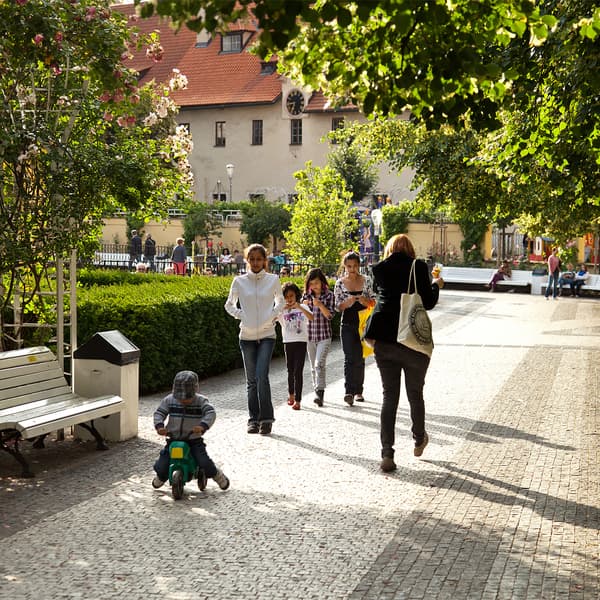
Ah, the garden's white vans. The white benches and spreading rose bushes are a universe away from the fast beat of the city, which throbs just beyond the buildings corralling this little oasis. The peacefulness reflects the purpose of its Franciscan origin. St.
Francis, the founder of the order, thought God's presence could be found in nature. In the 1600s, Prague became an important center for a group of Franciscans from Ireland. Enjoy the herb garden and the children's playground. By the way, this is a popular place for discreet rendezvous.
Read more...Show less
It's famous among locals for kicking off romances. Is that why you brought me here? No, but it is romantic, don't you think? Quite.
If you need to use the toilet, there's one... Boy, are you the romantic. I'm just saying, if you need to go, there's a toilet just out the far side of the garden. When you're ready to move on, head back to Wenceslas Square.
By the way, there's another toilet further along on this walk. Again with the toilets, Romeo. Thank you, Rick. When you get back to Wenceslas Square, you'll turn left and continue downhill.
This will take a few minutes, so start walking, and on the next track, let Rick guide you from there. We'll see you then.
Můstek
We'll see you then. Historically, people used lead crystal vessels for everyday use. But now that we know lead is a poison, most people use it sparingly or for decoration. Some shops advertise lead-free products that use safer minerals but still glitter like true crystal.
You'll see all kinds of decoration and colors. The glass might be cut with facets like a diamond. The most traditional check pattern looks like intricate lace etched into the glass. If you look closely, you'll see that the glass is tight rows of starbursts.
Read more...Show less
Survey your choices if you're serious about buying. The most famous and expensive brand is Moser. You'll find their wear at several places around town. For mid-range price, try Sklo Bohemia or Cavalier.
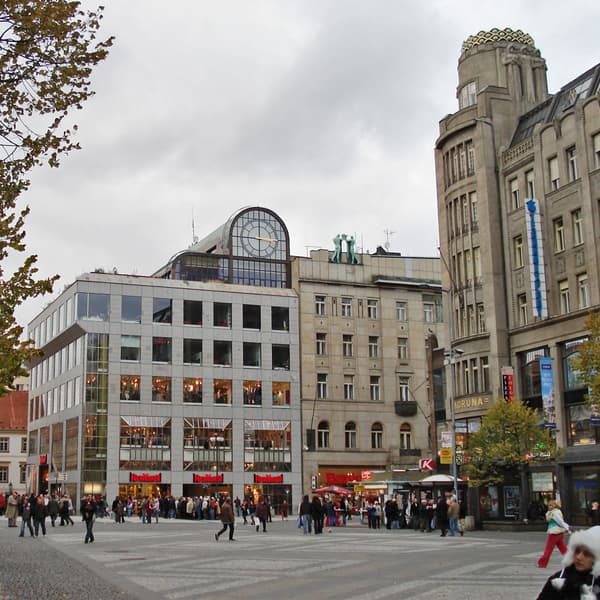
Items sold at tacky tourist shops without a clear label can be of lesser quality. The design may be machine-made rather than hand-cut, or may be ordinary glass masquerading as crystal. By now, you should be back at Wenceslas Square. When you reach the square, turn left and start walking toward the bottom.
We're headed now to the border between the Old Town and New Town. As you walk, you'll pass by the metro stop Mustek. Mustek means bridge. A bridge once crossed a moat right here.
You had to cross that bridge and pass through a gate to enter the Old Town because the original city center was, like most cities, like most medieval towns, surrounded by a protective wall. By the way, if you're interested, you could detour down into the Mustek metro station and actually see the original Old Town gate in the wall, but we won't go there on this walk. The Old and New Towns were officially merged in 1784. Though the moat and city wall are now long gone, there's still a strong divide between the Old Town and the New Town.
Here in the New Town, it's fancy malls, high-fascinated, fashion shops, and busy traffic. But the Old Town, as we'll see, still retains some of its atmospheric medieval character. When you reach the bottom of Wenceslas Square, there's a busy boulevard stretching to the right, a street called Naprikapje. Turn right and start walking down Naprikapje while Rick narrates. Sights along Naprikapje Street
Sights along Na Příkopě Street
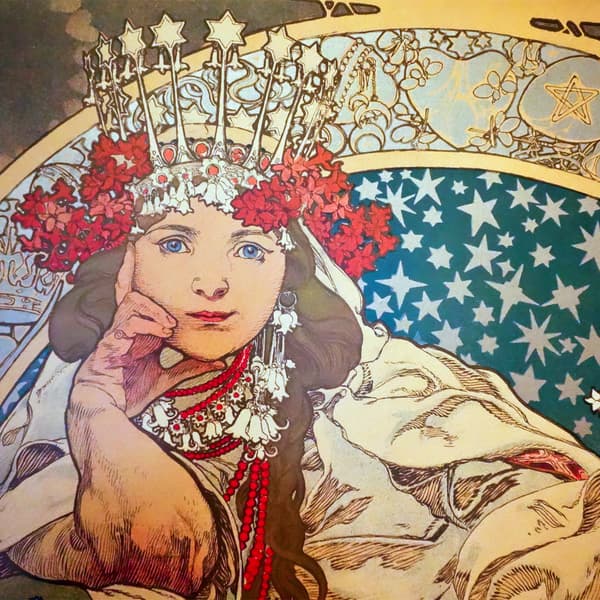
The phrase Naprikapje means on the moat. You're walking along what was once the moat outside the Old City wall. To your left is the Old Town. To the right, the New.
This busy boulevard follows the line of the Old Town wall. It leads to one of the wall's former gates, the Powder Tower. That's the black tower you can see in the distance. As you walk along this pleasant street of modern shops, the bleak era of communism seems like a distant memory.
Read more...Show less
But for elderly Czech people, think of all the history they've seen in their lifetimes. Some were born as far back as when their ruler was the Habsburg emperor, still wearing the crown of Charlemagne. Elderly Czechs have seen democracies come and democracies go. The rumble of Nazi tanks, the empty store shelves, and oppressive harshness of the Soviet regime.
They watched as their children rose up in the Prague Spring of 1968, and their grandchildren in the Velvet Revolution of 1989. Think of the wonder when for the first time in their lives they could live as truly free Czech people. But with freedom came another invasion, the onslaught of the West, the hordes of tourists and McDonald's and the international chain stores that now line Naprikopje Street. They saw their country join hands with former enemies and participate in the European Union.
Some older Czechs find it ironic that as soon as they finally became independent, they turned around and gave up much of their autonomy to join the EU. These old folks have seen their city transformed from a place of horse and buggies to trams to cars to, well, still the trams. If on your walk you see some elderly Czech people, give a nod in some respect for everything they've lived through in their day. And next up on our walk is a sight that harkens back to the glory days those elderly citizens recall fondly.
It's quite a ways up ahead. So just keep going, headed for that big black tower. Next to that tower is our next sight, the Municipal House. It's done in the style so popular back then, Art Nouveau.
Prague is arguably Europe's best city for the art style called Art Nouveau. Arguably. I'd say it is the best. You'll find fancy Art Nouveau facades all over Prague, such as the Hotel Grand Europa we saw earlier.
Keep walking toward the Municipal House while Rick talks a bit more about Art Nouveau. Art Nouveau flourished in Prague around the turn of the 20th century. The style was called Nouveau, or new, because it was associated with all things modern, technology, progress, and enlightened thinking. The buildings were done with the latest building materials, especially wrought iron and glass.
Rather than rigid Greek-style columns, Art Nouveau artists used curvy lines inspired by vines and curvaceous women. Rather than stodgy symmetry, you'll see less rigid forms decorated with mosaics, sculptural knick-knacks, and motifs that express each architect's unique vision. The style liberated the artist in each architect. Artists believed that the style should brighten all facets of daily life.
They designed everything from their buildings to the furniture that filled them, from typefaces to cigarette packs. Though Art Nouveau was born in Paris, it's here in Prague that you'll find some of Art Nouveau's greatest hits. Besides the Grand Hotel Europa, there are also the exuberant facades that you'll find in the Jewish Quarter, including the Jerusalem Synagogue, as well as the stained-glass window in St. Vitus Cathedral.
And you can see the work of Art Nouveau's greatest painter, Alphonse Mucha, in the Mucha Museum. It's just a few blocks from here. Mucha's masterpiece, the Slav Epic, is in a different museum outside the city center and well worth a visit. And the very best Art Nouveau building is just up ahead, the Municipal House.
As you continue up Naprikopia Street, you'll soon reach a busy intersection with the big black powder-tinted tower. Let me guess, you're not even close to that black tower yet. No worries. If you're not there yet, just pause the audio tour now and restart it when you get there.
Next to the tower is our next site, the Municipal House, a cream-colored building topped with a green dome. So, when you get there, find a spot where you can take in the colorful facade. We'll see you at the black tower with the Municipal House just across the street. The Municipal House
Municipal House
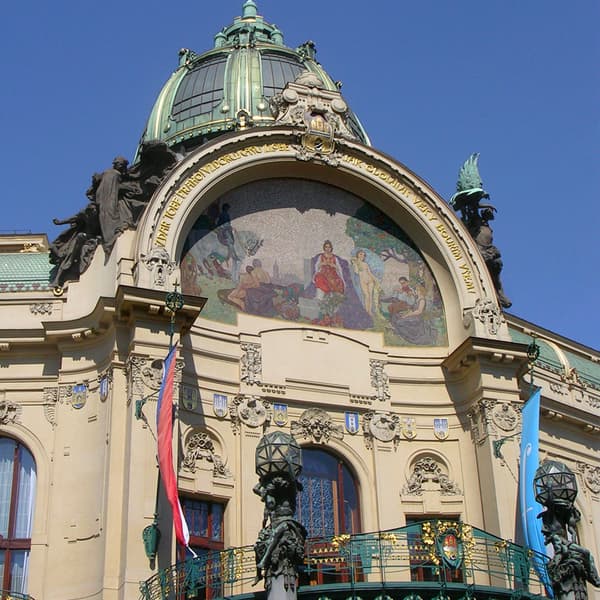
The Municipal House, which celebrated its centennial birthday in 2011, is the pearl of Czech Art Nouveau. Stand in front and peruse the striking facade. Enjoy the elaborate wrought-iron balcony flanked by two bronze atlases hefting lanterns. Study the colorful mosaic above called Homage to Prague, a symbol of the city the goddess Praha presides over a land of peace and high culture, an image that stoked cultural pride and national sentiment.
The exterior is neo-Baroque with a dusting of Art Nouveau. Constructed in the early 1900s, it was built at a time when Czech nationalism was rising to a fever pitch. They wanted a ceremonial palace to stoke the pride of the Czech nation. It was drenched in patriotic Czech themes to emphasize how the Czechs were a distinct culture.
Read more...Show less
Within a few short years, in 1918, the nation of Czechoslovakia was formed, and the Czech people could finally govern themselves. Imagine that day the Independence Proclamation was announced to the people right here from the balcony of the municipal house. Let's go inside. It's free and visitors are welcome to wander through at least some of the public areas.
While the extreme exterior is impressive, the highlight is within, arguably Europe's finest Art Nouveau interior. The municipal house has Prague's largest concert hall, a recommended Art Nouveau café, and two other restaurants. Poke around the entrance halls. Enjoy the colorful stained glass of the entrance arcade.
Explore. Walls have colorful mosaic designs or rich wood paneling. The café has razzle-dazzle chandeliers and curvaceous wooden chairs. You can visit the lobby of the concert hall.
Well, to really appreciate the building, you need to attend a concert or take one of the excellent tours offered throughout the day. Any visit here gets a sweet dose of Art Nouveau. When you're ready to move on, head back outside. Next to the municipal house is the big black powder tower.
Though it's not worth paying to tour the inside, it's historic and impressive from the outside. Rick? Rick? The powder tower.
Powder Tower
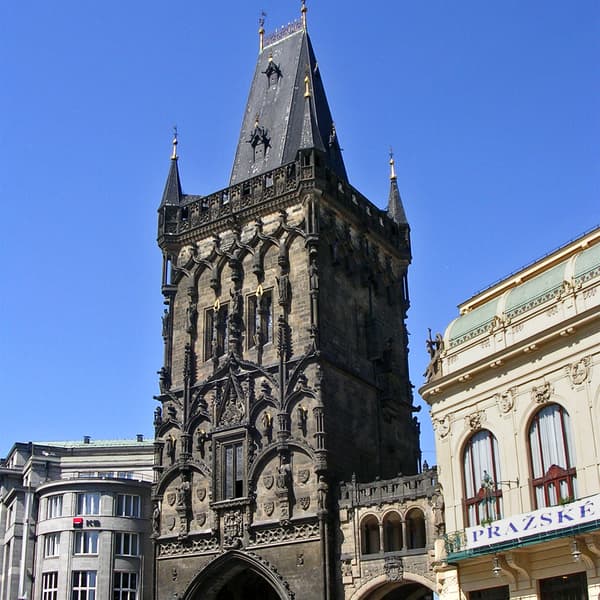
The 500-year-old powder tower was the main gate of the old town wall. It's named that because it also housed the city's gunpowder. Check out the Gothic decoration on the tower, some of the best 15th-century sculpture in town. There's kings on thrones, saints, and coats of arms, all laced together with elaborate carved tracery.
This is the only surviving bit of the wall that was built to defend the city back in the 1400s. Look at your city map and conceptualize medieval Prague's smart design. The city was protected on two sides by its river and on the other two sides by its wall, now a main street which arcs through the city. The only river crossing back then was the fortified Charles Bridge.
Read more...Show less
The road from Vienna, arrived here at the foot of the Powder Tower. This was the city's formal front door. Picture the scene two centuries ago when Empress Maria Theresa arrived here from Vienna to be crowned Queen of Bohemia. She would have passed right under the Powder Tower gate.
Look up at the carvings, an impressive welcoming committee reminding all of the hierarchy of our mortal existence. From artisans flanking Prague's coat of arms to a pair of Czech kings with seals of alliance with neighboring regions and finally to angels heralding the heavenly zone with Saints Peter and Paul flanking Jesus. Got it, Lisa? Uh, I think I got lost somewhere with the seals.
Anyway, let's go into the old town. Just like Maria Theresa did with her royal entourage two centuries ago. Da-da-da-da-da-da-dum! Pass through the old medieval gate, the Powder Tower.
As you emerge, you reach Seletna Street. This street leads directly to the old town square. Start heading down Seletna Street while Rick points out some sights. Seletna Street.
Celetná Street
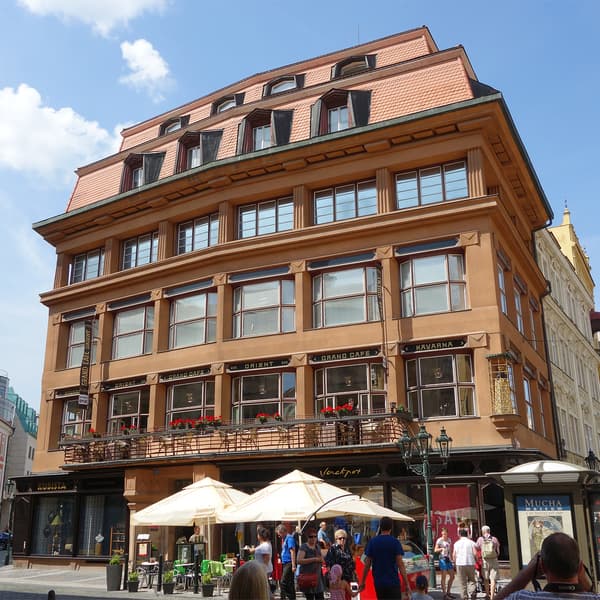
Welcome to the old town, or as they call it in Czech, Stari Miesto. Walk down Seletna Street. Since the 10th century, this area has long been the busy commercial quarter, filled with merchants and guilds. These days, it's still pretty commercial and very touristy.
By the way, if you're interested in any of the lead crystal glass where I mentioned earlier, Seletna Street is lined with glass shops. Though these aren't the highest quality places, you'll find a wide selection suitable for a surgical strike for a crystal souvenir. Keep strolling down the street, enjoying some of the pleasant old facades. Up ahead on the left, at the first corner, you'll see a building that definitely sticks out.
Read more...Show less
It's a brown, modern, angular structure called the House of the Black Madonna. It's famous as an example of Cubist architecture. It'll take a minute or so to get there, so just keep walking. Keeping an eye out for that modern, brown building on the left.
As you go, let Rick take us back in time and set the scene for when that structure was built. Back around the turn of the 20th century, Prague was a center of avant-garde art second only to Paris. We've already seen how Art Nouveau blossomed here. The next big art style, Cubism, also flourished.
Czech painters were using cube and shard shapes to render a new kind of reality on canvas. Architects were also using similar forms. That's where the House of the Black Madonna comes in. It was one of the world's first great, groundbreaking Cubist structures.
By now, it should be coming into view. It's the brown Cubist house on the left and on the corner. Just stroll around and take it in from various angles while Rick tells us more. This fascinating house is Cubist inside and out.
The exterior is a marvel of rectangular windows and cornices. Get up close and study the house. inside there's even a Cubist cafe with cube-shaped chairs and square-shaped vanilla rolls. The building is unique, but see how masterfully it also blends in so nicely with its neighbors.
This building is an example of what has long been considered the greatest virtue of Prague's architects, the ability to adapt grandiose plans to an existing cityscape. Let's continue on another couple hundred yards to the Old Town Square. As you walk you'll pass by a number of buildings with pleasant facades. Remember, Prague was largely spared the devastating aerial bombardments of World War II that leveled so many great European cities like Berlin, Dresden, or Munich.
Salatna Street maintains some of this old-world charm. But much earlier, Prague was not spared the devastation of the Great Fire of 1689. After that destruction, Prague rebuilt in the preventive period the prevailing styles of the time, Baroque and Neoclassical. Appreciate the pastel pink, yellow and blue facades with their classical touches.
There are arches over doorways, pediments over windows, and you'll see hints of classical scrollwork and garlands. It's little wonder that when movie makers want to film a movie set in frilly Baroque times, they often choose Prague. The movie about Mozart, Amadeus, was filmed here, with Prague standing in for Vienna. Seeing how thriving this city is today, it's hard to imagine the gray and bleak Prague of the communist era.
Before 1989, the city was a wistful jumble of possibility. Cobbled lanes were shadowed by decrepit, crusty buildings. Ramshackle timbers reached across lanes holding crumbling buildings apart. Consumer goods were plain and uniform, stacked like Legos on thin shelves in shops, where customers waited in line for a tin of pineapple or a bottle of Ersatz Coke.
Throughout the city, statues were black with soot. And on Charles Bridge, so busy today, there was no commerce except for a few shady characters trying to change money. Hotels had two price schedules, one for people from the Warsaw Pact nations and another, six to eight times more expensive, for capitalists. At the train station, frightened but desperate locals would meet arriving foreigners and offer to rent them a room in their apartment, hoping to earn enough Western cash to buy batteries or Levi's at one of the hard-currency stores.
But as Tseletna Street clearly demonstrates, the bleak communist era is fast becoming ancient history. Today, it thrives amid an old-world ambience. This is the Prague we admire today, mostly modern, but living within its medieval, Baroque, neoclassical, art nouveau, cubist, and communist-era past. And up ahead is the historic center of the Old Town, appropriately called the Old Town Square.
When you reach the Old Town Square, head for the square's centerpiece, the monument to Jan Hus. As you stroll, enjoy the swirl of facades, history, and people, both Czechs and tourists, as we listen to the music of the great Czech composer Antonín Dvorák. © BF-WATCH TV 2021 © BF-WATCH TV 2021 © BF-WATCH TV 2021 The Old Town Square
Old Town Square
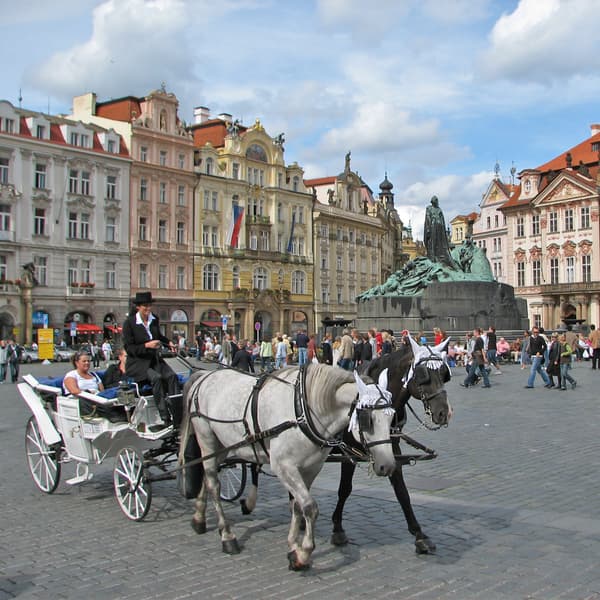
The focal point for most visits, Prague's Old Town Square is one of the city's top sights. This has been a market square since the 11th century. It became the nucleus of the Old Town, or Stary Miesto, in the 13th century, when its town hall was built. Today, the old-time market stalls have been replaced by outdoor cafes and touristy horse buggies.
But behind the old town, behind this commercial veneer, Prague's Old Town Square hides a dramatic and powerful history. Start with the square's centerpiece, a memorial to Jan Hus. This monument symbolizes the long struggle for Czech freedom. In the center, Jan Hus stands tall.
Read more...Show less
Hus, born around 1370, was a Prague priest who defied both the Catholic Church and the Habsburg oppressors. His defiant stance, as depicted so powerfully in this monument, galvanized the Czech people, who rallied to fight not just for their religious beliefs, but for independence from foreign control. Walk around the memorial. The statue stands between two groups of people.
On one side, Hussite followers who gave their lives battling the Habsburgs in 1620. On the other are the survivors. One patriot holds a cup or a chalice. This was what the Hussites were fighting for.
You see, in the medieval church, only priests could drink the wine at communion. But Jan Hus demanded that everyone be allowed to take both the bread and the wine. Look into the survivors' faces. It was a bitter fight.
Hus himself was arrested, charged with heresy, and in 1415 was burned at the stake. His followers picked up the torch so to speak and fought on for two decades in the Hussite wars. These wars killed tens of thousands and left Bohemia a virtual wasteland. The controversy lingered for decades as Hus had awakened the Czech people to their common values.
Eventually, their rebellious cause was brutally put down by the Catholic Habsburgs. This monument shows that pivotal battle, the Battle of White Mountain, fought outside of Prague in 1620. For the next chapter of that story, look again at the statue of Hus. Follow his gaze across the square to Teen Church.
This became the headquarters and leading church of his Hussite followers. Look between the church's two towers. Find the golden medallion of the Virgin Mary. Between the two towers.
Yes, I see the gold circle. And beneath that, I can see a niche with a golden chalice. And that chalice symbolizes the Hussite cause for every Christian to be able to participate in the Eucharist. But after the Habsburg victory over the Czechs in 1620, the Hussite church was converted to Catholic.
And the Hussite chalice was melted down and made into that golden image of Mary. While the Hussite movement was suppressed, Czech patriotism lived on. Eventually, the Czech people triumphed. Turn your eyes and turn your attention back to the Huss monument.
Just behind the statue of Jan Hus is a bronze statue of a mother and her children. They represent the ultimate rebirth of the Czech nation. While Jan Hus lived and preached a century before Martin Luther, they had many things in common. Both were college professors as well as priests.
Both drew huge public crowds as they preached in their university chapels. Both condemned church corruption, promoted local religious autonomy, and advocated for letting the common people participate more in worship rituals. Both established their national languages. Luther championed modern German, and it's Hus who gave the Czech alphabet its unique accent marks so that the letters could fit the sounds.
By challenging established authority, both got in big trouble. And today, both Hus and Luther are honored not only as religious reformers, but as national heroes. Stepping away from the Hus Memorial, stand in the center of the Old Town Square. From here, let Rick give you a 360-degree orientation spin tour. Sounds fun! Old Town Square
Old Town Square Spin Tour
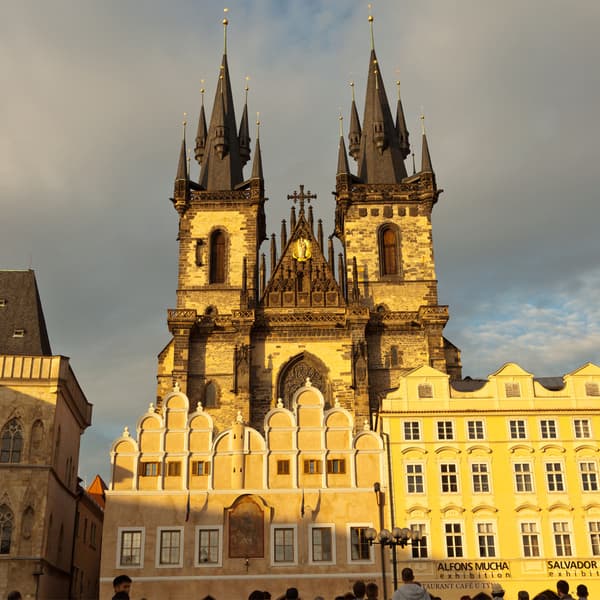
Orientation Spin Tour Whirl clockwise to get a look at Prague's diverse architectural styles. Gothic, Renaissance, Baroque, Rococo, and Art Nouveau. Start with the green domes of the Baroque Church of St. Nicholas.
Originally Catholic, now Hussite, this church is a popular venue for concerts. The Jewish Quarter is a few blocks behind the church, down the uniquely tree-lined Paris Street. Spin to the right, past the Hus Memorial, and the fine yellow Art Nouveau building. The large, pastel-colored Rococo Palace on the right is part of the National Gallery.
Read more...Show less
Further to the right is the towering Gothic Teen Church with its fanciful spires flanking the relief of Mary. For 200 years after Hus' death, this was Prague's leading Hussite church. Again, it was Catholic before the Hussites and was returned to Catholicism after the Hussites were defeated. If you were to go inside, you'd find an interior that's uncharacteristically bright for a Gothic building.
That's because of its clear Baroque windowpanes and whitewash as if to insult the Hussite doctrine of simplicity. The church's once elegant and pure Gothic columns are now encrusted with noisy Baroque altars. By the way, concertgoers might appreciate knowing that the city's most convenient ticket box office, Via Musica, is located just next to the church's front door. But let's continue our spin tour.
The row of pastel houses in front of Teen Church has a mixture of Gothic, Renaissance, and Baroque facades. Spinning further to the right, take in more gloriously colorful architecture. Finally, you reach the pointed 250-foot-tall spire. This marks the 14th-century Old Town Hall.
The tower is neo-Gothic. Notice the chunk of purple stonework that's attached to the tower. This is all that remains of a 19th-century building that once stood here. The building stretched all the way to the Church of St.
Nicholas. Notice the broken Gothic arch. Then, in the last days of World War II, German tanks knocked off this building. They did it to the joy of many Prague citizens who considered it an ugly, oversized 19th-century stain on this elegant medieval square.
Start making your way toward the Old Town Hall. As you approach the town hall, look down at the base of the tower. Near the food stand, find some white crosses embedded in the pavement. These 27 crosses inlaid in the pavement mark the spot where 27 Protestant nobles, merchants, and intellectuals were beheaded in 1621 after rebelling against the Catholic Habsburgs.
This mass execution ended Czech independence for 300 years. And it's still one of the grimmest chapters in the country's history. Leave the square by walking around to the left side of the Old Town Hall. Stand, probably with plenty of other tourists, before the big, fancy, old clock. The Astronomical Clock
Astronomical Clock
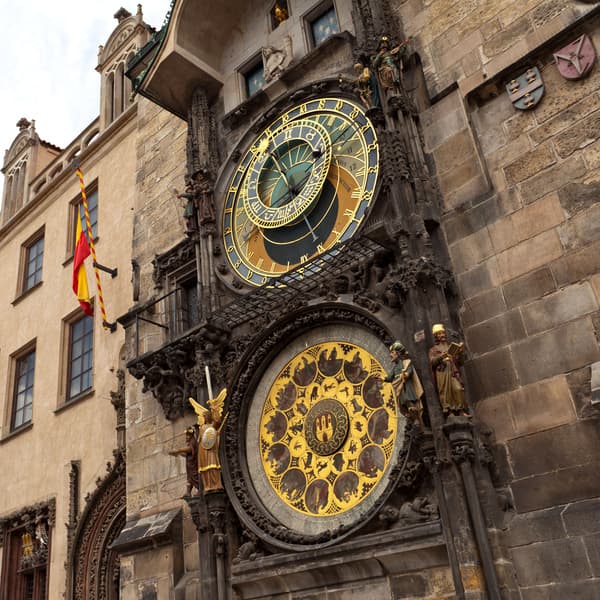
You can join the gang for the striking of the hour on the Town Hall clock. It rings daily from 9 till 9. Regardless of the time, see if you can figure out how the clock works. Take a close look.
With revolving disks, celestial symbols, and sweeping hands, this clock keeps several versions of time. Two outer rings show the hour. One of them, with strange Gothic numbers, tracks medieval Bohemian time. It counts starting from sunset.
Read more...Show less
Find the zero. That's between 23 and 1. Supposedly, that's the time of tonight's sunset. The inner ring, with 24 Roman numerals, counts modern time.
The 12 at the top is noon, and the 12 at the bottom is midnight. In the center of the dial is a map. Five hundred years ago, everything revolved around the Earth, which, so they thought, stood still. And at the center of the Earth, of course, was Prague.
The big hand is adorned with a golden sun. This sweeps around, passing through a series of arcing lines and colored zones that indicate sunrise and sunset. The little hand, a moon, spins to show the various phases of the moon. Look for the orbits of the sun and moon as they rise through the day, that's the blue zone, and night, the black zone.
If this seems complex to us, it must have been a marvel in the early 1400s when the clock was installed. The clock was heavily damaged during World War II, and much of what you see today is a reconstruction. Four statues flank the clock. These politically incorrect symbols evoke a 15th-century outlook.
A Turk with a mandolin symbolizes hedonism. A Jewish moneylender holding a bag of coins is greed. And the figure staring into a mirror stands for vanity. All these worldly goals are vain in the face of death, whose hourglass reminds us that our time here is unavoidably running out.
There's a second circle below the clock. This was added in the 19th century. It shows the signs of the zodiac, scenes from the seasons of a rural peasant's life, and a ring of saints' names. There's one saint for each day of the year, and a marker on top indicates today's special saint.
At the top of the hour, the astronomical clock puts on a little show. First, death tips his hourglass and pulls the cord ringing the bell. Then the windows open, and the Twelve Apostles parade by, acknowledging the gang of onlookers. The rooster crows, and finally, the hour is rung.
The hour is often wrong because of daylight savings time, completely senseless to 15th century clockmakers. I find an alternative view just as interesting. At the top of the hour, you can stand under the tower with the clock behind you. As the cock crows, protected by a line of banner-wielding concert salespeople in powdered wigs, I enjoy watching the mass of gaping tourists.
From here, it's a straight shot down Carlevis Street to the Charles Bridge where our tour ends. Start heading down Carlevis Street. Carlevis Street.
Karlova Street
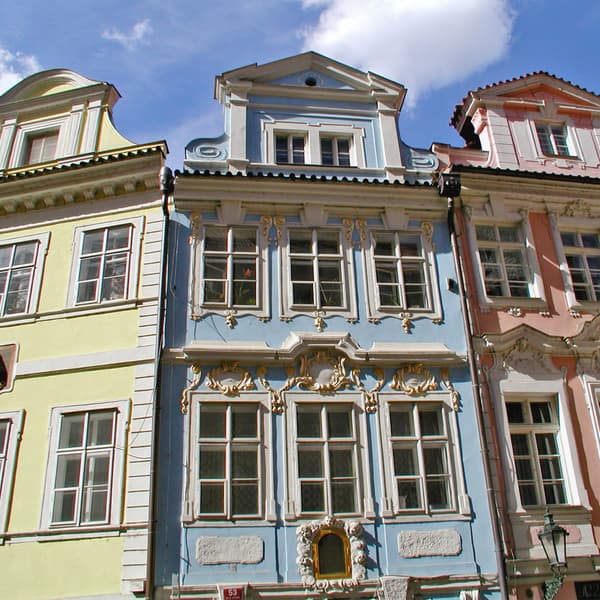
The traffic-free Carlevis Street winds through medieval Prague from the Old Town Square to the Charles Bridge. It zigs and zags a bit, just follow the crowds. Street signs keep you on track, and Carleve Most signs point to the bridge. This route has plenty of historic charm if you're able to ignore the contemporary tourism.
As you walk, look up. Notice historic symbols and signs of shops which advertised who lived there or what they sold. Cornerstones designed to protect buildings from careening carriages also date from centuries past. The touristy feeding frenzy of today's Prague is at its ugliest along this commercial gauntlet.
Read more...Show less
Obviously, you'll find few good values on this drag. Locals have a desire to disdain for the many Russian-owned shops. They sell Matryoshka nesting dolls, furry hats, and things that have nothing to do with Czech culture to clueless tourists. You'll also see signs of Prague's lively entertainment scene.
Prague booms with live theater, classical music, jazz, and pop concerts. Almost any day of the week, you can choose from a half-dozen classical music concerts. They're performed in a delightful old-world setting with crowd-pleasing music like Vivaldi or famous arias. Concerts often feature works by three composers with ties to Prague.
Mozart, who lived here during his prime, Antonin Dvorak, who built an international career in symphonic music based on Czech folk tunes, and Bedrik Smetana, who, well, we'll hear more about him in just a bit. Concerts are very inexpensive and typically last about an hour. You'll be tempted to gather flyers as you wander through town. Don't, don't bother.
The Via Musica box office I mentioned earlier near the teen church on Old Town Square has all the info. You can also get monthly events brochures free from the Tourist Information Office. Prague's most unique form of entertainment, you'll see it advertised everywhere, is something known as Blacklight Theater. It got its start in Prague in the 1960s.
The performers dress in fluorescent costumes that glow under ultraviolet blacklights. It's a playful, absurd, kind of variety show. Since it's mostly pantomimed or danced, there's no language barrier. It's definitely an unusual theater experience, and most people are glad they've done it, once.
One of the best blacklight theaters in town is called Ta Fantastica. It's just up ahead on Karlova Street near the Charles Bridge. Keep walking toward Charles Bridge. Imagine Prague in the late 1500s when it was once again the center of the Holy Roman Empire and one of the most enlightened places in all of Europe.
The astronomers, Tycho Brahe, who tracked the planets, and his assistant, Johannes Kepler, who formulated the laws of motion, both worked right here. In fact, though it may not be apparent because of all the tourist shops, the buildings around here have been home to thriving Charles University since medieval times. Even many buildings lined with souvenir stalls outside have venerable classrooms and lecture halls just upstairs. Since the 1300s, the old town's hidden courtyards have provided Czech scholars with their two most essential needs, a space for inspiring conversation and good beer.
Charles University still attracts the best and brightest. For Czech students, tuition is free. Charles University has always been at the center of Czech political thinking and revolutions, from Jan Hus in the 15th century to the people and the passionately patriotic Czech students who set themselves on fire in the 20th century. The Velvet Revolution, which swept communists out of power in November 1989, started as a student demonstration.
As we continue walking toward the Charles Bridge where our tour ends, let Rick take a moment to bring the story of the Czech people up to date. The Soviets were tossed out of Czechoslovakia in 1989. After that Velvet Revolution, the Czech Republic and Slovakia split apart in the Velvet Divorce of 1993. Through the 1990s, the fledgling Czech Republic was guided by President Václav Havel, that former playwright who jingled his keys from the balcony overlooking Wenceslas Square.
In 2004, the Czech Republic was accepted as a member of the European Union. Today, as you walk down bustling Karlova Street, it's clear that Prague is thriving. It's home to more than one in ten Czechs. The Czech people, while not without problems, are enjoying a growing economy and a strong democracy.
And Prague is understandably one of the most popular tourist destinations in Europe. Karlova Street leads directly to a tall medieval tower that marks the start of Charles Bridge. But before entering the bridge, stop on this side of the river. To the right of the tower is a little park called Charles the Fourth Square.
It has a great view of both the bridge and the rest of Prague across the river. Charles the Fourth Square
Charles IV Square
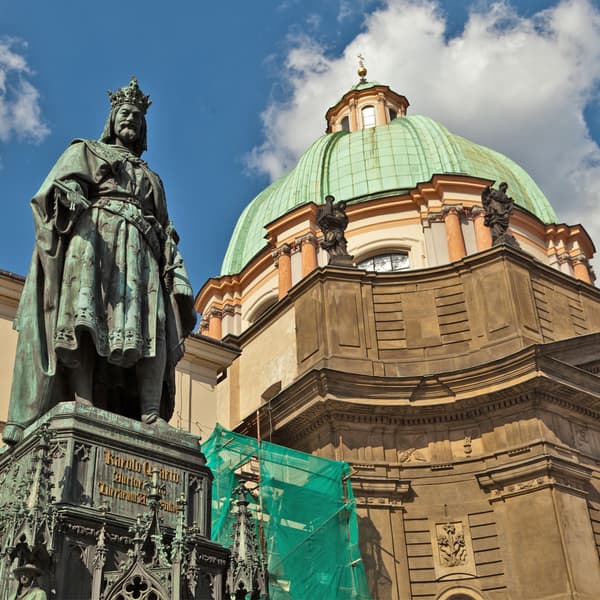
and a grand view from the riverside. Start with the statue of the bridge's namesake, Charles the Fourth. Look familiar? Yeah, he's the guy on the Hundred Karuna Bill.
Charles was the Holy Roman Emperor who ruled his vast empire from Prague in the 14th century. This statue was erected in 1848 to celebrate the 500th anniversary of Prague's university, one of Charles' great accomplishments. He's holding a contract establishing the university, the first in this part of Europe. The women around the pedestal symbolize the school's four traditional subjects, theology, the arts, law, and computer science.
Read more...Show less
I think she's medicine. Oh, yeah, I guess that's right. By the way, try viewing the statue from the corner by the busy street. From this angle, many people think the emperor's silhouette makes His Highness look like he's peeing on the tourists.
Which reminds me, public toilets are in the passageway just opposite the statue. And we're back to the toilets again. Now, look up at the bridge tower. This is one of the finest Gothic gates anywhere.
Contemplate the fine sculpture here on the old town side of the tower. It shows the 14th century hierarchy of society. People at street level, above them, kings, and bishops above the kings. Climbing the tower rewards you with wonderful views over the bridge.
But you can enjoy a marvelous view from the viewpoint at the riverside of this square. Stroll on over to the riverside, belly up to the banister, and enjoy the view. Before you is the Vltava River and Charles Bridge. Across the river, up on the hill, is Prague Castle, topped by the prickly spires of St.
Vitus Cathedral. Prague Castle has been the seat of power in this region for over a thousand years, ever since the time of our old friend good King Wenceslas. By some measure, it's the biggest castle on Earth. Given the castle's long history, it's no wonder that when the nation of Czechoslovakia was formed in 1918, Prague Castle served as the White House of its new president.
If you tour the castle, you also get access to historic St. Vitus Cathedral, which was begun by Emperor Charles IV. The cathedral has the tomb of Wenceslas, as well as a stunning Art Nouveau stained-glass window by Alphonse Mucha. The Vltava River is called the Moldau in German.
It runs 270 miles through a diverse landscape, like a thread connecting the Czech people. And, as we've learned, the Czechs have struggled heroically to carve out their identity while surrounded by mightier neighbors, Austrians, Germans, and Russians. The Vltava is their common thread. The view of Charles Bridge from here is photogenic to the max.
The historic bridge is almost seven football fields long, lined with lanterns and 30 statues, and bookmarked at each end with medieval towers. This structure is not the first that has stood on this spot. In fact, the name Prague probably comes from the word Ford. That's because the city was born at a convenient place to cross the wide river.
But earlier wooden bridges were washed away by floods. After a major flood in 1342, Emperor Charles IV commissioned a new stone structure. Initially called the Stone Bridge, it was Prague's only bridge for more than 20 years. It connects the old town with the district called the Little Quarter at the base of the castle across the river.
As you enjoy the view, consider this. In 1848, a young Czech composer named Bedrick Smetana stood on this bridge. He was defending his people from Austrian oppressors. Smetana went on to write a symphonic portrait of the Vltava River that celebrated the roots of Czech culture, language, and tradition.
To this day, Czechs get a lump in their throat when they hear Smetana's evocative melody, the Moldau. You may have heard it. Now, wander onto the bridge over the river, which gives this beautiful piece of music its name. Make your way slowly across the bridge while Rick points some things out.
You will find a lot to see on the other side of the bridge. You will find a lot to see on the other side of the bridge. You will find a lot to see
Charles Bridge
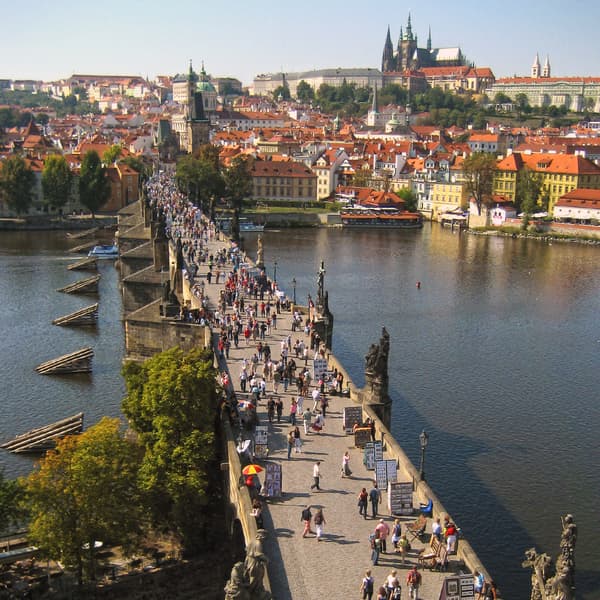
on the other side of the bridge. Charles Bridge. As you walk across Charles Bridge, make your way to the third statue on the right. It's the big green cross you'll see up ahead.
The Charles Bridge is one of Prague's defining landmarks. This much-loved bridge offers one of the most pleasant and entertaining strolls in Europe. Musicians, artisans, and a constant parade of people make it a festival every day. You can come back and back to this bridge enjoying its charms differently at different times of day.
Read more...Show less
Early and late, it can be enchantingly lonely. It's a photographer's delight, especially during that magic hour when the sun is low in the sky just before it sets. The statues on either side of the bridge depict saints, and all of them are impressively expressive. Let's check out a few of them.
Pause when you reach the third statue on the right. It's a green cross showing Jesus being crucified, flanked by mourners. Notice the golden band of Hebrew letters. This is a Hebrew inscription from the book of Isaiah celebrating Christ.
It reads, Holy, holy, holy is the Lord of hosts. The inscription was paid for by a fine imposed on a member of Prague's Jewish community who was accused of mocking this cross. Keep walking down the bridge. Skip the next statue and continue to the one after that.
That would be the bridge's fifth statue on the right. As you walk, bear in mind that back around 1600 there was only one statue on the bridge, the cross we just saw. Back then, Prague was a Hussite town, and the veneration of Catholicism with Catholic saints was not popular. But then the Catholic Habsburgs took over.
They wanted to make sure the saints overlooked and inspired the town folk each day as they crossed this, the only bridge over the river until the 19th century. To make it more palatable, they chose saints that had special meaning for the Czech people. Case in point is the fifth statue on the right. This is actually a pair of statues, Saints Cyril and Methodius.
These were the two brothers from Greece who brought Christianity to this area around 865 A.D. In this scene, they're bringing a pagan, primitive Czech woman into the Christian fold. Maybe they can get her a blouse while they're at it. Let's keep walking to the next statue.
Most of the statues date from the 17th and 18th centuries. Most are made of bronze and done in the Baroque style with flowing robes and dramatic poses. Today, about half the statues you see are replicas. The originals are in city museums, safely out of the polluted air.
The next statue on the right is of a guy with a golden cross. It's John the Baptist, if you must know, but let's keep on going. Just past that statue, still on the right, find an ironwork grill sticking up from the bridge's stone banister. Within the grill is a brass relief panel.
The relief depicts an interesting scene, a figure floating in the river with a semicircle of stars above him. That floating figure is the corpse of St. John of Nepomuk. This marks the traditional spot where John is believed to have been tossed off the bridge and into the river.
Yikes! What happened? If you want the rest of the story, keep on walking. Okay.
Continue two more statue groups to the statue of St. John of Nepomuk. As you walk, Rick, tell us about St. John.
St. John of Nepomuk is the national saint of the Czech people. John was a 14th century priest. His job was being confessor to the queen.
According to legend, the queen opened up and confided all her sins to John. Meanwhile, her husband, the king, wanted to know his wife's secrets. He pressed John to divulge her secrets, but Father John dutifully refused to tell. What happened next?
I dutifully refused to tell also, until we reach John's statue. Thank goodness. Up ahead is the statue of St. John of Nepomuk.
He's the green statue with a golden halo of stars. His statue usually draws a crowd. Get in close and check out the shiny plaque at the base of the statue. When John refused to tell the king his wife's secrets, John was tortured and eventually killed.
by being thrown off the Charles Bridge. The plaque shows the heave-ho. When he hit the water, five stars appeared, signifying his purity. Notice the date on the inscription.
1683. The statue is unveiled on the supposed 300th anniversary of the martyr's death. Traditionally, people believe that touching the St. John plaque will make a wish come true.
But you get only one chance in life to make this wish, so think carefully before you commit. You'll find statues to John on squares and bridges throughout the Czech Republic. Why is that? Some historians claim it's because Czechs were forcibly converted to Catholicism.
Nepomuk became the rallying national symbol. Okay, we'll convert, but our patron saint must be Czech. It gave locals an attractive Catholic alternative to the Protestant hero, Jan Hus. Whatever the reason, the Czech people are especially devoted to several patron saints who, even if you're an atheist, serve as a rallying point for Czech national identity.
For example, directly across from John is St. Ludmila. She's the good Christian mother who raised her grandson to become good King Wenceslas. That's the 10th century ruler who first united the Czech people and whose statue on horseback started this walk.
And a good way to end this walk is to enjoy the wonderful view of the city Wenceslas helped create. Find a good spot near the center of the bridge and survey your surroundings. First, look upstream. Notice the icebreakers immediately below.
They protect the abutments upon which the bridge sits, as ice flow has historically threatened its very survival. Look further upstream for the tiny locks on the right-hand side. While today's river traffic is limited to tourist boats, in earlier times, timber, lashed together like rafts, was floated down the river. On the left, further up, by the next bridge, is a building with a gilded crown atop its black dome.
That's the National Theater. Now, cross the bridge and look downstream. Scan from right to left. You'll see the modern Four Seasons Hotel.
That's the modern black roof, doing a pretty good job of fitting in. Further down with the green roof is the large Neo-Renaissance Concert Hall of the Czech Philharmonic. Across the river and up the hill is a red needle of a giant metronome. It ticks at the spot where a 50-foot-tall granite Joseph Stalin, flanked by eight equally tall deputies, stood from 1955 until 1962.
To the right of Stalin's former perch, hiding under the trees and worth the climb on a hot summer day, is Prague's most popular beer garden. Finally, capping the hill, follow the line of noble palaces that leads to the spire of the cathedral. It stands at the center of the Prague Castle, which for a thousand years has been the political heart of this nation. And beneath your feet flows the majestic Vltava River, the watery thread that has and always will connect the proud Czech people.
We hope you've enjoyed our walk through Prague. Thanks to Jean Openshaw, the co-author of this tour. This tour was excerpted from the Rick Steves Prague and Czech Republic Guidebook, co-authored by Hansa Vihon. For more details on eating, sleeping, and sightseeing, and Prague, refer to the most recent edition of that guidebook.
For more free audio tours and podcasts, and for information about our guidebooks, TV shows, bus tours, and travel gear, visit our website at ricksteves.com. This tour was produced by Cedar House Audio Productions. Thanks. Ahoy! And goodbye for now. © BF-WATCH TV 2021 © BF-WATCH TV 2021 © transcript Emily Beynon
Free
GPS-guided walking tour
No account needed. Walk at your own pace.
Free
18 stops ·