22 stops
GPS-guided
58 min
Duration
Free
No tickets
About this tour
A guided tour of Versailles Palace in France with 22 stops. Highlights include The Palace of Versailles, Entering the Château, and Royal Chapel.
22 stops on this tour
The Palace of Versailles
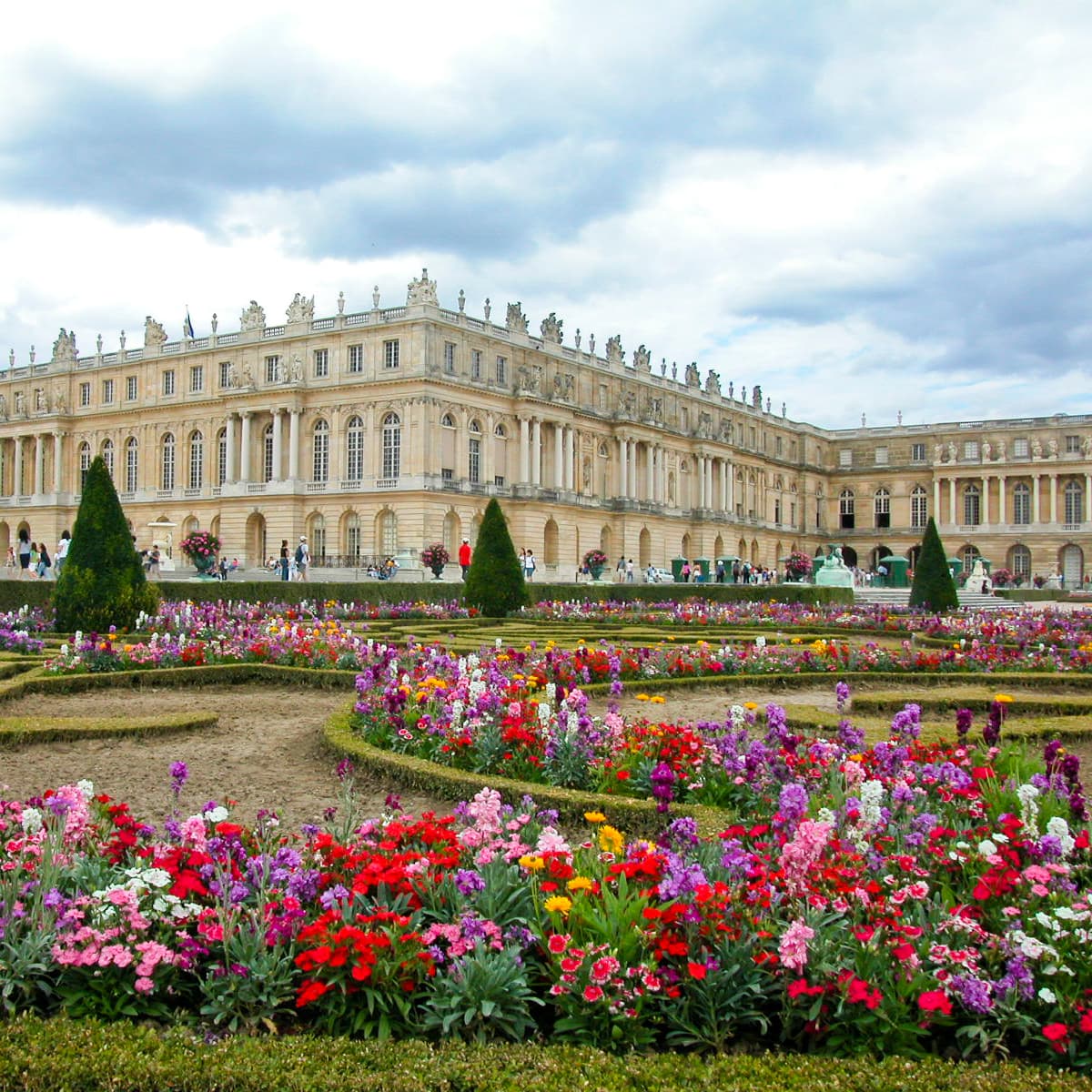
The Palace of Versailles. If you've ever wondered why your American passport has French writing on it, you'll find the answer at the Chateau of Versailles. Hi, I'm Rick Steves. Thanks for joining me on a visit to Europe's greatest palace.
Around 1700, Versailles was the cultural heartbeat of Europe, and France was at its zenith. Throughout Europe, when you said, the king, you were referring to the French king, Louis XIV. Every king wanted a palace like Versailles. Everyone learned French.
Read more...Show less
French taste in clothing, hairstyles, table manners, theater, music, art, and kissing spread across the continent. That cultural dominance continued, to some extent, right up to the 20th century. Today, if you're planning to visit just one palace in all of Europe, make it Versailles. In this audio tour, we'll explore the historic heart of the palace, now decorated with period furniture.
Then, we'll stroll the immense landscaped gardens, dotted with fountains and monuments, and sprinkled with smaller palaces, each an architectural gem. Allow two or three hours to do justice to this audio tour. Consult a guidebook to help navigate the site's huge mobs without losing your head. Now, let's get going.
The luxurious world of kings and queens awaits us at the... The fabled Palace of Versailles. To help us along the way, I've invited a good friend and virtual travel buddy. Bonjour, Lisa.
Bonjour, Monsieur Steeves. Lisa will give us helpful directions and sightseeing tips throughout the tour. And my first tip is to be sure you get our tour updates. Just press the icon at the lower right of your device.
You'll find any updates and helpful instructions unique to this tour. Things like closures, opening hours, and reservation requirements. There's also tips on how to use this audio tour and even the full printed script. Yes, so pause for just a moment right now to review our updates and special tips. It's okay, we'll wait. And now, let's go to Versailles.
Tour Begins: Château and Courtyard
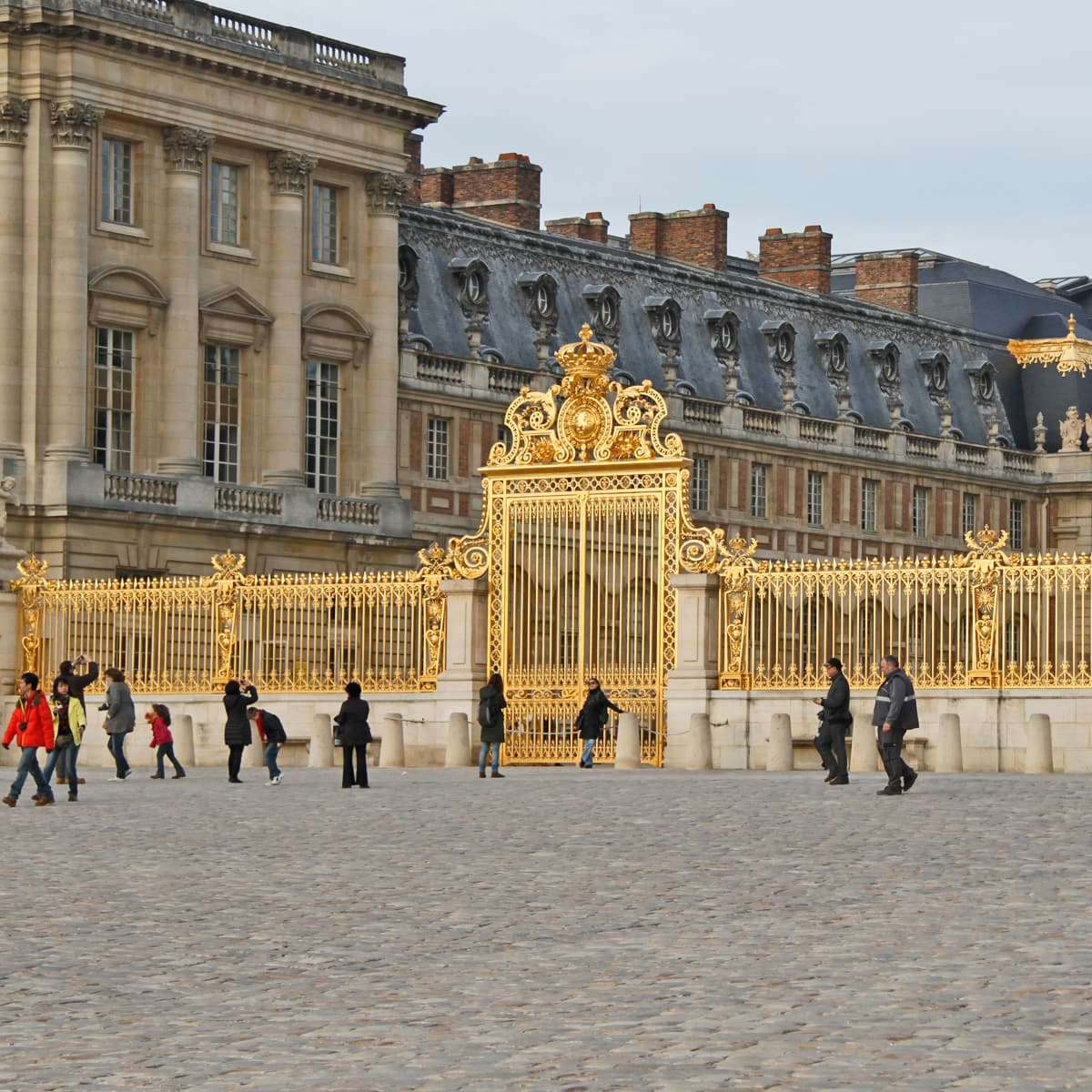
The tour starts in the big cobbled square outside the palace. Hopefully, you have a good guidebook. I could recommend one. A guidebook can point out the various entrances where you get your tickets, how to minimize crowds, and so on.
If there's a long line to get inside the palace, consider getting in line now. You can listen while Rick talks about the palace exterior. Wherever you stand, pan around and survey the scene. Rick?
Read more...Show less
This place is huge. First, there's the palace itself, called the chateau. The central part of the palace is U-shaped. It also has wings that stretch far to the left and far to the right, completely filling your vision.
Then there's the vast courtyard in front, where we stand with the mobs of tourists. There's the golden royal gate in front of the palace. Well, it's actually a palace. It's a replica of the original.
This gate stretches nearly 260 feet. It's adorned with 100,000 gold leaves. As grand a view as you have from here, it's only a slice of the entire complex. Behind the palace is the enormous backyard, the gardens.
These stretch for miles and are filled with fountains, statues, and still more palaces. All in all, the complex of Versailles covers about 2,000 acres, that's more than twice the size of New York's Central Park. The Palace of Versailles was home to the kings of France for one glorious century, roughly from 1680 to 1792. It all got its start as a tiny hunting lodge in what was then a swampy forest outside of Paris.
You can see the ghost of that original lodge today. Direct your attention to the very center of the palace, the section with the clock. That central part was once a hunting lodge. See the three arched windows beneath the clock?
That was the private bedroom of Louis XIV. As a boy, little Louis spent his happiest days here. Naturally, the Sun King's windows faced the rising sun. In fact, the whole palace and grounds are laid out on an east-west axis.
Once king, Louis XIV expanded the lodge by attaching wings, creating its present U-shape. Later, the long north and south wings were built. The total cost of the project has been estimated at half of France's entire gross national product for one year. Think how busy this courtyard must have been 300 years ago.
There were as many as 5,000 nobles here at any one time, each with an entourage. Carried by their servants in sedan chair taxis, they'd buzz from games to parties to amorous rendezvous. Servants ran around, delivering secret messages and roast legs of lamb. Horse-drawn carriages clattered through the fancy gate with their finely-dressed passengers.
They drove up the broad boulevard that ran directly from Paris. The horse stables still lined the boulevard. Incredible as it seems, both the grounds and most of the palace were public territory, where even the lowliest peasant could come to gawk, so long as they followed a dress code. Then, as now, there were hordes of tourists, pickpockets, palace workers, and men selling wind-up children's toys.
Now let's go inside the chateau. You'll see signs marking the various entrances, for groups, for individuals, to the gardens, and so on. It can be a bit overwhelming, and the entrance locations can change. Just be flexible.
Find the entrance to the chateau. It's generally through the modern concrete and glass structure that serves as the security checkpoint. Our tour starts upstairs, at the royal chapel. It's a bit tricky to get there, so on the next track, let Rick and I guide you in. Entering the chateau.
Entering the Château
Some historical background on kings and queens and guillotines. Enter the chateau through the security entrance. Remember, our tour starts upstairs, at the royal chapel. To get there, you pass through security, and go through a reception area.
Then just follow the flow of crowds. And pickpockets. Everyone is headed the same way. It'll take several minutes to our first stop, so as you walk, let Rick fill you in on some historical background.
Read more...Show less
As you make your way upstairs to the royal chapel, you'll pass through about a dozen forgettable rooms. You'll pass by old paintings of French kings, and paintings of the royal family. Paintings of Versailles itself, as it grew from a hunting lodge to the massive complex it is today. Three kings lived at Versailles during its century of glory, Louis XIV, XV, and XVI.
The palace was built by Louis XIV in the 1680s in the forests and swamps of Versailles, which is about 10 miles west of Paris. The reasons for the move from Paris were partly personal. Louis loved the outdoors, and he disliked the inside-the-beltway environment, the environs of stuffy Paris, and the reasons were partly political. Louis XIV, who ruled France for 72 years, from 1643 to 1715, was busy creating the first modern, centralized state.
At Versailles, he consolidated Paris' scattered ministries so that he could personally control policy. He invited France's nobles to Versailles in order to control them. Living a life of almost enforced idleness, the domesticated, united aristocracy couldn't interfere with the way Louis and his ministers were running things. Imagine France in 1700, with 18 million people united under one king.
That was more than triple England's population of less than 6 million. France had a booming economy and a powerful military. It was Europe's number one power. At the center of all this was Europe's greatest king.
Louis XIV was a true Renaissance man, a century after the Renaissance. Athletic, good-looking, a musician, dancer, and a great singer. Fine horseman, statesman, art lover, lover. For all his grandeur, he was one of history's most polite and approachable kings, a good listener who could put even commoners at ease.
Louis called himself the Sun King because he gave life and warmth to all that he touched. Versailles became the personal temple of this god on earth, decorated with statues and symbols of Apollo, the Greek god of the sun, and of Louis himself. The classical themes underlined the divine right of France's kings and queens to rule without limit. For 72 years, Louis was the perfect embodiment of the absolute monarch.
He summed it up best himself with his famous rhyme, L'état, c'est moi. The state, that's me. There are just two more Louis to remember. Louis XV, the great-grandson of Louis XIV, carried on similar traditions and policies, but without the Sun King's flair.
Still, Louis XV's Versailles was the center of the world. The center of European court life. During his 60-year reign, from 1715 to 1774, France's power abroad was weakening, and there were rumblings of rebellion from within. France's monarchy was crumbling, and the time was ripe for a strong leader to reestablish the old feudal order.
They didn't get one. Instead, they got Louis XVI, a shy, meek bookworm, married to a sweet girl from the Austrian royal family, Marie Antoinette. Together, they became the first in the world where they retreated into the idyllic gardens of Versailles and watched as France exploded into revolution. In the chaos, the monarchy was overthrown.
Louis and Marie Antoinette were arrested and executed, and Versailles was transformed from a center of power into a tourist attraction. By now, you should be inside the palace and upstairs. Once upstairs, you pass through a couple more rooms of exhibits. Finally, you reach a palatial, golden-brown room.
with a doorway that overlooks a lavish church with a pipe organ. This is the Royal Chapel. Let the tour begin. The Royal Chapel.
Royal Chapel
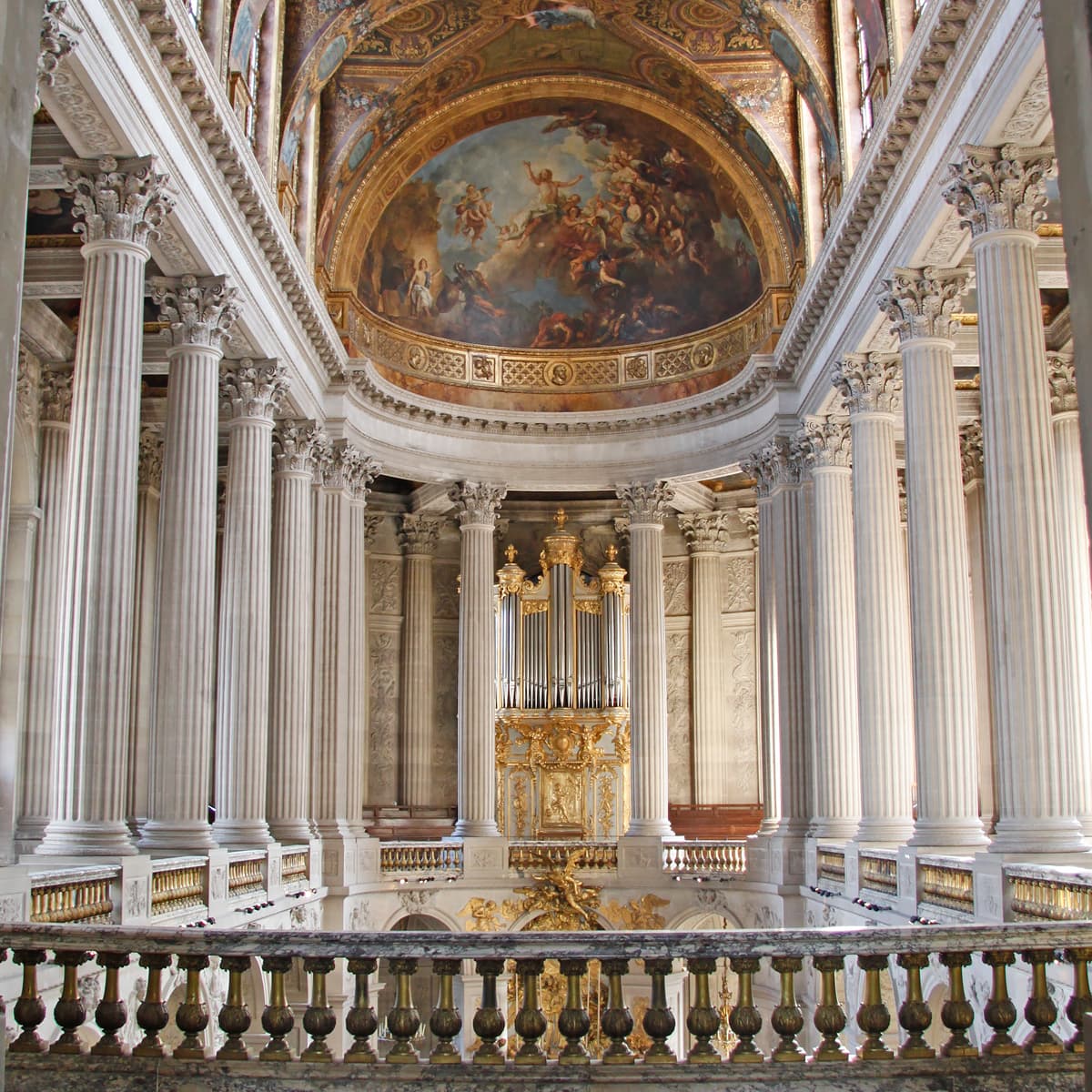
Every morning at 10 o'clock, the organist and musician struck up the music. These big golden doors opened, and Louis XIV and his family walked through to attend Mass. While Louis sat here on the upper level and looked down on the golden altar, the lowly nobles below knelt with their backs to the altar and looked up, worshiping Louis, worshiping God. Important religious ceremonies took place here, including the marriage of young Louis XVI to Marie Antoinette.
In the vast secular temple that is Versailles, built to glorify one man, Louis XIV, this royal chapel is a paltry tip of the hat to that other god, the Christian one. It's virtually the first, last, and only hint of Christianity you'll see in this entire complex. Versailles celebrates man, not God, by raising the king to almost godlike status, the personification of all good human qualities. In a way, Versailles is the last great flowering of Renaissance humanism.
Read more...Show less
Armed with your free Versailles map, enter the next room. It's a large room with a fireplace and a colorful painting on the ceiling. The Hercules Drawing Room
Hercules Drawing Room
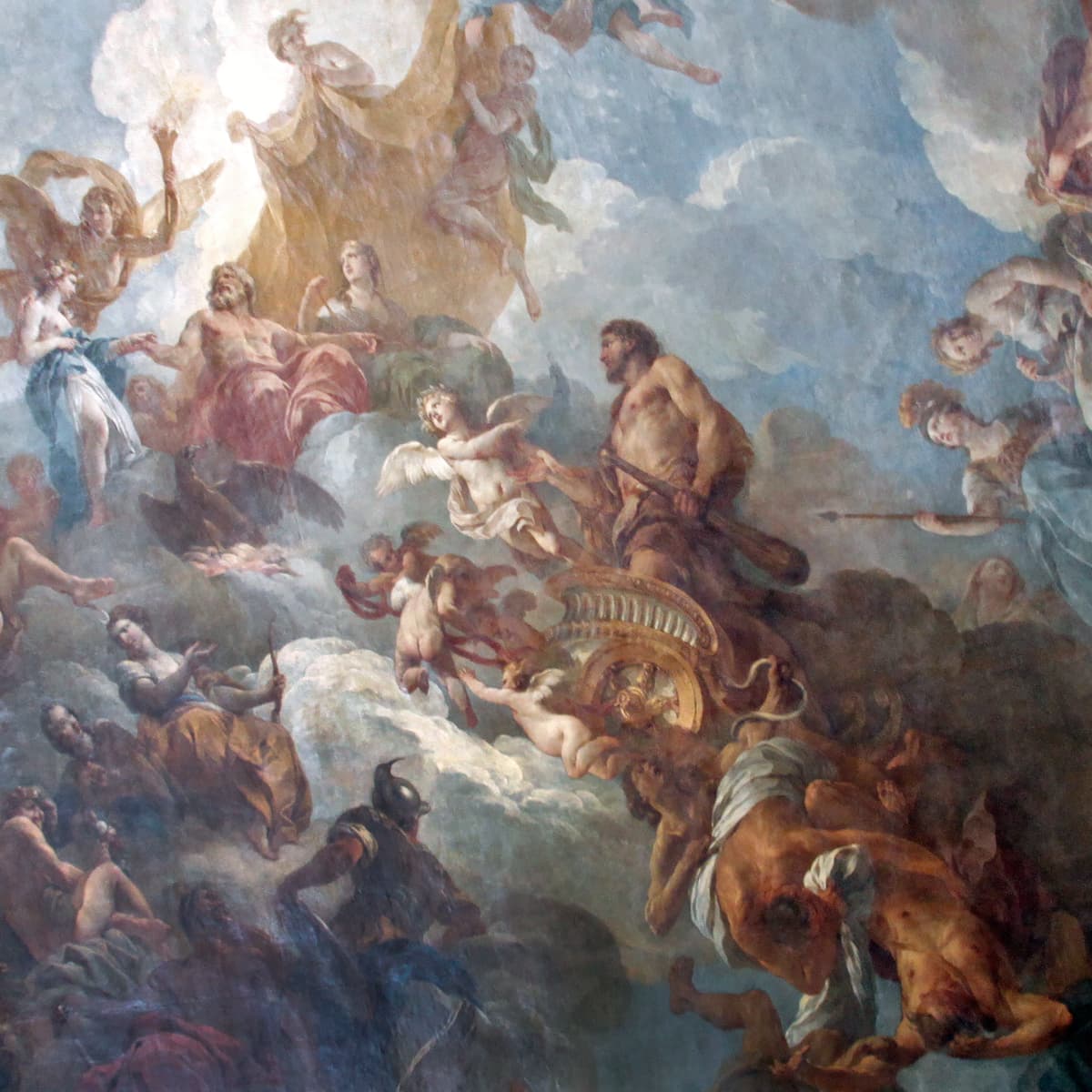
In Louis' house, pleasure ruled. The main banquets, balls, and receptions were held in this room. Picture elegant party goers in fine silks, wigs, rouge, lipstick, and fake moles —and that's just the men— as they danced to the strains of a string quartet. On the wall opposite the fireplace, is an appropriate painting showing Christ in the middle of a Venetian party.
The work by Paolo Veronese, a gift from the Republic of Venice, was one of Louis XIV's favorites, so they decorated the room around it. Stand by the fireplace for the full effect. The room's columns, arches, and frieze match the height and style of Veronese's painted architecture, which makes the painting an extension of the room. Pretty nifty.
Read more...Show less
For another illusion, look up at the ceiling. It looks like the roof is opening right up to the heavens. The ceiling painting of Hercules being crowned a god gives the room its name. Hercules, with his club, hurries up to heaven on a chariot, late for his wedding to Zeus' daughter.
Louis XIV built the room for his own daughter's wedding reception in the style of the day, pure Baroque. As you wander, the palace feels bare, but remember that entire industries were created just to furnish and decorate the place with carpets, mirrors, furniture, and tapestries. From here on, it's a one-way tour. Getting lost is not allowed.
Just go with the flow from room to room. The names of the rooms generally come from the paintings on the ceilings. Now, follow the crowds into the first room, a small green room with an abundant goddess in pink on the ceiling. The Salon of Abundance. The Salon of Abundance.
Salon of Abundance
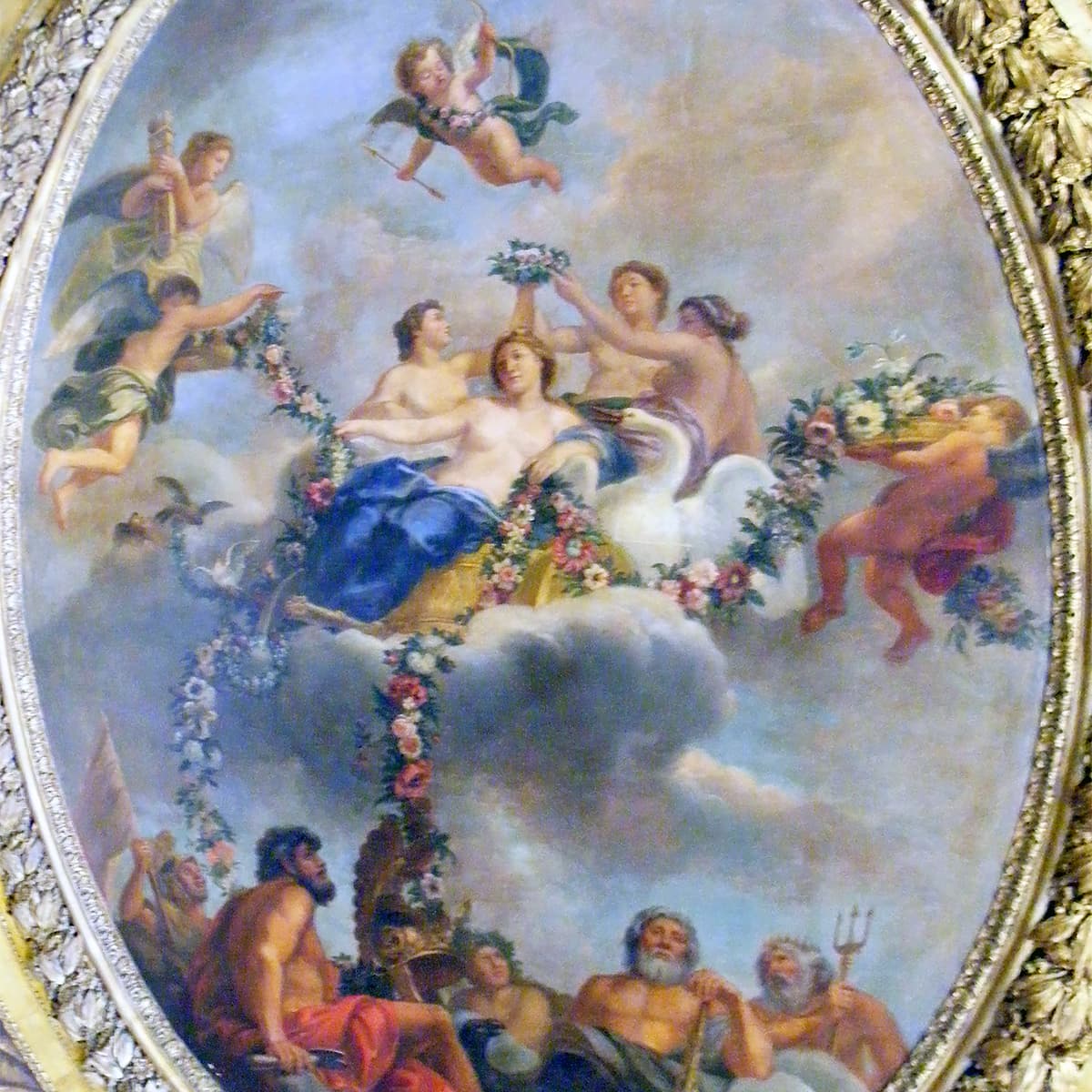
If the party in the Hercules room got too intense, you could always step in here for some refreshments. Silver trays were loaded up with liqueurs, exotic stimulants like coffee, juice, chocolates, and, on really special occasions, three-bean salad. The ceiling painting shows the cornucopia of riches poured down on invited guests. Around the edges of the ceiling are painted scenes of the king's actual dinnerware and treasures.
The two black chests of drawers are from Louis' furniture collection. They rest on heavy bases and are heavily ornamented. That's the so-called Louis XIV style. Unfortunately, most of the palace's original furniture was lost in the Revolution.
Read more...Show less
Louis himself was a gracious host who enjoyed letting his hair down at night. If he took a liking to you, he might sneak you through the room, through those doors over there in the middle of the wall, and into his own private study, or cabinet of curiosities. There, he'd show off his collection of dishes, medals, jewels, and the Mona Lisa, which hung on his wall. Louis' favorite show-and-tell items are now in the Louvre.
The paintings on the walls are Louis XIV's heirs. Louis reigned for more than 70 years and outlived three potential heirs, finally leaving the crown to his pink-cheeked, five-year-old great-grandson, Louis XV, on the right. Continue to the next room, the Venus Room. Start by checking out the glorious ceiling.
The Venus Room. Love ruled at Versailles. In this room, couples would cavort beneath the Greek goddess of love. She's up on the ceiling, who sends down a canopy of golden garlands to ensnare mortals in delicious amour.
Notice how a painted garland goes out the bottom of the central painting, becomes a golden garland held by a satyr, transforms into a gilded wood garland, and then turns back into a painting again. Baroque artists loved to mix their media to fool the eye. Another illusion is the paintings at both ends of the room. The painted columns match the room's real ones, extending this grand room into mythical courtyards, such as the one on the left.
Turn your attention now to a curly-haired sculpture that's often displayed in this room. Don't let the statue of a confident Louis XIV as Roman emperor fool you. He started out as a poor little rich kid with a chip on his shoulder. His father died before Louis was old enough to rule, and during the Regency period, the French Parliament treated little Louis and his mom like trash.
They were virtual prisoners, humiliated in their own home. And back then, the royal palace was a place where the palace was the Louvre in Paris, with bland meals, hand-me-down leotards, and pointed shoes. But little Louis grew up to become King Louis and make those nobles kneel before him here, in his own private paradise, Versailles. Once Louis attained power, there was one topic you never discussed in his presence, poverty.
Versailles was Louis' way of saying, living well is the best revenge. Continue on into the next room. The Diana Room
Diana Room, Mars Room
Here in the billiards room, Louis and his men played on a table that stood in the center of the room while ladies sat surrounding them on Persian carpet cushions and music wafted in from the next room. Louis was a good pool player. He was also a sore loser, and, being king, he rarely lost. The famous bust of Louis by Bernini, in the center, shows a handsome, dashing, 27-year-old playboy king his gaze is steady amid his wind-blown cloak and hair.
Young Louis loved life. He hunted animals by day noticed Diana the huntress on the ceiling and chased beautiful women at night. Games were actually an important part of Louis' political strategy, known as the domestication of the nobility. By distracting the nobles with the pleasures of courtly life, he was free to run the government his way.
Read more...Show less
Billiards, dancing, and concerts were popular, but the biggest distraction was gambling, usually a card game similar to blackjack. Louis lent money to the losers, making them even more indebted to their king. The good life was an addiction, and Louis kept the medicine cabinet well-stocked. Keep shuffling along with the crowds.
As you move into the next room, notice the fat walls that hid thin servants who were to be at their master's constant call but out of sight when not needed. The Mars Room Also known as the Guard Room, as this was the room for the king's Swiss bodyguards, it's decorated with a military flair. Check out the ceiling. There's Mars, the Greek god of war, in a chariot pulled by wolves.
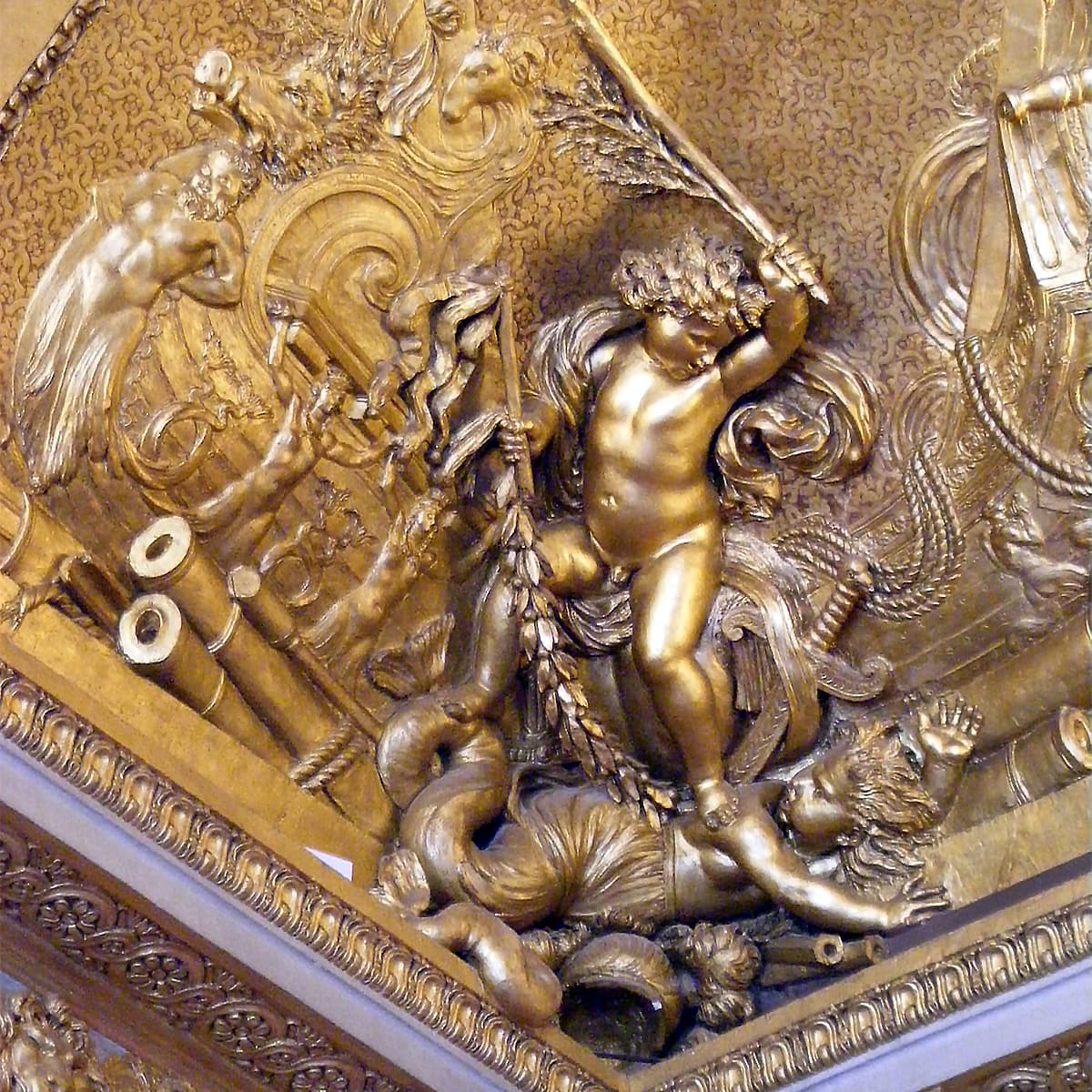
The bronze cupids in the corners are escalating from love arrows to heavier artillery. The Mars Room is certainly impressive, but I'm loving the view. Out the window, are sculpted gardens in the style of a traditional Italian villa, landscaped symmetrically with trimmed hedges and cone-shaped trees lining walkways that lead to glorious fountains. Move along to the next room, which has a big canopy bed that served a specific purpose in court life. The Mercury Room.
Mercury Room, Apollo Room
Louis' life was a work of art, and Versailles was the display case. Everything he did was a public event designed to show his subjects how it should be done. This room served as Louis' official but not actual bedroom, where the Sun King would rise as a ritual each morning to warm his subjects. From a canopied bed, similar to the one you see here today, Louis would get up, dress, and take a seat for morning prayer.
Meanwhile, the nobles would stand behind a balustrade, awestruck by his piety, nobility, and clean socks. At breakfast, they murmured with delight as their king deftly decapitated his boiled egg with a knife. And when Louis went to bed at night, the dukes and barons would fight over who got to hold the candle while he slipped into his royal jammies. Here in the home of the Sun King, bedtime, wake-up, and meals were all public rituals.
Read more...Show less
Continue to the next room, where the most formal rituals were held. The Apollo Room This was the Grand Throne Room. Louis held court from a ten-foot-tall silver-canopied throne on a raised platform placed in the center of this room. Notice the metal rings in the ceiling that once supported the canopy.
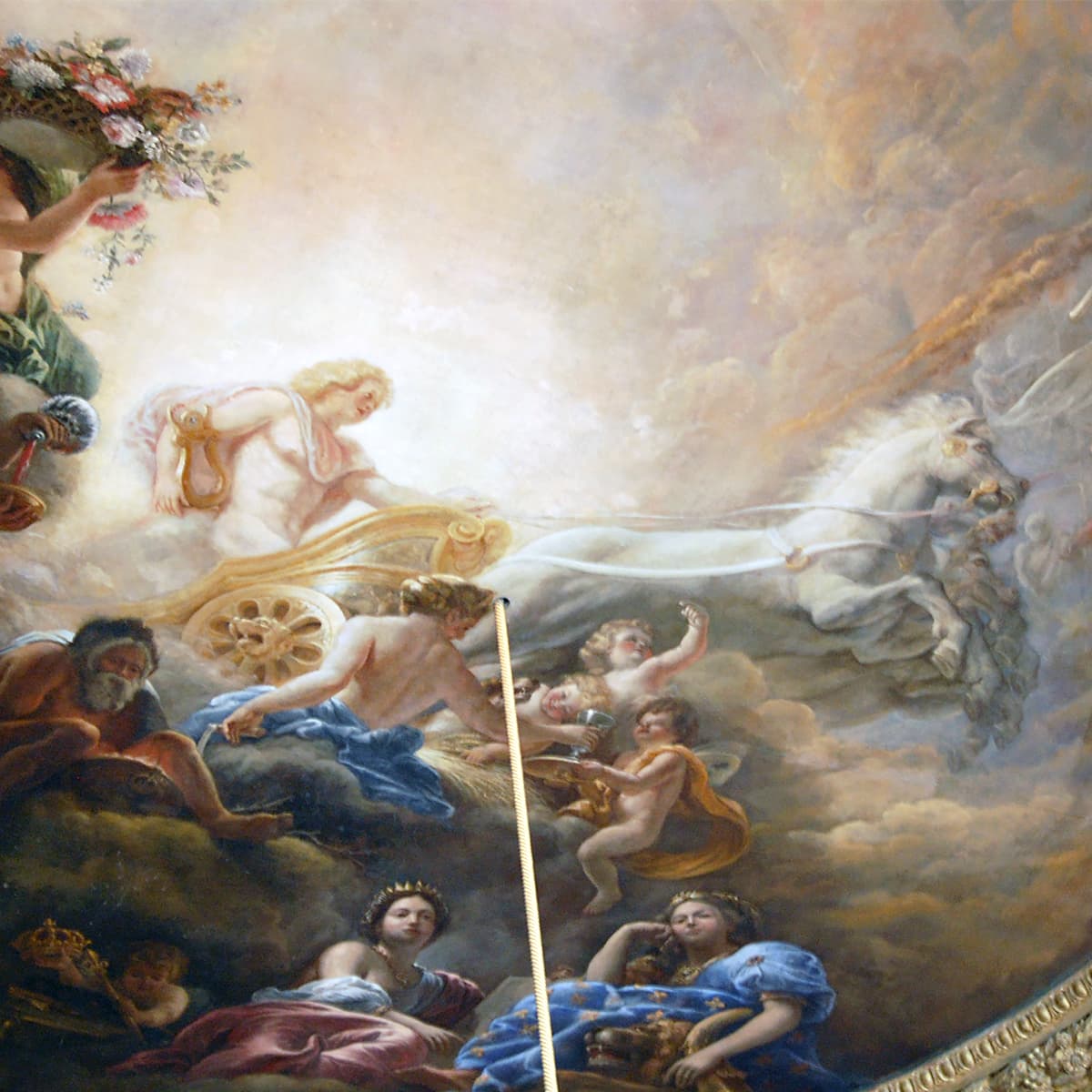
Everything in here reminds us that Louis XIV was not just any ruler, but the Sun King, who lit the entire world with his presence. On the ceiling, the sun god Apollo drives his chariot, dragging the sun across the heavens to warm the four corners of the world. Find those four continents, starting above the exit door and moving counterclockwise. There's Europe with a sword, Asia with a lion, Africa with an elephant, and finally, good old America, an Indian maiden with a crocodile.
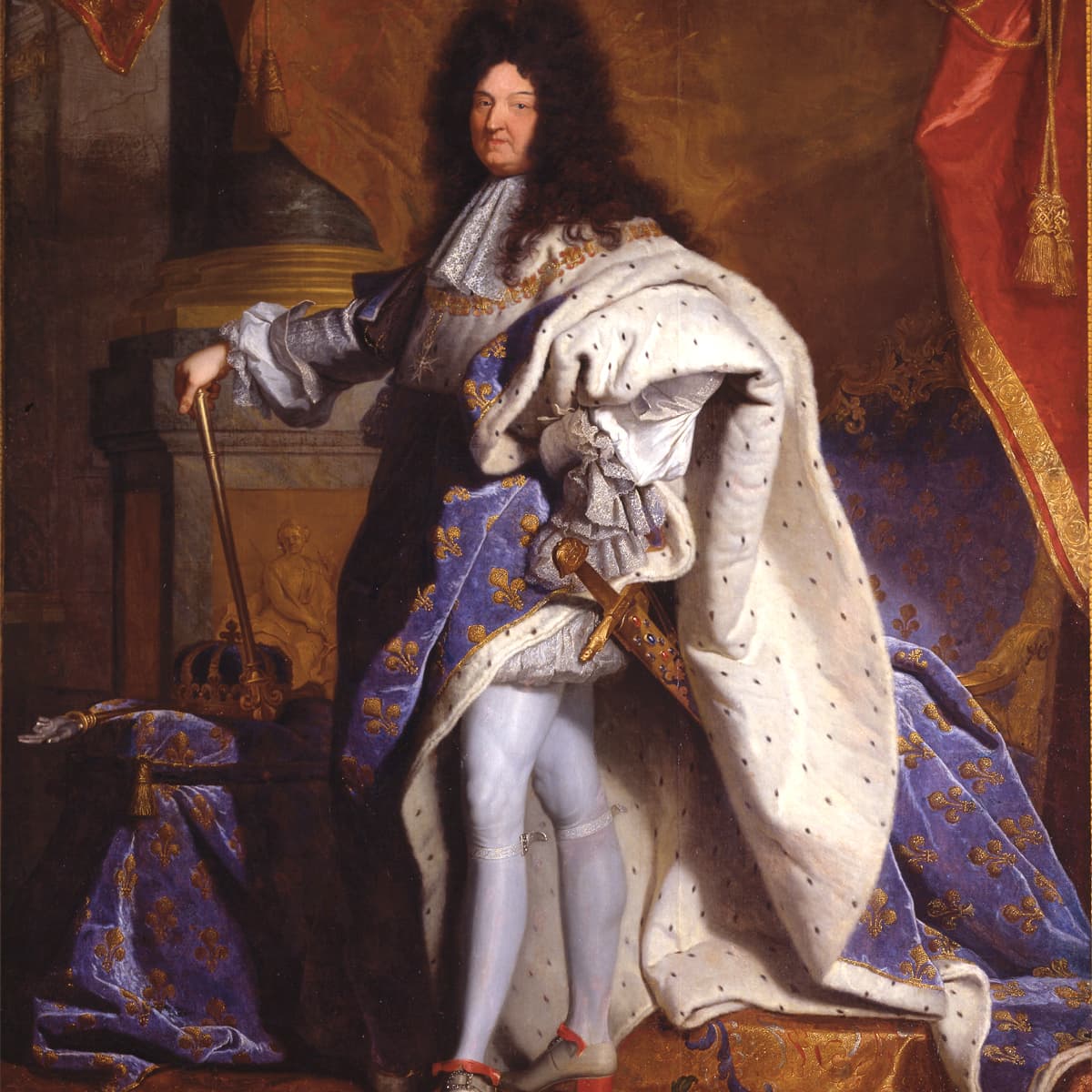
Notice the ceiling's beautifully gilded frame and gold-finger made-out. The famous portrait by Rigaud over the fireplace gives a more human look at Louis XIV. He's shown in a dancer's pose, displaying the legs that made him one of the all-time dancing fools of kingery. At night, they often held parties in this room, actually dancing around the throne.
Louis, who was 63 when this was painted, had more than 300 wigs like this one. He changed them several times a day. This fashion was born as Louis' hairline began to recede. It then spread all over Europe and even to the American colonies in the days of George Washington.
Louis may have been treated like a god, but he wasn't an overly arrogant man. His subjects adored him because he was a symbol of everything a man could be, the fullest expression of Renaissance man. Compare the portrait of Louis XIV with the one across the room of his last successor, Louis XVI. You'll see the same arrogant pose, but Louis XVI's just doesn't have the inner confidence necessary to keep his head on his shoulders. Continue into the next room, the final room on this side of the palace. The war room.
War Room
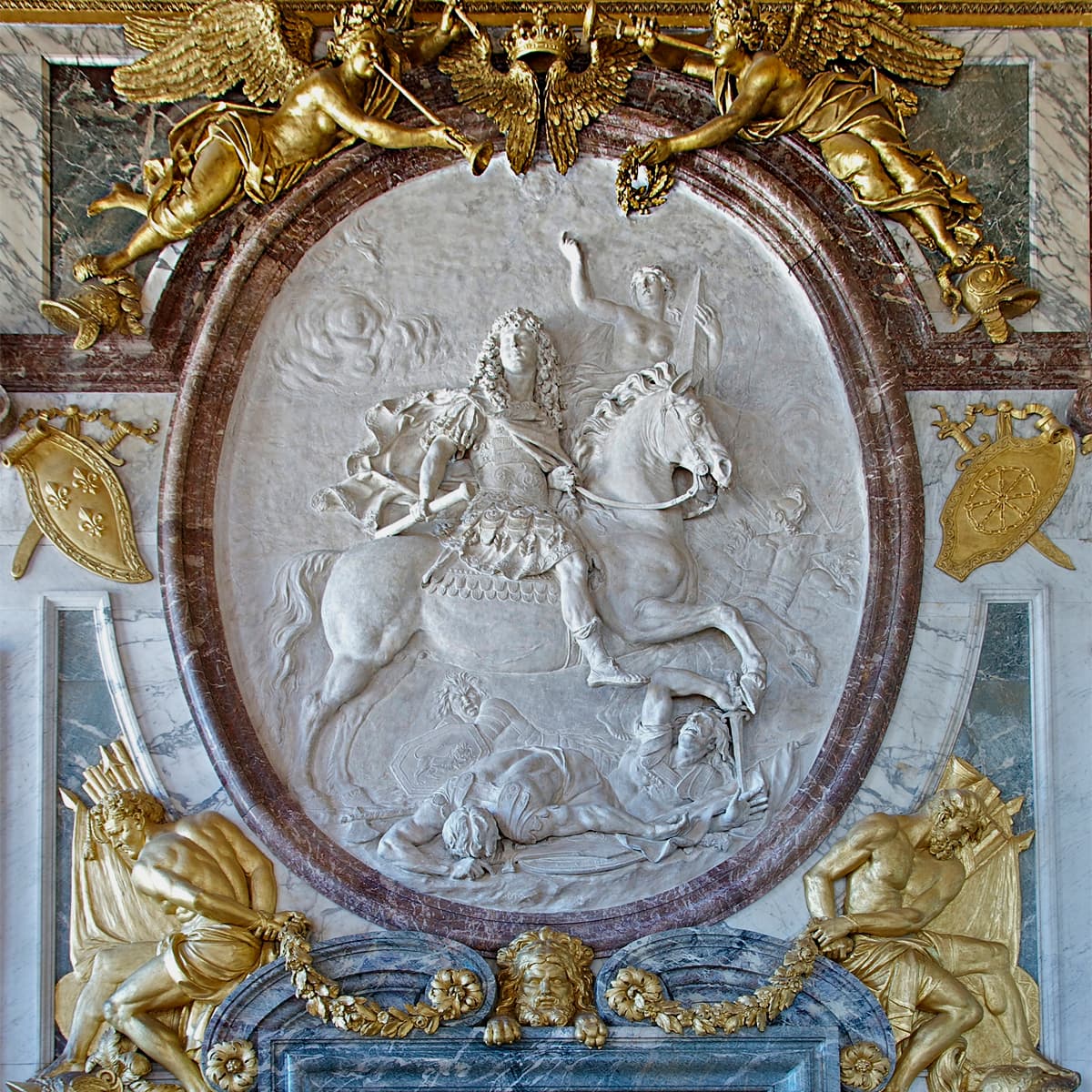
Louis XIV was addicted to wars, and France's success made other countries jealous and nervous. At the base of the ceiling in the semicircular paintings, we see a painting of Louis XIV, we see all the other nations ganging up on powerful France. You can see Germany with the double eagle, Holland with its great ships, and Spain with a red flag and roaring lion. But Lady France, in the center of the ceiling, protected by the shield of Louis XIV, hurls thunderbolts down to defeat them all.
The stucco relief on the wall shows Louis on horseback, triumphing over his fallen enemies. Versailles was good propaganda. It showed the rest of the world how rich and powerful France was. And Louis' greatest triumph may be the next room, the one that everybody wrote home about. Follow the crowds into the long, spacious, and magnificent ballroom. The Hall of Mirrors.
Hall of Mirrors
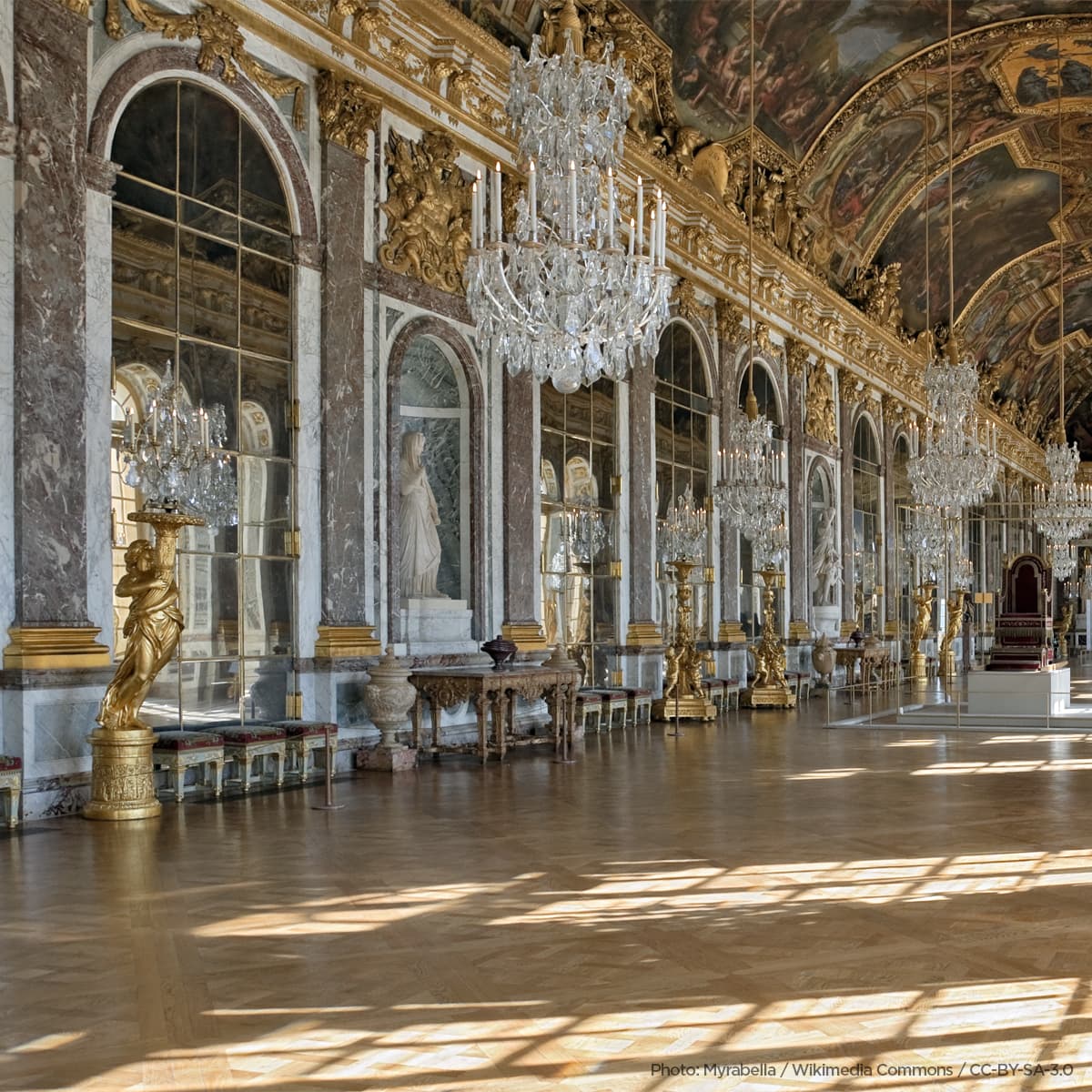
No one had ever seen anything like this hall when it was opened. Mirrors were still a great luxury at the time, and the number and size of these monsters was astounding. This Hall of Mirrors is nearly 250 feet long. There are 17 arched mirrors matched by 17 windows reflecting the breathtaking view of the gardens.
Lining the hall are 24 gilded candelabras, 8 busts of Roman emperors, and 8 classical-style statues, seven of them arched. These are actually ancient originals. As you make your way to the center of the room, about 20 steps past the doorway on your left, check out the glorious painting overhead. The ceiling decoration chronicles Louis' military accomplishments, topped off by Louis himself in the central panel with cupids playing cards at his divine feet.
Read more...Show less
The king's shown doing what he did best, triumphing. Originally, two sprawling carpets mirrored the action depicted on the ceiling. Now stand in the center of the hall and take in the ambience all around. Imagine this place lit by the flames of thousands of candles.
Then fill it with ambassadors, nobles, and visitors dressed in silks and powdered wigs. At the far end of the room sits the king on the canopied throne moved in temporarily from the Apollo room. Servants glide by with silver trays of hors d'oeuvres and an orchestra fuels the festivities. The mirrors reflect an age when beautiful people loved to look at themselves.
It was no longer a sin to be proud of good looks and fine clothes or to enjoy the good things in life. Laughing, dancing, eating, drinking, flirting, and watching the sun set into the distant canal. The importance of this room survived the age of divine monarchs. In 1871, after the Prussians defeated the French, Otto von Bismarck declared the establishment of the German Empire right here.
And in 1919, Germany and the Allies signed the Treaty of Versailles ending World War I and some say starting World War II here in the Hall of Mirrors. From the center of the hall, you can fully appreciate the epic scale of Versailles. The huge palace by the architect Louis Laveau, the fantasy interior by Charles Lebrun, and the endless gardens by André Le Notre. Made Versailles la best.
Backtrack a few steps and find an open doorway. Hey, let's go through it. Let's. This leads to some of the most intimate parts of the palace that are open to the public. The King's Bedroom
King’s Bedroom, Council Rooms
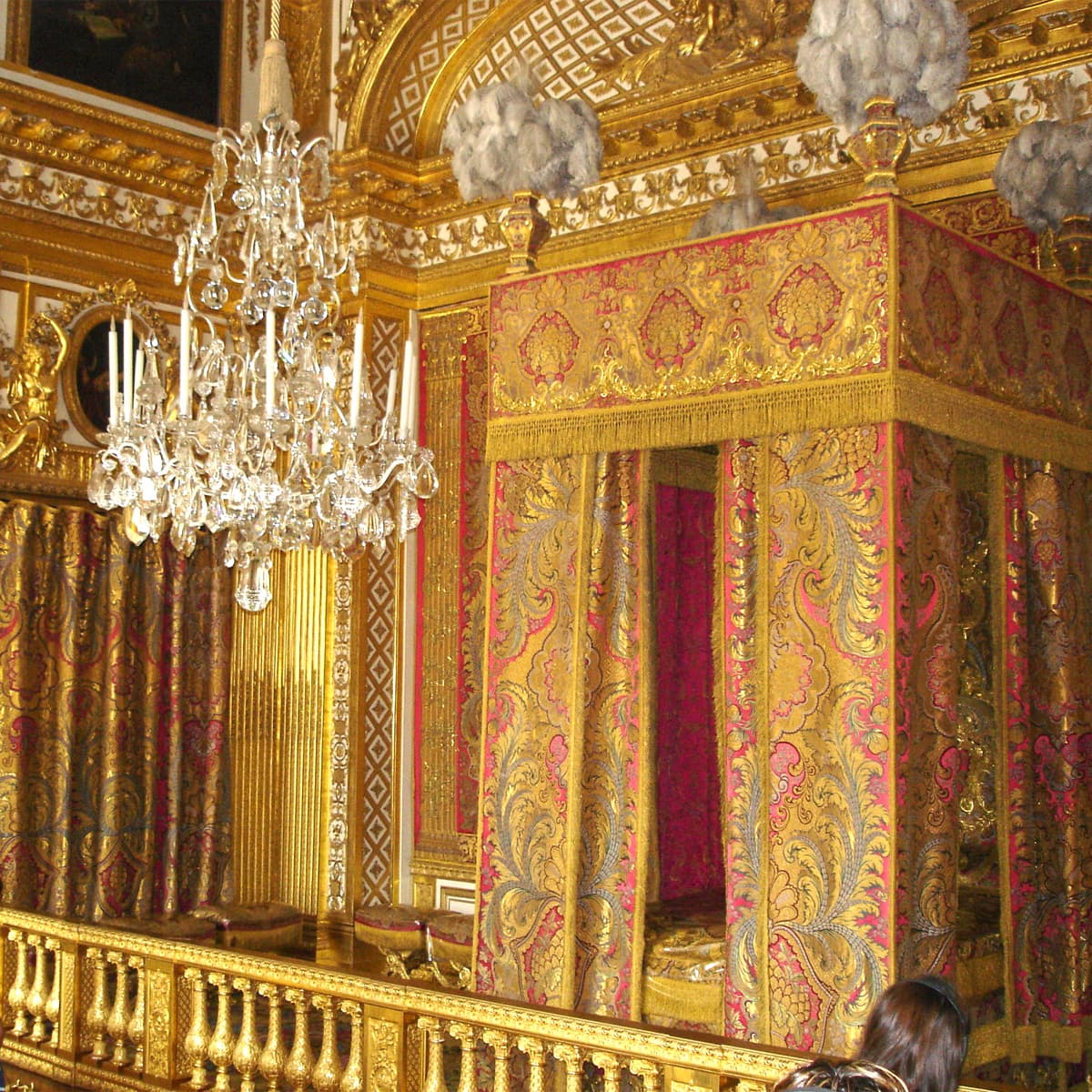
and Council Rooms You first enter a large room that served as a council chamber for the king's advisors. Now, continue on into Louis XIV's actual bedroom. There's an impressive canopied bed, another period piece replica. The room is elaborately decorated and the decor changed with the season.
Look behind the bed. There on the wall is a golden Lady France who watched over her king as he slept. At the foot of the bed is a balustrade that separated the courtiers from the king. You see, this bedroom was both private and public.
Read more...Show less
The king slept here, but he also worked here. The rooms on either side of his bedroom were for top council meetings. Now, turn your attention to Louis' bedroom window. Look out the window and notice how this small room is at the exact center of the immense horseshoe-shaped building, overlooking the main courtyard and, naturally, facing the rising sun in the east.
Imagine the humiliation on that day in 1789 when Louis XVI was forced to stand here and acknowledge the angry crowds that filled the square demanding the end of the divine monarchy. Keep going. Eventually, you'll spill back out in the Hall of Mirrors. Once there, continue to the far end of the Hall of Mirrors.
The rooms we've seen so far have been for the king. Now we enter a suite on the other side of the palace. Rooms fit for a queen. At the end of the Hall of Mirrors, you pass into a lavish room in the corner of the palace. The Peace Room.
Peace Room
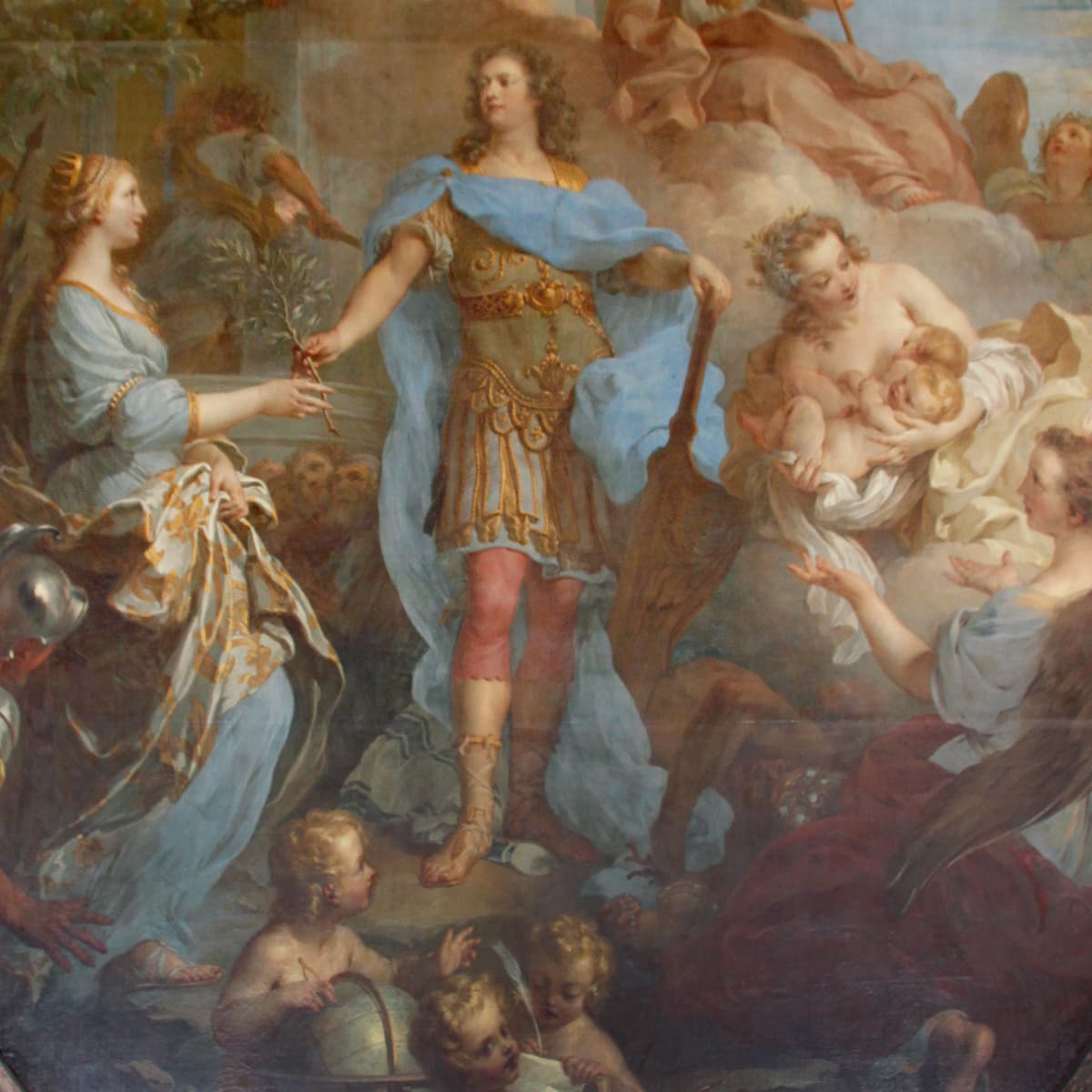
Look at the symbolic images on the walls in this room. It's clear that the palace is clear that by the end of the Sun King's long life, he was tired of fighting. In this sequel to the War Room, peace is granted to Germany, Holland, and Spain as cupids play with the discarded cannon, armor, and swords. Louis XIV advised his great-grandson to be a peaceful king.
The oval painting above the fireplace shows his successor. Nineteen-year-old Louis XV bestows an olive branch on Europe. Beside him is his Polish wife, Marie, cradling their baby-twin daughters. Louis XV would prove to be a more hands-off ruler, delegating authority to his advisors while amusing himself with a bevy of mistresses.
Read more...Show less
The Peace Room marks the beginning of the queen's half of the palace. The queen's wing is a mirror image of the king's wing. While the king's wing was mostly ceremonial and used as a series of reception rooms, the queen's wing is more intimate. For instance, on Sundays, the queen held chamber music concerts in this room for family and friends. Notice the gilded music motifs. Enter the next room with its canopied bed. The queen's bedroom.
Queen’s Bedroom, Salon of Nobles
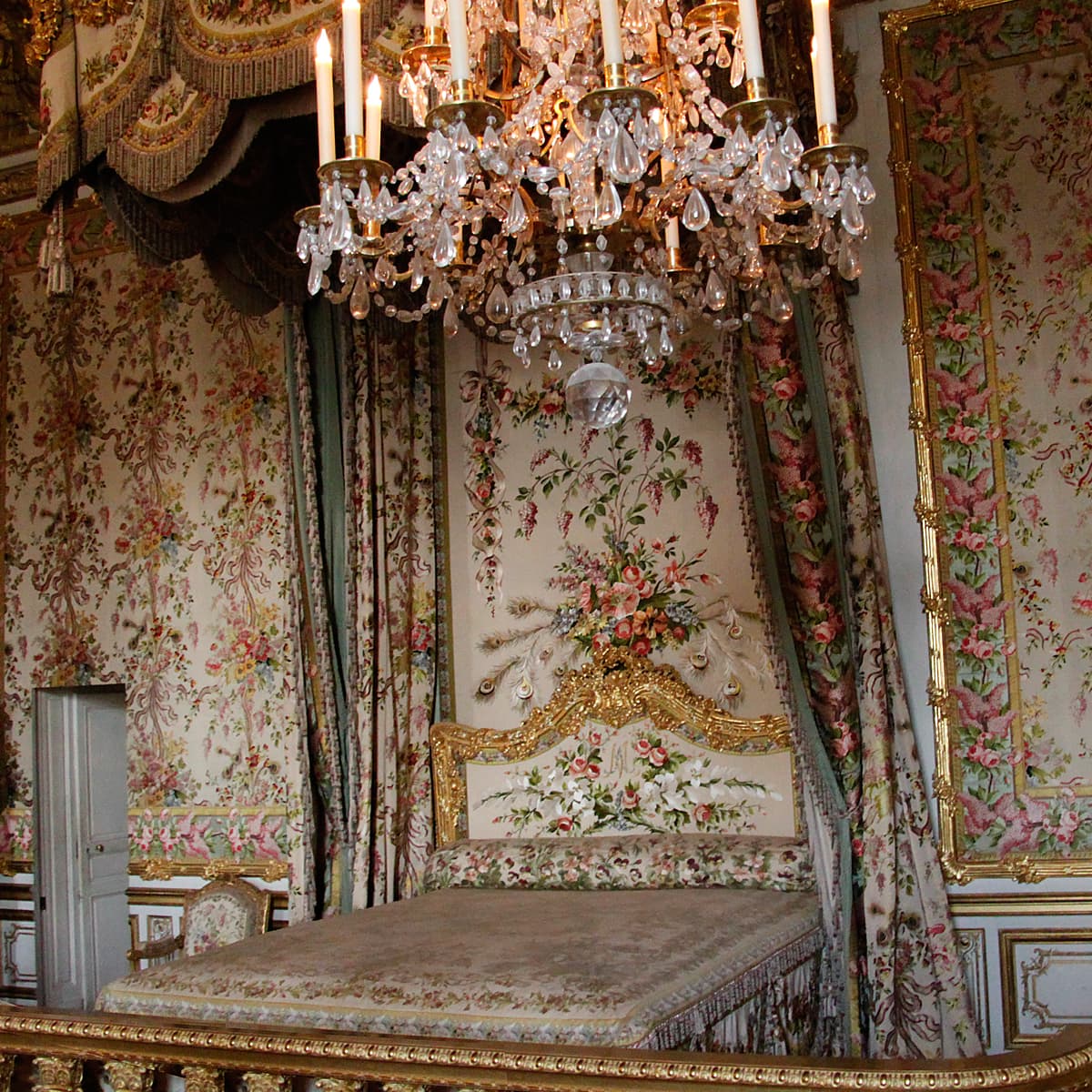
This room looks like it did in the days of the last queen, Marie Antoinette, who substantially redecorated the entire queen's wing. That's her bust over the fireplace and the double-eagle of her native Austria in the corners. The big chest to the left of the bed held her jewels. The queen's canopied bed is a reconstruction.
The bed, chair, and wall coverings were switched with the seasons. This was the cheery summer pattern. It was here that the queen rendezvoused with her husband. Two queens died in this room.
Read more...Show less
This is the room where 19 princes were born. The chandelier is where two of them were conceived. Rick! Rick!
Okay, just kidding. Royal babies were delivered in public with witnesses to prove their blue-bloodedness. Neither Louis XIV nor his successor were the most faithful of husbands. There was no attempt to hide the fact that the sun king warmed more than one bed, for he was above the rules of mere mortals.
By Louis XV's time, adultery became acceptable, even fashionable, in court circles. The secret-looking door on the left side of the bed was for the king's late-night liaisons. It led straightly to his private rooms. Some of Louis XV's mistresses, especially Madame de Pompadour, became more famous and powerful than his rather quiet queen.
But Louis was faithful to the show of marriage and had genuine affection for his wife. Their private apartments were connected, and Louis made a point of sleeping with the queen as often as possible, regardless of whose tiara he tickled earlier in the evening. Continue into the next room, where we get a glimpse into the world of the queen's social life. The Salon of the Nobles The queen's circle of friends met here, seated on stools under paintings by Boucher, popular with the queen for their pink-cheeked rococo exuberance.
Discussions ranged from politics to gossip, food to literature, fashion to fashion, to philosophy. The Versailles kings considered themselves enlightened monarchs who promoted the arts and new ideas. Folks like the political radical Voltaire and the playwright Moyer participated in the Versailles court. Ironically, these discussions planted the seeds of liberal thought that would soon grow into the revolution. Head for the next room, where royalty partied while revolution brewed. ¶¶ The Queen's Antechamber
Queen’s Antechamber, Guard Room
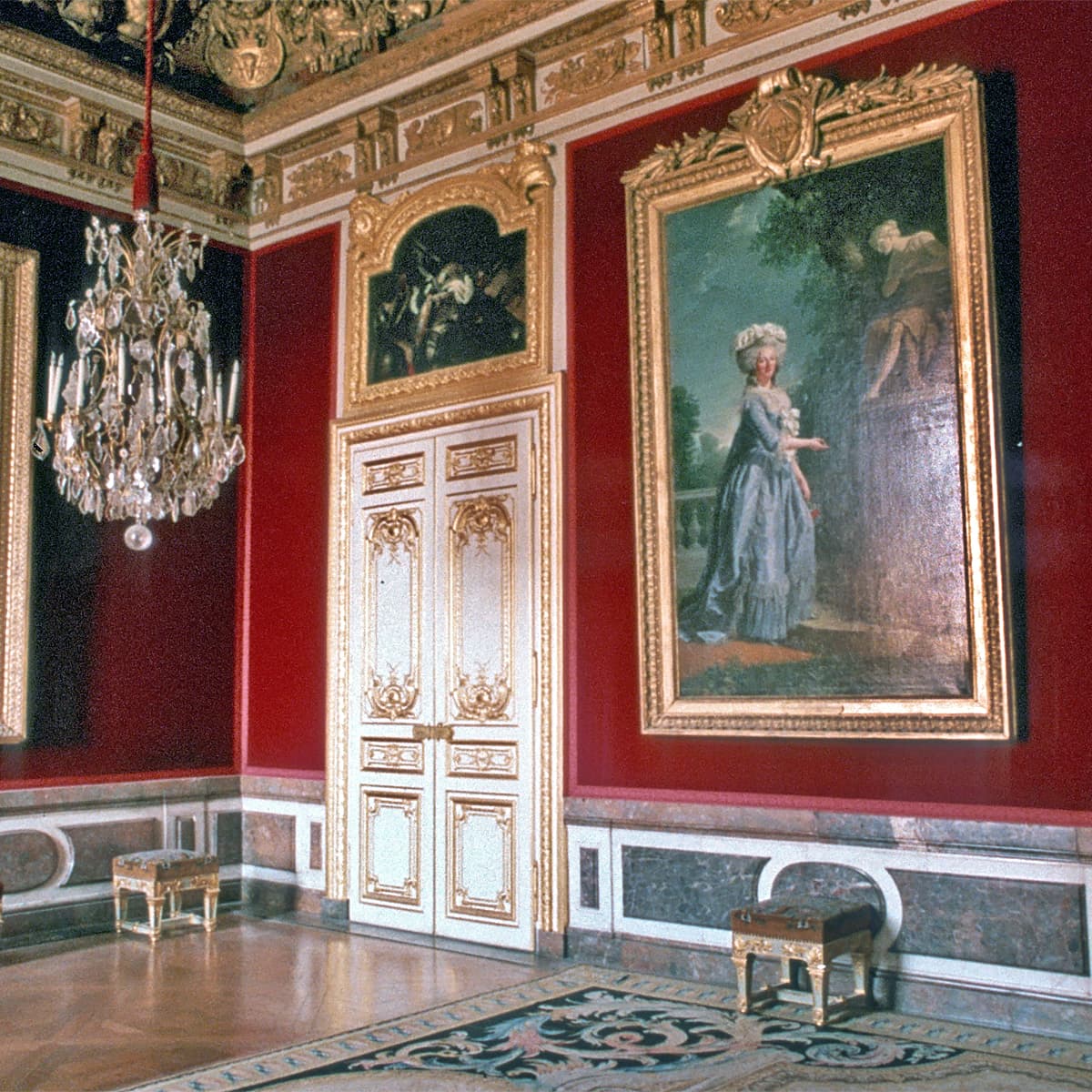
The royal family dined here. It was a public event, with servants and nobles fluttering around, admiring their table manners, and laughing at the king's jokes like courtly sidekicks. Here's the menu for a typical dinner. To start, four different soups.
Then, two entire birds stuffed with truffles. Mutton and ham slices came next, and for dessert, fruit and pastries. Hey, what about that three-bean salad? Yeah.
Read more...Show less
As we visit these final rooms of the chateau, we're also approaching the end of the French monarchy. Remember, Louis XIV reigned for 70 years, making France, Europe's number-one superpower. But his successor, Louis XV, let others run the country while he partied at Versailles. Meanwhile, revolutionaries were plotting in the streets of Paris.
Louis XV supposedly looked to the future and said the immortal words, Après moi, la deluge. After me comes the flood. His successor, Louis XVI, took over and waited for the revolutionary onslaught. In this room, you'll see several portraits of the well-dressed ladies of Louis XVI's court.
The central portrait is of Marie Antoinette, the wife of Versailles' final king, Louis XVI. This portrait captures her luxury-loving, let-them-eat-cake image. As France's discontent grew and the fires of revolution kindled, it was Marie Antoinette who, perhaps unjustly, became the poster child of decadence to the peasants. The portrait at the far end of the room is a public relations attempt to soften her image by showing the queen with her three cute little children.
The floodwaters of the revolution were creeping up to the gates of Versailles. Head for the next room, where the final chapter played out. The Queen's Guardroom Louis XVI was an intelligent man, but he was no match for the snowballing events of France's growing revolution. On October 6, 1789, a mob of revolutionaries stormed the palace.
They were fed up with the ruling class leading a life of luxury out here in the countryside while they were starving in the grimy streets of Paris. The king and queen locked themselves in the palace, finally retreating to this room. Some of the revolutionaries gained access to the upper floor. They burst in, where Marie Antoinette was.
Marie Antoinette was hiding, overcame her bodyguards, and dragged the queen and her husband off. Some claim that as they carried her away, she sang, Louis, Louis, oh, oh, we gotta go now. Yeah, yeah, yeah, yeah, yeah, right, Rick. The enraged peasants then proceeded to ransack the palace as revenge for the years of poverty and oppression they'd suffered.
Marie Antoinette and Louis XVI were made virtual peasants back in Paris. Two years later, they were carried to the Place de la Concorde, where they knelt under the guillotine and were made, as they said back then, a foot shorter at the top. The monarchy ended, but French history did not. Make your way to the final room of this wing to see how France carried on. The Coronation Room
Coronation Room
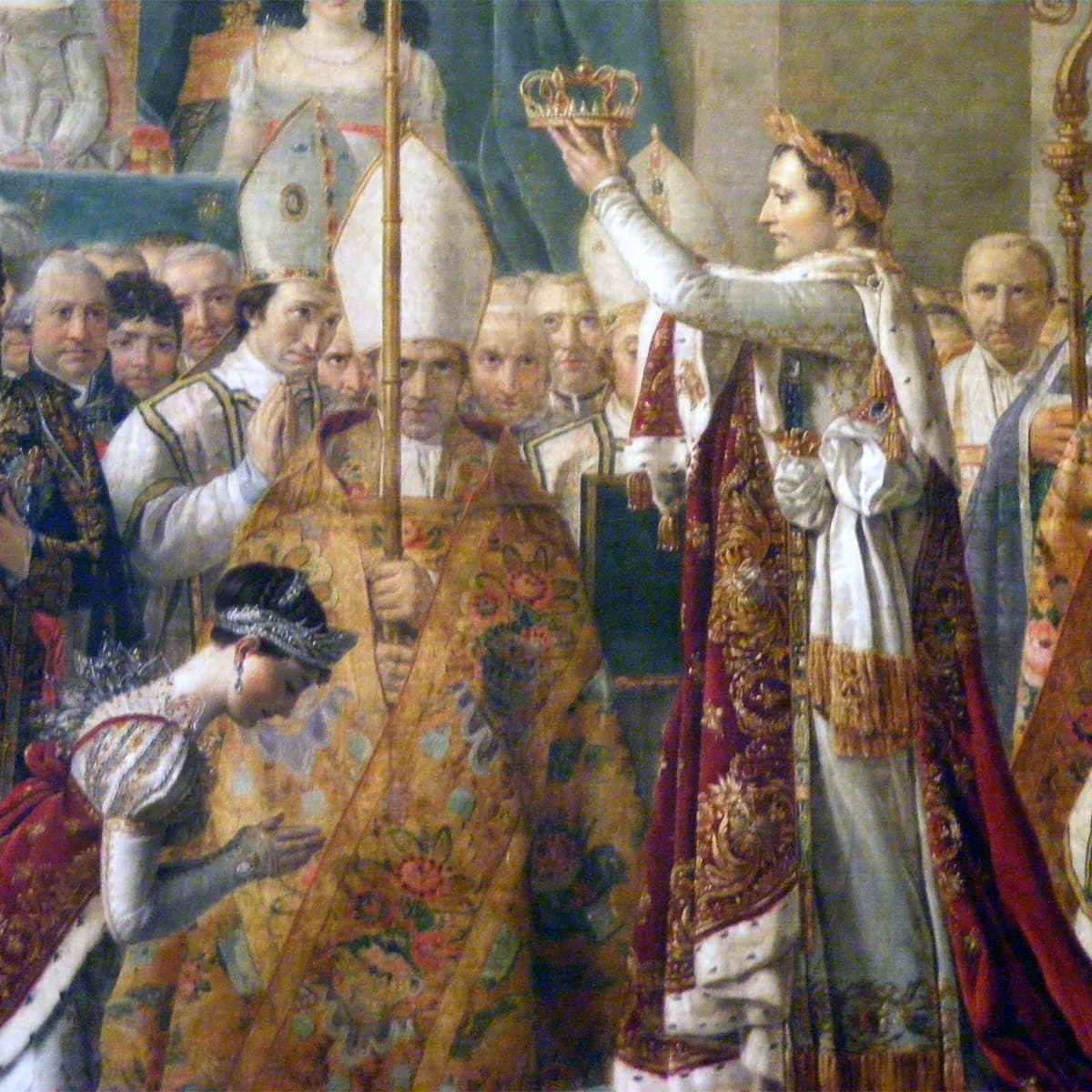
No sooner did they throw out their king than the French got an emperor, Napoleon Bonaparte, who's honored in this room. The revolution established democracy, but it was shaky in a country that wasn't used to it. In the midst of all that confusion, an upstart general, Napoleon, took control and soon ruled like a dictator. This room captures the glory of the Napoleon years, when France conquered most of Europe.
In the huge canvas on the left-hand wall, we see Napoleon crowning himself emperor, of a new, revived Roman empire. While also painted by the master, Jacques-Louis David, this is a lesser-quality version of the famous canvas that hangs in the Louvre. There are a few other paintings in this room that flesh out the remarkable story of Napoleon. Turn and face the windows to see the portrait, between the windows, of a dashing, young, and charismatic Napoleon.
Read more...Show less
This was painted in 1796, when he was just a general-in-command of the Republic of France. This is a portrait of the emperor, of the revolutionary army in Italy. Compare this with the adjacent portrait from ten years later, looking less like a revolutionary and more like a Louis. Above the young Napoleon is a portrait of Josephine, his wife and France's empress.
Opposite the coronation painting is The Distribution of Eagles, also by David. In it, the victorious general, in imperial garb, passes out emblems of victory to his loyal troops. Look at the painting opposite the window. It depicts the Battle of Aboukir.
In it, you see a Napoleonic general looking bored as he slashes through a tangle of dark-skinned Egyptian warriors. His horse, though, has a look of, What are we doing in this mob? Let's get out of here. You know, that's a good idea.
Let's. Let's, indeed. Our chateau visit is over, and time to head to the gardens. To exit the palace, just follow the flow of the crowds.
Head down the stairs, skipping the long gallery of famous French battles. The exit staircase will put you back outside, alongside the palace. From there, you're just steps away from the entrance to the gardens. Before tackling the gardens, this is a good time to take a break, get a bite to eat, and use the WC.
Me gotta go now. So pause the audio tour, and we'll meet up again when you're ready to visit the gardens. Entering the gardens.
Entering the Gardens
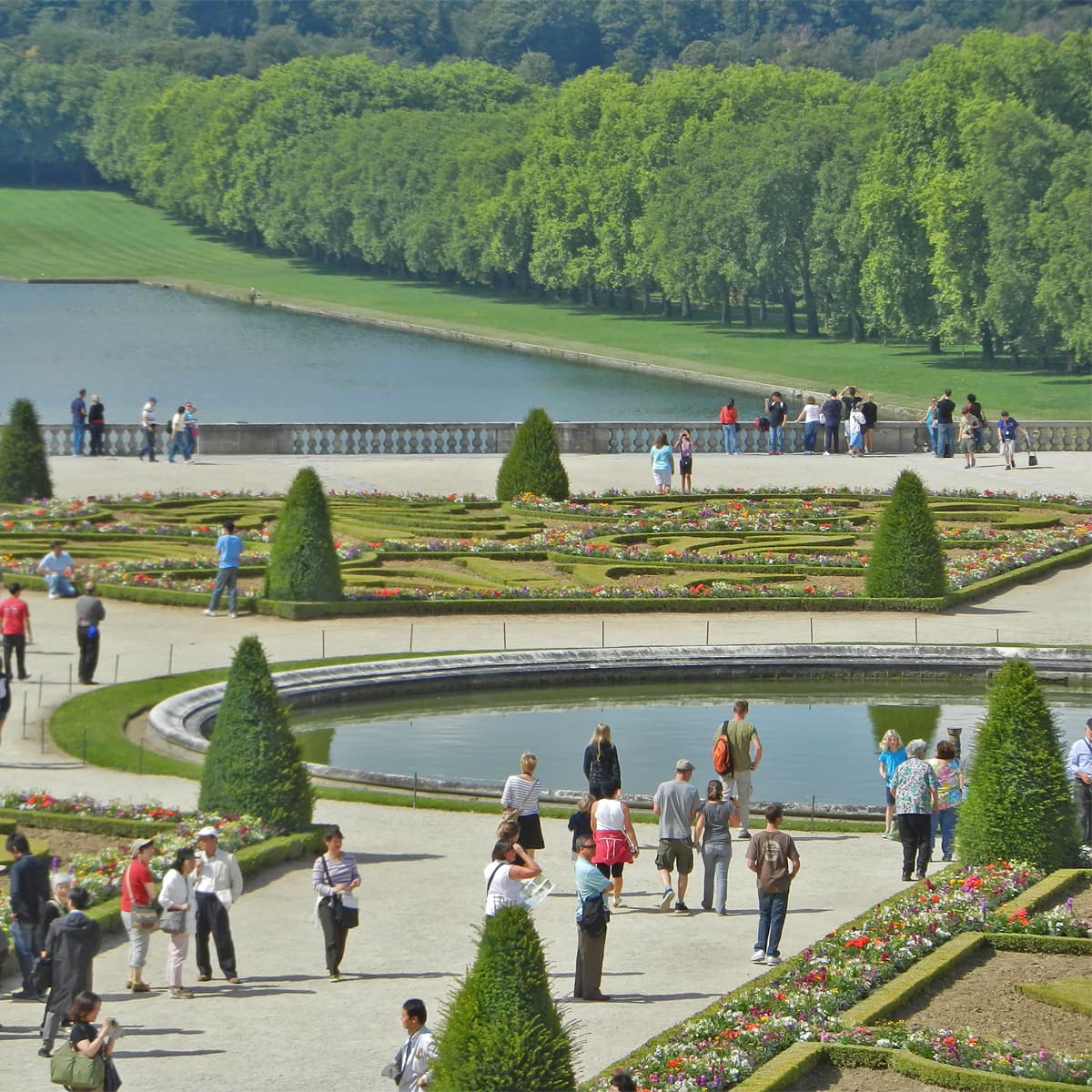
Versailles' gardens are so immense that we'll only see a slice of it. But it'll be a royal slice. We'll walk from the palace to the Apollo Fountain, about a half-hour leisurely stroll from here. That's where we'll end our tour, though I'll mention some options if you want to see more.
If you want to do more sightseeing. Enter the gardens. As you emerge into the palace's spacious backyard, keep walking ahead, that is, away from the palace. You're making your way to a spot directly behind the center of the palace with a view to the far distance.
Read more...Show less
You'll pass by artificial ponds, reclining river god statues, cookie-cutter patterns of hedges, and cone-shaped trees. Versailles' sculpted gardens were not just pretty, they symbolized the authority of France's king. Louis XIV was a divine right ruler. One way he proved it was by controlling nature, like a god.
These lavish grounds, elaborately planned out, pruned and decorated, showed everyone that Louis was in total command. Louis loved his gardens and, until his last days, presided over their care. He personally escorted VIPs around the grounds, and threw his biggest parties right here. With the Greco-Roman themes and their incomparable beauty, the gardens further illustrated the king's immense power.
As you walk, consider that a thousand orange trees were once stored beneath your feet in greenhouses. On sunny days, they were actually wheeled out in their silver planters and scattered all around the grounds. The warmth from the sun king was so great that he could even grow orange trees in church. You soon reach the top step of a staircase overlooking the gardens. Face away from the palace and take in the jaw-dropping view. The view down the Royal Drive.
View Down the Royal Drive
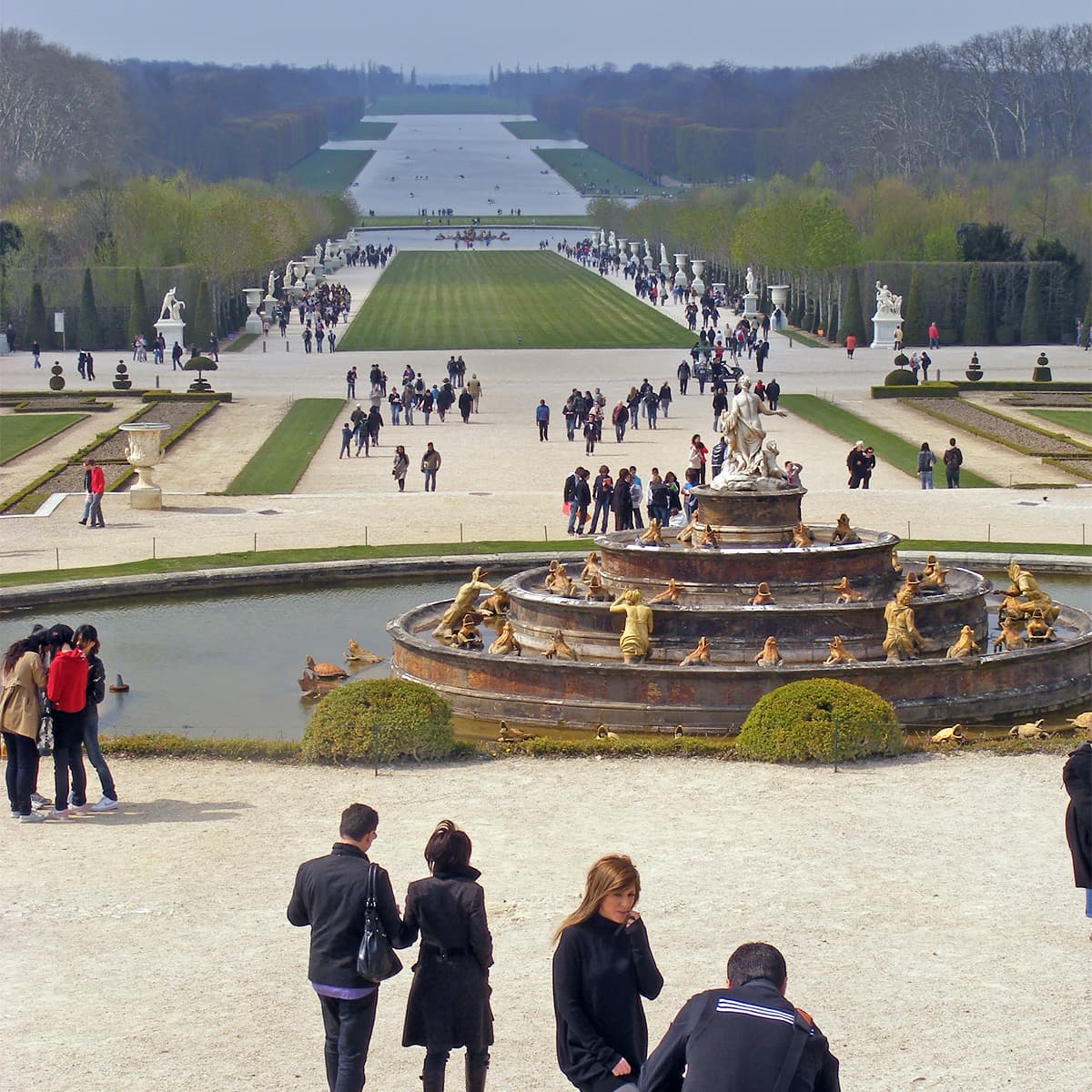
This, to me, is the most stunning spot in all of Versailles. With the palace behind you, the grounds stretch out, it seems, forever. Versailles was laid out along an eight-mile axis that includes the grounds, the palace, and the town of Versailles itself. It's one of the first instances of urban planning since Roman times.
In fact, it served as a model for future capitals, like Washington, D.C. Looking down the Royal Drive, you see the round Apollo Fountain far in the distance. Just beyond that is the Grand Canal. The groves on either side of the Royal Drive were planted with trees from all over.
Read more...Show less
It's all laid out in an elaborate grid and dotted with statues and fountains. Of the original 1,500 fountains, 300 remain. Look back at the palace. You can see the Hall of Mirrors.
It's the middle story with the arched windows. Let's start heading for the Apollo Fountain. You can see it in the distance, and again, that's where this tour ends. If you're out of steam or out of time, you could actually stop here.
Listen to the rest of the commentary and see what I'm talking about and cut this tour a little bit short. Stroll down the steps. Circle to the left around a huge round fountain called the Latona Basin. As you make your way around that basin, check out its sculptures while Rick tells the story behind it. The Latona Basin.
Latona Basin
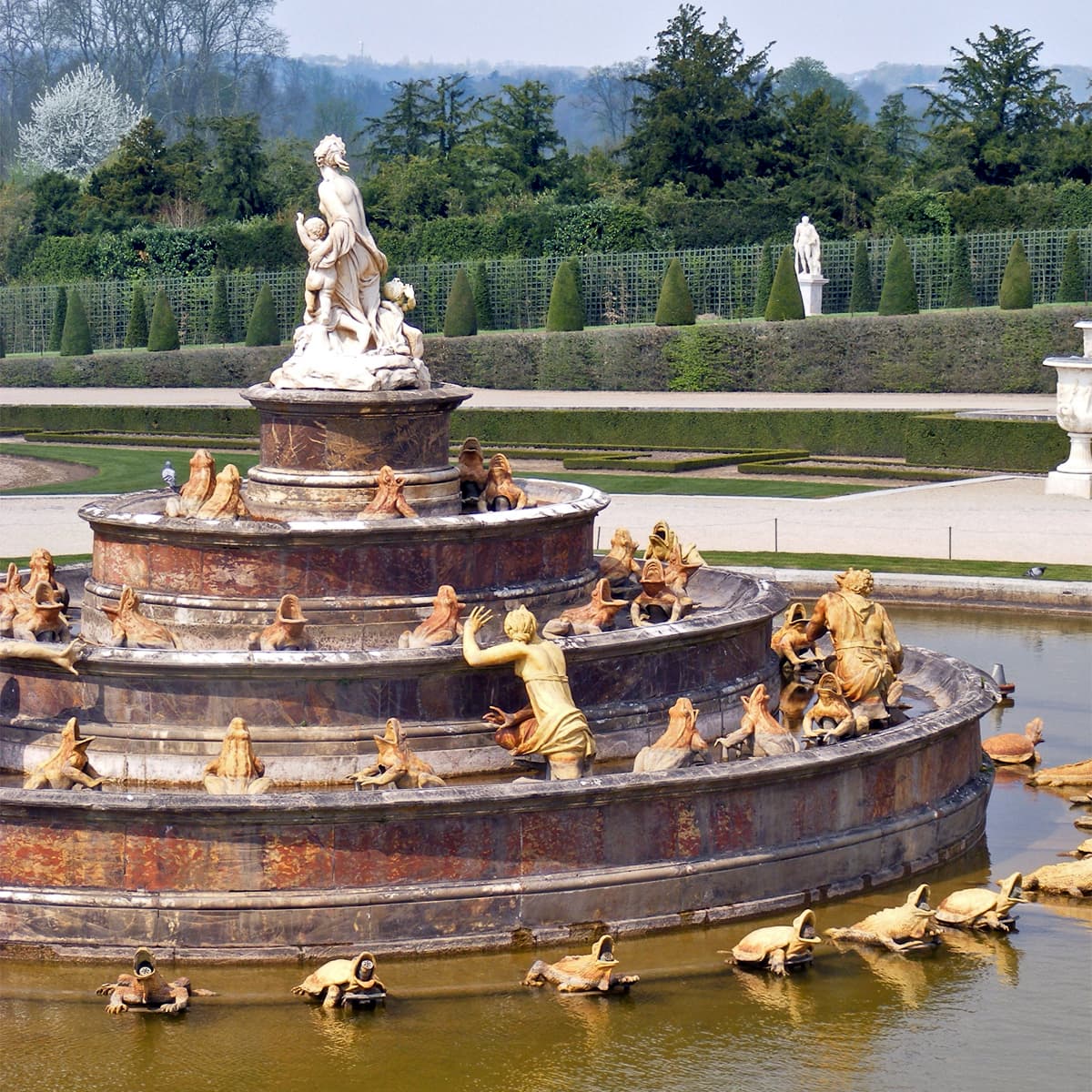
The fountain has a wedding cake-looking structure in the center that's dotted with statues. Ringing the base are turtles with gaping mouths. On other levels are more turtles, nymphs, frogs, and lizards. On top stands a lady, and that's where the fountain's symbolic story begins.
Everything in the garden has a symbolic meaning. This round fountain tells the story of the birth of Apollo, another sun king on par with Louis XIV. On top of the fountain are Apollo and his sister, Diana, as little kids with their mother, Latona. They're facing toward the Apollo fountain.
Read more...Show less
Latona, an unwed mother, was insulted by the local peasants. She called on the king of the gods, Zeus, that's her children's father, to avenge the insult. Zeus swooped down and turned the peasants into all the little frogs and lizards you see ringing the fountain today. By now, you should be nearing the downhill side of the Latona Basin.
Keep heading downhill straight down the Royal Drive. By the way, there are eateries and toilets dotted throughout the gardens. A few are hidden away right near here. They're through the hedges at about 11 o'clock as you make your way downhill. Now, continue strolling down the Royal Drive, staying along the left-hand side. Walking down
Walking Down the Royal Drive
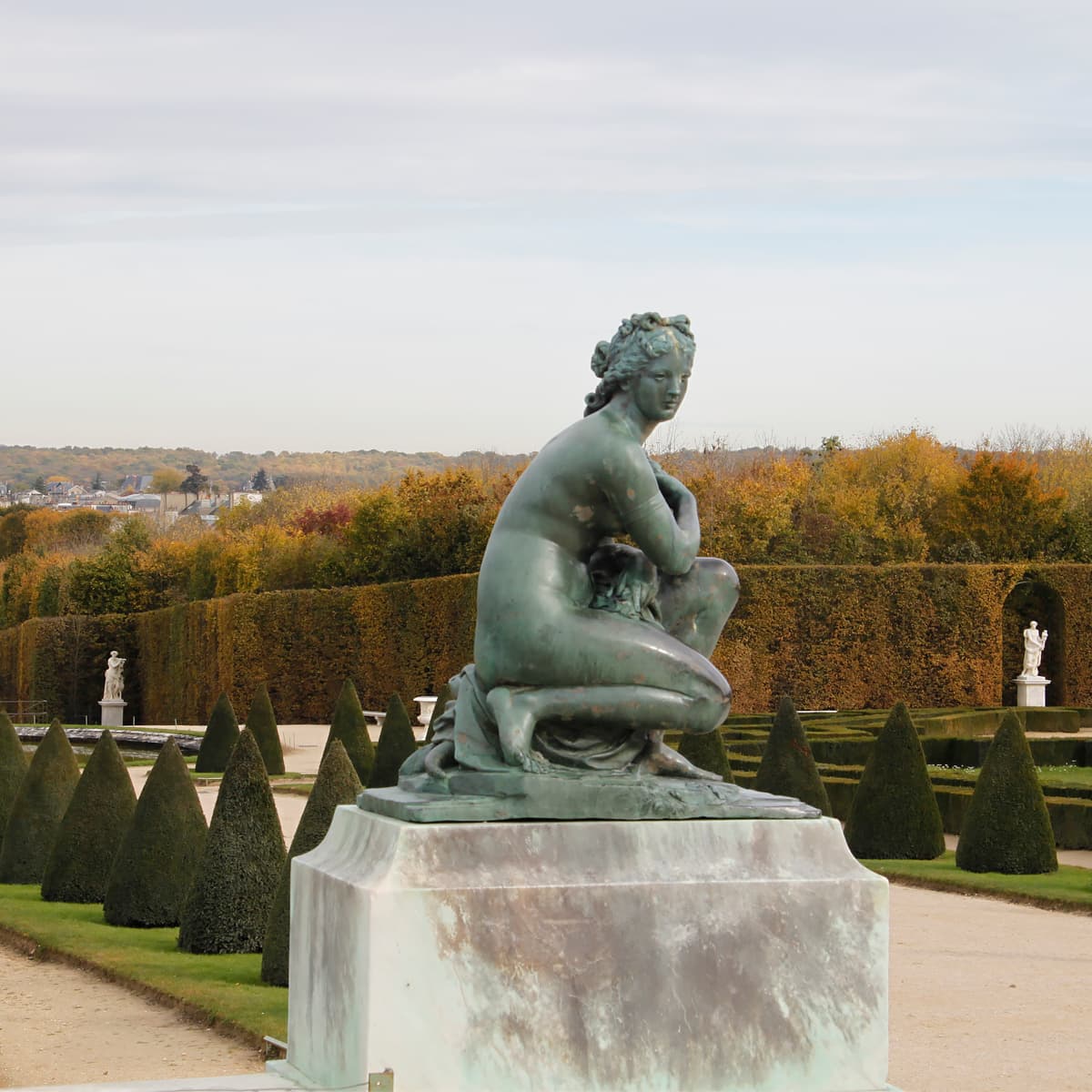
the Royal Drive, our next stop, the colonnade, is hidden in the woods on the left side of the Royal Drive, about three-quarters of the way down. Don't worry, I'll give more specific directions as we approach it. As you stroll down the Royal Drive, you'll pass by gleaming white statues that seem to be from ancient times. In fact, they were done by 17th-century French sculptors in love with all things classical.
You'll see statues of Greek and Roman gods like Venus and Diana, you'll see nymphs and mythological heroes like Achilles. There are robed women who stand as allegories of the seasons, and some of the pedestals sport huge Roman-style vases. You'll also pass by pathways that branch off the Royal Drive. The gardens are laced with paths through the greenery, laid out in an east-west and north-south grid.
Read more...Show less
They lead to picturesque groves, hideaway ponds, and romantic fountains. Up ahead on the left-hand side is one such path, the turnoff that leads to our next stop, the colonnade. Once you reach that path and look left, the white-columned colonnade is hard to miss. It'll take a minute or two to get there, so enjoy some music while you walk.
This music comes from the time of the court at Versailles. In fact, Louis XIV loved to dance. He occasionally even donned a costume and joined the other performers on stage. Enjoy the music as you walk, or you can just skip ahead to the next track, and we'll meet you at the colonnade. piano plays softly piano plays softly piano plays softly piano plays softly piano plays softly piano plays softly
Colonnade
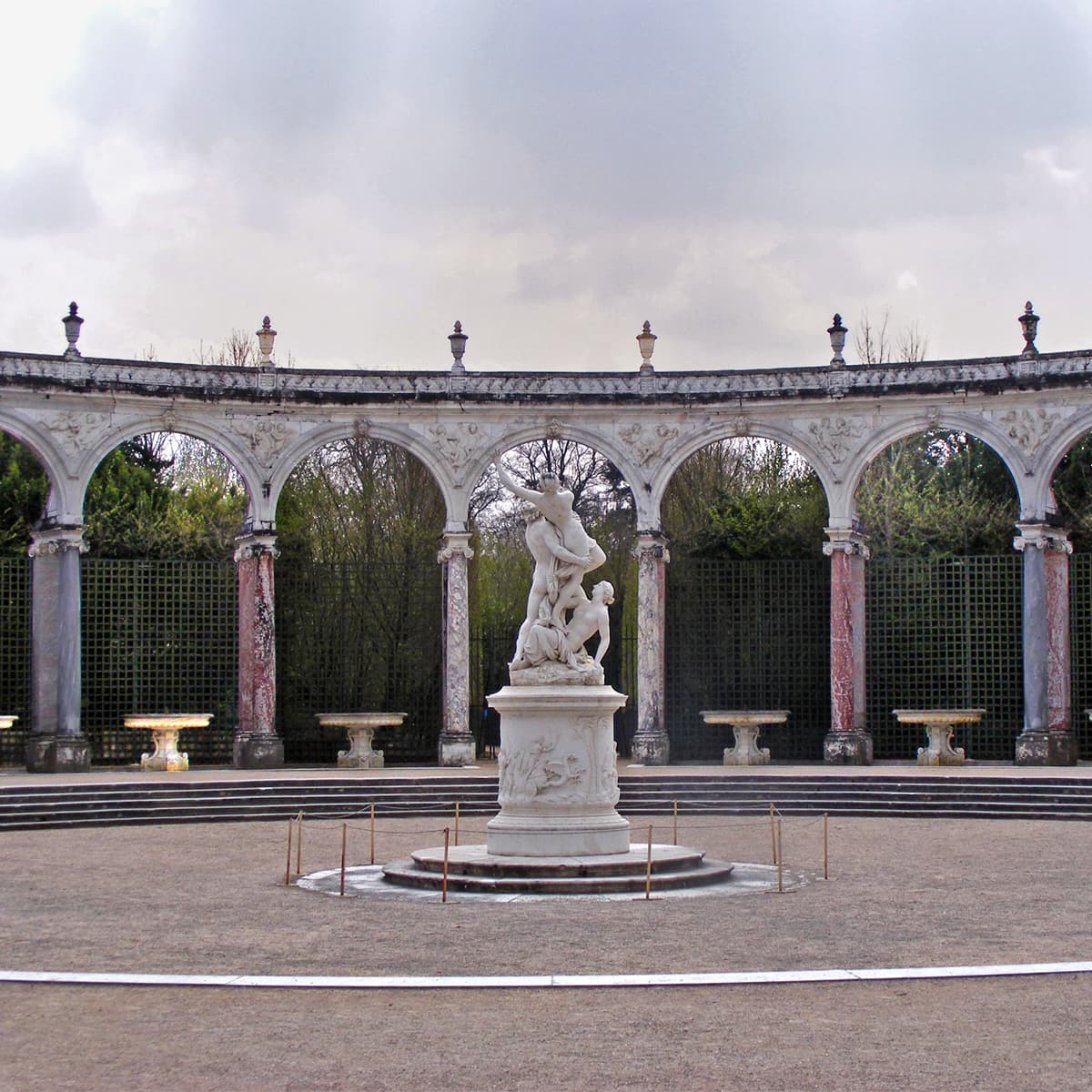
The colonnade. This classical-looking structure lies just off the Royal Drive on the left-hand side. You'll spot it from the Royal Drive when you reach the path that leads to it. Walk there.
Do I have to? Yeah, it's interesting. The colonnade is a circle of 64 red marble columns about 100 feet wide. The columns support pure white arches.
Read more...Show less
Versailles had no prestigious ancient ruins. No problem. The king built his own, a prefab Roman ruin. Find a few more details.
The arches are decorated with cherubs playing harps. In the center of the ruin stands a statue of Pluto, Greek god of the underworld. The statue depicts a racy, sexually charged scene that must have titillated the city. The sophisticated court of Versailles.
Pluto is carrying off Persephone, the daughter of Demeter, the goddess of grain. Persephone struggles against the sexual assault while her mom gets trampled below. The colonnade was a rendezvous spot for nobles. They'd picnic here in the shade of the columns.
They'd enjoy the splashing water of fountains. Notice the birdbath fountains ringing the colonnade. Meanwhile, they might have been serenaded by a string quartet as they pretended they were enlightened citizens of the ancient world. We're headed to our last stop, the Apollo Fountain, which sits at the end of the Royal Drive.
So return to the Royal Drive, turn left, and continue on to that big, round fountain. As you walk, enjoy some more music from the Court of Versailles. piano plays piano plays piano plays piano plays piano plays © BF-WATCH TV 2021 © BF-WATCH TV 2021
Apollo Basin, Grand Canal
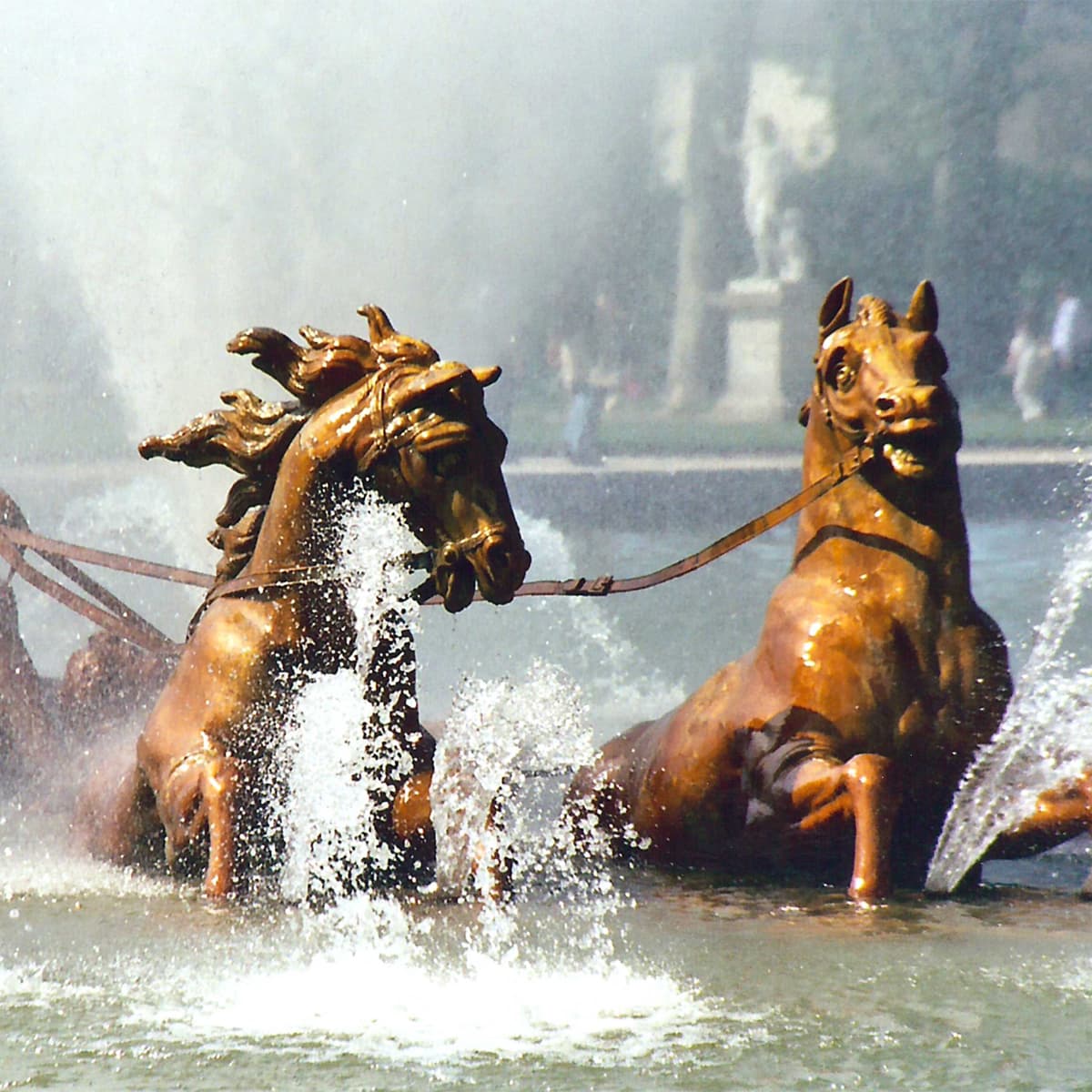
The fountains of Versailles were its most famous attraction, a marvel of both art and engineering. This one was the centerpiece, showing the sun god Louis XIV in his sunny chariot as he starts his daily journey across the sky. The horses are half-submerged, giving the impression, when the fountains play, of the sun rising out of the mists of dawn. Most of the fountains were only turned on when the king walked by, but this one played constantly for the benefit of those watching from the palace.
All the fountains here are gravity-powered. They work on the same principle as blocking a hose with your finger to make it squirt. Underground streams were pumped into Versailles by the pressure of the river Seine. They feed into smaller pipes at the fountains, which then shoot the water high into the air.
Read more...Show less
Just beyond the Apollo Basin, you can see another body of water. A huge body of water, stretching as far as the eye can see. This is the Grand Canal, modeled after the famous waterway in Venice. Why visit Venice when you can just build your own?
In an era before virtual reality, this was the next best thing to an actual trip. Couples and gondolas would pull along the water accompanied by barges with orchestras playing O Solo Mio. The canal is actually cross-shaped. You're looking at the longest part, one mile from end to end.
Of course, this, too, is a man-made body of water with no function other than to please Louis and his gang. Originally, actual gondoliers imported with their boats from Venice lived in a little settlement just next to the canal. The Apollo Fountain is the final stop on our tour. But before we say au revoir, listen to the next track, where Rick explains some more sightseeing options and brings the story of Versailles to its conclusion. The tour ends,
Tour Ends: Legacy
more sightseeing options, the domain of Marie Antoinette and the legacy of Versailles. The Apollo Basin is perfectly located at the heart of the gardens. Nearby, you'll find various eateries, WCs, and tourist services. And the Chateau is right up there, just a 30-minute walk away.
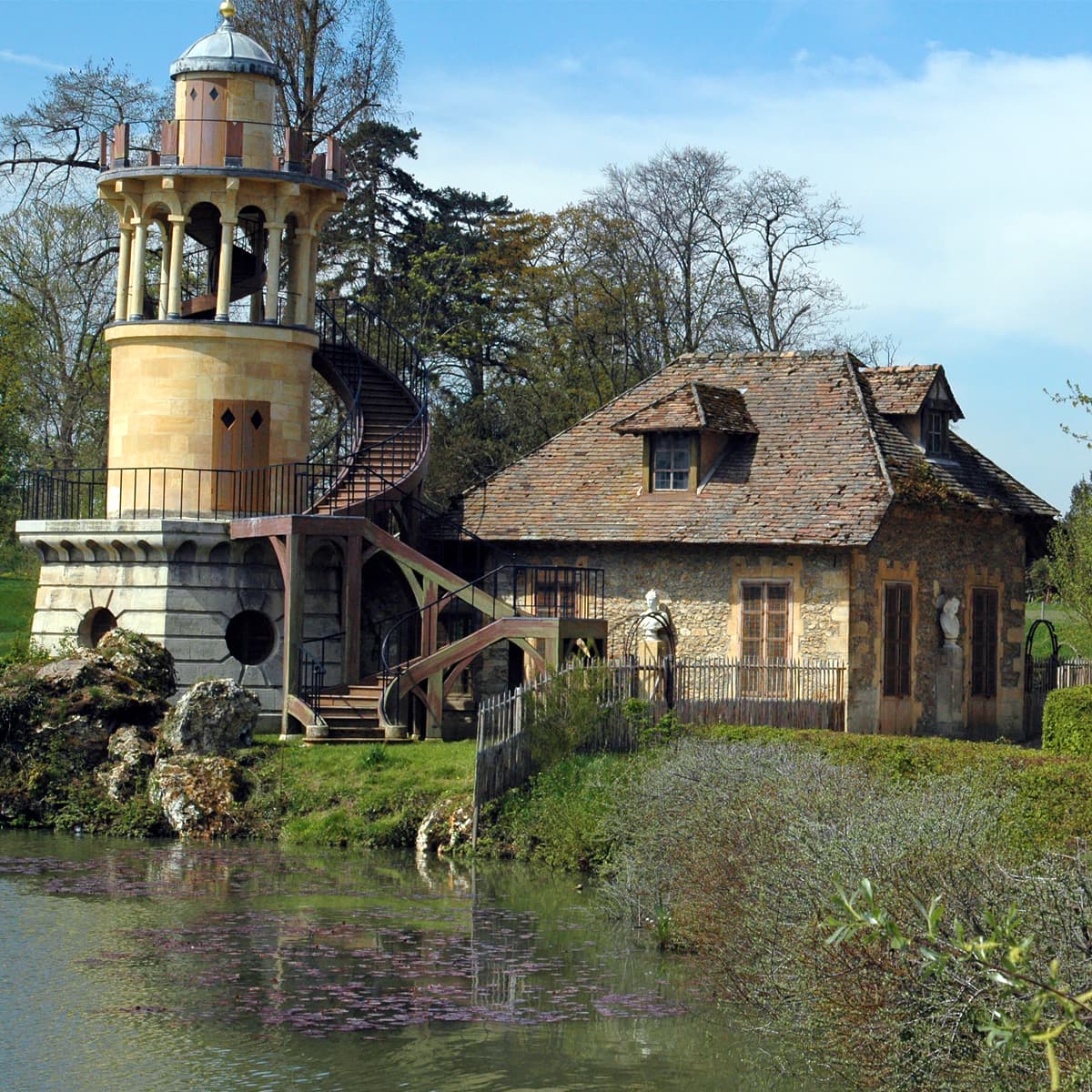
If you're up for more sightseeing, the exciting area called the Trianon, or the domain of Marie Antoinette, is a 15-minute walk from here. It's easy to find. Just follow the signs or get out your map. The domain is a walled-off enclosure that holds several small palaces that you can tour.
Read more...Show less
It's a fantasy world of ponds, pavilions, and pleasure gardens. If you go... Which we won't do on this tour. No, but if you want to see the domain when we're done, you'll continue past the two Grand Canal restaurants and boat rental, then veer right and go 500 yards uphill to the Grand Trianon.
Or just follow your map. Though we won't go to the domain, it is the next chapter in the story of Versailles. This is where Marie Antoinette retreated to escape the harsh realities of French life. She served tea in her little palaces.
She built a fake medieval village, like something right out of Hansel and Gretel. She spent her days pretending to be a farm girl, tending her manicured gardens and perfumed sheets. But meanwhile, France's real peasants sweated in the fields, and commoners starved in the grimy streets of Paris. Exactly.
Rick, while we're standing here, surrounded by acres of opulence, let's bring the tour home by remembering how the world-changing story of Versailles played out. Good idea. By 1792, the monarchy was crumbling, and revolution was in the air. Come on, Rick!
Formidable! To the barricades! Revolutionaries seized the day. Overnight, Versailles ceased to be the center of power and became a symbol of oppression.
As we saw, the revolutionaries marched right to the chateau. They arrested Louis XIV and Marie Antoinette and hauled them away to the guillotine. From that moment, Versailles has been frozen in time. It still looks much like the old days.
Much like it did back in its glory days. The chateau still has its marvelous ceiling paintings. The fountains still play on special occasions. The gardens still inspire fantasies.
And today, those fantasies can be indulged in by everyone, even us commoners. Finish your tour by looking back up at the palace. Appreciate the distance we've walked and how much history we've covered. Be glad you don't have to mow that lawn.
Our tour is over, but you are welcome to linger a little longer. Find a quiet spot. Indulge your own fantasy. We hope you've enjoyed this walk through Versailles.
Thanks to Jean Openshaw, the co-author of this tour. If you're doing more sightseeing in Paris, we have audio tours of the Paris Historic Walk, the Louvre, and the Orsay Museum. Remember, this tour was excerpted from the Rick Steves Paris Guidebook. Rick's co-authors for this book are Jean Openshaw and Steve Smith.
For more self-guided walks and details on eating, sleeping, and sightseeing in Paris, refer to that guidebook. For more free audio tours and podcasts, and for information about our TV shows, bus tours, and travel gear, visit our website at ricksteves.com. This tour was produced by Cedar House Audio Productions. Merci. Au revoir. And bon voyage. © transcript Emily Beynon
Free
GPS-guided walking tour
No account needed. Walk at your own pace.
Free
22 stops ·