10 stops
GPS-guided
2.7 km
Walking
45 minutes
Duration
Free
No tickets
About this tour
From the blood-soaked arena of the Colosseum to the flower market where a philosopher was burned alive, this walk covers two thousand years of history in a single morning. You'll stand where emperors lived, where the Roman Republic died, where Michelangelo redesigned a hilltop, and where Bernini trolled his rivals with a stone elephant. Ancient Rome, Renaissance Rome, and the living city — all in one epic walk.
10 stops on this tour
The Colosseum
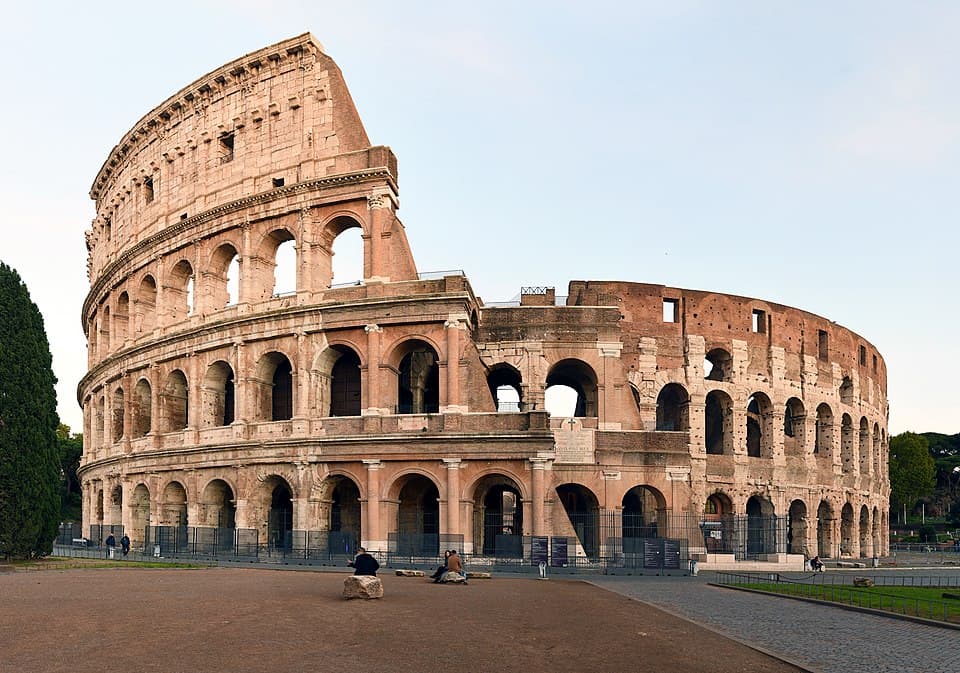
Welcome to Rome. And welcome to the building that defines it. You're standing in front of the Colosseum, and no matter how many photos you've seen, nothing prepares you for this. It's enormous. Forty-eight metres high, one hundred and eighty-nine metres long. Look at the arches stacked three stories high, each framed by a different style of column: Doric on the bottom, Ionic in the middle, Corinthian on top. The Romans literally wrote the textbook on classical architecture, and this building is the textbook.
But here's what most people don't know. This arena was built out of spite. Emperor Vespasian started construction in seventy-two AD on the exact spot where the despised Emperor Nero had built himself a private pleasure lake, part of his obscene Golden House complex. After Nero's suicide, Vespasian drained the lake and gave the land back to the people as a massive entertainment venue. It was a political masterstroke: where a tyrant once played, the people would now be entertained.
Read more...Show less
The construction itself is staggering. The building was finished in just eight years, largely by Jewish slaves brought to Rome after the sack of Jerusalem in seventy AD. Estimates suggest sixty thousand to a hundred thousand enslaved people hauled the stone. The Colosseum used roughly a hundred thousand cubic metres of travertine limestone, held together not by mortar but by three hundred tons of iron clamps.
And what happened inside? Gladiatorial combat, wild animal hunts, and public executions. The arena floor hid a two-level underground network called the hypogeum, with thirty-two animal pens and eighty vertical lifts. Animals and fighters could appear from the floor as if by magic. Over four centuries, an estimated four hundred thousand people died here, along with over a million animals. Lions, elephants, hippos, ostriches. The Romans drove the North African elephant to extinction for this place.
By the way, you know the word fornication? It comes from the Latin fornix, meaning arch. The arches of the Colosseum were a favourite meeting point for prostitutes after the games, when passions ran high. The arches literally gave us the word.
Now, look to your left, toward the large triumphal arch between the Colosseum and the hill beyond. That's the Arch of Constantine, built in three fifteen AD to celebrate Constantine's victory at the Battle of the Milvian Bridge. It's the largest surviving Roman triumphal arch. But here's the thing: most of the sculptures on it were stolen from earlier monuments to Trajan, Hadrian, and Marcus Aurelius. The Romans were recycling long before it was fashionable.
When you're ready, walk past the Arch of Constantine and bear right toward the entrance to Palatine Hill. It's about a hundred and fifty metres.
Palatine Hill

As you walk past the Arch of Constantine, look up to your right. That tree-covered hill with ruins peeking through the greenery is the Palatine Hill, and this is where Rome's story begins. According to legend, this is where Romulus and Remus were found by the she-wolf who nursed them in a cave called the Lupercal. In two thousand and seven, archaeologists actually found a vaulted sanctuary buried sixteen metres deep inside the hill that they believe is the legendary cave. Whether or not you believe in wolf-raised twins, the Palatine is genuinely where Rome started. Archaeologists have found Bronze Age pottery and tools here that predate the traditional founding date of seven fifty-three BC.
The hill's name gave us something we use every day: the word palace. Every language in Europe borrowed it. The Palatine was where the emperors lived, so palatium became palazzo, palais, palace. You're standing at the origin of the word.
Read more...Show less
Look up at those ruins. The most powerful people in the ancient world lived up there, starting with Augustus, Rome's first emperor. And here's what's wonderful about Augustus: he lived in a surprisingly modest house. The historian Suetonius wrote that Augustus slept in the same bedroom for forty years, summer and winter. No heated floors, no gold leaf. Just a simple room in a simple house on the fanciest hill in the world. His successors were not so restrained. Domitian built a palace so enormous in ninety-two AD that it covered most of the hilltop. Tiberius, Caligula, and Septimius Severus all added their own sprawling complexes. By the second century, the entire hill was one massive imperial compound.
Imagine standing here in the first century. You'd look up at marble facades gleaming in the sun, gardens cascading down the slopes, fountains catching the light. The emperors could look down from their terraces and see the Forum below, the Colosseum rising, the entire city at their feet. This was the most exclusive address on earth.
Today, the Palatine is one of Rome's most peaceful spots. Pine trees, wildflowers, lizards sunning themselves on two-thousand-year-old walls. It's a beautiful contrast to the chaos below.
Now, let's walk downhill. Head northwest, and in about four hundred metres you'll reach the Roman Forum. As you walk, notice how the path descends. You're literally walking from the world of emperors down into the world of the people.
The Roman Forum
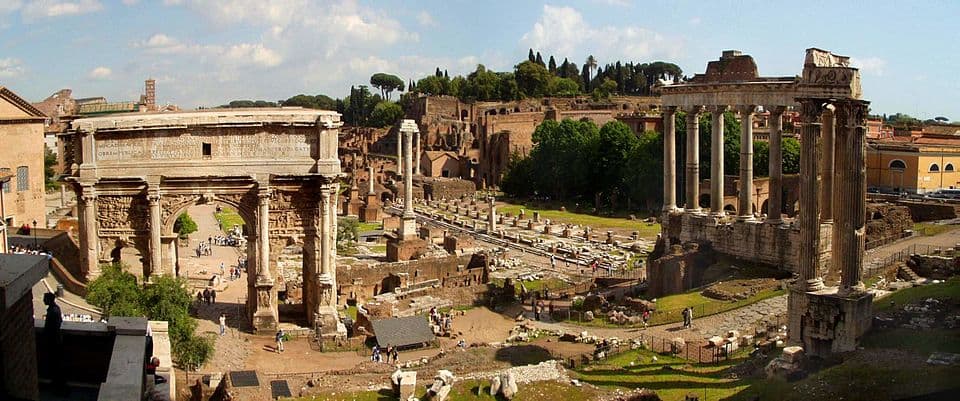
And here it is. The Forum. Two thousand years ago, this was the centre of the known world. Everything that mattered happened here: elections, trials, triumphal processions, religious ceremonies, and everyday commerce. The Senate met here. Julius Caesar was cremated here. Mark Antony gave his famous funeral speech here. Stand at the main viewpoint and let the scale of it sink in.
But it wasn't always grand. The Forum started as a swamp. Literally. The low-lying valley between the Palatine and Capitoline hills was marshy, waterlogged ground. The early Romans solved this with one of the greatest engineering feats of the ancient world: the Cloaca Maxima, a massive sewer that drained the valley. It was built around six hundred BC, and here's the kicker: it's still in use today. You're standing above a functioning twenty-six-hundred-year-old drain. The Romans really did build things to last.
Read more...Show less
Once drained, the valley became a marketplace, then a civic centre, then the symbolic heart of an empire that stretched from Britain to Iraq. Look at the columns still standing. Those eight columns on your right belong to the Temple of Saturn, one of the oldest temples in Rome, first dedicated around four ninety-seven BC. The Romans kept their treasury here. Imagine a temple that doubled as a bank.
Now, see that small circular mound near the centre? That's the spot where Julius Caesar was cremated on the seventeenth of March, forty-four BC, two days after his assassination. The crowd was so grief-stricken that they tore apart wooden benches and market stalls to build a funeral pyre right there in the Forum, against all religious law. To this day, people leave flowers on the spot. Two thousand years on, and Caesar still gets flowers.
After Rome fell, this entire area was buried under metres of earth and rubble. For nearly a thousand years, Romans called it the Campo Vaccino, the cow field, because that's literally what it had become. Cattle grazed over the Senate house. Farmers plowed over temples. It wasn't until the eighteenth and nineteenth centuries that excavation began to reveal what lay beneath.
When you're ready, climb the path leading up to your left, toward the Capitoline Hill. It's about three hundred and fifty metres, and the climb is worth it.
Capitoline Hill and Museums

You've made it to the top of the Capitoline Hill, the smallest of Rome's seven hills but historically the most important. In ancient times, this was the religious centre of Rome. The Temple of Jupiter Optimus Maximus, the most sacred temple in the Roman world, stood on this summit. Generals returning from victories would climb up this hill in triumphal processions. The word Capitol, as in the U.S. Capitol, comes directly from this hill.
But what you're looking at now isn't ancient. This gorgeous piazza was designed by Michelangelo. Yes, that Michelangelo. In fifteen thirty-six, Pope Paul the Third asked the sixty-one-year-old genius to redesign this hilltop. Michelangelo had just finished the Sistine Chapel ceiling and was working on The Last Judgment. And somehow he found time to completely reimagine a public square.
Read more...Show less
His design was radical. He turned the piazza to face not the old Roman Forum behind you but Saint Peter's Basilica in the distance, the new centre of power. He designed a trapezoidal space flanked by three palazzi with matching facades, connected by a grand ramp staircase called the Cordonata. And in fifteen forty-six, he drew an oval pavement pattern with a twelve-pointed star at its centre. It's stunning geometry. Here's the thing, though: Michelangelo never saw it finished. He died in fifteen sixty-four, and the square wasn't completed until the seventeenth century. The star-pattern pavement? That wasn't actually laid until nineteen forty, when Mussolini ordered it done to Michelangelo's original design. Nearly four hundred years after it was drawn.
The bronze statue in the centre is a copy of Marcus Aurelius on horseback, one of the most famous equestrian statues in the world. The original, from around a hundred and seventy-five AD, survived the Middle Ages only because people thought it was Constantine, the first Christian emperor. Had they known it depicted a pagan, they'd have melted it down. It's now safely inside the Capitoline Museums, in the building on your left.
Those museums, by the way, are the oldest public museums in the world, founded in fourteen seventy-one when Pope Sixtus the Fourth donated a collection of ancient bronzes to the people of Rome. If you have time, go in. The original She-Wolf of Rome is in there, along with the Dying Gaul and the colossal head and hand of Emperor Constantine.
Now, walk down the Cordonata staircase, the wide ramp ahead of you. At the bottom, you'll reach Piazza Venezia. You can't miss it: the enormous white marble building ahead is impossible to ignore.
Piazza Venezia and the Vittoriano

Look at that thing. That massive, blindingly white marble monument dominating the entire skyline is the Vittoriano, also known as the Altare della Patria. It was built between eighteen eighty-five and nineteen thirty-five to honour Victor Emmanuel the Second, the first king of a unified Italy. It's a hundred and thirty-five metres wide and seventy metres tall, covered in Botticino marble from Brescia, and Romans have been making fun of it since the day it opened.
They call it the Wedding Cake. The Typewriter. The False Teeth. It's not that it's ugly, exactly. It's that it's comically out of scale with everything around it. An entire medieval neighbourhood was demolished to build it. The marble is too white for Rome's warm palette of ochre and terracotta. And it was built to celebrate a king that most modern Romans couldn't pick out of a lineup.
Read more...Show less
But here's what redeems it. Beneath the equestrian statue of Victor Emmanuel, there's a tomb. The Tomb of the Unknown Soldier, with an eternal flame that has burned since nineteen twenty-one. The body was chosen by a grieving mother named Maria Bergamas, who had lost her only son in World War One. She was asked to select one coffin from eleven unidentified Italian soldiers. The one she chose was brought here and interred beneath the statue of the goddess Roma. Two military guards stand watch around the clock.
Say what you will about the architecture, but that tomb gives this place a gravity that the building itself doesn't quite earn.
By the way, if you want the best free view in Rome, take the glass elevator inside the Vittoriano to the rooftop terrace. It costs seven euros, but the three-hundred-sixty-degree panorama is better than anything you'll pay twenty euros for elsewhere.
Piazza Venezia itself is the chaotic traffic roundabout below. Mussolini used to give speeches from the balcony of the Palazzo Venezia, the dark Renaissance palace on your right. He'd stand up there, chin jutting out, shouting at a hundred thousand people packed into the square below. Hard to imagine that now, watching the Fiats and scooters whirl around.
When you're ready, walk north from the piazza along Via del Corso. It's the long, straight shopping street directly ahead. After about two hundred metres, look for the entrance to the Palazzo Doria Pamphilj on your left.
Palazzo Doria Pamphilj

As you walk up Via del Corso, you're on one of Rome's oldest streets. This was the ancient Via Lata, the wide road, and it's been a main artery since the days of the Republic. These days it's shopping and gelato, but every building along here has layers of history buried in its foundations.
Stop at the entrance to the Palazzo Doria Pamphilj, on your left. From the outside, it looks like any grand Roman palazzo. But inside is one of the finest private art collections in the world, and it's been in the same family for nearly four hundred years. The collection was started in sixteen fifty-one by Pope Innocent the Tenth, a member of the Pamphilj family, and it now contains over four hundred paintings. Caravaggio, Titian, Raphael, and Bernini are all represented. The Gallery of Mirrors rivals Versailles.
Read more...Show less
But the star of the show is one painting: Diego Velazquez's Portrait of Pope Innocent the Tenth, painted around sixteen fifty. The English painter Joshua Reynolds called it simply the finest picture in Rome. And when the Pope first saw it, his reaction was reportedly a nervous laugh and the words: troppo vero. Too true. Velazquez had captured something the Pope didn't want seen: the shrewd, calculating intelligence behind the papal robes. The painting is so psychologically intense that three centuries later, the Irish painter Francis Bacon became obsessed with it, painting dozens of screaming variations. You can see the Velazquez original in a small room at the back of the gallery, hung alone on a red wall, exactly where it's been for three hundred and seventy years.
The palazzo is still owned by the Doria Pamphilj family. When you take the audio guide, it's narrated by a family member. You're literally walking through someone's home, and they're showing you around. It's one of Rome's great hidden gems, and the ticket costs about twelve euros.
When you're ready, continue north on Via del Corso for about fifty metres, then turn left and follow the signs toward the Pantheon. The streets get narrower and more charming as you leave the main road. You're entering the heart of Renaissance Rome.
The Pantheon
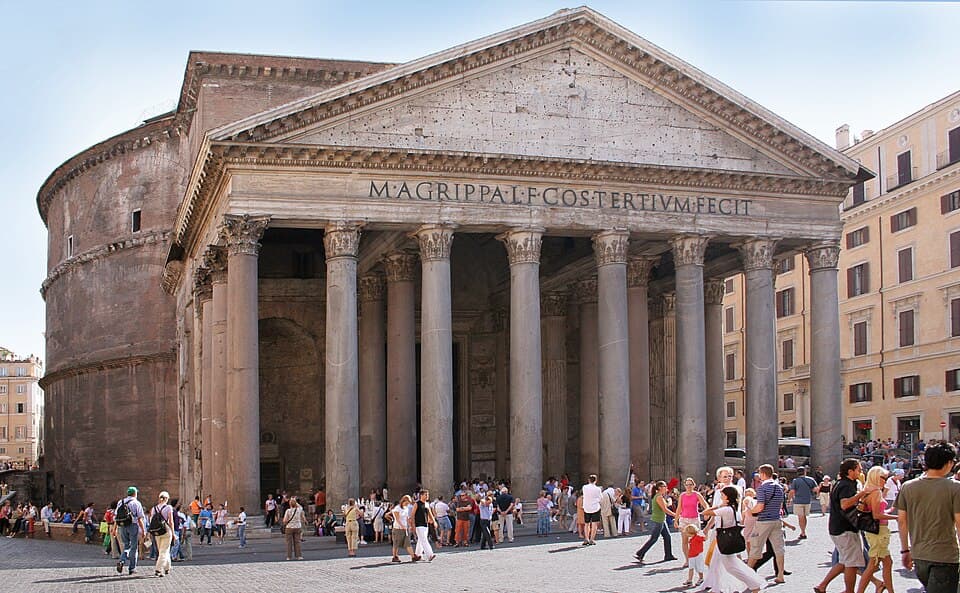
And here it is. The Pantheon. The best-preserved ancient Roman building in the world. Stand in the piazza and look at the massive portico. Those sixteen granite columns are twelve metres tall, each carved from a single piece of stone quarried in eastern Egypt and shipped across the Mediterranean. The inscription across the top reads M. Agrippa L.F. cos. tertium fecit: Marcus Agrippa, son of Lucius, made this in his third consulship. That's a bit misleading. Agrippa built the first Pantheon in twenty-seven BC, but it burned down twice. What you're looking at was completely rebuilt by Emperor Hadrian around a hundred and twenty-five AD. Hadrian, being Hadrian, kept Agrippa's name on the front out of respect. Classy move.
Now step inside. Look straight up. That dome is the reason we're here. It's forty-three point three metres across, and after nineteen hundred years, it remains the largest unreinforced concrete dome in the world. No rebar, no steel, no modern engineering tricks. Just Roman concrete, which gets stronger with age because of a volcanic ash called pozzolana. The height from the floor to the top of the dome is exactly the same as its diameter: forty-three point three metres. A perfect sphere would fit inside this building.
Read more...Show less
And that hole at the top. The oculus. It's nine metres across and completely open to the sky. When it rains, it rains inside. You can see the water falling through the light. There are barely visible drains in the floor. And every year on April the twenty-first, the traditional founding day of Rome, the midday sun passes through the oculus and sends a shaft of light through the entrance, as if the building were designed for that exact moment. It probably was.
The Pantheon has been in continuous use for nearly two thousand years, which is why it survived. It was converted to a Christian church in six oh nine AD, which saved it from being quarried for stone. Walk to the left wall and look for the tomb of Raphael. He died in fifteen twenty at the age of thirty-seven, and his dying wish was to be buried here. The inscription reads: here lies Raphael, by whom Nature feared to be outdone while he lived, and when he died, feared that she herself would die.
By the way, if you need gelato, walk about two hundred metres northeast to Giolitti on Via degli Uffici del Vicario. They've been making gelato since nineteen hundred, and their fruit flavours are spectacular. Pay at the register first, then take your receipt to the counter.
When you're ready, exit the Pantheon and look for the small piazza directly behind it. That's where we're headed next.
Piazza della Minerva and the Elephant Obelisk
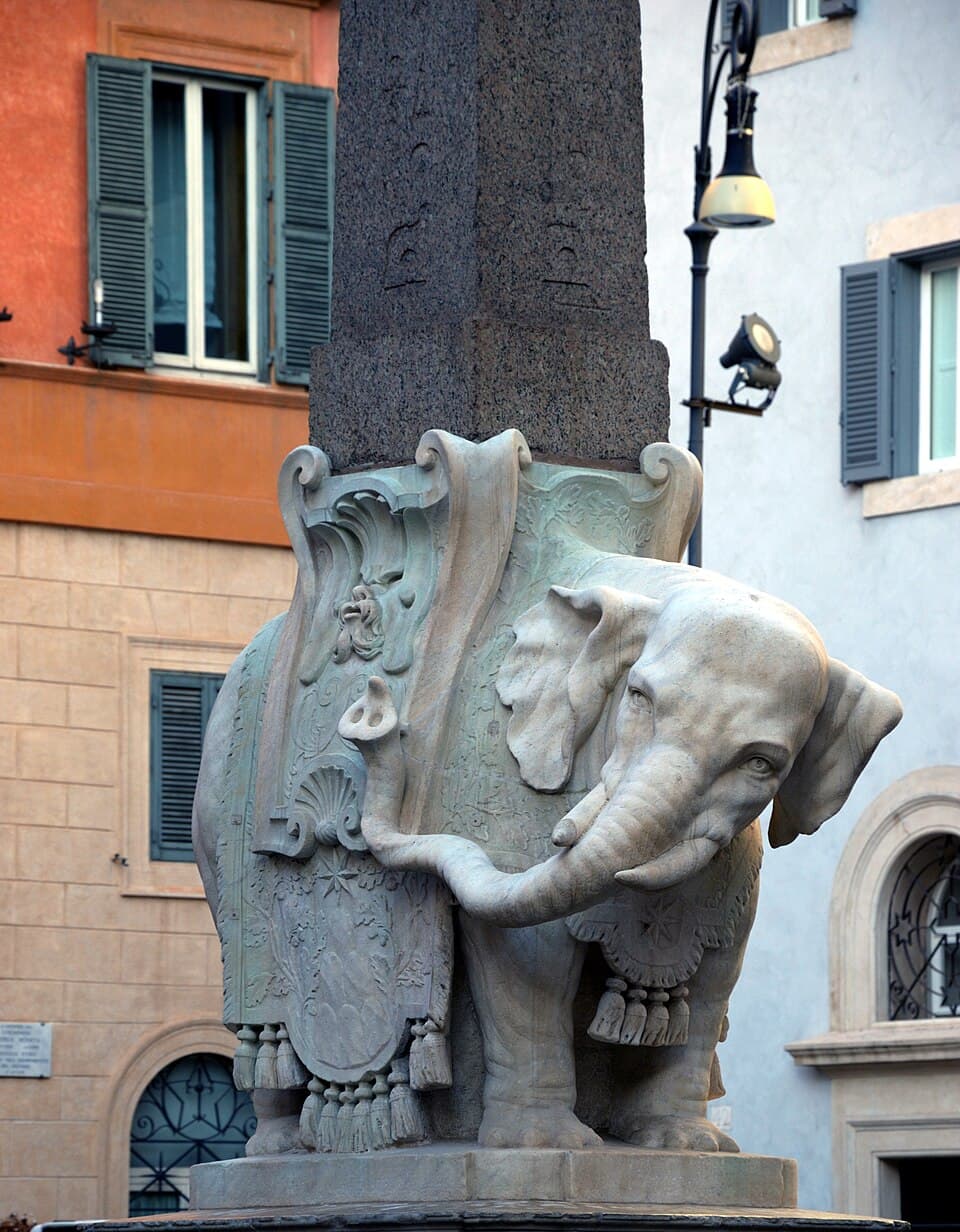
Walk around the side of the Pantheon and into Piazza della Minerva. In the centre of this quiet little square, you'll see one of the most delightful sculptures in all of Rome: a small marble elephant carrying an Egyptian obelisk on its back. It was designed by Gian Lorenzo Bernini in sixteen sixty-seven, and the story behind it is pure Roman drama.
The obelisk itself is tiny by Roman standards, only five and a half metres tall, carved from red granite in Egypt around the sixth century BC. It was part of a shrine to the goddess Isis that once stood nearby. After Rome fell, the obelisk was lost, buried in a garden behind the church of Santa Maria sopra Minerva. In sixteen sixty-five, Dominican friars accidentally dug it up while doing construction work.
Read more...Show less
Pope Alexander the Seventh wanted the obelisk re-erected, and he turned to Bernini for the design. Bernini, ever the showman, proposed something nobody had seen before: an elephant carrying the obelisk on its back. The idea came from a strange fifteenth-century novel called the Hypnerotomachia Poliphili, an erotic romance by a Dominican monk, which contained a woodcut of exactly this image. The Pope, a fan of the book, loved it.
But here's where it gets petty. A Dominican friar named Father Paglia thought the design was structurally unsound and insisted Bernini add a stone support block under the elephant's belly. Bernini was furious. He complied, hiding the block under an elaborate saddlecloth. But then he got his revenge. He angled the elephant's rear end directly toward the Dominican convent next door, with its tail slightly to one side, as if the animal were about to relieve itself. The friars had to stare at an elephant's backside for eternity. Romans loved it. They nicknamed the elephant il Porcino della Minerva: Minerva's little piggy.
The inscription on the base, chosen by the Pope, reads: a strong mind is needed to support solid knowledge. It's the most passive-aggressive monument in Rome.
From here, head west through the narrow streets toward Piazza Navona. It's about a four-hundred-metre walk. As you go, notice the ochre and sienna buildings closing in around you, laundry hanging overhead, scooters squeezing past. This is the Rome that no amount of ancient ruins can capture: the living, breathing, beautifully chaotic city.
Piazza Navona

You'll hear Piazza Navona before you see it. The splash of fountains, the buzz of conversation, street musicians competing for attention. Then you step through one of the narrow entrances and the space opens up, and it takes your breath away. This is one of the most beautiful public squares in the world.
But notice the shape. Long and narrow, with rounded ends. That's not a design choice. You're standing inside the footprint of a first-century Roman stadium. The Stadium of Domitian was built here in eighty AD, the same year the Colosseum opened. It seated thirty thousand spectators who came to watch Greek-style athletic competitions: foot races, wrestling, discus. The Romans called it the Circus Agonalis, and through centuries of linguistic drift, agonalis became in agone, became navone, became Navona. You're hearing the echo of ancient Greek athletics in the name of a Baroque piazza.
Read more...Show less
The centrepiece is Bernini's Fountain of the Four Rivers, built between sixteen forty-seven and sixteen fifty-one. Four massive marble figures represent the four great rivers of the known world: the Danube for Europe, the Ganges for Asia, the Nile for Africa, and the Rio de la Plata for the Americas. The Nile's head is covered because, at the time, nobody knew where the Nile's source was. The whole thing is topped by an Egyptian obelisk that was originally in the Circus of Maxentius on the Via Appia.
Now, look at the church facing the fountain. That's Sant'Agnese in Agone, designed by Bernini's great rival, Francesco Borromini. There's a famous legend that the Danube figure on Bernini's fountain has its hand raised as if to shield itself from the church facade, as if Bernini were saying: don't worry, it won't fall on you. It's a great story, but it's not true. The fountain was finished before Borromini even started on the church. Still, Romans love the rivalry so much they keep telling it.
Piazza Navona has been a public gathering space for nearly two thousand years. In the seventeenth and eighteenth centuries, the square was deliberately flooded on summer weekends so that Roman aristocrats could drive their carriages through the shallow water. Imagine that. A Baroque water park.
If you want coffee, Caffe Domiziano on the northwest corner is named after the emperor who built the original stadium. Sit outside, watch the piazza, and you're doing exactly what Romans have done on this spot for twenty centuries.
When you're ready, exit the piazza at the southern end and head south toward Campo de' Fiori. It's about a four-hundred-metre walk through some of Rome's most atmospheric streets.
Campo de' Fiori
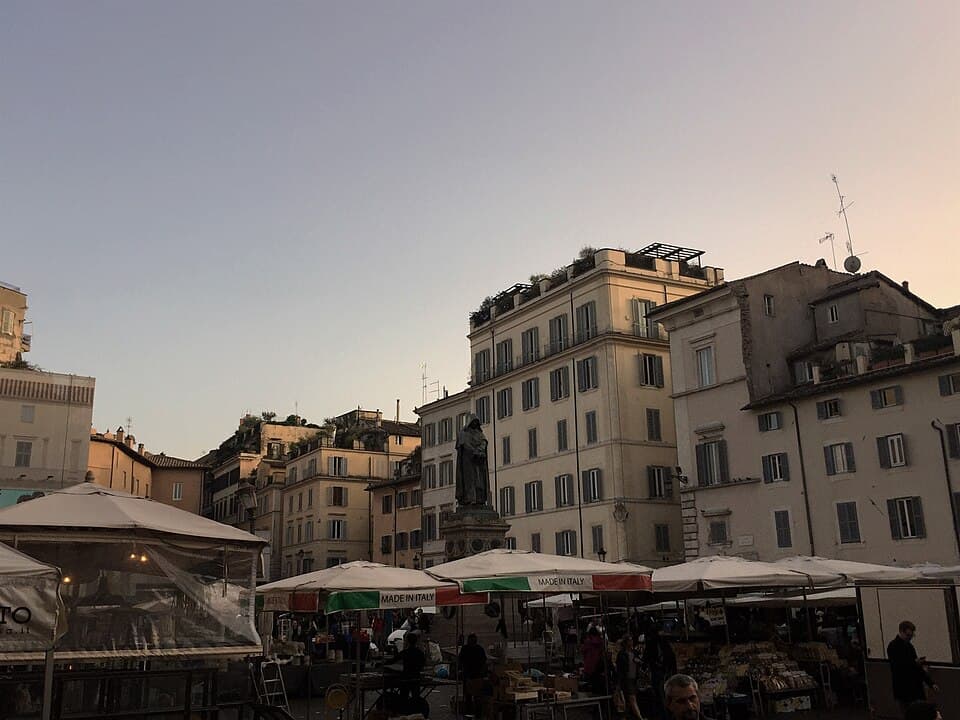
And here we are. Our last stop. Campo de' Fiori, the Field of Flowers. In the morning, this square is a riot of colour: a daily market selling tomatoes, artichokes, fresh mozzarella, dried chillies, and flowers. It's been a market square since eighteen sixty-nine, and it's one of the last places in central Rome where ordinary Roman life happens without apology. No churches face this square, which is unusual for Rome. It gives Campo de' Fiori a distinctly secular, earthy, almost defiant character.
And that defiance has a dark reason. Look at the hooded bronze figure in the centre of the square. That's Giordano Bruno, a Dominican friar, philosopher, and cosmologist who was burned alive on this very spot on the seventeenth of February, sixteen hundred. Bruno had committed the unforgivable sin of thinking for himself. He proposed that the universe was infinite, that stars were distant suns, and that other worlds might harbour life. The Catholic Church branded him a heretic. His trial lasted seven years. When he refused to recant, they drove a spike through his tongue so he couldn't speak, led him to this square, tied him to a stake, and set him on fire.
Read more...Show less
The statue was erected in eighteen eighty-nine, funded largely by student donations, and the Catholic Church fought bitterly against it. At the unveiling, around a hundred Masonic flags surrounded the monument, and the radical politician Giovanni Bovio gave a speech declaring Bruno a martyr for free thought. The statue faces the Vatican, and it's no accident. Bruno's cowled figure stares toward Saint Peter's dome with an expression that seems to say: I was right.
This square embodies something essential about Rome. The city doesn't hide its darkness. It puts a statue on it and sells tomatoes around it every morning. The blood and the beauty, the sacred and the profane, all mixed together in the same square, the same city, the same two thousand years.
Our walk is over. You've just crossed two millennia on foot, from the Colosseum to the Campo. If you're hungry, the neighbourhood around here is packed with trattorias. Roscioli, on Via dei Giubbonari about a hundred metres east, is legendary for its carbonara and its wine cellar. For pizza by the slice, try Forno Campo de' Fiori, right on the square. Their pizza bianca, drizzled with olive oil and sprinkled with salt, is perfect.
Sit in the square for a while. Watch the market wind down. Have a coffee or an aperitivo. You've earned it. Rome has been doing this for two thousand years, and it's not going to stop for anyone.
Thanks for walking with me. Enjoy the Eternal City.
Free
GPS-guided walking tour
No account needed. Walk at your own pace.
Free
10 stops · 2.7 km