14 stops
GPS-guided
43 min
Duration
Free
No tickets
About this tour
A 14-stop walking tour through the heart of Netherlands. Visit Amsterdam's Jordaan Walk, Molsteeg, Torensluis Bridge, and Oude Leliestraat — with narrated stories at every stop.
14 stops on this tour
Amsterdam's Jordaan Walk
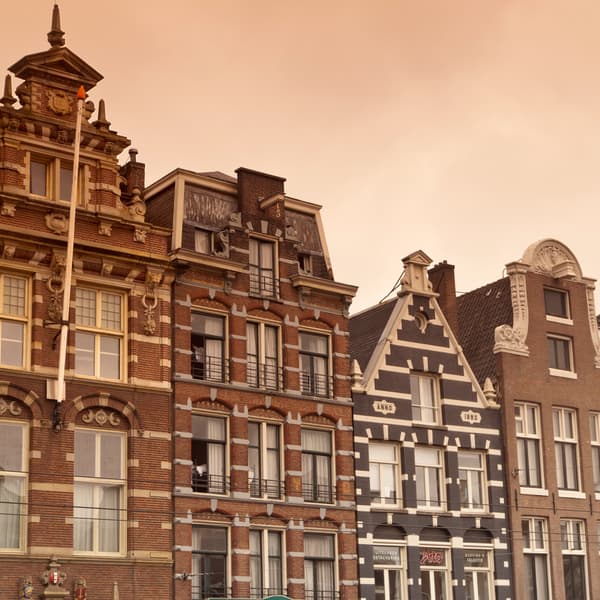
Amsterdam's Jordaan Walk. Amsterdam, a modern city of 800,000 people, is also a collection of quiet neighborhoods. In the Jordaan neighborhood, you'll leave the tourists behind, experiencing the laid-back Dutch lifestyle and catching a few intimate details most busy tourists never appreciate. Hi, I'm Rick Steves.
On this walk, we'll go from Dam Square, the bustling Times Square of Amsterdam, into the characteristic Jordaan neighborhood. It's a pleasant, gentrified area, home to cafes, boutiques, bookstores, art galleries, and trendy residents. Along the way, we'll pass by one of the city's most fascinating and sobering sights, the Anne Frank House. Allow about 90 minutes for this short and easygoing walk.
Read more...Show less
It's nice in the sleepy morning or as part of a visit to the Anne Frank House or en route to a Jordaan dinner in the evening. Now, let's get started as we go on a cultural scavenger hunt. We're sure to see a few things which, while commonplace in Amsterdam, you won't find in any other city in the world. To help us along the way, I've invited a good friend and virtual travel buddy.
Welcome, Lisa. Hi, Rick. Lisa will give us helpful directions and sightseeing tips throughout the tour. And my first tip is to be sure you get our tour updates.
Just press the icon at the lower right of your device. You'll find any updates and helpful instructions unique to this tour. Things like closures, opening hours, and reservation requirements. There's also tips on how to use this audio tour and even the full printed script.
Yes, so pause for just a moment right now to review our updates, and special tips. It's okay. We'll wait. And now, let's explore Amsterdam's most charming neighborhood, the Jordaan. The tour begins.
Tour Begins
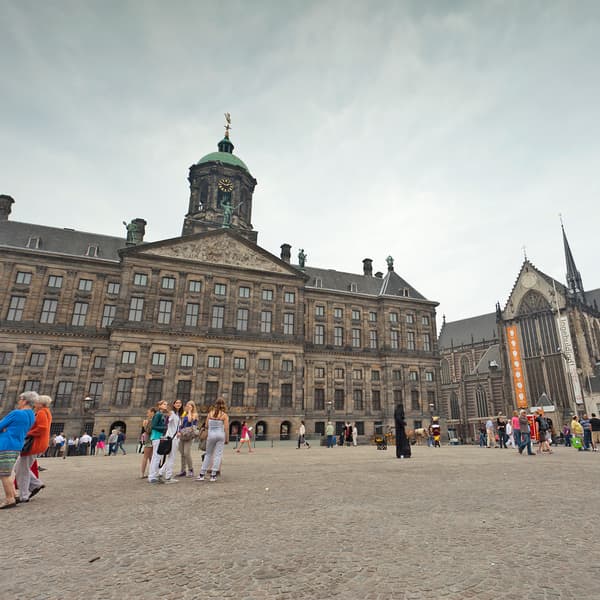
Domsquare. Start on Domsquare. Face the Royal Palace. That's the large building with the green copper tower.
You're facing roughly west, the direction where the Jordaan neighborhood lies. To your right, is the new church, or Nieuwekerk. Rick? Domsquare is where the city was born.
Read more...Show less
It was here that around the year 1250, they dammed the Amstel River to create Amstel Dam. The original residents settled east of here, in the neighborhood now known as the Red Light District. But as Amsterdam grew from a river trading village to a worldwide sea trading empire, the population needed new housing developments. They started reclaiming land to build a new city.
To the west of Domsquare, where we're headed. They built a new church, the Nieuwekerk, to serve these new neighborhoods. Canal by canal, they created new neighborhoods of waterways lined with merchants' townhouses. This is the area we'll be walking through in the first half of our tour.
By the 1600s, Amsterdam's golden age, they needed still more land. They opened up a new development further west, the Jordaan. It was serviced by the Church to the West, the Westerkerk, which we'll see. It was also in the 1600s that the Royal Palace was built here on Domsquare.
It didn't house royalty, as the name suggests, but was home to the city council. They passed zoning laws and oversaw the rapid expansion of this growing metropolis. Now, let's go see it. Lisa?
Facing the Royal Palace, slip to the right between the palace and the new church. You'll soon see the facade of the red brick main building. It's the Magna Plaza Shopping Center. Rick?
As you walk west, toward the fanciful Magna Plaza building, you leave the fast-food chains, the mimes, and the tourists behind. We're heading to the place where real Amsterdammers live, the Jordaan. Along the way, as I mentioned earlier, we'll be passing through an equally charming neighborhood called the West Canal Belt. Or Grok de Gordel West.
This has the girdle, or belt, of concentric canals that surrounds the historic core. On our way to the Jordaan, we'll be crossing some of the city's prettiest canals. The Prince's Canal, Kaiser's Canal, and so on. All lined with 18th-century townhouses.
But first, we need to skirt past more recent structures. Up ahead, the Magna Plaza was built in 1899. Like so many buildings in this soggy city, it was constructed atop a foundation of pilings, some 4,500 of them in this case. In its day, it was ultra-modern, symbolizing the city's economic revival after two centuries of decline.
The North Sea Canal was opened, there was increased industrialization, and it was all capped by a World's Fair in 1883. Until the 1980s, this was Amsterdam's main post office. Now, it's a mall, housing 40 stores. As you approach Magna Plaza, cross the busy street called Neuvesides-Vorburgwall.
Be sure to watch out for bikes, trams, and cars. Definitely. Facing Magna Plaza, turn right on Neuvesides-Vorburgwall. This wide, busy street doesn't really seem to fit the city.
That's because it's new. Well, from the 1880s. Built atop a paved-over canal. Walk 50 yards down the busy street to the corner of the tiny street called Molsteg. Before turning left down Molsteg, stand, and survey this slice of Amsterdam. Molsteg.
Molsteeg
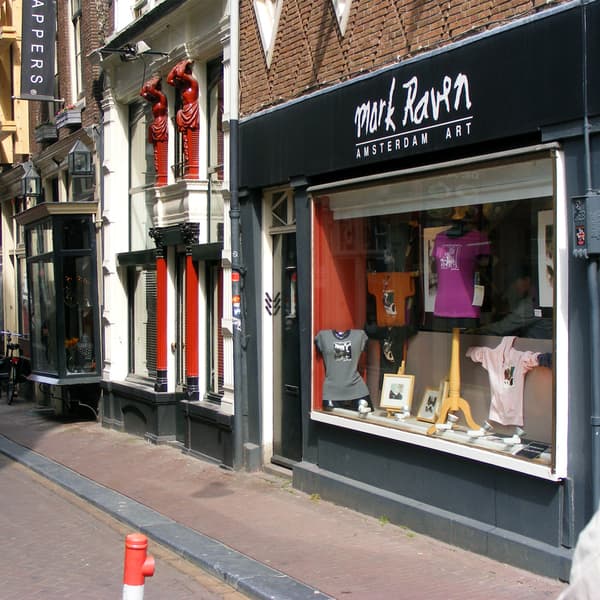
Facades and bicycles. Scan the facades. Are you drunk or high? Or in Amsterdam, where buildings settle.
Nice line of gables, both along the busy street and down Molsteg. Before moving on, notice the T-shirt gallery on the corner. Decades ago, I bought a Mark Raven T-shirt from a street vendor. Now this Amsterdam original has his own upscale shop, selling T-shirts and paintings featuring spindly-lined, semi-abstract cityscapes.
Read more...Show less
Raven works primarily with small etchings, as Rembrandt often did. Now, look down tiny Molsteg Street. From here, this tour's essentially a straight-shot west, though the street changes names along the way. Start strolling slowly, west, down Molsteg.
But don't walk on the reddish pavement in the middle. That's for bikes. Stay to the sides. Always a good reminder.
A few steps along, pause at house number five, on the left. Just one window wide, it's typical of the city's old, narrow houses. Look up and notice hooks above warehouse doors. This was the typical merchant's design.
Shop on the ground floor, living space in the middle, and storage up in the middle. Houses lean out on purpose, so you can hoist up cargo without bouncing things on the wall. Continue down Molsteg to the intersection with Spouwstraat. You'll likely see rows of bicycles parked along the street.
Amsterdam's 800,000 residents own nearly that many bikes. The Netherlands' 17 million people own 17 million bikes. Many people own two, a long-distance racing bike, and a junky in-city bike, often deliberately kept in poor maintenance, so it's less enticing to the many bike thieves in town. Locals are diligent about locking their bikes twice.
They lock the spokes, and then they use a heavy chain to attach the bike to the U-shaped hitching racks, which locals call staples. Continue strolling west another short block. Amsterdam is a great bike town. In fact, bikes outnumber cars.
The efficient Dutch appreciate a self-propelled machine that travels five times faster than walking without pollution, noise, parking problems, or high fuel costs. On a bicycle, or fiets in Dutch, a speedy local can traverse the historic center in about ten minutes. And biking seems to keep the populace fit and good-looking. People here say that Amsterdam's health clubs are more for networking than for working out.
And when it comes to helmets, few wear them. As many Dutch say, fashion over safety. The street opens onto a small square. It's understandably nicknamed Big Head Square because of the statue. The square is actually a bridge straddling the single canal. It's called the Torrenslaus Bridge. Torrenslaus Bridge.
Torensluis Bridge
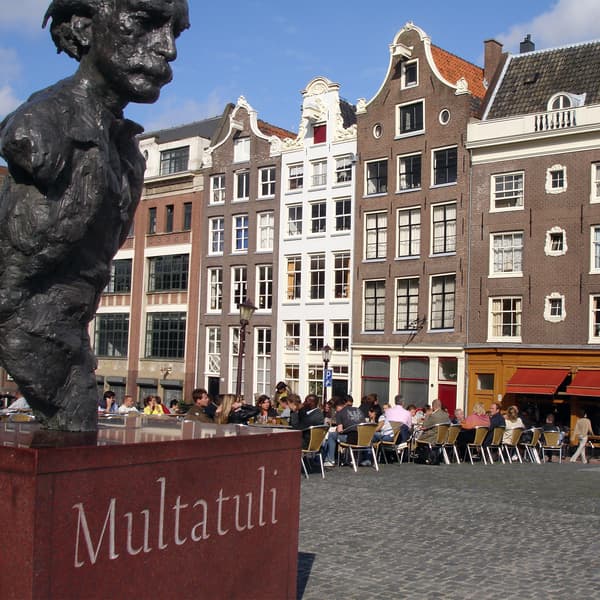
We haven't quite reached the Jordaan yet, but the atmosphere already seems miles away from busy Dom Square. With cafes, art galleries, and fine benches for picnics, this is a great place to relax and take in a golden age atmosphere. Find a place to enjoy the scene. Belly up to the railing, take a seat on a bench, or even pause the tour for a drink at one of the characteristic bars that spill out onto the bridge.
One of the bars, Van Zoulen, is famous for its variety of beers. In good weather, you'll see, lots of Amsterdammers enjoying a laid-back afternoon or evening right here. But whether you sit or just stand atop the bridge, take a moment to take in the scene, both modern and historic. The single canal was the original moat running around the old walled city.
Read more...Show less
This bridge is so wide because it was the road that led to one of the original city gates. The area still looks much as it might have during the Dutch Golden Age of the 1600s. This was when Amsterdam's seagoing merchants ruled the waves, establishing trading colonies as far away as modern Indonesia. Fueled with all this wealth, the city quickly became a major urban center, lined with impressive homes.
Each proud merchant tried to outdo his neighbor, pan 360 degrees, and take in the variety of buildings. The houses crowd together, shoulder to shoulder. They're built atop thousands of logs hammered vertically into the marshy soil to provide the city a foundation. Over the years, they've shifted with the tides, leaving some leaning this way and some leaning that.
Notice that some of the brick houses have iron rods strapped onto the sides. These act like braces, binding the bricks to an inner skeleton of wood. Almost all Amsterdam houses have big, tall windows to let in as much light as possible. Although some houses look quite narrow, most of them extend far back.
The rear of the building, called the actor house, is often much more spacious than you might expect from the facade. Real estate has always been expensive on this canal, and owners were taxed by the amount of street frontage. It was especially expensive for homes with a wide facade and minimum usable space in back. A local saying back then was, only the wealthy can live on the inside of a canal's curve.
I don't get it. Well, think of a slice of pie. If you're on the inside of the curve, you get a lot of crust. And not much apple.
Hmm. I'll have to chew on that. Slice. Mingled among the old houses are a few modern buildings.
Those sleek, gray metal ones are part of the university. Built in the less affluent 1970s, they wouldn't be allowed today. Though these buildings try to match the humble, functional spirit of the older ones, they're still pretty ugly. But the students they house inject life into this neighborhood.
The big head statue honors a writer known by his name, by his pen name, Multitully. Born in Amsterdam in 1820, Multitully did what many young Dutchmen did back then. He sought his fortune in Indonesia, then a colony of the Netherlands. While working as a bureaucrat in the colonial system, he witnessed firsthand the hard life of Javanese natives slaving away on Dutch-owned plantations.
In 1860, he wrote about what he saw in his semi-autobiographical novel, Max Havillard. The story follows a progressive civil servant fighting to reform colonial abuses. He was the first author to criticize Dutch colonial practices, a very bold position back then. For his talent and subject matter, Multitully has been dubbed the Dutch Rudyard Kipling.
The single canal is just one of Amsterdam's many canals. All told, there are roughly 50 miles of them. Most are about 10 feet deep. Canals originated as a way to drain diked-off marshland.
As the city grew, they also became part of the city's sewer system. They were flushed daily by opening the locks as the North Sea tides came in and out. You can glimpse the locks in the distance. They're way down at the north end of the single canal, beyond the dome.
You'll see some white flagpole thingies sprouting at 45-degree angles. Those are part of the apparatus that opens and shuts the gates. The Dutch are credited with inventing locks in the 1300s. Try telling that to the Chinese.
Locks are the single greatest invention in canal building. Besides controlling water flow in the city, they allowed ships to pass from higher to lower water levels and vice versa. It's because of locks that you can actually ship something by boat from here inland. From Amsterdam, you could go upriver connecting to the Rhine, connect the Rhine with the Danube thanks to a series of locks at the Continental Divide in Germany, and then sail down the Danube, eventually reaching the Black Sea and Romania.
You follow? I'm still chewing on that slice of pie. The green copper dome in the distance marks the Lutheran Church. To the left of the church is the new city, reclaimed in the 1600s and destined to be Amsterdam's high-rent district.
To the right is the old town. Let's move on. Continue west on Odalelystraat. Odalelystraat!
Odalely, Odalely, Odalely! Rick, wrong country! Browse the shops on Odalelystraat on the way to the next canal. Odalelystraat.
Oude Leliestraat
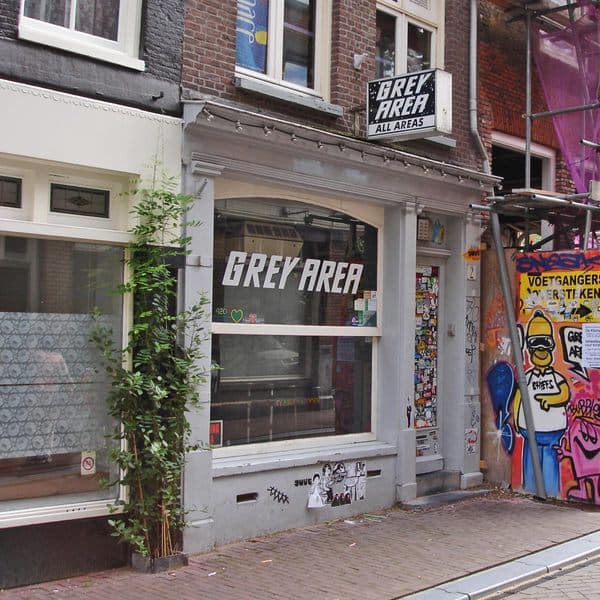
Old Lily Street is the well-worn path for tourists going to Anne Frank's, so it's lined with touristy but still tasty shops. You'll find Puccini's Bon Bons, Tuscany's Sausages, Gray Area's Marijuana, Boutique Cheese, Sushi, Thai, Shormas. Everything but Lily's. Pause at the Gray Area.
This is a thriving coffee shop. It sells marijuana. The green and white decal in the window identifies it as number 92 in the city's licensing program. While smoking marijuana is essentially legal here, the cafe's name refers to the murky backside of the marijuana business, how coffee shops get their supply from wholesalers.
Read more...Show less
That's the Gray Area that Dutch laws have yet to sort out. Pot is no longer imported. With modern techniques, countless small-time Dutch growers expertly duplicate strains from around the world in nearby greenhouses to meet the demand of local shops. This esteemed coffee shop, the Gray Area, which works with the best boutique growers in Holland, was a recent winner of Amsterdam's Cannabis Cup.
A high honor, to be sure. The next canal is the Herengraakt. Pause on the bridge while Rick points a few things out. © transcript Emily Beynon
Herengracht
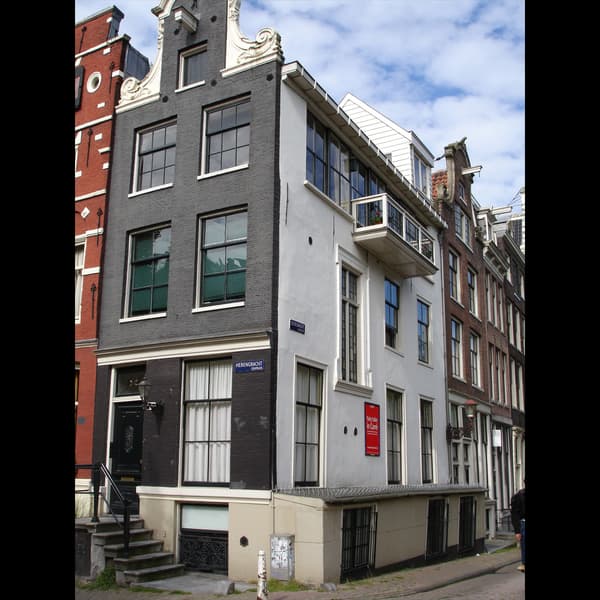
Herengraakt During the Dutch Golden Age boom in the 1600s, Amsterdam expanded, adding this canal. It was named for the heron, the wealthy city merchants who lined it with their mansions. Because the city was anti-royalty, there was no blue-blooded class. These heron functioned as the city's aristocracy.
Even today, the Herengraakt is the high-rent district. Notice that zoning here forbids houseboats. Check out the house that's kitty-corner across the bridge at Herengraakt 150. It has features you'll find on many old Amsterdam buildings.
Read more...Show less
On the roof is a gable, a false front supported with rods. These gables have no structural purpose. They simply decorate the otherwise sharply-pitched roof lines. I'll talk more about gables in just a bit.
Notice also that because this particular building is at the end of the block, you get a cutaway look of its entire depth, the long side of the building. Like this one, most Amsterdam buildings are much bigger than they appear from the front. In a few minutes, we'll be walking by the most famous actor house in all the world, the Anne Frank House. The word graakt refers to the ensemble of a canal and the lanes that border it on each side, like Herengraakt.
By the way, a straat is a street without a canal. Before moving on, notice the parking sign along Herengraakt. The sign warns motorists to put money in the meter at the end of the block. Parking is a major problem in a city like this, designed for boats, not cars. Continue west, walking slowly along the Lelygraakt Canal. Lelygraakt.
Leliegracht
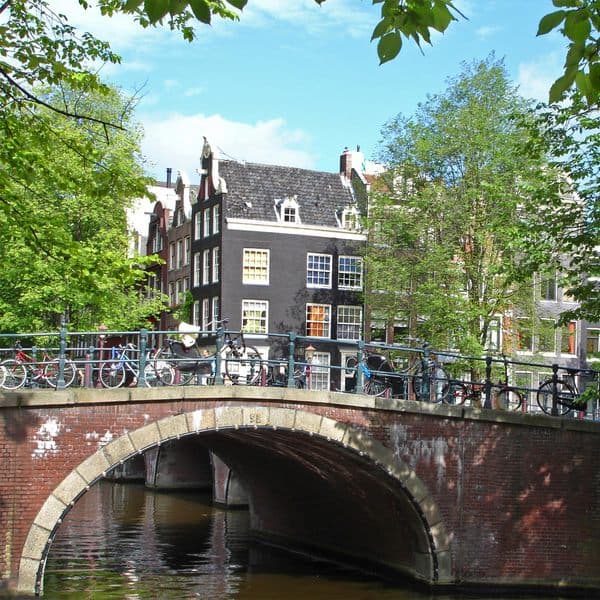
As you make your way to the next bridge, take your time. Enjoy the sound, the small shops that capture the quirky, artistic spirit of the neighborhood. You'll find odd knick-knacks, antiques, trendy interior design shops, scholarly bookstores, and a number of local eateries. As for the canal you're walking along, it's one of the city's prettiest, lined with trees and crossed by a series of arched bridges.
There are some 400 such bridges in Amsterdam. And this one is so nice, I'm taking a photo of it. As you walk, check out the buildings. Notice that some have staircases leading down below the street level.
Read more...Show less
Many lead to daylight basement apartments. Looking up, you'll notice the characteristic beams jutting out from the top with a hook on the end. Attach a pulley to that, and you can hoist up a sofa and send it through a big upper-story window. Much easier than lugging it up a long, narrow staircase.
It'd be lovely to live here, but not always easy. Think of all the steep stairs. And another thing. Amsterdammers are constantly battling just to keep their centuries-old structures from crumbling into the canals.
The embankments along the canals have to be regularly reinforced. High-tech engineering firms sink new pilings into the marshy ground and shore up the old masonry. As they go, they have to upgrade old electronic cables to new standards. It's expensive, sure, but the residents know it's necessary to pass through and pass their unique heritage on to the next generation.
Continue on to the next canal you cross. The next belt in this West Canal Belt. This is the Kaisersgracht. Pause on the bridge. Kaisersgracht.
Keizersgracht
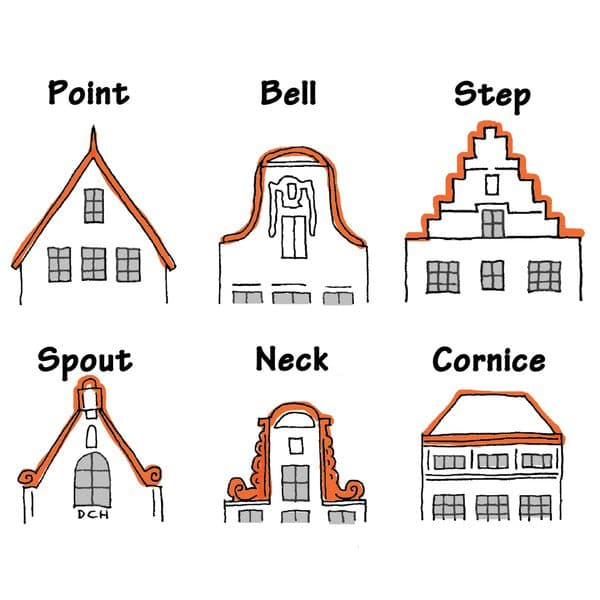
From the bridge, check out the variety of buildings. Decorating the roof tops are Amsterdam's famous gables, or false fronts. Gables come in all shapes and sizes. They might be ornamented with human and animal heads, garlands, urns, scrolls, and curlicues.
Despite the infinite variety, there are a few distinct types. See how many of these you can spot. A simple point gable just follows the triangular shape of a normal pitched roof. A bell gable is shaped like a bell.
Read more...Show less
How clever! Step gables are triangular in shape and lined with steps. These are especially popular in Belgium. The one with the rectangular protrusion at the peak is called a spout gable.
Neck gables rise up vertically from a pair of sloping shoulders. Cornice gables make pointed roofs look classically horizontal. And there's probably even a Clark gable. Frankly, my dear, I don't give a damn.
From here, we make a detour off our westward roof, veering left toward the church called the Westerkirch. You can see the Westerkirch tower rising above the rooftops, capped with a colorful crown. So, cross the Kaisersgracht Bridge and turn left. That is, heading south.
Start walking south along the Kaisersgracht Canal while Rick directs you toward the church. © transcript Emily Beynon A Detour to the Westerkirch
Detour to Westerkerk
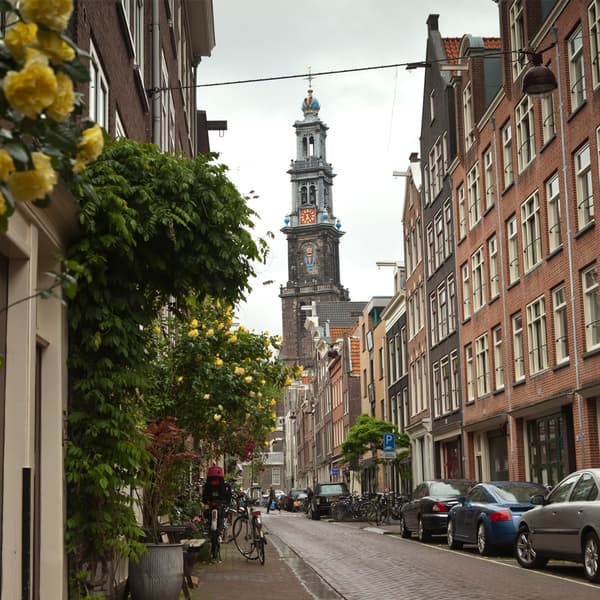
Walk south about a hundred yards along the Kaisersgracht. We're headed for a monument that speaks to Amsterdam's long tradition as a tolerant society. Think of it. From its very beginnings, the city attracted sailors and businessmen away from home, so it was profitable to allow them to have a little fun.
Hence, the Red Light District. Over the centuries, Amsterdam became home to immigrants, Jews, and radical thinkers unwelcome elsewhere. Anne Frank's family found refuge here. In the 1960s, it was a magnet for Europe's hippies.
Read more...Show less
Since then, it's become a world capital of alternative lifestyles. The Dutch aren't necessarily more tolerant. They're just pragmatic. They believe it's counterproductive to legislate morality and try to forbid things people are gonna just do anyway.
In the late 20th century, Amsterdam was one of the leaders in embracing the world's once-persecuted gay community. That's the focus of the monument we're headed to. Find the set of steps on your left leading down to the water. There you'll find a triangular pink stone jutting into the canal.
This is part of the so-called Homo Monument, Amsterdam's AIDS memorial. If you survey the square, you'll see that the pink triangle is just one of three triangles between here and the church. These are contained in a single large triangle, that comprises the Homo Monument. The pink triangle design reclaims the symbol that the Nazis used in concentration camps to label homosexuals.
And it's also a reminder of the persecution gay people still experience today. You may see flowers or cards left here by friends and loved ones. Near the monument on Westermark Square is a souvenir kiosk called Pink Point. Here, the volunteer staff gives out information on gay and lesbian Amsterdam, especially nightlife.
The green metal structure near the Homo Monument is a public urinal. It offers just enough privacy. City trucks circulate around town on a regular basis, sudsing them down. From here, walk through Westermark Square between the church and the busy street called Radhustraat.
You'll find two very Dutch kiosks. One sells French fries. When it's closed, the shutters feature funny paintings putting fries into great masterpieces of Western art. The other sells fresh herring.
If you've yet to try a delicious Dutch herring, this is the perfect opportunity. Lisa, care for a raw herring? No, thanks. For around three euros, you get a herring with pickles and onion.
Still, no. You get a paper plate. Sorry. And instructions from the merchant on how to eat it.
Uh-uh. Oh, don't be so picky. Listen, I'll try one herring if we can also get some French fries. How's that?
Fair enough. Yep. You can't get more Dutch than frites dipped in mayonnaise sauce. True, but personally, I don't really like the mayonnaise sauce.
Aha! Now who's being picky? Maybe we should just move on. Good idea.
Near the church, look for a cute little statue. It's of Anne Frank. The Anne Frank house is just down the block. Anne was born in Germany, but her family moved to Holland when the Nazis took power in their native land.
Anne's father set up a prosperous business in the neighborhood and they hoped to enjoy a peaceful life here in this city so known for tolerance. But on May 10, 1940, Germany's Luftwaffe began bombing Schiphol Airport. Within a week, the Netherlands surrendered, Queen Wilhelmina fled to Britain, and Nazi soldiers goose-stepped down Radhusstraat, past the Westerkirche and into Damm Square, where they draped huge swastikas on the royal palace. A five-year occupation began.
More on that tragic story in just a moment. For now, look up at the towering spire of the impressive Westerkirche. The crown shape was a gift of the Habsburg emperor Maximilian I. As a thanks for a big loan, the city got permission to use the Habsburg royal symbol.
The tower also displays the symbol of Amsterdam with its three X's. The Westerkirche, or Western Church, was built in 1631 as the city was expanding out from Damm Square. Rembrandt's buried inside, but no one knows where. The church tower has a carillon that chimes every 15 minutes.
At other times, it plays full songs. Carolins are a Dutch specialty. They were invented by Dutch bell makers back in the 1400s. Well, the Chinese say that they are the ones who invented...
Work with me, Lisa. Work with me. A carillon is a set of bells of different sizes and pitches. There's a live musician inside the tower who plays a keyboard to make the music.
Mozart, Vivaldi, and Bach all play the music. All of whom lived during the heyday of the carillon wrote music that sounds great on this unique instrument. During World War II, the Westerkirche's carillon played every day. This hopeful sound reminded Anne Frank, who hid out just down the street, that there was, indeed, an outside world.
And so we go to the Anne Frank House. Continue past the church entrance, walking north along the Prinsengrocht Canal. You'll see the glassy, modern museum wing of the Anne Frank House. Keep going a few steps past that to the actual address that the Frank family lived at, Prinsengrocht No. 267. It's a historic townhouse marked with a small, humble plaque saying, Anne Frank House. The Anne Frank House.
Anne Frank House
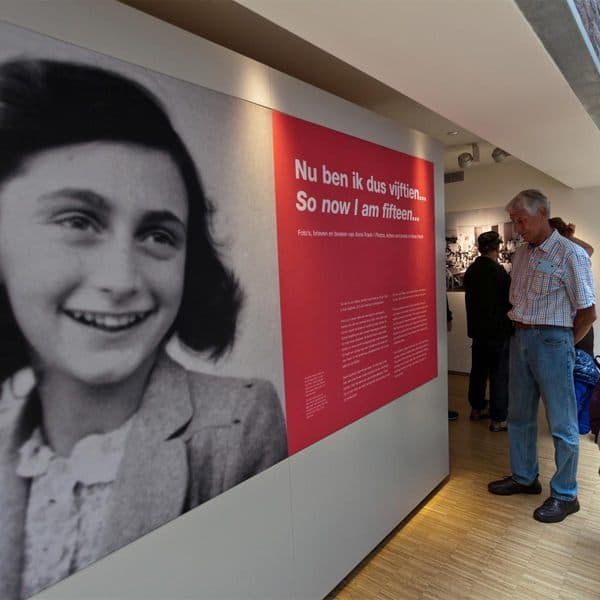
Though we won't go inside, it's worth pausing here at Prinsengrocht No. 267. This was the office of Anne Frank's father, Otto, who owned a business selling spices and a commercial gelling agent called Pectin. It was here that, during World War II, eight Amsterdam Jews hid from Nazi persecution, including 13-year-old Anne Frank.
After invading Holland, the Nazis started rounding up Amsterdam's Jews and shipping them by train to death camps in the East. To avoid deportation, the Jewish Frank family went into hiding. They decided to hide out in Otto Frank's place of business. So, on a rainy Monday morning, July 6, 1942, they walked down this street, wearing extra clothes to avoid carrying suspicious suitcases.
Read more...Show less
They breathed their last fresh air, took a long look at the Prinsengrocht Canal, went in through the entrance, and disappeared. Where did they go? As we've seen on our walk, many Amsterdam structures have a spacious back house, an actor house. The entrance to the hiding place was concealed by a pull-away bookcase.
Meanwhile, the front of the building remained a working business. The Nazis had no reason to suspect anything fishy was going on. Here, Anne Frank's family and four other Jews hid for 25 months. They were kept alive by brave Amsterdammers who smuggled in food.
They tried to carry on life as usual. Anne kept up her schoolwork. She pasted photos of American movie stars on her wall. She flirted with the 16-year-old Peter Van Pels, who was hiding out with the Frank family.
By day, they had to keep completely quiet so no one in the office could hear them. They'd whisper, tiptoe, and step around squeaky places in the floor. The windows were blacked out so they couldn't even look outside. They could hear the bells of the Westerkirch chiming every 15 minutes.
At night, when the office is closed, they could sneak into the business area and listen to Winston Churchill's BBC radio broadcasts and chart the progress of the war. All this humdrum existence was captured by 13-year-old Anne in her diary. Then, on August 4, 1944, a band of Nazi police politely entered the office. They went directly to the hidden bookcase entrance.
No one knows who tipped them off. They arrested the eight Jews and sent them by train to Auschwitz, the notorious death camp in Poland. There, Anne died of typhus just weeks before the camp was liberated by the Allies. Of the 135,000 Dutch Jews, 100,000 perished in the war.
Otto survived. He returned to Amsterdam where he found his daughter's diary. He had it published in 1947 under the title Die Achterhaus. It became a worldwide sensation, spawning translations, plays, and movies.
The Anne Frank House is a grim reminder of the horrors of World War II. But it has an uplifting twist, the Diary of Anne Frank, which lives on, a testament to the human spirit that cannot be crushed. Our tour continues just ahead at the next bridge. Turn left at the bridge and stop at the summit, mid-canal, for a view of the Prinzengrecht Canal.
Prinsengracht
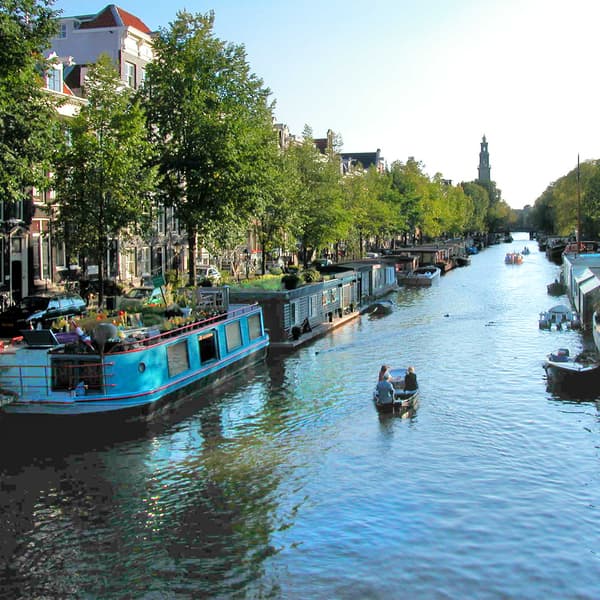
Prinzengrecht. The so-called Prinz's Canal is considered one of the most livable areas in town. It's lined with houseboats, some of the city's estimated 2,500. These small vessels were once cargo ships, but by the 1930s they had become obsolete, replaced by more modern craft.
They found a new use, as houseboats lining the canals of Amsterdam, where dry land was so limited and pricey. Today, their former cargo holds are fashioned into elegant, cozy living rooms. The once-powerful engines have generally been removed to make room for more living space. Moorage spots are prized and grandfathered in, making some of the junky old boats worth more than you'd think.
Read more...Show less
Houseboaters can plug hoses and cables into outlets along the canals to get water and electricity. Note the canal traffic. The official speed limit on canals is about 4 miles per hour. At night, boats must have running lights on the top, the side, and in the stern.
Most boats are small and low, designed to glide under the city's bridges. The Prinsengrakt Bridge is average height, with less than 7 feet of headroom. That headroom varies with the water level. Some bridges have less than 6 feet.
Boaters need good maps to tell them the height of the bridges, which is crucial for navigating. Police boats roam on the lookout for boaters' DUI. Just across the bridge are several typical Jordan cafes. The relaxed Café du Prince serves food and drink both day and night.
The old-timey Tveitsfantje, a few doors to the right, occasionally features the mournful songs of the late local legend, the balladeer Yanni Jordan. Finally, there's the Café Tismala. It's not visible from here, but it's about a half a block to the right. It has a deck where you can drink outside along the quiet canal.
But let's keep going for now. Once you cross the Prinsengrakt, you enter what's officially considered the Jordan, neighborhood. Facing west toward Café du Prince, cross the bridge and veer left. Start heading down the street called Neue Lelystraat. Walk slowly, making your way to the first intersection while Rick points a few things out. Neue Lelystraat.
Nieuwe Leliestraat
Welcome to the quiet Jordan. Built in the 1600s as a working-class housing area, it's now home to artists and yuppies. The name Jordan probably was not derived from the French jardin. But given the neighborhood's garden-like ambience, it seems like it should have been.
Develop good traveler's eyes. Notice number one. While parking is generally not allowed, this prime space, complete with a plug-in, reserves a spot for those investing in an electric car. Signs warn speeding drivers of the speed bumps.
Read more...Show less
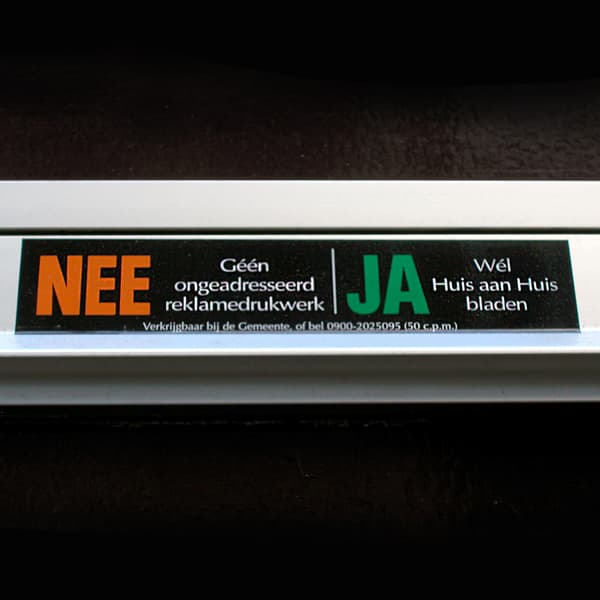
Let op, it says. Watch out for drempels. Notice how the pragmatic Dutch deal with junk mail. On the doors, stickers next to the mail slots say nay or ya, no or yes, telling the postman if they'll accept or refuse junk mail.
A practical law recently made nay the default, and residents now have to make a point to request junk mail in order to get it. Residents are allowed a front yard garden as long as it's no more than one sidewalk tile wide. The red metal bollards have been bashing balls since the 1970s when they were put in to stop people from parking on the sidewalks. Though many apartments have windows right on the street, the neighbors don't stare and the residents don't care.
They even invite their friends over for candlelit dinners right by the front window. Excuse me, Rick. A few directions. At the first intersection, turn right on Air Station, Ersta-Lely-Dvar-Strat.
Thanks, Lisa. There's no way I could have pronounced Ersta-Lely-Dvar-Strat. Gotcha. Pause and linger a while on this tiny lane.
Imagine the frustrations of home ownership here. The ugly modern buildings you see date from the 1960s and 1970s. This was before the gentrification of the 1980s when they started making the more restrictive building codes of today. Check out house number nine.
Number nine. Number nine. Here, a rundown historic home was torn down, replaced by a cheap and functional building with modern heating and plumbing. Now, move ahead to number five.
Number five. Number five. This owner was probably stuck with rent control, so he didn't invest in the place. He missed the window of time when a cheap and functional rebuild was allowed, and now he can't get permission to renovate his home without making it prohibitively expensive.
Across the street, number 2A obviously had the cash to spruce things up first class. In this case, Yvonne, who loves plants, lives upstairs while making and selling her art on the ground level. Even newly renovated homes like this need to preserve their funky leaning angles and original wooden beams. Nice to look at, but absolutely maddening if you own a building and don't have a lot of money.
Hey, just give me a houseboat and I'm happy. Just ahead, stop atop the bridge over the canal. The Heart of the Yordan
Heart of the Jordaan
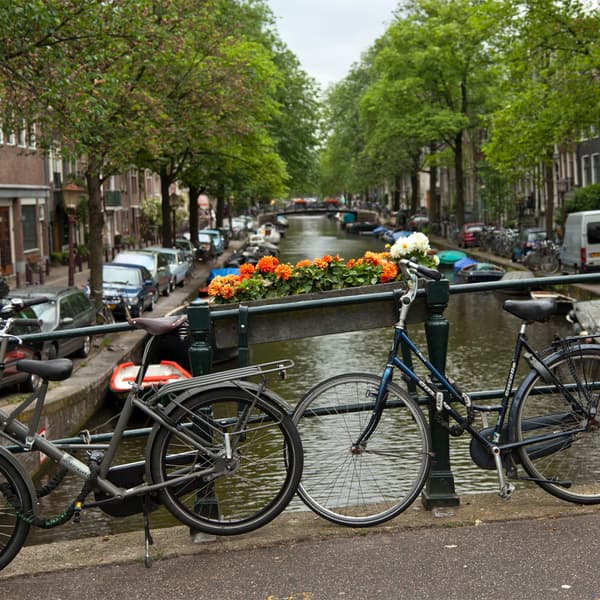
For me, this bridge and its surroundings capture the essence of the Yordan. Look around. There's bookstores, art galleries, working artist studios, small cafes filled with rickety tables. Look down the quiet Egeland Tears Canal.
It's lined with trees and old narrow buildings with gables. Classic Amsterdam. Look south at the Westerkerk or Western Church. This is a completely different view of the church from the one that the tourists in line at the Anne Frank House get.
Read more...Show less
Framed by narrow streets, crossed with street lamp wires and looming over shoppers on bicycles, to me, this is the church in its very best light. Now with your back to the church, look north down the street called Teveydaeg A little help here, please, Lisa. Teveyda Egeland Tears Dvarstraat. Yeah, Teveyda, what she said.
That street is the laid-back Yordan neighborhood's main shopping and people street. If you venture down there, you'll find boutiques, galleries, antique stores, hair salons, restaurants, and cafes. But for now, we're moving on to our final stop. From the bridge, face the Westerkerk.
Facing the church, turn right going west alongside the Egeland Tears Canal. Our final stop is a block and a half away. Let Rick point out a few things along the way. To St. Andrews Hoff
To St. Andrew’s Hof
by way of Electric Ladyland. As you walk west along Egeland Tears Canal, check out the boats. Junkie old boats litter the canal. Some aren't worth maintaining and are left abandoned.
As these dinghies fill with rain, water, and start to rot, the city confiscates them and stores them in a big lot. Unclaimed boats are auctioned off three times a year. But most boats are well used and even the funkiest scows can become cruising love boats when the sun goes down. It seems like the Jordan is a place where people of all kinds can find their niche in life and where life seems very good.
Read more...Show less
Yeah. What I plan to do when the tour is over is to find one of the neighborly benches you see here and there. Just sit a while and consider all that Amsterdam has to show us and to teach us. To just be still, to listen, to watch Amsterdam roll by.
Our final destination is just up ahead. But first, there's something worth a short detour I'd like to show you. You'll come to the first intersection, the street called... Called Tveide Leelidvarstraat.
At the intersection, turn left and walk a few steps to number five. You'll find a small shop with a flowery window display. It's called Electric Ladyland, the first museum of fluorescent art. The funky facade hides an illuminated wonderland within.
It's the creation of Nick Padolino, one cool cad who really found his niche in life. Downstairs is a tiny museum of fluorescent blacklight art. Nick personally demonstrates fluorescents found in everything from minerals to stamps to candy to the tattoo on his arm. He seems to get a bigger kick out of it than even his customers.
You can see the historic first fluorescent crayon from San Francisco in the 1950s. Wow. The label says, Use with blacklight for church groups. Wow.
A hundred yards further down the street, old hippies might want to visit the Paradox Coffee Shop. This is the perfect coffee shop for the nervous American who wants a friendly, mellow place to go low-key. Wow. Wow, indeed.
But we have one final stop, remember? Backtrack to the canal and turn left. After turning left and walking a few dozen yards, you'll soon find the St. Andrew's Hoff.
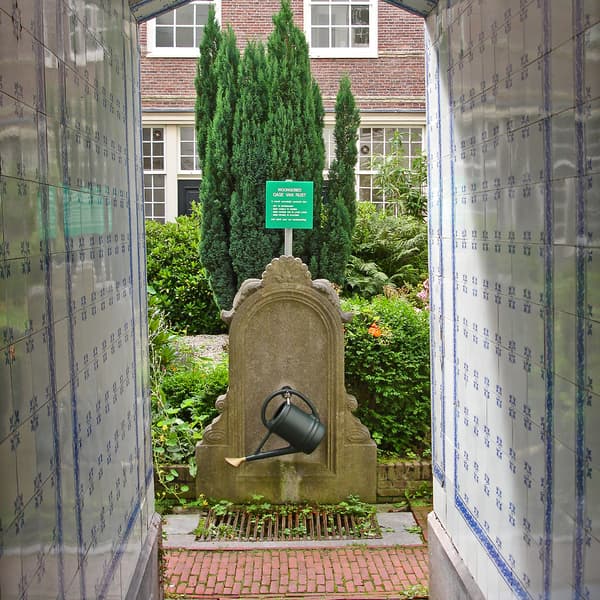
It's on the left side of the street at number 107. The black door is marked St. Andrew's Hoff, 107, TM 145. The doorway looks private, but it's the public entrance to a set of residences.
It's generally open during daytime hours except on Sundays. Enter quietly. You may have to push hard on the door. Go inside and continue on.
You'll walk into a tiny garden courtyard surrounded by a dozen or so residences. Take a seat on a bench. This is one of the city's scores of courtyards called Hoffjes, similar to Amsterdam's much larger Begijnhof. These are subsidized residences built around a courtyard funded by churches, charities, and the city for low-income widows and pensioners.
And this is where our tour ends, in a tranquil world that seems right out of a painting by Vermeer. You're just blocks from the bustle of Amsterdam, but it feels like another world. You're immersed in the Jordaan, where everything's in its place and life seems very good. We hope you've enjoyed this walk through the Jordaan.
Thanks to Jean Openshaw, the co-author of this tour. If you're doing more sightseeing in Amsterdam, check out our other tours, the Amsterdam City Walk and the Red Light District. This tour was excerpted from the Rick Steves Amsterdam, Bruges, and Brussels Guidebook. For more details on eating, sleeping, and sightseeing in those cities, refer to the most recent edition of that guidebook.
For more free audio tours and podcasts, and for information about our guidebooks, TV shows, bus tours, and travel gear, visit our website at ricksteves.com. This tour was produced by Cedar House Audio Productions. Thanks, dank u wel, tot ziens, and goodbye for now.
Free
GPS-guided walking tour
No account needed. Walk at your own pace.
Free
14 stops ·