24 stops
GPS-guided
3 km
Walking
2 hours
Duration
Free
No tickets
About this tour
A 3 km GPS-guided walk through the heart of Portugal. Visit Lisbon City Walk, Rua Augusta and the Baixa , From Rua Augusta to Praça da Figueira , and Praça da Figueira — with narrated stories at every stop.
24 stops on this tour
Lisbon City Walk
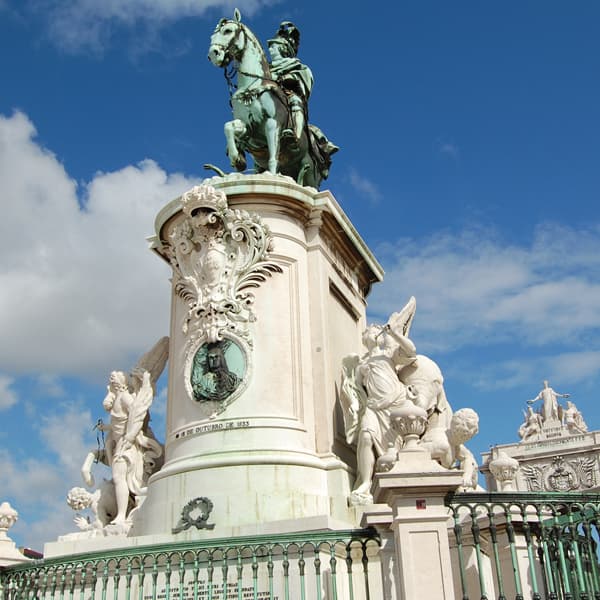
Lisbon City Walk. Lisbon is a charming mix of now and then. Vintage trolleys shiver up and down its hills. Bird-stained statues mark grand squares.
And well-worn people sip coffee in elegant old cafes. It's a city with a glorious past, but with an eye to the future. Hi, I'm Rick Steves. Thanks for joining me on a walk through Lisbon's historic center.
Read more...Show less
We'll start where Lisbon itself did, at the harbor, where Portugal grew rich in the global sea trade. We'll walk through the neighborhood called the Baixa, home to high-fashion shops and mosaic-covered streets. We'll ride a classic old funicular up to a stunning view of the cityscape. Then we'll stroll the back streets of the historic Bairro Alto neighborhood.
Here, fado is sung, port wine is drunk, and cod is consumed in great abundance. All along our walk, we'll see reminders of the devastating earthquake of 1755 that completely transformed the city. Note that we'll be visiting a couple of sites that are only open during daytime hours and may require an admission charge, so check a guidebook for details on opening times and costs. But regardless, you can enjoy this walk any time of day.
You could also easily split the walk conveniently into two parts, the Baixa, that's tracks 1 to 12, and the Bairro Alto, with a break in between. Now, let's set off for Lisbon, a city of ironwork balconies, flowering bougainvillea, and red-tiled roofs dotted with antique TV antennas. All these are part of this cosmopolitan city with an elegantly fading past and a vibrant global future. Lisbon.
To help us along the way, I've invited a good friend and virtual travel buddy. Welcome, Lisa. Hi, Rick. Lisa will give us helpful directions and sightseeing tips throughout the tour.
And my first tip is to be sure you get our tour updates. Just press the icon at the lower right of your device. You'll find any updates and helpful instructions unique to this tour. Things like closures, opening hours, and reservation requirements.
There's also tips on how to use this audio tour and even the full printed script. Yes, so pause for just a moment right now to review our... Our updates and special tips. It's okay.
We'll wait. And then... Let the tour begin. The tour begins.
Tour Begins: Praça do Comércio
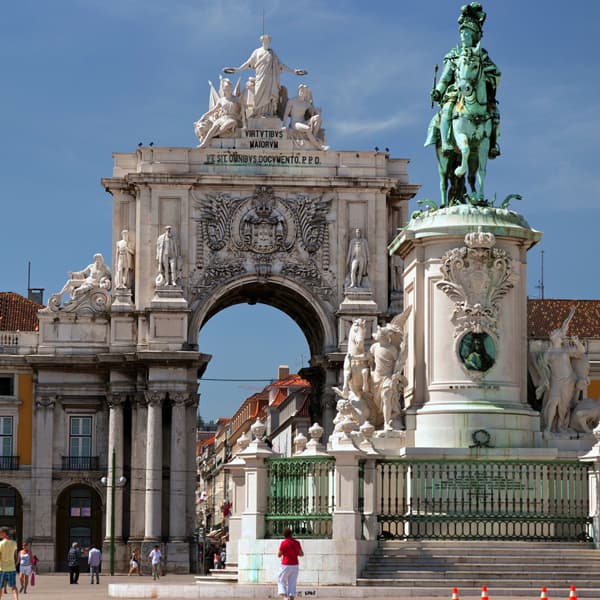
Prasa do Comercio. Start your walk in the spacious square along Lisbon's waterfront called Prasa do Comercio. There's a big statue of a king on horseback in the center. Take it all in.
The statue, the buildings that surround the square, the big white triumphal arch, and the view across the water. Rick? Lisbon is a city of half a million people with more than three million in Greater Lisbon. It's the capital of Portugal and the country's banking and manufacturing center.
Read more...Show less
Locals call their city Lisboa. Lisbon is situated at the mouth of the Tejo River where it empties into the Atlantic Ocean. It was here, at this prime location, that Lisbon was born. In fact, the city's name, Lisboa, comes from an ancient word meaning calm port.
For 2,000 years, Portugal's hardy sailors have boarded ships here at the mouth of the river. They sailed into the Atlantic, to distant lands, then returned here to this harbor to trade their goods. Today's square is named Prasa do Comercio, or Plaza of Commerce, in honor of the traders who helped make the city rich. Turn your attention to the huge statue in the center.
The statue of a proud man on horseback is Portugal's King José I. It's the year 1750, and José has just begun his reign. He's inherited a country that, for the past three centuries, has grown into a global superpower. José's horse stomps on snakes, symbolizing how mighty Portugal had defeated its enemies.
The statue of the elephant represents the vast colonial empire Portugal's command. It stretched from Brazil to Africa to India all the way to China. Fittingly, the statue of King José faces the harbor, the place where the riches of the world poured in. Spices, diamonds, sugar, and gold.
No wonder José can afford such a stylin' hat. To oversee this vast empire, José wisely selected a shrewd prime minister. That man is depicted on the pedestal of the statue, on the front side. Find the medallion relief of a man with long, curly hair.
This was José's prime minister, the Marquis of Pombal. Pombal was a man of broad life experience, a nobleman, highly educated, a military man, and diplomat. As prime minister, Pombal immediately began instituting progressive reforms. Portugal was on a path headed toward an enlightened future.
Under the dynamic duo of José and Pombal, everything was going to be fine. Everything. Everything was looking bright and sunny. Then came that fateful day, the morning of November 1st, 1755, the moment that would change Lisbon forever.
Da-da-da-da! A cliffhanger! Well, I guess it's no big secret, so, spoiler alert, it was in that fateful year of 1755 that Lisbon was struck by an enormous earthquake. Buildings collapsed, a fire ignited, worst of all, there was the earthquake's aftermath, a deadly tsunami.
Imagine it, a 20-foot-high wall of water came rushing through Praça do Comercio, right where we're standing. It swept inland, engulfing the city. It completely destroyed the royal palace, which had stood right here. Within hours, Lisbon was practically wiped off the map.
The city was shaken to its core. So, who was it that bravely stepped up to face the crisis? This king on his high horse and his prime minister, the Marquis of Pombal. Exactly.
The square we're standing in and the statue are a celebration of how Lisbon rose like a phoenix after the 1755 earthquake. Within a month of the earthquake, the energetic Pombal had a plan. He began transforming the town into a modern, urban-planned European capital. A perfect example of that is the buildings that surround this square.
They're 10 feet tall, typical of Pombal's architecture. Perfectly symmetrical, all the same height, arcades with rounded arches, rectangular windows with ironwork balconies. The buildings became home to Pombal's successors, the government ministries. They still house government offices to this day.
The square is also home to a venerable café, which dates from the era of Pombal. To find that café, face inland toward the arch. It's in the square's right corner. Café Martinho d'Arcada.
Also worth pointing out, on the left-hand side of the square is the Wines of Portugal tasting room. Here you can sample local wines for a good price, and along the waterfront you'll find city bus and tram tours, as well as boats that cruise along the river. Praça do Comercio stands as a testament to the work of Pombal and the vibrant city he rebuilt after the 1755 quake. Let's go see that city.
Let's! On top of the arch stands a statue representing Lady Glory. She crowns two other statues at her feet. She represents Portugal as a great world power with an empire that stretched across the globe.
As you get closer to the arch, check out some of the other statues. On the left side of the arch locate the reclining river god. This is the River Tejo, or Tagus in English. The Tejo laces the country of Portugal together.
It starts in Spain, near Madrid, flows western for 600 miles, and spills out here into the Atlantic, the gateway to the wider world. Now turn your attention to the right side of the arch, that river god is the River Douro. He holds a cluster of grapes. The Douro, to the north, is the source of port wine.
That's the country's great export product. The other four statues on the arch offer Portuguese history in a nutshell. Start on the left side of the arch, next to the Tejo. There's a man wearing rustic clothes.
This is one of the proud indigenous inhabitants of ancient Portugal, the Lusitanians. When the Romans invaded, the resulting mix of Celtic and Latin cultures created what became Portugal. Now switch to the other side of the arch. Next to the Douro River stands a guy with a long sword.
This is the brave general who, in the 1300s, finally freed Portugal from foreigners after a thousand years of foreign domination. Back on the left again, find Vasco da Gama, wearing a cap and beard. Vasco da Gama was the intrepid explorer of the 1400s who sailed around Africa to Asia. Almost overnight, his discoveries transformed Portugal from a tiny fishing country into a rich global superpower.
The colonial empire he forged would fuel Portugal to greatness for the next three centuries. Which brings us to the final figure. To the right, find a well-dressed gentleman. It's our old friend...
The Marquis of Pombal, who, in the 1750s, after that horrific earthquake, basically built the Lisbon we see today. Let's pass through Pombal's ceremonial arch and into his city. By the way, you can climb the arch for a view of the city, but we'll see better views later on our walk. As you emerge from under the arch, heading inland, you're walking up the street called Rua Augusta. Rua Augusta and the Baixa.
Rua Augusta and the Baixa
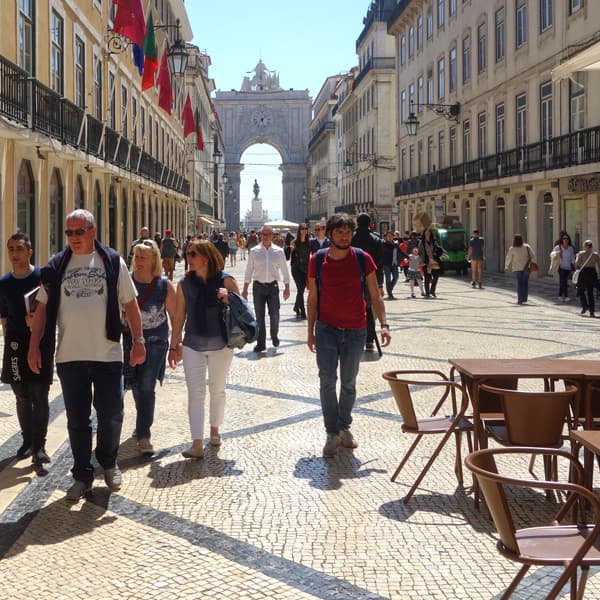
The street is pedestrian-only and paved with fine black-and-white mosaics. These are just the first of many pavement mosaics we'll see on our walk. Stroll one short block up Rua Augusta. We're walking through the neighborhood called the Baixa.
The word "Baixa" means "low" or "tall." You'll understand why when you reach the first cross street. As you reach the cross street, Rua do Comércio, stop for a second. Glance to the right down Rua do Comércio. In the distance, you see the twin towers of the old cathedral.
Read more...Show less
This sits on the slope of a hill. Now look in the opposite direction, down Rua do Comércio. Those buildings in the distance are on Lisbon's other hill. The Baixa, or Low Town, is a flat valley that sits between these hills.
Keep going up Rua Augusta. As you walk, you'll pass, on your right, the Museum Le Mode. It's housed in a former bank, done in the Art Deco style. The museum offers a quick, well-described stroll through 20th-century fashion.
It's free and has a handy toilet. Always a plus. Keep walking. We'll cross the next street, Rua de São Julio, and just keep going uphill, inland on Rua Augusta.
Enjoy the Rua Augusta scene -- inviting cafes, bustling shops, and elegant old storefronts. It's a people-watcher's paradise. The city gives subsidies to old businesses to try to keep the Baixa charming. But unfortunately, tacky modern businesses are still finding a way to creep in.
It's clear that the Baixa's streets were laid out in a geometrical grid. This was Pombal's plan. It was the 1700s, the Age of Enlightenment. Everything was supposed to be rational, logical, and done according to the latest science.
Pombal was creating a city of the future. It was to be both functional and beautiful in its simplicity. When you reach the next cross street, Rua da Canção, stop. Notice the trolley tracks in the pavement.
Like San Francisco, Lisbon has kept a few classic trolleys from the 1920s as part of its heritage. One of them is the 28E, which stops here. It connects Lisbon's three historic neighborhoods -- the Bairro Alto, that's to the left, the Baixa, which we're exploring now, and the Alfama, that's up on the right. This vintage trolley shakes and shivers up hills and around corners, somehow safely weaving within inches of parked cars.
Joy riding on these trolleys is a great way to sightsee the city. You can just hop on and pay the driver or use a transit pass, which saves a little money. Keep going up Rua Augusta. On your right, you'll pass by the Millennium Bank.
Look into the windows to see some Roman artifacts, a reminder that Lisbon's history goes way back. Keep going two blocks to Rua Vitoria. As you walk... Rick, what's up with these mosaic sidewalks, anyway?
The mosaic work is called calçada. It's a uniquely Portuguese art form. The Baixa's mosaics date from the 1800s, but the practice goes back to pre-earthquake Lisbon. In fact, it probably goes all the way back to the ancient Romans, who were masters of mosaic.
Lisbon's mosaics are generally black and white, black basalt and white limestone, both of which are plentiful around here. It's a painstaking process. Craftsmen have to break the stone into just the right size and shape, generally a cube. They lay down a compact bed of clay.
Then they set the cube-shaped stones into place and pound them into the clay with a hammer. Once the pattern's laid, they spread a cement mix over the whole thing to fill the spaces in between and seal the stones together. Just a quick reminder on directions. As Rick talks, keep going up Rua Augusta, crossing Rua de São Nicolau.
As we make our way to Rua Vitoria. The patterns for these mosaics have been used for decades. You'll see crisscross diamond patterns and floral shapes. Elsewhere on our walk, you may see waves, ribbons, vines, scallop shells, even words and pictures.
To this day, the patterns are chosen from an official book of acceptable designs. Portuguese calçadas have spread throughout the former Portuguese Empire. In Brazil, for example, they decorate the walkways along Rio's famous Copacabana and Ipanema beaches. It's hard work making these mosaics.
Lots of stooping and squatting and hauling heavy materials in the hot sun. You have to be strong, but also something of an artist. As a result, the sidewalks are expensive and hard to maintain. The city is having trouble finding skilled craftsmen who can do it for low wages.
And there's another problem with these mosaics. The stones get slippery when wet. People slip and fall, especially old pensioners navigating Lisbon's steep hills. As a result, the government's talking about replacing the mosaics with modern pavement.
Say it ain't so! That's right. Others are crying out to keep the tradition and the beauty they add to this one-of-a-kind city. When you reach the cross street called Rua da Vitoria, we'll be turning right. On the next track, Rick and I will direct you from there. ♪♪
From Rua Augusta to Praça da Figueira
From Rua Augusta to Praça da Figueira. From Rua Augusta, turn right and start heading east down Rua da Vitoria. We'll be going three short blocks down Vitoria Street. As we walk, I'd like to introduce you to another voice you'll be hearing along our tour.
It's a good friend of mine and fellow tour guide, Cristina Duarte. A while back, I had the chance to walk through Lisbon with her, and she'll be adding her insights as we go. So, welcome to Cristina. Hello, bom dia.
Read more...Show less
Bom dia, Cristina. Bem-vindos a Lisboa. What did you say? Welcome to Lisbon.
That's what I thought. Thank you very much. We'll be hearing periodically from Cristina, as well as another friend of mine I'll introduce later. But first, some directions.
You'll soon reach a busy cross street, Rua da Prata. There, you'll find a big white church. Find a spot to view the church where you can see both its façade and its long side. This is the Church of St.
Nicola. People have worshipped on this spot for over 800 years. But the medieval church was destroyed in the 1755 quake. Now rebuilt, it's typical of a post-earthquake church by Pombal.
The façade looks like a church, but its side, running along the street, looks like just an ordinary secular building. It houses shops and apartments, and the walls have green flower-patterned tiles like the rest of the buildings along the street. If it were left up to the people, they would have rebuilt their churches bigger than ever. But Pombal was a practical man and a military man.
He had a tight budget and a strict timeline. He didn't want church building to compromise the needs of the people. In those austere post-earthquake days, Pombal got his way. As a result, churches are scarce in the post-earthquake Baixa.
Those that were rebuilt were simple, like this one. They were incorporated into the no-nonsense style that blended in with the rest of the street. From the church, turn left on Rua da Prata and start heading uphill. We're headed three blocks toward that statue up ahead.
Marking Praça da Figueira. As you walk uphill on Rua da Prata, you're jockeying with busy Lisbon traffic. I asked my friend, Cristina, who's lived in Lisbon all her life, how local pedestrians make their way across such busy streets. Here's what she had to say.
First of all, you have to know where the traffic comes. You never run. You look to the driver on the ais and then you cross. Oh, you look to the driver on the ais?
Oh, yes. You just want to make eye contact. And basically, never run. Never run.
Because the driver will not know where you're going. So if you make eye contact with the driver, that's good. Otherwise, the driver will never know where you are going to. Keep making your way up Rua da Prata.
Check out your surroundings. The busy streets, the shops, the upper-floor apartments. These practical features of modern life are exactly what Pombal had in mind when he laid out the city after the earthquake. Yes, you're walking through the heart of Pombal's Baixa.
He wanted a city that was both beautiful and functional, a style locals call "Pompalene." The buildings are mostly uniform, five stories tall with similar features. There are rectangular windows and lookalike balconies made from wrought iron. These grid-like buildings echo the Baixa's grid-planned streets. Pombal built for business.
He put shops on the ground floor and apartments and offices above, much as it is today. Pombal's priority after the 1755 quake was to rebuild fast and cheap. But there was one more thing. He also made sure the buildings had stone firewalls and flexible wood-beam infrastructure.
That, so they could survive the next earthquake. Keep going uphill along Rua da Prata, making your way toward the big statue up ahead. A generation after Pombal, in the 1800s, Lisbon could afford a few luxuries. Some of the buildings along here got colorful tile work, as you see.
This added a touch of beauty. Plus, it helped insulate against the hot sun. This was when the pavement mosaics, the calzadas, were revived. Here, on Rua da Prata, the mosaic sidewalk runs up the street like a geometric black snake.
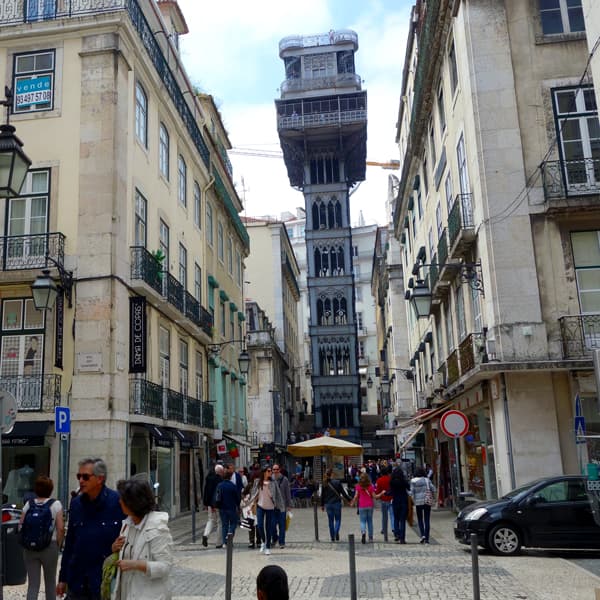
One block before the statue, you'll reach the cross street called Rua da Santa Justa. Pause here for a second and look left down Rua Santa Justa. A few blocks in the distance, you'll see an odd-looking gray iron structure rising up above the rooftops. This rectangular iron tower is an elevator, the Santa Justa Elevator.
It was built in the 1800s, so residents in the Baixa could easily ascend up to the Bairro Alto hilltop. It has the iron girder look of the Industrial Age, but it's adorned with neo-Gothic touches, pointed arches, columns, and elaborate tracery. Take note of the rooftop terrace. We'll be there later on our walk.
Now, keep going up Rua da Prata one more block to the statue. The Rua da Prata, or Street of Silver, is named for the silversmiths who once worked here. This is the former Jewish Quarter. The earthquake cleared that neighborhood out, but the traditional trades are still remembered in the street names.
The Baixa was built by military engineers whose experience was in building garrison towns overseas. The architecture was made of interchangeable prefab building blocks. You could load those on a ship and erect them fast and easy in distant lands. That's why you'll see very similar Pombolim buildings in Portugal's former colonies, like Brazil and Mozambique.
The Baixa today is changing. Notice that the upper floors of many buildings, the apartments, are empty. Lisbon's downtown population is shrinking as more and more people are moving to the suburbs. Rua da Prata finally reaches the statue.
You spill into a huge square, Praça da Figueira. Stand here at the entrance to the square, face the statue, and survey the scene. ♪♪♪ ♪♪♪
Praça da Figueira
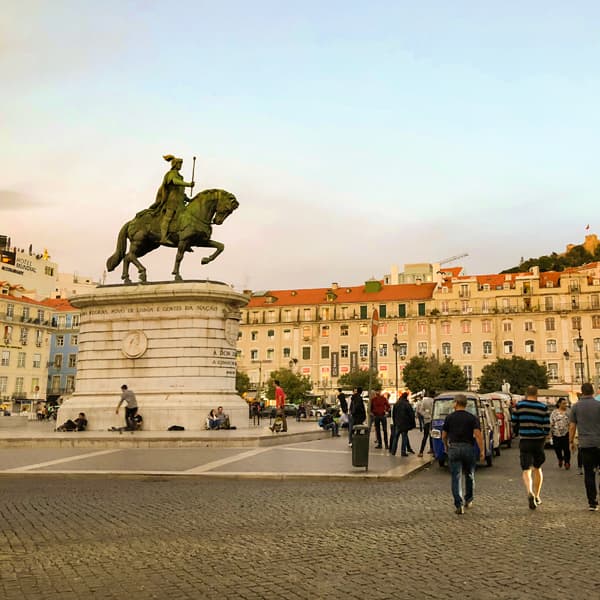
Praça da Figueira. The square is spacious, where today's Lisbon bustles with life. There's a big statue in the middle, and the square is enclosed with uniform five-story buildings. The square's busy with buses, cars, trolleys, and pedestrians.
Skateboarders do their thing, oblivious to all the history around them. The statue is of King John I. This is the man who ushered in Portugal's Golden Age. John is dressed in armor and a plumed helmet and sits proudly atop his horse.
Read more...Show less
It's the year 1385, and John has just defeated the Spanish in the famous Battle at Batalha. By the way, that battle site is worth a visit if you have the time. It's 50 miles north of Lisbon. Victorious John was declared king.
Which must be why he's holding a scepter, not a sword. As king, John's first act was marrying a princess from England. This marriage would forge a strong bond between Portugal and England that would last for centuries. The happy couple had a son, and they named him Henry.
That would be Prince Henry the Navigator. Indeed. They sent Henry exploring the coast of Africa. This launched the Age of Discovery, which would lead to the voyages of Vasco da Gama.
Those discoveries would bring Portugal to global greatness for the next three centuries. And King John's descendants would rule Portugal until its very last king in 1910. Let's explore the square. As you face the statue, turn left and walk a few steps.
Find a pastry shop, called Confeiteria Nacional. It's in the corner of the square, at number 18. The Confeiteria Nacional shop is a venerable old palace of sweets. It hasn't changed much since it opened back in the 19th century.
Check out the window displays, or better yet, step inside for a closer look. A look? I'm buying. I had a chance to visit the shop a while back with another friend of mine.
She's also a tour guide. Her name is Alex Almeida. Alex told me this place is a favorite among locals. As you peruse the various sweets, let's hear what Alex had to say.
Okay, so this is Confeiteria Nacional, and it's actually one of the oldest pastry shops here in Lisbon. It was the first one, the first shop to have a telephone in Lisbon, which is interesting. And of course, they're famous for their cakes. You know, the Portuguese are known for liking sweet things.
Of course, with a lot of sugar coming from Brazil, this was a place that had a lot of sugar. And here, they were supplying the royal family with sugar and cakes, all kinds of sweet things. And this place, it's from 1829. It's a very old, inside, very beautiful, old-style pastry shop.
Well, let's step inside and take a look. Let's do it. The specialty here is sweets that are, as the signs say, conventual. That is, they come from convents.
I asked Alex to explain. Conventual. Pasteleria conventual. Or dulceria conventual.
Why would there be pastries from the convents made by the nuns? Yes, they were basically the only ones that could afford the chickens and the eggs. And they would use the egg whites as starch to iron their abbots, make it really thick. So they were left with the yolks.
So they have all these yolks because they used the whites to starch their abbots. Yes. And what are you going to do with your yolks? Yes.
We had Brazil. Brazil was sending a lot of sugar, so let's put it together. So the convents had the yolks, and the Brazil trade had the cheap sugar, put it together, and you got? 95% of the Portuguese pastry.
The most famous of the goodies sold here is called pastel de nata. It's a custard. It's also made by monks or nuns. It's made from egg yolks and comes in a little cup shape.
Mmm, I'll take a couple of those, too. Then it's time to move on. Or you could consider a light lunch here in the upstairs dining room. But we're moving on.
Exit the shop, cross the street, and start heading uphill toward the upper left corner of the square. The square is actually fairly recent. After the earthquake, it was left abandoned as a field of rubble. In the late 1800s, it became a marketplace.
Today, it's a people place and a major transportation hub. Tourists can catch the hop-on, hop-off buses here. There's also the old trolley, number 12E, that goes up to the castle, or bus 714 that heads out to Belém. Continue to the upper left corner.
Rick, what's with the big building on the left-hand side of the square? It's pretty rundown. Yes, it's a victim of 50 years of rent control. Many landlords, demoralized by the earthquake, demoralized by their inability to raise their rents, end up doing nothing to fix up their property.
Buildings like this end up either vacant or occupied by old pensioners living out their lives in decrepit conditions. We'll exit Praça da Figueira from the upper left corner of the square. Leave the square on the street called Rua da Mantao da Almada. After a few steps, you'll find our next site, a deli on the left side of the street, at number one. The cod shop.
Cod Shop
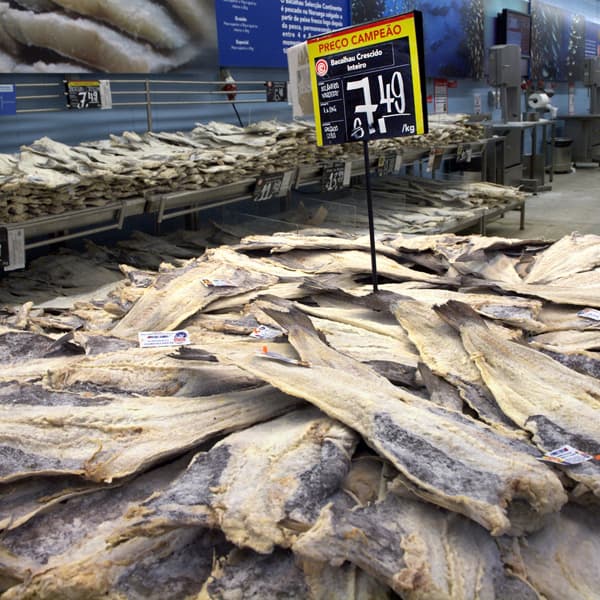
Check out this classic deli. Its specialty is bacalhau, or dried cod. You didn't have to say it. I smell it.
Cod is an essential part of Portugal's heritage. Around here, it's In Cod We Trust. They've eaten it for centuries, and you'll still find it on menus everywhere. Here, you'll find cod dried and stacked like cordwood.
Read more...Show less
Step inside and check out the cod, as well as other regional delicacies -- pork products and the like. To learn more about this Portuguese obsession with dried cod, I talked with my friend Alex. I asked her how it came to be that cod is so important to Portuguese cuisine. It's not easy to explain that one, because, you see, we have a lot of fish.
It's kind of weird, the fact that we love a fish that we don't have, because we never had codfish in our waters. Codfish, of course, likes cold waters. We don't have that. So the explanation is that we're a fisherman's country.
So we've been fishing all over the world. And in 1500, we went to a place called New Finland. Up in Canada? In Canada, exactly.
Okay. And so the descriptions of what they found there are pretty amazing. They talk about not being able to move their boats because there was so much fish. So, of course, the Portuguese, pretty excited with this, they brought huge amounts of that.
But they had to preserve it. And how did they do it? Like this, salted and dried. And so that's the tradition here in Portugal, is to have it like this, salted and dried.
It comes salted and dried originally so they could preserve it. So these days, how do people actually cook it? So now, these days, we have more than 300 recipes with it. We really love it.
And you take this cod. It's like, these are like pieces of wood almost. Yeah. And you put it in water, one, two, three days, depending on the size.
And then if you really know how to cook it, like my mother does, you put it in a bit of milk to get it soft, and then you cook it. These days, of course, it will be much easier. to have the fresh cod. But the thing is, we don't like it.
We only like the salted one. So that's the one we have. Even on Christmas Eve, we have the salted cod. That's the tradition, to have it with your family.
I love it all. It's absolutely amazing. And if, as a tourist, we want to enjoy that at a restaurant, what do we look for? What do we order in the restaurant?
I always say people to be careful, not go for the grilled one, okay? Because it could be an intense experience. So probably you should start by what I call the intro recipes, which is codfish cakes or bacalhau à brache. These two are a bit more soft.
Bacalhau à brache, B-R-A-S. And that's with the eggs mixed together? And potato sticks and a bit of parsley. That's quite a nice local specialty.
And it's not as intense as the other recipes. But this comes from the dried and salted cod. Always. And even in the restaurant, they had to soak it for a couple of days.
Oh, yes, for sure. Put a little milk in if you want it special. Yeah, yeah, for sure. That's always the ritual.
How do you say "cod" in Portuguese? Bacalhau. Bacalhau. Yeah.
When you're ready to continue the walk, keep going up the street to the end of the block. There are actually several more characteristic shops along this street worth checking out. But we're passing them by. After about 30 yards or so, you'll reach a big church facing a square. The church of São Domingos.
Church of São Domingos
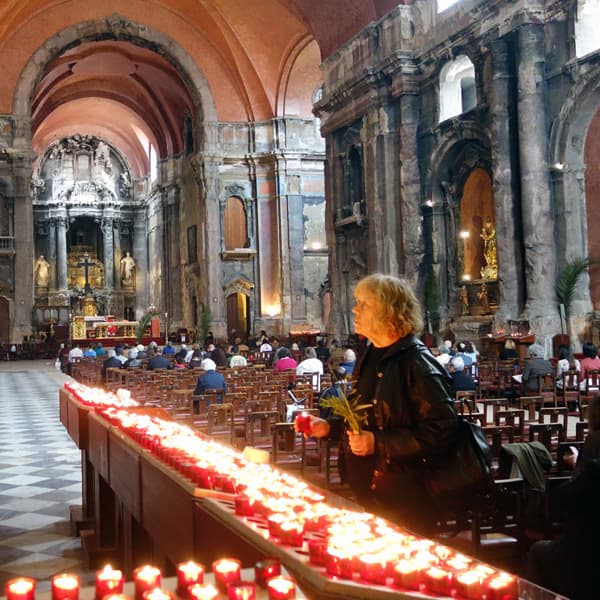
Check out the church's ornate exterior with its roofline of Baroque shoulders. This church is one of Lisbon's most active today, and it has a long history dating back to the 1200s. Let's go inside. As you enter, pause near the entrance and take in the nave.
The church interior is surprisingly big. It was often used as a wedding venue for Portugal's kings and queens. The church shows its age. Notice the stone columns along the walls.
Read more...Show less
They're scarred from centuries of earthquakes, fires, and rebuilds. The church was almost totally destroyed in the 1755 earthquake. The quake struck on one of the holiest days of the year, All Saints' Day. Sadly, most of the city was at mass.
All across Lisbon, heavy stone church walls like these collapsed right on top of their congregations. Here, near the entrance, you can see some of the pre-1755 stone walls that survived. At the other end, near the altar, notice the black soot on the walls and the charred stonework that recalls the horrible fires that followed the earthquake. Let's explore.
On the left side of the nave, here near the entrance, find the chapel with three statues. One statue depicts the Virgin Mary with her hands folded in prayer. Flanking her are two smaller statues of children. This chapel honors Our Lady of Fatima, Portugal's most popular saint.
Her chapel always has the most candles. The main statue is Our Lady of Fatima, that is, the Virgin Mary. She's accompanied here by two children who saw her in a miraculous vision. It was on May 13, 1912, or May 13, 1917.
The children were tending sheep. Suddenly, the sky lit up and Mary, the Mother of Christ, appeared before them, shining like the sun. This was in the darkest days of World War I, and Mary's message to the kids was a hopeful promise of peace. That vision was followed by many other miraculous events around their town.
As word spread, the Virgin Mary was seen by tens of thousands of other Portuguese. This took place in the small town of Fatima. It's about 50 miles north of Lisbon. Today, Fatima is one of the Catholic world's greatest pilgrimage sites, welcoming literally millions of faithful each year.
Exit the church back onto the square outside, the square called Largo São Domingos. ♪ ♪ ♪ ♪ ♪ ♪ ♪ ♪ ♪ Largo São Domingos.
Largo São Domingos
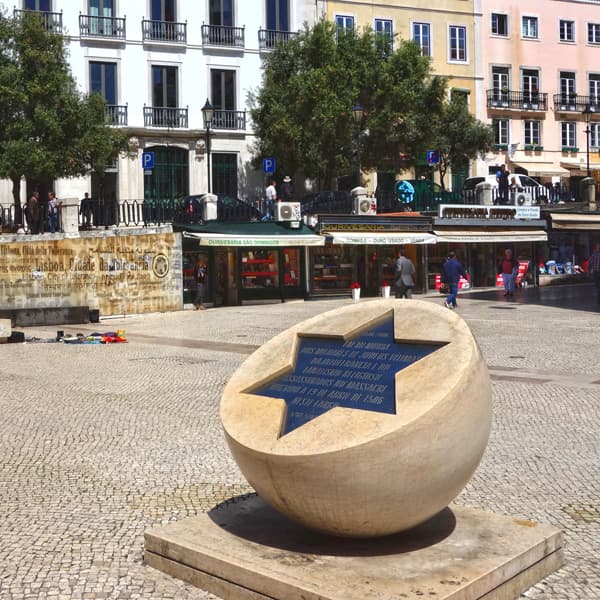
This square is a pleasant gathering spot with a fine mosaic pavement. Check out the round stone monument. It's near the church. It's carved with a Jewish six-pointed Star of David.
The monument is a reminder that this square was once the local headquarters of the Inquisition. From the 1400s up until modern times, the Inquisition tried and punished heretics and enemies of the Catholic Church. In 1506, the city massacred the town's Jews right here on this square. In the 1700s, a heretical priest was executed nearby.
Read more...Show less
He had dared to suggest that the 1755 earthquake was a punishment from God for the excesses of the Inquisition. So the Inquisition killed him for it. Talk about excessive. This square is also notorious for another reason.
In the 1500s, it hosted a slave market. The Portuguese were great traders, and one of their most profitable commodities back then was human flesh. Since then, Lisbon has tried to erase the memory of this square's unsavory past. The Inquisition Palace was demolished.
In its place, they built the National Theater. That's the impressive building across from the church. And the Roundstone Memorial was unveiled in 2008 as a reminder of those past years of intolerance. Today, the square, a former slave market, is now a gathering place for the city's African immigrant community.
Lisbon is home to many immigrants from its former colonial empire, from Angola, Mozambique, and Portuguese Guinea. Here on this square, they hang out, trade news from home, and watch the tourists go by. It seems that Lisbon is kind of like the Paris of the Portuguese-speaking world. Yes, it's the sophisticated old world capital of its former empire.
Worldwide, the Portuguese-speaking community numbers about 250 million people. Portuguese is spoken in Brazil, parts of Africa, and Macau in China. Brazil won its independence way back in the 1820s, but other lands remained colonies until as recently as the 1970s. In fact, anyone born in those African lands before 1974 was automatically a Portuguese citizen.
Many have moved to Lisbon. The influx has added diversity and flavor to the city, everything from African dance music to spicy foods like chicken piri-piri. Chicken piri-piri. That makes a nice transition to what we'll see next -- all the restaurants you'll find nearby.
With your back to the church, make your way kitty-corner across the square. From there, a street runs uphill -- Rua das Portas de Santo Antão. Gaze up this street -- Lisbon's eating lane. It has a galaxy of eateries.
Many specialize in seafood, including the bacalhau à bras we heard about earlier. There's also the Portuguese paella called arroz de mariscos. You'll find chicken piri-piri from Africa, and grilled pork with clams from Portugal. There's also pork with clams.
That's a specialty from Portugal's Alentejo region. Portugal has a varied cuisine, and this street, though pretty touristy, is an enjoyable place to browse. Grab a beer, snack on some snails or barnacles, and watch the world go by. For a true local specialty and some great people watching, let's head to our next site.
Backtrack into Largo São Domingos. Find the colorful little hole-in-the-wall tavern at number 8. Over the door, the sign reads: "A Gengenha." ♪ ♪ cheese. ♪ ♪
A Ginjinha Bar
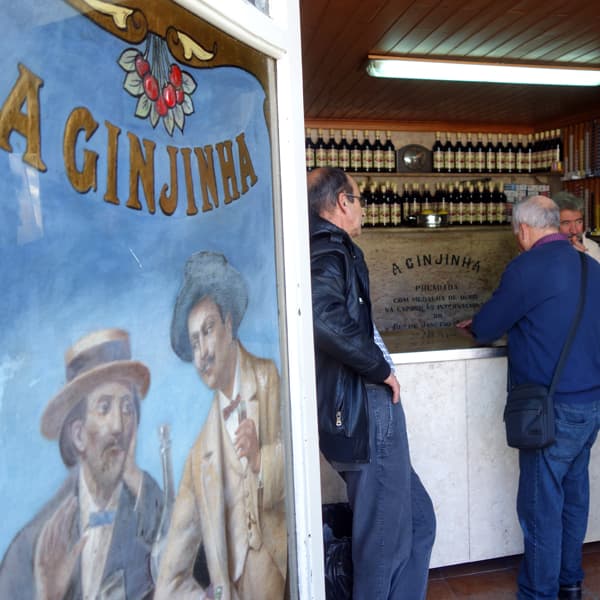
A Gengenha. Liquid sightseeing. This little bar serves the traditional cherry brandy known as Gengenha. It's the oldest such bar in town, one of the last of a dying breed.
While the nuns baked sweets, the monks took care of the liquor. Gengenha is a sweet liqueur made from a sour cherry-like berry called the Gengenha. It's flavored with sugar, cinnamon, and brandy. Feel free to step inside and order yourself a Gengenha.
Read more...Show less
You can order it two ways: with the berry in it or without. I asked Alex to explain a little more about this local drink. Yeah, so it started with a monk, of course. He did this, and he said it was a medicine, okay?
If you were sick, you were allowed to have this. It's made of sour cherry, and sugar, of course, and cinnamon, and just a small detail, it has 23% alcohol. Okay, so it's strong stuff. This place, which is the original one, a Gengenha, this place opens at 9 a.m., and sometimes you have people starting here at 9 a.m.
getting some Gengenha to start the day. So you step right up to the bar, and what are your choices? Do you just order everything the same, or do you have an alternative? It's basically the same.
You know, it's Gengenha, so it's just that drink, but you can choose the big one or the small one, and you can choose it with the fruit or without the fruit, okay? Oh, so if you want the fruit, you just say... You just ask for it. With.
How do you say it? With the fruit. With. Com.
Com. Gengenha com. Com. And they'll give you the drink with the fruit inside.
Just a warning, small warning. It's sour, okay? The fruit is really sour. It has a bit inside, but it will be a contrast between the sour and the sweet.
I actually like it with the fruit. Hey, I kind of like this stuff. Yeah, me too. Lots of people do.
People love it here. In fact, in Portugal, if you like the taste of anything, they have a saying: "Saba que nem Gengas." That literally means, "It tastes as good as Gengha." By the way, if you hang around the bar long enough, you'll see them refill the bottle from an enormous vat. But we're moving on. Visit the Gengenha bar.
From Largo, São Domingos, head into the enormous square that adjoins it. You can't miss it. It's a long rectangular square paved with mosaics and dotted with fountains and a big column in the middle. This is Rocio Square. Rocio Square.
Rossio Square
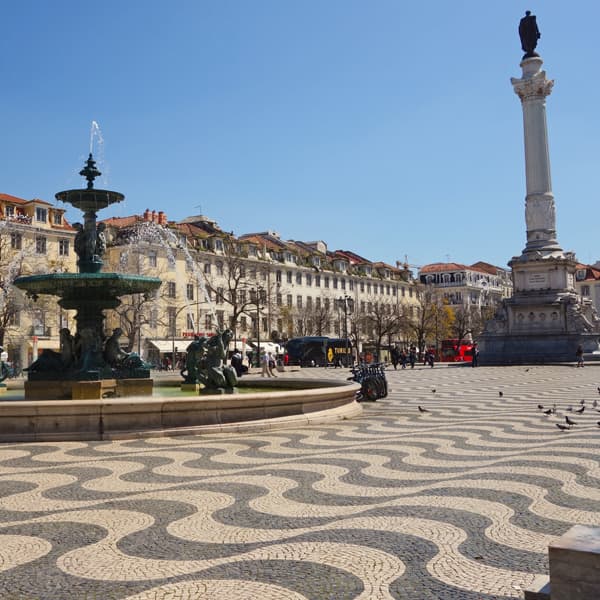
Enjoy the square from the uphill end where we entered. Slowly make your way across the top end of the square. You'll pass alongside the impressive façade of the big white National Theatre. Rocio Square is Lisbon's historic center.
Today, it's still the city's bustling cultural heart. Given its long shape, historians believe it was a Roman racetrack 2,000 years ago. These days, cars circle the loop instead of chariots. It's home to the colonnaded National Theatre and a McDonald's.
Read more...Show less
There are street vendors who can shine your shoes or laminate your documents. You can buy knock-off watches, roasted chestnuts, or lottery tickets. Kind of like a big open-air Walmart. Keep making your way across the top end of the square, keeping the National Theatre on your right.
As you walk, gaze down the length of the square. Notice the fine mosaics in the pavement. These patterns evoke the waves of the sea, the same waves encountered by the great Portuguese explorers. The column in the center of the square has a statue on top.
Who is it? That's Dom Pedro IV, the King of Portugal back in the 1820s. As a child, Pedro's family had to flee to Brazil, then a Portuguese colony. He grew up in Brazil and fell in love with it.
When he became king, he oversaw the process that granted Brazil its independence. Today, the square is officially named for him, though everyone just calls it "Rossio." We'll exit Rossio Square from the uphill end. As soon as you exit the square, find the fanciful building with two horseshoe-shaped doorways. This is Rossio train station. Start making your way there to get a closer look. ♪♪ ♪♪ Rossio Station.
Rossio Station
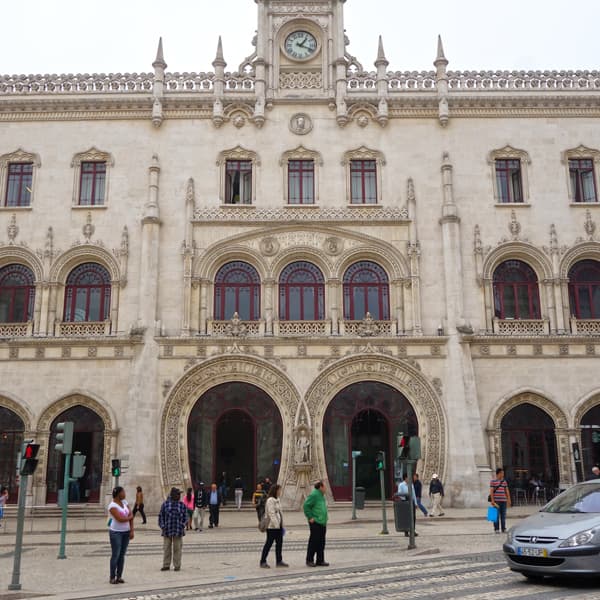
This train station was built around 1900. Its façade is done in the neo-Manuelan style. That is, it reflects the Manuelan architecture popular during Portugal's Golden Age in the 1500s. Manuelan was an eclectic style.
You'll see pointed arches. Yes, I see some there on the ground floor. You'll also see round Renaissance arches. Like on the middle story.
Read more...Show less
And even horseshoe arches borrowed from the Muslim Moors. The two entrance doors. Everywhere you'll see elaborate carved stonework in the Manuelan style. There are pinnacles, a balustrade across the roof, medallions with cameo portraits, elaborate tracery, all intertwined.
There are motifs from the sea. Yes, like the columns that look like braided ropes on a ship. Yes, and like the armillary sphere. The arma...
armadillo... the what? The armillary sphere. You'll find two of them high up on the building, at the base of the clock tower.
They look like globes or models of the Earth. An armillary sphere was a navigational device shaped like the Earth. It was surrounded by metal rings that could move, simulating the orbits of the heavenly bodies. Sailors used the armillary sphere to chart their course against the stars.
Because it was so crucial to Portugal's seafaring exploits, the armillary sphere became the symbol of the nation of Portugal itself. By the way, if you want to see original Manuelan-style architecture, the best example anywhere is just outside Lisbon, in nearby Belém. Here at Rocio Station, you'll find other symbols dear to the hearts of the Portuguese people. Get close to the entrance doors and find a small statue.
It's right in between the two doors where the horseshoe arches intersect. The statue is of King Sebastian. He has a rather downcast, lost-in-thought expression, and his is a rather sad tale. Sebastian was a dashing and romantic young king.
In 1580, he set off on an adventure to Africa. There, he disappeared mysteriously and never returned. As Sebastian had left no heir to the throne, the crown ended up with Philip II of Spain. The Spanish king promised to give back the throne if Sebastian ever turned up.
Ever since, the Portuguese have dreamed that Sebastian will return, restoring their national greatness. And even today, in any national crisis, the Portuguese like to say that maybe Sebastian will return to save the day. Look closely at Sebastian's huge shield. It's decorated with seven castles and five sets of coins.
These symbolize the Portuguese Christian victory over the Muslim Moors back in the 1100s. With that victory, in 1139, the nation of Portugal was officially founded. Even today, these symbols -- castles, coins, and the armillary sphere -- are found on the Portuguese flag. Let's move on.
Actually, before we do, remember that this is a working train station. Yes, you can even read the word "station" -- "estação" -- over the horseshoe door on the left. This is where you can catch trains to Sintra with its romantic palaces, to the beautiful walled town of Obidos, and to the beach town of Nazaré. Start heading uphill from Rocio Station.
Stay on the left side of the street. You'll pass alongside the elegant Hotel Avenida Palace. This is Lisbon's oldest hotel. It has an elegant yet inviting oasis of a bar and lounge.
It's popular with old World War II spies and with tourists needing a break -- or a toilet. After half a block, the street widens into a long elliptical-shaped square. In the center is a big obelisk -- a ceremonial column. This square is called "Praça dos Restauradores." Keep going uphill, staying on the left side of the square. Praça dos Restauradores.
Praça dos Restauradores
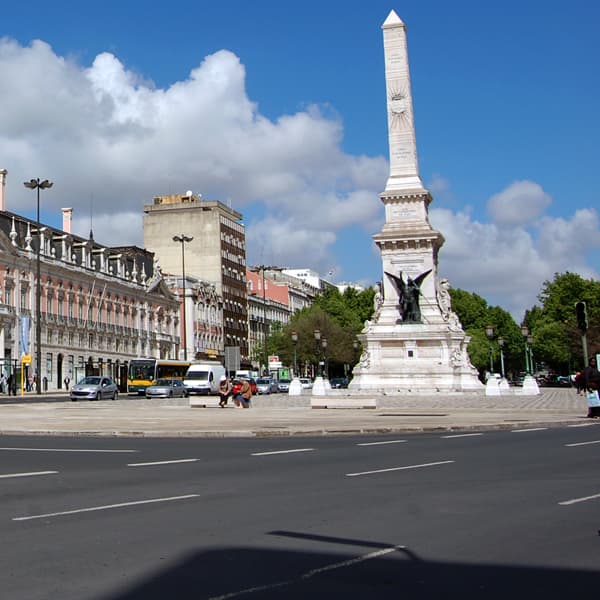
Enjoy the square as you walk to the far end. The square is grand and lined with impressive buildings. On the left-hand side of the square, you'll pass by the curvy art-deco façade of the classic Eden cinema, dating from the 1920s. The name of this square translates out as "Restoration." The obelisk in the center celebrates the restoration of Portuguese independence from Spain in 1640.
Remember, after the disappearance of Sebastian in 1580, Portugal ended up back under Spanish rule for the next 60 years. Throughout its history, tiny Portugal has had to constantly struggle to keep from being overwhelmed by its larger neighbor, Spain. Keep going uphill to the end of the square. I asked my friend Cristina how the Portuguese feel about those Spanish, their Iberian cousins.
Read more...Show less
Well, like cousins, we have our days. So Sundays, it's in, Sundays, it's out. Ha, ha, ha. We are very similar to them in many things, in language and with a different accent, actually, but the language is there.
We can understand. I mean, reading is very, very easy. So Portuguese and Spanish are fairly close languages. Very close, yes.
Character, probably they are more lively than us. You know, we tend to be more discreet, shy, and afraid of, how do I say that, of being ashamed. You know, it's like we have... Portuguese are a little less confident?
Probably. Spanish are more flamboyant? Flamboyant, yes. That's a good word.
Yeah, that's a good word. They are more flamboyant. Yeah. We tend to be more discreet.
More discreet. Yeah, more discreet. That's true, yeah. And when Spanish and Portuguese play football, who wins?
No. Ha, ha, ha. It's illegal, of course. Ha, ha, ha.
As you approach the end of the square, keep an eye out for a small street on the left-hand side. Here you'll find a stop for the funicular, or trolley, up the very steep hillside. From here, you can gaze further up the tree-lined boulevard that extends uphill from Praça dos Restauradores. It's called the Avenida da Liberdade.
It's kind of like Lisbon's Champs-Élysées, but more workaday, lined with banks, airline offices, and office buildings. The street connects the old town here with the newer upper town. By now, you should be near the funicular stop, just past Praça dos Restauradores, on the left-hand side. This is the funicular we'll catch to go up the hill.
We're about halfway through our walk. If you need a break, this is a convenient time to do it. When you're ready to continue on, turn to the next track, where Rick and I will talk you through the funicular ride. The funicular,
Funicular: Elevador da Glória
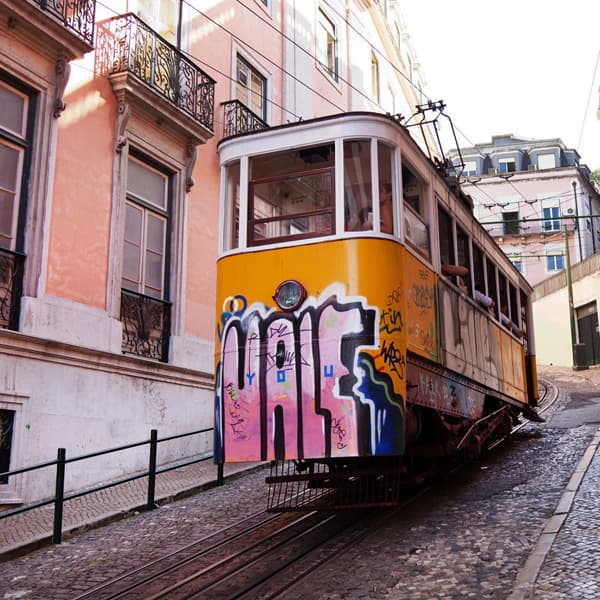
called the Elevador da Glória. We'll catch the next funicular that comes along and ride it to the top. These trolleys leave about every 10 minutes or so. You can buy a ticket directly from the driver, or use a transit pass.
Cheapskates, or those looking for a little exercise, can even hike up the lane alongside the tracks. Get in line. Whenever the next funicular arrives, get on board. While you wait, let Rick explain how the funicular works.
Read more...Show less
The trolley climbs up this steep and narrow alley, connecting the Baixa with the Bairro Alto neighborhood. Since 1885, there's been a funicular here. It works on a counterbalance system. That means it's powered mainly by gravity.
There are two cars connected by a cable. As the top car descends, it pulls the lower car up. To assist the counterweights, they've added various other mechanisms over the years: water power, steam power, and the electric power that runs it today. These trolley cars are classics and are now preserved as part of the national heritage.
The funicular travels about 300 yards, climbing the hill at about a 10-degree angle. Or, if you're thinking like a cyclist climbing a hill, that would be a 17% grade. On the ride, you'll pass by hardy locals on the sidewalks carrying their groceries. You get a close-up look at the apartments on either side.
There are a few trees and a few glimpses down side streets. It's a short ride, but very atmospheric and feels quite local. Again, whenever the next trolley arrives, hop on and ride it to the top. There are only two stops: top and bottom.
Everyone gets off at the top, the end of the line. Once you get there, we'll pick up the trolley, and, on the way there, we'll pick up the tour on the next track, number 14, Miradouro de São Pedro de Alcantara. As you wait for the next trolley and make the journey to the top, here's a little music to pass the time. It's a traditional style of Portuguese music called fado.
Fado is commonly played in the clubs of the neighborhood we're headed to now, the bairro alto. This particular selection is a kind of jazzy take on traditional fado. It features Portuguese guitar and a female vocalist. She's singing about life's ups and downs.
Ups and downs? Like a funicular? Huh, yeah, I guess so. Like all fado, it touches on the melancholy life's fortunes can bring, the uniquely Portuguese feeling of saudade.
So catch the funicular, enjoy the music, and we'll see you at the top, where our tour picks up again on track 14. ♪ ♪ ♪ ♪ ♪ ♪ ♪ ♪ ♪ ♪ ♪ ♪ ♪ ♪ ♪ ♪ ♪ I love you. Inseguridades e incertezas Eu quero saber o que fazer Entre o sofrimento e o prazer Assim é a vida A vida é assim O meu destino Saudade sem fim Assim é a vida A vida é assim O meu destino Saudade sem fim A vida é assim A vida é assim O meu destino Saudade sem fim Assim é a vida A vida é assim O meu destino Saudade sem fim Assim é a vida A vida é assim O meu destino Saudade sem fim O meu destino Saudade sem fim A vida é assim A vida é assim O meu destino Saudade sem fim A vida é assim A vida é assim A vida é assim A vida é assim A vida é assim A vida é assim A vida é assim A vida é assim
Miradouro de São Pedro Viewpoint
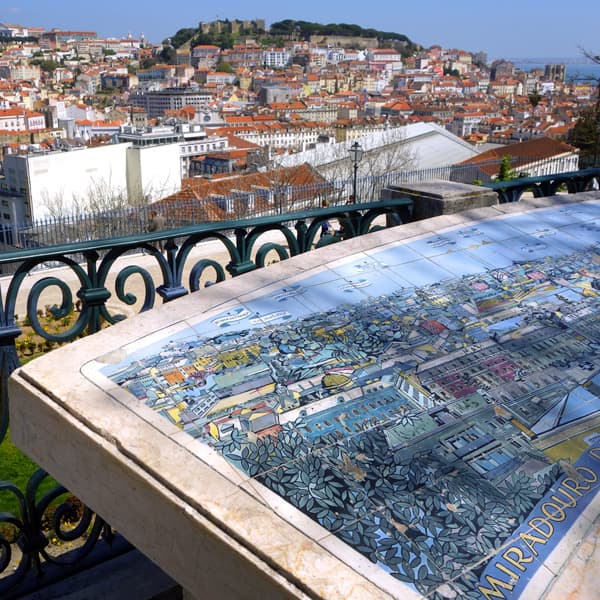
A vida é assim A vida é assim A vida é assim Miradouro de Sao Pedro de Alcantara The San Pedro Viewpoint The San Pedro Viewpoint The San Pedro Viewpoint The San Pedro Viewpoint The San Pedro Viewpoint The funicular stops at the top The funicular stops at the top and everyone gets out From the funicular go up those last ten stair steps At the top turn right on the street called Rua Sao Pedro de Alcantara We're headed for that park with a balcony viewpoint It's just a few yards up ahead on the right Climb the steps into the park and make your way to the balcony railing There we'll have a great view of the city At the balcony find the posted map that points out landmarks along the Lisbon skyline Belly, up to that balcony railing and take in the view of Lisbon The entire historic part of the city stretches before you As you can see downtown Lisbon consists of three neighborhoods The Baixa fills the valley between two hills The hill we're standing on hosts the Bairro Alto neighborhood On the hill across the way is the Alfama a colorful neighborhood with a tangle of medieval streets That far hill is topped by the Castle of Sao Jorge or Saint George Yes, I can make out the castle It's at the highest point of the hill amid the greenery It's surrounded by a stout wall There's been a fortress of some sort on that strategic hill since prehistoric times Even before the Romans the indigenous Lusitanians built there The castle we see dates from around the year 1000 started by the Moors Then in 1147 Lisbon was retaken by the Christians They fortified the castle still more and they built a massive castle You'll find that cathedral to the far right of the castle near the river's edge It's the building we saw earlier with twin stone towers In Portuguese the cathedral is called the Cé It was begun in 1150 It stands like a fortress of God a bold statement that Portugal's Christians are not to be messed with The cathedral was solid enough to survive the 1755 earthquake Today it's a virtual textbook example of the stark and powerful Romanesque style What's that building farther to the left to the left of the castle the big long building? That's an historic convent dating back to medieval times Lisbon once had many monasteries and convents Most were nationalized with the dissolution of the monasteries in 1834 They now serve as secular buildings hospitals schools or military academies Panning even farther to the left in the distance there's a church There are skyscrapers Yes, like so many major cities Lisbon's center is shifting The populace is moving steadily away from the river to the suburbs far beyond Let's continue our walk Start backtracking through the park back to the funicular stop As you pass through the park you may come across a statue of a newspaper boy This honors the local journalist who founded Lisbon's first daily newspaper As we'll see this neighborhood the Bairro Alto is known for its writers poets publishers and bohemians Return to the funicular stop Our next site is almost directly across the street from the stop It's the Port Wine Institute at number 45 Rua Sao Pedro de Alcantara It's a pretty low-key entrance just a stone doorway with a tiny bronze plaque with the name in Portuguese Solar do Vinho do Porto ♪ ♪ ♪ The Port Wine Institute
Port Wine Institute
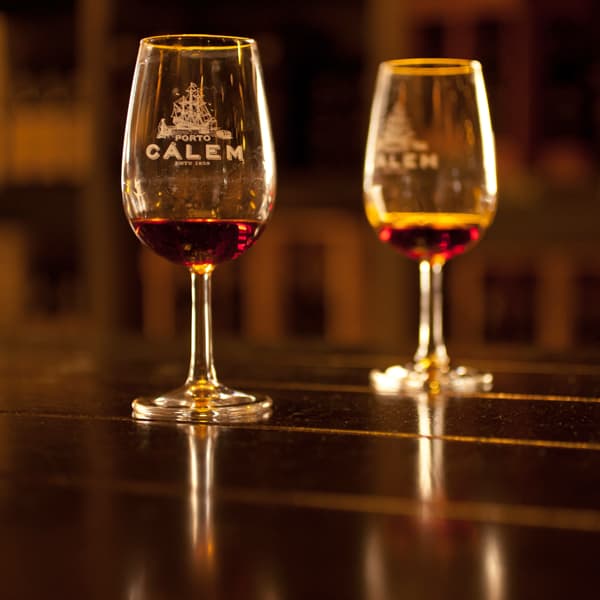
If you're into the wine called Port you'll find the world's greatest selection right here Let's go inside Everyone is welcome to go in and simply browse even if you're not going to order something And even though the ambiance is kind of classy wearing shorts or casual clothes is fine if you're just here for a quick look Stepping inside you'll find what looks like a fancy air-conditioned old-world living room with walls lined with racks of wine bottles Patrons can order a glass of port and sip it while seated in a plush leather chair with a coffee table and reading lamp Here you can sample 150 different kinds of port along with a menu of appetizers By the way if you do order something it's fastest to order directly from the bar rather than taking a seat and waiting for a waiter As you enter as you browse and peruse the menu let Rick explain a bit about port wine Port is a fortified wine The name comes from the city where it was born in Porto about 200 miles north of Lisbon There are several varieties of port Most are medium sweet served as a dessert wine It's made by fortifying regular wine with brandy Then it's aged in wood barrels or bottles anywhere from two years to, well, a hundred years or more There are three basic types Port is a fortified wine Ruby port is the cheapest It's aged only a few years and has a ruby red color and a fruity taste Tawny port is the classic It's aged longer has a leathery color and a mellower taste You can get a tawny port aged 10, 20, 30 years even more More aging means better quality and a higher price The final type is vintage port Rather than being a blend of different wines it comes from a single harvest from an essential and a specially good year Vintage port is aged many decades in glass bottles rather than wood barrels It sounds pretty complicated Frankly, it is complicated Connoisseurs spend years learning the intricacies of port But for me, whether it's a cheap ruby a medium tawny or an expensive vintage Hey, you know what I always say Any port in a storm From the Port Wine Institute we'll now take a little walk through the back streets of the Bayreuth Alto neighborhood Start at the funicular stop Directly across from the funicular stop find the street called Travesa da Boa Hora On the next track Rick and I will guide you from there A stroll through the Bayreuth Alto
A Stroll Through the Bairro Alto
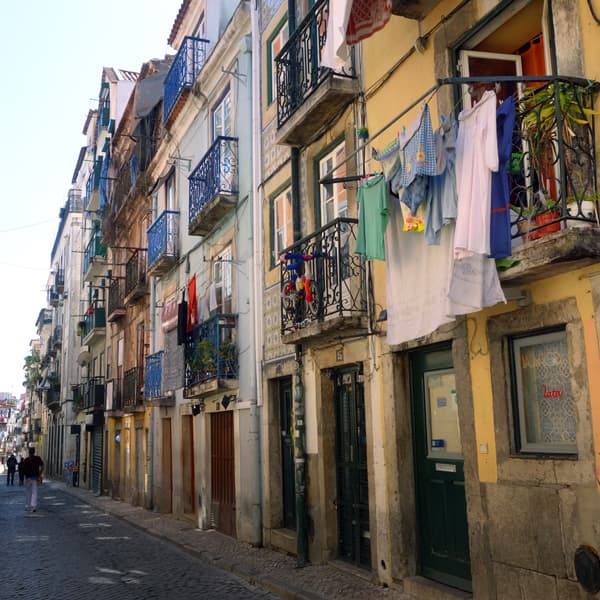
Start making your way up the street called Travesa da Boa Hora Travesa da Boa Hora We'll be going two blocks Rick? We're now in the high town or Bayreuth Alto It's one of the most characteristic and charming neighborhoods in Lisbon In medieval times the Bayreuth Alto was outside the city walls home to convents and refugees It still retains a bit of that character less chic and more working class and bohemian In the 1500s it got a makeover with the grid street plan we walk today That was the first considered very modern for the time I asked Alex to describe the flavor of the Bayreuth Alto So Bayreuth Alto basically means the high quarter You have to walk a bit up to get up here And Bayreuth Alto is a traditional neighborhood that we have in Lisbon So a very old one medieval times and during the day you can see that you see the people coming out and basically it's just a normal traditional neighborhood It's a very traditional and then at night it goes crazy and it becomes the party zone in town You have restaurants you have bars you have discos all kinds of things really and basically a lot of people in the streets drinking and having fun going to the restaurants all of that So it's like a neighborhood with two different lives Yes, the Bayreuth Alto is quiet in the morning but buzzes with a thriving restaurant scene in the evening After two blocks you reach the cross street called Rua da Atalaya Turn left Start walking We'll be going three blocks down Rua da Atalaya As you walk enjoy the characteristic neighborhood It has several bars where they play that traditional Portuguese music called Fado Frankly many Fado bars these days are tourist traps but a few still offer quality Fado at a reasonable price Since the mid-1800s Fado has been the Lisbon blues They sing haunting ballads about lost sailors broken hearts and bittersweet romance Although most Fado songs are sad they can also be jaunty and quite captivating A stout 60-year-old widow singing Fado can be quite sexy To each his own Fado songs reflect Portugal's bittersweet relationship with the sea The word Fado means fate It's about how fate deals with Portugal and the women they leave behind These are songs of both sadness and of hope They evoke a bittersweet emotion called saudade meaning melancholy or longing or nostalgia The songs are often in a minor key The singer is usually accompanied by a special 12-string Portuguese guitar She might sing of a loved one across the water hoping for a future reunion She might sing She might remember a rosy past or yearn for what might have been if fate had not intervened Here are some lyrics from a classic Fado song Lisa Oh, waves of the salty sea Where do you get your salt? From the tears shed by the women in black On the beaches of Portugal I'm feeling it That's saudade Let's listen to some Fado Great, but first some quick directions After three blocks along Rua da Atalaya you reach a street on your left called Travessa de Queimada Turn left Head down Travessa de Queimada two blocks where you'll cross a busy street and dead end at a pleasant square As we walk to that square enjoy the character of the Bairro Alto while we listen to a short selection of Fado music Ver salvado no coração Sentimentos e paixão Ter saudade de amor Sofrimentos e amor Estou chorando em desespero Sentimentos e paixão Lágrimas de frustração Lágrimas de frustração Mas ainda eu espero E creio na ilusão E creio na ilusão The street leads directly to a square called Travessa de Queimada called Largo Trindade Coelho Cross the busy street to enter the square On the square is our next site the São Roque Church It's on your left Let's head inside O Fado é o blush do Porto O Fado é o blush do Porto O Fado é o blush do Porto
São Roque Church
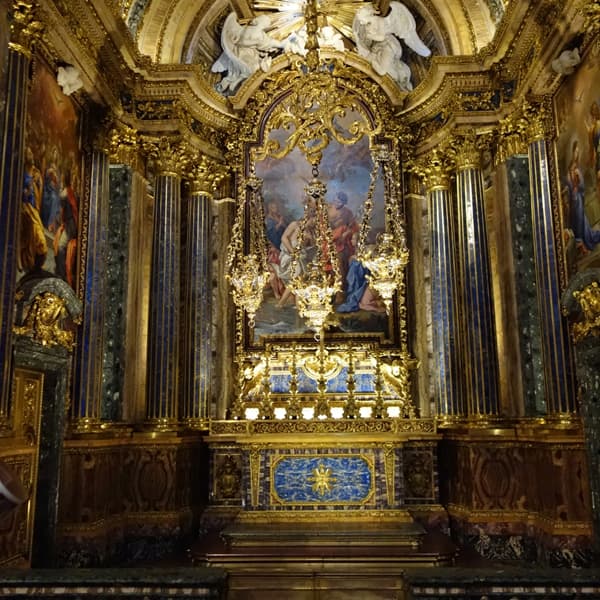
Once inside the church Take a seat on a pew in the middle Immerse yourself in this ornate church interior The church was built in the 1500s back when Lisbon was rich with overseas trade It's dedicated to Saint Roque He's the devout man who spent his life helping victims of the plague Nowadays people come to this church to pray to Saint Roque about their medical conditions This church was one of Portugal's first Jesuit churches Gaze up at the ceiling The ceiling arches overhead in a barrel vault It has three glorious domes The central dome opens up to the sky where there's a heavenly vision of a cross carried aloft by angels They spin and cavort and... Ahem, ahem Um, excuse me But those domes are totally fake It's a painted illusion In reality the ceiling is just flat wood painted to look like it has domes This was an economical way to make this church look as grand as trendy churches in Rome But the acoustics here they really are top-notch That was important in a Jesuit church where the emphasis is on the sermon That's why there's not one but two pulpits midway up the nave Now, look down at the floor You'll see numbered panels These were tombs nameless because they were for lots of people They're empty now The practice was stopped back in the 1800s when parishioners didn't want dead people rotting under their feet anymore Let's explore more of the church Head for the rich chapel on the left side of the nave the one to the left of the altar It's decorated with gold and blue columns This is the chapel of St. John the Baptist It's so ornate it looks like it belongs in the Vatican And no wonder that's where it came from It was actually constructed in Rome using the most precious materials The chapel was used exactly once there for a mass with the Pope himself Then it was disassembled and shipped all the way to Lisbon Per square inch it's got to be Portugal's most costly chapel There's gold, of course but even more precious was the blue columns made of extravagantly expensive lapis lazuli Notice the mosaic floor Aha! The mosaic depicts the armillary sphere the symbol of Portugal Well done, Lisa Now, check out the three paintings in the chapel Hey!
They're not paintings You're right again They're intricate beautiful mosaics That was a Vatican specialty designed to avoid damage from candle smoke that would darken real paintings Notice also the delicate sliced marble cemetery Imagine the amount of labor it must have taken to so artfully cut that stone five centuries ago Let's check out the chapel a few steps to the left It features babies Babies, babies and more babies They're stacked on top of each other along the columns clustered around the crucifix and gazing down from the ceiling In fact, looking around at other chapels in the church it looks like somebody got a great deal on cherubs Each chapel is paid for by a different noble family They seem to be in competition to see whose is the most glorious Many chapels also feature ceramic tiles These were considered as extravagant as the gold leaf and silver This church has more ornate chapels glass cases of relics and a sacristy with paintings on the life of St. Francis Xavier But we're moving on Start making your way back outside and exit the church On your way out you might pop a coin into a rack of electronic candles and say a prayer Back outside you emerge into the square called Largo Trindad Coelho Largo Trindad Coelho
Largo Trindade Coelho
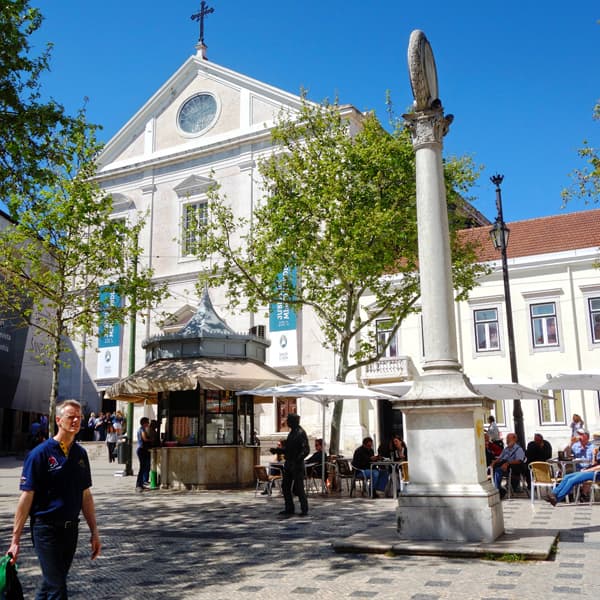
This square is quite charming There's even a rather charming public toilet underground Sounds delightful There are two kiosks here The kiosk is a standard feature in Lisbon Many originated about a century ago as the city's first public phone terminals Then they became newsstands Lisbon has three daily newspapers People love to gather at the kiosks read the paper and chat about daily events The main topic football that is soccer Because kiosks are such gathering places many have also become outdoor cafes They turn parks and squares into neighborhood hangouts New kiosks are popping up all over and can be quite trendy Kiosks also sell another popular item lottery tickets Find the statue in the square It depicts a friendly man a man selling lottery tickets The national lottery called the Totoloto is a big thing here Like national lotteries everywhere it's a form of taxation on gamblers that helps fund government social programs Locals love to buy their lottery tickets at the kiosks here on this square in particular Then they can rub the statue's well-polished ticket to give them good luck Let's continue our walk Exit Kitty Corner across the square Head downhill along the street called Rua Nova Datrindad You'll find our next site about 50 yards down the street on the left at number 20 Rua Nova Datrindad at number 20 Rua Nova Datrindad at number 20 Rua Nova Datrindad at number 20 Rua Nova Datrindad at number 20 Rua Nova Datrindad at number 20 Rua Nova Datrindad at number 20 Rua Nova Datrindad at number 20 Rua Nova Datrindad at number 20 Rua Nova Datrindad at number 20 Rua Nova Datrindad at number 20 Rua Nova Datrindad at number 20 Rua Nova Datrindad at number 20 Rua Nova Datrindad at number 20 Rua Nova Datrindad at number 20 Rua Nova Datrindad at number 20 Rua Nova Datrindad Survejaria Datrindad
Cervejaria da Trindade
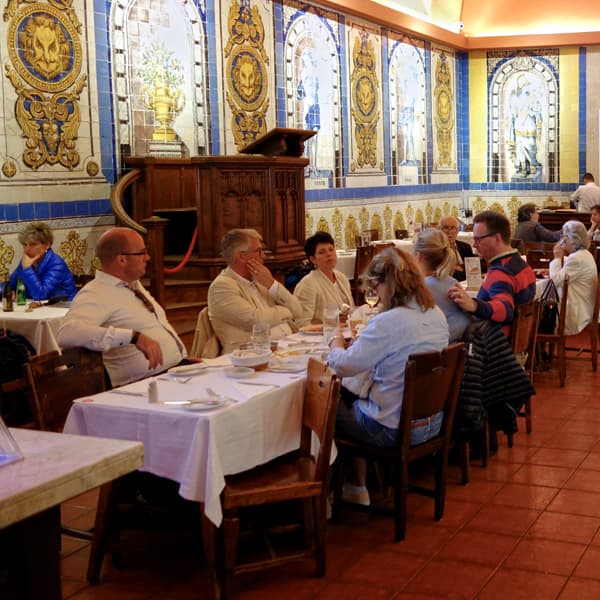
This is considered the oldest beer hall in Lisbon. It's a bright, boisterous, Portuguese-style beer hall. It bustles with historic tiles, seafood, and... and lots of tourists.
True, it's overpriced and in all the guidebooks, but people still enjoy its atmosphere. Let's step inside for a look. Or a beer. Or a beer.
Read more...Show less
There's a wonderful selection. Inside, you enter a main room which dates from the 1800s. It's gloriously decorated with colorful tiles. The Portuguese call tiles like these azulejos.
As we've seen along our walk, ceramic tile work is a Portuguese specialty. It dates back to the Moors in medieval times. In the 1500s, King Manuel I traveled to Spain He saw their magnificent tile work and decided his palace had to be equally fine. He came back home and established a tile-making industry here in Portugal that continued for centuries.
By the early 1900s, tile work was considered out of fashion. But in the 1960s, with Lisbon's new metro system, tiles came back in vogue. Now you'll find them decorating buildings inside and out, palaces, ordinary apartments, even train stations. Get a closer look at the beer hall's tiles.
The older ones have Christian themes. That's because this building was once a refectory or dining hall for monks. In fact, you can also see the pulpit from which the Bible was read as the monks ate. Then in 1834, the monastery was abolished and this place became a brewery.
So later tiles are all about beer. And speaking of beer, they have several Portuguese beers on tap. Sagres is the standard lager. Sagres Preta is a good dark beer, like a porter.
I've enjoyed Bohemia. It's sweet with more alcohol. At the bar in front, you can get a simple beer or a snack. More expensive dining is in the back.
But our tour is moving on. Exit the beer hall, turn left, and continue down the street. Keep going to the end of the block, about 100 yards, where we'll be turning left. As you walk, let's hear from Alex again.
Remember, earlier I asked the other guide, Cristina, to try to define what made the Portuguese different from their Spanish cousins. I asked Alex the same question. For me, I would say that the Spanish, they'll probably be a bit more expressive. I mean, they'll be a bit more like the Italians.
So I would say a bit more Latin. Very expressive when they talk. The Portuguese tend to be a bit more reserved. A bit more low-profile.
Low-profile. Yeah. A huge cultural difference. Right?
But it's a cultural thing, you know? I think it's a cultural thing. Maybe because of the fact that we are a small country. We've been isolated from Europe for a long, long time because we're in the corner of Europe.
So in terms of personality, I would say that the Portuguese are a bit more low-profile than the Spanish. At the end of the block, turn left. Where the road and trolley tracks turn left. Signs point you to the ruined Convento do Carmo, where we're headed.
Walk along the left side of the street following the left set of trolley tracks. Continue straight ahead another block. It leads you to a pleasant tree-filled square. There are a number of trees and a lot of trees.
There are a lot of trees and a lot of trees. There are a lot of trees and a lot of trees. There are a lot of trees and a lot of trees. There are a lot of trees and a lot of trees.
There are a lot of trees and a lot of trees. There are a lot of trees and a lot of trees. There are a lot of trees and a lot of trees. There are a lot of trees
Largo do Carmo
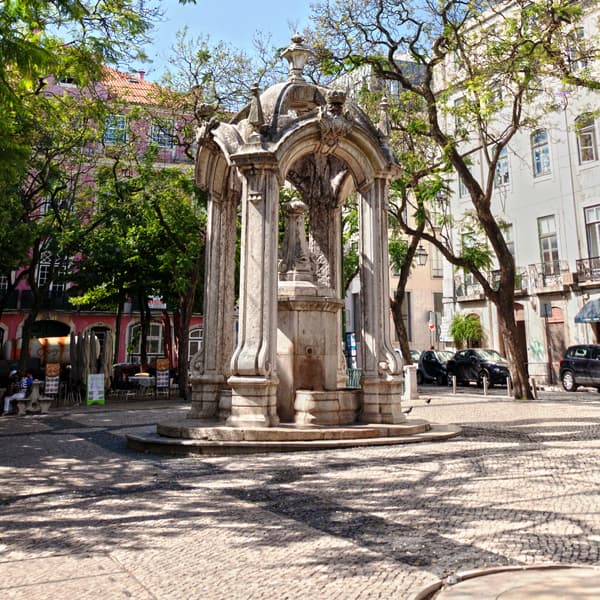
and a lot of trees. There are a lot of trees and a lot of trees. There are a lot of trees and a lot of trees. There are a lot of trees and a lot of trees.
There are a lot of trees and a lot of trees. There are a lot of trees. There are a lot of trees and a lot of trees. There are a lot of trees and a lot of trees.
Read more...Show less
There are a lot of trees and a lot of trees. There are a lot of trees and a lot of trees. There are a lot of trees and a lot of trees. There are a lot of trees and a lot of trees.
There are a lot of trees and a lot of trees. There are a lot of trees and a lot of trees. There are a lot of trees and a lot of trees. There are a lot of trees and a lot of trees.
There are a lot of trees and a lot of trees. There are a lot of trees and a lot of trees. There are a lot of trees and a lot of trees. There are a lot of trees and a lot of trees.
There are a lot of trees and a lot of trees. There are a lot of trees and a lot of trees. There are a lot of trees and a lot of trees. There are a lot of trees and a lot of trees.
There are a lot of trees and a lot of trees. There are a lot of trees and a lot of trees. There are a lot of trees and a lot of trees. There are a lot of trees and a lot of trees.
There are a lot of trees and a lot of trees. There are a lot of trees and a lot of trees. There are a lot of trees and a lot of trees. There are a lot of trees and a lot of trees.
There are a lot of trees and a lot of trees. There are a lot of trees and a lot of trees. There are a lot of trees and a lot of trees. There are a lot of trees and a lot of trees.
There are a lot of trees and a lot of trees. There are a lot of trees and a lot of trees. There are a lot of trees and a lot of trees. There are a lot of trees and a lot of trees.
There are a lot of trees and a lot of trees. There are a lot of trees and a lot of trees. There are a lot of trees and a lot of trees. There are a lot of trees and a lot of trees.
There are a lot of trees and a lot of trees. There are a lot of trees and a lot of trees. There are a lot of trees and a lot of trees. There are a lot of trees and a lot of trees.
There are a lot of trees and a lot of trees. There are a lot of trees and a lot of trees. There are a lot of trees and a lot of trees. There are a lot of trees and a lot of trees.
There are a lot of trees and a lot of trees. There are a lot of trees and a lot of trees. There are a lot of trees and a lot of trees. There are a lot of trees and a lot of trees.
There are a lot of trees and a lot of trees. There are a lot of trees and a lot of trees. There are a lot of trees and a lot of trees. There are a lot of trees and a lot of trees.
There are a lot of trees and a lot of trees. There are a lot of trees and a lot of trees. There are a lot of trees and a lot of trees. There are a lot of trees and a lot of trees.
There are a lot of trees and a lot of trees. There are a lot of trees and a lot of trees. There are a lot of trees and a lot of trees. There are a lot of trees and a lot of trees.
There are a lot of trees and a lot of trees. There are a lot of trees and a lot of trees. There are a lot of trees and a lot of trees. There are a lot of trees and a lot of trees.
There are a lot of trees and a lot of trees. There are a lot of trees and a lot of trees. There are a lot of trees and a lot of trees. There are a lot of trees and a lot of trees.
There are a lot of trees and a lot of trees. There are a lot of trees and a lot of trees. There are a lot of trees and a lot of trees. There are a lot of trees
Convento do Carmo
and a lot of trees. There are a lot of trees and a lot of trees. There are a lot of trees and a lot of trees. There are a lot of trees and a lot of trees.
There are a lot of trees and a lot of trees. There are a lot of trees and a lot of trees. There are a lot of trees and a lot of trees. There are a lot of trees and a lot of trees.
Read more...Show less
There are a lot of trees and a lot of trees. There are a lot of trees and a lot of trees. There are a lot of trees and a lot of trees. There are a lot of trees and a lot of trees.
There are a lot of trees and a lot of trees. There are a lot of trees and a lot of trees. There are a lot of trees and a lot of trees. There are a lot of trees and a lot of trees.
There are a lot of trees and a lot of trees. There are a lot of trees and a lot of trees. There are a lot of trees and a lot of trees. There are a lot of trees and a lot of trees.
There are a lot of trees and a lot of trees. There are a lot of trees and a lot of trees. There are a lot of trees and a lot of trees. There are a lot of trees and a lot of trees.
There are a lot of trees and a lot of trees. There are a lot of trees and a lot of trees. There are a lot of trees and a lot of trees. There are a lot of trees and a lot of trees.
There are a lot of trees and a lot of trees. There are a lot of trees and a lot of trees. There are a lot of trees and a lot of trees. There are a lot of trees and a lot of trees.
There are a lot of trees and a lot of trees. There are a lot of trees and a lot of trees. There are a lot of trees and a lot of trees. There are a lot of trees and a lot of trees.
There are a lot of trees and a lot of trees. There are a lot of trees and a lot of trees. There are a lot of trees and a lot of trees. There are a lot of trees and a lot of trees.
There are a lot of trees and a lot of trees. There are a lot of trees and a lot of trees. There are a lot of trees and a lot of trees. There are a lot of trees and a lot of trees.
There are a lot of trees and a lot of trees. There are a lot of trees and a lot of trees. There are a lot of trees and a lot of trees. There are a lot of trees and a lot of trees.
There are a lot of trees and a lot of trees. There are a lot of trees and a lot of trees. There are a lot of trees and a lot of trees. There are a lot of trees and a lot of trees.
There are a lot of trees and a lot of trees. There are a lot of trees and a lot of trees. There are a lot of trees and a lot of trees. There are a lot of trees and a lot of trees.
There are a lot of trees and a lot of trees. There are a lot of trees and a lot of trees. There are a lot of trees and a lot of trees. There are a lot of trees and a lot of trees.
There are a lot of trees and a lot of trees. There are a lot of trees and a lot of trees. As church candles fell and kitchen ovens broke, fires spread. Soon Lisbon's mostly wooden neighborhoods were a raging inferno.
Then came the huge tsunami. It blasted the waterfront where we began our walk. It capsized ships and swept people off the docks. A 20-foot wall of water crested over the seawall and rushed inland 800 feet.
As it receded, it swept people back out to sea. In mere minutes, Lisbon was in the middle and Lisbon was changed. Thousands lay dead under the rubble. The fires blazed for five days.
It ravaged everything from the Bairro Alto across Rocio to the castle atop the Alfama. Shaken survivors scrambled aboard boats to escape the flames. Over 10,000 people may have perished. Besides leveling the city, the quake shook conservative Portugal's moral and spiritual underpinnings.
Why had God sent the quakes? Was Portugal being punished? If so, for what? For its wickedness?
Or maybe for its self-righteous killing of so many heretics under the Inquisition? As we know, the 1755 earthquake did not mean the end of Lisbon. The city rose from the ashes like a phoenix. The city was rebuilt under the Marquis of Pombal.
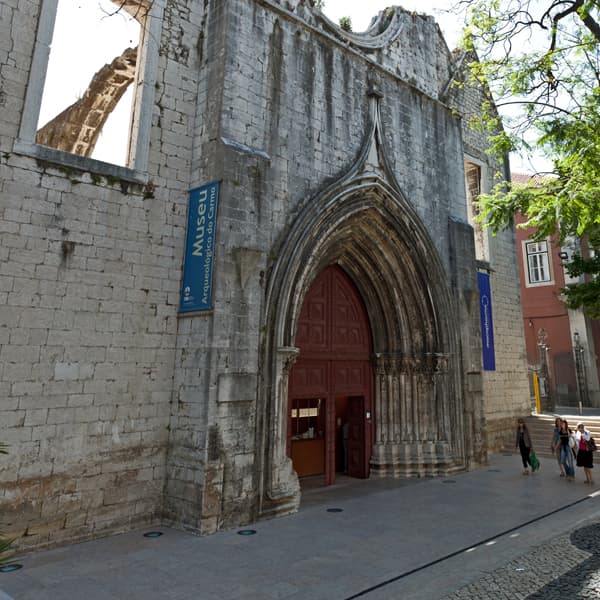
And it was Pombal himself who decreed that this church, the Convento do Carmo, never be rebuilt. He insisted that the delicate Gothic arches not be torn down, but left standing, supporting nothing but open sky. And so it stands to this day as an everlasting reminder of that disastrous event that changed Lisbon. When you're finished pondering those terrible events, it's time for our tour to move on.
By the way, your admission also includes a simple museum. You could pause your tour and see some ancient artifacts, medieval sarcophagi, and even a couple of Peruvian mummies. Exit back out into the square and turn left. Walk a few steps toward the far end of the square.
At the corner of the convent, turn left down a small lane. Head down this small lane. We're headed toward a nice viewpoint where we can look over the Baixa. It's a good place to get a sense of the massive destruction of the earthquake, fires, and tsunami.
Follow the lane as it leads out and around and up a few stairs. To the left of the convent is a church that was built in the 12th century. The church was built in the 12th century in the 16th century. The church was built in the 12th century and up a few stairs.
Finally, you reach that big gray iron structure we saw earlier in our walk, the Elevador de Santa Justa. You can wander around the entry level for free. The Elevador de Santa Justa.
Elevador de Santa Justa
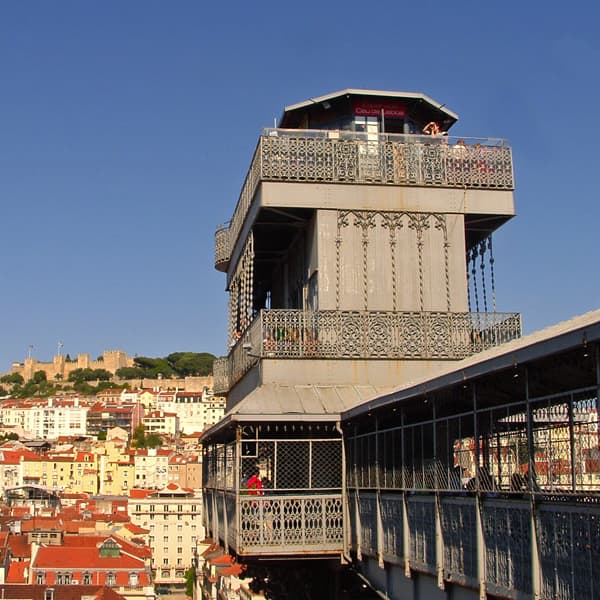
This 150-foot-tall elevator connects the Baixa with this upper part of town. It was built in 1902. The architect had studied under Gustav Eiffel, who'd built the big iron girder Eiffel Tower. This elevator has both Industrial Age pragmatism but also some elegant touches of the Art Nouveau style.
The neo-Gothic motifs -- pointed arches, pinnacles, and tracery -- were meant to mirror the ruined convent we just saw. There's an excellent city view from here. You could pay admission to go up to the top floor lookout. I'm going to.
Read more...Show less
But the free view from the entry ramp level is nearly as good. From whatever view, survey the city. Check out the castle across the way and the old cathedral. Look down into the Baixa.
The grid street plan is very clear from this perspective. To the left is Rocio Square, marked by the column and statue of Dom Pedro. Behind you, you can see the buttresses of the ruined convent, topped by those bare arches. When you're ready to go, start backtracking the way you came.
Return to the square, Largo do Carmo. On the next track, Rick and I will direct you from there as we head into the final stretch of our walk. The Chiado neighborhood,
Chiado Neighborhood
from Largo do Carmo to Rua Garrett. As you re-enter Largo do Carmo, veer slightly to the left. We'll exit the square by walking slightly uphill on the street called Travesa do Carmo. Follow the trolley tracks as they go up Travesa do Carmo Street.
Go one block slightly uphill to the next square. We're now walking through the neighborhood called the Chiado. Although this particular street isn't terribly atmospheric, the neighborhood itself is. Like the Pleasant Square we just left.
Read more...Show less
Exactly. Since the 1800s, this Chiado neighborhood has been known for its artsy but casual charm. The upper-class bourgeoisie would dress up and come here for opera. They shopped for fashion and frequented the bars and outdoor cafes on quiet squares.
Actors, writers, and Bohemian folk lived here above the busy Baixa. Today, the Chiado still has that enduring mix of elegance and counterculture. Much of the neighborhood was destroyed in a disastrous fire back in 1988, but as we'll see, it's risen from the ashes better than ever. At the next square, turn left on the street called Rua Serpa Pinto.
Walk downhill on Rua Serpa Pinto about 50 yards to the cross street called Rua Garrett. As you walk, check out the stylish street lanterns. The street lanterns on the left are the most popular street lanterns in the city of Lisbon. The ironwork tracery depicts a sailing ship with two birds on board.
It's the coat of arms of the city of Lisbon. Here's the story. Having reconquered Lisbon from the Moors in the 1100s... When they built that castle on the hill.
Yes. They then sent a ship to fetch the remains of their beloved patron saint, St. Vincent. On the journey, Vincent's body was protected by ravens.
When the saint arrived in Lisbon, it made the city a major pilgrimage site and put it on the map of Lisbon. You'll soon arrive at Rua Garet. This mosaic-covered street with more of those characteristic sailing ship lanterns is undeniably the heart of the Sciato neighborhood. At Rua Garet, turn right.
Stroll up this pleasant pedestrian zone. There are calzada mosaics in the pavement and a number of interesting shops and cafes. Walk uphill on Rua Garet, about 50 yards. Find a lovely little town on the north of Lisbon. Find a venerable old cafe on the right. It's called A Brasileira. Café
Café A Brasileira
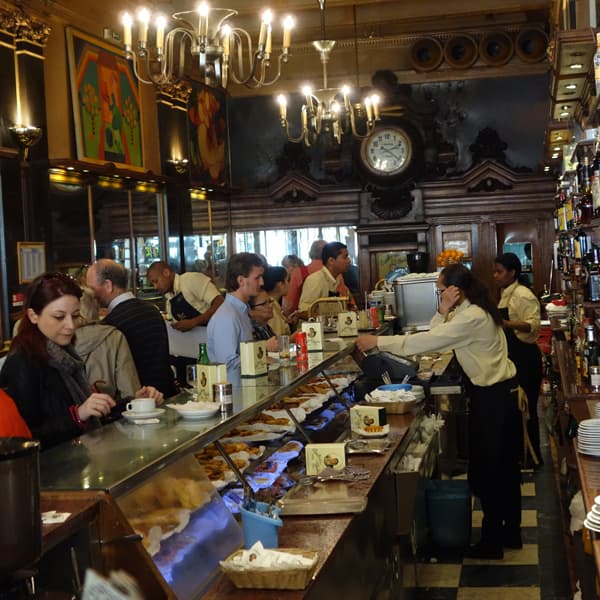
A Brasileira. Wreaking of smoke and slinky with Art Nouveau, a hundred-year-old institution for coffeehouse junkies. This cafe was the literary and creative soul of Lisbon back in the 1920s when the country's avant-garde poets, writers, and painters would hang out here. The cafe's fading elegance is a snapshot of Portugal in the early 20th century.
Once a global superpower, now a dwindling colonial empire clinging to its traditions as it fades elegantly into history. Check out the logo over the entryway. It shows just patrons sampling a cup of coffee. The name of the establishment comes from its origins, selling products from that former colony of Brazil.
Read more...Show less
And its most popular import from Brazil proved to be coffee beans. Step inside to check out the Art Nouveau decor. There's fine wood, brass railings, chandeliers, and elegant metalwork. I'm ordering a coffee.
The classic coffee drink in Lisbon is a double decaf 130-degree frappuccino with extra caramel and peppermint sprinkles, no whip. Well, not exactly. It's a bica. A bica is Lisbon slang for a simple shot of espresso.
It was first popularized here, at this cafe. If you'd rather have something like an espresso macchiato, order a cafe pingado. A latte would be a galau. I'm getting a galau.
And one of those custard pastries I saw earlier, a pastel de nata. Made by nuns. They often have other sweets on sale here, too. Like a barriga de freiras.
Mmm. That's a nun's belly. Or a papo de anjo. Mmm.
That's the angel's double chin. We'll finish our walk through Lisbon back outside, in front of a brasilera. This is a popular area to just hang out. You can take a selfie alongside a bronze statue with an empty seat alongside.
This statue is of Fernando Pessoa, a beloved poet and a regular here at the cafe. The other statue nearby is another poet, Antonio Ribeira, from Portugal's Golden Age in the 1500s. There's a third statue nearby. It's about 50 yards uphill on Rua Garet, marking an impressive square.
This is Luís Camões, often called the Portuguese Shakespeare. His heroic poems immortalized Portugal's great golden age of the 1500s. It was Camões who described Portugal as the place where the land ends and the sea begins. And we are nearly at the place where our tour ends and your free time begins.
Before we finish, take a moment to get oriented and plan your next move. You might want to get out a map as Rick reviews your options. First, you have several easy transportation options in the area. There's the metro stop called Baixa Chiado.
Two metro lines meet here, which could take you to Rocio Square, back to Praça da Comércio where our tour began, or really anywhere in Lisbon. Also, inside the metro stop is a long series of escalators. These can whisk you effortlessly all the way back down to the Baixa. Also nearby is a trolley stop for that historic route I mentioned earlier, the 28E.
It could take you back to the Baixa Chiado. Just for more sightseeing, explore more of the lively Chiado district. You could browse downhill on Rua Garet with its mosaic sidewalks, iron balconies, and classy stores. There's an old-time clothing store at number 77, a venerable bookshop at 73, and a great shop of Portuguese gifts a block to the right of Rua Garet at Rua Axieta, number 11.
Finally, at the end of Rua Garet, you run right into a big modern shopping mall. This place, the Armazéns do Chiado Mall, has a lively food court filling its top floor and another Baixa Chiado metro entrance. Lisbon awaits. We've taken a journey through the Baixa, ridden a funicular, and walked through the Bairro Alto.
We've traveled through history from Lisbon's Age of Discovery through its traumatic earthquake and its centuries of fading elegance. Today, as the Chiado district shows, Lisbon is a vibrant, modern city with a bright future. I'll leave you with the proud words of the poet Camoes. They're as applicable now as they were when he was describing Lisbon during its great Golden Age.
Lisa, take us out. Arms and the heroes from Lisbon's shore sailed through seas never dared before, with awesome courage forging their way to the glorious kingdoms of the rising day. We hope you've enjoyed our Lisbon City Walk. Thanks to Jean Openshaw, the co-author of this tour.
Special thanks to our Portuguese guests, Cristina Duarte and Alex Almeida. If you're doing more sightseeing in Spain and Portugal, check out our walking tours of Barcelona and Madrid. Remember, this tour was excerpted from the Rick Steves Portugal Guidebook. For more details on eating, sleeping, and sightseeing in Lisbon and the environs, refer to this year's edition of that guidebook.
For more free audio tours and podcasts, and for information about our TV shows, bus tours, and travel gear, visit our website at ricksteves.com. This tour was produced by Cedar House Audio Productions. Gracias. Adeus. And happy travels.
Free
GPS-guided walking tour
No account needed. Walk at your own pace.
Free
24 stops · 3 km