17 stops
GPS-guided
62 min
Duration
Free
No tickets
About this tour
A 17-stop walking tour through the heart of Scotland. Visit Castlehill, Lawnmarket, Lady Stair’s Close, Writers’ Museum, and Bank Street Intersection — with narrated stories at every stop.
17 stops on this tour
Welcome to Edinburgh
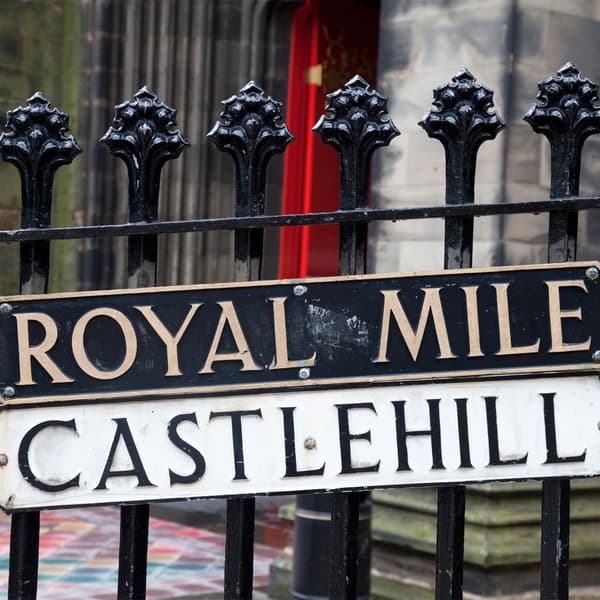
Welcome to Edinburgh. Edinburgh is the historical, cultural, and political capital of Scotland. And there's no better introduction to this slice of Scotland than a walk straight down the spine of the old town, from the castle to the palace, a stretch appropriately called the Royal Mile. Hi, I'm Rick Steves.
Thanks for joining me for one of Europe's most interesting historic walks. We'll start at Edinburgh's hill-topping castle and hamble down to the palace. Nearly every step of this entertaining, mile-long walk is packed with shops, cafes, and lanes leading to tiny squares. Along the way, we'll get an overview of some of the museums and sites you may want to go inside and explore later.
Read more...Show less
As we walk, we'll be tracing the growth of the city, from its birth atop Castle Hill to the heyday of the 1600s when the city's primitive skyscrapers were the wonder of Europe, and into the 1700s and 1800s when the wealthy moved elsewhere and the Royal Mile fell into decline. Finally, we'll end our walk at the palace and the modern new Parliament building, a symbol of Scotland's resurgence in the 21st century. Truth be told, much of the Royal Mile is quickly becoming a touristic mall. All tartans, tourists, and shortbread.
But it's still popular, all packed with history, and if you know where to look, you can still find a few surviving rough edges of the old town they call Aldrici. To help us along the way, I've invited a good friend and virtual travel buddy. Welcome, Lisa. Hi, Rick.
Lisa will give us helpful directions and sightseeing tips throughout the tour. And my first tip is to be sure you get our tour updates. Just press that button, and you'll see the icon at the lower right of your device. You'll find any updates and helpful instructions unique to this tour.
Things like closures, opening hours, and reservation requirements. There's also tips on how to use this audio tour and even the full printed script. Yes, so pause for just a moment right now to review our updates and special tips. It's okay, we'll wait. And then... Let the tour begin!
Tour Begins: Castle Esplanade
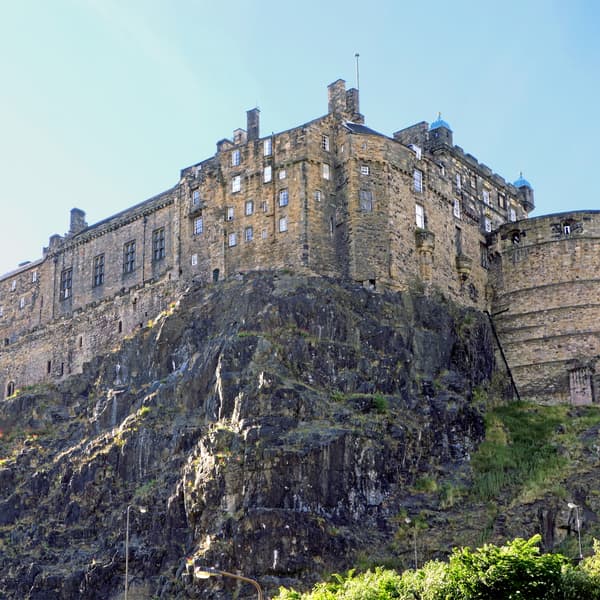
The tour begins. The Castle Esplanade. Start at the Castle Esplanade, the big parking lot at the entrance to the Royal Castle. From here, the highest and most historic point in the city, the Royal Mile slopes slowly downhill.
Along the way, the street changes names. Castle Hill. Castle Hill, Lawn Market, High Street, and Cannon Gate, but it's a straight downhill shot totaling just over one mile. Stand at the upper end of the Esplanade and take in the sights, starting with the castle.
Read more...Show less
Rick? Thanks, Lisa. Edinburgh was born on this bluff, a big rock where the castle now stands. Since before history, people have lived on this natural defense.
Take in the castle, a stone behemoth squatting atop the highest point in the city, protected on three sides by sheer cliffs. The bluff was occupied by Celtic tribes and maybe even by the Romans. In the 11th century, Malcolm III assumed the Scottish throne by murdering King Macbeth. Is that Macbeth of Shakespeare fame?
Yes, forsooth. Malcolm married Princess Margaret, and they set up house here, in a crude castle. It was a thousand years ago that their marriage united Malcolm's Highland Scots with Margaret's lowland Anglo-Saxons. Creating the cultural mix that would define Edinburgh.
Over the centuries, the castle grew into the mighty fortress you see today. As the home of Scotland's kings and queens, the castle has witnessed royal births, medieval pageantry, and bloody sieges. Today, it's well worth visiting the castle to tour the old buildings and enjoy stunning views. The highlight is the crown jewels of Scotland, including the ceremonial Stone of Scone, upon which the Queen of Scotland which monarchs have been crowned for over a thousand years.
Now, focus your gaze on the castle's entryway. The castle is an imposing symbol of Scottish independence against their arch-nemesis, England. The statues on either side are of fierce warriors who battled English invaders. On the right is William Braveheart Wallace.
In 1286, England invaded and stole the Stone of Scone. Enraged, the Scots rallied around Wallace. He defeated the Scots, defeated the English at Stirling Bridge, but was finally arrested and brutally executed. The torch then passed to Robert the Bruce, the statue on the left.
Bruce beat the English at Bannockburn. Bruce was crowned king, and his heirs would rule for the next four centuries under the family name of Stuart. Between the two statues is the Scottish motto, the one you'll see everywhere, including on the Scottish one-pound coin. It reads, Roughly, no one messes with me and gets away with it.
I wouldn't think of it. Now let's check out the rest of the esplanade. Built as a military parade ground in 1816, the esplanade is now the site of the annual military tattoo. Tattoo?
You want to know the site of my military tattoo? It's on my... Lisa, let's do it later, okay? Okay.
The tattoo I'm talking about is a spectacular massing of the bands. It fills the square nightly... for most of August. They set up temporary bleachers where up to 9,000 fans can watch kilt-wearing bagpipers marching against the spectacular backdrop of the castle.
TV crews from around the world broadcast the spectacle to all corners. When the bleachers are not up, the esplanade provides fantastic views of the surrounding city. First, face north. North is to the right as you face the castle.
Looking north in the distance, you'll see the body of water called the Firth of Forth. It's an estuary where the Forth River flows into the North Sea. Closer to you are the stately buildings of Edinburgh's Newtown. This neighborhood was built in the 1700s as growing Edinburgh expanded outward from the Royal Mile.
In between you and the Newtown stands the lacy spire of the Sir Walter Scott Memorial and two neoclassical buildings housing art galleries. Panning to the right, find Nelson's Column in the distance and some of the most famous art galleries from fake Greek ruins atop Colton Hill. Edinburgh. For nearly a thousand years, Scotland's kings, parliaments, writers, thinkers, and bankers have called this place home.
It's a city of stunning vistas nestled among craggy bluffs and studded with a prickly skyline of spires, towers, domes, and steeples. Proud statues of famous Scots dot the urban landscape. The buildings are a harmonious yellow-gray, all built from the same local sandstone. Today's Edinburgh is a thriving city of half a million.
Excuse me, Rick. How exactly do you pronounce the city's name? It's spelled like Pittsburgh. Well, it's definitely not Edinburgh.
Locals say something like Edinburgh. But I usually settle on simply Edinburgh. Edinburgh is, in many ways, the U.K.'s second city, big in banking, scientific research, and scholarship at its four universities. Since 1999, when Scotland regained its independence, and gained a measure of self-rule, Edinburgh once again assumed its place as home of the Scottish Parliament.
The city hums with life. Students and professionals pack the pubs, parks, and art galleries. Before we move on, survey the whole landscape. Edinburgh is built among bluffs, crags, and ridges.
These were built up by volcanoes and then carved down by glaciers. A city formed in fire and ice, as locals like to say. Picture it. During the Ice Age, a river of glaciers came sweeping in from the west.
That's behind today's castle. It ran into the super-hard volcanic basalt of Castle Hill. Bam! The ice then flowed around the hill, cutting valleys on either side.
What it left behind was a tale of land that became the Royal Mile. Now, let's start walking down the Royal Mile. Lisa? Start strolling down the Esplanade.
As you approach the bottom of the Esplanade... Excuse me, Lisa. I just want to point out one more thing. At the bottom of the Esplanade, where the square hits the road, pause for a second.
On the left, find a tiny fountain in the wall. The plaque above it memorializes 300 women who were accused of witchcraft. If you were accused of witchcraft, they put you to the test. You'd be tied up and dropped into the Norlock.
That's the swampy lake at the base of the castle. If you sank and drowned, you were innocent. That proved it. If you floated, you must have special powers, and they figured you were a witch.
So they brought you here, in front of the castle, and burned you. Yikes! Scotland burned more witches per capita than any other country, and estimated 4,000 men and women between 1563 and 1728. The plaque shows two witches, one good and one bad.
If you tickle the serpent's snout, it shows that you sympathize with the witches. Is that tickle thing really true? Nah, I'm just messing with ya. Messing with me?
Ne mo impune la casse! All right, all right, I'm sorry. Okay. Now, start walking down the Royal Mile.
I'm walking, I'm walking. From here, it's a straight shot to the end of the walk, though the street changes names as we go. The first block is a street called Castle Hill. Castle Hill.
Castlehill
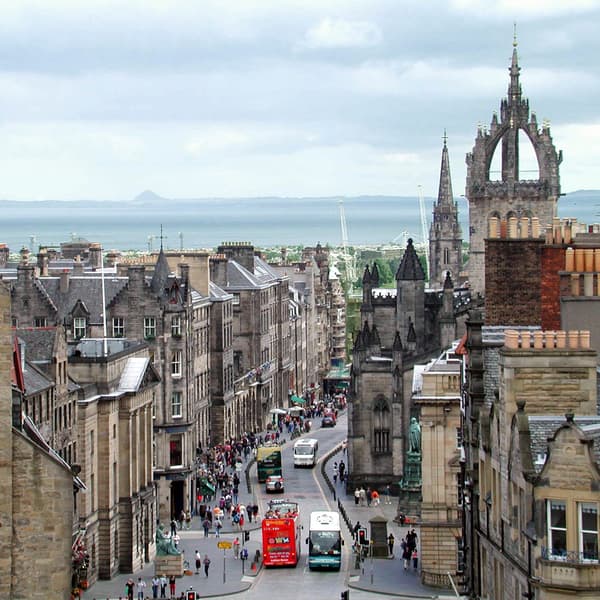
As we enter the Royal Mile, you're immediately in the tourist hubbub. But remember, our walk is more than touristic clichés. We're tracing the course of the city's history. The city began at the castle, and as it grew, the town spilled downhill, along the sloping ridge that became the Royal Mile.
And that's where we're going. The big tank line is the Royal Mile. The big tank line is the Royal Mile. The big tank line is the Royal Mile.
Read more...Show less
The big tank-like building on your left was the Old Town Reservoir. You'll see the wellheads it served all along this walk. While it once held 1 1⁄2 million gallons of water, today it's filled with the touristy Tartan Weaving Mill and Exhibition. If you want several floors of Tartanry in Chinese-produced Scottish kitsch, pop in.
The tower ahead on the left has entertained visitors since the 1850s with its Camera Obscura, a darkened room where a series of mirrors on the rooftop captures an image of the surroundings and then projects it onto a screen. Back down on street level, check out the wacky funhouse mirrors and have a laugh as you walk fatly by. Across the street, filling the old Castle Hill Primary School, is a gimmicky, if intoxicating, whiskey sampling exhibit called the Scotch Whiskey Experience. I've heard it called Malt Disney.
Well, you sure leave feeling goofy. Keep going with an eye toward the big church with the lacy, spire, it's just ahead. Over the course of this walk, you'll pass by no end of traditional Scottish clichés, whiskey tastings, kilt shops, bagpipe-playing buskers, and gimmicky tours about Scotland's bloody history and ghost stories. These cultural clichés aren't necessarily from Edinburgh.
They come from all over Scotland. But culturally, Edinburgh has always been the place where Lowland culture, which was urban and more English, met the Highlands. The Highlands are just north of Edinburgh. That's the rugged and rustic world of Gaelic, kilt-wearing, bagpipe players that we've come to associate with all of Scotland.
At the end of the block is the Tollbooth Church. This impressive neo-Gothic structure from 1844 has the tallest spire in the city. These days, it's home to the Hub, Edinburgh Festival's ticket and information centre. The world-famous Edinburgh International Festival in August, as well as other festivals held in that very busy month, fills the city with cultural action.
The festivals feature classical music, theatre, fringe theatre, especially comedy, art, and books. You can pop inside the church where there's festival information and a public toilet. The church towers over Lawn Market, the next stretch of the Royal Mile. Let Rick lead you slowly down this block that's filled with sights. music music music "Lawn Market" and "Gladstone's Land"
Lawnmarket
music During the Royal Mile's heyday in the 1600s, this intersection in front of the church was filled with bustle, hustle, and lots of commerce. It was called Lawn Market, that is, the marketplace where they sold lawn, meaning produce or linen. See that round, white hump in the middle of the roundabout? That's all that remains of the official weighing beam called the Buttertron, where goods were weighed, for honesty and tax purposes.
Now, let's start strolling slowly down Lawn Market, along the left side of the street. Back in the vibrant 1600s, this was the city's main street. Edinburgh bustled with breweries, printing presses, and banks. Tens of thousands of citizens were squeezed into the narrow confines of the old town.
Read more...Show less
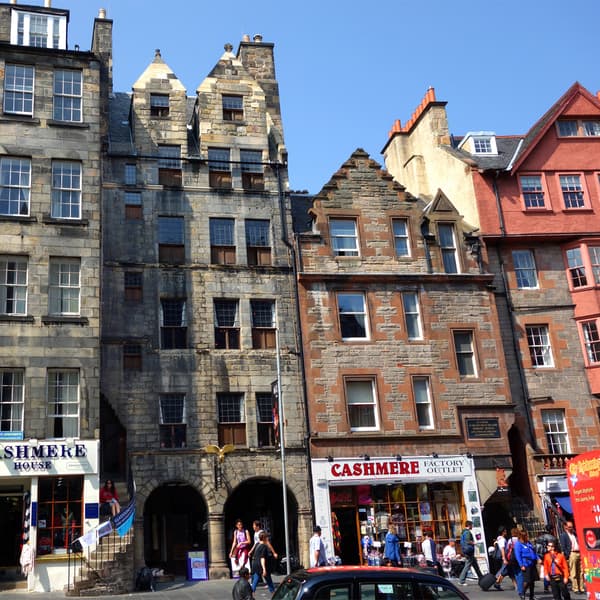
Because this strip of land is so narrow, there was no way to build but up. So this street was lined with multi-story residences called tenements, or lands. Some of these rose up 10 stories and more. The living arrangements shocked class-conscious English visitors to Edinburgh.
That's because the tenements were occupied by rich and poor alike, usually the poor in the cellars and up in the attics, and the rich in the more comfortable middle floors. The best look at a surviving tenement is Gladstone's Land, at number 476, and number 47B, on the left. It dates from 1617. Stand in front of Gladstone's Land and look up.
That's a 17th-century skyscraper. It had the typical layout -- a shop on the ground floor with columns and an arcade, and residences above. Back then, windows were expensive and didn't open. That's why the lower halves were wood, cheaper and able to swing out like shutters for ventilation, rusting out garbage.
You can pay admission to go inside Gladstone's Land. If you do, you'll climb up tight spiral staircases to see the tenement's small rooms -- a kitchen, bedroom, parlor, and so on. They're filled with period furnishings, most of it reconstructed. For a good photo of the Royal Mile, climb the curved stairway outside the museum and look downhill.
Notice the snoozing pig just outside the front door. Just like every house today has a vacuum cleaner, in the good old days, a snorting rubbish collector was a standard feature of any well-equipped house. I love mine. Back in the 1600s, Gladstone's Land was just one of many tenements squeezed into this narrow strip of land.
People circulated through the densely packed city by way of narrow winding alleyways that branched off the main street. Let's go explore one now. Continue downhill about ten steps past Gladstone's Land. You'll find the opening to a passageway called "Lady Stairs Close." ♪♪
Lady Stair’s Close, Writers’ Museum
"Lady Stairs Close and the Writers' Museum." Enter the alleyway called "Lady Stairs Close." Head for the Writers' Museum just a few steps straight ahead. This alley is just one of many branching off the spine of the Royal Mile. They go by various lines. It has local names.
A "wind" is a narrow winding lane. A "pinned" is an arched gateway. "Gate" is from an old Scandinavian word for "street." This one is a "close," a tiny alley between two buildings, originally with a door that closed it at night. A "close" usually leads to a court or courtyard.
Read more...Show less
And what do you know? Here we are. Here you'll find the Writers' Museum. It's free.
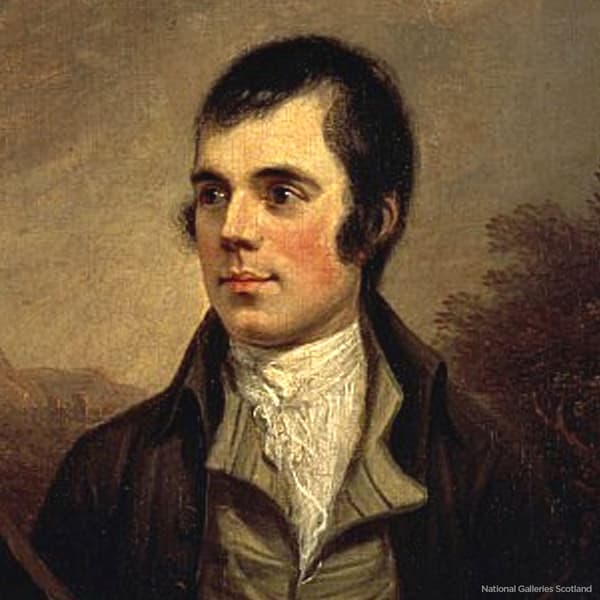
If it's open, pop inside. Just enjoy the ambiance of this quiet courtyard. Inside the museum, you wind up steep staircases through a maze of rooms. There you can peruse first editions and keepsakes of the city's holy trinity of writers -- Robert Burns, Sir Walter Scott, and Robert Louis Stevenson.
These men not only created timeless literature, they were also instrumental in reviving Scottish culture. Burns was a farmer's son who wrote in the rough, Scots dialect. His poems championed the simple virtues of the common Scotsman. Sir Walter Scott, who wrote popular novels like "Ivanhoe" and "Rob Roy," helped popularize Highland culture.
That Highland culture -- the Gaelic language, kilts, legends, the system of clans, and so on -- came to be seen as Scottish culture in general. Sir Walter was part of the 19th-century revival as the Scottish people forged a new national identity after years of English domination. Robert Louis Stevenson, an avid traveler, drew on his experiences to write thrilling adventure stories, including "Treasure Island" and "The Strange Case of Dr. Jekyll and Mr.
Hyde." While these three dominate, there are other great writers with Edinburgh connections. Sir Arthur Conan Doyle, of Sherlock Holmes fame, was born in Edinburgh and went to med school here. J.M. Barrie attended the University of Edinburgh before going on to write "Peter Pan." And J.K.
Rowling, though not born here, lived in Edinburgh and captured the Gothic feel of the city for her books about "Harry Potter." Besides the museum displays, the building itself gives a glimpse at what a typical aristocrat's home might have looked like in the 1600s. If you want to linger inside the Writers' Museum, by all means, feel free to press pause. But otherwise, return to the courtyard outside. Lisa, I know you love Robbie Burns.
That I do. I also know that Burns actually lived for a while in this very neighborhood in 1786, when he first arrived in Edinburgh. You know, if you stand here and gaze around, you can almost hear him reading one of his best-loved poems. Oh, my love is like a red, red rose That's newly sprung in June Oh, my love is like the melody That's sweetly played in tune As fair art thou, my bonnie lass So deep in love am I And I will love thee still, my dear Till all the seas gone dry.
A bonnie poem indeed. Part of a song, near and dear to every Scottish heart. Back outside, explore some of the alleys around the courtyard. Edinburgh was a wonder in the 17th and 18th centuries.
Tourists came here to marvel at its skyscrapers. Imagine the labyrinthine maze of old Edinburgh. Thousands of people scurrying through these back alleyways, buying and selling, popping into taverns. No city in Europe was as densely populated.
But it was also filthy. The streets were dirt, soiled with sewage from bedpans emptied out the windows. By the 1700s, the old town was rife with poverty and cholera outbreaks. Rich and poor lived atop one another.
For the poor, it was a living hell of smoke, smell, and noise, with the constant fear of fire, collapse, and disease. The smoky home fires rising from tenements, and the infamous smell, or reek in Scottish, which wafted across the city, gave the town a nickname that sticks to this day: Auld Reekie. Thanks for that image, Rick. Or should I say, Auld Reekie.
When you're done exploring, return to the Royal Mile. As you emerge onto the main street, turn left and continue downhill. After a few steps, you reach Deacon Brodie's Tavern. The pub's notorious namesake was a pillar of the community who worked day by day and a burglar by night.
You can read about him on the plaque outside and see his picture on the hanging signpost. Make sure you check out both sides of the sign to see his spooky split personality. In a way, Brodie epitomized the split personality of Edinburgh in the 1700s. On the one hand, it was a rich, productive city, home to great philosophers and scientists, hosting the Enlightenment of the age.
On the other, the old town was rife with crime and squalor. Brodie inhabited both worlds. He dutifully repaired people's locks by day, but at night, he picked those same locks to fund his gambling addiction. This kind of split personality was captured by Robert Louis Stevenson in his famous novel "Dr.
Jekyll and Mr. Hyde." Pause here at Deacon Brodie's. You're at the intersection where Lawn Market is crossed by Bank Street, stretching to the left, and George IV Street to the right. Take a moment to check out some sights. ♪♪
Bank Street Intersection
Bank Street intersection. Standing at this intersection, you can spy some sights that recall the next phase of Edinburgh's history. In the late 1700s, Edinburgh's upper class decided that the old town was just too crowded and too filthy. They moved into a planned community called the New Town.
That area of broad boulevards and Georgian mansions is located about a quarter-mile north of here, down Bank Street. Eventually, most of the old town's tenements were torn down and replaced with newer Victorian buildings. You'll see some of them here at the intersection. Look left down Bank Street.
Read more...Show less
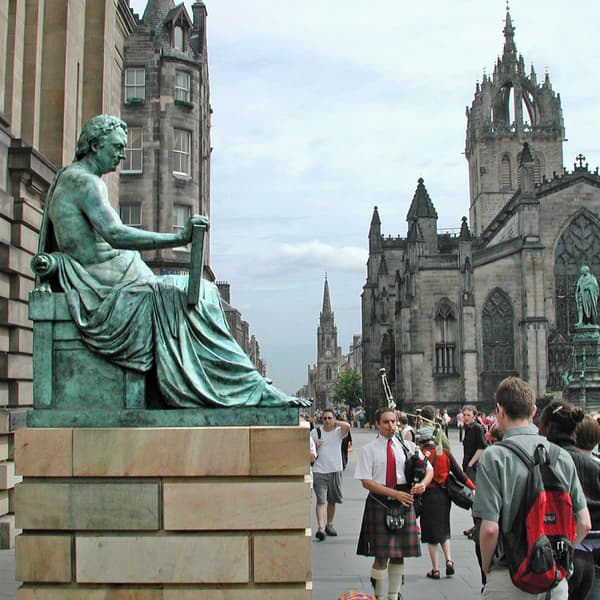
The Green Dome building was the world headquarters of the Bank of Scotland. Since 1695, the bank has practiced modern capitalist financing. These days, the Bank of Scotland is part of the larger Lloyds Banking Group, and the building now houses a banking museum called the Museum on the Mound. Across the street from Deacon Brodie's is a seated green statue of hometown boy David Hume, who lived from 1711 to 1776.
He was one of the most influential thinkers not only of Scotland, but in all of Western philosophy. Hume is one of those towering figures of the Scottish Enlightenment from the mid-1700s. Thinkers and scientists were using the experimental method to analyze everything, including religion. Hume questioned cause and effect.
He used the example of billiard balls to make a deceptively simple point. We can see that one billiard ball strikes another, and it moves. And it does this every time we repeat the experiment. But how do we know that the billiard ball actually causes the other ball to move?
Well, we don't know for sure, but...so? So, Hume was saying that the experimental method can never prove anything with 100% certainty. So, science is always questioning things. That was a very radical idea during an age of religious certainty.
By the way, if Hume's toe is shiny, it's because people on their way to trial -- in the high court behind the statue -- or students on their way to exams in the nearby university -- rub it for good luck. From here, we'll start heading towards St. Giles Church. You can see the church up ahead on the right-hand side of the Royal Mile.
So, cross to the right-hand side of the street. Once there, let Rick lead you to St. Giles as he points out a few things. ♪♪ Sites near St. Giles.
Sights near St. Giles
Now, on the right-hand side of the Royal Mile, start heading towards St. Giles. Find a brass "H" in the pavement. See it?
This marks the site of the last public execution in Edinburgh in 1864. Deacon Brodie himself was hanged near here also, on a gallows he designed himself. Smart guy. A few steps further down the Royal Mile, pause at the square stone wellhead with the pyramid cap.
Read more...Show less
It dates from 1835. All along the Royal Mile, neighborhood wells like this one provided townsfolk with water. The water came from the reservoir we saw just below the castle. Imagine long lines of people in need of water standing here, gossiping and sharing the news.
It was that way until old buildings were finally retrofitted with modern plumbing. Now, continue toward St. Giles, passing the lazy Victorian statue of some duke. I believe his name was Lord whoever he was.
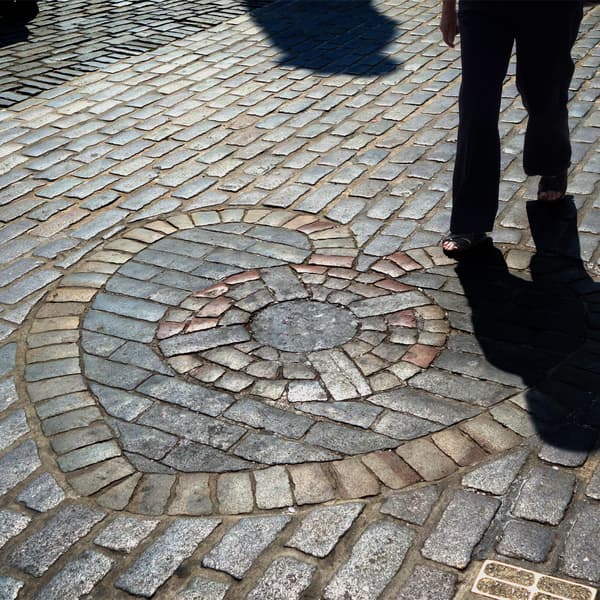
A few steps past the statue, look down at the sidewalk. Find a heart shape embedded in the pavement. It's near the street. Find it?
The heart of Midlothian marks the spot where the door of the jail once was. As we mentioned before, in times past, this area around St. Giles was where criminals were hanged, traitors were decapitated, and witches were burned. Average citizens hated the rough justice doled out here.
For that reason, locals still spit on the heart in the pavement. Go ahead. Do as locals do. Land one right in the heart of the heart.
By the way, Edinburgh has two soccer teams: Heart of Midlothian -- their nickname is "The Hearts" -- and Hibernian. If you're a Hibernian fan, you have one more reason to spit. Before we turn our attention to St. Giles, stroll to the right of the church.
That grand building is the old Parliament House. For centuries, the Scottish Parliament met here. When the Parliament first formed in the 13th century, it was only a rubber-stamp assembly of nobles and bishops dominated by the king. But with the 1500s came the Reformation.
The Protestant revolt against church authority indirectly promoted political democracy, and the Parliament gained real power. Throughout the 1600s, this building was a true center of power in Scotland, housing freely elected officials. But in 1707, all that ended. Scotland signed an act of union with England.
They joined the United Kingdom, giving up their right to self-rule. The Scottish Parliament then packed up and moved to join the Parliament in London. More on that later in the walk. These days, the building holds the city's civil law courts, so you may see lawyers in robes and curly wigs buzzing all about.
You can go inside and see the action and the historic interior. It's free, but you have to go through a security check. For now, glance at the nearby parking lot. The statue among the cars shows King Charles II riding to a toga party back in 1685.
The great reformer, John Knox, is buried with appropriate austerity in the same parking lot. He's underneath parking space number 23. And speaking of John Knox, let's visit the place where Knox made history, St. Giles Church.
Backtrack a bit and make your way to the entrance of the church. Start by stepping back far enough to take in the impressive façade and prickly steeple. St. Giles Church.
St. Giles Church
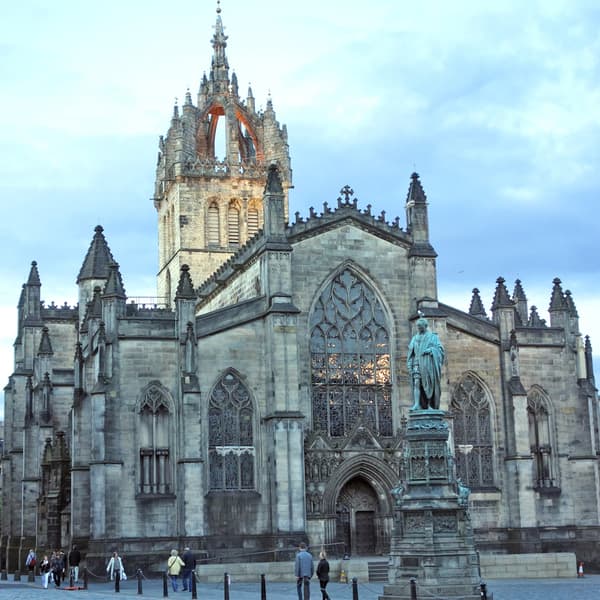
This is Scotland's most important church. It's the flagship of the Church of Scotland, Scotland's largest denomination, and the historic home of Scottish Presbyterianism. These days, the interior serves as a kind of Scottish Westminster Abbey. It's filled with monuments, statues, plaques, and stained-glass windows dedicated to important moments in history and great Scottish heroes.
Great Scots! A church has stood on this spot since 854. The current structure, dating mostly from the 15th through 19th centuries, is a hodgepodge of different architectural styles through the years. The ornate spire from 1495 is in the shape of the Scottish royal crown.
Read more...Show less
Let's go inside the church. If it's closed, you can still enjoy hearing about its important history. Once inside, enjoy the spacious nave. Up ahead, in the center of the church, are four massive pillars.
These are the oldest parts of the current church. They date from the 12th century. Explore more of the church. On the left side of the nave, find the bronze statue standing like a six-foot-tall chess piece.
This is John Knox. Look into his eyes. Really, look into his eyes and picture the scene. It's the mid-1500s.
Protestant radicals are challenging Catholic authority all over Europe. Martin Luther in Germany, John Calvin in Switzerland. Here in Scotland, it was John Knox. And St.
Giles is a kind of national stage upon which the drama of the Reformation was played out. Knox was a preacher here. His fiery sermons helped turn once-Catholic Edinburgh into a bastion of Protestantism. St.
Giles was transformed from a Catholic cathedral to a Presbyterian church. Presbyterians embraced a Calvinist creed of hard work, frugality, and strict ethics. Religion is just one of the things that distinguishes the Scottish culture from the English. Knox's influence was huge.
His insistence that every person should be able to personally read the Word of God gave Scotland an educational system three centuries ahead of the rest of Europe. Thanks partly to Knox, it was Scottish minds that led the way in math, science, medicine, and engineering. Take a little time to stroll around the church. The organ from 1992 is one of Europe's finest.
In an alcove next to the organ is a copy of a famous document called the National Covenant. In 1638, this was signed in blood by Scottish heroes who refused to compromise their religion for the kings. Most who signed the covenant were eventually arrested and executed. At the far end of the church is the intricately carved Chapel of the Knights of the Thistle.
It was built in only two years, 1910 and '11, entirely with Scottish materials and labor. It's the private chapel of the Knights of the Thistle, the only Scottish order of chivalry. Once a year, Scotland's leading citizens assemble here, to welcome some new member. The British monarch presides over the ritual from the fanciest stall.
That's the one marked by the Scottish coat of arms, a heraldic zoo of symbolism. Are there bagpipes in heaven? For your answer, find the tooting angel at the top of a window to the left of the altar. It's time to head back outside and continue our walk.
Okay, but before leaving, be aware that downstairs, the church has an inviting café and handy public toilets. Now let's head out the way we came in. Before leaving, look up above the main entrance. Over the door is an impressive modern stained-glass window celebrating Robert Burns.
The rosy-red sunburst at the top reminds locals of Burns' famous line, "My love is like a red, red rose." Ah! Exit the church into the light of day. As you exit, turn right and continue down the Royal Mile. At the back end of the church, you'll find a monument supporting a slender pillar. This is the Marquette Cross. The Marquette Cross.
Mercat Cross
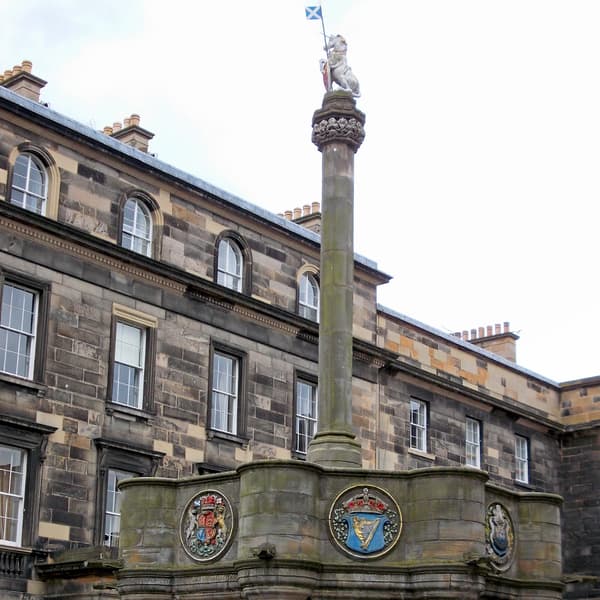
This monument, the Marquette Cross, has a slender column topped with a unicorn holding a flag with the cross of Saint Andrew, the patron saint of Scotland. This monument marked the town's former main marketplace. Crosses like this were standard features in any town licensed by the king for trade. Each town also had a toll booth where people were taxed and a tron, an official weighing scale, like the butter tron we saw earlier.
The Marquette Cross was the place where royal proclamations were read, a tradition that goes back here as far back as the 14th century. Hear ye, hear ye, hear ye. As recently as 1952, a town crier stood right here and heralded the news that Britain had a brand-new queen. Britain has a brand-new queen.
Read more...Show less
He made the announcement. Hmm. Britain has a brand-new queen. Three days after the actual event, because that was traditionally the time it took for a horse to speed here from London.
Today, Marquette Cross is the meeting point of several walking tours, both historic and ghostly. Now, turn your attention to the nearby statue of Adam Smith. Adam Smith, an Edinburgh resident and author of "The Wealth of Nations," pioneered the economics of free-market capitalism. He theorized that there was an invisible hand that wisely guides the unregulated free market.
Stand in front of Smith and imagine the intellectual energy of Edinburgh in the mid-1700s. That was when this was Europe's most enlightened city. Adam Smith was right there in the center of it. He was good friends with the philosopher we encountered earlier, David Hume.
Did they play billiards together? Smith also knew the writer James Boswell, who went on to fame as the biographer of Samuel Johnson. James Watt, inventor of the steam engine, was another proud Scotsman of the age. The poet Robert Burns, the father of modern geology James Hutton, and the publishers of the first Encyclopedia Britannica also lived here in Edinburgh.
Steeped in the Enlightenment, they applied cool rationality and a secular approach to their respective fields. With great intellectuals like these, Edinburgh helped create our modern world. Let's continue on down the Royal Mile. Note that at this point, the Royal Mile is now called High Street. Sights along High Street.
Sights Along High Street
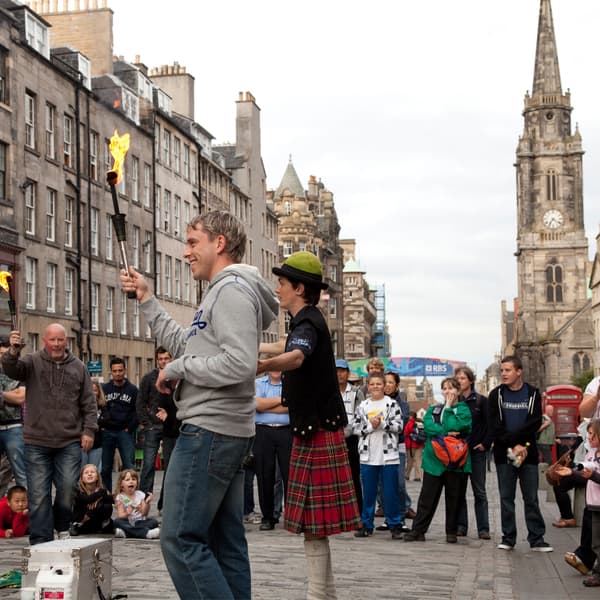
A few steps downhill at number 188 is the Police Information Centre. This place provides a pleasant police presence. Say that three times fast. Pleasant police presence, pleasant police presence, pleasant police...
The place also provides a little local law and order history to boot. Ask the officer on duty about the impact of modern technology and budget austerity policies on their police work today. Seriously, this is a great chance to drop in and discuss whatever law and order issues pique your curiosity. Continue down the Royal Mile.
Read more...Show less
This stretch is traffic-free most of the day. Notice the bollards that rise and lower for permitted traffic. At number 180 is the Fringe Festival office. Along the street, you'll pass another wellhead.
This one comes with sippy spouts for horses and dates from 1675. Rick, what are those three strange red boxes? Well, back in the 20th century, people used these to make telephonic calls to each other. They'd step into one of these boxes and read through a big book to find the telephone number of the person they wanted to call.
They'd push the buttons and then talk into the microphone at the end of a long wire. Ingenious! These telephone boxes are cast iron and were produced for all of Britain right here in Scotland. As they're gradually being decommissioned, they're showing up in British homes as nostalgic garden decorations.
On the left is Cockburn Street. This was cut through High Street's dense wall of medieval skyscrapers in the 1860s to give easy access to the New Town and the train station. Notice how the sliced buildings were thoughtfully capped with facades that fit the style of the Royal Mile. In the Middle Ages, only tiny lanes, like the Fleshmarket Lane just uphill from Cockburn Street, interrupted the long line of Royal Mile buildings.
These days, Cockburn Street has a reputation for shops catering to alternative lifestyles. A few steps further down the Royal Mile is the Tron Church, built in the 17th century. You're at the intersection with North and South Bridge Streets, two major and modern thoroughfares. Make your way to the street corner diagonal from the Tron Church.
Stand here and survey the scene. This is the halfway point of this walk. First, look uphill back to the top of the Royal Mile. There's the Spire of the Hub, at 73 meters, the tallest in the city.
Nearer to you is the Spire of St. Giles Church, inspired by the Scottish crown and the thistle, a symbol of Scotland. Now, look around you. The Radisson Hotel, built in 1990, is entirely new construction, but built to fit in.
Edinburgh is protecting its historic look. The Bank Hotel was once a fancy bank with a lavish interior. As modern banks are moving away from the city centers, lavish old buildings like these are enjoying a new life, as ornate pubs and restaurants. In the next block downhill, you'll find three characteristic pubs, side by side.
Each of them offer free traditional Scottish and folk music in the evenings. Notice all the chimneys. Tenements, local apartment buildings, shared stairways and entries with individual apartments, and each had its own chimney. By the way, tenements didn't have the slum connotation they have today.
Cross Bridge Street and continue down the Royal Mile another block. Along the way, you'll pass the Museum of Childhood. It's both entertaining and free. There's also a fragrant fudge shop.
They demonstrate how it's baked on the spot and give out samples. Delicious and also free. You can sample various flavors, just like with gelato. Sorry, Rick, we can't stop now.
We've got another royal half mile to go. Our next stop is directly across from the fudge shop, the much less sinful John Knox House. ¶¶
John Knox House
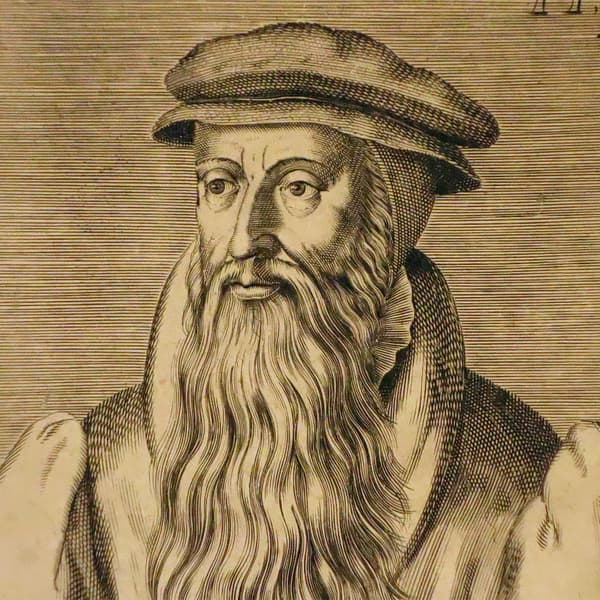
The John Knox House. As we've seen, a towering figure in Edinburgh's history was John Knox. He converted Scotland to a Calvinist brand of Protestantism. His religious bent was Presbyterianism, where parishes are governed by elected officials rather than by appointed bishops.
As this brand of Christianity was more democratic, it also spurred Scotland toward political democracy. If you're interested in Knox or the Reformation, this place is worth a visit. Full disclosure, it's not certain that Knox ever actually lived in the Knox House. Regardless, the place is still interesting.
Read more...Show less
There's good information on Knox and on his intellectual sparring partner on the Catholic side, Mary, Queen of Scots. The house itself is old, and it has some period furniture. So, even if it wasn't Knox's house, it's easy to stroll through these atmospheric rooms and imagine the times. The Protestant firebrand, John Knox, and the devout Catholic, Mary, Queen of Scots, sitting face to face, discussing the most intimate matters of their spiritual lives as they decided the course of Scotland's religious future.
Continue a few steps further down High Street to the intersection with St. Mary's and Jeffery Streets. There, you find yourself out and you find yourself at... The World's End. The World's End.
World’s End
For centuries, a wall stood here marking the end of the Burg of Edinburgh. For residents within the protective walls of the city, this must have felt like the World's End, indeed. The area beyond was called Canongate, a monastic community associated with Holyrood Abbey. Here at the intersection, find the brass bricks in the street that trace the wall's entrance gate, which was demolished in 1764.
If you look down St. Mary's Street, about 200 yards to the right, you can actually see a surviving bit of that old wall. This is the Flodden Wall, built after the 1513 Battle of Flodden with England. In this epic battle against Henry VIII's forces, Scotland's King James IV was killed.
Read more...Show less
The women of Edinburgh, fearing a brutal English attack, scrambled to build up this wall. We'll talk more about the long-standing Scottish-English divide in just a bit. By the way, the pub on the corner, No. 1 High Street, is a good centrally-located venue for live traditional music.
Stroll by and see what's on tonight. Now, it's time to move on and leave... The World's End. But before we do, go about ten steps down the Royal Mile and look left, down Cranston Street.
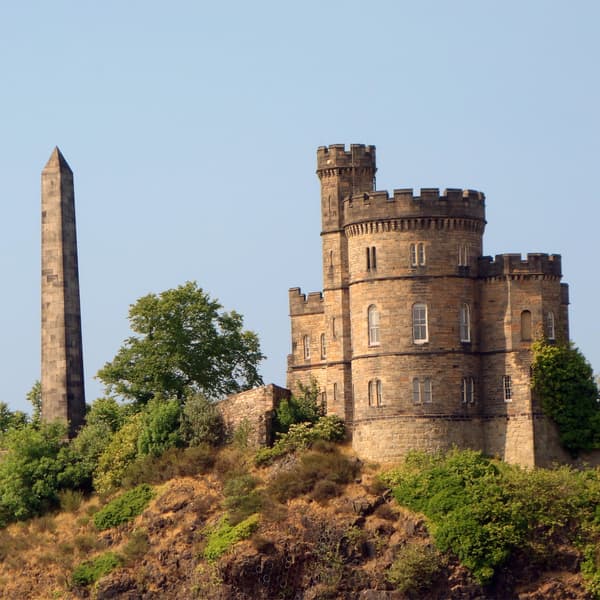
There, past the train tracks, you get a good view of the Calton Cemetery on Calton Hill. The obelisk, called Martyr's Monument, remembers 18th-century Scottish patriots exiled for their politics by London. Dangerous ruffians, like those who founded Australia. The round building to the left of the obelisk is the grave of the philosopher David Hume.
And the big, turreted building to the right was the jailmaster's house. Today, the main reason to go up Calton Hill is for the fine views. Now, continue down the Royal Mile, leaving Old Edinburgh, as High Street changes names to Canongate. From here, the Royal Mile is less pedestrian-friendly and sparser with sights, so let Rick fill the time with some background on Scotland as you stroll. ♪ ♪ ♪ ♪ ♪ ♪ ♪
Canongate
Canongate. Our next stop is a couple hundred yards ahead. Our ultimate destination is Holyrood Palace, one of the residences of the British monarch who rules both Scotland and England. So, as you walk down Canongate, consider the long relationship between Scotland and England.
As far as relationships go, well, it's complicated. Scotland and England have been tied together since the beginning of history. They share common DNA from their ancient Celtic heritage. But while England became part of the Roman Empire and the European world in general, Scotland remained isolated.
Read more...Show less
The Scots, Gaels, and Picts were considered barbarian tribes roaming wild to the north of Rome's defenses at Hadrian's Wall. After Rome fell, England was overrun by Anglo-Saxon tribes from the continent, while Scotland remained more purely Celtic. Edinburgh, situated where the lowlands meet the highlands, has long been the place where Scottish culture met English -- Celtic versus Anglo, rural versus urban, and isolated versus European. You could say Scotland was born in the year 843.
That's when a Gaelic warlord was crowned in the city of Scone, 50 miles from here, making him King of Scotland. For the next 800 years, Scotland would be an independent nation ruled by Scottish kings. But it remained complicated. Scottish kings intermarried with English royalty, and the two nations were often at war.
Remember how William Wallace and Robert the Bruce had to fight English invaders, and how the Flodden Wall was built to keep the English at bay. Then, in the 1600s, things got really tricky. Queen Elizabeth I of England, the Virgin Queen, died without an heir. So her nephew, Scotland's King James, was invited to rule England as well as Scotland.
Then, James' successor was beheaded by the English Parliament. Suddenly, Scotland was without a king of its own, the English invaded, and Scotland's 800-year independence was over. The Scots tried to fight back in two heroic rebellions. But finally, Bonnie Prince Charlie's Highland army was defeated in 1745, and the English cracked down with a vengeance on all things Scottish.
The clans were dispersed, the farmers were evicted from their lands, kilts were banned, so was speaking Gaelic, even playing the bagpipes was forbidden. Now, I could get behind that. In fact, about the only thing Scotch that the Scots had left was Scotch. Scotch whiskey?
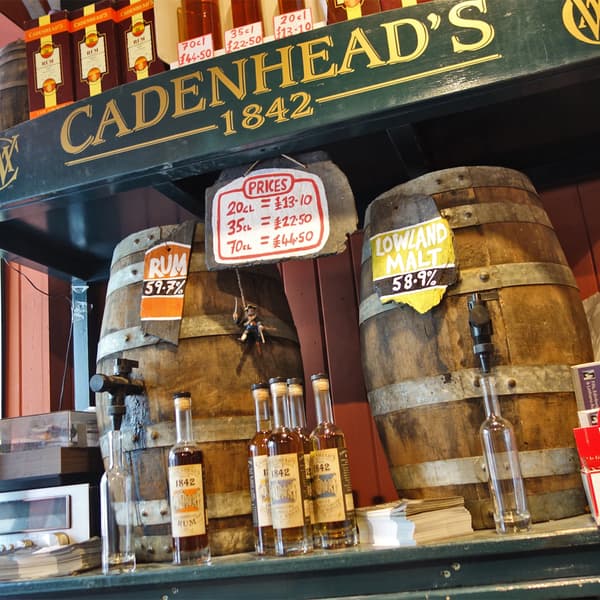
I can get behind that, too. In fact, there's a whiskey shop just ahead called Caddenhead's. It's on the right-hand side of the Royal Mile at Canongate number 172. Caddenhead's Whiskey Shop is not a casual tourist site, but if you're serious about tasting and buying whiskey, pop inside and chat with the owners.
They're evangelical about the virtues of Scotland's national drink. Whiskey has been distilled here in Scotland since medieval times. In its purest form, Scotch is made from water and malted barley. That's what we call single malt Scotch.
All Scotch is aged in oak barrels for years, and different distillations can be mixed together to make blended whiskey. Caddenhead's, founded in 1842, prides itself on bottling good whiskey without compromises like watering it down, adding sugar, or changing its color for marketing purposes. The store's owners love to say that here, you'll enjoy pure, unadulterated whiskey -- as the distillery's owners themselves do, not as the sorry public does. Let's continue our walk.
Must we? We could stop in for a wee dram. Just a wee dram. We'll come back after the tour.
All right, good idea. Our next stop is Canongate Church, about 50 yards ahead. As you walk, you'll pass a couple of free museums -- the People's Story and the Museum of Edinburgh. They're both interesting, so keep going to the church entrance.
By the way, if you want to learn more about whiskey, just pop into any neighborhood pub. Buy a round for the bar. It's a great conversation starter. Let a local talk you through the different types and their different personalities -- peaty, heavy iodine finish, and so on.
Let a local teach you how to drink it neat, and then add a little water. Learn how to swish it around so you can let your gums taste it, too. Experiencing whiskey with locals in an Edinburgh pub, you soon may understand how whiskey can become, as they like to say, a very good friend. When you reach the Canongate Church, step inside the iron gates for a closer look. The Canongate Church and Cemetery.
Canongate Church
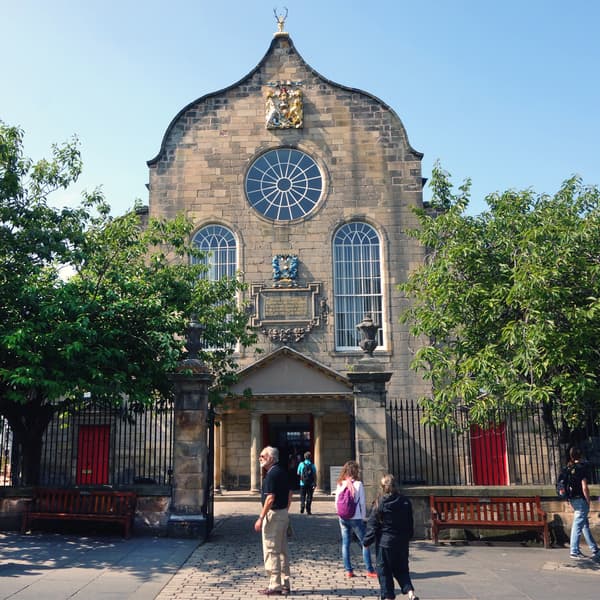
Start by looking up at the church's roof high above the door. The gilded emblem has the antlers of a stag. The symbol comes from Scotland's Balmoral Castle. That's the estate of the British royal family.
And the royal residence, Holyrood Palace, is just down the street. So this church from 1688 is where the royals worship whenever they're in town. So don't sit in the front pew marked with the royal crown. If the church is open, step inside.
Read more...Show less
In the lobby near the entrance, peruse the photos of royal family events that have taken place right here. Queen Elizabeth II's granddaughter got married here in 2011. Also, find a list of ministers of this parish going back to 1143. Notice the clear break during the chaos of the Reformation in 1561.
The church interior is a lofty blue and red with no stained glass. It's filled with light, and the flags of various Scottish regiments. Now, head back outside. Check out the church graveyard.
Enjoy the views of Calton Hill. You can follow the cute little markers that lead to the grave of Adam Smith, the father of capitalism. His tombstone abuts the back of the People's Story Museum. It's just a few steps away.
As you return to the street, glance across the royal mile at the gabled house. The shells embedded high in the wall were put there in the 17th century to defend against the evil power of witches yet to be burned. The statue on the sidewalk just outside the church is of the poet Robert Ferguson, one of the first to write in Scottish, and the man who did so much to inspire Robbie Burns. Let's continue on.
From here, we walk about 300 yards to the modern Scottish Parliament building and Holyrood Palace, which is the end of this walk. As you walk, let Rick talk about Scotland's struggles to regain its autonomy.
Canongate: Part 2
Canongate Part 2: History of the Scottish Parliament As you walk along Canongate to the Scottish Parliament building, remember how hard it's been for Scotland to sort out its complicated relationship with England. After Scotland's monarchy was united with England's, the English dominated. Scottish resistance was suppressed. But slowly, a new generation of Scots came to embrace the English influence.
You see, England was rich, a global force, so Scottish merchants welcomed their wealth and business ties. Soon, Edinburgh was decorated with English-style Georgian buildings, just like London. English culture was getting stronger, Scottish ways were disappearing, and becoming part of Great Britain was making more and more sense. So, in 1707, Scotland agreed to merge its government with England in a treaty called the Act of Union.
Read more...Show less
Both countries became part of the larger United Kingdom. The Scottish Parliament voted itself out of existence. The members packed up and traveled to London to join the British Parliament, and Edinburgh's old Parliament building, the one we saw by St. Giles, became a courthouse.
In 1707, Scotland as a nation ceased to exist. But Scottish culture would not die. Men like Sir Walter Scott championed all things Scottish. It romanticized the Highland clans and the old legends.
The wearing of kilts, once forbidden, now became fashionable. Meanwhile, during the Industrial Revolution, Scotland itself was becoming an economic powerhouse. The ingenious and industrious Scots were raised on the concept of the Protestant work ethic. They wove Scottish cloth in Scottish factories, which were fueled by Scottish coal and shipped around the world on Scottish-built ships.
By the 20th century, sentiment was growing for a return to Scottish self-rule. But it wasn't that easy. You see, the Scots and English have long seen their fitful union through two very different filters. If you talk to a Brit, they'll likely say it's in the two countries' mutual interest for tiny Scotland to be ruled benevolently from London.
But talk to your Scottish cabbie or B&B host, and you may get an entirely different spin. Which brings us to the watershed year of 1998. It was then that Scotland made a major step towards self-rule. After an election, the Scottish people had made their wishes clear.
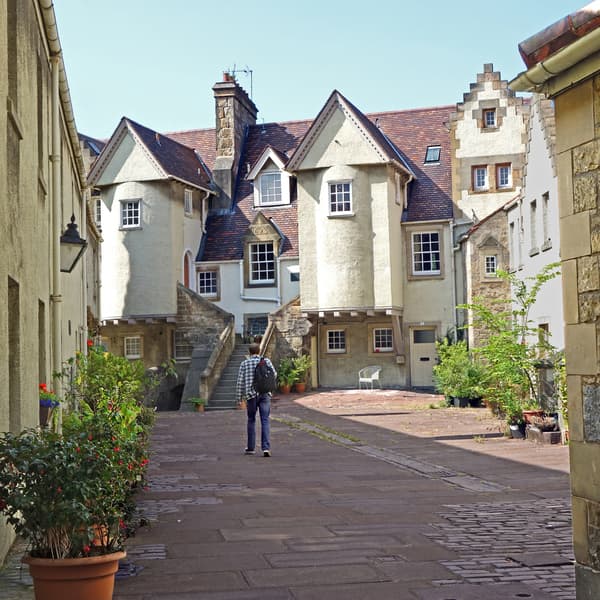
The Scottish Parliament returned to Edinburgh. Excuse me, Rick, but before we get to that, can I point something out? Just before you reach the modern Parliament building, which is on the right side of the Royal Mile, check out the White Horse Close on the left. Step through the white arcade into this 17th-century courtyard.
It was from here that the Edinburgh stagecoach left for London. Eight days later, the horse-drawn carriage would pull into its destination in London: Scotland Yard. Now, return to the Royal Mile and the Parliament building, walk on down to the flagpoles in front, and we'll take it from there. ♪♪ ♪♪
Scottish Parliament
The Scottish Parliament building. Finally, after so much history, we reach the 21st century. And finally, after three centuries of London rule, Scotland has a Parliament building, in Scotland. Remember, Scotland's Parliament had been dissolved when Scotland united with England back in 1707.
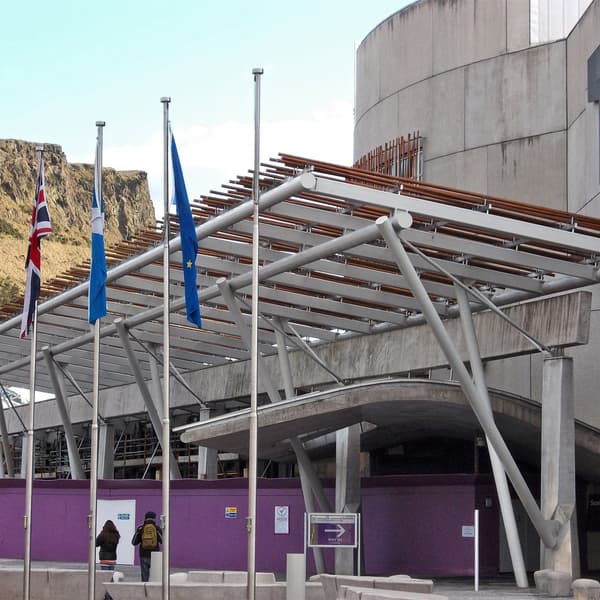
In 1998, after years of lobbying and a referendum, they won it back. To celebrate, Scotland built this striking new home. The building mixes wild angles, lots of light, bold windows, oak, and native stone into a startling complex. Notice how the eco-friendly structure by the Catalan architect Enric Miralles fits so comfortably into its natural surroundings.
Read more...Show less
Look at it in relation to the dramatic bluffs nearby -- Salisbury Crags and the higher summit called Arthur's Seat. The architect envisioned that the Parliament building would, as he put it, "arise from the sloping base of Arthur's Seat and arrive into the city as if almost surging out of the rock." Since the building celebrates Scottish democracy, the architecture is not a statement of authority. There are no statues of old heroes. There's not even a grand entry.
You feel like you're entering an office park. You're welcome to go inside and wander around on your own. It's free. The highlight is the impressive Grand Legislative Hall, or debating chambers.
For much more information about local politics and the Parliament building itself, ask about the excellent free guided tours, which are given most days. In 2004, the Scottish Parliament moved into its new home. Scotland now enjoys home rule, but not completely. Matters of defense, foreign policy, immigration, and taxation are still handled in London.
The word is "devolution." Most rights have devolved back to Scotland. Scottish independence is still a hot-button issue. Some want complete independence. Others appreciate the benefits of remaining part of the United Kingdom.
The three flags in front of the Parliament building tell the story -- the flag of Scotland, the flag of Britain, and of Europe. Scotland's a country with some self-rule. It's part of Britain or the United Kingdom. The U.K., in turn, is part of the European Union.
Locals understand the fine distinction between all these labels. Take a football match, for example. If a Scottish athlete does well, the English claim him as one of their own. They call him "British." If he screws up, he's a clumsy Scot.
Before we head to the finale of our walk, make a mental note of the bus stop near the entrance to Whitehorse Close. Bus number 35 can take you back up the Royal Mile as far as South Bridge. Now let's finish the walk by continuing to the end of the Royal Mile. You'll enter a lane called Abbey Strand that dead-ends at the gate of Holyrood Park. Step up to the impressive wrought-iron gate and peer into the palace grounds. The Palace of Holyrood House.
Palace of Holyroodhouse
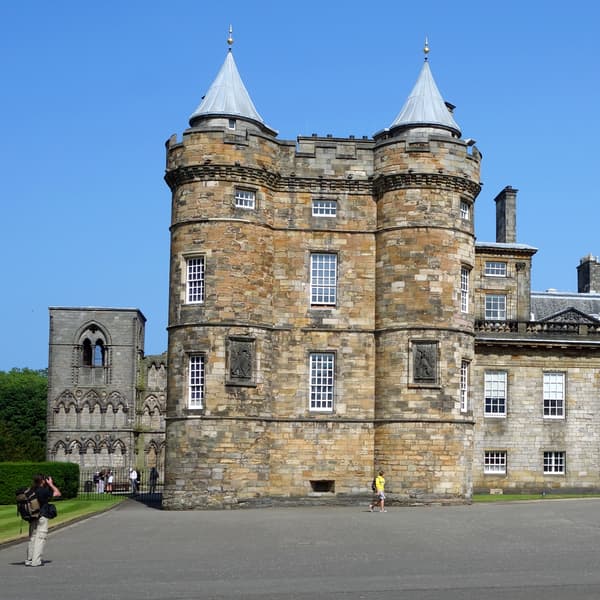
Since the 16th century, this palace has marked the end of the Royal Mile. Even before that, an Augustinian monastery stood in its place. While most of it's long gone, you can still see the surviving nave of the abbey behind the palace on the left. It was named Holyrood for a piece of the Holy Cross that Christ was crucified on.
It was brought here as a relic by the Scottish Queen Margaret, who was later Saint Margaret. Look up on the wrought-iron gate. Find the stag symbol of the royal family, with the Holy Cross on its forehead. The palace has been a home of the Scottish monarchs since medieval times.
Read more...Show less
They also kept a residence at the royal castle at the top end of the mile. But they preferred life here, at the cushier Holyrood House. This is where many kings and queens were born and crowned. It was where Mary, Queen of Scots, lived her adventurous life, and where her secretary -- and possibly lover -- was stabbed to death.
Today, the palace is one of the royal family's official residences. They generally stop here, at nearby Balmoral. You can pay to go inside, where you'll see elegantly furnished Victorian rooms, portraits of kings, the ruined abbey, and the lavish gardens. Also nearby, you can pay to see the Queen's Gallery, a small but sumptuous collection of fine art.
Your walk from the castle to the palace, with so much Scottish history packed in between, is now complete. Hopefully, it's whetted your appetite for more of this great city. We hope you've enjoyed our walk through Edinburgh. Thanks to Jean Openshaw, the co-author of this tour.
If you're doing more travel in Britain, we have several more audio tours for London. This tour was excerpted from the Rick Steves Great Britain Guidebook. For more details on eating, sleeping, and sightseeing in Edinburgh, refer to the most recent edition of that guidebook. For more free audio tours and podcasts, and for information, about our guidebooks, TV shows, bus tours, and travel gear, visit our website at ricksteves.com.
This tour was produced by Cedar House Audio Productions. Thanks. Cheers. And goodbye for now.
Free
GPS-guided walking tour
No account needed. Walk at your own pace.
Free
17 stops ·