12 stops
GPS-guided
3.8 km
Walking
40 minutes
Duration
Free
No tickets
About this tour
From the soaring Gothic cathedral to secret cooking clubs, from the birthplace of the pintxo to Chillida's sculptures in the crashing Atlantic surf, this walk winds through San Sebastián's Old Town and along the world-famous La Concha Bay. You'll taste the city's legendary food culture, uncover the fire that destroyed everything, and end at a century-old funicular with one of Europe's greatest views.
12 stops on this tour
Catedral del Buen Pastor
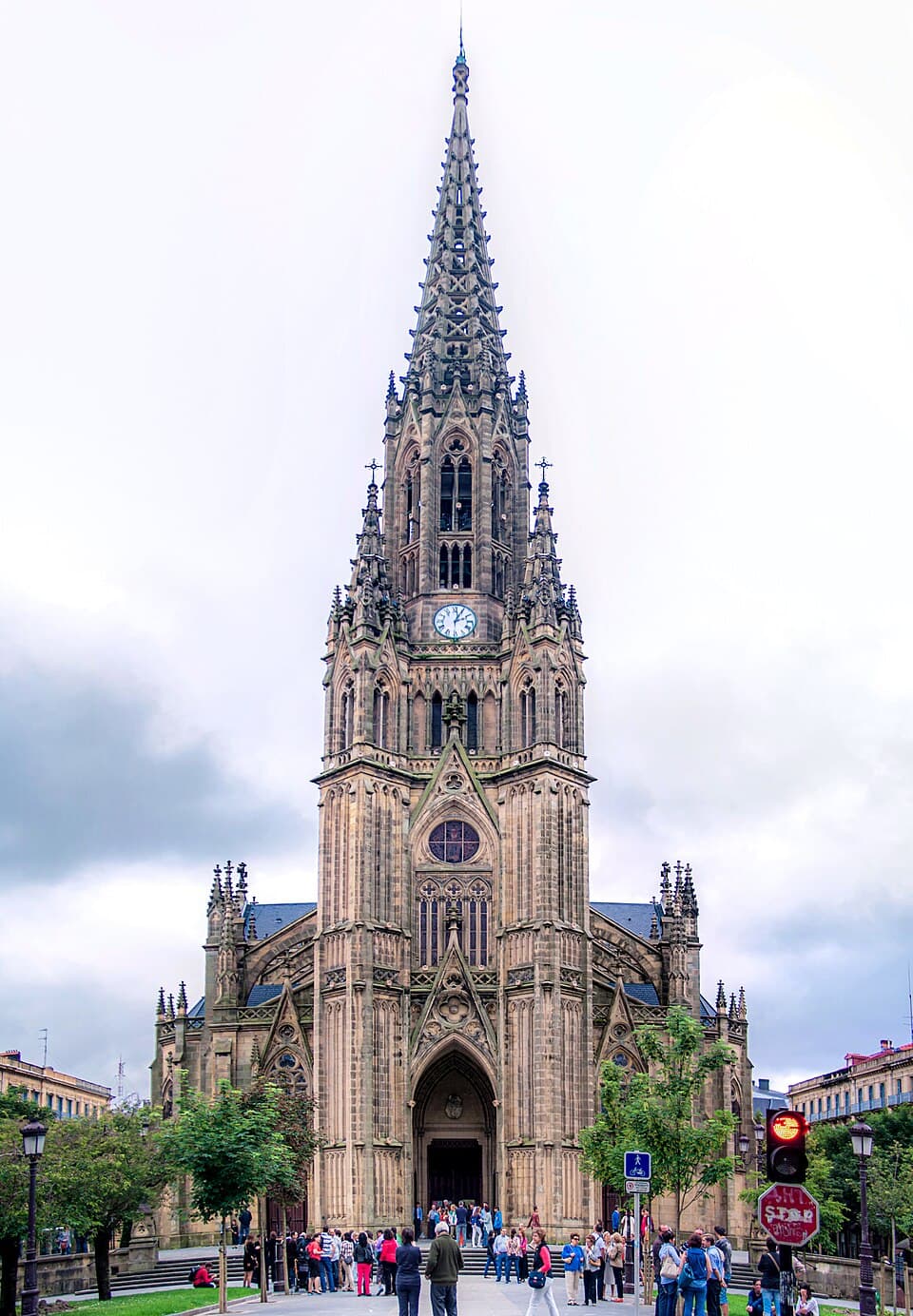
Welcome to San Sebastian -- or as the Basques call it, Donostia. We're starting our walk at the biggest church in the province, the Cathedral of the Good Shepherd. You can't miss it. That spire rising seventy-five meters above you? It's modeled after the spires of Cologne Cathedral in Germany. Which is a bit unexpected in a Basque city, but this place is full of surprises.
The cathedral was built in the eighteen-eighties and nineties, right when San Sebastian was reinventing itself as Spain's most glamorous resort town. Queen Regent Maria Cristina loved this city so much she spent every summer here, and the Spanish court followed her. So when it came time to build a grand new church, they went big. The foundation stone was laid on September twenty-ninth, eighteen eighty-eight, with the Queen Regent and her children in attendance.
Read more...Show less
Step inside if the doors are open. The nave stretches sixty-four meters long and rises twenty-five meters to the vaulted ceiling. But here's the showstopper: the organ. It's one of the largest in Europe, with five keyboards and nine thousand five hundred and thirty-five pipes. The biggest pipe is ten meters tall. When this thing plays, you feel it in your chest.
By the way, the cathedral only became a cathedral in nineteen fifty-three. Before that, it was just a parish church. The diocese of San Sebastian was created that year, and this church got the promotion.
Look around you. This area is the Ensanche -- the planned expansion of the city that was built after the old medieval walls were torn down. The grid of wide, elegant streets you see was designed in the eighteen-sixties, modeled on Paris. It's all Belle Epoque grandeur, wrought-iron balconies, and fancy facades.
When you're ready, head north toward the Old Town. Walk down Calle Loyola and then turn right onto Calle Fermin Calbet-on. You'll know you've arrived when the streets get narrow, the buildings get older, and the smell of food gets incredible. We're heading to the birthplace of the most famous bite in the Basque Country.
Casa Vallés
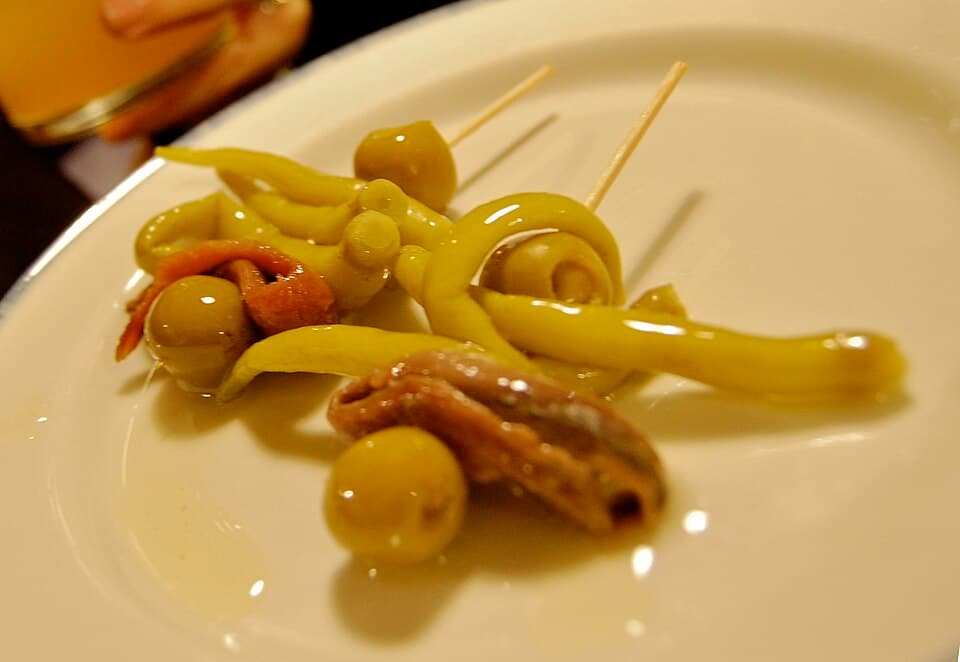
You're now on Calle Fermin Calbet-on, one of the most famous food streets in a city that's famous for food. And right here is Casa Valles, a bar that's been open since nineteen forty-two. This is where the gilda was invented. The first pintxo. The one that started it all.
Here's the story. The year was nineteen forty-six. A regular at this bar, a man everyone called Txepetxa, was standing at the counter, probably a few drinks in. He picked up a toothpick and started skewering things that were sitting on the bar -- an olive, a pickled green pepper, a salt-cured anchovy. He popped it in his mouth. The bartender tried it. And just like that, the gilda was born.
Read more...Show less
Now, why is it called gilda? That same year, Rita Hayworth starred in the film Gilda, and she was the talk of the town. Txepetxa thought his little creation was just like the character Rita played -- green, salty, and a little bit spicy. The name stuck.
Before the gilda, Basque bars served simple things. Olives in a bowl. Some cheese on a plate. But the gilda introduced this idea of combining ingredients on a toothpick, making each bite a composed dish in miniature. And from that moment, the pintxo -- from the Spanish word pinchar, to pierce -- was born. Every elaborate, beautiful, architectural pintxo you'll see in this city traces its DNA back to this bar, this toothpick, this slightly tipsy man in nineteen forty-six.
Order a gilda here. You have to. It's a pilgrimage. The combination of the briny anchovy, the sharp pickled pepper, and the fat green olive is perfect. Wash it down with a txakoli -- that's the local white wine they pour from a height to give it a little fizz.
By the way, San Sebastian has more Michelin stars per square meter than almost anywhere on earth. This tiny city of under two hundred thousand people has a dozen Michelin-starred restaurants. And it all started with a man, a toothpick, and an olive.
When you're ready, walk about fifty meters further up the street and turn left. You'll emerge into a wide, colorful square. That's the Plaza de la Constitucion.
Plaza de la Constitución
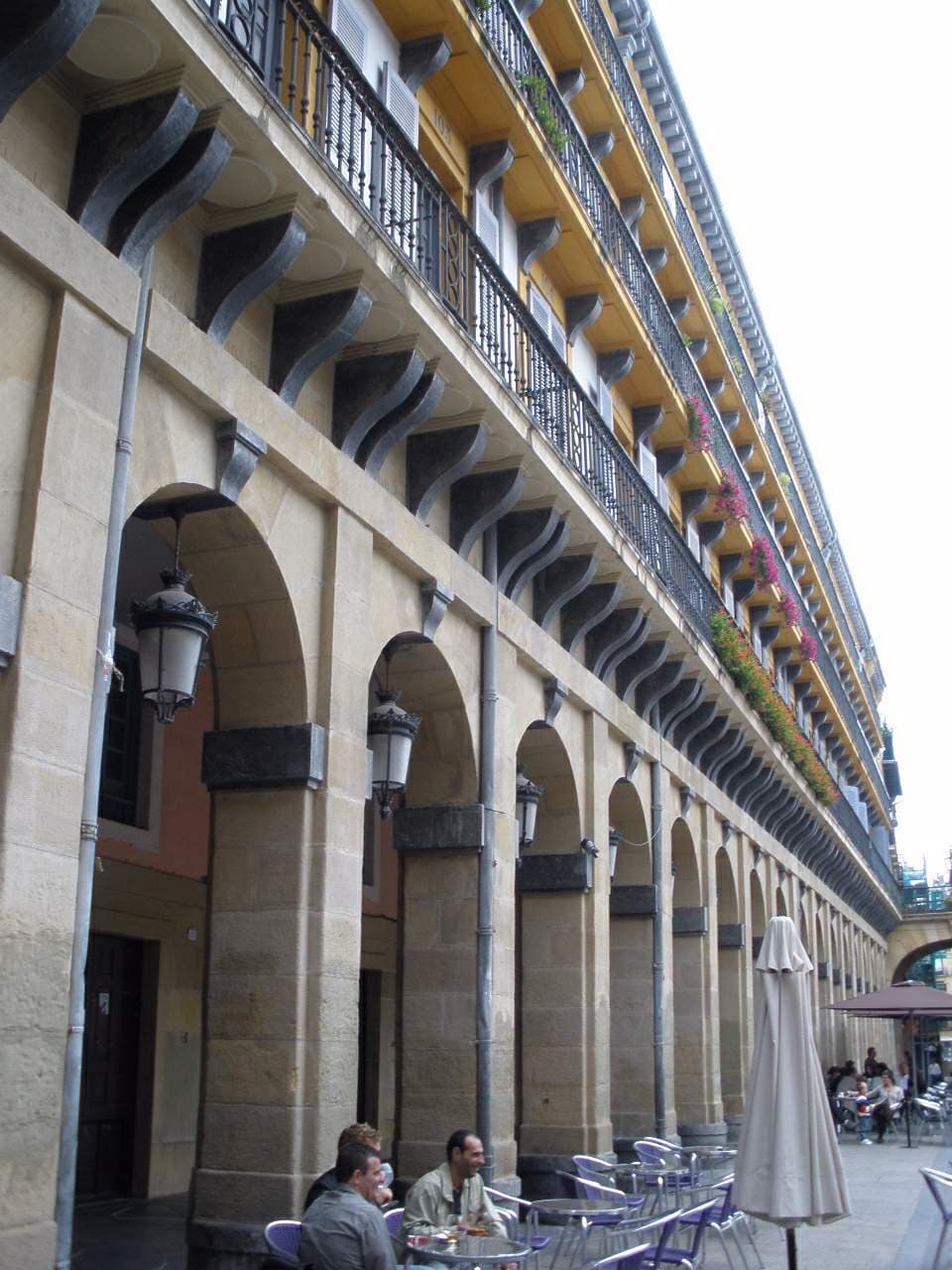
Here we are in the Plaza de la Constitucion, the heart of the Old Town. Take a look around. It's a handsome square, painted in warm yellows and greens, with cafe tables spilling out onto the pavement. But look more carefully at the buildings. See the numbers painted above the windows on each balcony? One, two, three, all the way up to the top floors. What are those about?
This square used to be a bullring. From the eighteenth century until the mid-eighteen hundreds, bulls ran right where you're standing. The balconies were private boxes. Each one was numbered so spectators could find their seat -- or rather, their window. Wealthy families would rent a balcony for the season, lean out, and watch the action below. Imagine the noise, the dust, the cheering crowds packed into these windows while a bull charged around the square.
Read more...Show less
The numbered balconies survive as one of those beautiful, slightly weird historical details that make a city interesting. Bullfighting moved to a purpose-built ring when they built the Plaza de Toros, but nobody bothered to repaint the numbers. And now they're a protected feature.
The square was designed in eighteen seventeen by the architect Silvestre Perez, as part of the reconstruction after the devastating fire of eighteen thirteen -- which we'll talk about at our next stop. The design is neoclassical, with uniform facades and covered arcades, very much in the tradition of grand Spanish plazas like the ones in Madrid and Salamanca.
Today, this is where San Sebastian celebrates. On January twentieth, the entire city gathers here for the Tamborrada, a twenty-four-hour drumming festival that marks the feast of San Sebastian. Thousands of people in military and chef costumes march through the streets beating drums from midnight to midnight. It's gloriously loud, wonderfully chaotic, and uniquely Basque.
If you want a coffee, grab one at one of the cafes under the arcades. Then head out of the square to the northeast. We're walking to the street that survived the apocalypse.
Calle 31 de Agosto
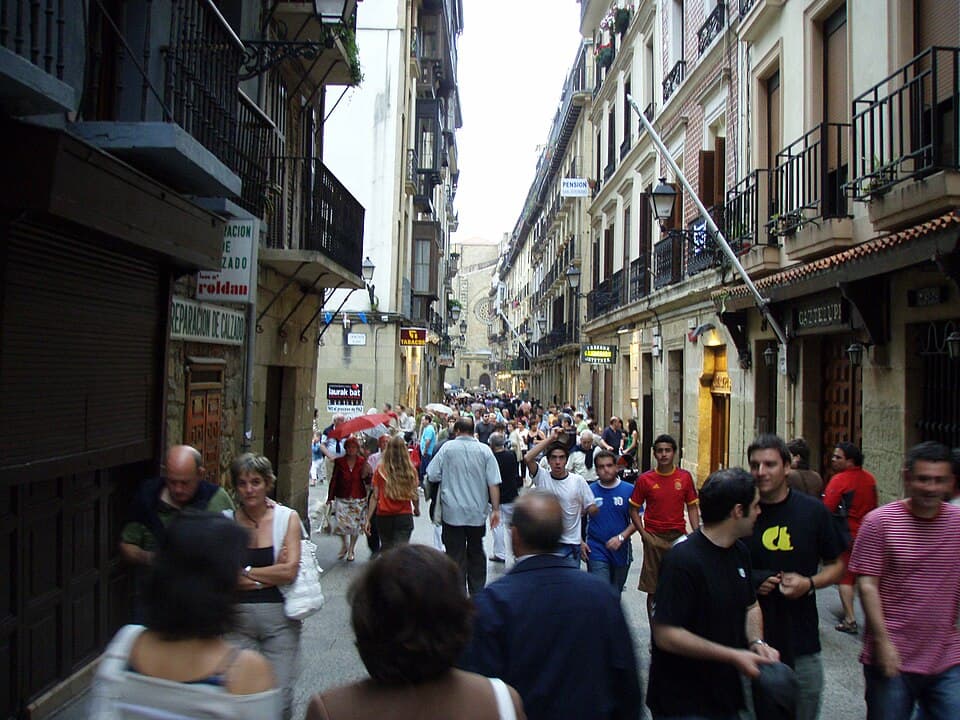
You're standing on Calle treinta y uno de Agosto. August thirty-first street. And the name tells you everything you need to know.
On August thirty-first, eighteen thirteen, this city was destroyed. Not damaged. Not partially burned. Destroyed. During the Peninsular War, San Sebastian had been occupied by Napoleon's French troops for five years. When British and Portuguese forces finally laid siege to the city, they broke through the walls near what is now the Bretxa market -- bretxa means breach in Basque, and that's exactly what happened. But after taking the city, something terrible occurred. The liberating troops went on a rampage. They looted, they assaulted civilians, and they set fire to the city. The blaze burned for days, fueled by an explosion at a gunpowder store. By the time the smoke cleared on September eighth, the entire Old Town was gone.
Read more...Show less
Every building. Every church. Every home. Reduced to ash and rubble. Out of seven thousand inhabitants, around three thousand five hundred survived.
Every building except this street. The Anglo-Portuguese troops spared this one street because they were using it as their own shelter. So the houses you see here, with their old stone facades and wooden beams, are the oldest buildings in the city. Everything else in the Parte Vieja -- the Old Town -- was rebuilt after eighteen thirteen. But this street is the real thing.
The street was originally called Calle Trinidad. After the fire, it was renamed to make sure nobody forgot what happened on that August day. Walk slowly down it. Look at the stonework. Touch the walls. These stones remember things the rest of the city has forgotten.
By the way, if you look up, you'll notice that the buildings lean slightly inward. That's not earthquake damage -- it's deliberate. In the Middle Ages, upper floors were built wider than lower floors to gain more living space. The overhang also kept rain off the street. Clever, if a little claustrophobic.
At the end of the street, look ahead. You'll see the elaborate baroque facade of a church rising above the rooftops. That's our next stop.
Basílica Santa María del Coro
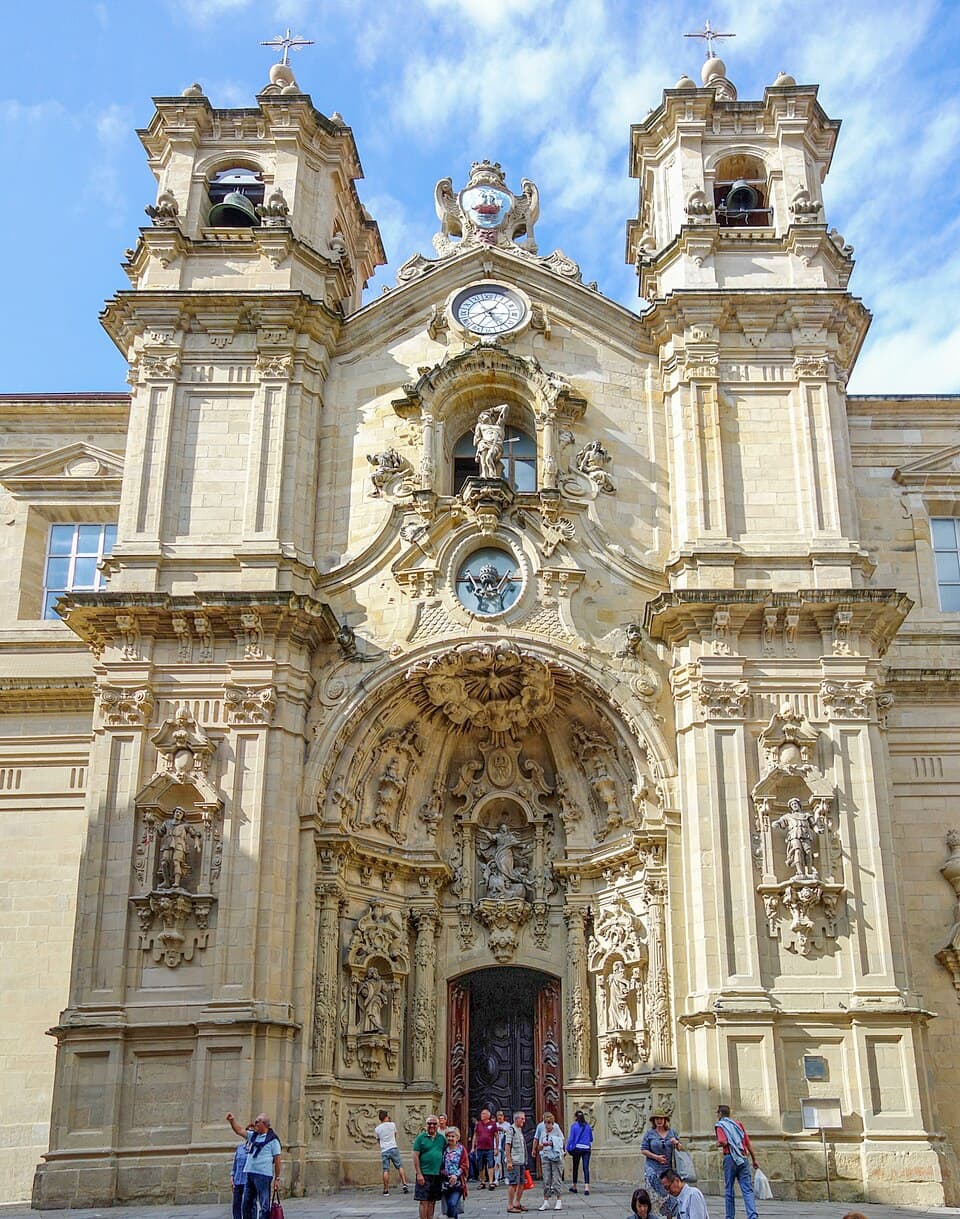
Look up. The facade in front of you is one of the most spectacular pieces of baroque architecture in the Basque Country. The Basilica of Santa Maria del Coro looks like someone took a stone altarpiece and stuck it onto the front of a building. Every inch is carved -- saints, angels, garlands, scrolls. And right at the top, the figure of San Sebastian himself, the city's patron saint, bristling with arrows.
This church has deep roots. A Romanesque church stood here in the twelfth century, built by the kings of Navarre. That was expanded into a Gothic-Renaissance structure in the fifteen hundreds. But in the seventeen hundreds, a gunpowder magazine exploded nearby and badly damaged the building. So between seventeen forty-three and seventeen seventy-four, the current baroque church was built on the same foundations.
Read more...Show less
Here's a remarkable detail: when the rest of the Old Town burned in eighteen thirteen, this church survived. While everything around it was reduced to rubble, Santa Maria stood. Whether that was luck, divine intervention, or just good stone construction, locals have their own opinions.
Step inside if you can. The interior is much more restrained than the facade -- a single nave with a baroque altarpiece. It's the kind of contrast that tells you something about Basque character. The exterior shouts. The interior whispers.
The name del Coro means of the Choir. This was one of two main churches in the old city -- Santa Maria and San Vicente -- and each had its own devoted following. For centuries, the two parishes were fierce rivals. Marriages between families from different parishes were controversial. Imagine that -- a city so small you can walk across it in ten minutes, divided by church loyalty.
By the way, look at the street you're standing on. This is the foot of Monte Urgull, the hill that dominates the Old Town. We'll get closer to it later. For now, head east along Calle treinta y uno de Agosto. In about two hundred meters, on your right, you'll see the weathered stone walls of a former monastery. That's San Telmo.
San Telmo Museoa
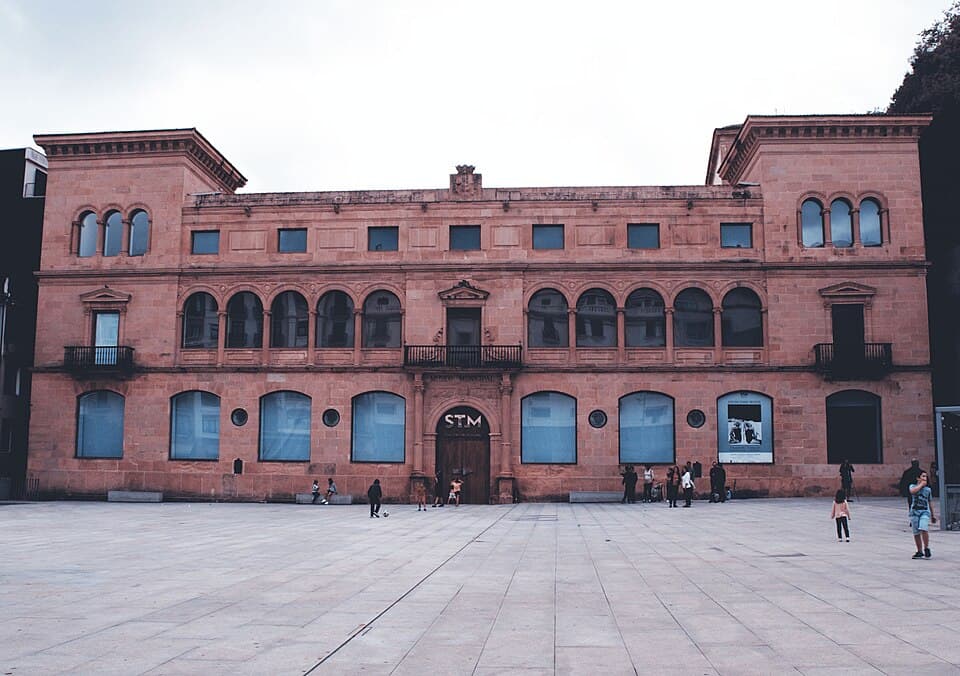
You're standing in front of San Telmo Museoa, the oldest museum in the Basque Country and one of the most important in Spain. But before it was a museum, it was a Dominican monastery. Before that, it was artillery barracks. And before everything, this spot was at the foot of a fortified hill in a medieval walled city. Layers upon layers.
The monastery was founded in the fifteen hundreds by Alonso de Idiaquez, secretary to Emperor Charles the Fifth -- the most powerful man in Europe. Idiaquez came from the nearby town of Tolosa and married Gracia de Olazabal, from a wealthy San Sebastian family. Together, they funded this Dominican convent as their personal legacy. The cloisters you can see are Renaissance, graceful and proportioned, with that particular warmth that old stone gets in the afternoon sun.
Read more...Show less
Then came eighteen thirteen. The fire that destroyed the city badly damaged the monastery too. After the Spanish government confiscated church property in the eighteen thirties, the Dominicans were expelled and the building became military barracks. Imagine monks' cells turned into soldiers' bunks, the cloister garden turned into a drill ground. It stayed that way for decades.
In nineteen twenty-nine, the city bought the complex, and by nineteen thirty-two it reopened as a museum of Basque ethnography and history. But the most dramatic change came in twenty eleven, when a stunning modern extension was added. The architects Nieto Sobejano designed a new wing clad in perforated aluminum panels that looks almost like scales -- or maybe like the hills behind it. Old monastery, new metal. It shouldn't work, but it absolutely does.
Inside, the museum traces Basque society from prehistoric times to today. There's everything from medieval gravestones to contemporary Basque art. The highlight is the former church, where the walls are covered in enormous murals by the Catalan artist Jose Maria Sert, painted in the nineteen thirties, depicting scenes from Basque life and history in rich golds and blacks.
When you're ready, exit the museum and head south on Calle treinta y uno de Agosto, then turn right toward the Boulevard. You'll see the modern entrance to the Bretxa market ahead.
Mercado de la Bretxa
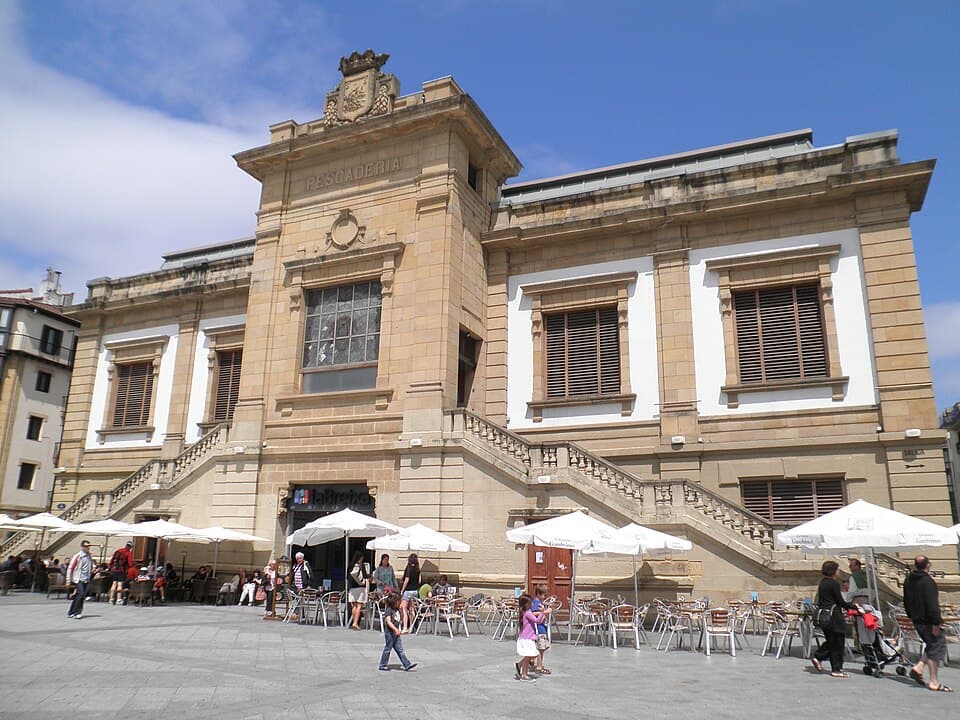
Welcome to Mercado de la Bretxa, and right away, let me tell you about the name. Bretxa means breach in Basque. This is the exact spot where, in eighteen thirteen, Anglo-Portuguese artillery blasted a gap in the city walls. The troops poured through this breach to liberate -- and then accidentally destroy -- San Sebastian. So every time a local says they're going to La Bretxa to buy fish, they're referencing a two-hundred-year-old military catastrophe. History is everywhere in this city, even at the grocery store.
The market has been here since eighteen seventy, making it one of the oldest continuously operating markets in the Basque Country. The original nineteenth-century architect was Antonio Cortazar, and while the building has been modernized over the years, the underground food market still has that wonderful old-school energy.
Read more...Show less
Head downstairs to the lower level. This is where the magic happens. The fish counter is extraordinary -- look at the variety of seafood from the Bay of Biscay. Whole turbot, glistening anchovies, spider crabs the size of dinner plates. The fishmongers here supply some of those Michelin-starred restaurants we talked about. Every serious chef in San Sebastian starts their morning at this market.
Here's what to try. First, Idiazabal cheese -- a smoked sheep's milk cheese that's been made in the Basque hills for centuries. It's nutty, smoky, with a slight tang. Second, Cantabrian anchovies. These are nothing like the sad, salty strips you get on pizza. They're plump, silky, almost sweet. Third, if you see dried guindilla peppers, grab some. They're the pepper used in the gilda.
And if you're hungry now, several stalls sell prepared food. Get a slice of Basque cheesecake -- tarta de queso -- which is burnt on top, creamy in the middle, and nothing like any cheesecake you've had before.
When you're done browsing, head back outside and walk west through the Old Town streets. We're going to talk about one of the most fascinating cultural traditions in the Basque Country -- the secret cooking clubs.
Sociedades Gastronómicas (Txokos)
Now, I want to tell you about something you probably can't see from where you're standing, because that's kind of the point. Hidden behind unmarked doors throughout this Old Town are some of the most remarkable institutions in European food culture: the txokos, or sociedades gastronomicas. The Basque gastronomic societies. Secret cooking clubs that have been operating here for over a hundred and fifty years.
Here's how they work. A txoko is a private kitchen, usually in a basement or back room, owned collectively by its members. There's a full professional kitchen, a long communal table, a well-stocked pantry with olive oil, wine, spices, and basics. Members can come in anytime, cook whatever they want, and eat with their friends. At the end of the night, everyone chips in to cover the cost of what they used. No staff. No menu. No bill. Just cooking.
Read more...Show less
The oldest surviving txoko is the Union Artesana, founded right here in San Sebastian in eighteen seventy. But the tradition goes back further. When industrialization brought workers from rural villages into the city in the mid-eighteen hundreds, the bars started imposing curfews to stop people drinking too late. The workers' response? We'll just build our own kitchens, thank you very much. And the txoko was born.
There are about a hundred and fifteen txokos in San Sebastian alone. Some have only twenty members. Others have hundreds. Historically, most were men-only -- women weren't allowed in until relatively recently. That exclusion is controversial and has been widely criticized, though most societies are now mixed.
But here's the detail that really gets me. Under Francisco Franco's dictatorship, when Basque language and culture were brutally suppressed, the txokos were one of the few places where people could speak Basque, sing Basque songs, and keep their culture alive. Behind closed doors, over simmering pots of marmitako and bacalao, the Basque identity survived.
And one more thing: the mayor of San Sebastian is required to dine at every single txoko in the city at least once a year. That's seventy-five dinners. Not a bad job, honestly.
From here, continue west through the Old Town toward the port. You'll start to see the harbor and smell the sea. We're heading to the waterfront.
Aquarium / Monte Urgull
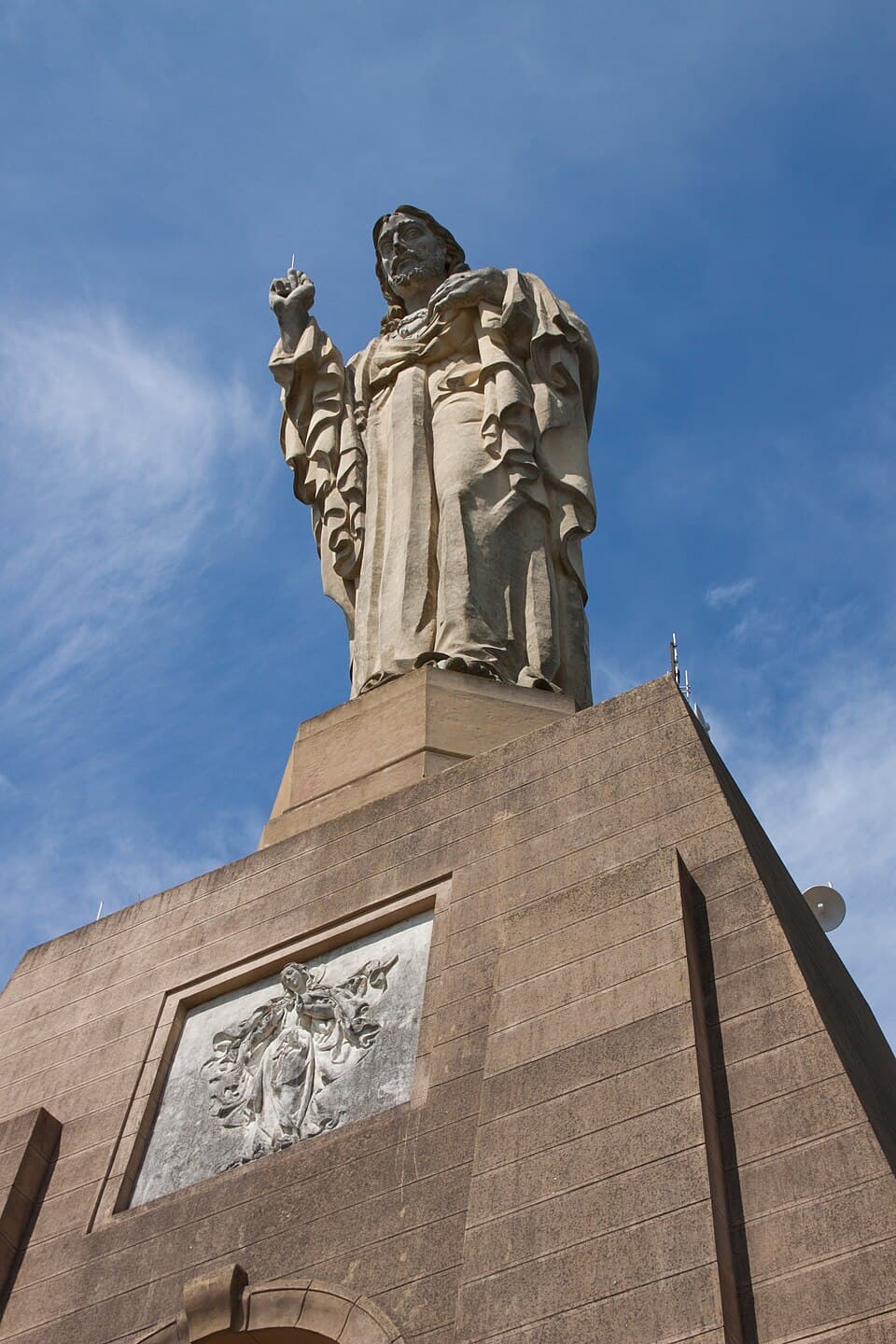
You've reached the harbor, and two things should catch your eye. First, the Aquarium right in front of you, a handsome stone building sitting at the water's edge. Second, the enormous hill rising behind it -- Monte Urgull -- with a giant statue of Jesus on top, arms outstretched over the city.
Let's start with the statue. That's the Sagrado Corazon, the Sacred Heart, unveiled in nineteen fifty. It's twelve meters tall and watches over San Sebastian from the summit of Monte Urgull like a protective guardian. At its feet are the ruins of the Castillo de la Mota, a fortress that has defended this promontory since the twelfth century. The castle was besieged repeatedly during the wars we've been talking about, and its cannons once controlled access to the entire bay. If you have an extra hour, the walk to the top is absolutely worth it -- panoramic views, old gun emplacements, and a sense of how strategic this little headland has been for centuries.
Read more...Show less
Now, the Aquarium. It was inaugurated on September first, nineteen twenty-eight, by King Alfonso the Thirteenth and Queen Victoria Eugenia, making it one of the oldest aquariums in Europe and the first natural science museum in Spain. Inside, there's a treasure: the skeleton of a North Atlantic right whale, captured off the coast between Zarautz and Getaria in eighteen seventy-eight. It's been hanging in the main hall since nineteen thirty-four. Twelve meters long, and it represents the last great whale hunted in these waters.
And that brings us to a story most people don't know. The Basques were some of the first commercial whalers in history. From the Middle Ages onward, Basque fishermen hunted right whales in the Bay of Biscay. They were so good at it that by the fifteen hundreds, the whales had become scarce locally, so the Basques sailed all the way to Newfoundland and Labrador to find more. They called the whale the pig of the sea because every part of it was used -- meat, blubber, bone, oil. Basque whaling stations have been found as far away as Red Bay in Canada, dating to the fifteen forties.
Now, turn and face the bay. That sweeping crescent of sand and blue water is La Concha -- the Shell -- and the promenade running along it is where we're headed. Follow the waterfront west.
La Concha Promenade
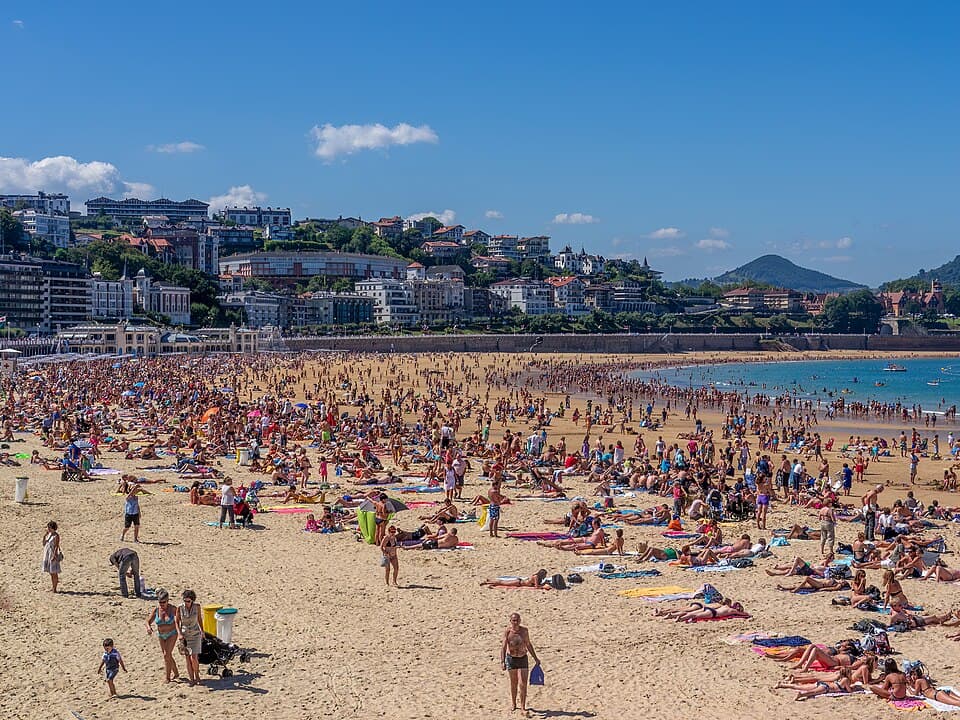
You're now walking one of the most beautiful urban promenades in Europe. La Concha. The Shell. Named for the near-perfect crescent shape of the bay. And you can see why. Look at this -- the curve of golden sand, the island of Santa Clara sitting in the middle of the bay like a green punctuation mark, and the hills rising on either side. On a clear day, this might be the most gorgeous urban beach in the world.
But reach out and touch the railing beside you. Go on, wrap your hand around it. This is the barandilla de La Concha, designed in nineteen ten by the city architect Juan Rafael Alday. King Alfonso the Thirteenth inaugurated it in nineteen sixteen. It's become the symbol of San Sebastian -- you'll see it on postcards, souvenirs, and the city's official branding. Two hundred and seventy-one sections of ornate white ironwork, stretching the length of the promenade.
Read more...Show less
Here's a detail that locals love. One section of the railing was installed backwards. Instead of the decorative flower facing the promenade and the pedestrians, it faces the sea. Nobody knows if it was a mistake or deliberate, but it's become a thing -- finding the reversed section is a little local game.
In nineteen ninety-nine, the entire railing was in such poor condition that the city dismantled all two hundred and seventy-one sections, restored each one individually, and reinstalled them. The railing had become so iconic that letting it rust away was unthinkable.
This promenade was the catwalk of Belle Epoque Europe. In the late eighteen hundreds and early nineteen hundreds, when Queen Regent Maria Cristina made San Sebastian the summer capital of Spain, European aristocrats flocked here. They would stroll along this exact path in their finest clothes, see and be seen, gossip and flirt against this ridiculous backdrop.
Imagine it. Horse-drawn carriages on the road behind you. Ladies with parasols and enormous hats. Gentlemen in white linen suits. The beach below dotted with changing huts because showing skin was scandalous. And across the bay, the same view you're seeing right now. Some things don't change.
Keep walking west along the promenade. The beach beside you transitions from La Concha to Ondarreta. At the western end, where the rocks meet the sea, you'll find three sculptures that are among the most photographed works of art in Spain.
Peine del Viento
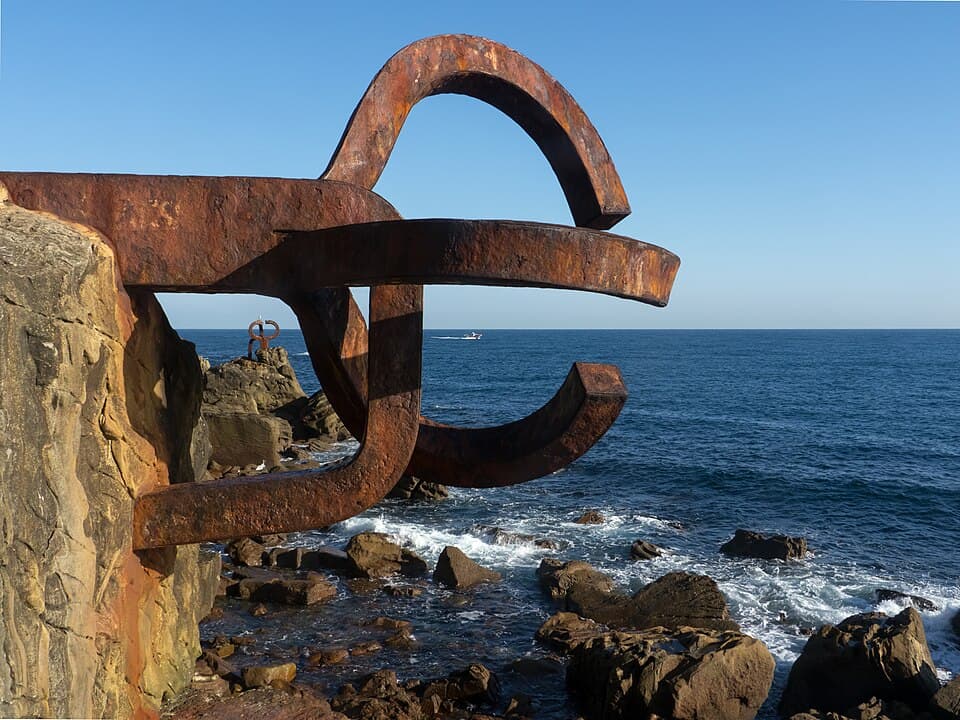
You've reached the end of the bay, where the promenade gives way to raw, dark rocks and crashing waves. And there, embedded in the stone, rising from the sea itself, are three massive steel sculptures that look like hands reaching up to comb the wind. This is El Peine del Viento -- the Comb of the Wind -- and it's the masterwork of Eduardo Chillida, the most important Basque artist of the twentieth century.
Chillida was born right here in San Sebastian in nineteen twenty-four. He grew up watching the waves crash against these rocks. He was a goalkeeper for Real Sociedad, the local football club, before a knee injury ended his athletic career and sent him to art school in Madrid. He eventually moved to Paris, then came home. And when he came home, he spent over two decades -- from nineteen fifty-two to nineteen seventy-seven -- developing this series. The three sculptures you see are numbers fifteen, sixteen, and seventeen in a series of twenty-three. Each weighs ten tons and is made from Corten steel, which rusts on the surface to form a protective patina. They were wedged more than a meter deep into the rock with minimal tools.
Read more...Show less
Chillida worked with the architect Luis Pena Ganchegui, who designed the pink granite terraces and the viewing platforms you're standing on. Look at the ground. See those holes in the stone? When big waves hit, seawater is forced through underground channels and erupts through these blowholes in great geysers of spray. It's not a malfunction -- it's part of the design. The sculptures are meant to interact with the elements. Wind, water, stone, steel. Chillida wanted to create a place where art and nature became inseparable.
Come here at sunset if you can. Or better yet, come during a winter storm, when the Atlantic sends ten-meter waves crashing into the rocks and the blowholes shoot water twenty feet into the air. The sculptures disappear and reappear in the spray. It's terrifying and magnificent.
Chillida died in two thousand and two, but his spirit is all over this city. The Chillida Leku museum, in the hills outside town, is his former farmhouse surrounded by his monumental sculptures in a beech forest. If you have time, it's unmissable.
Now, look behind you and slightly uphill. See the funicular railway track climbing the hillside? That's our final stop, and the view from the top is going to make your jaw drop. Head to the base station -- it's just a couple of minutes up the road.
Monte Igueldo Funicular
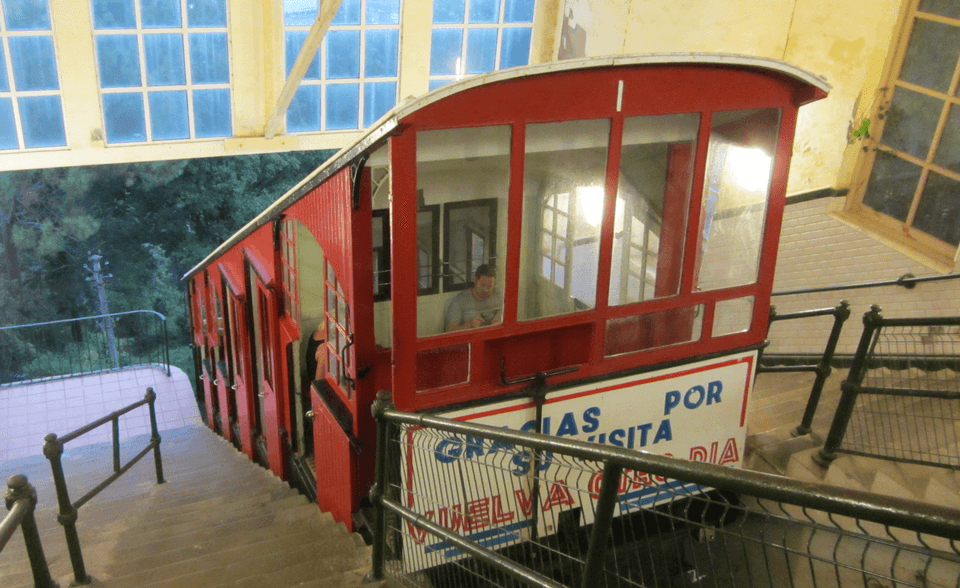
Here we are at the base of Monte Igueldo, and your chariot awaits. This funicular railway has been carrying people up this hill since nineteen twelve, when Queen Regent Maria Cristina herself inaugurated it. It's the oldest funicular in the Basque Country and the third oldest in all of Spain. The wooden carriages are originals -- or at least faithful restorations. Step inside, settle into the worn wooden bench, and enjoy the three-hundred-and-twenty-meter ride to the top.
At the summit, step out and walk to the viewpoint. And then just stand there for a minute.
Read more...Show less
This is, without exaggeration, one of the greatest city views in Europe. The entire bay of La Concha spreads out below you in a perfect crescent. The beach gleams. The island of Santa Clara floats in the center. Monte Urgull rises at the far end, with the Sacred Heart statue just visible. Behind it, the mountains of the Basque Country roll into the distance. And below, the city -- white buildings, terra cotta roofs, church spires -- nestles into the landscape like it grew there naturally.
Imagine the people who've stood in this exact spot. Queen Maria Cristina, who fell so in love with San Sebastian that she made it the summer capital of Spain. Ernest Hemingway, who came here in the nineteen twenties and would later write about the running of the bulls in Pamplona, just ninety kilometers to the south. Coco Chanel, who reportedly got her first suntan on La Concha beach below, scandalizing polite society and accidentally launching a fashion trend that changed Western beauty standards forever.
By the way, there's a charmingly old-fashioned amusement park up here. It's been running since the early twentieth century, and it has a wooden roller coaster that is -- how to put this -- rustic. It rattles, it creaks, and the views from the top are terrifying. In the best possible way. If you have kids with you, or if you're a kid at heart, take a ride.
And that's our tour. You've walked through a city that burns, rebuilds, and keeps eating. A city where a man with a toothpick invented a food tradition that defines an entire culture. Where secret cooking clubs preserved a language during a dictatorship. Where the world's greatest sculptor embedded his life's work into the rocks of his hometown.
If you're hungry -- and you should be -- head back down the funicular, walk to the Old Town, and go on a pintxo crawl. Bar hop along Calle Fermin Calbet-on and Calle treinta y uno de Agosto. Order a gilda at Casa Valles, a slice of tortilla at Bar Nestor, txuleta at Gandarias, and whatever looks good on every bar you pass. Point at things. Try everything. This city was made for eating.
Thanks for walking with me. Eskerrik asko -- that's thank you in Basque. Enjoy San Sebastian.
Free
GPS-guided walking tour
No account needed. Walk at your own pace.
Free
12 stops · 3.8 km