14 stops
GPS-guided
66 min
Duration
Free
No tickets
About this tour
A 14-stop walking tour through the heart of Spain. Visit Sevilla City Walk, Sevilla Cathedral and Giralda Tower, Puerta del Perdón, and Avenida de la Constitución — with narrated stories at every stop.
14 stops on this tour
Sevilla City Walk
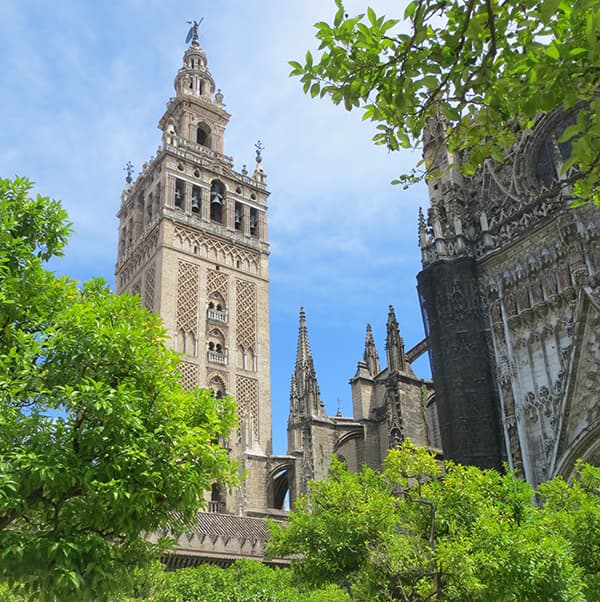
Sevilla City Walk. Sevilla flutters with flamenco, sizzles in the summer, and pulses with passion. As the writer James Michener put it, Sevilla doesn't have ambiance. It is ambiance.
Hi, I'm Rick Steves. On this walk, we'll stroll through the historic heart of Sevilla, or, as we say in English, Seville. We'll start by circling the massive cathedral. with its soaring bell tower.
Read more...Show less
We'll skirt alongside the Alcazar, the grand palace with Moorish roots. We'll remember Sevilla's glory days as Spain's greatest city during the Golden Age of the 1500s. And we'll walk along Sevilla's main street, getting a glimpse of the vibrant city of today. Then we'll hit the highlight, a walk through the narrow, winding lanes of Sevilla's oldest and most charming quarter, the Barrio Santa Cruz.
We'll wander from tree-shaded plaza to plaza, soaking up the ambiance of thriving tapas bars and the teeming evening paseo. We'll get just lost enough before popping back out right where we started, at the cathedral, surrounded by the great sights of Sevilla. Allow at least 90 minutes to do this walk. Note that we will not be going inside either the cathedral or the Alcazar, so if you choose to, which I'd recommend, check my guidebook for self-guided tours and details about the cathedral.
Details on getting reservations and avoiding the crowds. This walking tour can work any time of day, but early evening is ideal. It's cooler and less crowded. Now, let's get started as we sample the charms of a place that's always buzzing with life, the city of Sevilla.
To help us along the way, I've invited a good friend and virtual travel buddy. Welcome, Lisa. Hi, Rick. Lisa will give us helpful directions and sightseeing tips throughout the tour.
And my first tip is to be sure you get our tour updates. Just press the icon at the lower right of your device. You'll find any updates and helpful instructions unique to this tour. Things like closures, opening hours, and reservation requirements.
There's also tips on how to use this audio tour and even the full printed script. Yes, so pause for just a moment right now to review our updates and special tips. It's okay. We'll wait. And then... Let the tour begin. The tour begins.
Tour Begins: Overview of Sevilla
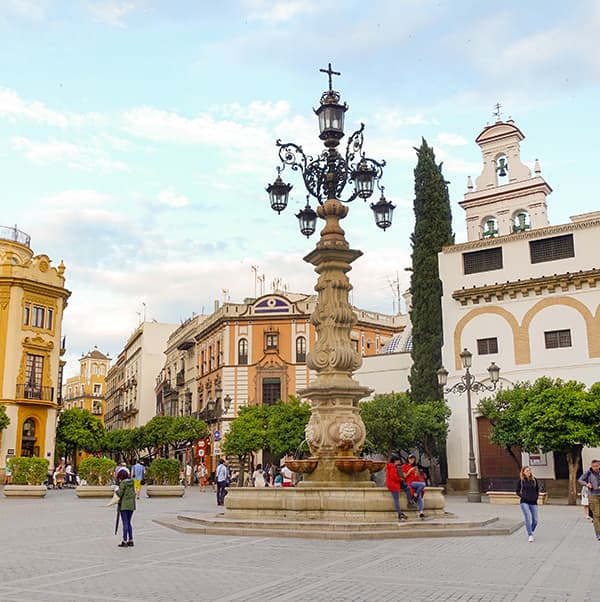
An overview of Sevilla. Start at the cathedral next to its towering bell tower called the Heralda. Find a spot near the lantern-decked fountain in the middle of the city. Find a spot near the square called Plaza de la Vergen de los Reyes.
This is the bullseye on the Sevilla city map, the cathedral and its Heralda tower, which can be seen from all over town. Rick? Thanks, Lisa. You're in the historic heart of Sevilla, a bustling city of 700,000 people.
Read more...Show less
As the capital of Andalusia, Sevilla is a kind of sampler of Spanish icons. Everything from flamenco to festivals to the city of Sevilla, to sherry, to flower-draped whitewashed lanes. Although Sevilla certainly has its major tourist sites, the real magic is the city itself. Sevilla has soul.
Let's start by doing a 360-degree spin, getting a quick snapshot of some of that ambiance. First, there's the cathedral, ground zero of the historic core of Sevilla. The church is sprawling and gangly with prickly trees and prickly spires and flying buttresses at all angles. The sheer size and over-the-top architecture looks nothing like your typical Spanish church.
As we'll learn, it stands as a symbol of Sevilla's notoriously passionate religious fervor. Next, turn your attention to the Heralda Tower. With its lacy, Moorish decoration, it's a reminder that Sevilla, like much of Spain, spent its formative years as a Muslim land. More on that in the next episode.
in a bit. For now, keep spinning. To the right of the tower is an ornate red-and-white building, the Archbishop's Palace. This has been a center of power since Christians first conquered the city from the Islamic Moors in medieval times and put the city on Europe's radar.
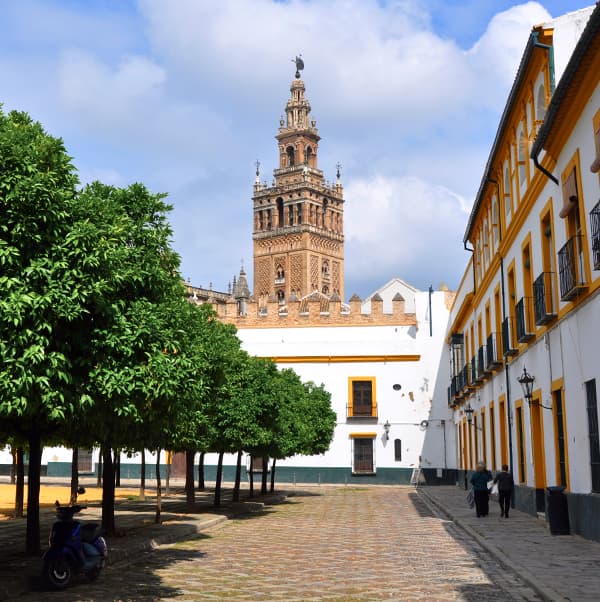
Continue your spin to the next building. With its whitewashed façade, goldenrod trim, and ironwork balconies, this is almost a cliché of Sevillan architecture. It was ambiance like this that made the city a magnet for aristocrats of the 1800s who were drawn to this exotic locale. By the way, this particular building is also typical in another way.
It's now government-protected to preserve that old flavor. Next, look up the street stretching away from the cathedral. This street is lined with another Sevillan trademark, tapas bars. These are housed in more classic Andalusian buildings with fancy ironwork.
In the evening, this street hums with locals sipping sherry and munching slices of ham as they stroll from bar to bar on their evening paseo. Continuing your spin, take in the row of Sevilla's signature orange trees. At the right time of year, Sevilla's already romantic atmosphere is permeated with the fragrances of orange, jacaranda, and myrtle trees. On the white building behind those trees, find a blue-and-gold tiled plaque on the wall.
This plaque depicts the Virgin of the Kings. This is just the first of several Virgin Marys we'll see on our walk. Sevilla loves its virgins, some smiling, some weeping, some triumphant. These different emotions could touch worshipers in different ways depending on their spiritual state of mind.
During the Easter season, statues of Mary are the main attraction on floats carried in processions throughout the town. This particular virgin represents the virgin triumphant, capturing the moment when Christians took Sevilla from the Moors in 1248. Nearby, hiding among the orange trees, is a statue of former Pope John Paul II. Now, Saint John Paul.
In 1982, he performed Mass here before half a million faithful Sevillians. A reminder that the city's famed religious passion continues to grow. It continues right up to today. Now turn your attention once again to the historic cathedral. The Sevilla Cathedral
Sevilla Cathedral and Giralda Tower
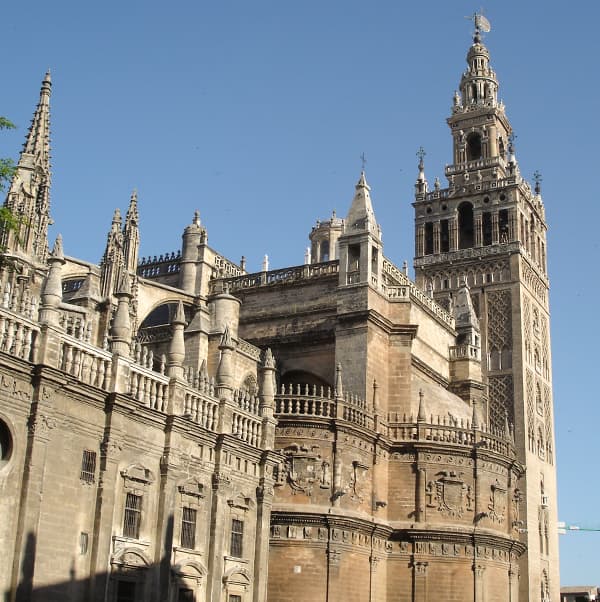
and Heralda Tower. The cathedral's odd exterior makes it kind of hard to fully appreciate. It certainly has interesting Gothic features. Prickly pinnacles, lacy stonework, and arched flying buttons.
But unlike Europe's other Gothic cathedrals, this one is more sprawling and horizontal than soaring and vertical. It's hard to even know where the front door is. Spoiler alert! We'll see it later.
Read more...Show less
The church was begun in 1401. It was built on the site of what had been Sevilla's mosque. Remember, Islamic Moors from North Africa ruled much of Spain for over 700 years, and Sevilla had been a Moorish city for 500 years before it was reconquered in 1248. The church would be a symbol of that Christian triumph over Islam.
So when they ripped down the Mosque of Brick, they vowed to build a cathedral so huge that anyone who sees it will take us for madmen. When it was finished in 1528, it was indeed the world's biggest. It's crazy big, that's for sure. Madmen!
It remained the world's largest church for a century until St. Peter's was finished in Rome. Even today, it's the third-largest church in Europe. After St.
Peter's and St. Paul's in London. Even today, it's the largest Gothic church anywhere. And it's the biggest cathedral in total square footage.
The Guinness Book of Records says so. Well, now I believe you. Next, let's turn our attention to the Heralda Bell Tower. The Heralda stands 342 feet tall.
In a way, this tower encapsulates Seville's 2,000-year history. The large blocks that form the very bottom of the tower, do you see those? Um, yeah, I do. I can see that the stonework on the bottom five feet or so looks different from the bricks higher up.
Those stones date from when Seville was a Roman city. In fact, if you got up close, you could actually read some Latin inscriptions. Mmm, except that I can't read Latin, and the view is better from back here anyway. Now, focus on the tower's main trunk.
It's decorated with an Islamic flair, elaborate tracery, slender columns, windows topped with lobed arches. This middle part of the tower was built by the Moors, with bricks made of mud from the river. Its purpose? As a minaret.
You got it. This was the call-to-prayer tower for what was then a mosque. If you go inside and climb the Heralda Tower, you'll go up a ramp that dates from its days as a minaret. For centuries, the muezzin would ride up this ramp on a donkey five times a day to give the Muslim call to prayer.
After Christians reconquered Seville, they tore down the mosque to build a cathedral, but they kept the tower. It still called the faithful to prayer, but now, as a Christian bell tower. When the top of the tower fell, that was in 1356, it was eventually rebuilt even higher. Near the top, though it's hard to make out, there's a ribbon of letters just beneath the cupola.
You may be able to read the word Taurus. Tower. That's right. That inscription proclaims the strongest tower is the name of God.
Capping the tower is a 4,000-pound bronze angel. This symbolizes the triumph of faith, specifically the Christian faith over the Muslim one. The statue also serves as a weather vane. Hmm.
That explains the tower's strange name. The weather vane turns in the wind. In Spanish, the word for rotate is herar, so the rotating angel gives it its name, heralda. Whatever it's called, the heralda has been here in some form or other for 2,000 years.
Roman, Moorish, Christian. Considering that it contains so much of the city's heritage, it's appropriate that it's ended up as the most iconic image of Seville, Sevilla itself. Let's see more of the cathedral, but let's do it while walking. Let's.
We'll be going counterclockwise around the cathedral, so face the heralda and turn right. Start walking. Are you ready, Boots? Start walking.
Bum, bum, ba-da-da-dum, bum, ba-da-da-dum. Oh, brother. Walk between the heralda and the red archbishop's palace. As we see, as we circle the church, we'll get an appreciation for its sheer size while also seeing a bit more of Sevilla.
By the way, Lisa, the heralda is still the tallest structure in the city. By law, no building in the city center can be higher. Sevilla has its skyscrapers, but they're banished to the outskirts. Keep walking with the wall of the cathedral on your left as we circle the church counterclockwise.
When you reach the end of the block, turn left and keep following the wall. The cathedral is huge, 137 yards long and 90 yards wide. It's more than two acres, the size of an entire city block in Manhattan. Its perimeter is nearly a quarter mile around.
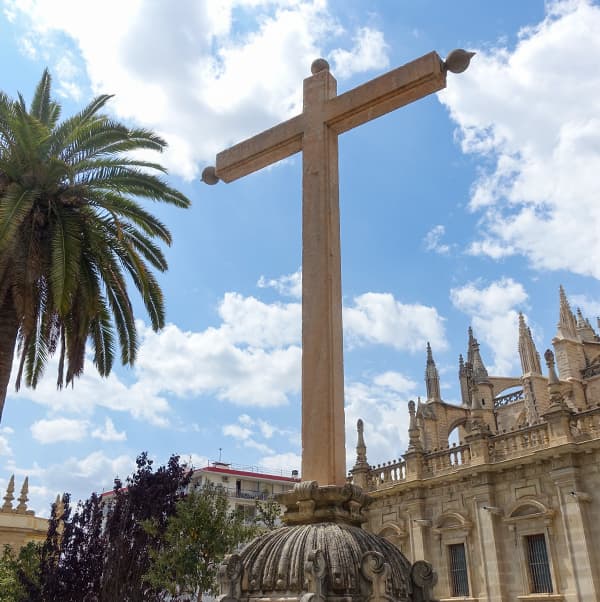
Apparently, the builders figured they needed a big enough footprint to stamp out every trace of the mosque it replaced. Notice the columns and chains that ring the cathedral. Some of these columns are even older than the cathedral itself. Dating back to Roman times.
The church fathers placed them here to establish a border between the church and the secular world. Sevillians running from the law merely had to cross these chains to find sanctuary inside church jurisdiction. It was like crossing the county line. After turning left, keep walking.
We'll be going about two-thirds of the way down the block. The cathedral's interior is definitely worth a visit. Though we won't be going inside on this tour. Inside, you can truly marvel at the vast space.
Unlike other Gothic churches, this one's nave is more square than long and more compressed than tall. You'll wander among massive pillars. In the center of the nave is an altarpiece 80 feet tall and covered in golden statues. It's considered the largest altarpiece ever made.
But of course, madmen. The church also has the 800-year-old battle flag those Christians waved when they took the city from the Moors back in 1248. By now, you should be approaching our next stop. It's an elaborately sculpted gate in the church wall.
Since this portal is used as the church exit, there may be tourists clustered near it. © transcript Emily Beynon
Puerta del Perdón
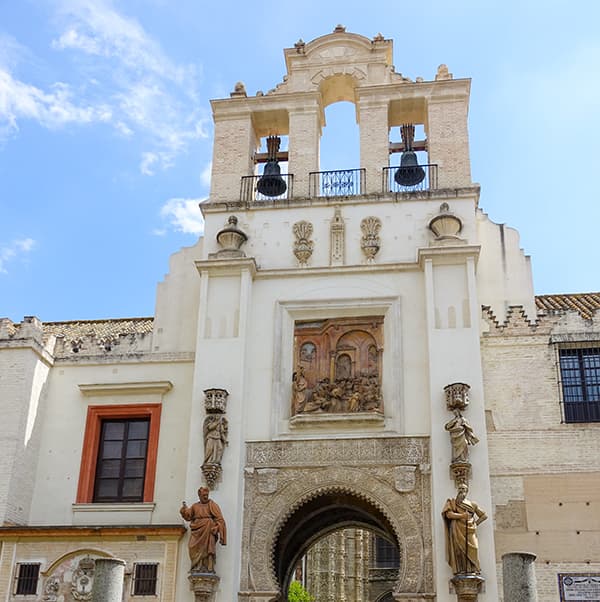
The Puerta del Pardón and the mosque that was. This gate is one of the rare remnants of the grand mosque that once stood where the cathedral stands today. Back then, Puerta del Pardón was one of the mosque entrances. It has the typical Moorish-style keyhole arch.
It's carved in intricate designs of vines and flowers. Check out the green bronze-plated door. Which may be closed depending on what time you're here. The door has intricate geometric designs and Arabic calligraphy quoting verses from the Koran praising Allah.
Read more...Show less
Picture this scene here around the year 1200. Muslims would enter the mosque through this gate and go into the mosque's courtyard. If the doors are open, go inside a few steps for a better look. You're welcome to go as far as the railing without a ticket and enjoy a view.
You can see the mosque's old courtyard, the church with its flying buttresses, and another perspective on the horizon. Heralda. Back when a mosque stood here, the Heralda was the mosque's minaret. In this courtyard was the place for ritual cleansing or ablutions.
Muslims would stop at a fountain here and wash their hands, face, and feet, then proceed inside the mosque to pray. Today, the courtyard is delightfully populated with orange trees. In the brick paving, you can still see the narrow channels for the irrigation streams. A reminder that the Moors introduced irrigation to Iberia.
Other than this courtyard, the gate, and the Heralda, the Christians completely leveled the site. They turned a mosque of brick into a cathedral of stone. Step back outside and, once again, turn your attention to the Puerta del Perdón's impressive exterior. Much of the carving is done in Moorish style.
True, but on closer inspection, you can see that it was actually done in Christian times. First, note the two coats of arms. They're flanking the peak of the arch. With their symbolic shields of Spanish rulers, those are clearly Christian.
This blending of Moorish and Christian motifs was popular after the reconquest. It's a style called mudéjar. Now, check out the relief above the door. That's also Christian.
It shows the Bible story of Jesus driving the money changers from the temple. It was a subtle reminder to merchants to keep their business doings outside those chains. In fact, this street was a busy place for merchants. Merchants from Germany to be specific.
Notice the name, Calle Alemanes, or in English, German Street. Now, step back away from the gate, back into the street, far enough to take in as much as you can. Enjoy the view, this fanciful gate, the tip of the Heralda Tower, the courtyard, and the church. And appreciate the significance of the church.
This site that was sacred to two great world religions. Let's continue our walk around the huge cathedral. Start walking to the end of the block. As you go, notice the small plaque a few steps past the gate.
This honors Miguel de Cervantes, the great 16th century author of Don Quixote. Cervantes spent some formative years here in Sevilla, and today, plaques like this mark places mentioned in his books. In this video, in this case, the topic was pickpockets, a warning that's still timely. Keep going to the corner.
We're headed for what's arguably the main street of Sevilla today. Sevilla is both historic and modern. It's home to three universities and many international students. The University of Sevilla dates back to 1505, and many of its traditions survive.
Yes, look to the left on the wall as you approach the corner. There are works of art and words written in red. This was graffiti done by 18th century students celebrating their graduation. Following an age-old tradition, it was written in animal blood.
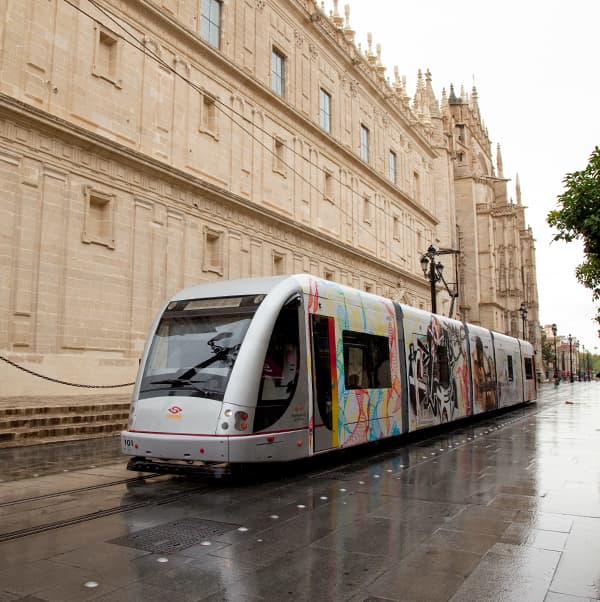
Hmm. A little different tradition than my college. Anyway, by now, you should be at the intersection. You've reached a long, straight street with a tram running down the middle.
Avenida de la Constitución, or Constitution Street. AVENIDA DE LA CONSTITUCIÓN AVENIDA DE LA CONSTITUCIÓN AVENIDA DE LA CONSTITUCIÓN AVENIDA DE LA CONSTITUCIÓN AVENIDA DE LA CONSTITUCIÓN AVENIDA DE LA CONSTITUCIÓN AVENIDA DE LA CONSTITUCIÓN AVENIDA DE LA CONSTITUCIÓN AVENIDA DE LA CONSTITUCIÓN AVENIDA DE LA CONSTITUCIÓN AVENIDA DE LA CONSTITUCIÓN AVENIDA DE LA CONSTITUCIÓN AVENIDA DE LA CONSTITUCIÓN AVENIDA DE LA CONSTITUCIÓN
Avenida de la Constitución
AVENIDA DE LA CONSTITUCIÓN AVENIDA DE LA CONSTITUCIÓN AVENIDA DE LA CONSTITUCIÓN AVENIDA DE LA CONSTITUCIÓN AVENIDA DE LA CONSTITUCIÓN AVENIDA DE LA CONSTITUCIÓN AVENIDA DE LA CONSTITUCIÓN AVENIDA DE LA CONSTITUCIÓN AVENIDA DE LA CONSTITUCIÓN AVENIDA DE LA CONSTITUCIÓN AVENIDA DE LA CONSTITUCIÓN AVENIDA DE LA CONSTITUCIÓN AVENIDA DE LA CONSTITUCIÓN AVENIDA DE LA CONSTITUCIÓN AVENIDA DE LA CONSTITUCIÓN AVENIDA DE LA CONSTITUCIÓN AVENIDA DE LA CONSTITUCIÓN AVENIDA DE LA CONSTITUCIÓN AVENIDA DE LA CONSTITUCIÓN AVENIDA DE LA CONSTITUCIÓN AVENIDA DE LA CONSTITUCIÓN AVENIDA DE LA CONSTITUCIÓN AVENIDA DE LA CONSTITUCIÓN AVENIDA DE LA CONSTITUCIÓN AVENIDA DE LA CONSTITUCIÓN AVENIDA DE LA CONSTITUCIÓN AVENIDA DE LA CONSTITUCIÓN AVENIDA DE LA CONSTITUCIÓN AVENIDA DE LA CONSTITUCIÓN AVENIDA DE LA CONSTITUCIÓN AVENIDA DE LA CONSTITUCIÓN AVENIDA DE LA CONSTITUCIÓN AVENIDA DE LA CONSTITUCIÓN AVENIDA DE LA CONSTITUCIÓN AVENIDA DE LA CONSTITUCIÓN AVENIDA DE LA CONSTITUCIÓN AVENIDA DE LA CONSTITUCIÓN AVENIDA DE LA CONSTITUCIÓN AVENIDA DE LA CONSTITUCIÓN AVENIDA DE LA CONSTITUCIÓN AVENIDA DE LA CONSTITUCIÓN AVENIDA DE LA CONSTITUCIÓN AVENIDA DE LA CONSTITUCIÓN AVENIDA DE LA CONSTITUCIÓN AVENIDA DE LA CONSTITUCIÓN AVENIDA DE LA CONSTITUCIÓN AVENIDA DE LA CONSTITUCIÓN AVENIDA DE LA CONSTITUCIÓN AVENIDA DE LA CONSTITUCIÓN AVENIDA DE LA CONSTITUCIÓN AVENIDA DE LA CONSTITUCIÓN AVENIDA DE LA CONSTITUCIÓN AVENIDA DE LA CONSTITUCIÓN AVENIDA DE LA CONSTITUCIÓN AVENIDA DE LA CONSTITUCIÓN AVENIDA DE LA CONSTITUCIÓN AVENIDA DE LA CONSTITUCIÓN AVENIDA DE LA CONSTITUCIÓN AVENIDA DE LA CONSTITUCIÓN AVENIDA DE LA CONSTITUCIÓN AVENIDA DE LA CONSTITUCIÓN AVENIDA CONSTITUCIÓN AVENIDA CONSTITUCIÓN AVENIDA CONSTITUCIÓN AVENIDA CONSTITUCIÓN AVENIDA CONSTITUCIÓN AVENIDA CONSTITUCIÓN AVENIDA CONSTITUCIÓN AVENIDA CONSTITUCIÓN AVENIDA CONSTITUCIÓN AVENIDA CONSTITUCIÓN AVENIDA CONSTITUCIÓN AVENIDA CONSTITUCIÓN AVENIDA CONSTITUCIÓN AVENIDA CONSTITUCIÓN AVENIDA CONSTITUCIÓN AVENIDA CONSTITUCIÓN AVENIDA CONSTITUCIÓN AVENIDA CONSTITUCIÓN AVENIDA CONSTITUCIÓN AVENIDA CONSTITUCIÓN AVENIDA CONSTITUCIÓN AVENIDA CONSTITUCIÓN AVENIDA CONSTITUCIÓN AVENIDA CONSTITUCIÓN AVENIDA CONSTITUCIÓN AVENIDA CONSTITUCIÓN AVENIDA CONSTITUCIÓN AVENIDA CONSTITUCIÓN AVENIDA CONSTITUCIÓN AVENIDA CONSTITUCIÓN AVENIDA CONSTITUCIÓN AVENIDA CONSTITUCIÓN AVENIDA CONSTITUCIÓN AVENIDA CONSTITUCIÓN AVENIDA CONSTITUCIÓN AVENIDA CONSTITUCIÓN AVENIDA CONSTITUCIÓN AVENIDA CONSTITUCIÓN AVENIDA CONSTITUCIÓN AVENIDA CONSTITUCIÓN AVENIDA CONSTITUCIÓN AVENIDA CONSTITUCIÓN AVENIDA CONSTITUCIÓN AVENIDA CONSTITUCIÓN AVENIDA CONSTITUCIÓN AVENIDA CONSTITUCIÓN AVENIDA CONSTITUCIÓN AVENIDA CONSTITUCIÓN AVENIDA CONSTITUCIÓN AVENIDA CONSTITUCIÓN AVENIDA CONSTITUCIÓN AVENIDA CONSTITUCIÓN AVENIDA CONSTITUCIÓN AVENIDA CONSTITUCIÓN AVENIDA CONSTITUCIÓN AVENIDA CONSTITUCIÓN AVENIDA CONSTITUCIÓN AVENIDA CONSTITUCIÓN AVENIDA CONSTITUCIÓN AVENIDA CONSTITUCIÓN AVENIDA CONSTITUCIÓN AVENIDA CONSTITUCIÓN AVENIDA CONSTITUCIÓN AVENIDA CONSTITUCIÓN AVENIDA CONSTITUCIÓN AVENIDA CONSTITUCIÓN AVENIDA CONSTITUCIÓN AVENIDA CONSTITUCIÓN AVENIDA CONSTITUCIÓN AVENIDA CONSTITUCIÓN AVENIDA CONSTITUCIÓN AVENIDA CONSTITUCIÓN AVENIDA CONSTITUCIÓN AVENIDA CONSTITUCIÓN AVENIDA CONSTITUCIÓN AVENIDA CONSTITUCIÓN AVENIDA CONSTITUCIÓN AVENIDA CONSTITUCIÓN AVENIDA CONSTITUCIÓN AVENIDA CONSTITUCIÓN AVENIDA CONSTITUCIÓN AVENIDA CONSTITUCIÓN AVENIDA CONSTITUCIÓN AVENIDA CONSTITUCIÓN AVENIDA CONSTITUCIÓN AVENIDA CONSTITUCIÓN AVENIDA CONSTITUCIÓN AVENIDA CONSTITUCIÓN AVENIDA CONSTITUCIÓN AVENIDA CONSTITUCIÓN AVENIDA CONSTITUCIÓN AVENIDA CONSTITUCIÓN AVENIDA CONSTITUCIÓN AVENIDA CONSTITUCIÓN AVENIDA CONSTITUCIÓN AVENIDA CONSTITUCIÓN AVENIDA CONSTITUCIÓN AVENIDA CONSTITUCIÓN AVENIDA CONSTITUCIÓN AVENIDA CONSTITUCIÓN AVENIDA CONSTITUCIÓN AVENIDA CONSTITUCIÓN AVENIDA CONSTITUCIÓN AVENIDA CONSTITUCIÓN AVENIDA CONSTITUCIÓN AVENIDA CONSTITUCIÓN AVENIDA CONSTITUCIÓN AVENIDA CONSTITUCIÓN AVENIDA CONSTITUCIÓN AVENIDA CONSTITUCIÓN AVENIDA CONSTITUCIÓN AVENIDA CONSTITUCIÓN AVENIDA CONSTITUCIÓN AVENIDA CONSTITUCIÓN AVENIDA CONSTITUCIÓN AVENIDA CONSTITUCIÓN AVENIDA CONSTITUCIÓN AVENIDA CONSTITUCIÓN AVENIDA CONSTITUCIÓN AVENIDA CONSTITUCIÓN AVENIDA CONSTITUCIÓN AVENIDA CONSTITUCIÓN AVENIDA CONSTITUCIÓN AVENIDA CONSTITUCIÓN AVENIDA CONSTITUCIÓN AVENIDA CONSTITUCIÓN AVENIDA CONSTITUCIÓN AVENIDA CONSTITUCIÓN AVENIDA CONSTITUCIÓN AVENIDA CONSTITUCIÓN AVENIDA CONSTITUCIÓN AVENIDA CONSTITUCIÓN AVENIDA CONSTITUCIÓN AVENIDA CONSTITUCIÓN AVENIDA CONSTITUCIÓN AVENIDA CONSTITUCIÓN AVENIDA CONSTITUCIÓN AVENIDA CONSTITUCIÓN AVENIDA CONSTITUCIÓN AVENIDA CONSTITUCIÓN AVENIDA CONSTITUCIÓN AVENIDA CONSTITUCIÓN AVENIDA CONSTITUCIÓN AVENIDA CONSTITUCIÓN AVENIDA CONSTITUCIÓN AVENIDA CONSTITUCIÓN AVENIDA CONSTITUCIÓN AVENIDA CONSTITUCIÓN AVENIDA CONSTITUCIÓN AVENIDA CONSTITUCIÓN AVENIDA CONSTITUCIÓN AVENIDA CONSTITUCIÓN AVENIDA CONSTITUCIÓN AVENIDA CONSTITUCIÓN AVENIDA CONSTITUCIÓN AVENIDA CONSTITUCIÓN AVENIDA CONSTITUCIÓN AVENIDA CONSTITUCIÓN AVENIDA CONSTITUCIÓN AVENIDA CONSTITUCIÓN AVENIDA CONSTITUCIÓN AVENIDA CONSTITUCIÓN AVENIDA CONSTITUCIÓN AVENIDA CONSTITUCIÓN AVENIDA CONSTITUCIÓN AVENIDA CONSTITUCIÓN AVENIDA CONSTITUCIÓN AVENIDA CONSTITUCIÓN AVENIDA CONSTITUCIÓN AVENIDA CONSTITUCIÓN AVENIDA CONSTITUCIÓN AVENIDA CONSTITUCIÓN AVENIDA CONSTITUCIÓN AVENIDA CONSTITUCIÓN AVENIDA CONSTITUCIÓN AVENIDA CONSTITUCIÓN AVENIDA CONSTITUCIÓN AVENIDA CONSTITUCIÓN AVENIDA CONSTITUCIÓN AVENIDA CONSTITUCIÓN AVENIDA CONSTITUCIÓN AVENIDA CONSTITUCIÓN AVENIDA CONSTITUCIÓN AVENIDA CONSTITUCIÓN AVENIDA CONSTITUCIÓN AVENIDA CONSTITUCIÓN AVENIDA CONSTITUCIÓN AVENIDA CONSTITUCIÓN AVENIDA CONSTITUCIÓN AVENIDA CONSTITUCIÓN AVENIDA CONSTITUCIÓN AVENIDA CONSTITUCIÓN AVENIDA CONSTITUCIÓN AVENIDA CONSTITUCIÓN AVENIDA CONSTITUCIÓN AVENIDA CONSTITUCIÓN AVENIDA CONSTITUCIÓN AVENIDA CONSTITUCIÓN AVENIDA CONSTITUCIÓN AVENIDA CONSTITUCIÓN AVENIDA CONSTITUCIÓN AVENIDA CONSTITUCIÓN AVENIDA CONSTITUCIÓN AVENIDA CONSTITUCIÓN AVENIDA CONSTITUCIÓN AVENIDA CONSTITUCIÓN AVENIDA CONSTITUCIÓN AVENIDA CONSTITUCIÓN AVENIDA CONSTITUCIÓN AVENIDA CONSTITUCIÓN AVENIDA CONSTITUCIÓN AVENIDA CONSTITUCIÓN AVENIDA CONSTITUCIÓN AVENIDA CONSTITUCIÓN AVENIDA CONSTITUCIÓN AVENIDA CONSTITUCIÓN AVENIDA CONSTITUCIÓN AVENIDA CONSTITUCIÓN AVENIDA CONSTITUCIÓN AVENIDA CONSTITUCIÓN AVENIDA CONSTITUCIÓN AVENIDA CONSTITUCIÓN AVENIDA CONSTITUCIÓN AVENIDA CONSTITUCIÓN AVENIDA CONSTITUCIÓN AVENIDA CONSTITUCIÓN AVENIDA CONSTITUCIÓN AVENIDA CONSTITUCIÓN AVENIDA CONSTITUCIÓN AVENIDA CONSTITUCIÓN AVENIDA CONSTITUCIÓN AVENIDA CONSTITUCIÓN AVENIDA CONSTITUCIÓN AVENIDA CONSTITUCIÓN AVENIDA CONSTITUCIÓN AVENIDA CONSTITUCIÓN AVENIDA CONSTITUCIÓN AVENIDA CONSTITUCIÓN AVENIDA CONSTITUCIÓN
Archives, Plaza del Triunfo, Golden Age
AVENIDA CONSTITUCIÓN AVENIDA CONSTITUCIÓN AVENIDA CONSTITUCIÓN AVENIDA CONSTITUCIÓN AVENIDA CONSTITUCIÓN AVENIDA CONSTITUCIÓN AVENIDA CONSTITUCIÓN AVENIDA CONSTITUCIÓN AVENIDA CONSTITUCIÓN AVENIDA CONSTITUCIÓN AVENIDA CONSTITUCIÓN AVENIDA CONSTITUCIÓN AVENIDA CONSTITUCIÓN AVENIDA CONSTITUCIÓN AVENIDA CONSTITUCIÓN AVENIDA CONSTITUCIÓN AVENIDA CONSTITUCIÓN AVENIDA CONSTITUCIÓN AVENIDA CONSTITUCIÓN AVENIDA CONSTITUCIÓN AVENIDA CONSTITUCIÓN AVENIDA CONSTITUCIÓN AVENIDA CONSTITUCIÓN AVENIDA CONSTITUCIÓN AVENIDA CONSTITUCIÓN AVENIDA CONSTITUCIÓN AVENIDA CONSTITUCIÓN AVENIDA CONSTITUCIÓN AVENIDA CONSTITUCIÓN AVENIDA CONSTITUCIÓN AVENIDA CONSTITUCIÓN AVENIDA CONSTITUCIÓN AVENIDA CONSTITUCIÓN AVENIDA CONSTITUCIÓN AVENIDA CONSTITUCIÓN AVENIDA CONSTITUCIÓN AVENIDA CONSTITUCIÓN AVENIDA CONSTITUCIÓN AVENIDA CONSTITUCIÓN AVENIDA CONSTITUCIÓN AVENIDA CONSTITUCIÓN AVENIDA CONSTITUCIÓN AVENIDA CONSTITUCIÓN AVENIDA CONSTITUCIÓN AVENIDA CONSTITUCIÓN AVENIDA CONSTITUCIÓN AVENIDA CONSTITUCIÓN AVENIDA CONSTITUCIÓN AVENIDA CONSTITUCIÓN AVENIDA CONSTITUCIÓN AVENIDA CONSTITUCIÓN AVENIDA CONSTITUCIÓN AVENIDA CONSTITUCIÓN AVENIDA CONSTITUCIÓN AVENIDA CONSTITUCIÓN AVENIDA CONSTITUCIÓN AVENIDA CONSTITUCIÓN AVENIDA CONSTITUCIÓN AVENIDA CONSTITUCIÓN AVENIDA CONSTITUCIÓN AVENIDA CONSTITUCIÓN AVENIDA CONSTITUCIÓN AVENIDA CONSTITUCIÓN AVENIDA CONSTITUCIÓN AVENIDA CONSTITUCIÓN AVENIDA CONSTITUCIÓN AVENIDA CONSTITUCIÓN AVENIDA CONSTITUCIÓN AVENIDA CONSTITUCIÓN AVENIDA CONSTITUCIÓN AVENIDA CONSTITUCIÓN AVENIDA CONSTITUCIÓN AVENIDA CONSTITUCIÓN AVENIDA CONSTITUCIÓN AVENIDA CONSTITUCIÓN AVENIDA CONSTITUCIÓN AVENIDA CONSTITUCIÓN AVENIDA CONSTITUCIÓN AVENIDA CONSTITUCIÓN AVENIDA CONSTITUCIÓN AVENIDA CONSTITUCIÓN AVENIDA CONSTITUCIÓN AVENIDA CONSTITUCIÓN AVENIDA CONSTITUCIÓN AVENIDA CONSTITUCIÓN AVENIDA CONSTITUCIÓN AVENIDA CONSTITUCIÓN AVENIDA CONSTITUCIÓN AVENIDA CONSTITUCIÓN AVENIDA CONSTITUCIÓN AVENIDA CONSTITUCIÓN AVENIDA CONSTITUCIÓN AVENIDA CONSTITUCIÓN AVENIDA CONSTITUCIÓN AVENIDA CONSTITUCIÓN AVENIDA CONSTITUCIÓN AVENIDA CONSTITUCIÓN AVENIDA CONSTITUCIÓN AVENIDA CONSTITUCIÓN AVENIDA CONSTITUCIÓN AVENIDA CONSTITUCIÓN AVENIDA CONSTITUCIÓN AVENIDA CONSTITUCIÓN AVENIDA CONSTITUCIÓN AVENIDA CONSTITUCIÓN AVENIDA CONSTITUCIÓN AVENIDA CONSTITUCIÓN AVENIDA CONSTITUCIÓN AVENIDA CONSTITUCIÓN AVENIDA CONSTITUCIÓN AVENIDA CONSTITUCIÓN AVENIDA CONSTITUCIÓN AVENIDA CONSTITUCIÓN AVENIDA CONSTITUCIÓN AVENIDA CONSTITUCIÓN AVENIDA CONSTITUCIÓN AVENIDA CONSTITUCIÓN AVENIDA CONSTITUCIÓN AVENIDA CONSTITUCIÓN AVENIDA CONSTITUCIÓN AVENIDA CONSTITUCIÓN AVENIDA CONSTITUCIÓN AVENIDA CONSTITUCIÓN AVENIDA CONSTITUCIÓN AVENIDA CONSTITUCIÓN AVENIDA CONSTITUCIÓN AVENIDA CONSTITUCIÓN AVENIDA CONSTITUCIÓN AVENIDA CONSTITUCIÓN AVENIDA CONSTITUCIÓN AVENIDA CONSTITUCIÓN AVENIDA CONSTITUCIÓN AVENIDA CONSTITUCIÓN AVENIDA CONSTITUCIÓN AVENIDA CONSTITUCIÓN AVENIDA CONSTITUCIÓN AVENIDA CONSTITUCIÓN AVENIDA CONSTITUCIÓN AVENIDA CONSTITUCIÓN AVENIDA CONSTITUCIÓN AVENIDA CONSTITUCIÓN AVENIDA CONSTITUCIÓN AVENIDA CONSTITUCIÓN AVENIDA CONSTITUCIÓN AVENIDA CONSTITUCIÓN AVENIDA CONSTITUCIÓN AVENIDA CONSTITUCIÓN AVENIDA CONSTITUCIÓN AVENIDA CONSTITUCIÓN AVENIDA CONSTITUCIÓN AVENIDA CONSTITUCIÓN AVENIDA CONSTITUCIÓN AVENIDA CONSTITUCIÓN AVENIDA CONSTITUCIÓN AVENIDA CONSTITUCIÓN AVENIDA CONSTITUCIÓN AVENIDA CONSTITUCIÓN AVENIDA CONSTITUCIÓN AVENIDA CONSTITUCIÓN AVENIDA CONSTITUCIÓN AVENIDA CONSTITUCIÓN AVENIDA CONSTITUCIÓN AVENIDA CONSTITUCIÓN AVENIDA CONSTITUCIÓN AVENIDA CONSTITUCIÓN AVENIDA CONSTITUCIÓN AVENIDA CONSTITUCIÓN AVENIDA CONSTITUCIÓN AVENIDA CONSTITUCIÓN AVENIDA CONSTITUCIÓN AVENIDA CONSTITUCIÓN AVENIDA CONSTITUCIÓN AVENIDA CONSTITUCIÓN AVENIDA CONSTITUCIÓN AVENIDA CONSTITUCIÓN AVENIDA CONSTITUCIÓN AVENIDA CONSTITUCIÓN AVENIDA CONSTITUCIÓN AVENIDA CONSTITUCIÓN AVENIDA CONSTITUCIÓN AVENIDA CONSTITUCIÓN AVENIDA CONSTITUCIÓN AVENIDA CONSTITUCIÓN AVENIDA CONSTITUCIÓN AVENIDA CONSTITUCIÓN AVENIDA CONSTITUCIÓN AVENIDA CONSTITUCIÓN AVENIDA CONSTITUCIÓN AVENIDA CONSTITUCIÓN AVENIDA CONSTITUCIÓN AVENIDA CONSTITUCIÓN AVENIDA CONSTITUCIÓN AVENIDA CONSTITUCIÓN AVENIDA CONSTITUCIÓN AVENIDA CONSTITUCIÓN AVENIDA CONSTITUCIÓN AVENIDA CONSTITUCIÓN AVENIDA CONSTITUCIÓN AVENIDA CONSTITUCIÓN AVENIDA CONSTITUCIÓN AVENIDA CONSTITUCIÓN AVENIDA CONSTITUCIÓN AVENIDA CONSTITUCIÓN AVENIDA CONSTITUCIÓN AVENIDA CONSTITUCIÓN AVENIDA CONSTITUCIÓN AVENIDA CONSTITUCIÓN AVENIDA CONSTITUCIÓN AVENIDA CONSTITUCIÓN AVENIDA CONSTITUCIÓN AVENIDA CONSTITUCIÓN AVENIDA CONSTITUCIÓN AVENIDA CONSTITUCIÓN AVENIDA CONSTITUCIÓN AVENIDA CONSTITUCIÓN AVENIDA CONSTITUCIÓN AVENIDA CONSTITUCIÓN AVENIDA CONSTITUCIÓN AVENIDA CONSTITUCIÓN AVENIDA CONSTITUCIÓN AVENIDA CONSTITUCIÓN AVENIDA CONSTITUCIÓN AVENIDA CONSTITUCIÓN AVENIDA CONSTITUCIÓN AVENIDA CONSTITUCIÓN AVENIDA CONSTITUCIÓN AVENIDA CONSTITUCIÓN AVENIDA CONSTITUCIÓN AVENIDA CONSTITUCIÓN AVENIDA CONSTITUCIÓN AVENIDA CONSTITUCIÓN AVENIDA CONSTITUCIÓN AVENIDA CONSTITUCIÓN AVENIDA CONSTITUCIÓN AVENIDA CONSTITUCIÓN AVENIDA CONSTITUCIÓN AVENIDA CONSTITUCIÓN AVENIDA CONSTITUCIÓN AVENIDA CONSTITUCIÓN AVENIDA CONSTITUCIÓN AVENIDA CONSTITUCIÓN AVENIDA CONSTITUCIÓN AVENIDA CONSTITUCIÓN AVENIDA CONSTITUCIÓN AVENIDA CONSTITUCIÓN AVENIDA CONSTITUCIÓN AVENIDA CONSTITUCIÓN AVENIDA CONSTITUCIÓN AVENIDA CONSTITUCIÓN AVENIDA CONSTITUCIÓN AVENIDA CONSTITUCIÓN AVENIDA CONSTITUCIÓN AVENIDA CONSTITUCIÓN AVENIDA CONSTITUCIÓN AVENIDA CONSTITUCIÓN AVENIDA CONSTITUCIÓN AVENIDA CONSTITUCIÓN AVENIDA CONSTITUCIÓN AVENIDA CONSTITUCIÓN AVENIDA CONSTITUCIÓN AVENIDA CONSTITUCIÓN AVENIDA CONSTITUCIÓN AVENIDA CONSTITUCIÓN AVENIDA CONSTITUCIÓN AVENIDA CONSTITUCIÓN AVENIDA CONSTITUCIÓN AVENIDA CONSTITUCIÓN AVENIDA CONSTITUCIÓN AVENIDA CONSTITUCIÓN AVENIDA CONSTITUCIÓN AVENIDA CONSTITUCIÓN AVENIDA CONSTITUCIÓN AVENIDA CONSTITUCIÓN AVENIDA CONSTITUCIÓN AVENIDA CONSTITUCIÓN AVENIDA CONSTITUCIÓN AVENIDA CONSTITUCIÓN AVENIDA CONSTITUCIÓN AVENIDA CONSTITUCIÓN AVENIDA CONSTITUCIÓN AVENIDA CONSTITUCIÓN AVENIDA CONSTITUCIÓN AVENIDA CONSTITUCIÓN AVENIDA CONSTITUCIÓN AVENIDA CONSTITUCIÓN AVENIDA CONSTITUCIÓN AVENIDA CONSTITUCIÓN AVENIDA CONSTITUCIÓN AVENIDA CONSTITUCIÓN AVENIDA CONSTITUCIÓN AVENIDA CONSTITUCIÓN AVENIDA CONSTITUCIÓN AVENIDA CONSTITUCIÓN AVENIDA CONSTITUCIÓN AVENIDA CONSTITUCIÓN AVENIDA CONSTITUCIÓN AVENIDA CONSTITUCIÓN AVENIDA CONSTITUCIÓN AVENIDA CONSTITUCIÓN AVENIDA CONSTITUCIÓN AVENIDA CONSTITUCIÓN AVENIDA CONSTITUCIÓN AVENIDA CONSTITUCIÓN AVENIDA CONSTITUCIÓN AVENIDA CONSTITUCIÓN AVENIDA CONSTITUCIÓN AVENIDA CONSTITUCIÓN AVENIDA CONSTITUCIÓN AVENIDA CONSTITUCIÓN AVENIDA CONSTITUCIÓN AVENIDA CONSTITUCIÓN AVENIDA CONSTITUCIÓN AVENIDA CONSTITUCIÓN AVENIDA CONSTITUCIÓN AVENIDA CONSTITUCIÓN AVENIDA CONSTITUCIÓN AVENIDA CONSTITUCIÓN AVENIDA CONSTITUCIÓN AVENIDA CONSTITUCIÓN AVENIDA CONSTITUCIÓN AVENIDA CONSTITUCIÓN AVENIDA CONSTITUCIÓN AVENIDA CONSTITUCIÓN AVENIDA CONSTITUCIÓN AVENIDA CONSTITUCIÓN AVENIDA CONSTITUCIÓN AVENIDA CONSTITUCIÓN AVENIDA CONSTITUCIÓN AVENIDA CONSTITUCIÓN AVENIDA CONSTITUCIÓN AVENIDA CONSTITUCIÓN AVENIDA CONSTITUCIÓN AVENIDA CONSTITUCIÓN AVENIDA CONSTITUCIÓN AVENIDA CONSTITUCIÓN AVENIDA CONSTITUCIÓN AVENIDA CONSTITUCIÓN AVENIDA CONSTITUCIÓN AVENIDA CONSTITUCIÓN AVENIDA CONSTITUCIÓN AVENIDA CONSTITUCIÓN AVENIDA CONSTITUCIÓN AVENIDA CONSTITUCIÓN AVENIDA CONSTITUCIÓN AVENIDA CONSTITUCIÓN AVENIDA CONSTITUCIÓN AVENIDA CONSTITUCIÓN AVENIDA CONSTITUCIÓN AVENIDA CONSTITUCIÓN AVENIDA CONSTITUCIÓN AVENIDA CONSTITUCIÓN AVENIDA CONSTITUCIÓN AVENIDA CONSTITUCIÓN AVENIDA CONSTITUCIÓN AVENIDA CONSTITUCIÓN AVENIDA CONSTITUCIÓN
Royal Alcázar and Patio of Banderas
AVENIDA CONSTITUCIÓN AVENIDA CONSTITUCIÓN AVENIDA CONSTITUCIÓN AVENIDA CONSTITUCIÓN AVENIDA CONSTITUCIÓN AVENIDA CONSTITUCIÓN AVENIDA CONSTITUCIÓN AVENIDA CONSTITUCIÓN AVENIDA CONSTITUCIÓN AVENIDA CONSTITUCIÓN AVENIDA CONSTITUCIÓN AVENIDA CONSTITUCIÓN AVENIDA CONSTITUCIÓN AVENIDA CONSTITUCIÓN AVENIDA CONSTITUCIÓN AVENIDA CONSTITUCIÓN AVENIDA CONSTITUCIÓN AVENIDA CONSTITUCIÓN AVENIDA CONSTITUCIÓN AVENIDA CONSTITUCIÓN AVENIDA CONSTITUCIÓN AVENIDA CONSTITUCIÓN AVENIDA CONSTITUCIÓN AVENIDA CONSTITUCIÓN AVENIDA CONSTITUCIÓN AVENIDA CONSTITUCIÓN AVENIDA CONSTITUCIÓN AVENIDA CONSTITUCIÓN AVENIDA CONSTITUCIÓN AVENIDA CONSTITUCIÓN AVENIDA CONSTITUCIÓN AVENIDA CONSTITUCIÓN AVENIDA CONSTITUCIÓN AVENIDA CONSTITUCIÓN AVENIDA CONSTITUCIÓN AVENIDA CONSTITUCIÓN AVENIDA CONSTITUCIÓN AVENIDA CONSTITUCIÓN AVENIDA CONSTITUCIÓN AVENIDA CONSTITUCIÓN AVENIDA CONSTITUCIÓN AVENIDA CONSTITUCIÓN AVENIDA CONSTITUCIÓN AVENIDA CONSTITUCIÓN AVENIDA CONSTITUCIÓN AVENIDA CONSTITUCIÓN AVENIDA CONSTITUCIÓN AVENIDA CONSTITUCIÓN AVENIDA CONSTITUCIÓN AVENIDA CONSTITUCIÓN AVENIDA CONSTITUCIÓN AVENIDA CONSTITUCIÓN AVENIDA CONSTITUCIÓN AVENIDA CONSTITUCIÓN AVENIDA CONSTITUCIÓN AVENIDA CONSTITUCIÓN AVENIDA CONSTITUCIÓN AVENIDA CONSTITUCIÓN AVENIDA CONSTITUCIÓN AVENIDA CONSTITUCIÓN AVENIDA CONSTITUCIÓN AVENIDA CONSTITUCIÓN AVENIDA CONSTITUCIÓN AVENIDA CONSTITUCIÓN AVENIDA CONSTITUCIÓN AVENIDA CONSTITUCIÓN AVENIDA CONSTITUCIÓN AVENIDA CONSTITUCIÓN AVENIDA CONSTITUCIÓN AVENIDA CONSTITUCIÓN AVENIDA CONSTITUCIÓN AVENIDA CONSTITUCIÓN AVENIDA CONSTITUCIÓN AVENIDA CONSTITUCIÓN AVENIDA CONSTITUCIÓN AVENIDA CONSTITUCIÓN AVENIDA CONSTITUCIÓN AVENIDA CONSTITUCIÓN AVENIDA CONSTITUCIÓN AVENIDA CONSTITUCIÓN AVENIDA CONSTITUCIÓN AVENIDA CONSTITUCIÓN AVENIDA CONSTITUCIÓN AVENIDA CONSTITUCIÓN AVENIDA CONSTITUCIÓN AVENIDA CONSTITUCIÓN AVENIDA CONSTITUCIÓN AVENIDA CONSTITUCIÓN AVENIDA CONSTITUCIÓN AVENIDA CONSTITUCIÓN AVENIDA CONSTITUCIÓN AVENIDA CONSTITUCIÓN AVENIDA CONSTITUCIÓN AVENIDA CONSTITUCIÓN AVENIDA CONSTITUCIÓN AVENIDA CONSTITUCIÓN AVENIDA CONSTITUCIÓN AVENIDA CONSTITUCIÓN AVENIDA CONSTITUCIÓN AVENIDA CONSTITUCIÓN AVENIDA CONSTITUCIÓN AVENIDA CONSTITUCIÓN AVENIDA CONSTITUCIÓN AVENIDA CONSTITUCIÓN AVENIDA CONSTITUCIÓN AVENIDA CONSTITUCIÓN AVENIDA CONSTITUCIÓN AVENIDA CONSTITUCIÓN AVENIDA CONSTITUCIÓN AVENIDA CONSTITUCIÓN AVENIDA CONSTITUCIÓN AVENIDA CONSTITUCIÓN AVENIDA CONSTITUCIÓN AVENIDA CONSTITUCIÓN AVENIDA CONSTITUCIÓN AVENIDA CONSTITUCIÓN AVENIDA CONSTITUCIÓN AVENIDA CONSTITUCIÓN AVENIDA CONSTITUCIÓN AVENIDA CONSTITUCIÓN AVENIDA CONSTITUCIÓN AVENIDA CONSTITUCIÓN AVENIDA CONSTITUCIÓN AVENIDA CONSTITUCIÓN AVENIDA CONSTITUCIÓN AVENIDA CONSTITUCIÓN AVENIDA CONSTITUCIÓN AVENIDA CONSTITUCIÓN AVENIDA CONSTITUCIÓN AVENIDA CONSTITUCIÓN AVENIDA CONSTITUCIÓN AVENIDA CONSTITUCIÓN AVENIDA CONSTITUCIÓN AVENIDA CONSTITUCIÓN AVENIDA CONSTITUCIÓN AVENIDA CONSTITUCIÓN AVENIDA CONSTITUCIÓN AVENIDA CONSTITUCIÓN AVENIDA CONSTITUCIÓN AVENIDA CONSTITUCIÓN AVENIDA CONSTITUCIÓN AVENIDA CONSTITUCIÓN AVENIDA CONSTITUCIÓN AVENIDA CONSTITUCIÓN AVENIDA CONSTITUCIÓN AVENIDA CONSTITUCIÓN AVENIDA CONSTITUCIÓN AVENIDA CONSTITUCIÓN AVENIDA CONSTITUCIÓN AVENIDA CONSTITUCIÓN AVENIDA CONSTITUCIÓN AVENIDA CONSTITUCIÓN AVENIDA CONSTITUCIÓN AVENIDA CONSTITUCIÓN AVENIDA CONSTITUCIÓN AVENIDA CONSTITUCIÓN AVENIDA CONSTITUCIÓN AVENIDA CONSTITUCIÓN AVENIDA CONSTITUCIÓN AVENIDA CONSTITUCIÓN AVENIDA CONSTITUCIÓN AVENIDA CONSTITUCIÓN AVENIDA CONSTITUCIÓN AVENIDA CONSTITUCIÓN AVENIDA CONSTITUCIÓN AVENIDA CONSTITUCIÓN AVENIDA CONSTITUCIÓN AVENIDA CONSTITUCIÓN AVENIDA CONSTITUCIÓN AVENIDA CONSTITUCIÓN AVENIDA CONSTITUCIÓN AVENIDA CONSTITUCIÓN AVENIDA CONSTITUCIÓN AVENIDA CONSTITUCIÓN AVENIDA CONSTITUCIÓN AVENIDA CONSTITUCIÓN AVENIDA CONSTITUCIÓN AVENIDA CONSTITUCIÓN AVENIDA CONSTITUCIÓN AVENIDA CONSTITUCIÓN AVENIDA CONSTITUCIÓN AVENIDA CONSTITUCIÓN AVENIDA CONSTITUCIÓN AVENIDA CONSTITUCIÓN AVENIDA CONSTITUCIÓN AVENIDA CONSTITUCIÓN AVENIDA CONSTITUCIÓN AVENIDA CONSTITUCIÓN AVENIDA CONSTITUCIÓN AVENIDA CONSTITUCIÓN AVENIDA CONSTITUCIÓN AVENIDA CONSTITUCIÓN AVENIDA CONSTITUCIÓN AVENIDA CONSTITUCIÓN AVENIDA CONSTITUCIÓN AVENIDA CONSTITUCIÓN AVENIDA CONSTITUCIÓN AVENIDA CONSTITUCIÓN AVENIDA CONSTITUCIÓN AVENIDA CONSTITUCIÓN AVENIDA CONSTITUCIÓN AVENIDA CONSTITUCIÓN AVENIDA CONSTITUCIÓN AVENIDA CONSTITUCIÓN AVENIDA CONSTITUCIÓN AVENIDA CONSTITUCIÓN AVENIDA CONSTITUCIÓN AVENIDA CONSTITUCIÓN AVENIDA CONSTITUCIÓN AVENIDA CONSTITUCIÓN AVENIDA CONSTITUCIÓN AVENIDA CONSTITUCIÓN AVENIDA CONSTITUCIÓN AVENIDA CONSTITUCIÓN AVENIDA CONSTITUCIÓN AVENIDA CONSTITUCIÓN AVENIDA CONSTITUCIÓN AVENIDA CONSTITUCIÓN AVENIDA CONSTITUCIÓN AVENIDA CONSTITUCIÓN AVENIDA CONSTITUCIÓN AVENIDA CONSTITUCIÓN AVENIDA CONSTITUCIÓN AVENIDA CONSTITUCIÓN AVENIDA CONSTITUCIÓN AVENIDA CONSTITUCIÓN AVENIDA CONSTITUCIÓN AVENIDA CONSTITUCIÓN AVENIDA CONSTITUCIÓN AVENIDA CONSTITUCIÓN AVENIDA CONSTITUCIÓN AVENIDA CONSTITUCIÓN AVENIDA CONSTITUCIÓN AVENIDA CONSTITUCIÓN AVENIDA CONSTITUCIÓN AVENIDA CONSTITUCIÓN AVENIDA CONSTITUCIÓN AVENIDA CONSTITUCIÓN AVENIDA CONSTITUCIÓN AVENIDA CONSTITUCIÓN AVENIDA CONSTITUCIÓN AVENIDA CONSTITUCIÓN AVENIDA CONSTITUCIÓN
Entering the Barrio Santa Cruz
AVENIDA CONSTITUCIÓN AVENIDA CONSTITUCIÓN AVENIDA CONSTITUCIÓN AVENIDA CONSTITUCIÓN AVENIDA CONSTITUCIÓN AVENIDA CONSTITUCIÓN AVENIDA CONSTITUCIÓN AVENIDA CONSTITUCIÓN AVENIDA CONSTITUCIÓN AVENIDA CONSTITUCIÓN AVENIDA CONSTITUCIÓN AVENIDA CONSTITUCIÓN AVENIDA CONSTITUCIÓN AVENIDA CONSTITUCIÓN AVENIDA CONSTITUCIÓN AVENIDA CONSTITUCIÓN AVENIDA CONSTITUCIÓN AVENIDA CONSTITUCIÓN AVENIDA CONSTITUCIÓN AVENIDA CONSTITUCIÓN AVENIDA CONSTITUCIÓN AVENIDA CONSTITUCIÓN AVENIDA CONSTITUCIÓN AVENIDA CONSTITUCIÓN AVENIDA CONSTITUCIÓN AVENIDA CONSTITUCIÓN AVENIDA CONSTITUCIÓN AVENIDA CONSTITUCIÓN AVENIDA CONSTITUCIÓN AVENIDA CONSTITUCIÓN AVENIDA CONSTITUCIÓN AVENIDA CONSTITUCIÓN AVENIDA CONSTITUCIÓN AVENIDA CONSTITUCIÓN AVENIDA CONSTITUCIÓN AVENIDA CONSTITUCIÓN AVENIDA CONSTITUCIÓN AVENIDA CONSTITUCIÓN AVENIDA CONSTITUCIÓN AVENIDA CONSTITUCIÓN AVENIDA CONSTITUCIÓN AVENIDA CONSTITUCIÓN AVENIDA CONSTITUCIÓN AVENIDA CONSTITUCIÓN AVENIDA CONSTITUCIÓN AVENIDA CONSTITUCIÓN AVENIDA CONSTITUCIÓN AVENIDA CONSTITUCIÓN AVENIDA CONSTITUCIÓN AVENIDA CONSTITUCIÓN AVENIDA CONSTITUCIÓN AVENIDA CONSTITUCIÓN AVENIDA CONSTITUCIÓN AVENIDA CONSTITUCIÓN AVENIDA CONSTITUCIÓN AVENIDA CONSTITUCIÓN AVENIDA CONSTITUCIÓN AVENIDA CONSTITUCIÓN AVENIDA CONSTITUCIÓN AVENIDA CONSTITUCIÓN AVENIDA CONSTITUCIÓN AVENIDA CONSTITUCIÓN AVENIDA CONSTITUCIÓN AVENIDA CONSTITUCIÓN AVENIDA CONSTITUCIÓN AVENIDA CONSTITUCIÓN AVENIDA CONSTITUCIÓN AVENIDA CONSTITUCIÓN AVENIDA CONSTITUCIÓN AVENIDA CONSTITUCIÓN AVENIDA CONSTITUCIÓN AVENIDA CONSTITUCIÓN AVENIDA CONSTITUCIÓN AVENIDA CONSTITUCIÓN AVENIDA CONSTITUCIÓN AVENIDA CONSTITUCIÓN AVENIDA CONSTITUCIÓN AVENIDA CONSTITUCIÓN AVENIDA CONSTITUCIÓN AVENIDA CONSTITUCIÓN AVENIDA CONSTITUCIÓN AVENIDA CONSTITUCIÓN AVENIDA CONSTITUCIÓN AVENIDA CONSTITUCIÓN AVENIDA CONSTITUCIÓN AVENIDA CONSTITUCIÓN AVENIDA CONSTITUCIÓN AVENIDA CONSTITUCIÓN AVENIDA CONSTITUCIÓN AVENIDA CONSTITUCIÓN AVENIDA CONSTITUCIÓN AVENIDA CONSTITUCIÓN AVENIDA CONSTITUCIÓN AVENIDA CONSTITUCIÓN AVENIDA CONSTITUCIÓN AVENIDA CONSTITUCIÓN AVENIDA CONSTITUCIÓN AVENIDA CONSTITUCIÓN AVENIDA CONSTITUCIÓN AVENIDA CONSTITUCIÓN AVENIDA CONSTITUCIÓN AVENIDA CONSTITUCIÓN AVENIDA CONSTITUCIÓN AVENIDA CONSTITUCIÓN AVENIDA CONSTITUCIÓN AVENIDA CONSTITUCIÓN AVENIDA CONSTITUCIÓN AVENIDA CONSTITUCIÓN AVENIDA CONSTITUCIÓN AVENIDA CONSTITUCIÓN AVENIDA CONSTITUCIÓN AVENIDA CONSTITUCIÓN AVENIDA CONSTITUCIÓN AVENIDA CONSTITUCIÓN AVENIDA CONSTITUCIÓN AVENIDA CONSTITUCIÓN AVENIDA CONSTITUCIÓN AVENIDA CONSTITUCIÓN AVENIDA CONSTITUCIÓN AVENIDA CONSTITUCIÓN AVENIDA CONSTITUCIÓN AVENIDA CONSTITUCIÓN AVENIDA CONSTITUCIÓN AVENIDA CONSTITUCIÓN AVENIDA CONSTITUCIÓN AVENIDA CONSTITUCIÓN AVENIDA CONSTITUCIÓN AVENIDA CONSTITUCIÓN AVENIDA CONSTITUCIÓN AVENIDA CONSTITUCIÓN AVENIDA CONSTITUCIÓN AVENIDA CONSTITUCIÓN AVENIDA CONSTITUCIÓN AVENIDA CONSTITUCIÓN AVENIDA CONSTITUCIÓN AVENIDA CONSTITUCIÓN AVENIDA CONSTITUCIÓN AVENIDA CONSTITUCIÓN AVENIDA CONSTITUCIÓN AVENIDA CONSTITUCIÓN AVENIDA CONSTITUCIÓN AVENIDA CONSTITUCIÓN AVENIDA CONSTITUCIÓN AVENIDA CONSTITUCIÓN AVENIDA CONSTITUCIÓN AVENIDA CONSTITUCIÓN AVENIDA CONSTITUCIÓN AVENIDA CONSTITUCIÓN AVENIDA CONSTITUCIÓN AVENIDA CONSTITUCIÓN AVENIDA CONSTITUCIÓN AVENIDA CONSTITUCIÓN AVENIDA CONSTITUCIÓN AVENIDA CONSTITUCIÓN AVENIDA CONSTITUCIÓN AVENIDA CONSTITUCIÓN AVENIDA CONSTITUCIÓN AVENIDA CONSTITUCIÓN AVENIDA CONSTITUCIÓN AVENIDA CONSTITUCIÓN AVENIDA CONSTITUCIÓN AVENIDA CONSTITUCIÓN AVENIDA CONSTITUCIÓN AVENIDA CONSTITUCIÓN AVENIDA CONSTITUCIÓN AVENIDA CONSTITUCIÓN AVENIDA CONSTITUCIÓN AVENIDA CONSTITUCIÓN AVENIDA CONSTITUCIÓN AVENIDA CONSTITUCIÓN AVENIDA CONSTITUCIÓN AVENIDA CONSTITUCIÓN AVENIDA CONSTITUCIÓN AVENIDA CONSTITUCIÓN AVENIDA CONSTITUCIÓN AVENIDA CONSTITUCIÓN AVENIDA CONSTITUCIÓN AVENIDA CONSTITUCIÓN AVENIDA CONSTITUCIÓN AVENIDA CONSTITUCIÓN AVENIDA CONSTITUCIÓN AVENIDA CONSTITUCIÓN AVENIDA CONSTITUCIÓN AVENIDA CONSTITUCIÓN AVENIDA CONSTITUCIÓN AVENIDA CONSTITUCIÓN AVENIDA CONSTITUCIÓN AVENIDA CONSTITUCIÓN AVENIDA CONSTITUCIÓN AVENIDA CONSTITUCIÓN AVENIDA CONSTITUCIÓN AVENIDA CONSTITUCIÓN AVENIDA CONSTITUCIÓN AVENIDA CONSTITUCIÓN AVENIDA CONSTITUCIÓN AVENIDA CONSTITUCIÓN AVENIDA CONSTITUCIÓN AVENIDA CONSTITUCIÓN AVENIDA CONSTITUCIÓN AVENIDA CONSTITUCIÓN AVENIDA CONSTITUCIÓN AVENIDA CONSTITUCIÓN AVENIDA CONSTITUCIÓN AVENIDA CONSTITUCIÓN AVENIDA CONSTITUCIÓN AVENIDA CONSTITUCIÓN AVENIDA CONSTITUCIÓN AVENIDA CONSTITUCIÓN
Calle Agua
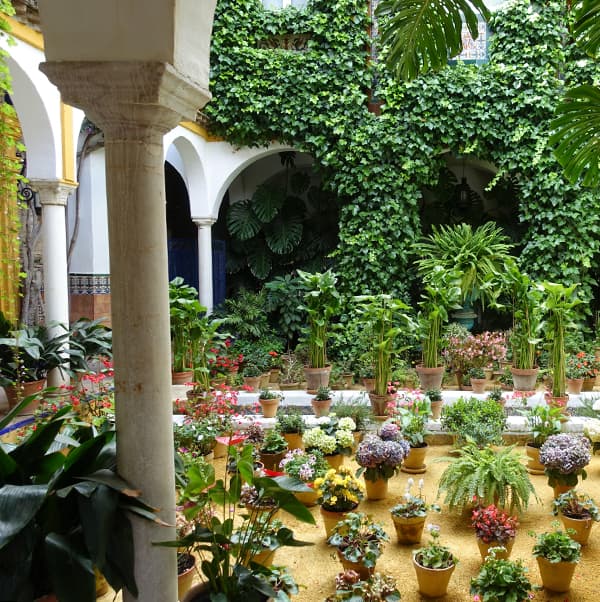
AVENIDA CONSTITUCIÓN AVENIDA CONSTITUCIÓN AVENIDA CONSTITUCIÓN AVENIDA CONSTITUCIÓN AVENIDA CONSTITUCIÓN AVENIDA CONSTITUCIÓN AVENIDA CONSTITUCIÓN AVENIDA CONSTITUCIÓN AVENIDA CONSTITUCIÓN AVENIDA CONSTITUCIÓN AVENIDA CONSTITUCIÓN AVENIDA CONSTITUCIÓN AVENIDA CONSTITUCIÓN AVENIDA CONSTITUCIÓN AVENIDA CONSTITUCIÓN AVENIDA CONSTITUCIÓN AVENIDA CONSTITUCIÓN AVENIDA CONSTITUCIÓN AVENIDA CONSTITUCIÓN AVENIDA CONSTITUCIÓN AVENIDA CONSTITUCIÓN AVENIDA CONSTITUCIÓN AVENIDA CONSTITUCIÓN AVENIDA CONSTITUCIÓN AVENIDA CONSTITUCIÓN AVENIDA CONSTITUCIÓN AVENIDA CONSTITUCIÓN AVENIDA CONSTITUCIÓN AVENIDA CONSTITUCIÓN AVENIDA CONSTITUCIÓN AVENIDA CONSTITUCIÓN AVENIDA CONSTITUCIÓN AVENIDA CONSTITUCIÓN AVENIDA CONSTITUCIÓN AVENIDA CONSTITUCIÓN AVENIDA CONSTITUCIÓN AVENIDA CONSTITUCIÓN AVENIDA CONSTITUCIÓN AVENIDA CONSTITUCIÓN AVENIDA CONSTITUCIÓN AVENIDA CONSTITUCIÓN AVENIDA CONSTITUCIÓN AVENIDA CONSTITUCIÓN AVENIDA CONSTITUCIÓN AVENIDA CONSTITUCIÓN AVENIDA CONSTITUCIÓN AVENIDA CONSTITUCIÓN AVENIDA CONSTITUCIÓN AVENIDA CONSTITUCIÓN AVENIDA CONSTITUCIÓN AVENIDA CONSTITUCIÓN AVENIDA CONSTITUCIÓN AVENIDA CONSTITUCIÓN AVENIDA CONSTITUCIÓN AVENIDA CONSTITUCIÓN AVENIDA CONSTITUCIÓN AVENIDA CONSTITUCIÓN AVENIDA CONSTITUCIÓN AVENIDA CONSTITUCIÓN AVENIDA CONSTITUCIÓN AVENIDA CONSTITUCIÓN AVENIDA CONSTITUCIÓN AVENIDA CONSTITUCIÓN AVENIDA CONSTITUCIÓN AVENIDA CONSTITUCIÓN AVENIDA CONSTITUCIÓN AVENIDA CONSTITUCIÓN AVENIDA CONSTITUCIÓN AVENIDA CONSTITUCIÓN AVENIDA CONSTITUCIÓN AVENIDA CONSTITUCIÓN AVENIDA CONSTITUCIÓN AVENIDA CONSTITUCIÓN AVENIDA CONSTITUCIÓN AVENIDA CONSTITUCIÓN AVENIDA CONSTITUCIÓN AVENIDA CONSTITUCIÓN AVENIDA CONSTITUCIÓN AVENIDA CONSTITUCIÓN AVENIDA CONSTITUCIÓN AVENIDA CONSTITUCIÓN AVENIDA CONSTITUCIÓN AVENIDA CONSTITUCIÓN AVENIDA CONSTITUCIÓN AVENIDA CONSTITUCIÓN AVENIDA CONSTITUCIÓN AVENIDA CONSTITUCIÓN AVENIDA CONSTITUCIÓN AVENIDA CONSTITUCIÓN AVENIDA CONSTITUCIÓN AVENIDA CONSTITUCIÓN AVENIDA CONSTITUCIÓN AVENIDA CONSTITUCIÓN AVENIDA CONSTITUCIÓN AVENIDA CONSTITUCIÓN AVENIDA CONSTITUCIÓN AVENIDA CONSTITUCIÓN AVENIDA CONSTITUCIÓN AVENIDA CONSTITUCIÓN AVENIDA CONSTITUCIÓN AVENIDA CONSTITUCIÓN AVENIDA CONSTITUCIÓN AVENIDA CONSTITUCIÓN AVENIDA CONSTITUCIÓN AVENIDA CONSTITUCIÓN AVENIDA CONSTITUCIÓN AVENIDA CONSTITUCIÓN AVENIDA CONSTITUCIÓN AVENIDA CONSTITUCIÓN AVENIDA CONSTITUCIÓN AVENIDA CONSTITUCIÓN AVENIDA CONSTITUCIÓN AVENIDA CONSTITUCIÓN AVENIDA CONSTITUCIÓN AVENIDA CONSTITUCIÓN AVENIDA CONSTITUCIÓN AVENIDA CONSTITUCIÓN AVENIDA CONSTITUCIÓN AVENIDA CONSTITUCIÓN AVENIDA CONSTITUCIÓN AVENIDA CONSTITUCIÓN AVENIDA CONSTITUCIÓN AVENIDA CONSTITUCIÓN AVENIDA CONSTITUCIÓN AVENIDA CONSTITUCIÓN AVENIDA CONSTITUCIÓN AVENIDA CONSTITUCIÓN AVENIDA CONSTITUCIÓN AVENIDA CONSTITUCIÓN AVENIDA CONSTITUCIÓN AVENIDA CONSTITUCIÓN AVENIDA CONSTITUCIÓN AVENIDA CONSTITUCIÓN AVENIDA CONSTITUCIÓN AVENIDA CONSTITUCIÓN AVENIDA CONSTITUCIÓN AVENIDA CONSTITUCIÓN AVENIDA CONSTITUCIÓN AVENIDA CONSTITUCIÓN AVENIDA CONSTITUCIÓN AVENIDA CONSTITUCIÓN AVENIDA CONSTITUCIÓN AVENIDA CONSTITUCIÓN AVENIDA CONSTITUCIÓN AVENIDA CONSTITUCIÓN AVENIDA CONSTITUCIÓN AVENIDA CONSTITUCIÓN AVENIDA CONSTITUCIÓN AVENIDA CONSTITUCIÓN AVENIDA CONSTITUCIÓN AVENIDA CONSTITUCIÓN AVENIDA CONSTITUCIÓN AVENIDA CONSTITUCIÓN AVENIDA CONSTITUCIÓN AVENIDA CONSTITUCIÓN AVENIDA CONSTITUCIÓN AVENIDA CONSTITUCIÓN AVENIDA CONSTITUCIÓN AVENIDA CONSTITUCIÓN AVENIDA CONSTITUCIÓN AVENIDA CONSTITUCIÓN AVENIDA CONSTITUCIÓN AVENIDA CONSTITUCIÓN AVENIDA CONSTITUCIÓN AVENIDA CONSTITUCIÓN AVENIDA CONSTITUCIÓN AVENIDA CONSTITUCIÓN AVENIDA CONSTITUCIÓN AVENIDA CONSTITUCIÓN AVENIDA CONSTITUCIÓN AVENIDA CONSTITUCIÓN AVENIDA CONSTITUCIÓN AVENIDA CONSTITUCIÓN AVENIDA CONSTITUCIÓN AVENIDA CONSTITUCIÓN AVENIDA CONSTITUCIÓN AVENIDA CONSTITUCIÓN AVENIDA CONSTITUCIÓN AVENIDA CONSTITUCIÓN AVENIDA CONSTITUCIÓN AVENIDA CONSTITUCIÓN This is a public park called the Murillo Gardens. The land was formerly the fruit and vegetable gardens for the Alcazar. The gardens' harvest once fed hundreds of people, the virtual city of rulers and servants that lived and worked within the walls of the vast Alcazar. We will not be entering the gardens, however.
Instead, start walking across the square diagonally. Are you ready, Boots? Start walking. Dun, dun, da-da-da-da.
Read more...Show less
Dun, dun, da-da-da-da. In the far corner of the square, continue down a lane another 20 yards. You emerge into a pleasant square with a green patch of hedges and trees in the center. Ole! Hola, hola! Hi! Plaza de Santa Cruz.
Plaza de Santa Cruz
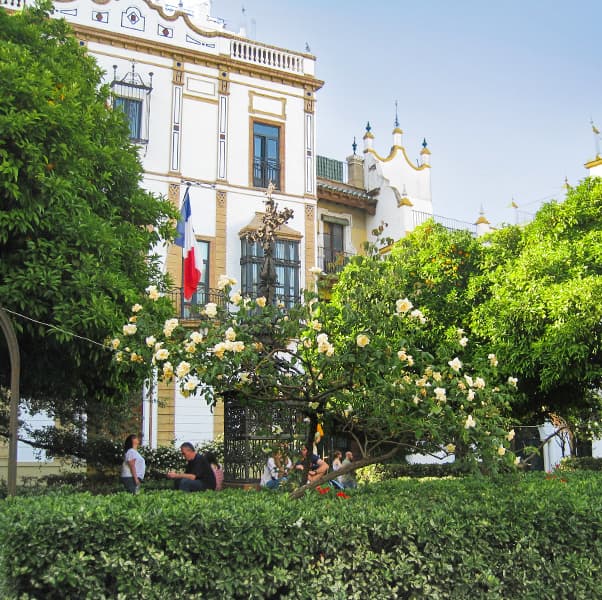
We've reached what's arguably the heart of today's Barrio Santa Cruz. Feel free to stroll around while I talk. The pleasant square is graced by orange trees and olive tree and draping vines with a hairpin. There's a hedged garden in the center.
The square encapsulates the history of this neighborhood. In early medieval times, this was the Juderia, home to thousands of prosperous Jews who were integral to civilian life. A synagogue stood where the garden is today. But increasingly, their Christian neighbors began to view the Jews with suspicion.
Read more...Show less
They were accused of everything from poisoning wells to ritually sacrificing Christian babies. In the summer of 13, smoldering anti-Jewish sentiment flared up. Christian mobs ransacked the Jewish quarter. Some 4,000 Jews were killed, 5,000 were driven from their homes, and Jewish possessions were confiscated.
Here on this square, the synagogue was demolished, and a Christian church was built on the spot. It was dubbed the Church of Santa Cruz, or Church of the Holy Cross. The location of that church is now marked by the building with a big ironwork cross in the center. And what was once the Juderia was now called the Neighborhood of the Holy Cross.
Or Barrio Santa Cruz. By the time of the Catholic monarchs, Ferdinand and Isabel, Sevilla had become a militantly Christian city. Sevilla became the center of the notoriously fanatical institution called the Spanish Inquisition. They staged big rallies where Jews and heretics were publicly burned at the stake.
Called an auto-da-fé, or act of faith. Thousands of supposed heretics were arrested, tortured, and killed in Spain. Then, in 1492, the same year the Moors were driven from Spain, Ferdinand and Isabel expelled all remaining Jews. The Jewish quarter was empty.
The neighborhood declined rapidly, and it never really recovered. It was mothballed in its medieval state. Such a sad story. It's a sad story to produce the charm we see now.
Let's get a closer look at that cross in the center of the garden. Start making your way there. This prized ironwork cross was made by a highly respected Sevillian workshop. Its unique shape, with a circle in the center and prickly spikes radiating out, inspired similar-looking crosses.
It's a popular style for crosses that are still carried in Holy Week processions to this day. Sevilla is still passionately religious, and the city makes a very big deal of Holy Week. That's the week between Palm Sunday and Easter, when Christ was crucified, buried, and resurrected. In Sevilla, each day during Holy Week brings parades of devout worshipers.
They carry crosses and heft elaborate floats with wooden statues of saints on top. Visitors pour in to watch, grandstands are erected, and TV crews broadcast it everywhere. No city in the world does Holy Week like Sevilla, a testament to the religious fervor Sevilla has always had. Now turn your attention to the big white building on the uphill side of the square.
It flies the blue, white, and red flag of France. This is the French Consulate. And it reminds us of the next episode in the Barrios' history. Because of the fanatical Spanish Inquisition, Sevilla became notorious around Europe, as an enemy of freedom.
In the 1800s, Napoleon invaded Spain and toppled the old order. Here in the plaza, they demolished the Church of Santa Cruz. After the French left, the Iron Cross, which was made in the previous century, was brought out and placed here to mark the spot. Sevilla became a backwater, and the Barrio Santa Cruz dwindled, becoming a poor neighborhood of tangled streets with a wistful old-world ambience.
Before we move on, check out a couple of other sites here on the square. First, head for the building opposite the French Consulate on the downhill side of the square. Look for address number 9. Here you can peek into a lovely courtyard or patio.
The place is often left open so visitors can enjoy it. It's another reminder of the traditional layout of an Andalusian home built around an open-air courtyard like this. When you're ready, find a bar about 20 yards away from you. It's 20 yards away called Los Gallos.
It's at the near end of this long square at address number 11. Los Gallos is a flamenco bar. Of course, flamenco music is Sevilla's claim to fame. It involves lightning-fast guitar playing.
They accompany dancers in colorful dresses who stomp their feet with passion. In fact, let's hear a little of that flamenco music while you check out the bar's posters, ticket prices, and performance times. A true flamenco performance is not a concert. It's a happening.
While the musicians play and the dancers dance, bystanders egg them on with clapping and castanets, whoops, and olés. Flamenco has deep, deep roots in Sevilla, probably dating way back to the Moorish and early gypsy cultures. Some of these early elements survive. In the raspy-voiced wails of the singers, you'll hear echoes of the Muslim call to prayer.
This particular bar, Los Gallos, is just one of the many in Sevilla that have flamenco performances. Places like this are pretty touristy, but they employ top-notch dancers, singers, and musicians, and they're very entertaining. For more authentic flamenco, you need to stay up very late, after midnight, and find an impromptu happening in a local bar. You can ask locals for the latest.
Uh, that's a bit past my bedtime. That's okay. You know, I like the tourist performances, and there's three or four all over town every evening. Let's move on as we explore more of the barrio. On the next track, Rick and I will direct you. ♪♪ ♪♪
Casa de Murillo and St. Teresa's
♪♪ To Casa de Mario and St. Teresa's Monastery. Two of the barrio's better-known residents lived just a block uphill from Plaza de Santa Cruz. To get there, exit the square up the left side of the French Consulate, going uphill on Calle Santa Teresa.
Just a few steps up the street, notice the old column functioning as a cornerstone. With the ruins of the ancient Roman city of Italica nearby, Savians always had a ready supply of old columns and statues they could scavenge for their streets and plazas. Keep going up Santa Teresa Street. As you go, look up at the upper floors of the buildings and imagine living here.
Read more...Show less
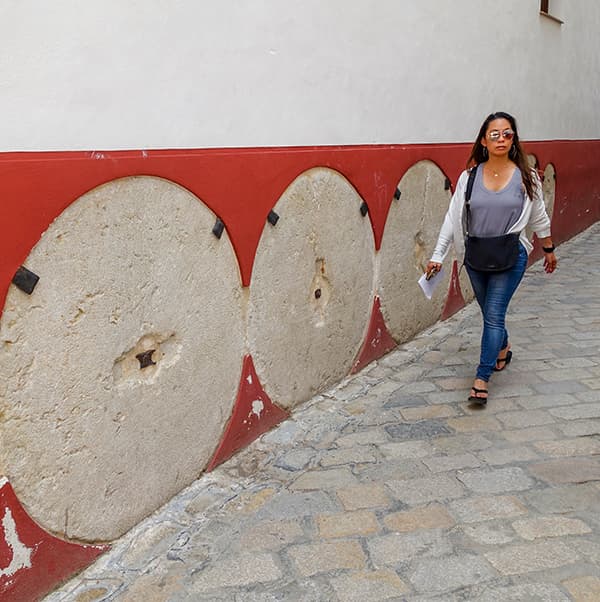
It can be crowded with tourists, but on the other hand, it's hard to imagine a more charming place. As you approach the kink in the road, notice a row of millstones embedded into the wall on the right. Tour guides like to say this was a way for a miller to show off his wealth. Kind of like someone today parking a row of fancy cars in their driveway.
Keep going through the kink in the road, zigzagging left and then right. Stop when you reach number 8 on the left. This is the Casa de Mario. In the 1600s, this place was home to Sevilla's famous painter, Bartolome Mario.
Nowadays, it's a museum keeping his art alive. Mario was born and raised here in Seville. He was the son of a barber. A barber of Seville, I guess.
The city was still riding a sugar high of the Golden Age, and Mario got rich selling his paintings of saints to churches all around town. Mario took Sevilla's devotion to the Virgin to a whole nother level. His specialty was painting radiant young Marias with ivory soap complexions and ecstatic poses. All wrapped in warm colors and soft light.
Mario spent his final years here, in this mansion. It's a typical Barrio residence, two stories tall and surrounding a central patio. Mario attended church just down the street in Plaza Santa Cruz. At the long-gone church where that iron cross stands today.
Mario soaked up the ambiance of Barrio street life. He painted Sevilla's street kids with cute smiles and grimy faces. Mario was rich and popular and the toast of Sevilla's high society. When he died, he was buried in his home church.
Now his tomb is lost somewhere under the bricks of Plaza de Santa Cruz. In his art, Mario combined extreme religiosity with down-to-earth street life, and in doing so, he captured the spirit of Sevilla. Directly across from Casa de Mario is an enormous church. It has an enormous wooden doorway.
This place was home to another Barrio resident. This is the monastery of San Jose del Carmen. The convent was founded by the renowned mystic Saint Teresa of Avila. Yes, I know her.
In the 1500s, she was well-known throughout Europe for her ecstatic visions. Her mystical writings helped spark a revival of spirituality among Catholics during the Reformation. Teresa was not born in Seville, but she moved here in 1580. In 1575, when it was Spain's leading city, she stayed in this convent for 10 years.
Today, this is still a convent, and the place keeps some of Teresa's artifacts and manuscripts, though they're generally closed to the public. While living here, Teresa wrote much of her most famous book, The Interior Castle. In it, she assured the faithful that everything was in the hands of a loving God. Trust God, she wrote, that wherever you are is where you are meant to be.
So, I guess that means that, right now, we're both meant to be right here, in the Barrio Santa Cruz. Very nice. At this point in our tour, we're entering some of the Barrio's narrowest lanes and most picturesque plazas. It's easy to get lost. So, on the next track, Rick and I will lead you along. The Kissing Lane
The Kissing Lanes
From the homes of Teresa and Murillo, continue a few steps uphill on Calle Santa Teresa. We're not going far. After about 20 yards, take your first left on Calle Lope de Rueda. It's just before the popular Las Teresas Café.
Start walking down Lope de Rueda. At the end of this narrow lane, the path turns left. As you stroll, enjoy a short selection of music. We'll see you next time.
Read more...Show less
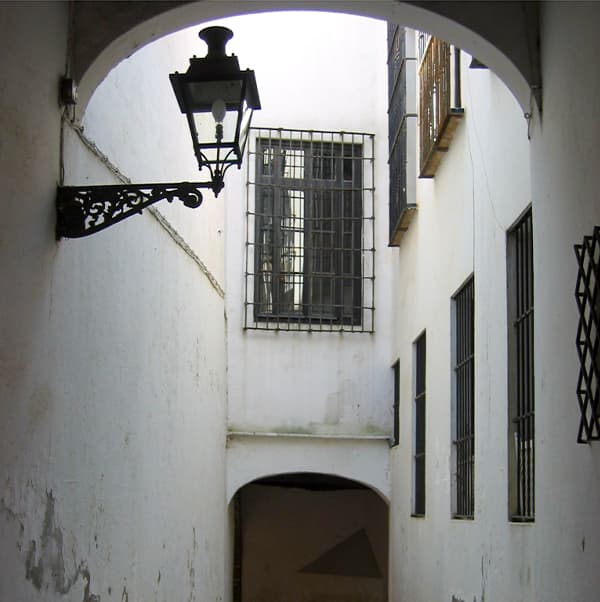
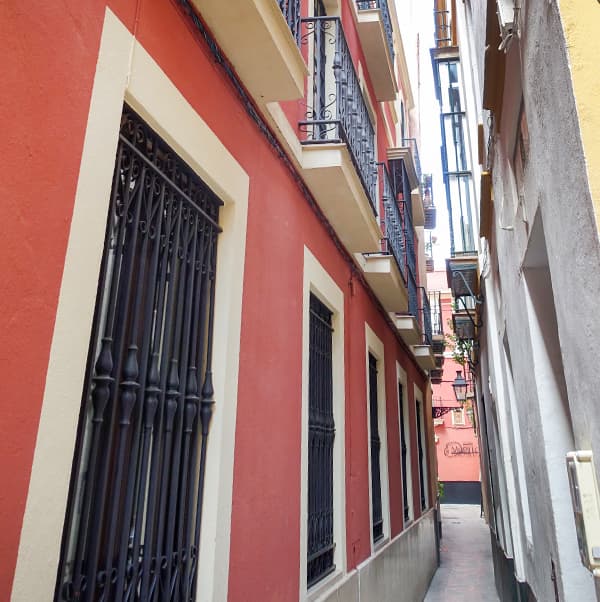
We'll see you after you turn left and emerge in a teeny little square with the hotel called Hotel Murillo. By now, you should be in the small, narrow square with the Hotel Murillo. From here, turn right and start walking down the narrow alleyway called Calle Reynoso. On Reynoso, you're walking down one of the so-called Kissing Lanes.
The buildings are so close together that neighbors could supposedly lean across and... kiss. More likely, the reason the buildings are so close together was to provide maximum shade. The street may date all the way back to Moorish times when this area was a maze-like bazaar, or it may date to the Jewish ghetto when homes needed to be this close together just to pack more people in.
Whatever the reason, it's certainly a far cry from the neighborhood I have back home. At the end of the narrow alley, kiss this lane goodbye. And turn left. Immediately after turning left, the street spills into another small square, the Plaza de los Venerables.
Stop here. This tiny square is another candidate for the title of the heart of the barrio. It's the lively hub for several picturesque streets that branch off it. The whole area just oozes with local ambiance.
With its colorful buildings, bars, and shops, it typifies the barrio today, both traditional and touristy, and it's a place where you can find a lot of people. It's a place where you can find a lot of people. At the same time. Take a moment to peek inside one of the bars.
I see ham hocks hanging from the ceiling. A local guide once told me that after the Reconquista, bar owners made sure that Muslims knew they weren't welcome by displaying forbidden pork products. Like these pig's legs. And the unsavory tradition has survived to this day, though without the racist overtones.
Changing the subject, let's turn our attention to the delighting and delightful red and white façade of the Hospital de los Venerables. This harmonious exterior is a perfect example of what's called Sevillian Baroque. This hospital was founded in 1675. It was a retirement home for old priests.
The Venerables. It's now a cultural foundation. If it's open, you could pause the audio guide and step inside to see an ornate church, a fine collection of Sevillian paintings, and interesting temporaries, as well as contemporary exhibitions. But let's move on.
As you face the hospital, take a few steps to the left and find a ceramic tile map on the wall. It's on Calle de Gloria, just a couple steps off the square. It's a map of the very neighborhood we've been exploring, the Barrio Santa Cruz. I can see where we are on the map.
We're in the lower left corner, second row up, third tile from the left. Bingo. The map shows some of the buildings that are the Barrio's most atmospheric buildings from an earlier age. Notice that many of them are still standing while others have disappeared.
Before we move on, just take a moment to look around this square. Soak up the romantic aura that has made the Barrio Santa Cruz such a popular stop for centuries. Psst. Hey, buddy.
If you need a toilet, the ceramic shop here welcomes tourists. Otherwise, let's move on. Start walking. Start walking down Calle de Gloria.
Just keep going straight for about 50 yards until you emerge into a larger square. As you walk, think of how it is that all this picturesque atmosphere survived into modern times. After the Jews were tossed out, the Barrio languished in a kind of suspended animation. Sevilla itself declined after its golden age, so there was little modernization.
Nevertheless, the city remained a major stop on that 19th-century tourist route called the Grand Tour. Nobles flocked here to the exotic place they'd heard about in story and song. They'd read spine-tingling tales about the cruelty of the Spanish Inquisition. They'd seen plays about the daring Don Juan who defied the moralists.
They laughed at the comic antics of the Barber of Seville and Marriage of Figaro. And they'd been riveted by an opera about a seductive femme fatale named Carmen. Wandering through the city, wandering through the Barrio Santa Cruz, those aristocratic tourists felt like their fairy tales had come to life. And 200 years later, I'm digging it, too. By now, you should have reached a large, rectangular, tree-dotted square, Plaza de Doña Elvira. Plaza de Doña Elvira.
Plaza de Doña Elvira
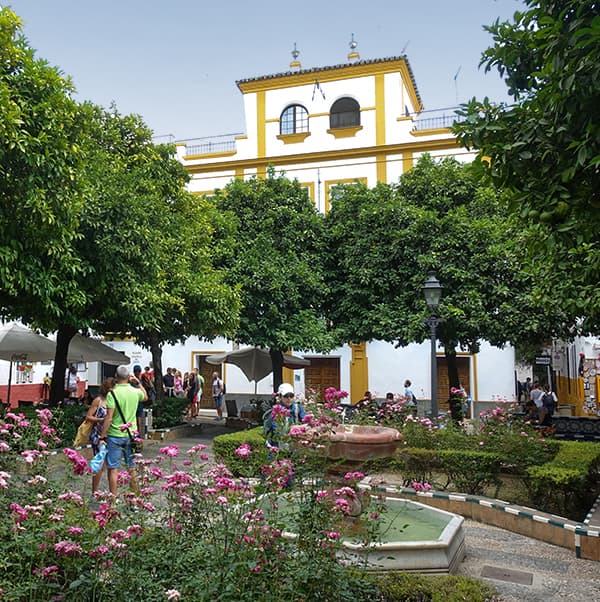
This is a good final stop in the barrio before we return to modern Sevilla. The square, with its orange trees, tile benches, and a stone fountain, kind of sums up the barrio. Shops here sell work by local artisans such as ceramics, embroidery, and fans. The plaza has been popular since the days of that grand tour.
This square was supposedly the home of Doña Elvira, the lady love of the Sevillan playboy, Don Juan. Those stories may be fiction, but at night, with candlelight and Spanish guitars playing, there is no denying this is indeed a romantic place. Stroll slowly through the length of the square as you make your way to the far left corner. The plaza reflects the fate of much of the barrio.
Read more...Show less
After so many years of neglect, by the 1900s, it was deserted and run down. The city of Sevilla began an extensive urban renewal project especially in the run-up to that 1929 World's Fair. They turned the barrio, including this plaza, into a showcase of Andalusian style. The city architects renovated using traditional motifs like ironwork balconies, tilework, painted trim, and orange trees.
At its worst, you might say the barrio became a kind of Andalusian theme park. Nevertheless, this new and improved version respected tradition, and, and carries the neighborhood's 800-year legacy into the future. From here, we head back to familiar ground, the cathedral. So if you want to linger longer, now's your chance to pause the audio tour and explore. Otherwise, on the next track, Rick and I will lead you home. Back to the start,
Back to the Start, Nun's Cookies
with a stop for Nun's Cookies. Leave Plaza de Doña Elvira, heading up the narrow street called Rodrigo Caro. Just keep following Rodrigo Caro as it zigzags left, then right. On our walk, we've touched on many sites that you may want to return to and actually tour.
You could always return to the barrio and explore further, or get a bite to eat. Evenings are ideal. Of course, visiting the cathedral is a must. You may want to catch a flamenco show or a bullfight.
Read more...Show less
Or shop for some typical Sevillan souvenirs, like hand-painted fans or painted ceramics. Ladies' shawls are also popular, and those characteristic headscarves called mantillas. Keep walking. After the zigzag, the road opens up into a square with a bubbling fountain in the middle, Plaza de la Alianza.
And look where we are. That wall and ramparts on the left are part of the Alcazar. At Plaza de la Alianza, turn left. On the street called Joaquin Romero Murube.
As you walk down Joaquin Romero, you're following the castle-like stone walls of the Alcazar. The Alcazar is certainly one of Sevilla's must-see sites, but definitely check a guidebook first to avoid the crowds and get acquainted with what you might want to see inside. If you're hungry, your best bet in Sevilla may just be tapas. It's easy.
Find a bar that looks lively and start by ordering a drink, maybe a beer, a vino tinto, or a soft drink. Then, peruse the tapas menu as you sip. Order a plate or two of tapas, you know, like olives, cheese, or ham. Then, nibble your way deeper into the menu.
A small plate of calamari, fried shrimp, or a Spanish tortilla. If you like the place, order another drink, then another plate of this or that, and pay at the end. It's easy to build a fine meal out of just tapas. Continue down Calle Joaquin Romero Murube.
Until the street opens up, and, hey, we're back in Plaza del Triunfo. And there's the cathedral. Those madmen again. So, I guess our walk is officially over now.
But, you know, I am kind of hungry. Didn't you say something about cookies? I did. Nun's cookies.
Okay. Check this out, Lisa. From Plaza del Triunfo, let's turn right. Head toward the Heralda Tower.
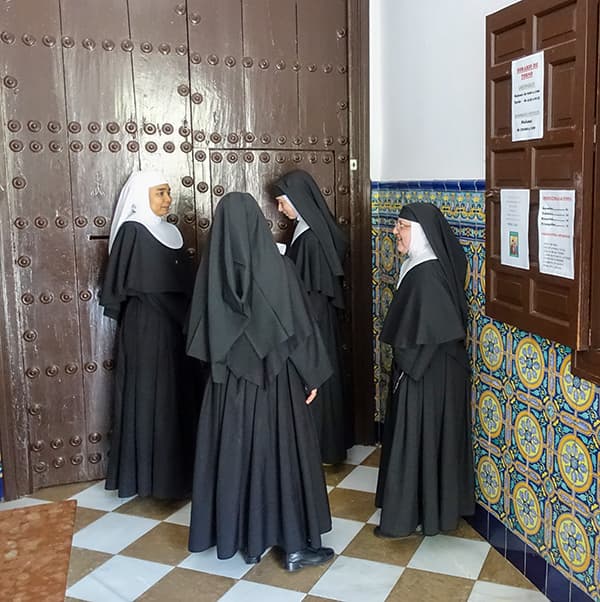
Go for about 30 yards. When you reach the white building on your right, look for number 3. This white building is an old Augustinian convent. Today, the nuns still raise a little charity money by selling various items.
They're generally open in the morning from 9 to 1 and afternoons from 4 to 6. If they're open, step inside the door at number 3 for a memorable experience. I'm right with you, but I don't see any nuns. Nope.
That's the whole thing. They're cloistered, hidden behind the wall. Here's how it works. You check out the various items for sale, things like rosaries, prayer books, and communion wafers called tabletas.
Then, you ring the bell to get the nun's attention. When she answers, tell her what you want to buy and put your money on the lazy Susan, the torno. The nun will spin it. She'll take your money and spin it back again to deliver the goods.
The sisters, who speak only Spanish, have a sense of humor. Have some fun practicing your Spanish with them. Okay. Tabletas, por favor?
Good choice. It's nice to buy something here just as a donation, like those tabletas or communion wafers. Hmm. They're not exactly cookies.
Well, granted, the tabletas are pretty bland. Consider them like sin-free cookies. But the experience, it's so sweet. In fact, it was the best.
Bar none. Oh, brother. Oh, sister. Oh, these puns.
They're habit-forming. And with that, let's put a merciful end to our Sevilla walk. Look at where we are. Mere steps from where we started, at the foot of the Giralda.
So, I guess this is Adios. We've seen the heart of Sevilla, from its Moorish Giralda to the Christian Cathedral to the Golden Age. And we've navigated the maze of the Barrio Santa Cruz and come out the other end. Lisa, let's go get a sherry and some shrimp.
I'm buying. Then, I'm coming. Salud! We hope you've enjoyed our Sevilla City Walk.
Thanks to Jean Openshaw, the co-author of this tour. If you're doing more sightseeing in Spain and Portugal, check out our walking tours of Madrid, Barcelona, and Lisbon. Remember, this tour was executed by and excerpted from the Rick Steves Spain Guidebook. For more details on eating, sleeping, and sightseeing in Sevilla, refer to the latest edition of that guidebook.
For more free audio tours and podcasts, and information about our TV shows, bus tours, and travel gear, visit our website at ricksteves.com. This tour was produced by Cedar House Audio Productions. Gracias. Adios. And happy travels. ♪ music playing ♪
Free
GPS-guided walking tour
No account needed. Walk at your own pace.
Free
14 stops ·