24 stops
GPS-guided
74 min
Duration
Free
No tickets
About this tour
A 24-stop walking tour through the heart of UK. Visit The City of London, Church of St. Clement Danes, Royal Courts of Justice, and Twinings Tea — with narrated stories at every stop.
24 stops on this tour
The City of London
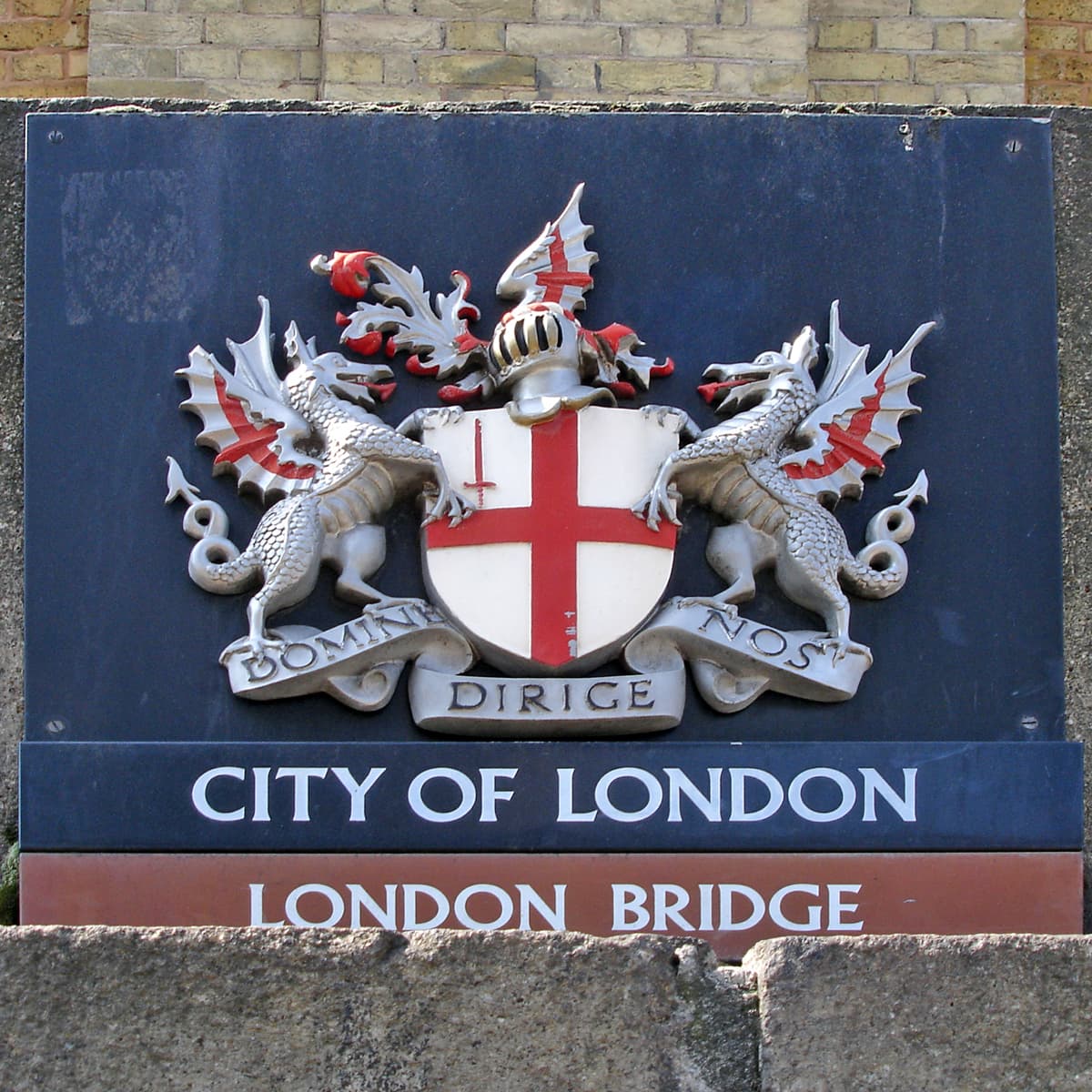
The City of London. In Shakespeare's day, London consisted of a one-square-mile area surrounding St. Paul's Cathedral. Today, that square mile, the neighborhood known as the City, is still the financial heart of London, densely packed with history and bustling with business.
Hi, I'm Rick Steves. Thanks for joining me on a walk through the City. This mile-and-a-half-long walk from the Temple to London Bridge parallels the River Thames. It follows the same road that's been used for centuries.
Read more...Show less
Along the way, we'll see sights from the City's storied past, St. Paul's Cathedral, the steeples of other Wren churches, historic taverns, a Crusader church, and narrow alleyways with faint remnants of the London of Shakespeare and Dickens. We'll also catch the City in action today. Lawyers in robes and wigs taking cigarette breaks.
Brokers in power suits, cool-talking cockneys, and shoppers browsing for tailored shirts and Cuban cigars. Allow about three hours to do this long walk justice and plan it for a weekday if you can. That's when the City is a hive of business activity. Use this walk to explore both London's historic roots and its vibrant present as we tour the exciting neighborhood known as the City.
To help us along the way, I've invited a good friend and virtual travel buddy. Welcome, Lisa. Hi, Rick. Lisa will give us helpful directions and sightseeing tips throughout the tour.
And my first tip is to be sure you get our tour updates. Just press the icon at the lower right of your device. You'll find any updates and helpful instructions unique to this tour. Things like clothing, closures, opening hours, and reservation requirements.
There's also tips on how to use this audio tour and even the full printed script. Yes. So pause for just a moment right now to review our updates and special tips. It's okay. We'll wait. And then... Let the tour begin.
Tour Begins: History
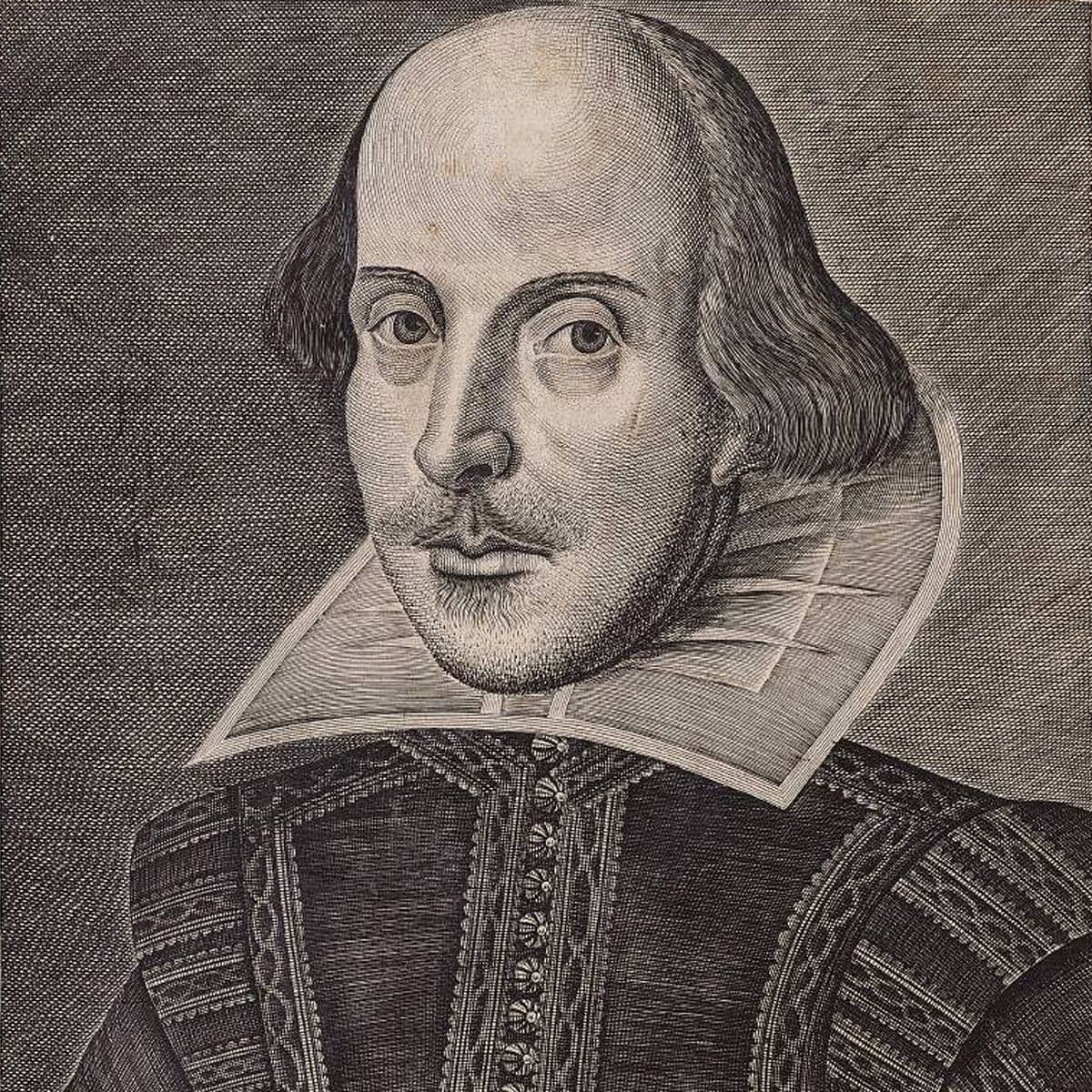
The tour begins. The city's 2,000-year history. Start at the Church of St. Clement Danes.
The closest tube stop is called Temple. It's easiest to just ride the tube there. But some may wish to walk from Trafalgar Square heading east one mile on the busy boulevard called The Strand. To reach the Church of St.
Read more...Show less
Clement Danes from the Temple tube stop, walk uphill on Arendelle Street until it intersects with The Strand. As you make your way to St. Clement Danes, listen to Rick give an overview of the city's history. Rick?
This district, called The City, stretches from near St. Clement Danes to the Tower of London. This was the London of the ancient Romans, of William the Conqueror, Henry VIII, Shakespeare, and Queen Elizabeth I. London began its life as Londinium, the settlement founded by the Romans in about 50 A.D.
right here on the north bank of the Thames. It quickly became the hub of Britain and a river port, complete with a Roman coliseum, forum, baths, a bridge across the Thames, and a city wall. That wall, arcing from what's now St. Paul's to the Tower of London, defined the city's boundaries for the next 1,500 years.
When Rome could no longer defend the city, it fell to the Saxons. Next came the Normans, who invaded from France in 1066 and established their rule here by building the Tower of London. In 1348, the medieval city was devastated by the Black Plague. As London recovered and grew even bigger, it became clear to wannabe kings that whoever controlled London controlled Britain.
When Queen Elizabeth I brought peace to the land, London came into its own, blossoming into a world capital. There's not much left of that world capital from Elizabeth's time, so on our walk through the 21st-century buildings of today, you'll have to use your imagination. Think of the city in Elizabeth and Shakespeare's day, around the year 1620, with a population of nearly 200,000. It looked like a big village, full of half-timbered buildings with thatched roofs.
Streams crisscrossed the city. The streets were narrow, winding, unpaved, and unlit. Horses and animals jockeyed for space with milkmaids, cobblers, sailors, actors, ladies in velvet dresses, and gentlemen in striped leotards. This bustling port town on the Thames was Britain's gateway to the world.
Businessmen fought for it, and businessmen fought for it, and businessmen fought for it, and businessmen fought for it, and businessmen fought for it, from all around Europe gathered here to trade exotic goods. Theaters like Shakespeare's Globe drew patrons across the river to Suffolk for an evening's entertainment. And a budding publishing industry was making London the center of words and ideas it remains to this day. Just when things were going so well, London suffered a catastrophe that would change it forever.
In 1666, the City of Wood was incinerated by the Great Fire, and it had to be rebuilt nearly from scratch. Within decades, it was thriving again as the capital of a growing global empire. London expanded westward to the fashionable West End, Trafalgar, and Westminster. The city became the notoriously grimy, soot-crusted place portrayed in Charles Dickens' novels.
In World War II, the city suffered another catastrophe when Nazi air raids leveled the landscape, and it had to be rebuilt once again. Today, the city is a concrete jungle. On our walk, we'll see remnants of London's 2,000 years of history. But we'll also see how the city has been stripped of its history by the Great Fire, the World War II Blitz, and by modern economic realities.
It's a neighborhood of honking horns, modern bank buildings, and retail stores. Only about 7,000 people actually live here, but on workdays, it's packed with hundreds of thousands of commuters, bankers, lawyers, secretaries, accountants, and coffee shop baristas. Yes, it's a concrete jungle, swinging through the streets as if on vines. We'll pass desk monkeys, clutching cell phones like bananas.
Okay, Rick. I better take it from here. Our tour starts at the busy intersection of Arendelle Street and the Strand. Find the church with a steeple over its entrance, surrounded by modern traffic.
The Church of St. Clement Danes. © transcript Emily Beynon The Church of St. Clement Danes.
Church of St. Clement Danes
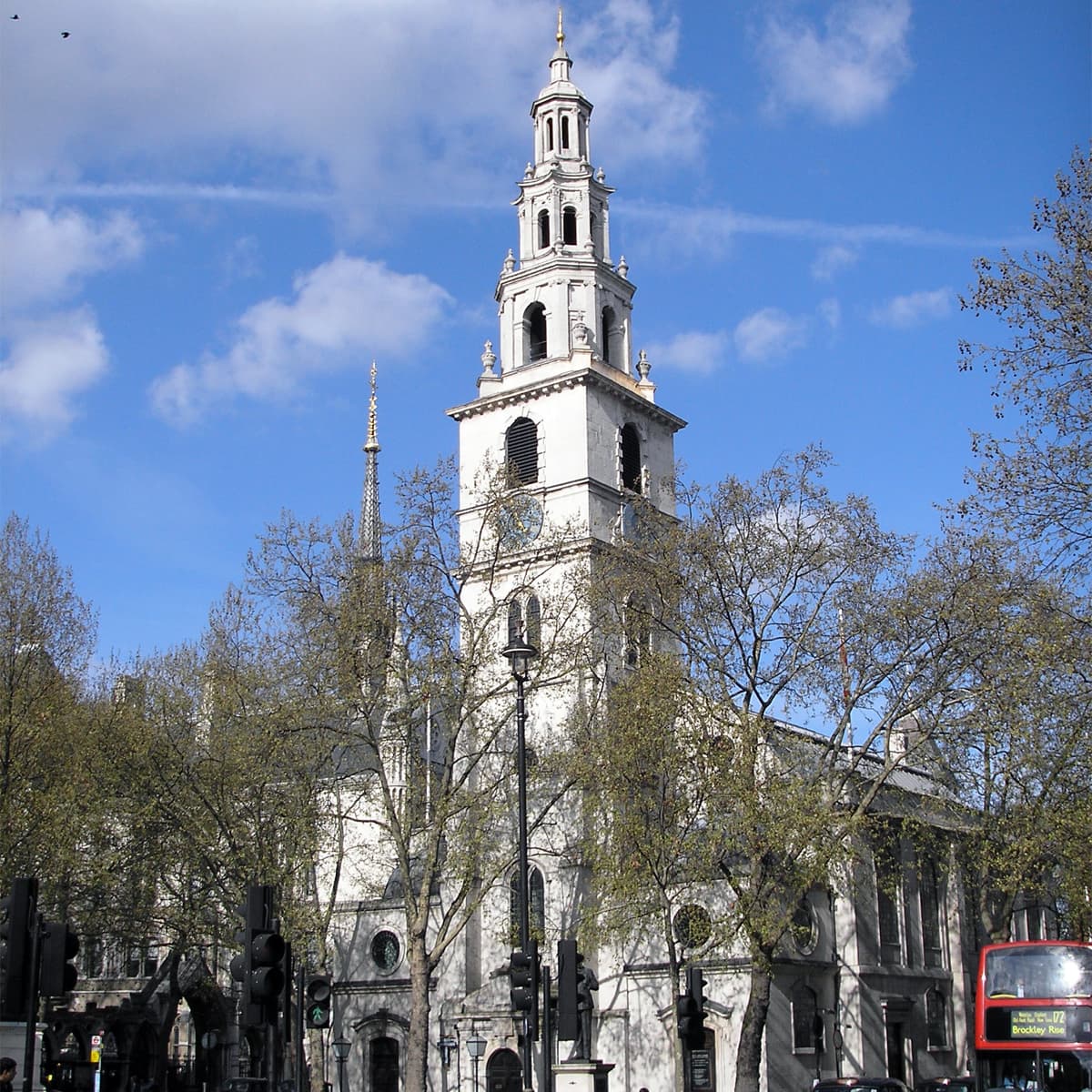
The church, with its wedding-cake steeple, sits in the middle of a tangle of traffic. Welcome to the city. Cars go in every direction at this busy intersection. Notice how the traffic curves completely around St.
Clement Danes. It's an island church left stranded in the middle of the Strand when the road was widened around it. St. Clement Danes introduces us to two themes we'll encounter time and time again on this walk.
Read more...Show less
Christopher Wren and the Blitz of World War II. This is the first of several Wren-built churches on this walk. After London was leveled by the Great Fire of 1666, Christopher Wren was hired to rebuild the city. Of the 50-some churches he built, 23 decorate London to this day.
This church was also blitzed heavily during the Nazi air raids in World War II. Today, it's a Royal Air Force chapel dedicated to the war. It's also the memory of the 125,000 RAF servicemen who gave their lives in both World Wars. Outside the church stand statues of brave airmen.
If you go inside, we won't go in on our tour, you'll find hundreds of gray medallions in the pavement dedicated to the various squadrons. Books of remembrance line the walls, including one for Americans. Ten thick volumes full of names are displayed, with the page respectfully turned each day. Facing St.
Clement Dane's is the impressive Australia House, with its green roof adorned with statues and the Australian flag. This is a kind of embassy for that member of the British Commonwealth, but it may be more famous for its role in the Harry Potter movies as the goblin-run Gringotts Wizarding Bank. Though it's not open to visiting muggles, you can peek into the chandeliered lobby from the door. From here, start heading east on the Strand, you may need to wait for the light at some crosswalks.
Don't worry, we won't leave you behind. Our route is simple, walking east along a single street that changes names as it goes. The Strand becomes Fleet Street, which becomes Ludgate Hill, and then Cannon Street. Keep heading east down the Strand as it curves around the back of St.
Clement Dane's. As you walk alongside the church, notice a couple of things. First, the steeple stands over the entrance. You may be saying, well, so what?
But that feature that's so common in American churches was actually quite groundbreaking back when Christopher Wren popularized it. Also, notice the light gray stone the church is made of. This is called Portland Stone. It's a kind of limestone quarried on an island off England's southern coast.
We'll see Portland Stone on buildings all throughout our walk, including the one coming up next. As you pass the church, look to the left side of the street. You'll see the Gothic steeple that stands atop the Royal Courts of Justice. There's no need to cross the street for a closer look. We'll view it from here on the right side of the Strand.
Royal Courts of Justice
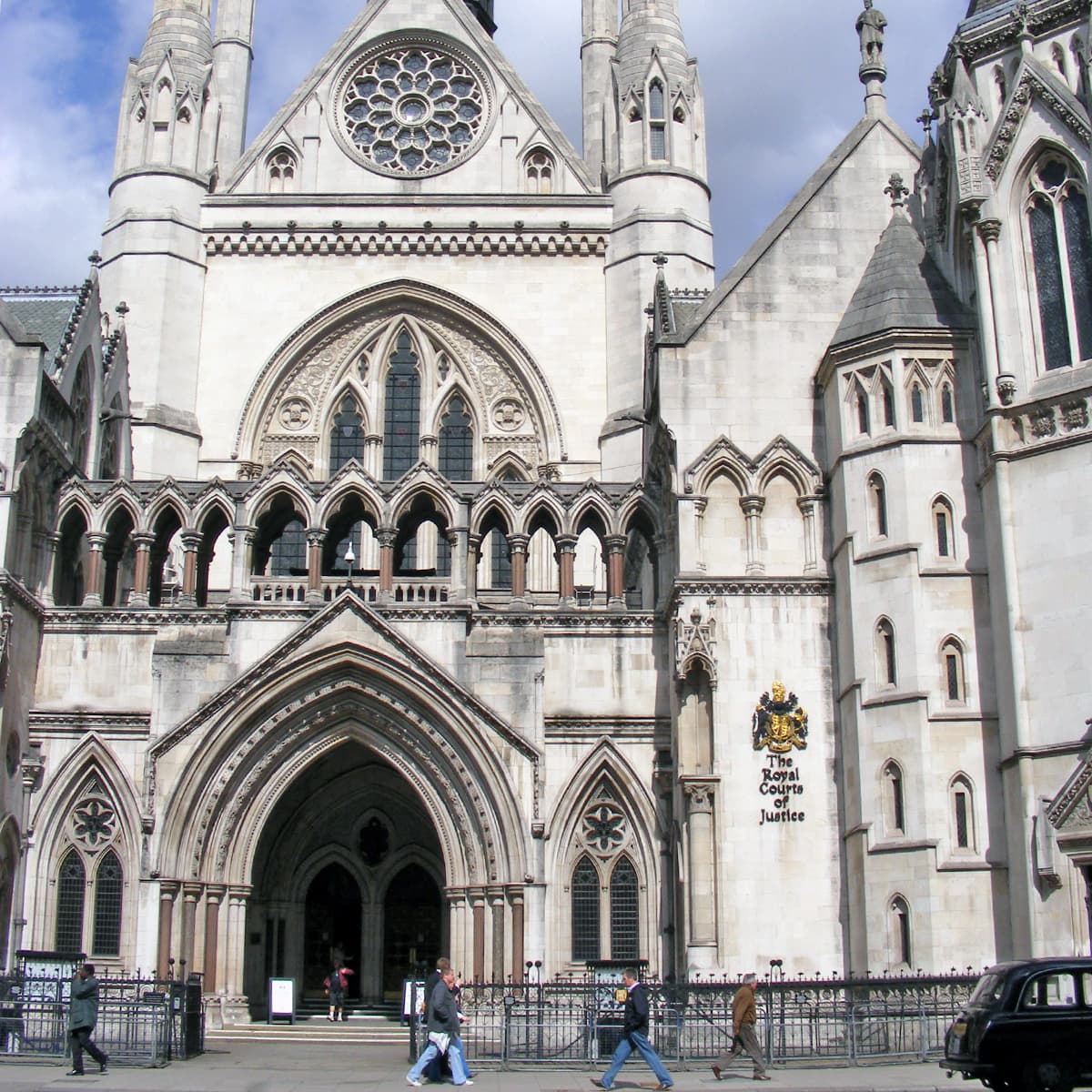
The Royal Courts of Justice When former Spice Girls threw the tabloids for libel, when the Da Vinci Coats, when the quote author gets sued for plagiarism, or when ex-Beatles pay $50 million divorce settlements to gold diggers, the trial is likely to be held here, at Britain's highest civil court. Criminal cases are held down the street at Old Bailey, which we'll visit later. Paparazzi often litter the entrance, awaiting a celebrity or a lawyer. In fact, many lawyers have become celebrities themselves.
The 76 courtrooms in this neo-Gothic complex are open to the public. You can step into the lobby to see the vast Gothic-style entrance, entry hall, or submit to a security check and go farther in. As we'll see, this courthouse is just one of several legal buildings in the neighborhood. Continue a few steps further along the Strand.
Read more...Show less
Stop when you reach No. 216, the tiny shop of Twining's Tea. Its narrow entrance has statues over the door of Chinese men. Colorful, despite the racial stereotypes, if the shop is open, feel free to go inside. It's worth it for the aroma alone.
Twinings Tea
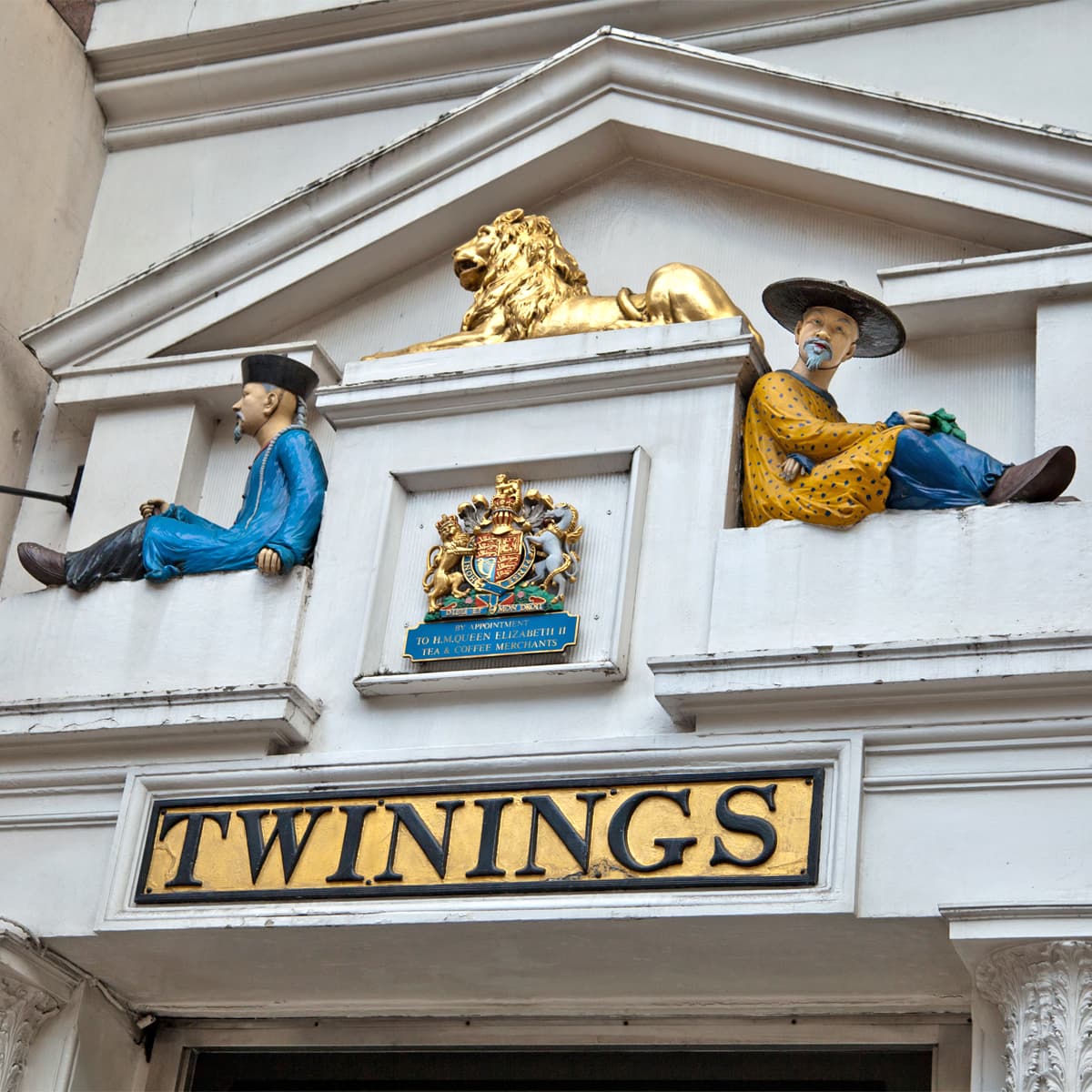
Twining's Tea. When this narrow store first opened its doors, tea was an exotic concoction from newly explored lands. The Chinese statues at the entrance remind us that tea came first from China, then India. Twining's has been in business since 1708, and this store has been in the Twining family for most of that time.
The shop is narrow, but explore its depths. There's a tea-tasting room way in the back. When tea hit the scene in the 1700s, London was in the grip of a coffee craze, and coffee houses were everywhere. These coffee houses were rather seedy places where so-called gentlemen went for coffee, tobacco, and female companionship.
Read more...Show less
Tea offered a refreshing change of pace, and a late-in-the-day cuppa, soon became a national institution. For some, the afternoon tea has expanded into a small meal in itself, complete with sandwiches and pastries. These days, as you'll see on this walk, coffee is making a big comeback in London in the form of modern Starbucks-style coffee shops. Make your way back out to the street as our walk is moving on.
Continue eastward on the strand. Up ahead in the middle of the street is a small statue of a winged dragon. While you pass by, let Rick explain its significance.
Temple Bar Monument
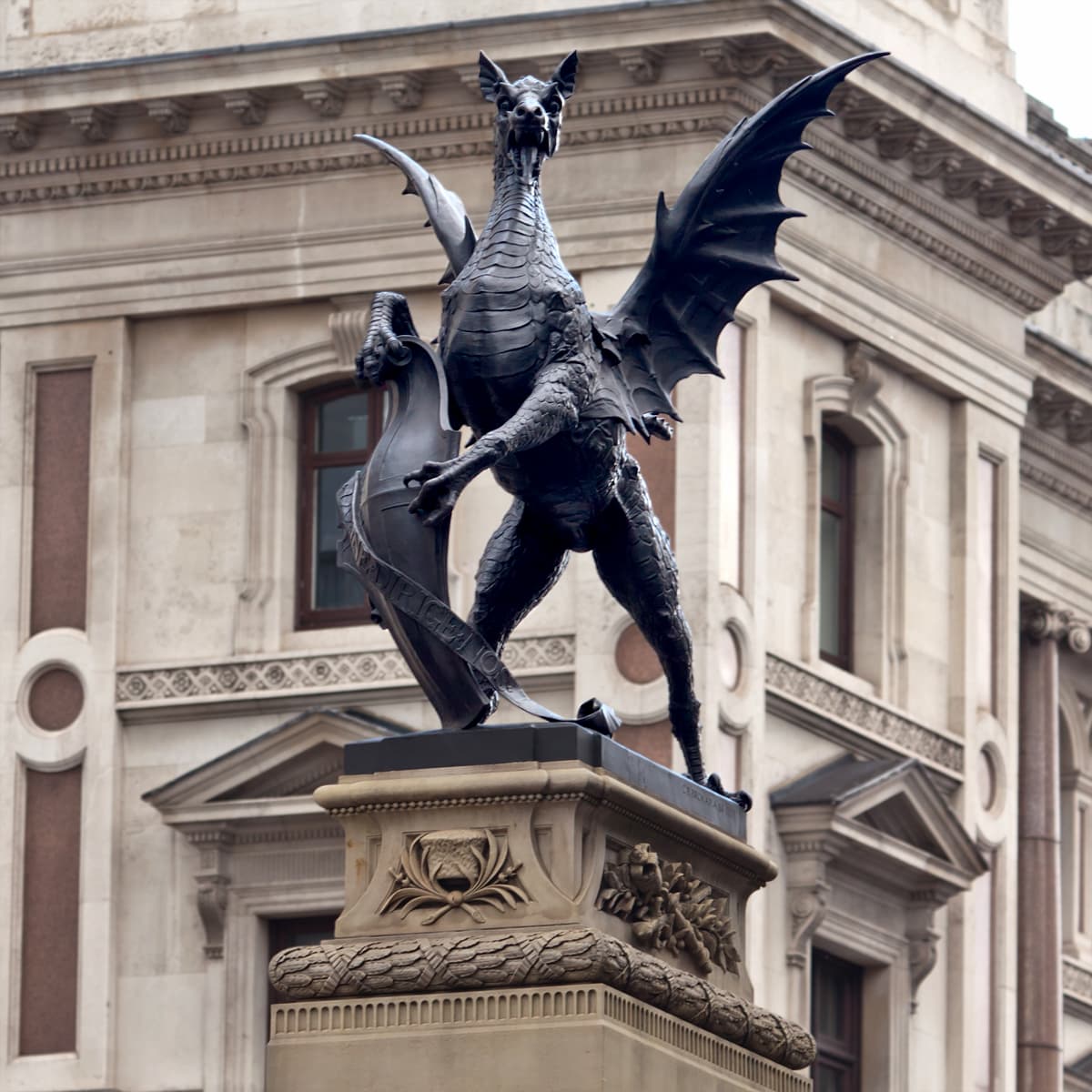
The Temple Bar Monument. This statue of a griffin, a mythological beast with wings and a lion's body, marks the official entrance to the city. As you pass it, you leave the city of Westminster and enter the City of London proper. The Queen, who presides over Westminster, doesn't pass this point without ceremonial permission, of the city's Lord Mayor.
The relief at the base of the monument shows Queen Victoria submitting to this ritual back in 1837. Keep going as you now officially enter the City of London. This is also the point where the street changes names. The strand becomes Fleet Street.
Read more...Show less
Ahead on the left at No. 194 Fleet Street is the Old Bank of England pub. This is a former bank with a lavish late Victorian interior, that now serves lunches to the 9-to-5 crowd. All over town, banks have moved into modern buildings, and their opulent old quarters have morphed into fancy pubs like this.
Continue up Fleet Street a few more storefronts to No. 17 Fleet Street, on the right-hand side. These days, No. 17 is a modern shop, but look above the shop. You'll find an old Tudor-style building with black-framed stained-glass bay windows. ¶¶ ¶¶ ¶¶ ¶¶ ¶¶ ¶¶
Prince Henry's Room
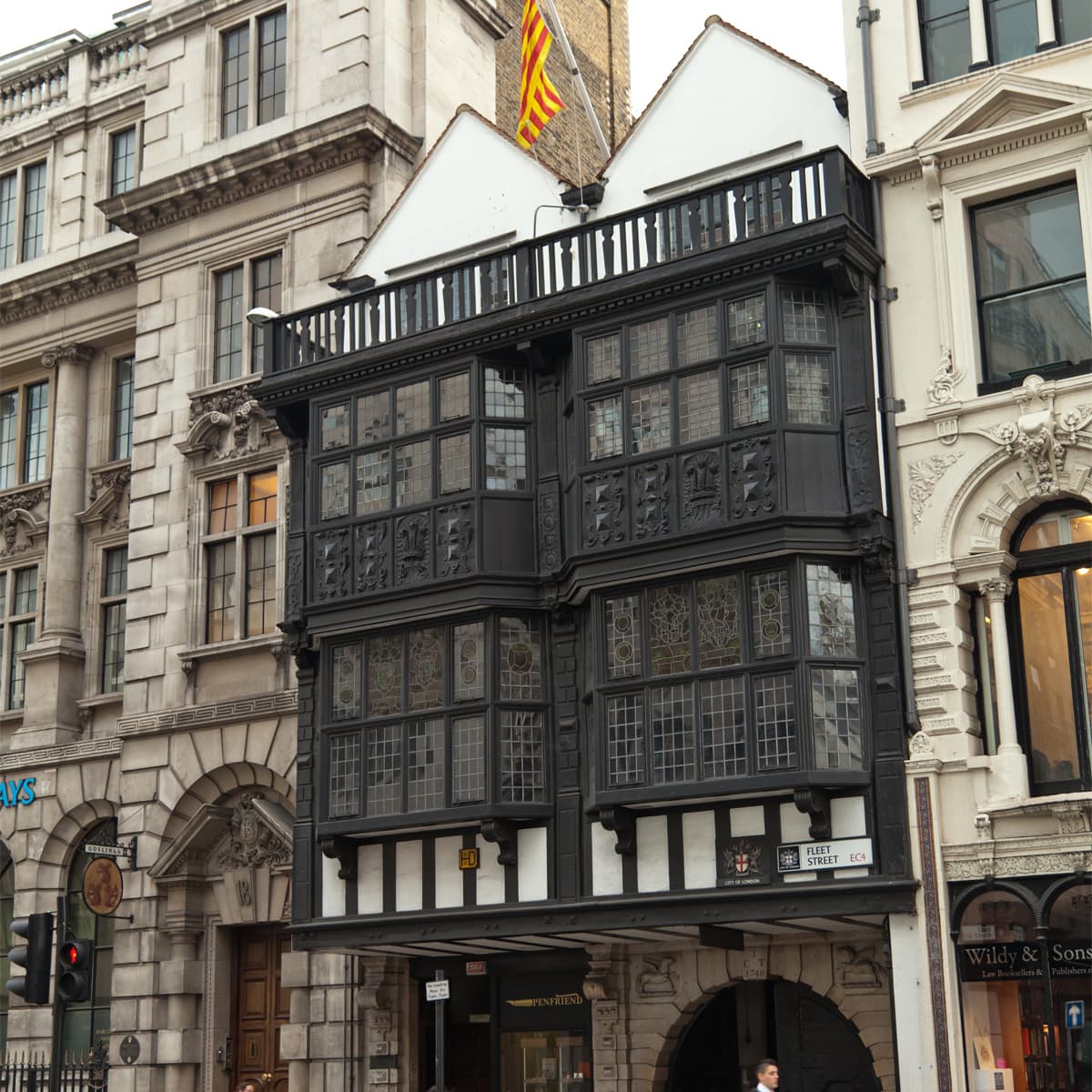
Prince Henry's Room. This half-timbered, three-story Tudor-style building from 1610 is one of the few to survive the Great Fire. In Shakespeare's day, the entire city was packed rooftop to rooftop with wood and plaster buildings like this. Many were five- and six-stories high, with narrow frontage.
Little wonder that a small fire could spread so quickly and become the Great Fire of 1666. The top floor of the house is Prince Henry's Room, once an office for the son of King Charles I. It was also a tavern at one point. If it's open, there are usually exhibits on London life in past centuries.
Read more...Show less
To reach our next stop, Temple Church, you'll need to pass underneath the Tudor-style house. So find the door that leads into a passageway called Inner Temple Lane. Walk down the lane. You've entered a vast complex of buildings known collectively as the Inns of Court.
After a half-block, you'll see our destination on the left, an exotic church with a round, castle-like turret, the Temple Church. Keep going to the far side of the church. There you'll find a statue atop a pillar, and if it's open, the visitor's entrance.
Temple Church, Inns of Court
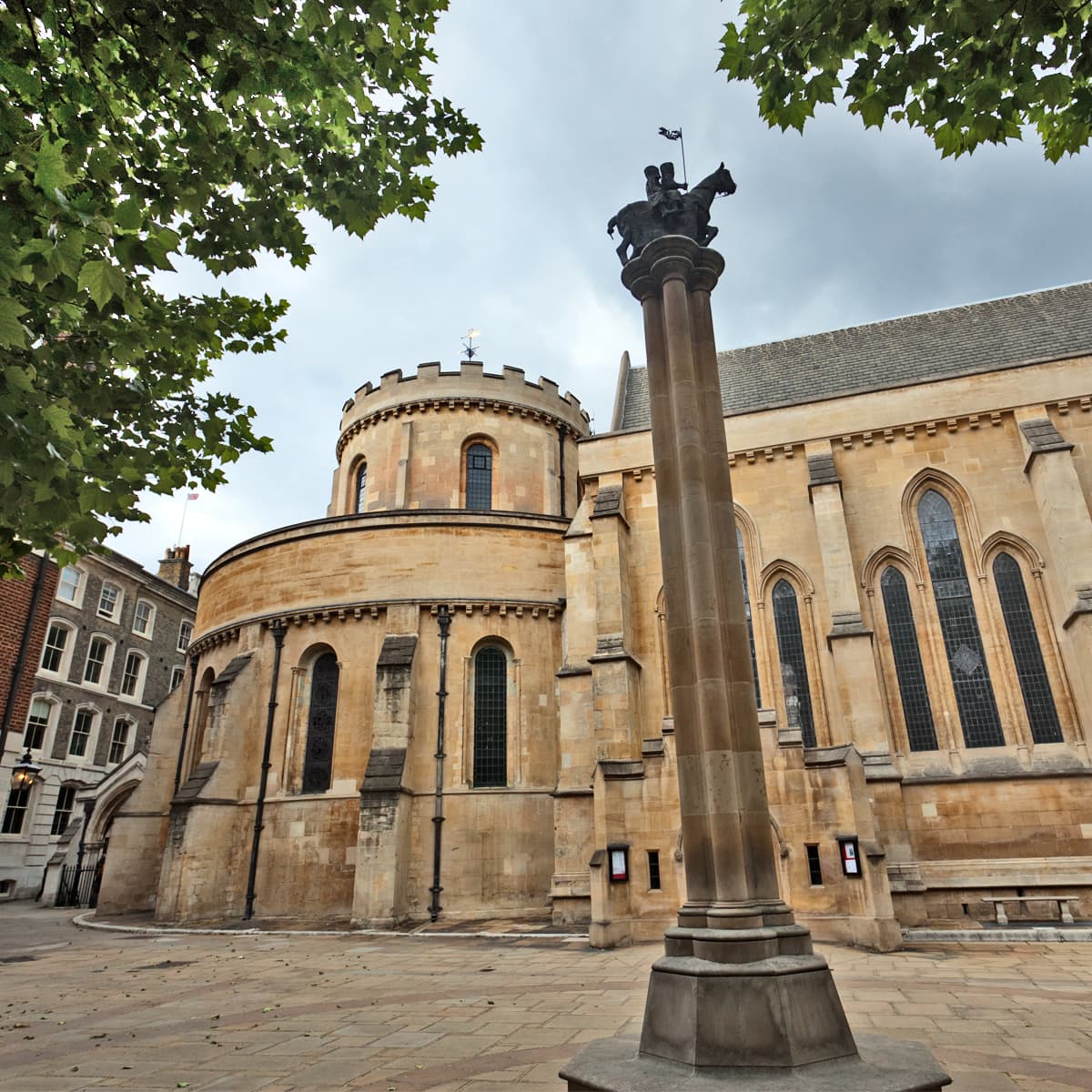
The Temple Church and Inns of Court For two centuries, from about 1100 until 1300, European Christians battled Middle Eastern Muslims over control of Jerusalem in a series of wars called the Crusades. The Temple Church is a Crusader church built in 1185, the days of England's Crusader king, Richard the Lionhearted. Notice the crenellated roof, and, in the courtyard alongside, the statue atop the pillar of a Crusader knight on horseback. The Temple Church is so called because it was the headquarters of the Knights Templar, a band of heavily armed, highly trained monks who joined the Crusades.
Over their armor, they wore long white robes decorated with red crosses. In their secret rituals, the knights were sworn to chastity and to the protection of pilgrims on their way to the Muslim-held Holy Land. If the church is open, though it has erratic hours, go on in. Inside, you'll find some of the honored knights lying face-up on the floor.
Read more...Show less
They lie under the rotunda of a circular nave. It's patterned after the Church of the Holy Sepulchre in Jerusalem. If a knight's legs are crossed, it indicates that he probably died peacefully, at home. Surrounding the serene knights are grotesque faces on the walls.
Perhaps they're the twisted expressions seen in battle in distant wars, or of Templars reflecting on their vow of chastity. By 1300, the Templars' mission of protecting pilgrims had become a corrupt protection racket, and they'd grown rich loaning money to kings and popes. Later, those same kings and popes condemned the monks as heretics, and sodomites, and confiscated their lands. With the knights gone, the temple church was rented to lawyers who built around the church.
Back outside the church, take in your surroundings. You're in the so-called inns of court. Browse around a bit. At least walk through the arcade of white columns next to the church.
Beyond that, you'll get a glimpse of one of the courtyards lined with lawyers' offices. The inns of court are quite, quite extensive. It's a peaceful maze of buildings, courtyards, narrow lanes, nooks, gardens, fountains, and century-old gas lamps. The complex is a self-contained city of lawyers with their offices, residences, courtrooms, chapels, and dining halls.
Law students must actually live here to complete their legal internship. Our tour is moving on, so start making your way back the way you came, uphill to Fleet Street. You may see lawyers, called barristers and solicitors here in England, as they go about their business. Some are dressed in modern business suits and ties.
Others wear traditional wigs and robes as they prepare to do legal battle at the royal courts of justice. The wigs are a remnant of French manners of the 1700s, when every self-respecting European gentleman wore one. By now, you should be back on Fleet Street. Stand in front, of Prince Henry's room, and survey the scene.
Fleet Street
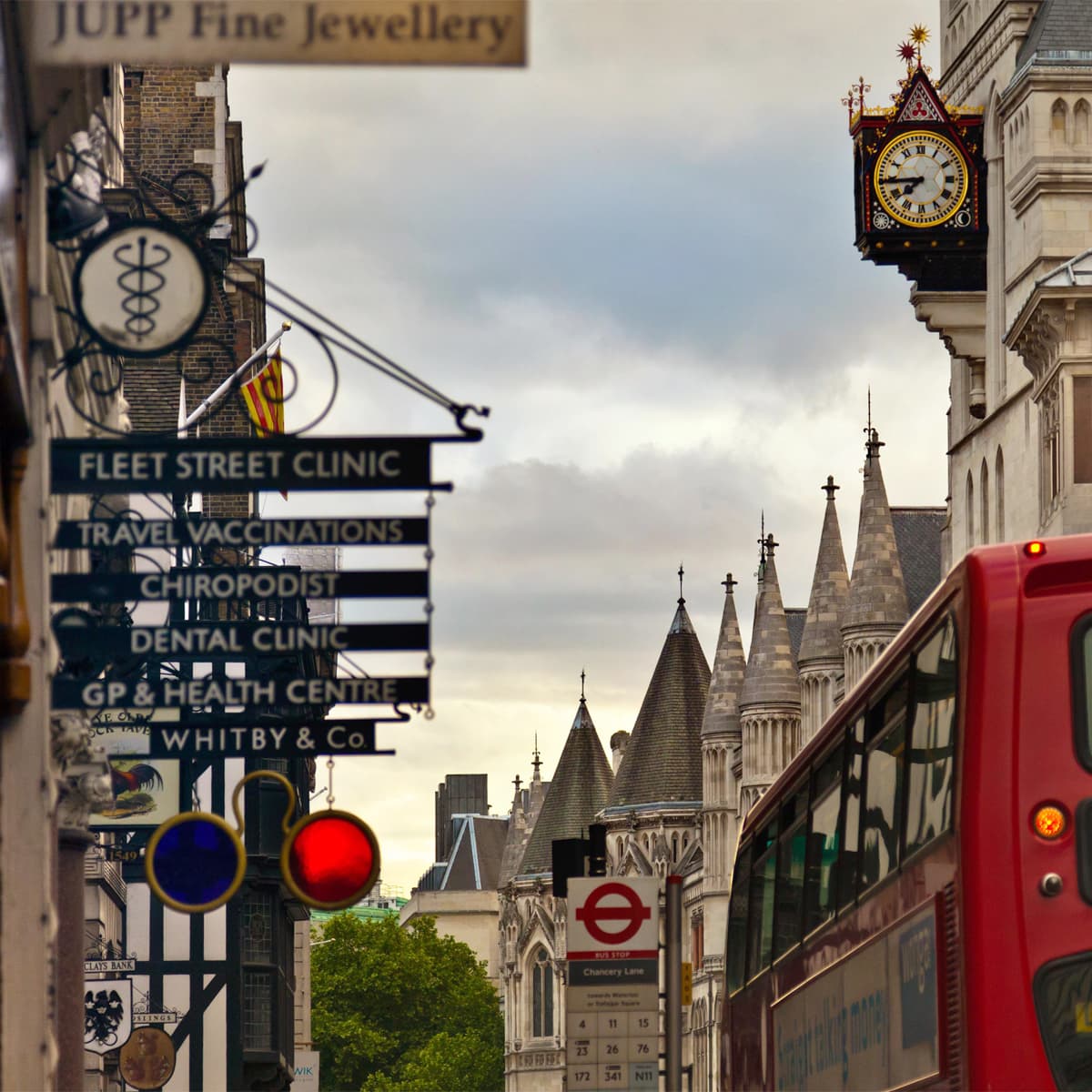
Fleet Street. Fleet Street has been the notorious haunt of a powerful combination, lawyers and the media. First came the lawyers at the inns of court. Then, in 1500, a newfangled invention arrived in the city, the printing press.
Fleet Street became the center of an early information age. In 1702, the first daily newspaper appeared. Soon, you had the Tattler, the Spectator, the People's Journal, and many others pumping out both hard news and tabloid fodder for the hungry masses. Start strolling east on Fleet Street and imagine life here in times past.
Read more...Show less
Hard-drinking reporters gathered with lawyers in Fleet Street taverns, places like the nearby Wig and Pen. Wig and Pen, that's for lawyer and writer. They talked over sensational court cases, searching for that scoop that London wanted to read about. Even today, Britain supports about a dozen national newspapers, and most Brits still read a daily paper.
But the newspaper industry is no longer centered here on Fleet Street. Starting in the 1980s, institutions like the Daily Telegraph, the Daily Express, and Reuters News Agency relocated to cheaper, more modern offices outside of the city center. After about a half block, stop, gaze across the opposite side of Fleet Street to the Church of St. Dunstan with its octagonal tower.
By the way, next to St. Dunstan is a brick building with the names of some bygone newspapers written on the side. View St. Dunstan from here. Music The Church of St. Dunstan in the West,
St. Dunstan, Great Fire 1666
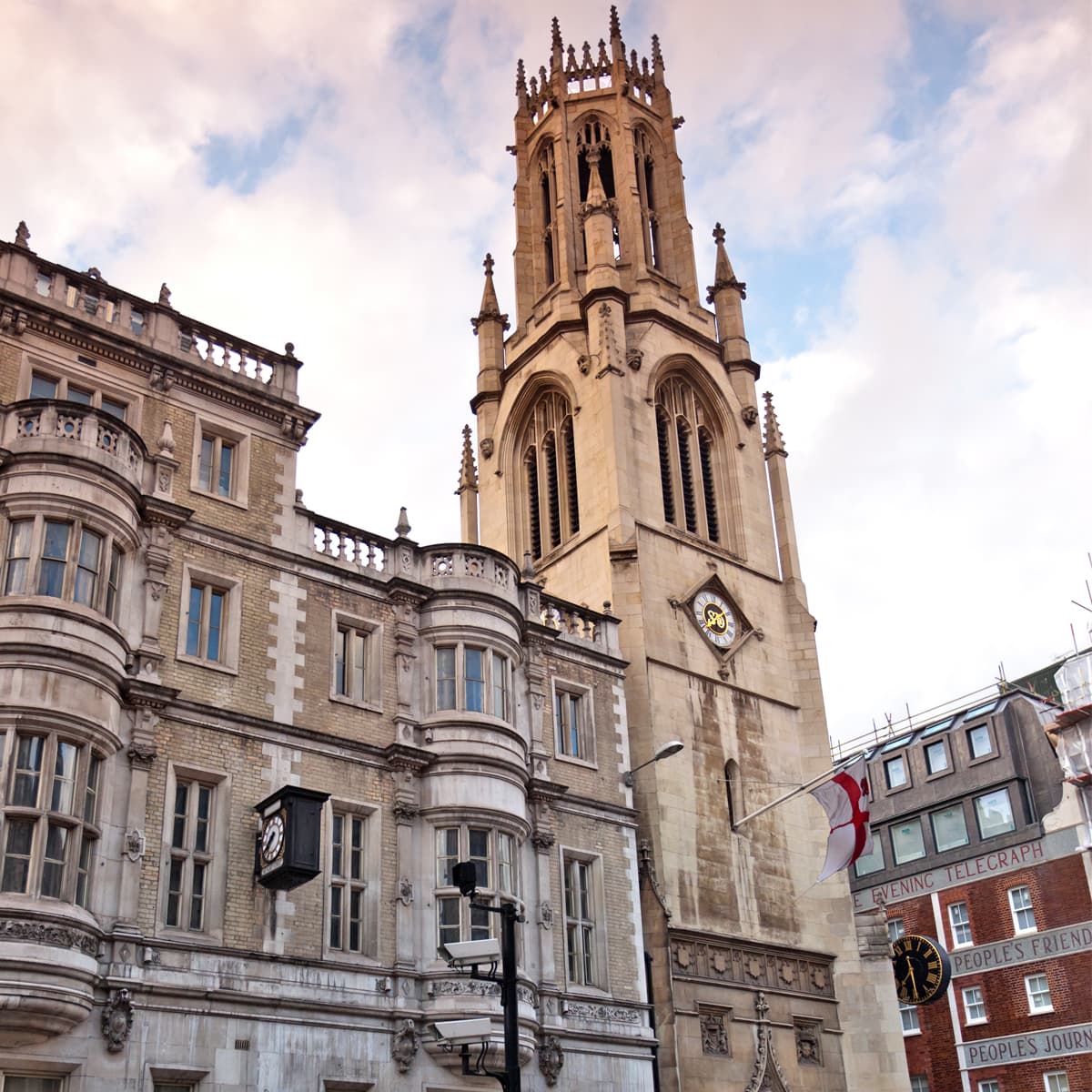
and the Great Fire of 1666. This church stands where the Great Fire finally ended. On September 2nd, 1666, a small fire started near London Bridge. We'll be there later.
For four days, the fire raged, growing larger and larger, sweeping westward, fanned by hot and blustery weather, devouring the wooden city as it went. As it approached St. Dunstan, 40 theology students battled the blaze. They held it in their hands, until the wind finally shifted, and the fire slowly burned itself out.
Read more...Show less
From here to the end of our walk, more than a mile, we'll be passing through the fire's path of destruction. It left London a Sodom and Gomorrah wasteland, so hot it couldn't be walked on for weeks. But the Church of St. Dunstan survived.
Yes, and today it still reminds Londoners of their pre-fire roots. The clock on the bell tower outside from 1670 features London's first minute hand and has two slaves gonging two bells four times an hour. Alongside the church is a statue of Queen Elizabeth I. The scepter and orb symbolize her religious and secular authority.
The statue is a rare contemporary portrait of Elizabeth since so many others perished in the fire. This 1586 depiction is as accurate as anything we have. St. Dunstan, St.
Dunstan is one of London's oldest congregations, established around 1000 A.D. In the vestibule is a list of church vicars, an unbroken line dating back to 1237. Today, St. Dunstan is one of the few churches with a thriving congregation in this now depopulated and secularized district.
Continue east up Fleet Street to number 165. We're heading to a small covered alleyway on the left, midway up the next block. To get there, you'll need to cross to the other side and continue to number 165 Fleet Street. As you walk, ahead of you, you'll catch glimpses of modern skyscrapers and the majestic dome of St.
Paul's Church. All of those, of course, came after the Great Fire of 1666. As you continue east, keep in mind that from this point until the end of our tour, we've entered the Fire Zone, the vast expanse of London destroyed by the fire. The Great Fire transformed the historic city of the Romans and Shakespeare into a totally different place.
It leveled thousands of old wooden houses. Similar to Prince Henry's Room, which we saw earlier. Right, as well as countless old churches. In the style of St.
Dunstan's or Temple Church. But the good news about the fire was that England of 1664 was a rising colonial power with plenty of money to rebuild. Thanks to the fire, Londoners turned what had been essentially a big medieval village into one of the world's most modern cities. Excuse me, Rick, just a reminder.
We're headed for number 165 on the left side of Fleet Street. Right. Once there, we'll seek out some of the first structures that rose from the ashes, like stately homes. But now, made of brick, to protect against future fires.
We'll see a post-fire restaurant that helped set the template for countless pubs and some of the world's most elegant churches. And our starting point for all that is number 165 Fleet Street, again, on the left side of the street. When you reach number 165, you'll find a small covered alleyway branching off Fleet Street. It's between 165 and 167.
Once you've found it, enter the passageway and follow signs through the narrow lanes directing you to Dr. Johnson's house. As you walk, let Rick describe this back-door part of the city.
Narrow Lanes of 1700s London
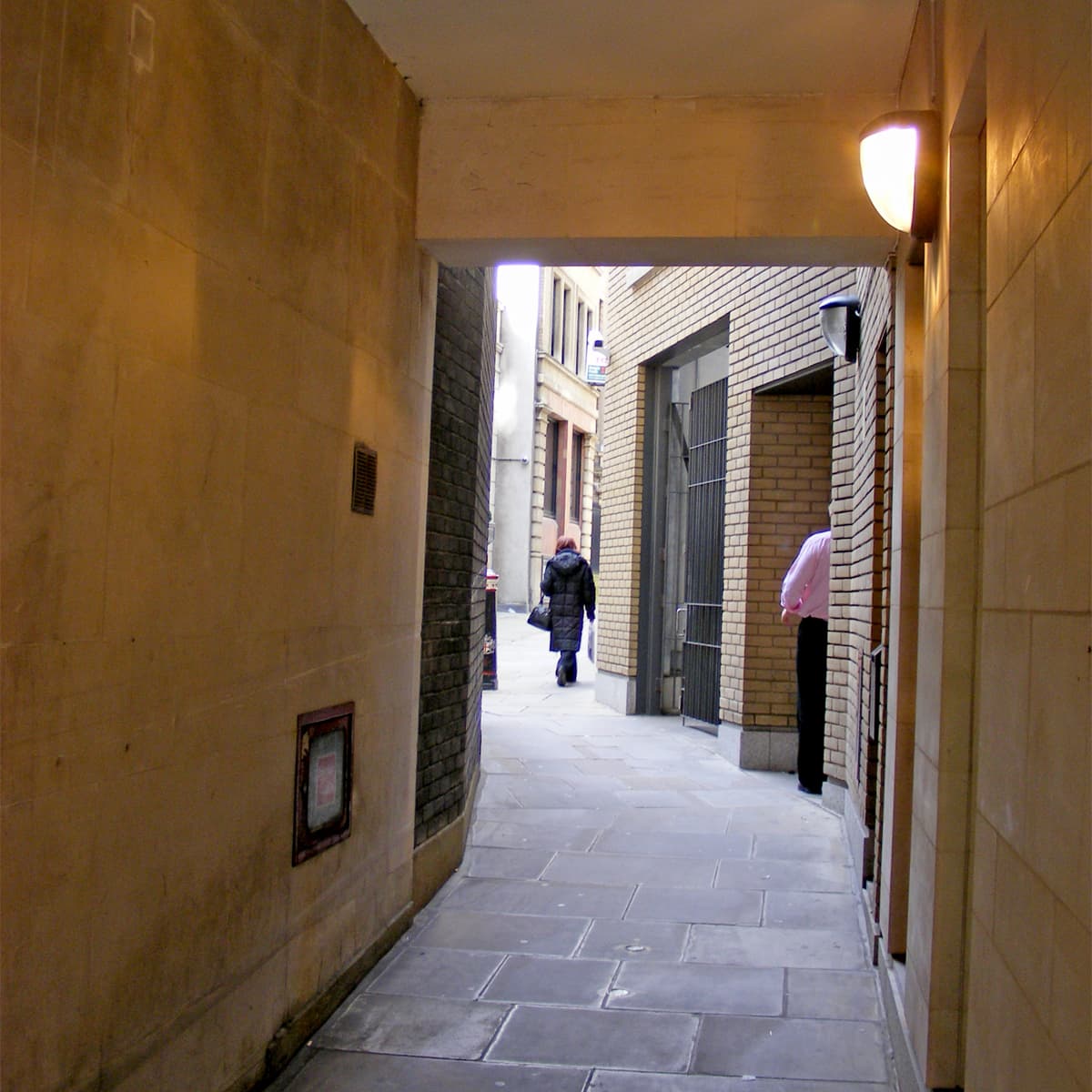
The narrow lanes of 1700s London. Make your way through these twisting alleyways and cramped buildings that now house urban hobbits. They give a faint glimpse of the London of the 1700s, a crowded city of half a million people. After the Great Fire, so it wouldn't burn down again, London was resurrected in brick and stone rather than wood.
But they stuck to the same medieval street plan, resulting in the narrow lanes lined with brick buildings like these. Keep winding through the maze. Don't worry, we'll soon run into Dr. Johnson's house.
Read more...Show less
As you enter Johnson's world, listen to what the writer told his audience. This is his young friend and biographer, James Boswell. Sir, he said, Sir, if you wish to have a just notion of the magnitude of this city, you must survey the innumerable little lanes and courts. Thank you, good doctor.
The little lanes and courts eventually spill into the quiet courtyard called Goff Square with Johnson's house. Dr. Johnson's house is at the top of the square on your left side of the square. On your left, as you enter. If you got turned around, Goff Square is located about a block north of Fleet Street.
Dr. Johnson's House
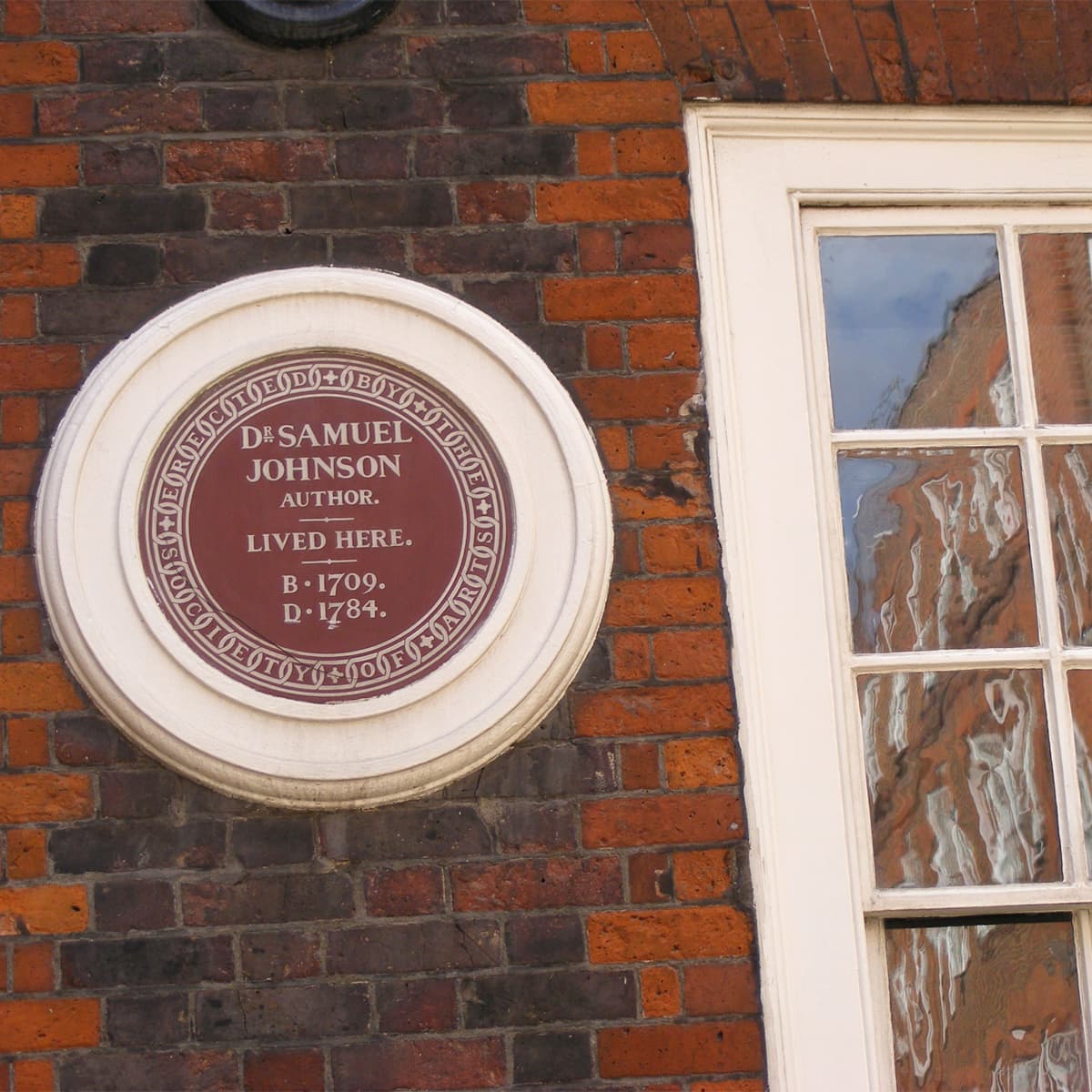
Dr. Johnson's house. When a man is tired of London, wrote Samuel Johnson, he is tired of life. For there is in London all that life is.
All that life can afford. Samuel Johnson, who lived from 1709 to 1784, loved to wander these twisting lanes. He was always on the prowl for pungent slices of London life that he could pass along in his weekly columns called The Rambler and The Idler. At age 28, Johnson arrived in London along with one of his former students, David Garrick, the actor who went on to revolutionize London theatre.
Read more...Show less
Dr. Johnson wrote a book called Johnson Roamed the Pubs, Brothels, and Coffee Houses. He took in the illicit dogfights where terriers battled cornered rats while men bet on the outcome. Johnson became a well-known eccentric, a man about town, though he always seemed to live on the fringes of poverty.
A contemporary described the man as, quote, tall, stout, and slovenly in his dress. Feel free to stroll around this pleasant courtyard while Rick tells us more about Johnson and his times. At the far end of Goff Square is a statue of Johnson's beloved cat, Hodge, who dined on oysters. Johnson lived in this house from 1748 until 1759.
He prayed at St. Clement Dane's and drank in the Fleet Street pubs. It was here, in the attic of this house, that he produced his most famous work, a dictionary of the English language. Published in 1755, it was the first great English-language dictionary.
It starred Johnson's 42,773 favorite words, culled from all the books he'd read. It took Johnson and six assistants more than six years to put it all together. They had to sift through all the alternate spellings and cockney dialects of the world's most complex language. Johnson standardized spelling and pronunciation and explained the word's etymology.
He also occasionally put his own droll spin on words. He said, to the point where he said, the word's generally given to horses, but in Scotland supports the people. Today the house is a museum. For hardcore Johnson fans, and I met one once, the exhibits are fascinating.
It's particularly auspicious for sojourners captivated by the alchemy of verbiage. But even for casual visitors, the old house itself is interesting. You climb four stories decorated with period furniture. There's a first-year student, the first edition of Johnson's Dictionary, and pictures of Johnson, Garrick, and Boswell.
Nothing's roped off or behind glass, and you can browse at will. Finally, you arrive at the top floor garret where literary history was made, the birthplace of the dictionary that standardized our English language. Walk to the far end of Goff Square. Many of the square's offices house lawyers.
They're called barristers or solicitors here in Britain. On the doorways, notice the lists of names and titles. These lawyers work not as part of a firm, but as freelancers, sharing offices and clerks. Turn right at the statue of Hodge the Cat.
Head back toward Fleet Street. Wind downhill through the alleys. When you reach busy Fleet Street, a few steps to the left, there's a venerable tavern facing the street.
Ye Olde Cheshire Cheese Tavern
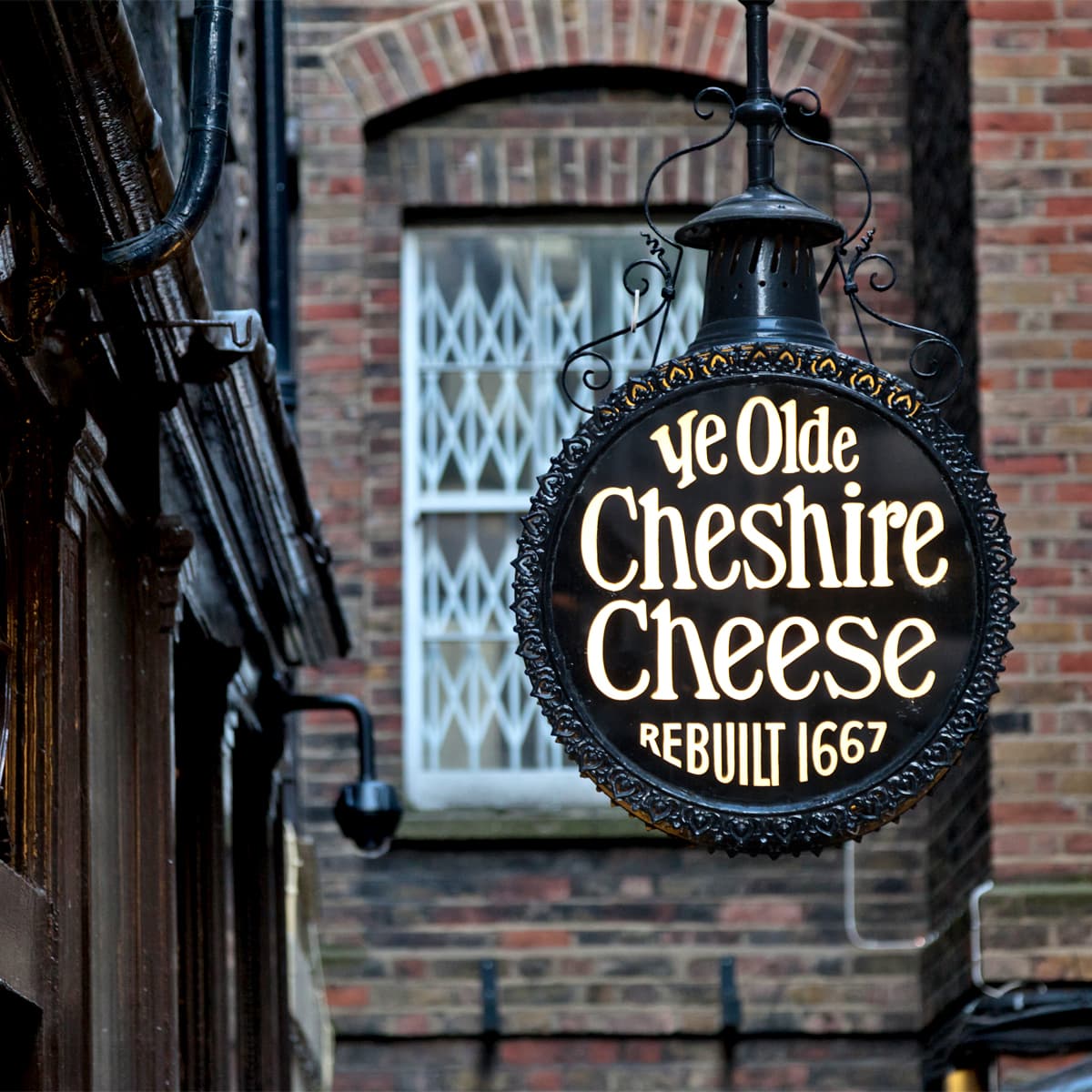
Ye Olde Cheshire Cheese Tavern. Dr. Johnson often, and I do mean often, popped around the corner here for a quick one, sometimes with David Garrick and his sleazy actor friends. The cheese, as the pub was called, dates from 1667 when it was rebuilt after the Great Fire, but it's been a tavern since 1538.
Inside, it's a four-story warren of small, smoky, wood-lined rooms. Each room offers a different menu from pub grub to white tablecloth fine dining. As a traditional chop house, it serves hearty portions of meats to power-lunching businessmen. The tavern's entrance is 10 yards up the narrow lane.
Read more...Show less
If you go in, you can sit in Charles Dickens' favorite seat next to the coal fireplace that's in the chop room on the main floor. Order a steak and kidney pie and some spotted dick, that sponge pudding with currants. Sip a pint of Samuel Smith, the house beer of the current owners, and think about Samuel Johnson, who drank here pondering, various spellings. Should it be pint with an I or pint with a Y?
Color with a U or without? Theater, E-R, or theater, R-E? The Cheshire Cheese is a place to immerse yourself in a world largely unchanged for centuries, a world of reporters trying to meet a deadline and lawyers trying to crack a case. It's also a world of many famous characters who dropped by over the generations, of Alfred Lord Tennyson inventing rhymes and Arthur Conan Doyle solving crimes, of W.B.
Yeats, Teddy Roosevelt, and Mark Twain. Step back out on Fleet Street and take in the stunning view of the dome of St. Paul's Cathedral.
View of St. Paul's
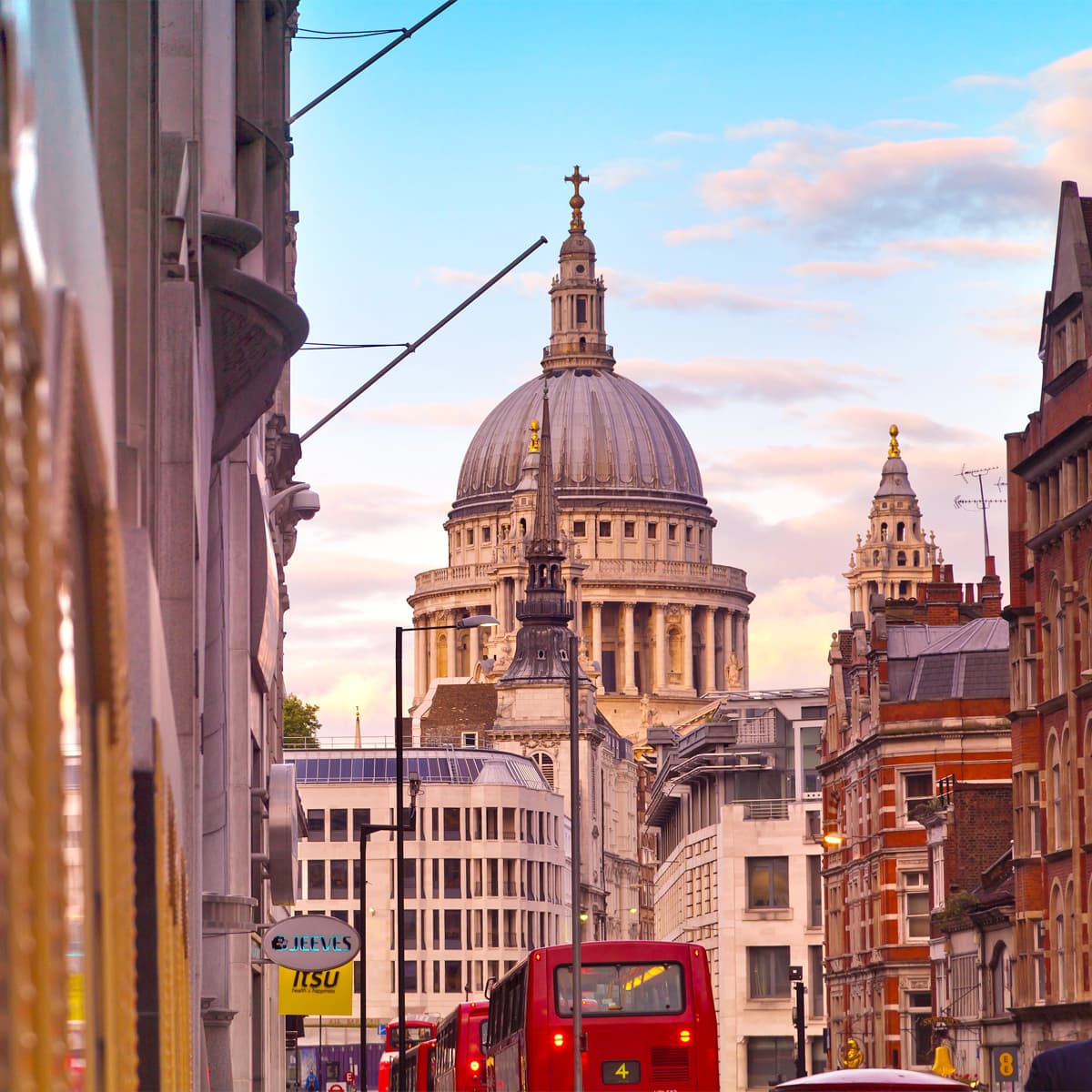
View of St. Paul's, the Blitz, the Great Fire, the Plague, and Christopher Wren. Think of the changes this city has been through. If you were standing here in December 1940, the morning after a German Luftwaffe firebomb raid, you'd see nothing but a flat, smoldering landscape of rubble with St.
Paul's rising high above it, almost miraculously intact. And standing here in September 1666, you'd see nothing at all but smoke and ruins. The Great Fire raised everything, including the original St. Paul's Cathedral.
Read more...Show less
Christopher Wren was hired to rebuild St. Paul's and the city. Even today, we see the view that Wren intended, a majestic dome hovering above hazy rooftops, surrounded by the thin spires of his lesser churches. From the Cheshire Cheese, start walking downhill east on Fleet Street about 100 yards to St.
Bride's Avenue on the right side of Fleet Street. As you walk, let Rick describe yet another London catastrophe. The Bubonic Plague. It started in the spring as the Poor's Plague and was ignored until it spread to richer neighborhoods.
By summertime, an especially hot one, 5,000 were dying every week. Victims passed through several days of predictable agony. Headaches, vomiting, fever, shivering, swollen tongue, and swollen buboes, or lumps, down on the groin glands. Finally, you died with your skin turned a blotchy black.
That's why they call it the Black Death. The corpses were carried off to mass graves, including one near here. By fall, London was a ghost town. And throughout England, people avoided Londoners like the plague.
In all, 70,000 people died, one in six Londoners. The city would not be completely rid of the disease until the purifying flames of the Great Fire a year later. Find St. Bride's Avenue a half block east of the Cheshire Cheese.
It's across Fleet Street on the south side or right side of the street. Looking down St. Bride's Avenue, you'll see the wedding cake steeple of St. Bride's Church. Cross Fleet Street and make your way to St. Bride's.
St. Bride's Church
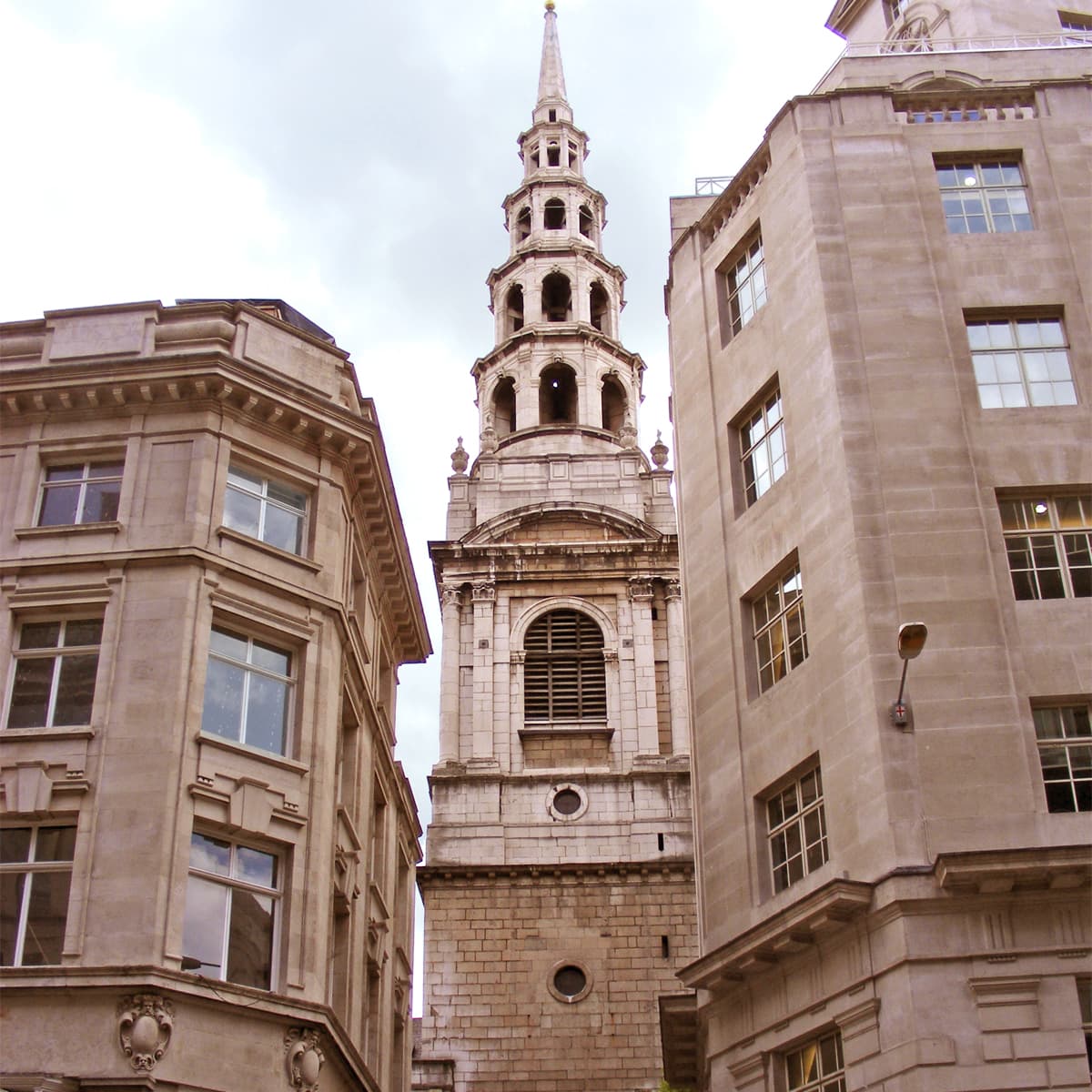
St. Bride's Church After the double whammy of the plague and the fire, Christopher Wren built a new St. Paul's plus about 50 other churches in the vicinity, including this one, St. Bride's.
The 226-foot-high steeple was Wren's tallest. And in 1675, nine years after the fire, it became the first of Wren's churches to open its doors. The distinctive steeple, stacked in layers as it tapers to a point, is said to have inspired the wedding cake. Supposedly, a Fleet Street baker named Mr.
Read more...Show less
Rich gazed out his shop window as he made the first multi-tiered cake. By the way, the word bride in St. Bride's is only coincidental. The church was dedicated to St.
Bridget, or Bride of Kildare, long before the steeple or any wedding cakes. Let's go inside the church. St. Paul's may be Wren's most famous church, but smaller churches like St.
Bride's better illustrate his distinctive style. First, there's usually a steeple over the main entrance. Stepping inside, you'll see more typical Wren features. Make your way to the nave.
As in all Wren churches, it's uncluttered and well-lit. St. Bride's interior is decorated with Wren's typical geometric patterns, squares, circles, and rosettes. There are neoclassical or Greek-style columns, a curved or domed plaster ceiling, and fine-carved woodwork.
You'll find these architectural elements in most of Wren's churches. Notice that the pews bear the names of departed journalists. St. Bride's is nicknamed both the Cathedral of Fleet Street and the Printer's Church.
It's been home to newspaper reporters, scholars, and literati since 1500. That's the year a man named Winkin Deward set up his printing press right here on church property. Deward's press first served the literate clergy of St. Bride's, but was soon adopted by secular scholars, bookmakers, and newspapers as Fleet Street became a global center for printed information.
During World War II, St. Bride suffered terribly in the Blitz. Today's structure was largely rebuilt after the war. But because of Hitler's bombs, the church was instantly excavated, cleared down to its 6th-century Saxon foundations, revealing previously unknown history.
Today, the basement is open to visitors as a museum. If you have the time and energy, you could pause the audio tour and explore the basement. You'd see layers of history from six previous churches. On display are Roman coins, medieval stained glass, examples of early printing, and 17th-century tobacco pipes.
There's even the wedding dress worn by the bride of the baker who was inspired by St. Bride's steeple. When you're ready to move on, start making your way back to St. Bride's By the way, we're about halfway through our walk, and you may consider taking a break at some point.
There's plenty of places nearby, including a historic tavern just ahead on Fleet Street, which we'll be passing in a moment. When you reach Fleet Street, turn right. Continue east on Fleet Street, heading in the direction of St. Paul's. Keep going as Fleet Street descends into a valley in the landscape, a former river valley. The Fleet River
Fleet River, Ludgate
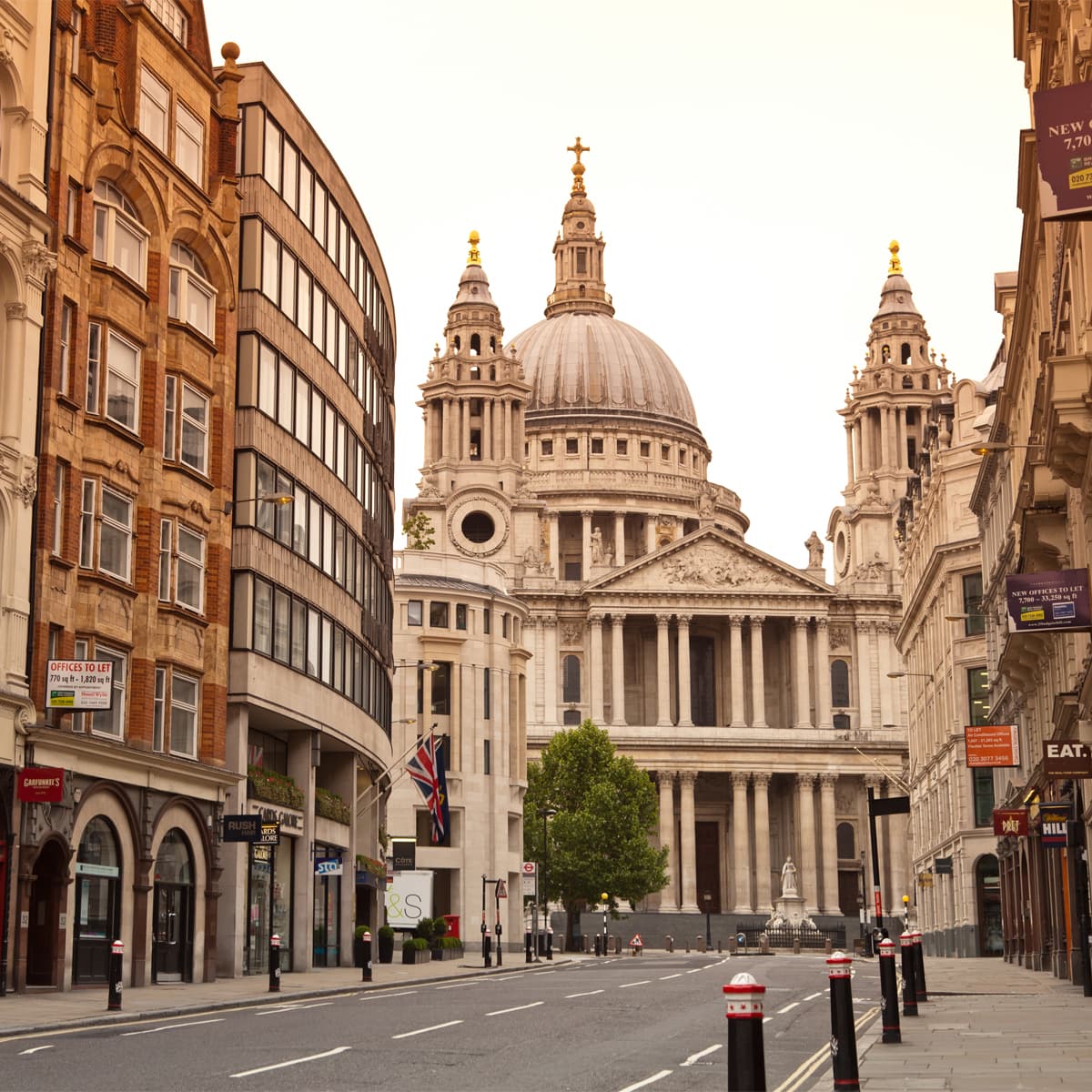
and Ludgate At No. 99 Fleet Street, just a block past St. Bride's, is the Punch Tavern. This pub is named after the London political magazine famous for its satirical cartoons.
In the mid-1800s, this pub became the magazine staff's hangout. Peek into the tavern to see what's going on. to see Punch and his look-alike wife, Judy, looking down on a perfectly Victorian scene. These figures from a popular puppet show gave both the magazine and the tavern their names.
Read more...Show less
Continue down Fleet Street into the valley. As we walk, we're getting closer and closer to London's medieval origins, which still lie a ways east of here. Cross Busy Farringdon Road. This valley in the landscape was formed by the Fleet River, which still has a lot of history.
It still flows, though covered over by Farringdon Road. The river flows southward, crossing underneath Fleet Street on its way to the Thames at Blackfriars Bridge. In medieval times, the river formed the western boundary of the walled city. So once we cross the street, we get closer to the city Shakespeare would have recognized.
After crossing Farringdon Road, continue on Fleet Street, which is now called Ludgate Hill. Okay, hike up the hill toward the big church. That's St. Paul's.
Ludgate Hill, as one of the three hills in the area, was where some of London's first inhabitants built. The ancient Romans of Londinium may have built a temple to their goddess of hunting where St. Paul stands today. As you walk, look up ahead.
You'll spy a lead-covered steeple just before St. Paul's. This steeple graces another of Wren's churches. It's called St.
Martin within Ludgate. The church itself is much older than the steeple. It stands on the site of what was once the city wall. In medieval and in Elizabethan times, this was one of the gated entrances to the city, known as Ludgate.
Because the gate was fortified, it was also used as a jail. Eventually, prisoners were transferred to another facility nearby at another of the city gates, Newgate. By the 17th century, this gate had been expanded and rebuilt into Newgate Prison, one of the civilized world's first purpose-built detention facilities. That prison is now long gone, but there's still one aspect of it that survives, and that's the courtrooms where the prisoners were tried.
And so we come to our next site, Old Bailey. Continue up Ludgate Hill until it intersects with Old Bailey Street. It's just before the prison, before the lead-covered spire on the left side of Ludgate Hill Street. Once you arrive, stand at the intersection and look up Old Bailey Street. A block away, you'll see a dome crowned by a golden statue of justice. This marks the Old Bailey.
Old Bailey
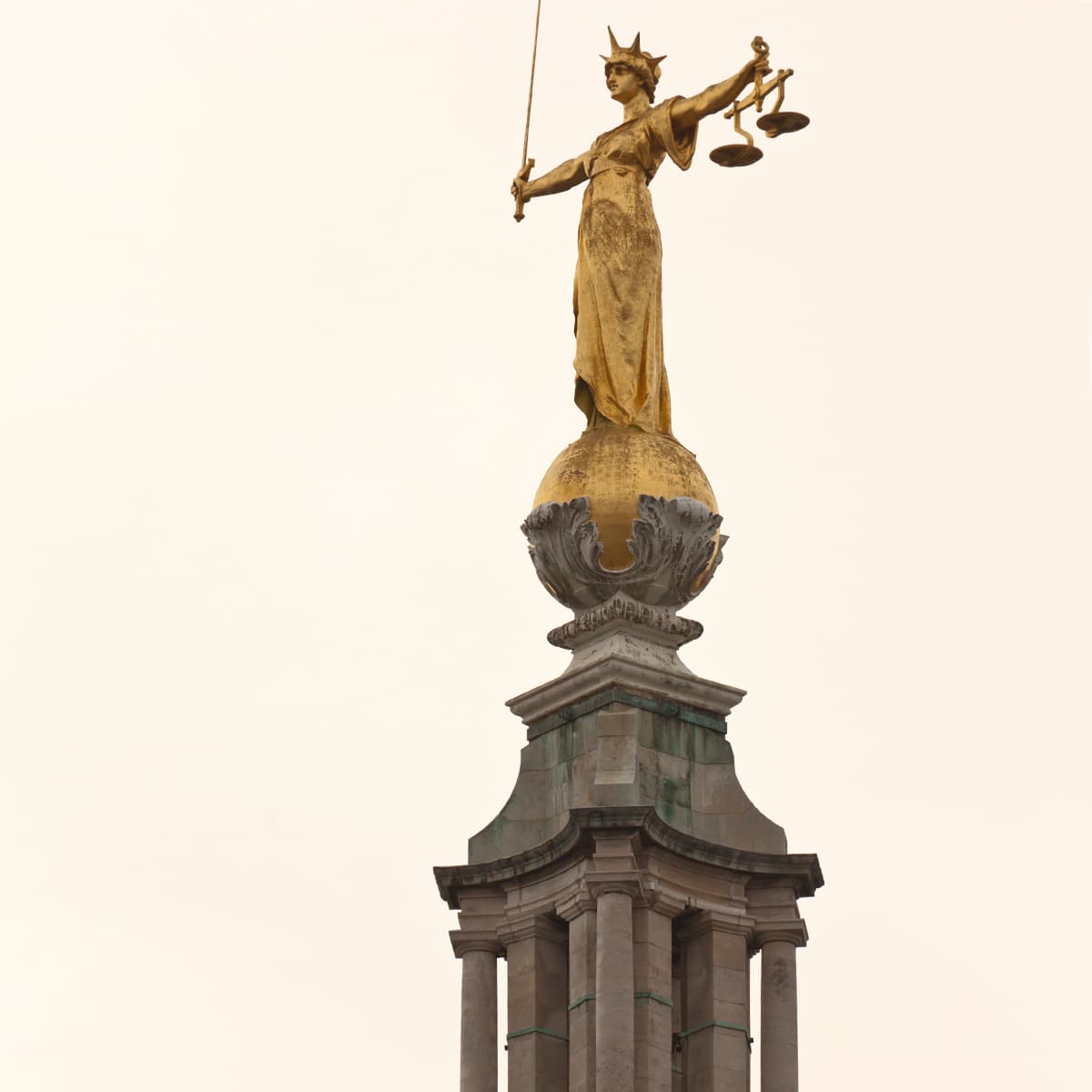
Old Bailey, Central Criminal Court. While you could actually go inside the famous courthouse known as Old Bailey, Old Bailey, your guidebook can tell you how. We'll just enjoy the view from here. The statue atop the dome is the famous Golden Lady who weighs and executes justice with a sword and a scale.
She symbolizes the Old Bailey's long history prosecuting England's most notorious criminals. That includes the rebels who beheaded King Charles I back in the 17th century. There was the radically religious William Penn, who went on to found out that the Old Bailey was a criminal. He was also the first to found Penn, Sylvania, as well as Oscar Wilde, charged with criminal homosexuality, and Britain's vicious serial killer, the Yorkshire Ripper.
Read more...Show less
More recently, Old Bailey hosted trials for the notorious founder of WikiLeaks, Julian Assange. Let's start heading to our next stop. Continue walking uphill on Ludgate Hill Street toward St. Paul's Cathedral.
By the way, if you did visit Old Bailey, you'd see justice doled out the old-fashioned way, with barristers in wigs and robes arguing their cases before stern judges while the accused sits in the dock. Up ahead is St. Paul's Cathedral with its majestic dome. As you approach, let Rick describe the church, the dome, and the venerable history. St. Paul's Cathedral.
St. Paul's Cathedral
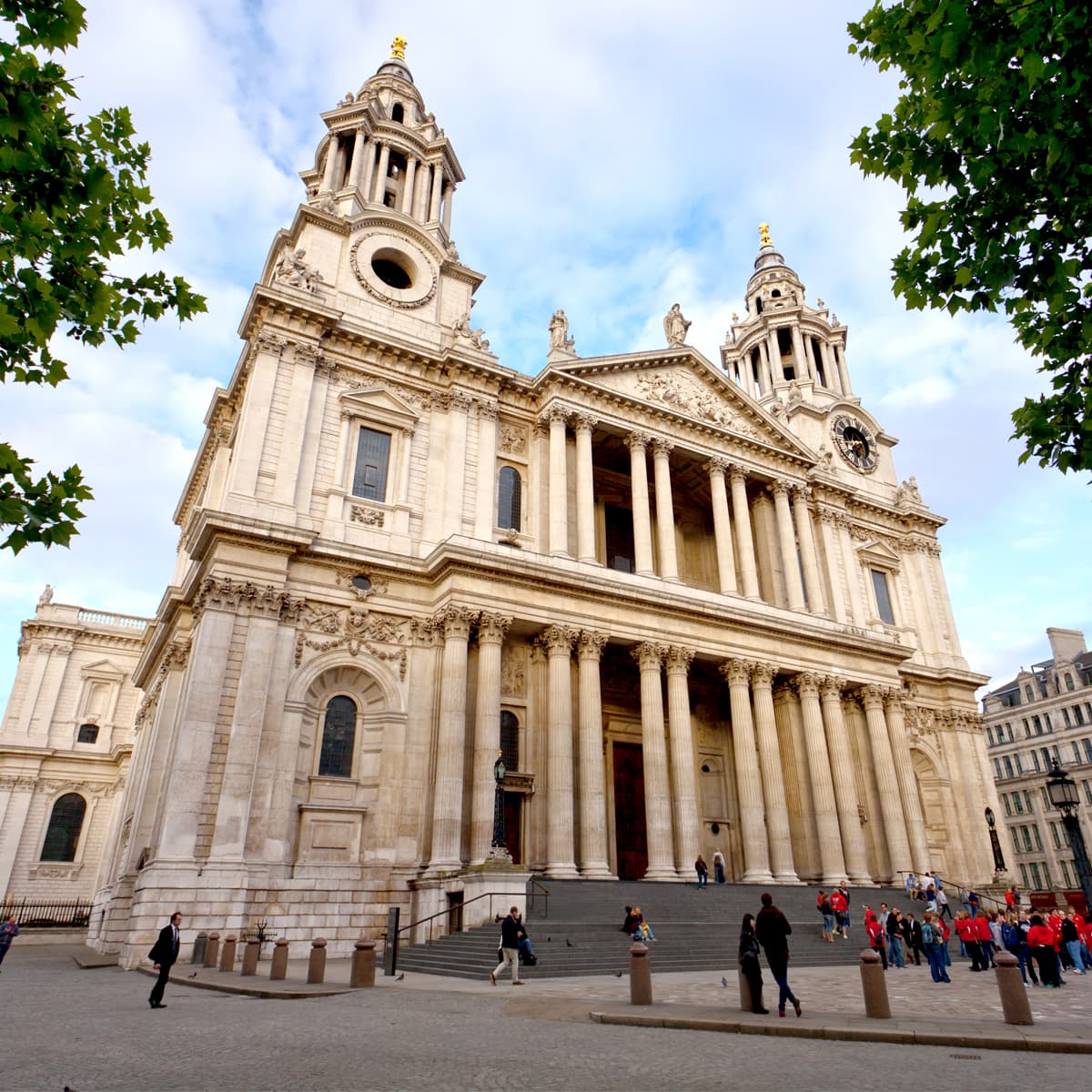
The greatest of Wren's churches is St. Paul's. England's national church marks the heart of the city. There's been a church on this spot for 15 centuries, but the old St.
Paul's burned to the ground in 1666. Immediately afterward, King Charles II turned to his old childhood friend, Christopher Wren, to rebuild it. As you approach new St. Paul's, admire its façade, with twin Baroque towers and topped with a soaring dome.
Read more...Show less
It's impressive how this grand structure came to be. Christopher Wren, who lived from 1632 to 1723, was only 33 years old when he got the gig. He wasn't a well-known architect, but he'd proven his ability in every field he'd touched. In astronomy, by mapping the moon.
In medicine, he pioneered using opium as a geological, general anesthetic. He made his mark in mathematics with a treatise on spherical trigonometry. And in physics, Wren's study of the laws of motion influenced the landmark work done by his even more famous colleague, Isaac Newton. For 40 years, Wren labored on this site, building what was then the second-largest dome in the world, after St.
Peter's in Rome. The dome rises 365 feet, weighs 65,000 tons, and stands as the city's most iconic dome. The dome is the largest dome in the world, and stands as the city's most iconic, St. Paul's is Europe's fourth-largest church, with a nave that stretches over 500 feet.
It's one of the few great churches built within the architect's lifetime. In his old age, Wren got to look up and see his son place the cross atop the dome, completing his masterpiece. As you get close to the church, you'll need to cross Ludgate Hill Street, find the crosswalk, and cross to the north side of the street. In many ways, St.
Paul's is London's heart. It's one of the first churches from London's early days. As a cathedral, it houses the city's bishop. First, it was a Catholic bishop, and then, after the Reformation, Anglican.
St. Paul's symbolizes London's rise from the ashes of the Great Fire. It survived the horrendous Nazi air raids of World War II. It's where the nation gathers for historic events.
Winston Churchill's funeral, or the wedding of Prince Charles and Lady Diana, and St. Paul's is the final resting place of England's finest, from the Duke of Wellington to Lord Nelson to the man who built it, Sir Christopher Wren. If you plan to go inside the church, we won't on this walk. Rick has another audio tour on St.
Paul's. For now, look for the Temple Bar Gate. It's directly to the left of St. Paul's facade.
It may not be visible from where you're standing, so start heading in that general, general direction, to the left of St. Paul's facade. You'll soon see a stone archway directly to the left of the church. There are statues on it.
And it's light gray in color, which means it was built with Portland Stone. This is the Temple Bar Gate, which marks the entrance to Paternoster Square. Temple Bar and Paternoster Square.
Temple Bar, Paternoster Square
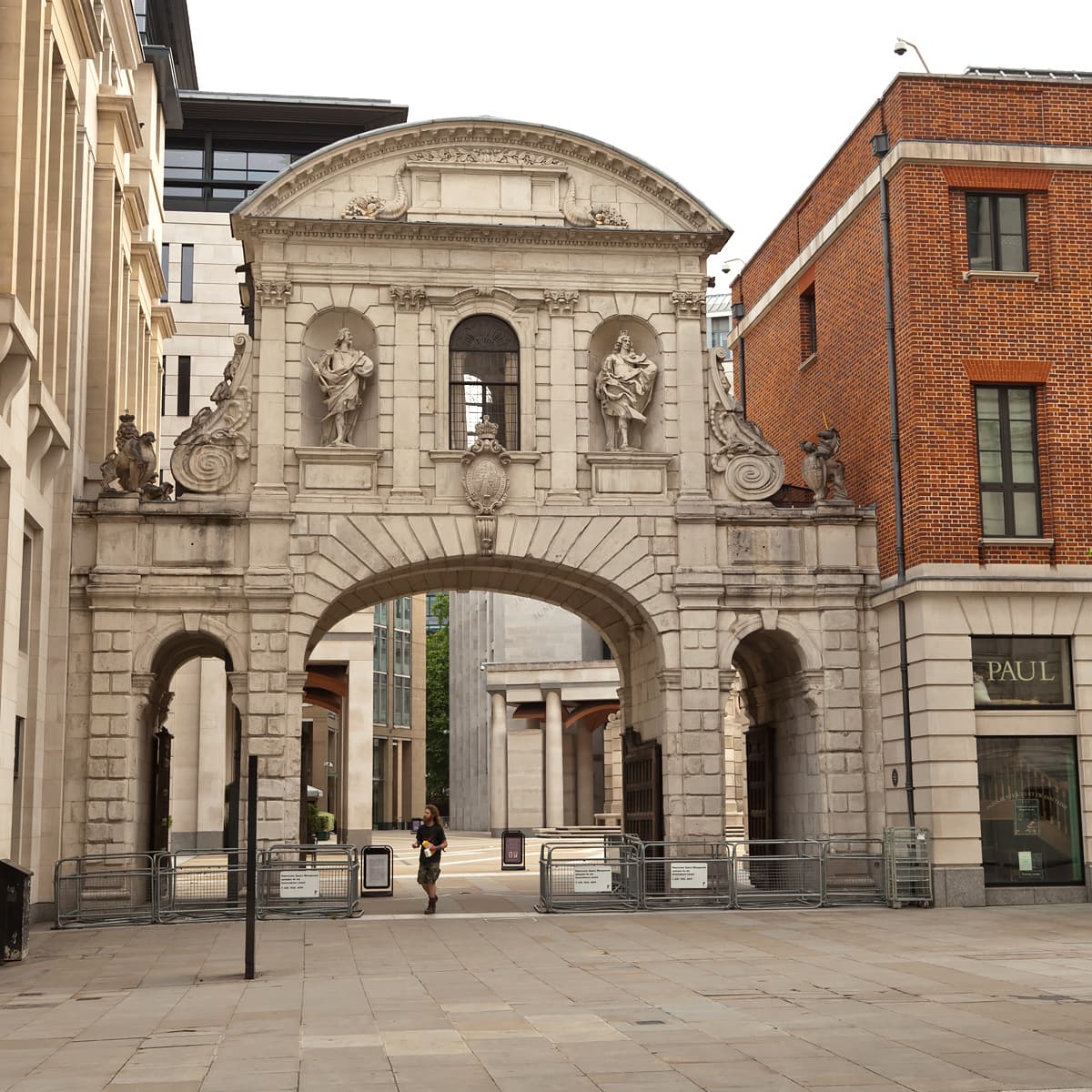
The Temple Bar Gate was once the ceremonial west entrance to the City of London. That is, it once stood a half-mile west of here, where the Strand meets Fleet Street. That's the historic spot we saw earlier on this tour, the place now marked by the Griffin Statue. In 1672, this stone archway was erected on Fleet Street, built by none other than Christopher Wren.
But as London modernized, the Temple Bar Gate, came to be seen as just a big obstacle in the way of traffic. In 1878, it was carted off to ornament the country villa of a brewery owner. Finally, in 2004, the gate was brought back to the city in pieces. The stones were painstakingly reassembled, like a 2,700-piece jigsaw puzzle.
Read more...Show less
It now guards the entrance to Paternoster Square. Enter through Temple Bar Gate. You emerge into Paternoster Square. As you can see, the square is completely modern, built in the early 21st century.
Once in the square, veer to the right. Start making your way to the Statue of the Sheep at the far end of Paternoster Square. This 21st-century square was designed to allow maximum urban development while not obliterating views of St. Paul's.
That's why the buildings are so low. As you walk through the square, enjoy the great view of the dome rising above Wren's red-brick neoclassical chapter house. Our next stop is the street called Cheapside, located behind St. Paul's.
Pass through Paternoster Square. Exit out the far end, striding right past the striding Shepherd and Sheep statue. Continue east along the pedestrian walkway behind the statue. The walkway is lined with modern shops.
Uh-uh-uh. No shopping. No shopping. It eventually leads to the noisy, traffic-filled boulevard called Cheapside.
While you walk, enjoy some music. We'll see you in a minute or two when you emerge at Cheapside. ¶¶ ¶¶ ¶¶ ¶¶ ¶¶ ¶¶ ¶¶ ¶¶ ¶¶ ¶¶ ¶¶ ¶¶ ¶¶ ¶¶ ¶¶ ¶¶ ¶¶ ¶¶ ¶¶ ¶¶ ¶¶ ¶¶ ¶¶ ¶¶ ¶¶ ¶¶ By now, you should be arriving at the busy street called Cheapside. When you reach it, turn right and continue east as you listen to Rick's commentary. Cheapside, Shakespeare's London
Cheapside
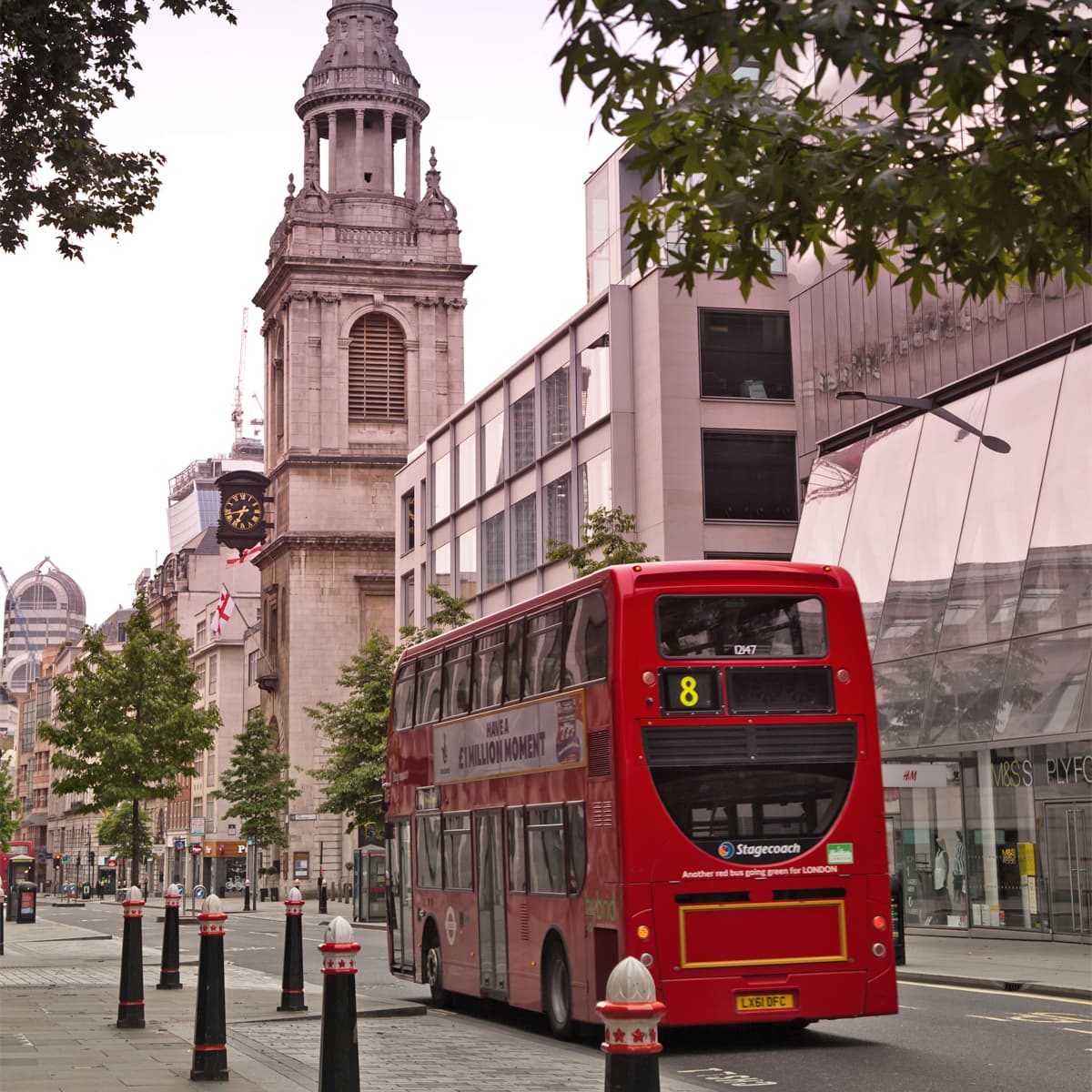
This was the main east-west street of London in Shakespeare's day. The city back then had a population of 200,000. The wide street hosted the city's marketplace. The word cheap meant market.
That market heritage is still seen today in the names of some of the streets that branch off it. Bread Street, Milk Street, Honey Street, and so on. But as you walk along it today, it's clear that the ambiance is far from Elizabethan, and it's far from cheap. It's a street of fancy offices, upscale clothing stores, and ye olde Starbucks.
Read more...Show less
This whole area around St. Paul's was destroyed in World War II. Remember, London was bombed heavily by Nazi warplanes. As the war began, Hitler threatened to invade the Isle of Britain.
When that didn't work, he punished the pesky Brits with a series of devastating air raids. This is called the Blitz. All through the fall and winter of 1940 and 41, Nazi planes firebombed a helpless London. It included a stretch of 57 consecutive nights of bombing.
Most of the bombs fell here, in East London. Cheapside was absolutely flattened. 20,000 Londoners were killed, As I mentioned earlier, only St. Paul's emerged relatively unscathed.
Locals called that a miracle. After the war, Cheapside was rebuilt. They originally did it with ugly 50s-style concrete buildings. But as you can see, the whole area has been rebuilt yet again with glassy 21st-century facades.
Case in point, just past New Chain Street is a slick new shopping mall. Inside, though we won't go there on this tour, is a glass elevator. That takes visitors up to a great rooftop terrace with a view of St. Paul's Cathedral.
Continue east on Cheapside. We're headed for the church steeple directly ahead. As you walk, you'll pass by Bread Street. If you were to detour two blocks south on Bread Street, our walk won't go there, but if you were to take the detour, on the corner of Bread and Cannon Streets, you'd find a little bit of a walk.
You'd find the site of the Mermaid Tavern. This was Shakespeare's favorite haunt. Not a trace of it remains today, but that's where it stood. In the early 1600s, Sweet Will would meet at the Mermaid along with fellow writers Ben Johnson, Sir Walter Raleigh, and John Donne.
There, they'd enjoy food, good ale, and literary conversation. One of the group, Francis Beaumont, wrote, What things have we seen done at the Mermaid? Heard words that have been so nimble, and so full of subtle flame. And those words are all that's left of the Mermaid Tavern.
A little further east along Cheapside is our next stop, the Church of St. Mary Lebeau. Locals refer to it as Marley Bow. The church is topped by another tall wren steeple. ¶¶ St. Mary Lebeau and Bow Lane.
St. Mary-le-Bow
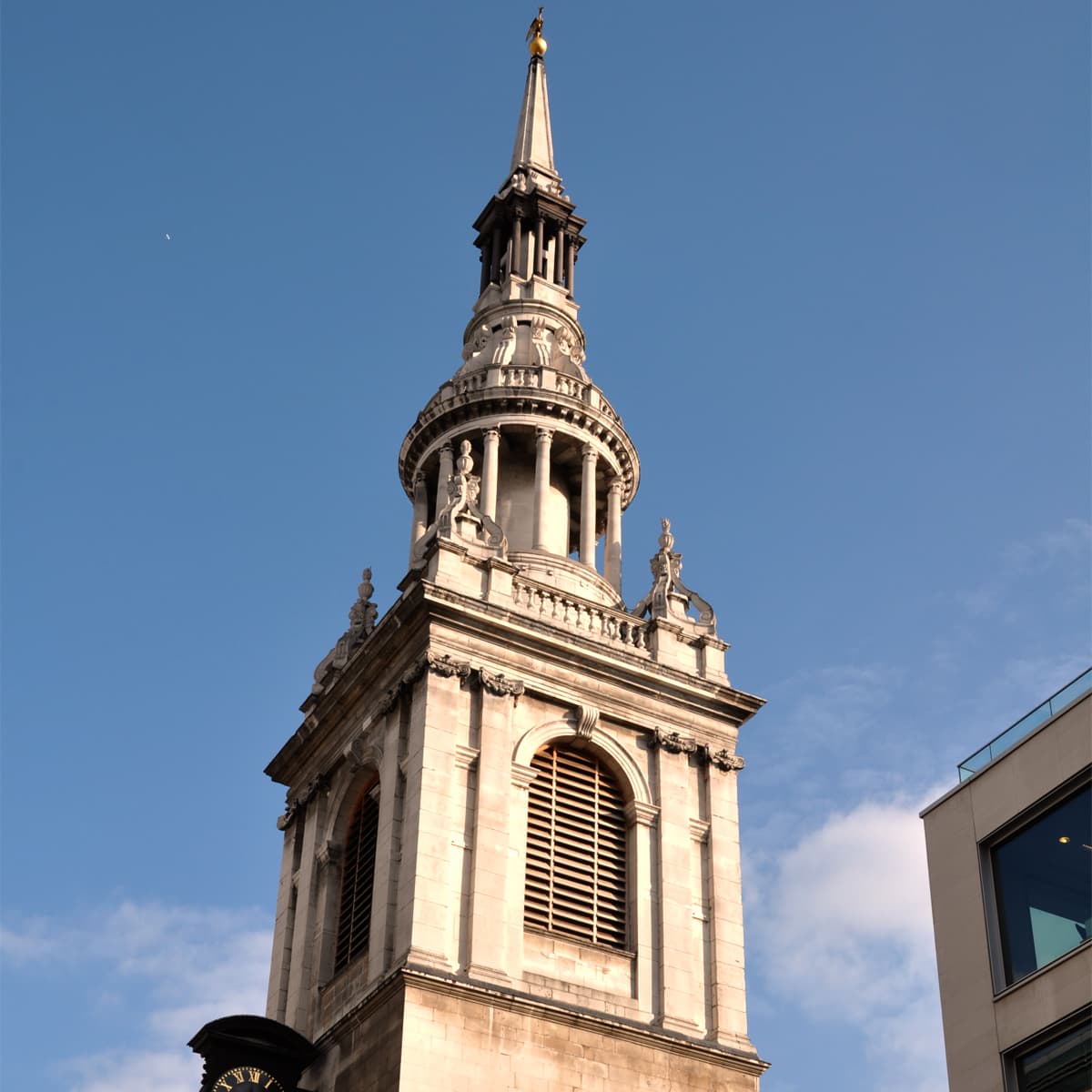
From London's earliest Christian times, a church has stood here. The steeple of St. Mary Lebeau, rebuilt after the fire, is one of Wren's most impressive. Look at the steeple's midsection.
Wren incorporated the ribbed arch, or bow, echoing a motif found in the earlier church. Explore the courtyard next to the church. You'll see a statue, Get closer. You'll see it's a familiar figure from American history.
Read more...Show less
The statue depicts the smiling face of Captain John Smith. In 1607, Smith established an English colony in America at Jamestown in Virginia. Smith claimed to have been captured by the Indians and saved by the Indian princess Pocahontas. Eventually, he returned to England and retired without Pocahontas here near the church.
¶¶ ¶¶ ¶¶ ¶¶ ¶¶ ¶¶ ¶¶ ¶¶ ¶¶ ¶¶ ¶¶ ¶¶ ¶¶ ¶¶ ¶¶ ¶¶ If you go inside the church... ¶¶ But we won't on this tour. ¶¶ But you can always pause the audio tour and pop inside. If you went inside, you'd find one quite unique feature.
The church has... not one, but two pulpits. These are used today for point-counterpoint debate of moral issues. Let's continue on, strolling through the Cockney neighborhood to our next stop.
So return to Cheapside and continue east. Just a few steps past St. Marlebo is the head of Bow Lane. But we won't stop.
I know, I know. We won't stop here at Bow Lane. We're only looking. Keep going down Cheapside.
The entire city once had narrow lanes like Bow, Watling, and Bread Streets. Today, pedestrian-only Bow Lane is upscale, featuring smart clothing shops, sandwich bars, and pubs. But when Shakespeare bought his tights and pointy shoes in Bow Lane, the shops were humble and wooden and the streets were dirt, and the bathroom was a ditch down the middle of the road. Continuing that thought, the garbage brought rats, and rats brought plagues, like the one that devastated London in 1660.
Back in Shakespeare's day, you bought water in buckets that were carted up from the Thames. And at night, the bellman walked the streets ringing the hour and assuring citizens that all's well. Keep going down Cheapside. We're making our way to an intersection called Bank Junction.
It's still a couple of minutes' walk away, so let Rick describe the neighborhood. As you walk along Cheapside, you're walking through the heart of the Cockney neighborhood. It's famous as the place of plucky streetwise urchins and Eliza Doolittle accents. The Cockney accent, though less common these days, is still the dialect of many working-class Londoners.
There are no H's. Are you happy, Harry? Where's your horse? Hurry up now!
Nineteenth-century social climbers added extra H's in order not to sound Cockney. I understand you are interested in renting my attic. These days, few people actually live within the sound of bow bells. The city's population, while 300,000 during the working hours, falls to about 7,000 at night.
One colorful Cockney invention that has survived is their unique rhyming slang. Even ordinary Londoners have picked up a few phrases. It's a bit complicated, but here goes. They replace an everyday word with another word or phrase that rhymes with it.
So, the wife becomes the trouble and strife. And if I were you, Five-pound note, or fiver, is called a deep-sea diver. And in American, a yank is called a septic. That's short for septic tank.
Tank, yank. True, if a bit demeaning. Here's another one. Hey, Lisa, after the tour, let's head to the pub for some Britney's.
Um, I don't get that one. A Britney, short for Britney Spears, which is a phrase that rhymes with... Spears! So, let's grab some Britney's.
Whatever butters your crumpet. For now, let's leave the world of the past and enter London's bustling financial district. Cheapside spills into a long, wide intersection where nine streets meet. This is Bank Junction, at the tube stop called Bank.
From here, you'll have views of a number of important buildings in the financial district. If you're not at Bank Junction yet, pause the audio tour and restart it when you get there.
Bank Junction
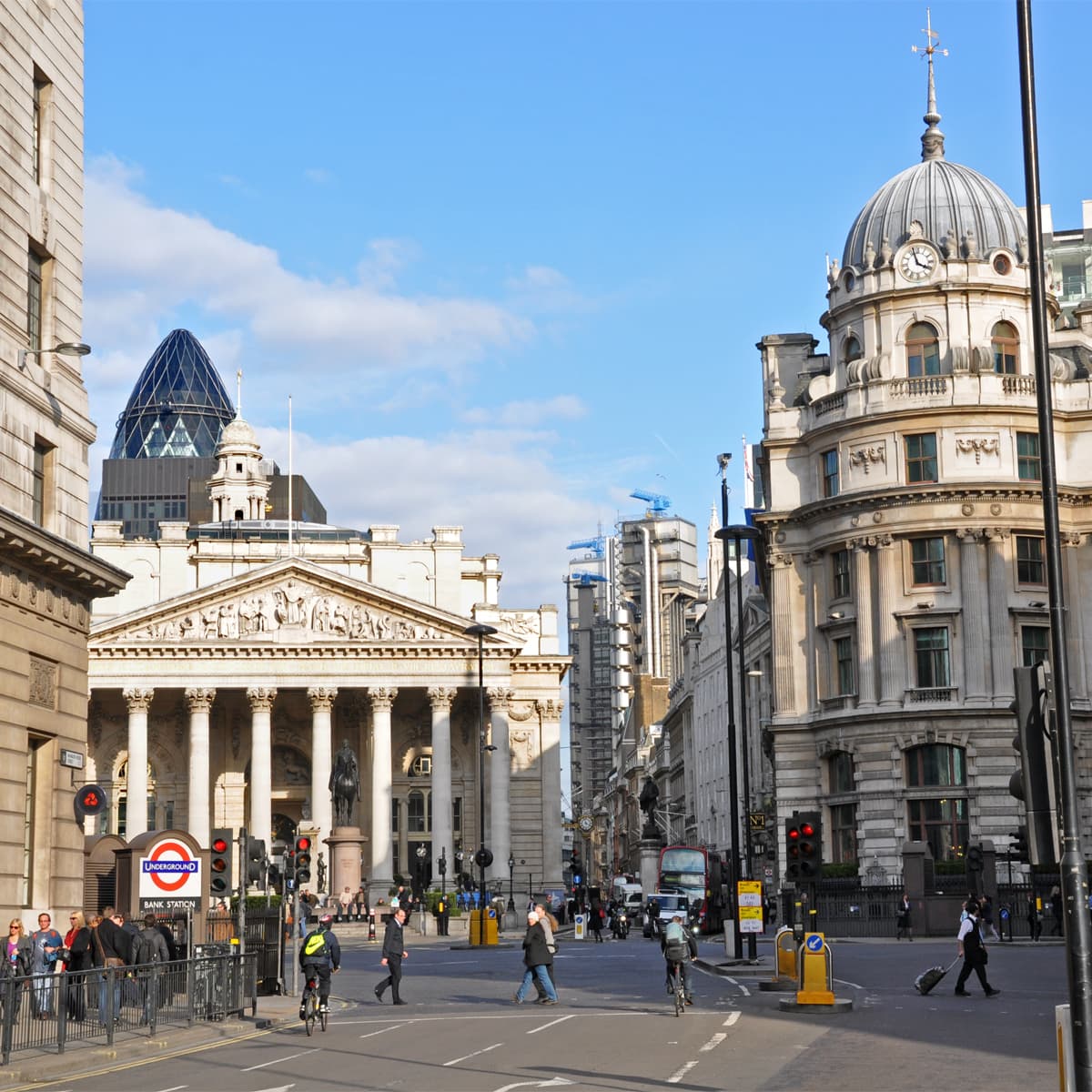
Bank Junction. This intersection is the center of financial London, the neighborhood nicknamed the Square Mile. It's where London helped invent the capitalist economy centuries ago. And today, you're surrounded by skyscrapers housing the multinationals that continue to make London one of the globe's financial capitals.
The best place to view the intersection is from the building called Mansion House. That's the old building just ahead on the right, the one with six big columns. That's six columns, not the eight-columned building you see further in the distance. Start making your way to Mansion House.
Read more...Show less
You'll need to cross a couple of crosswalks. London's Square Mile must handle more money than any square mile on Earth. It hosts 500 foreign and British banks. Several large companies have corporate headquarters here, companies like Prudential Life Insurance, Unilever, Lloyd's Banking.
The city is best known for its investment firms. London is located right in the middle of the planet's time zones. As a result, they can always find someone to trade with somewhere in the world. 24 hours a day.
When you reach Mansion House, stop. Stand in front of its six classical columns and survey the intersection. First, look directly across the square. Find the building with eight Greek-style columns.
This is the Royal Exchange, London's first stock exchange. When the original stock exchange opened, stock meant whatever could be loaded and unloaded onto a boat in the Thames. Remember, London got its start as a riverboat, Soon, those early businessmen were gathering here at the Royal Exchange, trading slips of paper and futures rather than actual live goats and chickens. Traders needed money changers, money changers needed bankers, and London's financial district boomed.
Today, you can step inside the Royal Exchange under the sign that reads Trading Since 1571. You'll find a skylight-covered courtyard lined with shops trading in retail goods. To the left, the Royal Exchange is the city-block-sized Bank of England. This huge building complex, covering over three acres, houses the country's national bank.
In 1694, the bank loaned 1.2 million pounds to King William III at 8% interest to finance a war with France. And it's managed England's national debt ever since. This is an investment bank, in other words, a banker's bank. It loans money to other financial institutions, working in tandem with the government.
The old lady of Threadneedle Street, as it's called, sets interest rates, prints the local currency, and serves as the country's Fort Knox. Inside, it houses stacks of gold bars in its mighty subterranean vaults. By the way, inside there's also a small bank museum where you can see old and new banknotes and a real gold bar. Now look farther in the distance at some of the financial district's impressive skyscrapers.
Rising up behind the Bank of England is the black-capped skyscraper called Tower 42. At 600 feet, it's the city's tallest. But it's not London's tallest, which is Canary Wharf, further to the east. To the right, behind the Royal Exchange, is the tip of the bullet-shaped, spiral-ribbed glass building called 30 St.
Mary X. Built in 2003, this 40-story building is probably better known as the Gherkin, or Pickle. And just to the right, inside of that is another building that's instantly recognizable by its nickname, the Cheese Grater. You're standing next to Historic Mansion House.
Mansion House is the official residence of the city's Lord Mayor. He governs not all of London, but just the neighborhood of the city. In the year 2000, a new post was created of a mayor that governs all of London. But the Lord Mayor of the city still carries on the old traditions, presiding from this palatial building.
Once a year, he rides the streets in the Lord Mayor's coach, a gilded carriage pulled by six white horses that looks right out of Cinderella. From Bank Junction, it's a five-minute walk to our next stop, called The Monument. From Mansion House, start walking east, staying along the right side of the intersection. After about 30 yards, veer right onto Lombard Street.
Continue down Lombard, which becomes King, William Street. As you walk, you'll soon catch glimpses of The Monument directly ahead. It's a tall column poking its bristly bronze head above the modern rooftops. Keep going and listen while Rick describes it.
The Monument
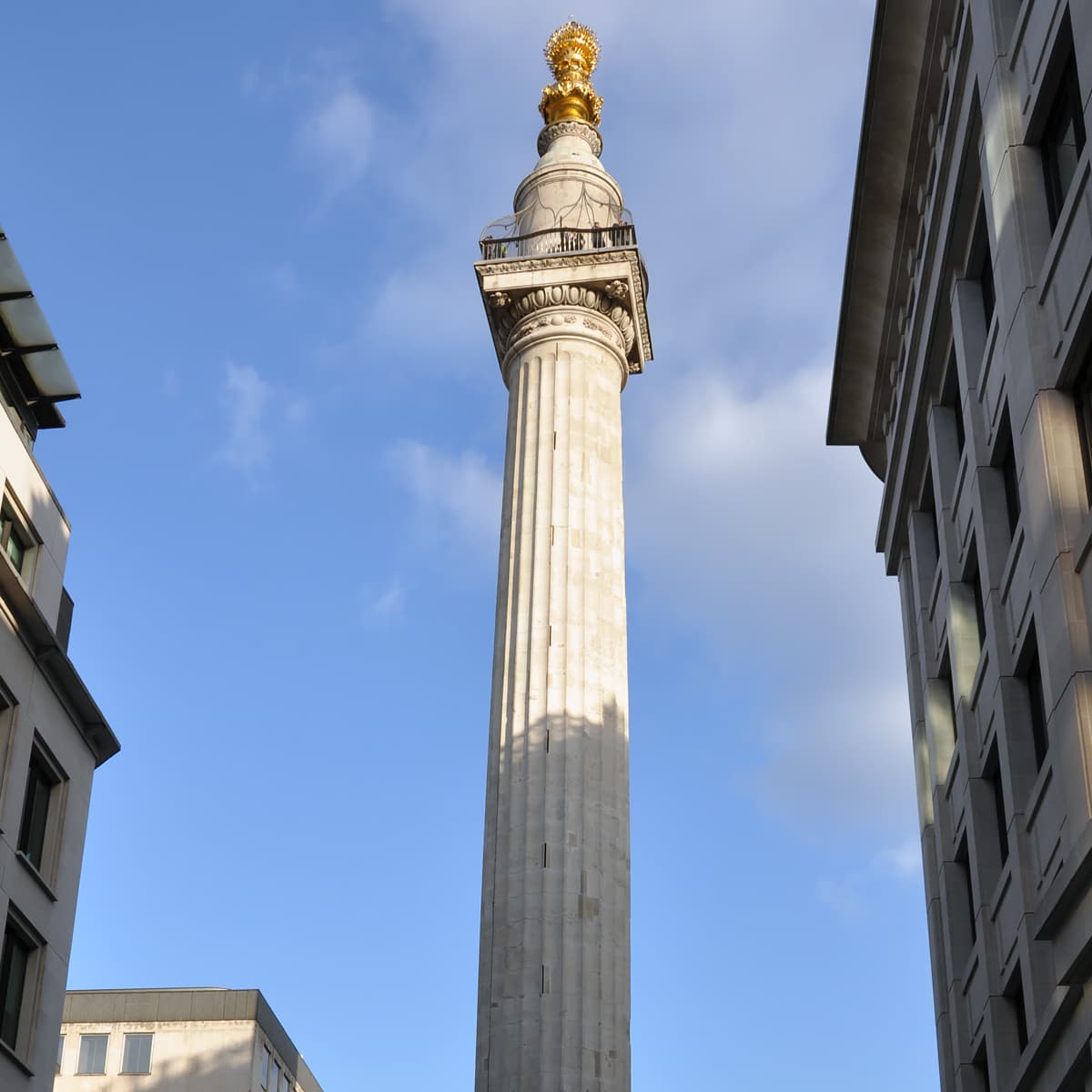
The Monument This 200-foot-tall column is Christopher Wren's tribute to the Great Fire of 1666, The Great Fire started near here. If you tipped the monument over to the east, its top would reach the exact spot. At 2 o'clock in the morning of September 2, 1666, a small fire broke out in a baker's oven here on Pudding Lane. Fanned by hot, blustery weather, the fire swept westward, leaping from house to house until the city was a solid square mile of flame.
Think about it. On our walk, we've traversed the entire fire zone, from St. Dunstan, to St. Paul's, to here.
Read more...Show less
Here's how one eyewitness described London's Great Fire of 1666. The stones of St. Paul's flew from the building, the lead melting down the streets in a stream. God grant that mine eyes may never again behold the like.
Above ten thousand homes, all in one flame, the noise and crackling and thunder of the impetuous flames, the flames, the shrieking of women and children, the hurry of the people, the fall of the towers, houses, and churches was like a hideous storm. In four days, 80% of the city was incinerated, including 13,000 houses and 89 churches. The good news? Incredibly, only nine people died.
The fire cleansed a plague-infested city, and Christopher Wren was left with a blank canvas upon which to create, modern London. Continue down King William Street, approaching closer to the monument. The monument brings to mind another theme of our walk, Christopher Wren. We've seen Wren's St.
Paul's as well as several other churches, including St. Bride's and the place our walk began, St. Clement Dane's. When Wren was invited to rebuild the city after the fire, he made sure to include a permanent memorial of the tragedy.
His design, was classic, a single Doric column. The bristly top is made of gilded bronze. It's meant to depict a Greek urn sprouting flames, symbolizing the great fire of 1666. The column itself is constructed from...
Lisa? Portland stone. You've been paying attention. Well, I'm not mutton.
Uh, say what? I'm not mutton. Mutton, Jeff, rhymes with death. I'm not deaf.
As the Cockneys would say... Lisa, you're amazing. You win a free Britney. Whatevs.
King William Street eventually crosses Cannon Street. As you cross, continue along King William Street as it veers to the right. Keep going as the road passes by the monument and on to the Thames. During the Blitz of World War II, a bomb fell right here where you're walking, on King William Street.
Everything was obliterated. But the monument remained standing. Another miracle, the locals said. For three centuries, the monument stood alone here, towering high above the skyline.
Now it's surrounded by much taller buildings. Maybe that's a shame, but it's also a testament to the Londoners' determination to rise time and time again from the ashes of disaster. You should now be reaching a spot with a clear view down Monument Street where you can see the entire monument top to bottom. The column is hollow.
Inside is a spiral staircase. You could pay admission and climb 311 steps up to the viewing platform. You get a pretty good view, despite the modern buildings. You could go up, but...
And here's another theme from our walk... But we won't go there. Instead, our walk continues on to our final stop, London Bridge. You can see it up ahead.
Spoiler alert! London Bridge, though famous, is not exactly picturesque. As you can see already, it looks more like a continuation of King William Street. By the way, take note that there's a handy tube stop by the monument.
It's called Monument. Continue ahead to London Bridge, walking far enough onto the bridge to get a good view of the Thames and the city. As you walk, let Rick introduce the bridge and its place in London's London. London Bridge is the largest bridge in London. London Bridge is the largest bridge in London. It has a long history.
London Bridge
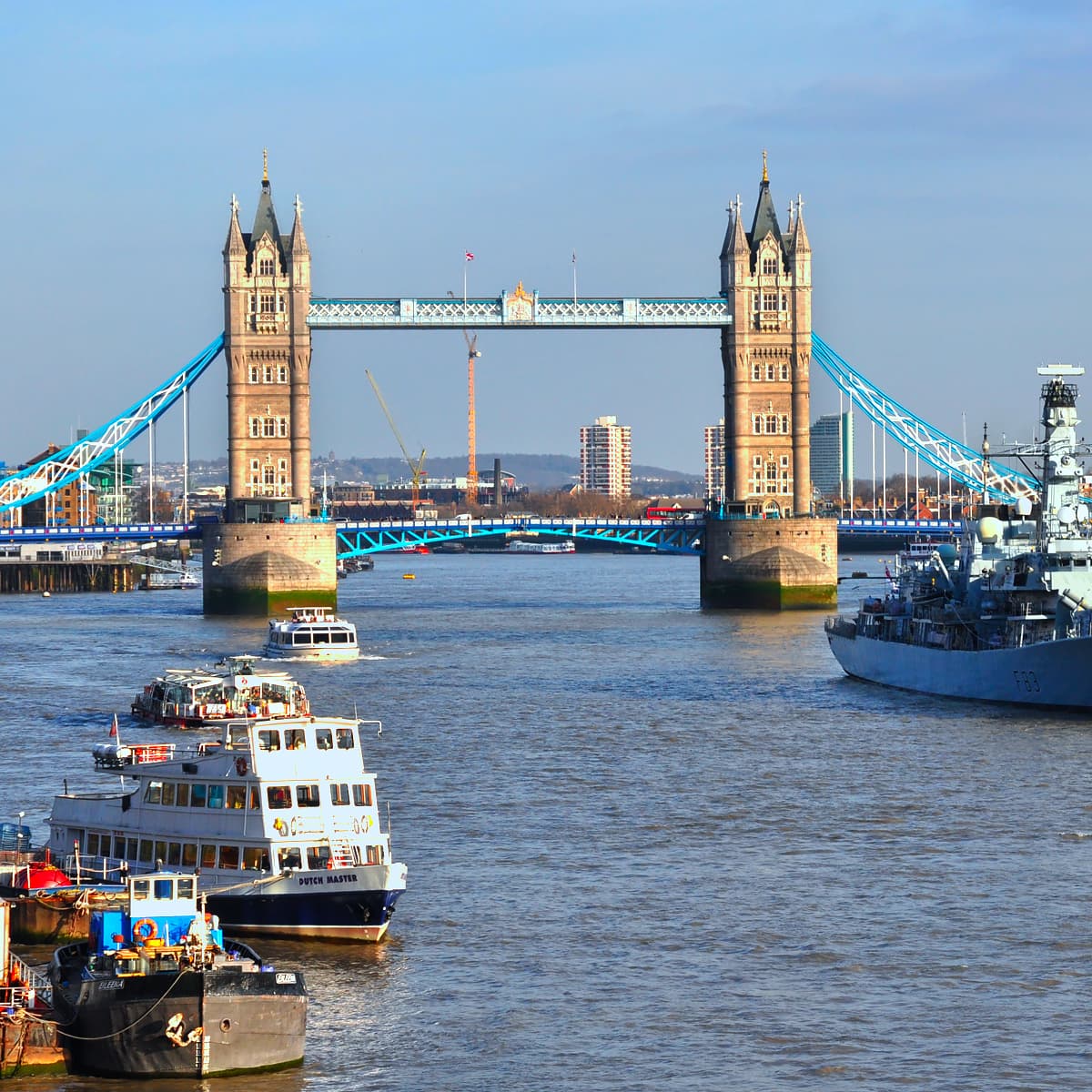
London Bridge. Let's finish our walk where the city started. London was born as a river-trading town, and a bridge has stood on this spot for 2,000 years. The Romans built the first wooden footbridge over the Thames to Londinium around 50 A.D.
The Thames flows from the interior of England to the open sea. It's a tidal river from here to the sea, so ancient boats could hitch rides on the tide in either direction. Soon, goods from every corner of the world were pouring into this urban center, and London thrived. Since Roman times, London Bridge has been torn down and rebuilt at least four times, including in 1014.
Read more...Show less
during the Danish invasions. That event may have inspired a song passed down to us as London Bridge is falling down, my fair lady. The most famous version of the bridge was crossed by everyone, from Richard the Lionhearted to Henry VIII to Shakespeare to Isaac Newton to Charles Darwin. It was built around 1200 and stood for more than six centuries.
Back then, it was the only crossing point into this major city. Built of stone on many thick pilings, it had houses and shops that arced over the roadway and leaned out over the river. With its own chapel and a fortified gate at each end, it was practically a neighborhood unto itself, with a population of 300. In 1823, that famous bridge was replaced by a brick version.
In 1967, that bridge was sold to an American. It was dismantled, shipped to Arizona, and reassembled all 10,000 bricks in Lake Havasu City, where it now stands. Humor today's Brits who like to believe that the Yank thought he was buying Tower Bridge. The London Bridge of today, three spans of boring, traffic-clogged concrete, was built in 1972.
Up ahead on the south bank is the mammoth skyscraper known as the Shard. It rockets dramatically up over 1,000 feet, a total of 95 stories. When inaugurated in 2012, it was far and away the tallest building in Western Europe. There's a viewing platform up top, though the ticket price is about as high as the building itself.
As you look up, try to picture Prince Andrew rappelling off the very top. He did just that to raise money for charity. Once on the bridge, make your way far enough along that you can get a good view. The best views are from the very center of the bridge.
From atop London Bridge, pan counterclockwise and take in the sights. Looking east, downstream is the fanciful Tower Bridge. Though it looks medieval, this neo-Gothic drawbridge was only built a century ago in 1894. The big ship in the foreground is the HMS Belfast, a World War II cruiser open to tourists.
On the north bank is the Tower of London. Find the four domed spires and a flag rising above the trees. The magnificent tower is 1,000 years old. It was built just as London was coming into its own as a city.
And it still stands strong today, bringing this historic walk full circle. Here at the end of our guided walk, consider all we've seen. In its 2,000 years, London has survived fires, plagues, blitzes, and economic changes. And with its worldwide financial network, skyscrapers, and cultural heritage, the city still thrives.
We hope you've enjoyed your walk through the City of London. Thanks to Jean Openshaw, the co-author of this tour. From here, you're a 10-minute walk to the Tower of London or five minutes to the South Bank. Or catch the tube to anywhere in London.
The Monument and the London Bridge stops are nearby. If you're up for more London sightseeing, we have audio-guided tours like this one covering St. Paul's Cathedral, the British Museum, the British Library, and the Westminster Walk. Remember, this tour was excerpted from the Rick Steves London Guidebook, co-authored with Jean Openshaw.
For more details on eating, sleeping, and sightseeing in London, refer to this year's edition of that guidebook. For more free audio tours and podcasts, and for information about our TV shows, bus tours, and travel gear, visit our website at ricksteves.com. This tour was produced by Cedar House Audio Productions. Thanks. Cheers. And goodbye for now. For more information, visit ricksteves.com.
Free
GPS-guided walking tour
No account needed. Walk at your own pace.
Free
24 stops ·