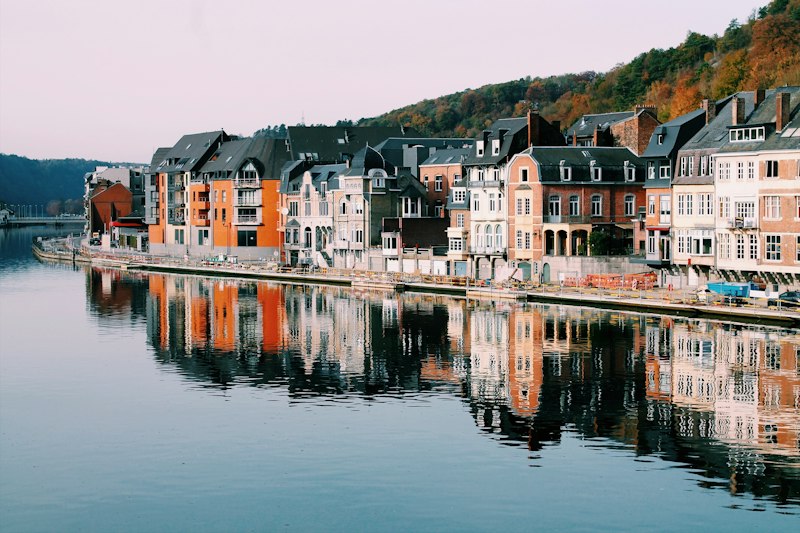
Walking Tours in Bruges
Bruges: The Medieval Heart
Bruges became one of the richest cities in Europe by the fourteenth century, a major wool and cloth trading hub connecting England, Flanders, and the Mediterranean. Then the Zwin channel silted up around fifteen hundred, trade moved to Antwerp, and Bruges was largely forgotten for four hundred years. That forgetting saved it. While most medieval European cities were demolished and rebuilt in the industrial era, Bruges survived intact — its Gothic guild houses, medieval canals, and fifteenth-century churches preserved not by design but by economic irrelevance. What you are about to walk through is a medieval trading city, almost perfectly preserved, now the most visited destination in Belgium.
Bruges: The Medieval Masterpiece
Walk the most perfectly preserved medieval city in northern Europe — from the cobblestoned Markt with its great belfry tower, through the lace-and-chocolate lined lanes to the swans of the Minnewater lake.
30 Landmarks in Bruges
Adornes Estate & Jerusalem Chapel
3 Peperstraat, Gezellekwartier, Bruges, 8000, Belgium
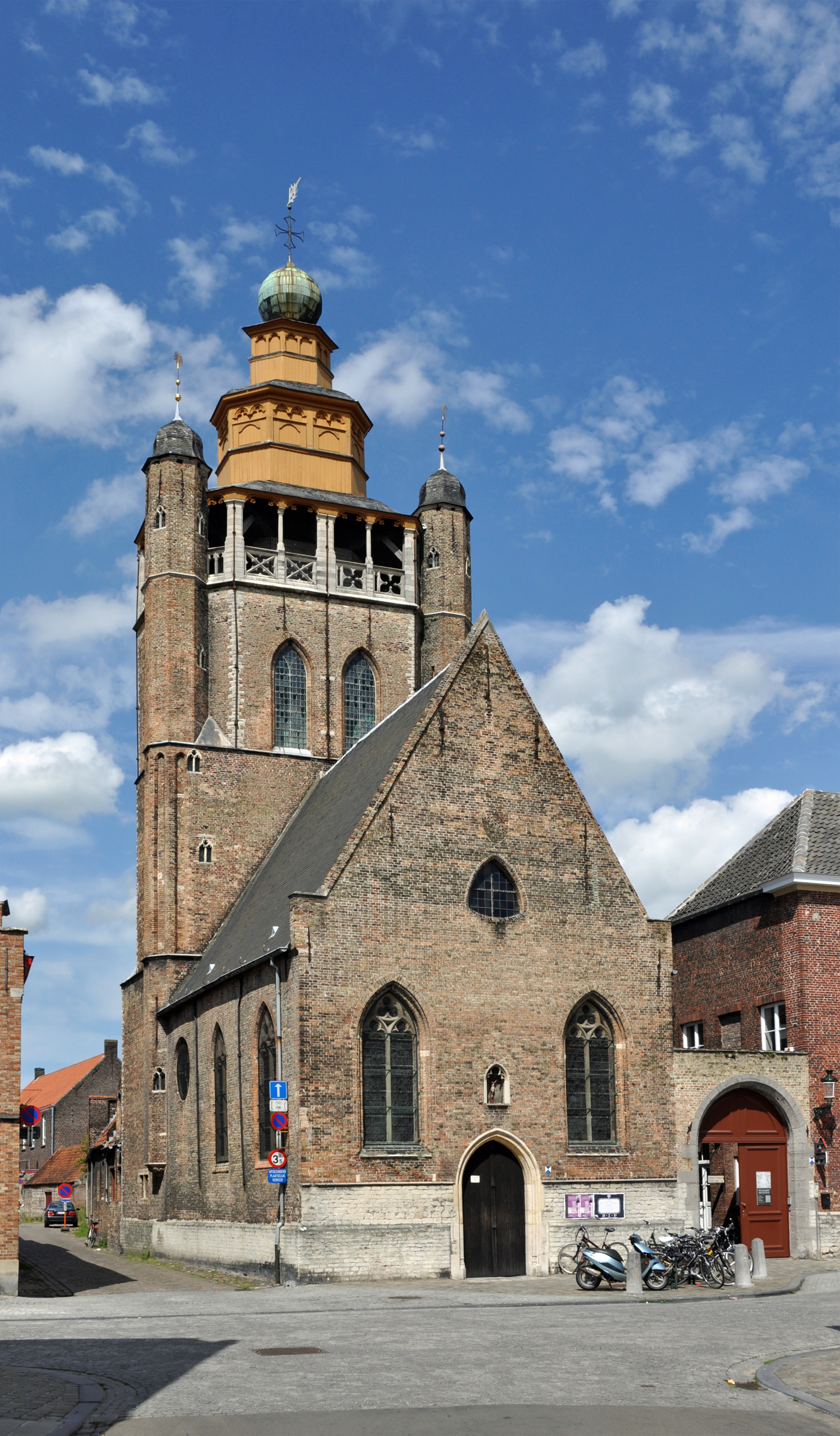
In the 13th century, a Genoese merchant named Opicius Adornes followed the Count of Flanders to Bruges and started a new branch of his Italian family in this Flemish city. Within a generation, the Adornes — or Adorno, in their native Italian — had become part of the Bruges aristocracy, playing a prominent role in the city's administrative and economic life. Their private estate in the quiet Sint-Anna district has survived for over six centuries, and it is still owned by their descendants. The current custodians, Count and Countess Maximilien de Limburg Stirum, are the 17th generation since the founders. The centrepiece is the Jerusalem Chapel, consecrated in 1429 and rebuilt by Anselm Adornes — the most famous family member, who served as a diplomat and adviser to the Burgundian dukes. In 1470, Anselm undertook a pilgrimage to the Holy Land, braving what the historical record describes as "countless dangers." When he returned, he remodelled the family chapel to resemble the Church of the Holy Sepulchre in Jerusalem, complete with an Eastern-style tower that looks startlingly out of place in Bruges. Inside, there is a replica of Christ's tomb and a fragment of the True Cross. Anselm himself is buried here — or at least his body is. He was murdered in Scotland in 1483 while on a diplomatic mission, and only his body was returned. His heart was buried in Scotland. The estate also includes almshouses that Anselm built for single women — a charitable act that was typical of wealthy medieval Bruges citizens who sought both spiritual merit and social prestige. The former almshouses now serve as the visitor entrance to the estate and include the Lace Centre, making this quiet corner of Sint-Anna a remarkable concentration of history in a very small space. This is the Bruges that most tourists miss entirely, and it is arguably the most rewarding.
Basilica of the Holy Blood
13 Holyblood Burg, Burg, Bruges, 8000, Belgium
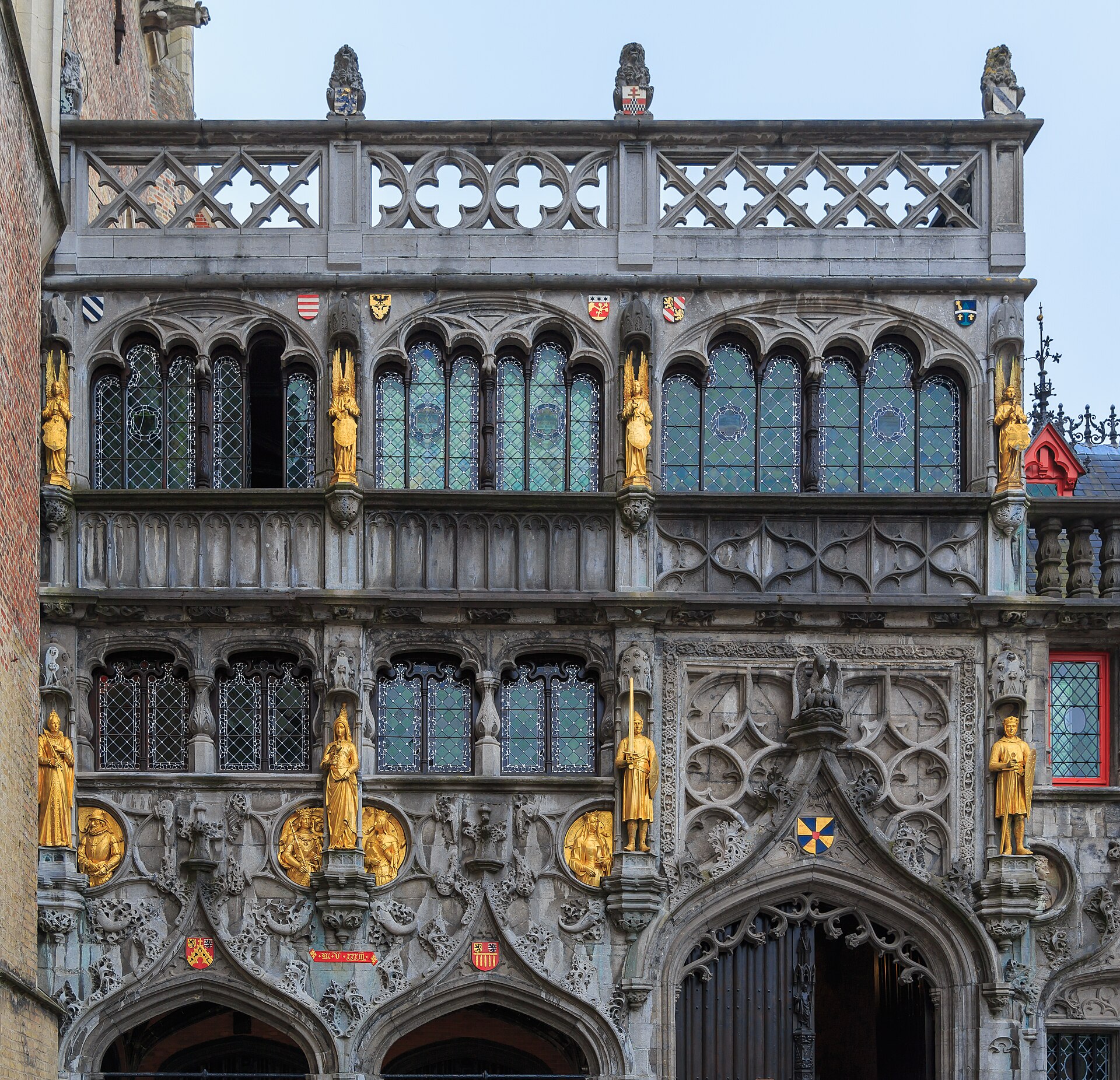
This building is two churches stacked on top of each other, and between them they span almost every architectural style from the Romanesque to the neo-Gothic. The lower chapel, dedicated to Saint Basil the Great, was built between 1134 and 1157 as the chapel of the Count of Flanders. It is a dark, heavy Romanesque space that has remained virtually unchanged for nearly nine hundred years — one of the best-preserved Romanesque interiors in the Low Countries. Upstairs, the upper chapel is a riot of colour and 19th-century neo-Gothic decoration, rebuilt after French Revolutionary troops gutted it in the 1790s. The basilica's fame rests on a single object: a phial said to contain a cloth stained with the blood of Jesus Christ. According to tradition, it was brought to Bruges by Thierry of Alsace, Count of Flanders, after the Second Crusade in 1150. Most historians now believe the relic more likely arrived after the sack of Constantinople in 1204, when Crusaders looted the Byzantine capital of virtually every holy relic they could carry. Either way, the phial has been venerated in Bruges for over eight centuries, and the city takes it seriously. Every year on Ascension Day, the relic is carried through the streets of Bruges in a solemn procession with approximately 1,700 participants and 35,000 spectators. The Procession of the Holy Blood has been held annually since at least 1304 and was recognised by UNESCO as Intangible Cultural Heritage in 2009. The rest of the year, the relic is shown to the public every Friday, and daily in the two weeks before Ascension Day. The basilica was promoted to minor basilica status in 1923. The phial itself is a small glass cylinder adorned with gold and enclosed at each end by coronets decorated with tiny angels. Whether you believe the blood is genuine or not, the devotion surrounding it is undeniable.
Begijnhof
28 Begijnhof, Begijnhofbuurt, Bruges, 8000, Belgium
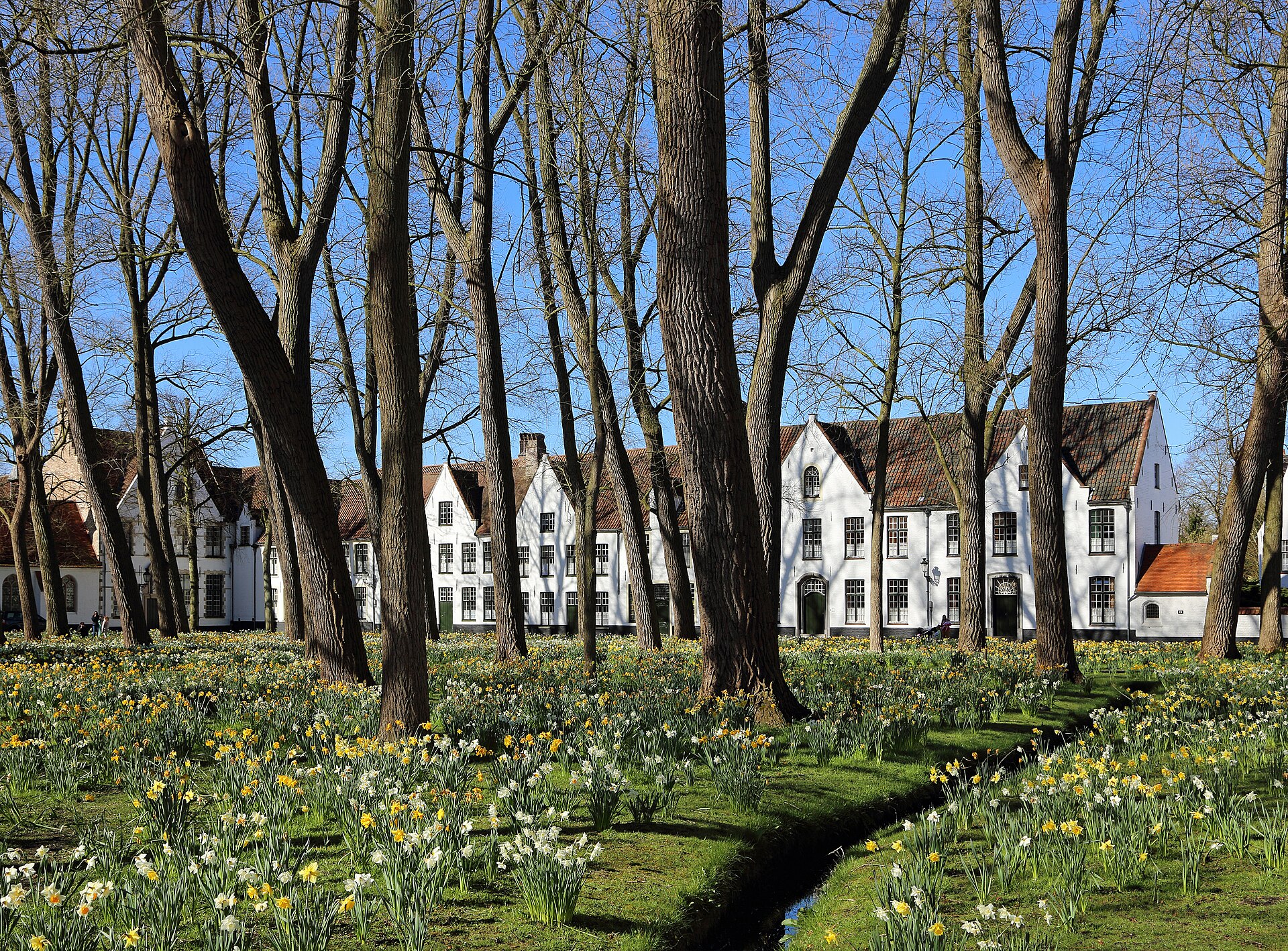
In the 13th century, an extraordinary social experiment emerged in the cities of Flanders. Women who wanted to live a religious life but did not want to take permanent vows — or who were widowed, or simply wanted independence from marriage — formed communities called beguinages. They were not nuns. They could own property, leave the community, and even marry. They answered to no bishop and followed no monastic rule. In an era when women's options were marriage, the convent, or destitution, the beguines carved out a fourth path. The Princely Beguinage Ten Wijngaarde in Bruges was founded in 1245 by Margaretha of Constantinople, Countess of Flanders. Its white-painted houses encircle a tranquil courtyard garden shaded by tall poplars and daffodils that bloom spectacularly each spring. In the 13th century, the beguines enjoyed the protection of Countess Joan of Constantinople, and by 1299, even the French King Philip the Fair had taken the beguinage under his jurisdiction — a sign of its wealth and political importance. The last beguine in Bruges died in 1927, and since then the houses have been occupied by Benedictine nuns who maintain the grounds with a quiet devotion that the original beguines would have recognised. The small beguine house museum in one of the cottages shows how a 17th-century beguine lived — a simple room with a bed, a prayer stool, and a lace-making pillow, because Bruges' beguines were famous lace makers. In 1998, the Bruges Begijnhof was inscribed as a UNESCO World Heritage Site along with twelve other Flemish beguinages. Walk through the entrance gate, cross the small stone bridge over the canal, and the noise of the city disappears. The grass is so perfectly maintained that there are signs asking visitors not to walk on it. Most people obey.
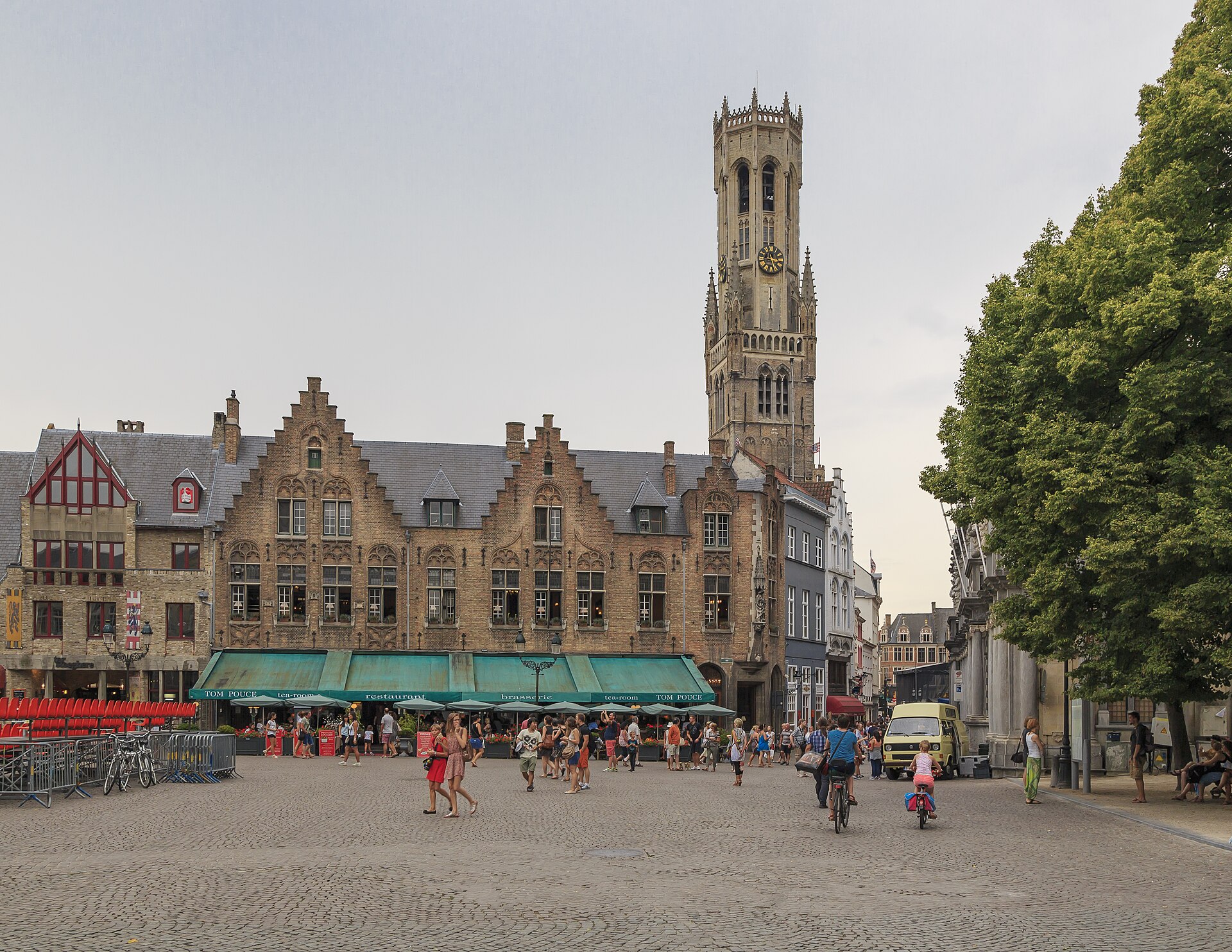
Belfry of Bruges
7 Markt, Markt, Bruges, 8000, Belgium
This tower leans. Not as dramatically as Pisa's, but 87 centimetres to the east — enough that if you know to look, you can see it. The Belfry of Bruges has been looming over the Markt since around 1240, when Bruges was one of the most powerful trading cities in Northern Europe, and the cloth trade generated wealth that would make a modern hedge fund manager uncomfortable. The tower was built to house the city's charter of rights and its treasury, which tells you everything about medieval priorities: your freedoms and your money go in the tallest, most fortified building you can build. At 83 metres, the tower is a serious climb — 366 narrow, winding steps to the top. But it used to be taller. A wooden spire once pushed it to 102 metres, until fire claimed it in 1741. The octagonal upper stage you see today was added between 1483 and 1487, originally capped with a spire bearing a gilded statue of Saint Michael. After the fire, the city opted for a Gothic Revival stone parapet instead, added in 1822. Inside, halfway up, you pass the treasury room where the city's rights were locked behind iron grilles. A bit higher, you reach the 47-bell carillon, played by a city carillonneur who performs concerts on Wednesday, Saturday, and Sunday — one of the last people in the world with this job title. A devastating fire in 1280 destroyed the original upper half, and the rebuilt tower incorporated lessons learned: thicker walls, better fire breaks. The second fire in 1741 was the last. Since 1999, the Belfry has been a UNESCO World Heritage Site as part of the Belfries of Belgium and France — a group of civic towers that symbolised the freedoms of medieval Flemish cities. Colin Farrell's character in the film In Bruges famously refuses to climb it. Most visitors disagree with his assessment.
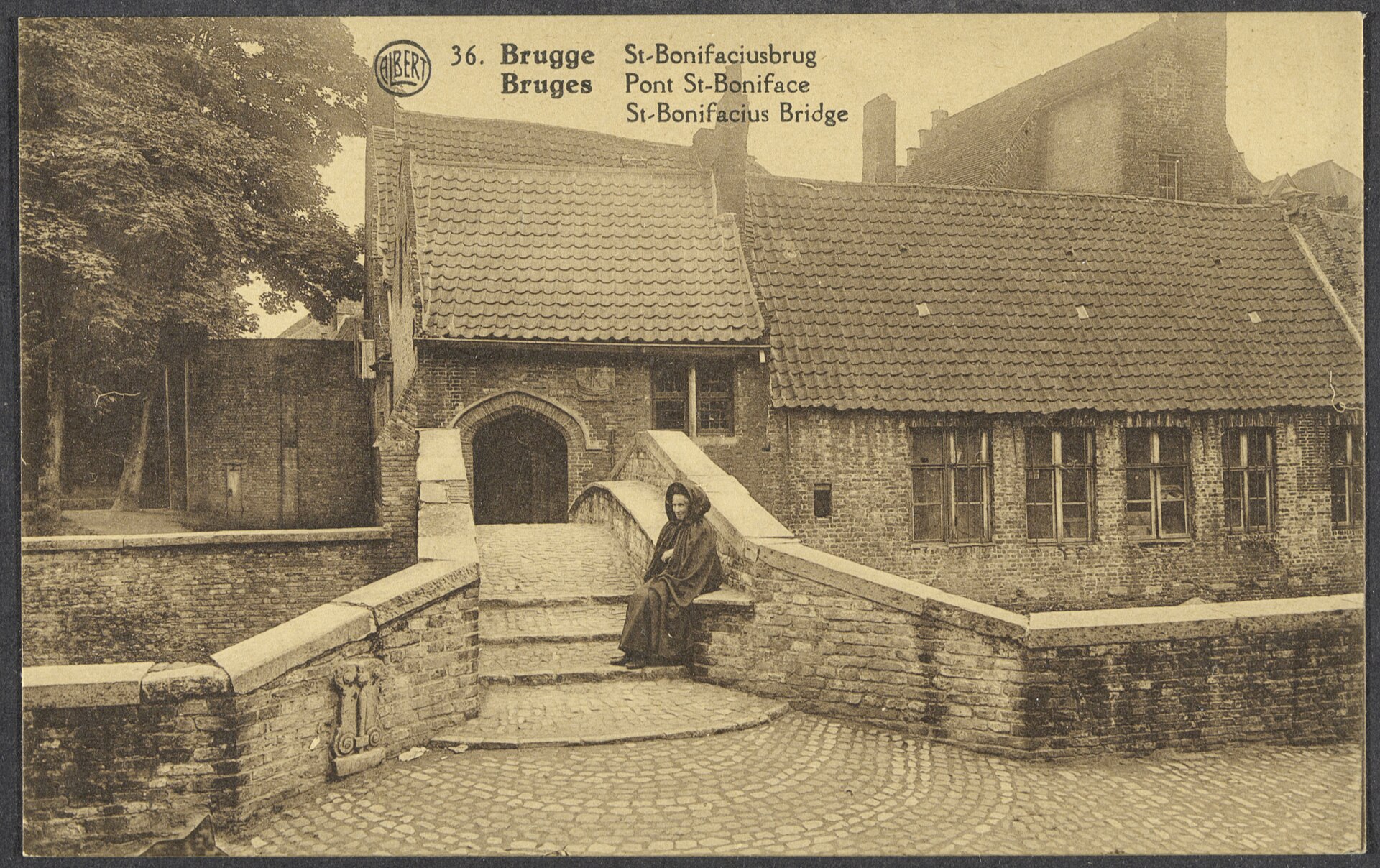
Bonifacius Bridge
Bonifaciusbrug, 8000 Brugge
This is the most romantic bridge in Bruges, and it is a complete fake. Or rather, a very convincing one. The Bonifacius Bridge looks ancient — moss-covered stone arches over a narrow canal, framed by the towering Gothic walls of the Church of Our Lady and the medieval Gruuthuse palace. It is the kind of scene that makes people propose marriage. But the bridge was actually built in the early 20th century, making it one of the newest structures in the oldest part of the city. The deception is so good that most visitors have no idea. The bridge was constructed to connect the gardens of a private residence with the Gruuthuse complex, and whoever designed it had either a deep reverence for medieval architecture or a very good sense of humour. There is an additional layer of dark comedy: parts of the bridge were reportedly constructed using old tombstones. On at least one stone, you can still make out the original funerary inscription, which gives the whole romantic setting a slightly macabre undertone. Locals call it the Kissing Bridge. The legend says that when you finish crossing, the first person you see is the one you will marry. Whether this has ever resulted in an actual marriage to a confused tourist is unrecorded. The view from the bridge is genuinely one of the finest in Bruges. The canal stretches away beneath medieval walls covered in climbing plants, the brick tower of the Church of Our Lady rises above, and on a misty morning the scene looks like it was painted by one of the Flemish Primitives who made this city famous. The bridge proves that in Bruges, authenticity is less important than atmosphere — and the atmosphere here is perfect.
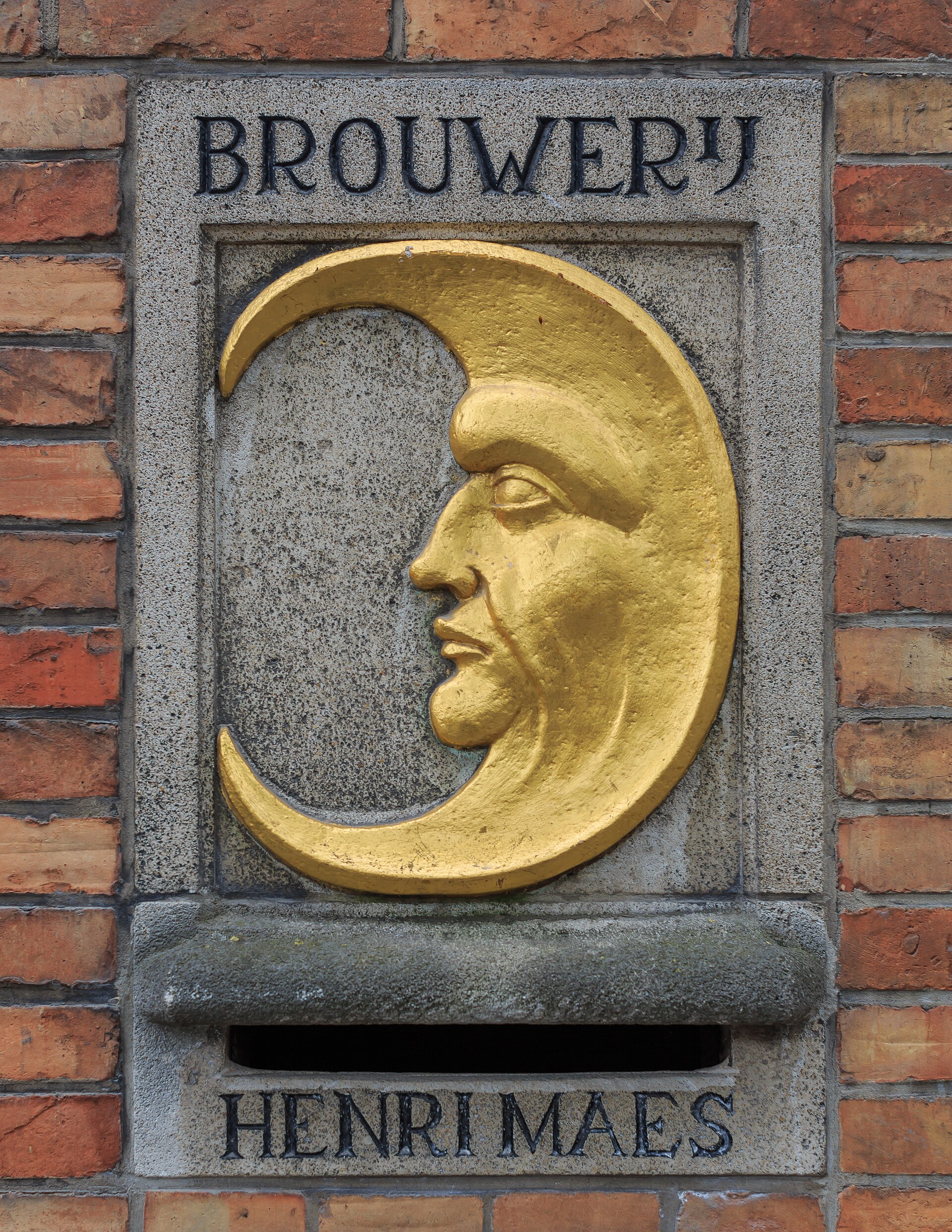
Brewery De Halve Maan
Walplein 26, 8000 Brugge
This is the last family brewery in the centre of Bruges, and in 2016 it did something that had never been done before anywhere in the world: it built an underground beer pipeline. The pipe runs 3,276 metres beneath the cobblestone streets, at its deepest point 34 metres underground, connecting the historic brewery to a bottling plant on the outskirts of town. It can transport 4,000 litres of beer per hour. The pipeline removed roughly 500 tanker truck journeys per year from Bruges' narrow medieval streets, which is the kind of engineering solution a UNESCO World Heritage city deserves. De Halve Maan has roots dating to 1564, though the current brewery was established in 1856 when Leon Maes — Henri the First, as the family calls him — took ownership. The brewery has remained in family hands ever since. In 1981, Véronique Maes became one of Belgium's first female brewers when she joined her father at the brewery and launched Straffe Hendrik, which remains one of their flagship beers alongside Brugse Zot — the official beer of the city of Bruges, whose name means "Bruges Fool." The crowdfunding campaign that helped fund the pipeline raised money from over 500 donors, each of whom received the most Belgian thank-you gift imaginable: free beer for life. The pipeline alternates between carrying the blonde and brown versions of Brugse Zot and the Straffe Hendrik, with a cleaning system that sterilises the pipes between batches using jets of cleaning solution. Brewery tours run throughout the day and include a climb to the rooftop terrace, which offers one of the best panoramic views of Bruges — a detail the brewery mentions on every piece of marketing material, and rightly so. The view is genuinely excellent, and the beer at the end makes it better.
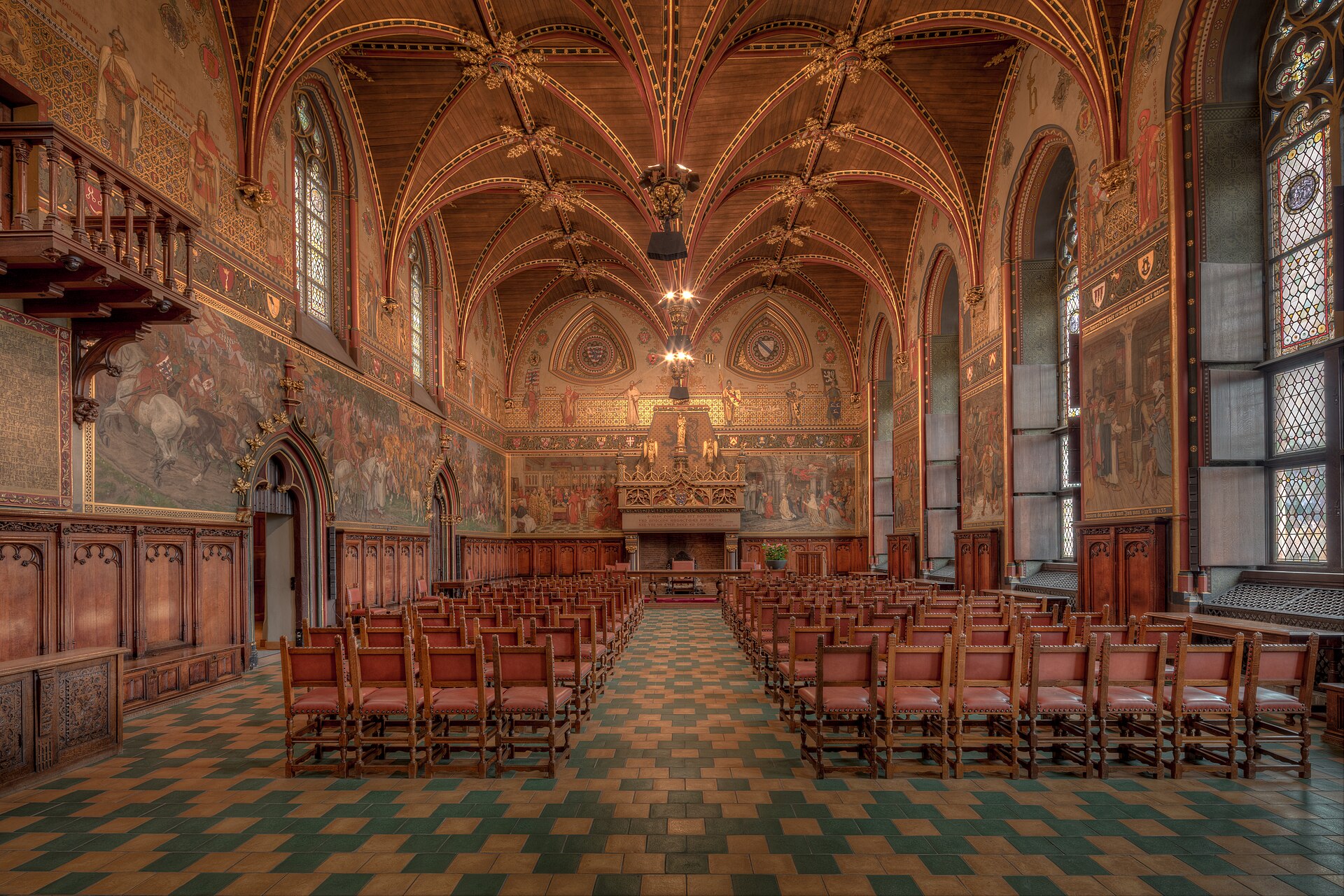
Bruges City Hall
Bruges, Belgium
Bruges has been governed from this building for over six hundred years, making it one of the longest continuously used seats of municipal government in Europe. Count Louis of Maele laid the foundation stone in 1376, and responsibility for construction was given to Jan Roegiers. The project was completed in 1421, and the result is the earliest late-Gothic monumental municipal council building in Flanders or Brabant — a building of such flamboyant opulence that it set the template for town halls across the region. The facade is pure medieval showmanship. Originally adorned with 48 polychrome statues of the counts and countesses of Flanders, each placed in an individual niche, the building was a deliberate declaration of civic wealth and historical legitimacy. The French Revolutionary troops who occupied Bruges in the 1790s smashed every one of them. The replacements you see today are 19th-century neo-Gothic copies — faithful, but copies nonetheless. The interior centrepiece is the Gothic Hall, a double-height room with a spectacular polychrome vaulted ceiling. Between 1895 and 1905, architect Louis Delacenserie and neo-Gothic designer Jean-Baptiste Bethune led a comprehensive restoration that replaced the original lesser and greater council chambers with a single grand hall. The murals on the walls depict key events in Bruges' history, and the effect is somewhere between a medieval throne room and a 19th-century vision of what a medieval throne room should have looked like. Walk through the Gothic Hall and you are walking through layers of history: a 14th-century building, restored through a 19th-century aesthetic lens, still functioning as the seat of 21st-century local government. The mayor's office is upstairs. Democracy operates in a building designed for aristocracy, which is either ironic or reassuring, depending on your politics.
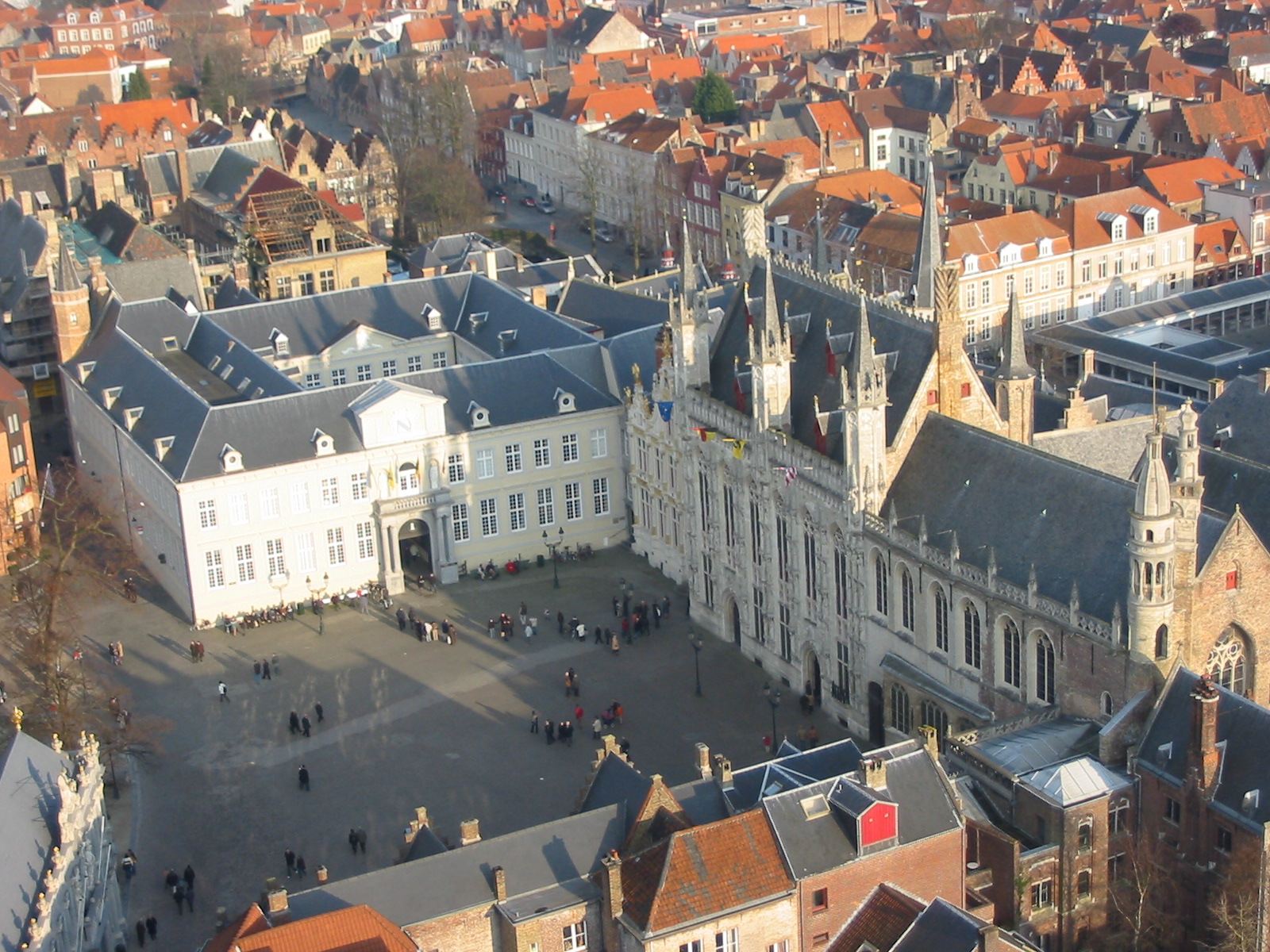
Burg Square
Bruges, Belgium
This is where Bruges began. In the ninth century, Baldwin Iron Arm — the first Count of Flanders, who earned his name and his title by eloping with the daughter of the King of France — built a fortified castle here. The word "burg" means fortress, and for over a thousand years this square has been the seat of political and religious power in the city. While the Markt was for commerce, the Burg was for governance, and the architectural showmanship here reflects centuries of rulers trying to outdo each other. The undisputed star is the Bruges City Hall, built between 1376 and 1421, making it one of the oldest Gothic town halls in the Low Countries. Count Louis of Maele laid the foundation stone, and the result is a building of almost aggressive beauty — its facade originally featured 48 polychrome statues of counts and countesses of Flanders in individual niches. French Revolutionary troops destroyed them all in the 1790s; the current statues are 19th-century replacements. Inside, the Gothic Hall features a spectacular polychrome vaulted ceiling with murals depicting key events in Bruges' history, painted between 1895 and 1905 during a massive restoration by architect Louis Delacenserie. Next door, the Old Civil Registry sports an elaborate Renaissance facade from 1534-1537, all gilded bronze statues and marble columns — a jarring stylistic shift from the Gothic town hall that makes for an unexpectedly entertaining architectural contrast. And tucked into the corner is the Basilica of the Holy Blood, housing the city's most precious relic. The one thing missing from the Burg is the original castle. It was demolished in the late 18th century, and the site is now a small park. Baldwin Iron Arm would probably not be pleased.
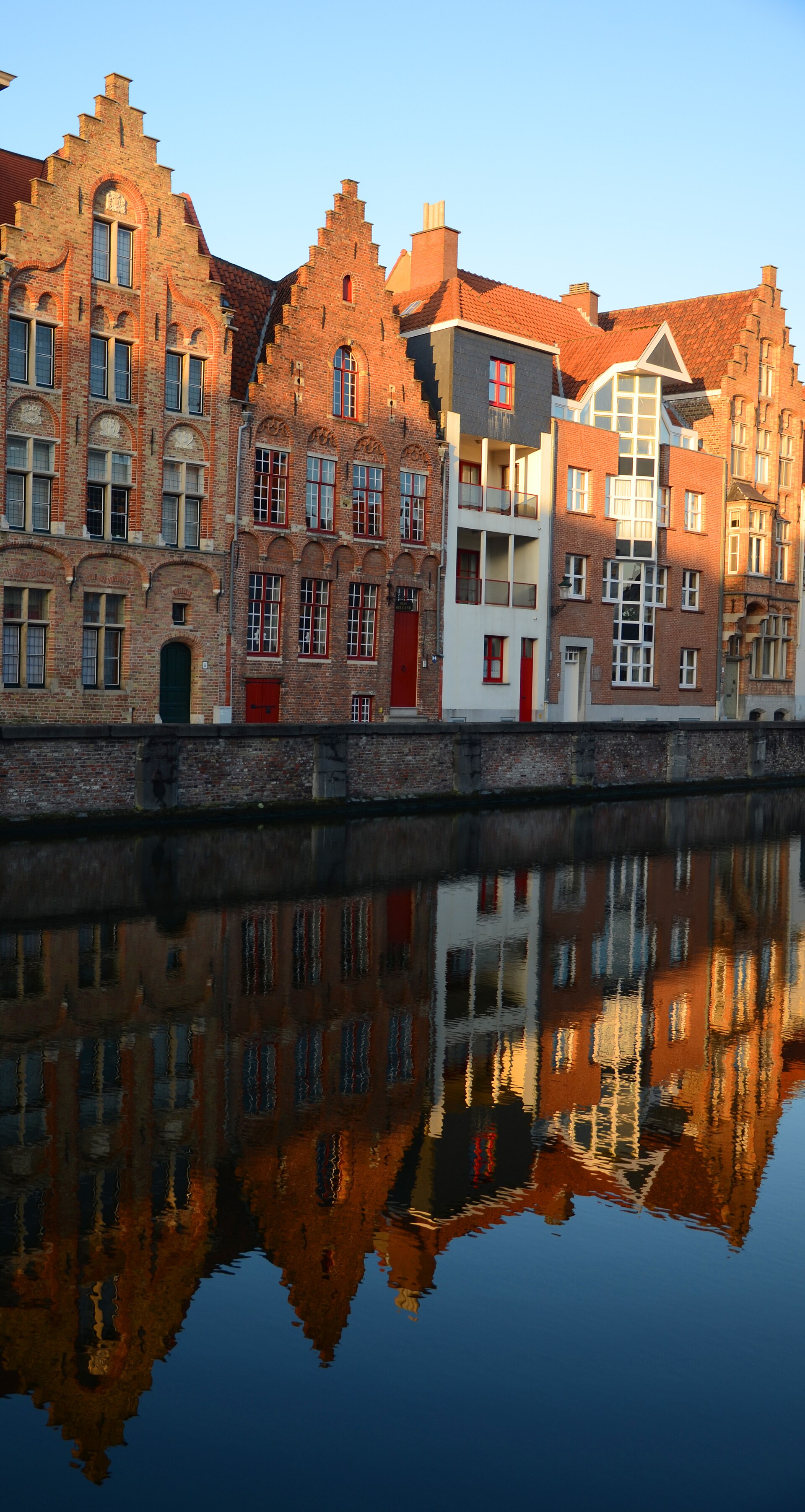
Canals & Boat Tours
10 Huidenvettersplein, Bruges, 8000, Belgium
Bruges is built on water. The city's canal system — known collectively as the Reie — was the reason Bruges became one of the most important commercial centres in medieval Europe, and the reason it declined. When the Zwin inlet to the North Sea silted up in the 15th century, Bruges lost its connection to maritime trade, and Antwerp inherited its wealth. The irony is that the same silting that killed Bruges' economy preserved its medieval character. Without commercial growth, there was no reason to demolish and rebuild. The city simply froze in time. The canal boat tours, which run approximately thirty minutes, are the single best way to see Bruges. From water level, the city reveals perspectives invisible from the streets — the backs of patrician houses, private gardens, hidden courtyards, and low stone bridges that you pass under with centimetres to spare. The boats operate daily from 10:00 AM to 6:00 PM, with extended hours in peak summer. Tickets are fixed at around twelve euros for adults and seven for children, and you can board at several landing stages, though the Rozenhoedkaai departure point is the most scenic and the most crowded. The canals have five official boarding points, and the routes are essentially the same regardless of where you start. Boats pass through the Dijver, the Groenerei, and the narrower channels near the Begijnhof, where the waterway squeezes between ancient walls and overhanging trees. Guides narrate in multiple languages, delivering a mix of history and local legend with the practised timing of people who do this twenty times a day. The entire historic centre of Bruges is a UNESCO World Heritage Site, and from a canal boat, it is easy to see why. The city is absurdly, almost suspiciously beautiful — a place that looks like someone designed it specifically to be photographed from the water.
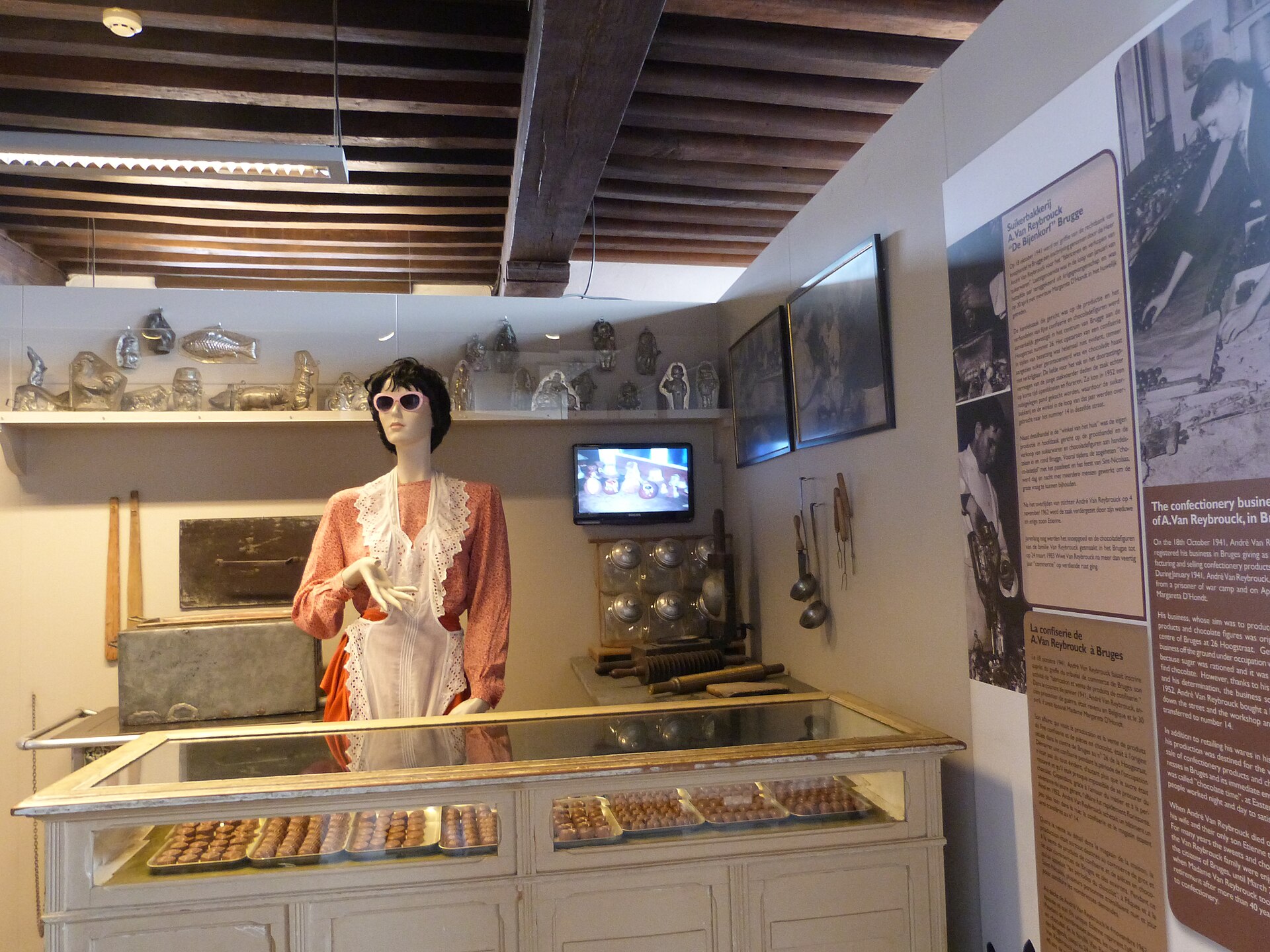
Choco-Story Museum
Wijnzakstraat 2, 8000 Brugge
Belgium produces over 220,000 tonnes of chocolate annually, and this museum exists to explain why the country takes the stuff so seriously. Housed in a building dating from 1480 — one of the oldest structures in Bruges' historic centre — Choco-Story traces 5,500 years of chocolate history, from the Maya civilisation's bitter cacao drinks to the refined pralines that Belgium has made its national art form. The story of Belgian chocolate really begins in 1912, when Jean Neuhaus II invented the praline in Brussels — a chocolate shell with a soft filling that would transform confectionery worldwide. The museum walks you through this evolution with interactive rooms, historical artefacts, and an Inca-era vase decorated with potato motifs that serves as a reminder that chocolate and potatoes arrived in Europe through the same violent colonial history. The live chocolate-making demonstrations are the highlight. A skilled chocolatier tempers chocolate, creates pralines, and offers samples — and the demonstrations run several times daily. Belgium has over 2,000 chocolate shops, and Belgian chocolatiers still largely work in small batches with fresh ingredients and intricate hand-finishing, treating chocolate-making as a craft rather than an industrial process. The museum makes the case that this artisanal approach is what distinguishes Belgian chocolate from its competitors. The building itself deserves attention. Its 15th-century architecture provides an atmospheric setting, and the medieval cellar adds a sense of occasion to what is, at its core, a very enjoyable museum about a very enjoyable food. Founded in 2004 by Eddy Van Belle, who also established Bruges' Frietmuseum, the museum reflects a particular Belgian genius for turning everyday pleasures into cultural institutions.
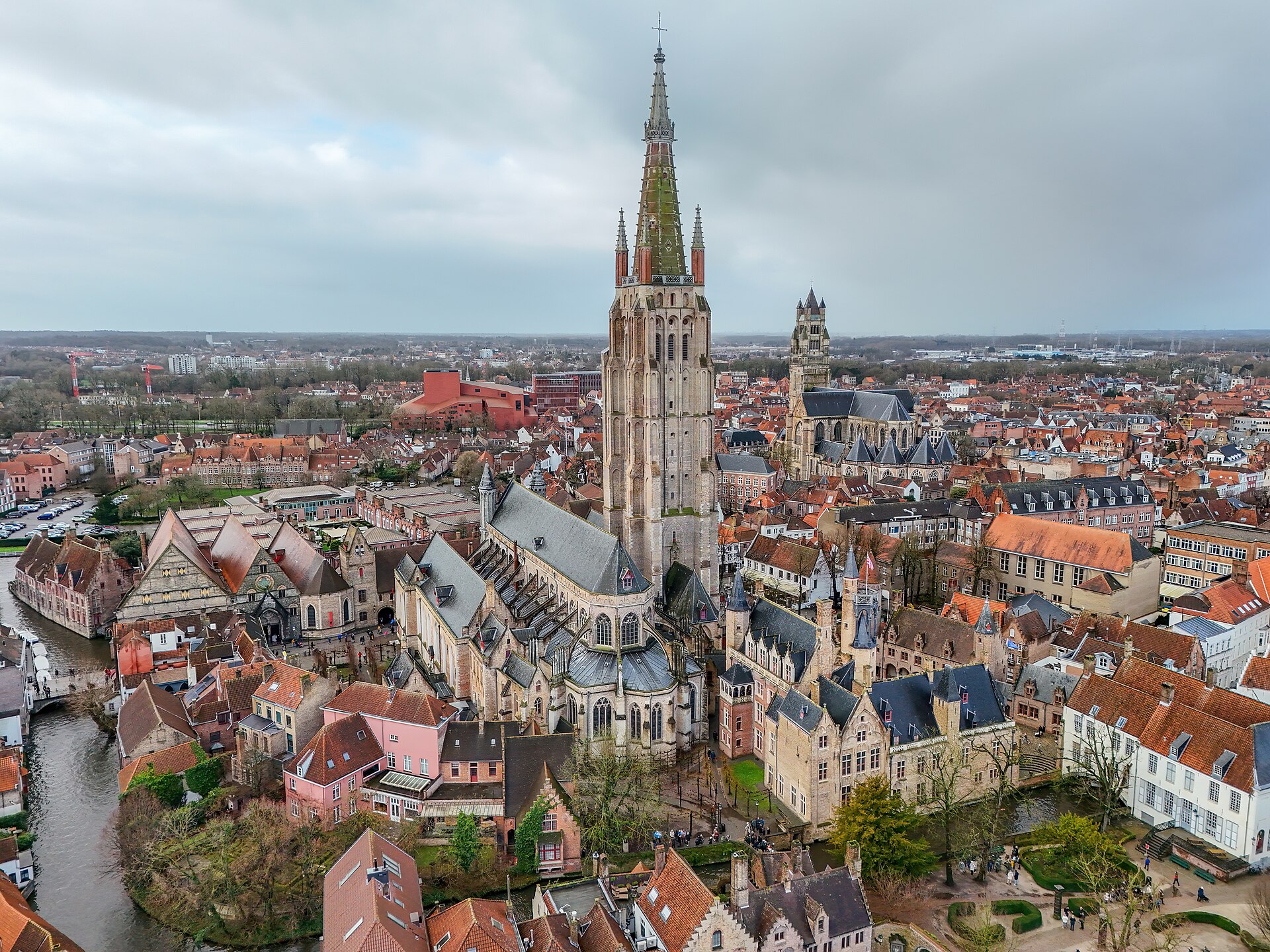
Church of Our Lady
Mariastraat, Bruges, 8000, Belgium
The tower of the Church of Our Lady reaches 115.5 metres into the Bruges skyline, making it the tallest structure in the city and one of the tallest brick towers in the world. Construction began in the 13th century and continued for over two hundred years, and the result is a building that wears its long construction history openly — Romanesque foundations, Gothic nave, and a tower that gets progressively more ambitious the higher it goes. But the reason most people visit has nothing to do with the architecture. In the southern aisle, behind protective glass, stands Michelangelo's Madonna and Child — a 128-centimetre white Carrara marble sculpture created around 1504. It was the only Michelangelo sculpture to leave Italy during his lifetime. A wealthy Bruges cloth merchant named Jan de Mouscron acquired the statue, possibly through an intermediary, and by 1514 it had been donated to this church. The Madonna gazes downward and away from the Christ child, who appears about to step off her lap — a radically different composition from traditional depictions, and unmistakably the work of a sculptor who was simultaneously painting the Sistine Chapel ceiling. The sculpture has been stolen twice. French Revolutionary troops seized it around 1794 and took it to Paris, where it remained until Napoleon's defeat. Then in September 1944, retreating Nazi soldiers packed it into a mattress-lined truck and removed it to Germany. It was recovered by the Monuments Men from a salt mine in Altaussee, Austria, and returned to Bruges. The film The Monuments Men dramatised this recovery, though Hollywood took its usual liberties. In the choir behind the high altar lie the magnificent tombs of Charles the Bold, last Valois Duke of Burgundy, and his daughter Mary of Burgundy — two of the finest examples of Late Gothic funerary art in Europe.
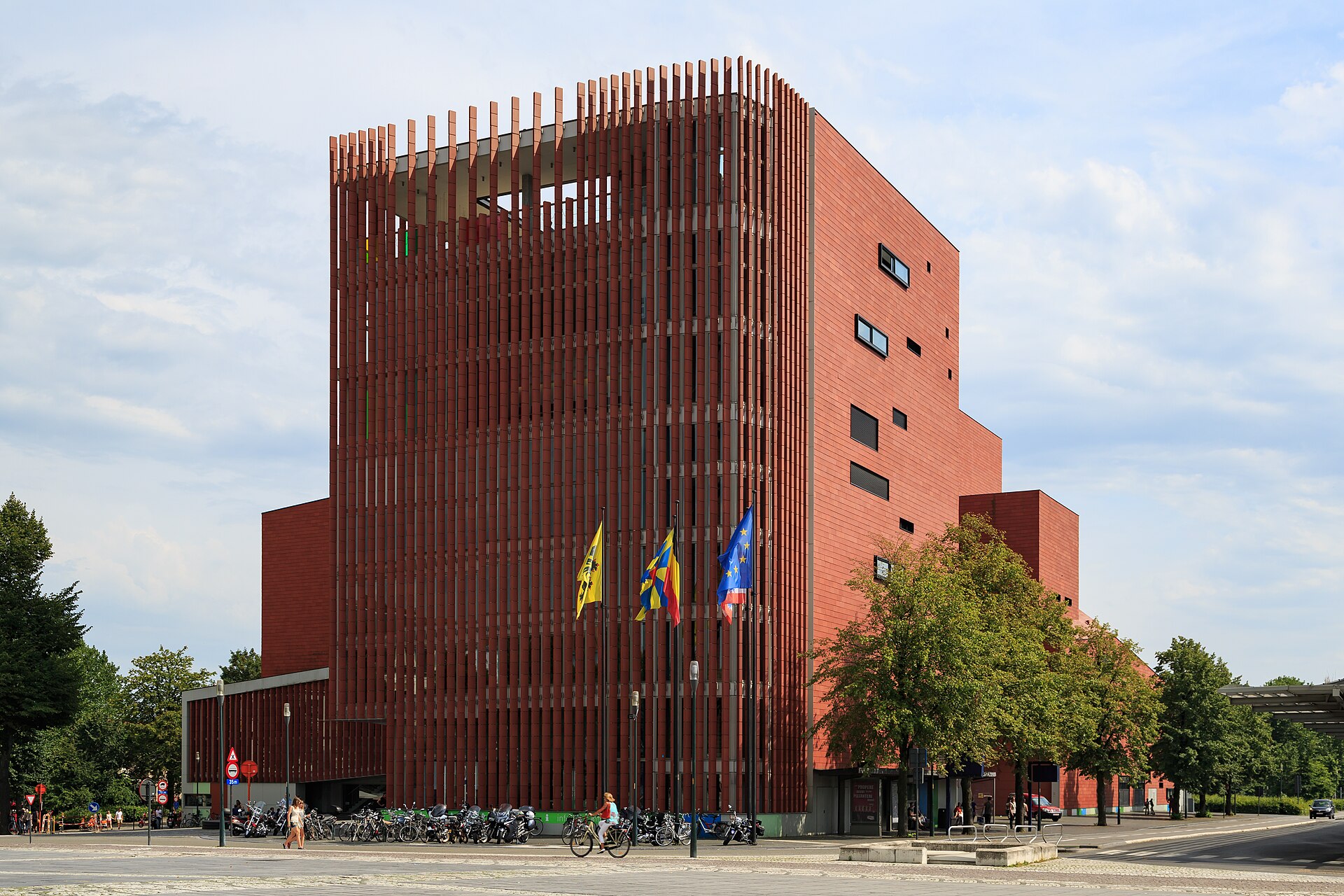
Concertgebouw
34 't Zand, Begijnhofbuurt, Bruges, 8000, Belgium
When Bruges was named European Capital of Culture in 2002, the city decided to build something that would look absolutely nothing like medieval Bruges. The Concertgebouw, designed by Paul Robbrecht and Hilde Daem, is a massive terracotta monolith that rises over 't Zand square like a piece of modern sculpture accidentally dropped into a fairy-tale city. The exterior is clad in 68,000 red terracotta tiles, specifically chosen to echo the colour of Bruges' medieval rooftops — a nod to the old city that does nothing to disguise the fact that this building is aggressively, unapologetically modern. The controversy was immediate and predictable. Bruges residents who had spent centuries carefully preserving their medieval streetscape were not uniformly enthusiastic about a brutalist concert hall appearing on their skyline. But the acoustics silenced most critics. The concert hall ranks among the best in the world, thanks in part to a foundation of more than 4,500 springs that carry the building. These springs neutralise vibrations from a traffic tunnel running beneath 't Zand square, along with specially insulated windows and wall coverings of custom plaster panels. The result is a space where you can hear a pianist breathe. The main hall seats over 1,290 on three levels, and the smaller chamber music hall holds 320. The Lantaarntoren — the Lantern Tower — houses exhibition space and a cafe with views over the historic town. The building complex is a deliberate statement: Bruges is not just a museum of itself, but a living city with contemporary cultural ambitions. Whether you love it or hate it, the Concertgebouw is the most interesting piece of architecture built in Bruges in five hundred years. It proves that a city can honour its past without being imprisoned by it.
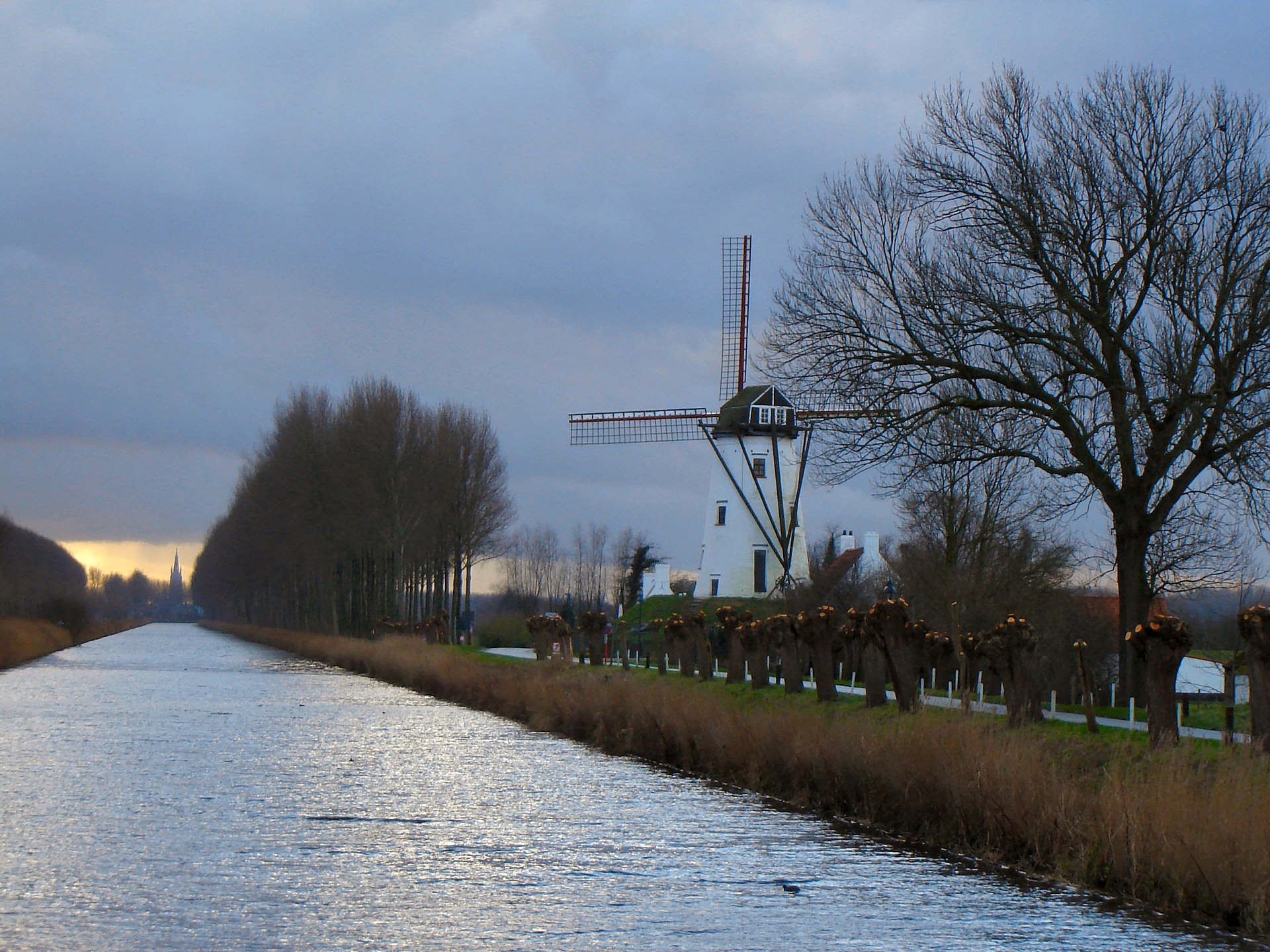
Damme
Dammesteenweg, Damme, 8340, Belgium
Seven kilometres northeast of Bruges, connected by a ruler-straight poplar-lined canal, lies Damme — a village so small and picturesque that it feels like Bruges' quieter, more self-possessed sibling. In the 13th century, Damme was anything but quiet. It served as the outer port of Bruges, the point where sea-going ships transferred their cargo to smaller vessels for the final journey up the canal to the city. At its peak, Damme was one of the most important trading posts in Flanders, handling the wine, wool, and herring that fuelled the medieval Flemish economy. When the Zwin channel silted up and Bruges lost its access to the sea, Damme went down with it. The village shrank from a prosperous port town to a sleepy farming community, and like Bruges itself, the economic decline preserved its medieval character. The Gothic Town Hall from the 15th century still stands on the market square, far too grand for a village this size — a permanent reminder of Damme's former wealth. The Church of Our Lady has a ruined tower that was partially demolished by Napoleon's troops for building materials in the early 19th century, which is the kind of vandalism that only an occupying army can pull off with a straight face. Damme is famous in Flemish literature as the birthplace of Thyl Ulenspiegel, the trickster folk hero whose adventures were immortalised by Charles de Coster in his 1867 novel. A statue of Ulenspiegel stands in the village, and the local museum tells his story. Whether Ulenspiegel was a real person or a literary invention is debated, but Damme has claimed him with the confidence of a small town that knows a good tourism hook when it sees one. The best way to reach Damme from Bruges is by bicycle along the canal path, lined with Lombardy poplars that create a green tunnel in summer. The ride takes about twenty-five minutes, and it is the finest cycling in the Bruges area.
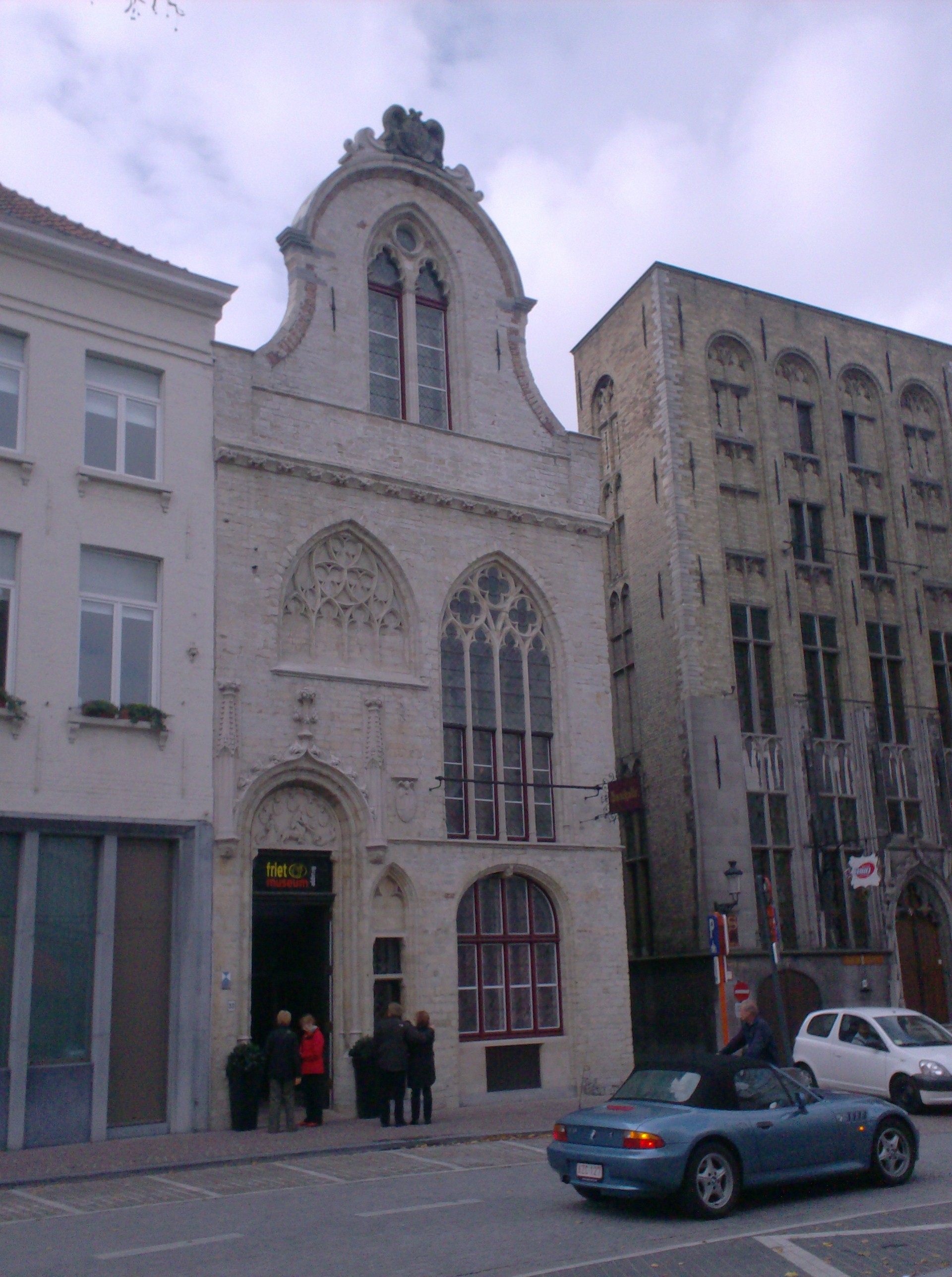
Frietmuseum
Bruges, Belgium
This is the world's first and only museum dedicated to the potato fry, and only Belgium could make this feel like a legitimate cultural institution rather than a joke. The Frietmuseum is housed in the Gothic Saaihalle — a former wool hall dating from 1399 — at Vlamingstraat 33, one of the oldest buildings in Bruges' World Heritage-listed centre. The contrast between the medieval architecture and the subject matter is part of the charm: you are learning about frying potatoes inside a 600-year-old trading hall. The museum was founded in 2008 by Eddy Van Belle, who had already opened Choco-Story (the chocolate museum) and Lumina Domestica (a lamp museum with a 6,500-piece collection). Van Belle clearly understood something about Bruges that most tourism operators miss: the city's relationship with everyday pleasures is as much a part of its heritage as its churches and paintings. The exhibits trace the history of the potato from its origins in Peru through the Spanish colonial period to its arrival in Europe, using dioramas of Peruvian farmers, Inca-era ceramic vases, and vintage advertising posters. There is an extensive collection of potato cutters that is either fascinating or deeply eccentric, depending on your interest in kitchen equipment. The museum makes the case — convincingly — that the Belgian fry is a national art form: twice-fried in beef tallow, served in a paper cone, and eaten with mayonnaise, not ketchup. The medieval cellar at the bottom serves fresh frites, which means you end the visit by eating the subject of the museum. This is either brilliant museum design or a conflict of interest, and in either case the frites are excellent.
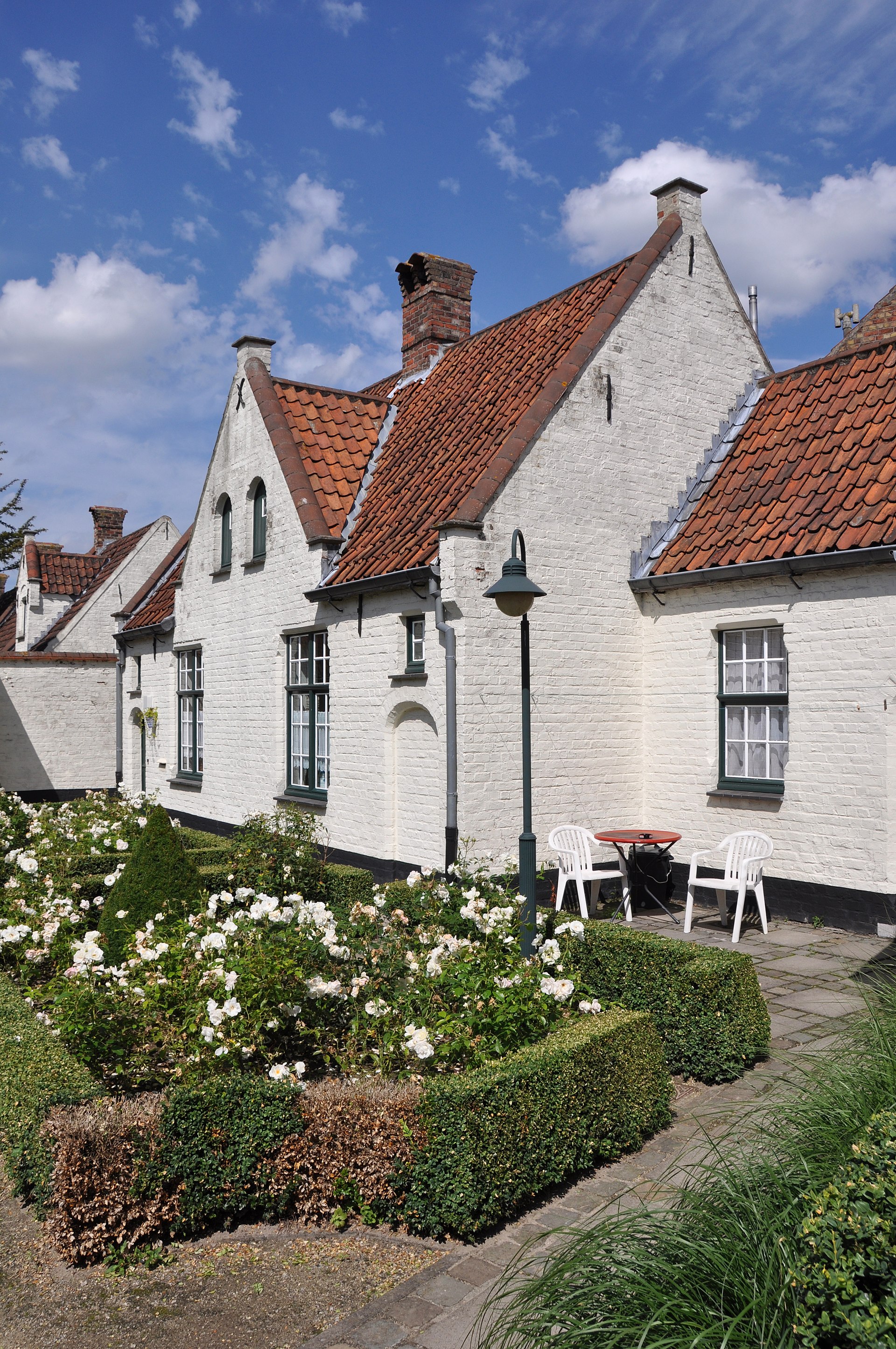
Godshuizen (Almshouses)
Nieuwe Gentweg, 8000 Brugge
Scattered across Bruges like quiet secrets are over forty godshuizen — literally "God's houses" — small whitewashed courtyard dwellings built from the 14th century onwards as acts of charity. Wealthy citizens, guilds, and occasionally the church built them to house the elderly, the poor, widows, and other vulnerable members of society. In return, residents were usually required to pray for the soul of their benefactor. It was a neat medieval transaction: real estate for the living in exchange for spiritual capital for the dead. The godshuizen follow a consistent pattern: a row of small houses arranged around a shared courtyard garden, entered through a narrow gate from the street. They are deliberately hidden — tucked behind walls, accessed through archways, invisible unless you know where to look. The gardens are immaculate, planted with flowers and herbs, and the silence inside them is startling given their proximity to busy streets. More than forty of these complexes survive, and many still serve their original purpose, housing elderly residents of Bruges at subsidised rents. The Godshuis De Meulenaere, founded in 1613 by Johanna de Muelenaere, originally consisted of twenty-four small houses for elderly women. The Godshuis De Vos, founded in 1480 by merchant Adriane de Vos, has a peaceful courtyard and a small chapel. Each complex typically bears the name of its founder — a form of immortality that has outlasted most other ways of being remembered. The best approach is to wander and discover them by accident. They are found throughout the city, with clusters along Nieuwe Gentweg, Katelijnestraat, and in the Sint-Anna district. Push open a gate, step through, and you are in a medieval garden of stillness. Just remember that people live here — this is not a museum, but a living tradition of charity that is over seven hundred years old.
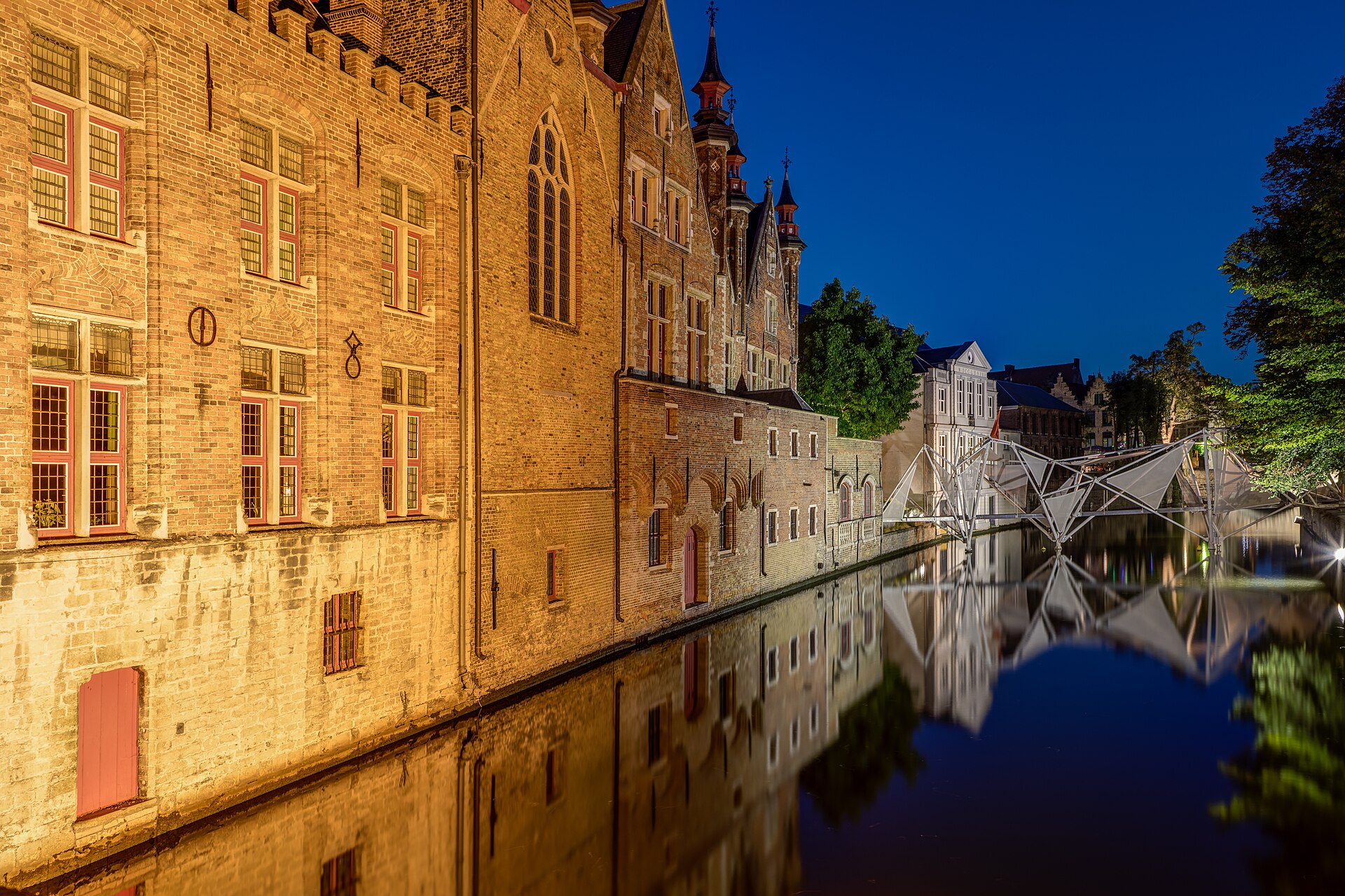
Groenerei Canal
Groenerei, 8000 Brugge
For a long time, people believed the Groenerei was a man-made canal dug before the 11th century to supply water to a mill. Recent studies have upended that assumption: the Groenerei is actually part of the natural course of the Reie river, making it an original waterway that was incorporated into Bruges' first city walls around 1127. This is not a canal at all — it is a river that the city grew around. The Groenerei is widely considered the most beautiful waterway in Bruges, and the competition is stiff. Lined with ancient trees, ivy-covered medieval houses, and small stone bridges, it runs from the Kraanrei near Huidenvettersplein to where it meets the Sint-Annarei near the Molenbrug. Along the southern bank, the street runs through one of the most photogenic stretches in a city that is, frankly, unreasonably photogenic. The Groenerei and its surroundings were recognised as Bruges' fifteenth protected cityscape. Several historic bridges cross the water. The Peerdenbrug dates to 1642. The Meebrug is probably the oldest bridge in Bruges — a plain stone structure that has been carrying foot traffic for centuries while the more famous bridges get all the attention. The Blinde-Ezelbrug adds its own historic charm, and each bridge frames a slightly different postcard view of canal, sky, and medieval gable. The best time to walk the Groenerei is late afternoon, when the western light catches the facades and the water turns gold. Or early morning, when mist rises from the canal and the only company is the occasional swan. The swans, remember, are here by legal obligation — but they seem to enjoy the Groenerei as much as everyone else.
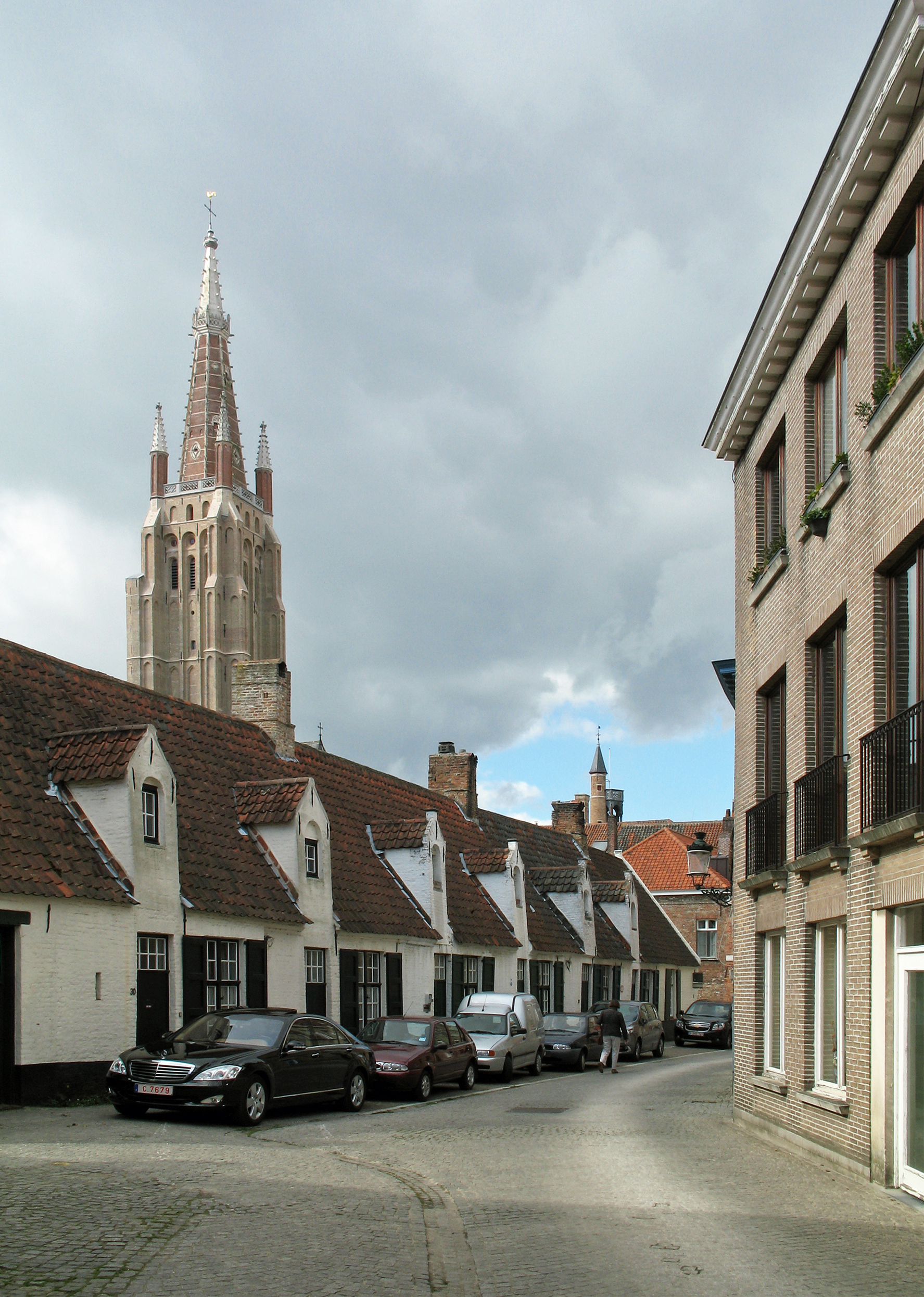
Groeninge Museum
Dijver 12, 8000 Brugge
This modest-looking museum on the Dijver canal holds one of the most important art collections in the world, and most people have never heard of it. The Groeninge Museum is the home of the Flemish Primitives — the 15th-century painters who revolutionised European art by perfecting oil painting techniques that made colours glow with an intensity that tempera could never achieve. Jan van Eyck, Hans Memling, Gerard David, Hugo van der Goes — the masters who made Bruges the artistic capital of Northern Europe are all here. The centrepiece is Jan van Eyck's Madonna with Canon Joris van der Paele, painted in 1436. Van Eyck is often credited with inventing oil painting, and while that's an oversimplification — he perfected rather than invented the technique — his innovations allowed for a level of detail that still astonishes. In the van der Paele painting, you can see individual threads in the canon's surplice and the reflection of a window in the armour of Saint George. No painter before van Eyck had achieved this level of microscopic realism. Hans Memling's Moreel Triptych from 1484, commissioned by wealthy merchant Willem Moreel, is another highlight. Where van Eyck excels in almost clinical precision, Memling brings grace and emotional tenderness — his figures inhabit a gentler, more serene world. The museum also holds significant works from later centuries, including pieces by Hieronymus Bosch and a strong collection of Belgian Surrealism and Expressionism, but the Flemish Primitives are why you come. The collection spans six centuries of Belgian visual art, but the museum itself is deceptively small. You can see the essential works in ninety minutes, which makes it one of the best value-for-time art museums in Europe. No overwhelming galleries, no museum fatigue — just masterpiece after masterpiece in a manageable space.
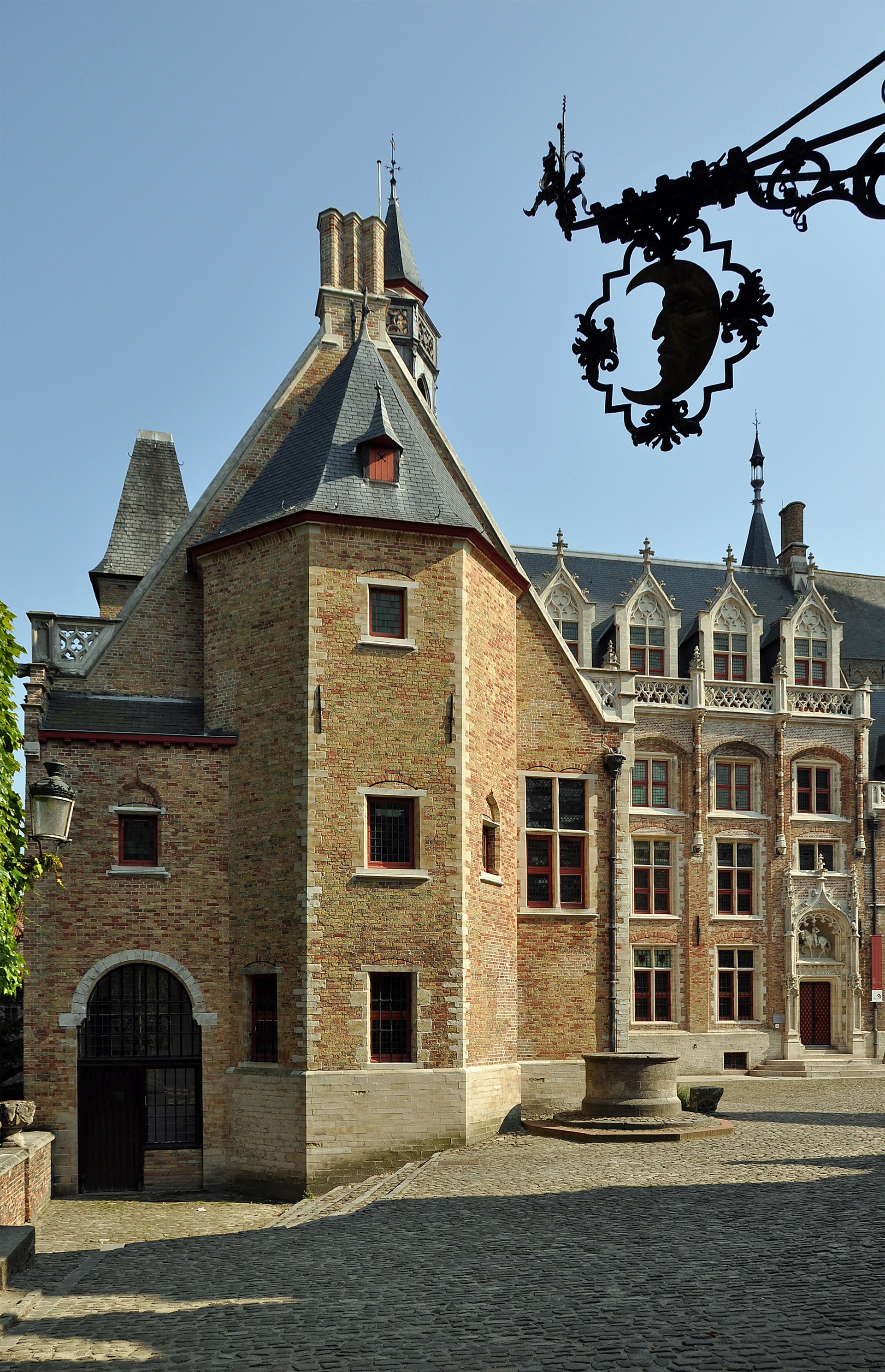
Gruuthuse Museum
Dijver 17c, 8000 Brugge
The name tells you everything you need to know about how this family made its fortune: gruut. Before hops became the standard bittering agent in beer, brewers used a mixture of dried plants and flowers called gruut to flavour their brew. The family that lived in this palace held the monopoly on gruut sales in Bruges, and even when brewers switched to hops, the family retained the right to levy a tax on virtually all beer brewed in or imported to the city. They literally taxed beer. In medieval Flanders, this made them spectacularly wealthy. The most famous resident was Louis de Gruuthuse, a nobleman and senior adviser to three successive Burgundian dukes in the 15th century. He expanded the palace, adding a second wing and in 1472 a private chapel — an oratory that connects directly to the choir of the neighbouring Church of Our Lady, allowing Louis to attend Mass without leaving his house. This architectural flexing — building a private bridge to the church next door — tells you more about wealth and power in 15th-century Bruges than any history book. The city of Bruges purchased the building in 1875, and architect Louis Delacenserie conducted a thorough restoration between 1883 and 1895. After a major renovation completed in 2019, the museum now tells the 500-year history of Bruges through some 600 objects across a series of beautifully restored rooms. The collection includes tapestries, ceramics, weapons, and furniture, but the building itself — with its timber-beamed ceilings, Gothic fireplaces, and that remarkable oratory — is the star. Before the Gruuthuse family, the building served as the gruut storage warehouse in the 13th century. Before that, it was just a prime piece of real estate next to the most important church in town. Some locations are simply destined for wealth.
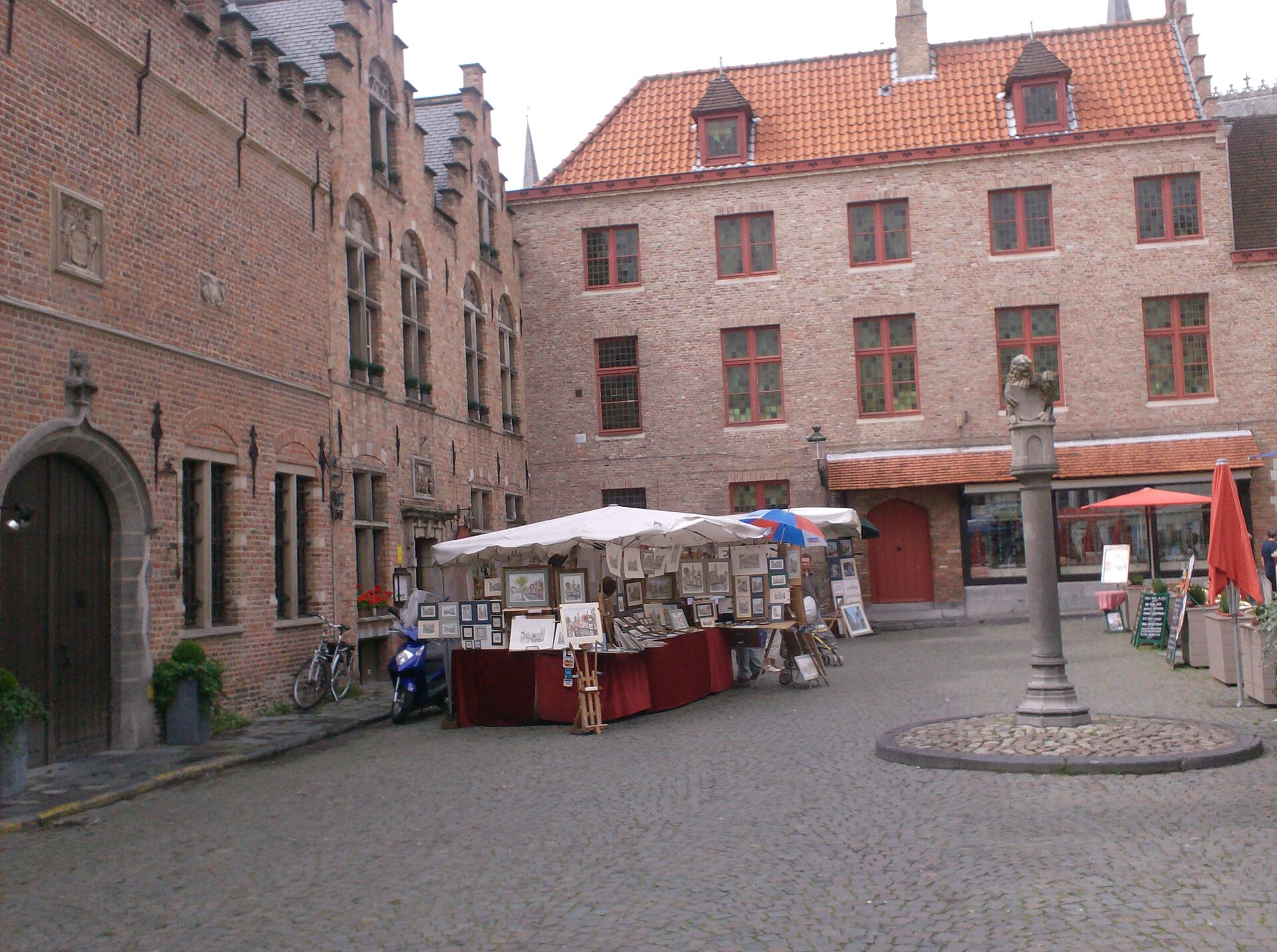
Huidenvettersplein
Huidenvettersplein, 8000 Brugge
The name translates as "Tanners' Square," and it tells you exactly what happened here for centuries. This small square near the Dijver canal was the working heart of Bruges' leather industry, where animal hides were scraped, treated, and cured. The process was messy, smelly, and essential — leather was used for everything from shoes to bookbindings to armour, and the tanners who worked here were among the city's most important craftspeople, even if nobody wanted to live downwind of them. The tanners needed running water to process their hides, which is why they set up next to the canal. The old fish market — a stone-columned arcade called the Vismarkt — sits just to the north, where fresh fish from the North Sea was sold every morning. Between the tanners and the fishmongers, this corner of medieval Bruges was not the most fragrant neighbourhood. Today, of course, the smells are exclusively of Belgian waffles and moules-frites, served at the restaurant terraces that now fill the square. The square is intimate — barely thirty metres across — and feels like a secret even though it sits a stone's throw from the Rozenhoedkaai. A column at the centre supports two bronze lions, the heraldic symbols of Flanders, added in the 19th century. The surrounding buildings are a mix of genuine medieval structures and later reconstructions, their ground floors converted into restaurants with outdoor seating that spills across the cobblestones in summer. Huidenvettersplein is one of those Bruges squares that works best when you stop trying to photograph it and simply sit down with a beer. The view to the canal and the Belfry tower in the background is exactly the kind of scene that makes people book return flights before they have left.
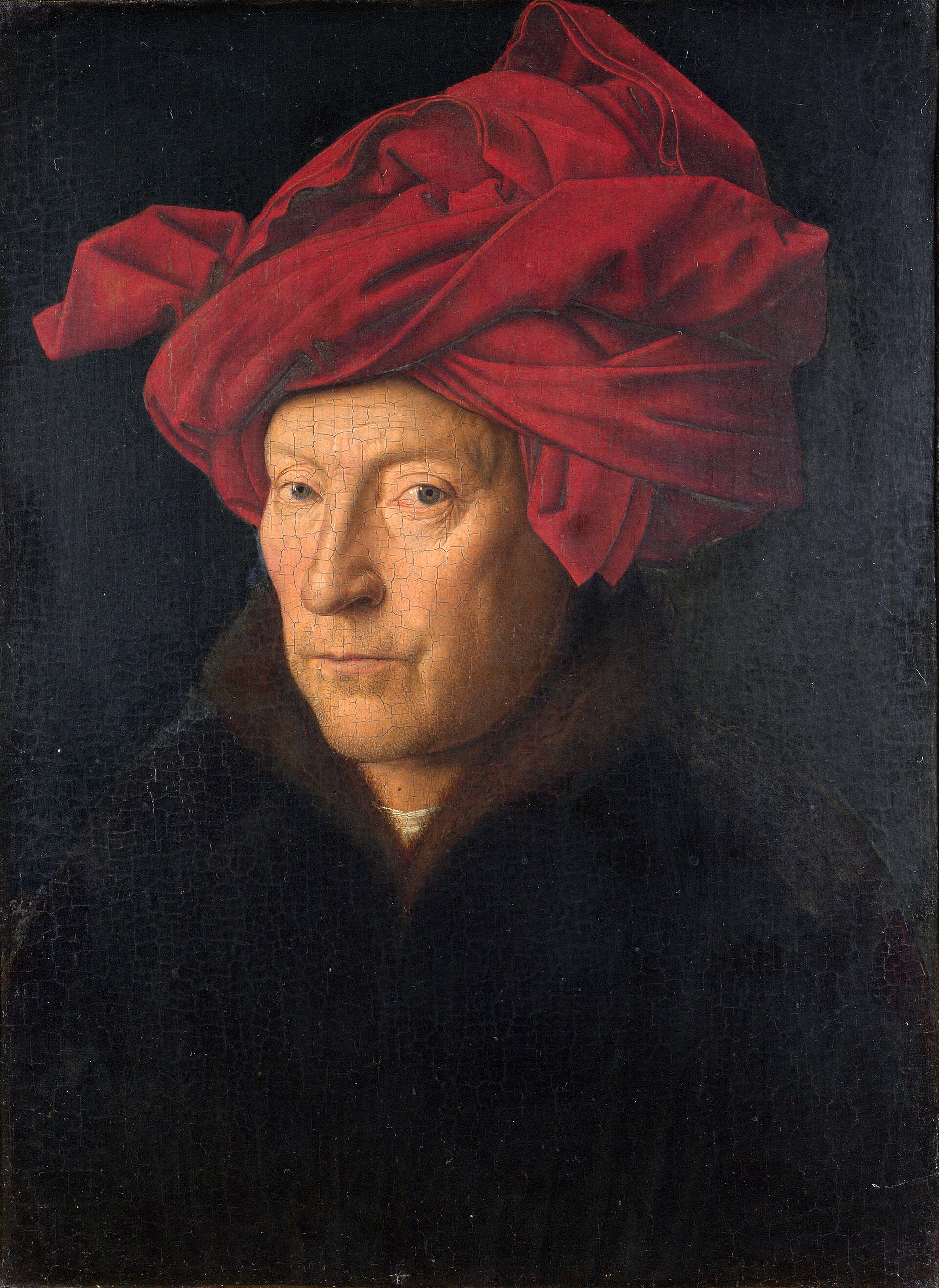
Jan van Eyck Square
Jan van Eyckplein, Bruges, 8000, Belgium
In the Middle Ages, this square was the beating heart of international commerce. Where tourists now sip coffee, merchants from Italy, Spain, Germany, Scandinavia, and the Middle East once crowded around the Toll House and the Rijkepijndershuis, loading and unloading goods while citizens watched from the Burghers' Lodge. You could hear every language spoken in Europe at this port — Bruges was the medieval equivalent of a global trading hub, and this square was its loading dock. The square sits at the intersection of the Spiegelrei and Academiestraat, at the point where the city's canal system once connected to sea-going trade routes. Overland carts left from here for Germany, France, and Northern Italy. Ships sailed to the British Isles, Scandinavia, the Iberian Peninsula, and beyond. Bruges' position at the crossroads of maritime and overland trade made it, for a time, the most important commercial city in Northern Europe — a medieval Manhattan, handling wool, spices, silk, and banking with equal facility. The square itself was created at the end of the 18th century after St John's Bridge was demolished and a section of the Kraanrei Canal was covered over. In 1844, it was named after Jan van Eyck, the Netherlandish painter who lived and worked in Bruges from 1432 until his death in 1441. A bronze statue of van Eyck stands in the centre, though the painter would probably be more interested in the quality of the light than in his own monument. The surrounding buildings include the former Toll House where import duties were collected and the ornate facade of the Burghers' Lodge, where Bruges' merchant class gathered. The lodge now houses the Belgian state archives for the region, which is a very Belgian way of honouring a building — turn it into a filing cabinet.
Koelewei Park
Kruisvest, Gezellekwartier, Bruges, 8000, Belgium
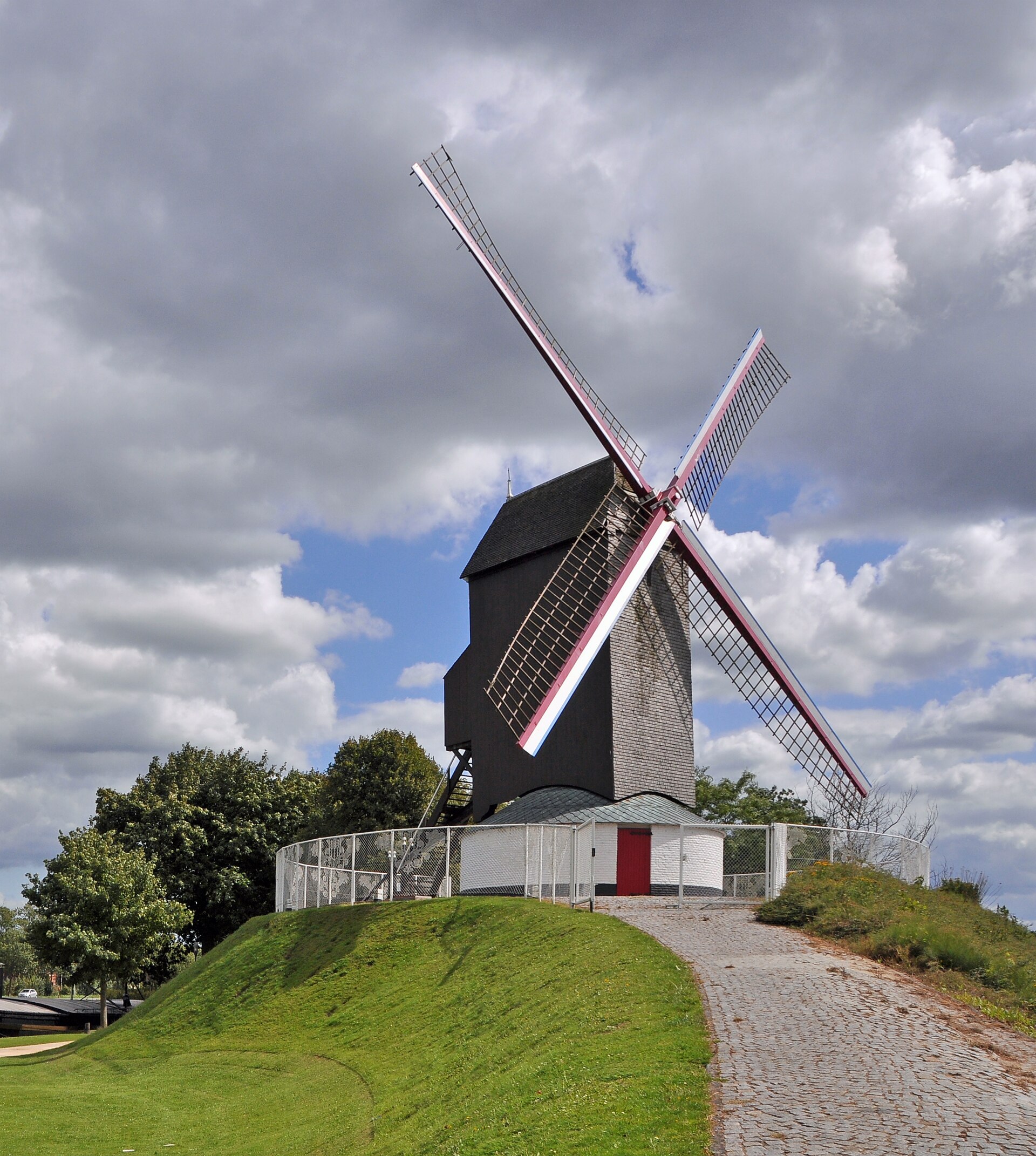
If you want to see Bruges the way residents see it, walk to the Koelewei Park on the northeastern ramparts. This sloping green space along the old city wall is where locals bring their dogs, where joggers trace the tree-lined paths, and where families spread out picnic blankets on summer evenings with views of the windmills silhouetted against the sky. It is decisively not a tourist attraction, and that is exactly the point. The park occupies the earthen ramparts that once formed Bruges' outer defensive wall, built at the end of the 13th century. When the city no longer needed fortifications, the walls were landscaped into green promenades — a transformation that happened across many Flemish cities, turning military infrastructure into public parks. The Koelewei section sits between the windmills to the north and the Kruispoort gate to the south, and the elevated position gives views across the canal to the flat Flemish countryside beyond. The Koelewei Mill itself, which sits at the northern end of the park, dates from 1765 and was relocated here in 1996 from elsewhere in Flanders. It is one of four windmills along the Kruisvest, and while it is not open to visitors as often as the Sint-Janshuismolen, it completes the windmill-studded skyline that makes this stretch of rampart one of the most distinctive walks in the city. The park is at its best in spring when the trees leaf out and the grass greens up, or in autumn when the foliage turns. But any time of day, any season, it offers something most of Bruges' attractions cannot: solitude. In a city that receives millions of tourists annually, a quiet park on the old city wall is a luxury.
Kruisvest Windmills
Kruisvest, Gezellekwartier, Bruges, 8000, Belgium
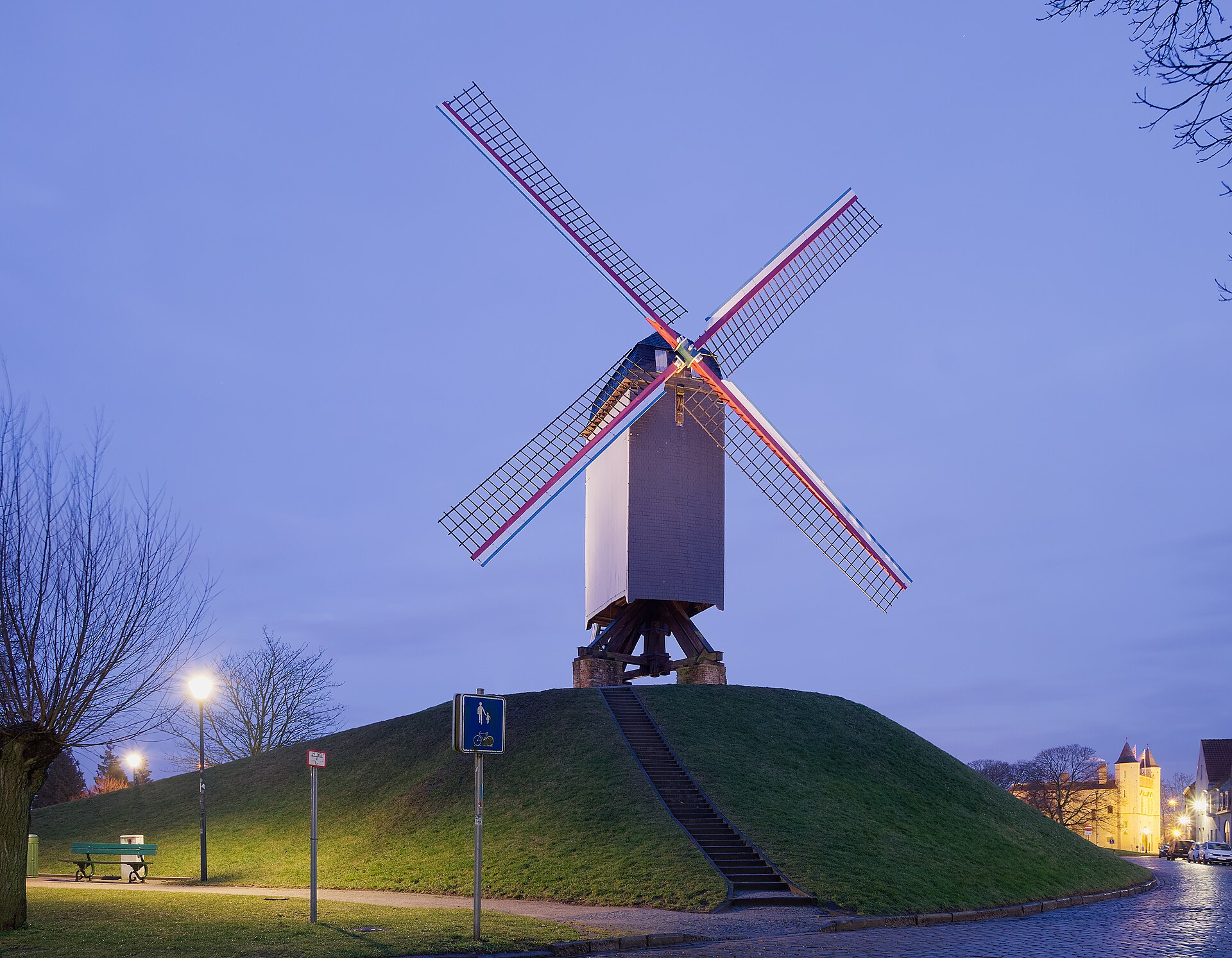
Windmills have graced Bruges' ramparts since the construction of the outer city wall at the end of the 13th century, and at the peak of their usefulness there were dozens spinning along the elevated earthworks. By the 20th century, they had all but disappeared. Today, four specimens survive on the Kruisvest — the green, tree-lined embankment that traces the northeastern city wall — and together they form one of the most photogenic walks in a city that is already almost unfairly photogenic. The star is the Sint-Janshuismolen, built in 1770 by a group of bakers who needed their own grain mill. It is the only one of the four windmills still standing on its original site, and more importantly, it is the only one where grain is still actually ground. In summer, you can climb inside and watch the mechanism work — the massive wooden gears, the grinding stones, the flour collecting below. It is a functioning piece of 18th-century engineering, maintained not as a museum exhibit but as a working mill. The other three windmills were relocated to Kruisvest from elsewhere in Flanders during the 20th century to preserve the memory of the city's milling past. The Bonne Chiere Mill, the De Nieuwe Papegaai Mill, and the Koelewei Mill (dating from 1765) were all transplanted here to maintain the windmill-studded skyline that appears in old paintings and engravings of the city. The walk along the Kruisvest from the windmills toward the Dampoort gate is one of Bruges' best-kept secrets. Away from the crowds of the Markt and the Burg, you are walking along the top of the old city wall, with views across the canal to the quiet suburbs on one side and the medieval rooftops on the other. Bring a picnic.
Lace Centre
Balstraat 16, 8000 Brugge
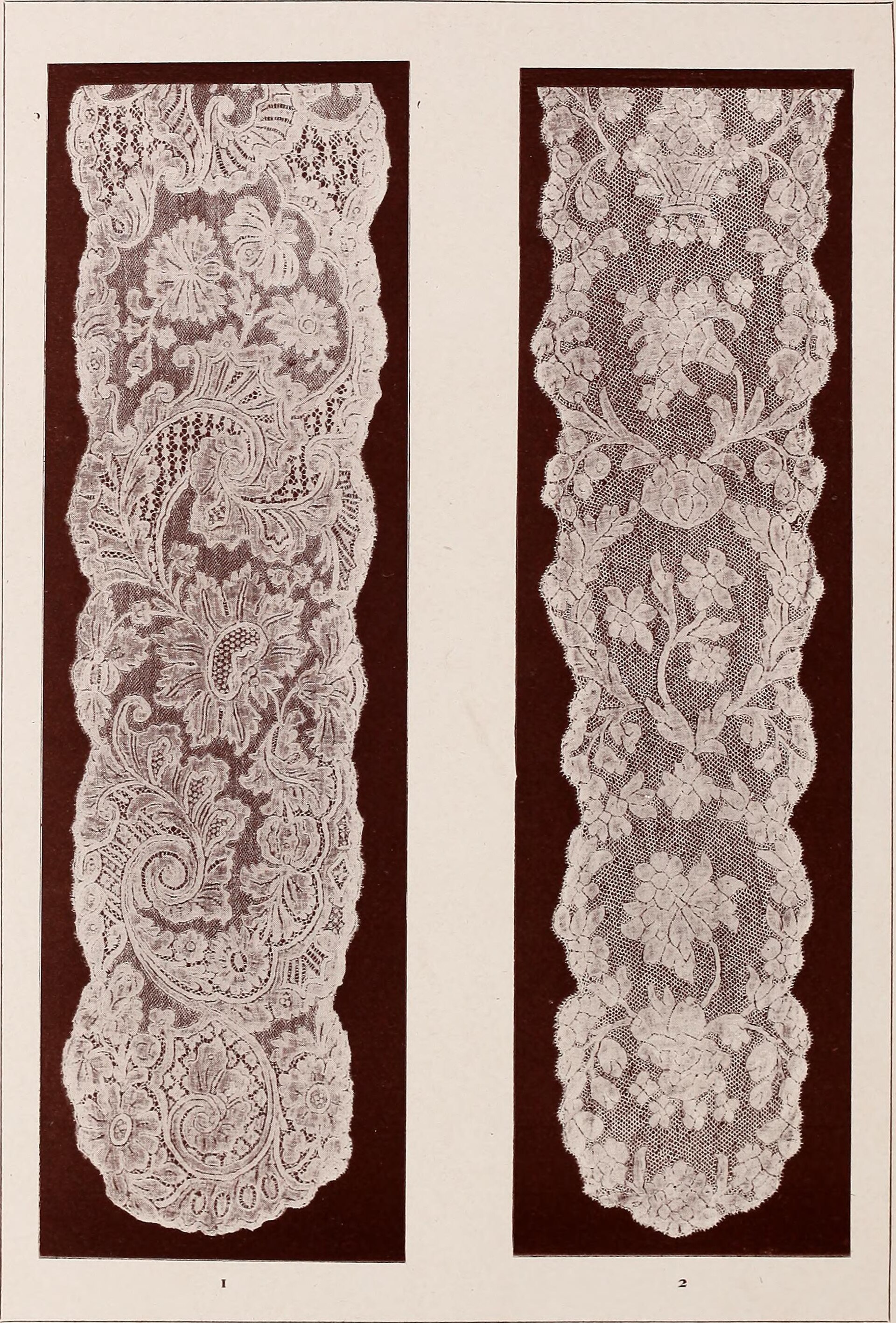
A single square inch of handmade bobbin lace can take up to ten hours to create, and the women who have practised this craft in Bruges since the 16th century have always known that patience is not a virtue — it is a job requirement. Lace was born as a craft in the 1500s, and within a generation it had become one of Flanders' most valuable exports. In Bruges, lace schools sprang up everywhere, often run by religious orders, and mothers taught daughters the technique as a matter of economic survival. The Kantcentrum originates in the Apostoline Sisters' lace school and was founded as a non-profit in 1970 to keep the tradition alive at a time when machine-made lace had almost killed it. Two years later, the organisation restarted the lace school, and in 2014 it moved to the Apostolines' former lace school on the Adornes estate in the quiet Sint-Anna district. The centre now runs courses, publishes a lace magazine in four languages, trains lace teachers, and has become a global centre of excellence with a worldwide reputation. Every afternoon except Sundays and holidays, visitors can watch bobbin lace demonstrations on the upper floor. The artisans work with traditional lace pillows and dozens of bobbins, their fingers moving with a speed and precision that makes the craft look deceptively simple. It is not. The patterns require counting, spatial reasoning, and a muscle memory that takes years to develop. Bruges lace reached its peak in the 17th and 18th centuries, when it adorned the clothing of European royalty and aristocracy. By the 19th century, the city had an estimated 10,000 lace makers. Today the number is a fraction of that, but the Kantcentrum ensures the thread — literally — is not broken.
Markt Square
Markt, 8000 Brugge
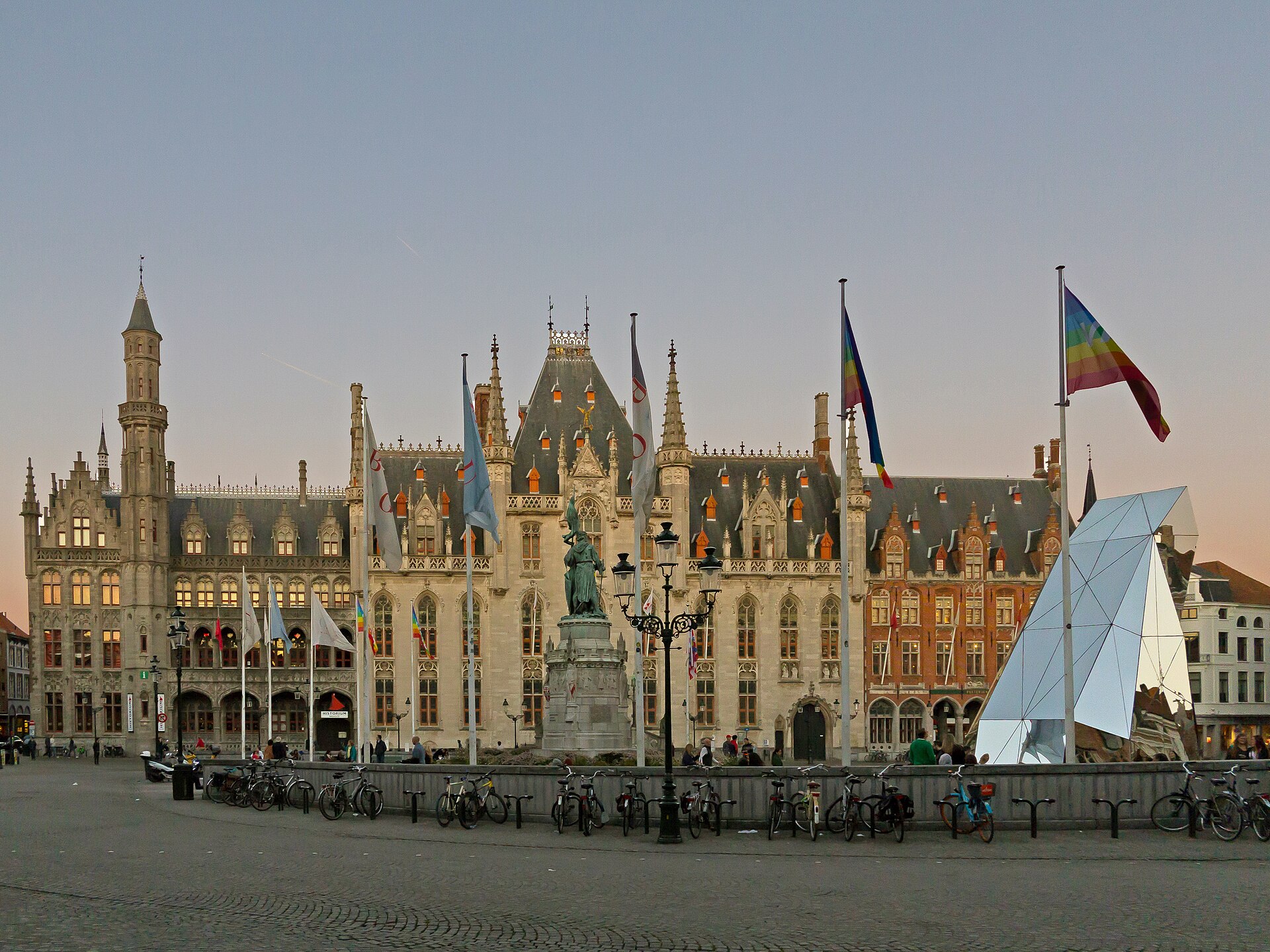
This is where Bruges puts on its best medieval face, and it has been doing so for over a thousand years. The Markt has served as the city's central marketplace since at least 958, when Count Arnulf I granted the right to hold a weekly market here. For centuries, this was the commercial engine of one of Europe's wealthiest cities — a place where Flemish cloth was traded, fortunes were made, and political power was displayed with architectural swagger. At the centre stands a bronze statue of Jan Breydel and Pieter de Coninck, erected in 1887 by sculptor Paul De Vigne. These two men — a butcher and a weaver — are celebrated as heroes of the 1302 Bruges Matins, when Flemish citizens rose up against their French occupiers. The revolt led to the Battle of the Golden Spurs on July 11 of that year, where an army of Flemish craftsmen and farmers defeated the flower of French knighthood near Kortrijk. That date is now the official holiday of Flanders. Whether Breydel and de Coninck played quite the heroic roles the statue suggests is debatable — the historical record is thin — but the myth has stuck. The square is dominated by the neo-Gothic Provinciaal Hof on the eastern side, built between 1887 and 1920 on the site of the old Waterhalle, a medieval covered port where boats once unloaded goods directly into the centre of town. The Waterhalle was demolished in 1787 after the waterways silted up, and the neoclassical replacement burned down in 1878. What you see now is essentially a Victorian fantasy of what a medieval government building should look like, clad in 68,000 terracotta tiles. The colourful guild houses lining the square may look ancient, but most facades are 19th-century reconstructions. Still, when the morning light hits the stepped gables and the carillon rings from the Belfry, it is easy to forget that some of this is restoration rather than original. The Markt sells the illusion of the Middle Ages so convincingly that the illusion becomes its own kind of truth.
Minnewater (Lake of Love)
Minnewater, 8000 Brugge
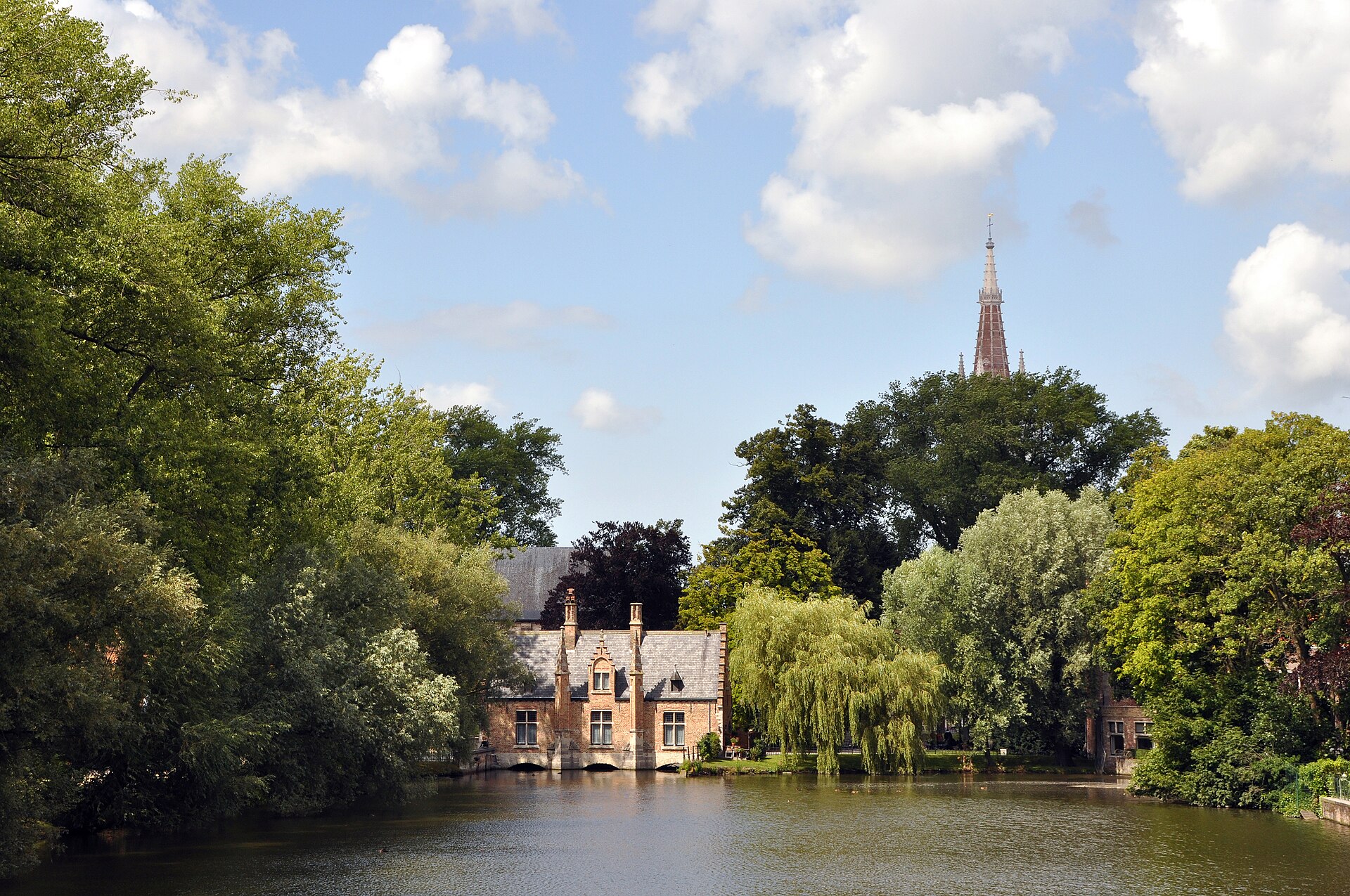
The name Minnewater translates loosely as "Lake of Love," and the legend behind it is exactly the kind of tragic romance a medieval city needs. A young woman named Minna loved a man named Stromberg, but her father had arranged a different marriage. Minna fled into the forests near the lake and died of heartbreak and exposure before Stromberg could reach her. Consumed by grief, he diverted the waters to bury her beneath the lake, ensuring their love would remain eternal. It is a story that has very little basis in historical fact and an enormous basis in tourism appeal. The reality of the Minnewater is more prosaic but equally fascinating. In the 12th century, a great storm created a natural channel connecting Bruges to the North Sea, and the Minnewater served as the inner harbour — a meeting point for boats transporting the fabrics, spices, and luxury goods that made Bruges one of the richest cities in medieval Europe. At its peak, the lake was the terminus of a commercial waterway that connected the city to the world. When the Zwin channel silted up and trade moved to Antwerp, the harbour became a quiet lake. The swans that glide across the water are there by obligation, not choice. In 1488, the citizens of Bruges executed their town administrator Pieter Lanchals, whose family coat of arms featured a white swan. The Habsburg ruler Maximilian I punished the city by ordering its citizens to keep swans on its lakes and canals for eternity. Over five hundred years later, Bruges still maintains the swans — whether out of obedience, tradition, or shrewd tourism marketing is anyone's guess. A stone bridge from 1740 crosses the lake, and the surrounding parkland is one of the loveliest spots in the city for an evening walk. The sluice gate at the southern end once controlled the water level of the entire canal system.
Provinciaal Hof
Markt 3, 8000 Brugge
The building that dominates the eastern side of the Markt looks like it has been standing since the Middle Ages. It has not. The Provinciaal Hof is a neo-Gothic confection, built between 1887 and 1920 on a site with a genuinely ancient pedigree. In 1294, the Waterhalle stood here — a massive covered market hall built directly over the canal, where boats could sail in and unload goods undercover. It was the commercial centrepiece of medieval Bruges, and when the waterways silted up and trade moved elsewhere, the Waterhalle lost its purpose and was demolished in 1787. The neoclassical building that replaced it burned down in 1878, and architects Louis Delacenserie and Rene Buyck designed the current neo-Gothic replacement — a building that deliberately echoes the medieval architecture surrounding the Markt. The post office opened in 1891, the first section of the provincial government hall in 1892, and the last pieces were completed in 1920. The result is a building that functions as a period piece of 19th-century historicism: it looks medieval, it feels medieval, but it was built during the era of the telephone. The Provinciaal Hof served as the meeting hall for the provincial government of West Flanders until 1999. Today it is primarily a ceremonial building used for exhibitions and official events. The facade is richly decorated with statues, coats of arms, and ornamental stonework that would have been immediately familiar to the medieval merchants who once traded in the Waterhalle below. The building is a monument to Bruges' favourite architectural trick: making the new look old. In a city where medieval preservation is a civic religion, the Provinciaal Hof fits in perfectly — which was, of course, exactly the point.
Rozenhoedkaai
Rozenhoedkaai, 8000 Brugge
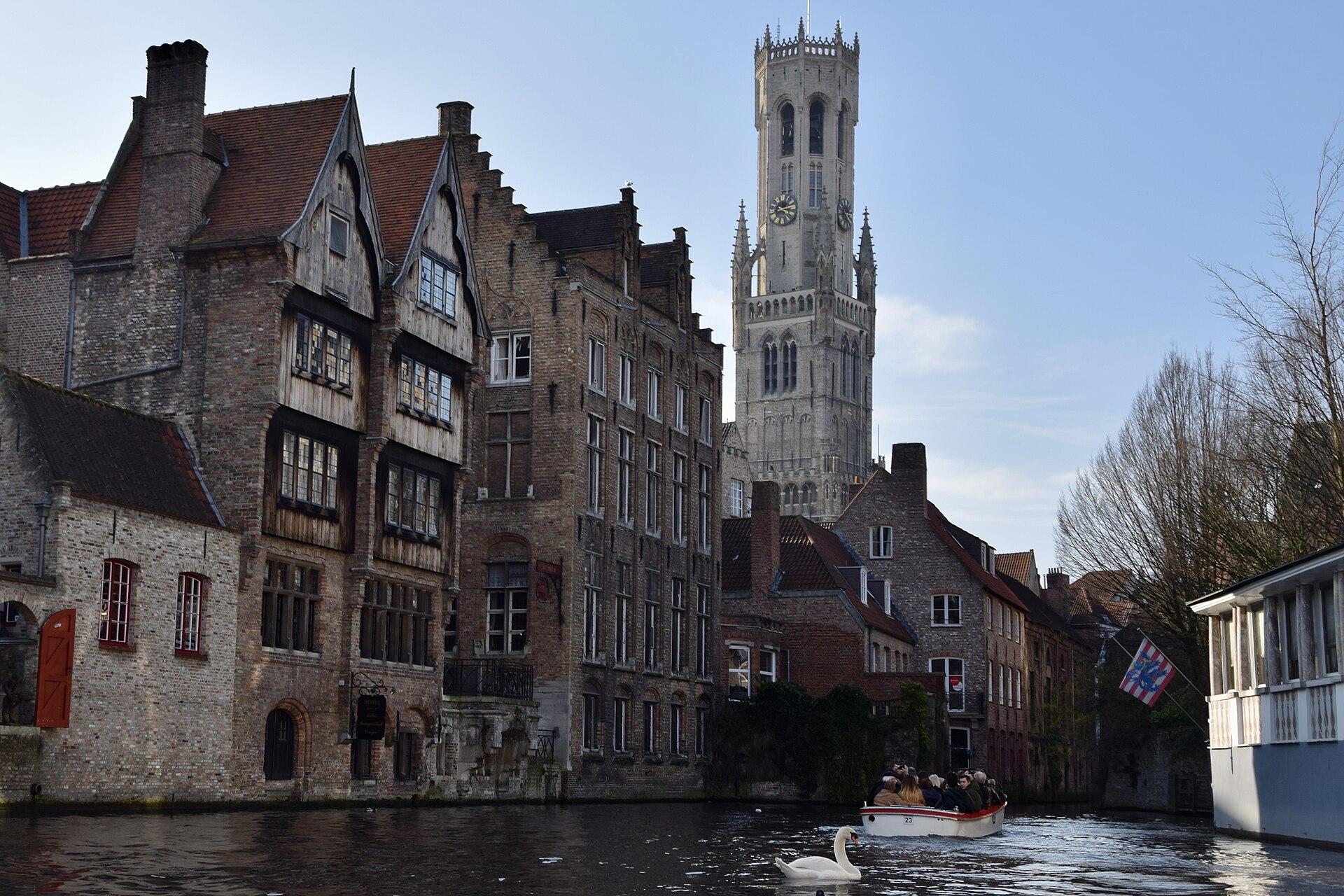
This is the most photographed spot in Bruges, and it earns every pixel. The Rozenhoedkaai — Quay of the Rosary — sits at the junction where the Dijver and Groenerei canals meet, and the view from here encompasses the 13th-century Belfry reflected in the water, flanked by medieval stepped-gable houses draped with ivy. It looks like a painting, which is appropriate for a city that produced more paintings per square metre than anywhere else in 15th-century Europe. The name comes from the rosary sellers who once traded at this spot, back when pilgrims passed through Bruges on their way to holy sites across Europe. But before it was a place of devotion, it was a place of commerce. In the late Middle Ages, the Rozenhoedkaai served as a mooring point for salt traders who unloaded their merchandise here. Salt was enormously valuable — the word "salary" derives from the Latin salarium, and in medieval Flanders, controlling the salt trade could make you richer than controlling the cloth trade. The canal boat tours depart from several points near here, offering thirty-minute journeys through the city's waterways. The routes pass under ancient stone bridges, alongside the backs of patrician houses, and through stretches where the water seems to flow directly through people's living rooms. From a boat, Bruges looks less like a city and more like an elaborate stage set — which, in a sense, it is. The entire historic centre is a UNESCO World Heritage Site, meticulously preserved and polished to a high medieval sheen. If you want the view without the crowds, come at dawn. By mid-morning in summer, the quay is packed with photographers, tour groups, and couples posing in front of the same composition that has launched a million Instagram posts.
Sint-Janshospitaal & Memling Museum
Mariastraat 38, 8000 Brugge
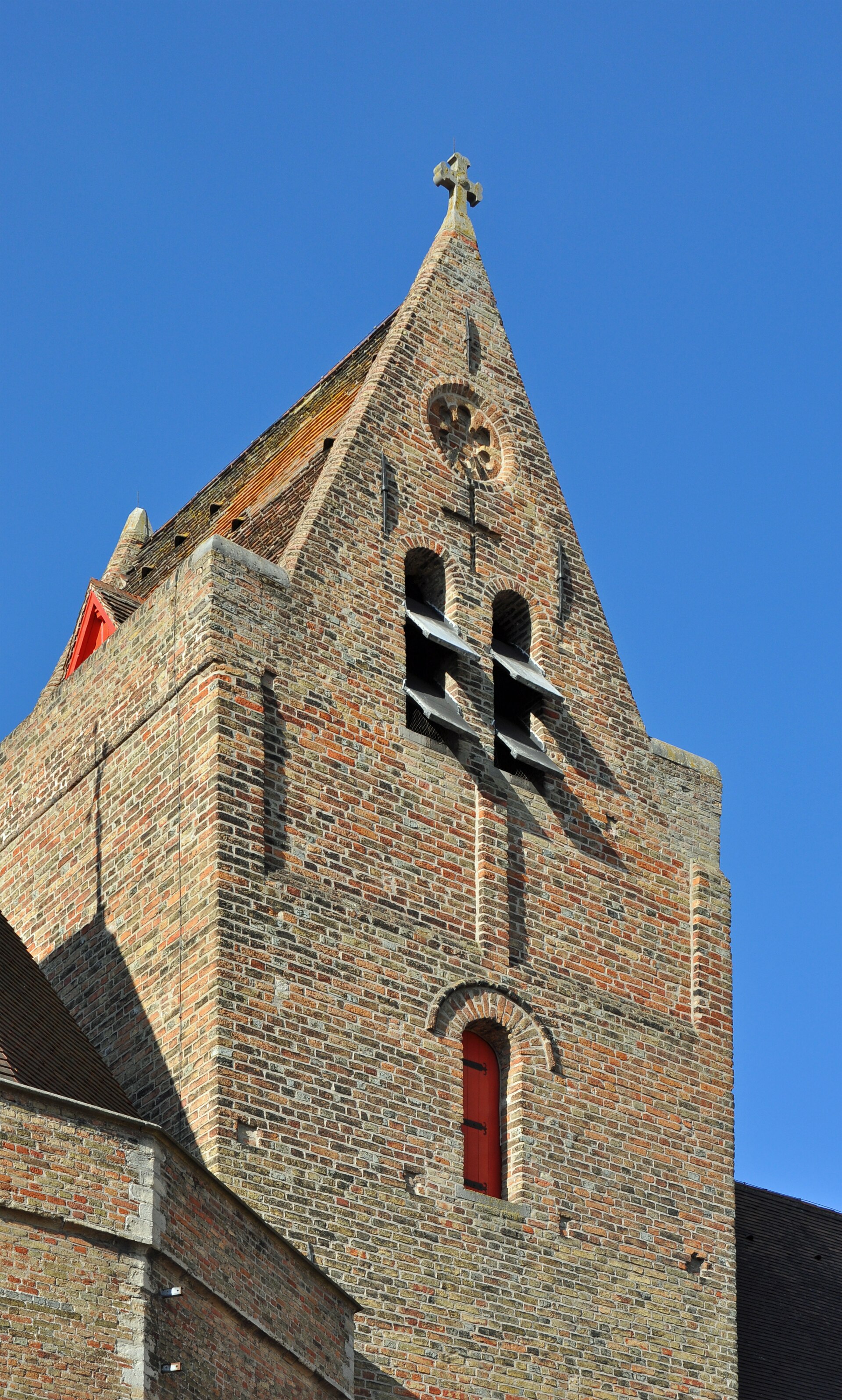
This building operated as a hospital for over eight hundred years. Founded in the mid-12th century, Sint-Janshospitaal cared for the sick, the poor, travellers, and pilgrims until 1977, when medical activities were finally moved to a modern hospital in Sint-Pieters. That makes it one of the oldest surviving hospital buildings in Europe — a place where people have been treated for illness since the era of the Crusades. The medieval hospital ward is a vast open hall with soaring Gothic arches, and it is disorienting to stand in a space where patients lay in rows for centuries. The friars and sisters who ran the hospital lived by a rule established in 1188, and the hospital grew into a complex that included a monastery, a convent, a pharmacy, and a brewery — because in the Middle Ages, beer was safer to drink than water, and hospitals brewed their own. But the real draw is the Memling Museum within the complex. Hans Memling, a German-born painter who spent most of his career in Bruges, created four of the seven masterpieces displayed here specifically for Sint-Janshospitaal, and they have hung in this building since the late 15th century. The Musea Brugge Memling collection is the second largest in the world. The most famous work is the Shrine of St Ursula, a gilded wooden reliquary painted with exquisite miniature scenes depicting the legend of Saint Ursula and the eleven thousand virgins — a work so delicate it feels like it was painted with a single-hair brush. The old pharmacy, with its original 17th-century cabinets and ceramic jars, is worth a visit in itself. Medieval pharmacies mixed herbal remedies, mineral compounds, and occasionally substances that would now be classified as recreational drugs. The line between medicine and magic was thin.
St. Salvator's Cathedral
Sint-Salvatorskoorstraat 8, 8000 Brugge
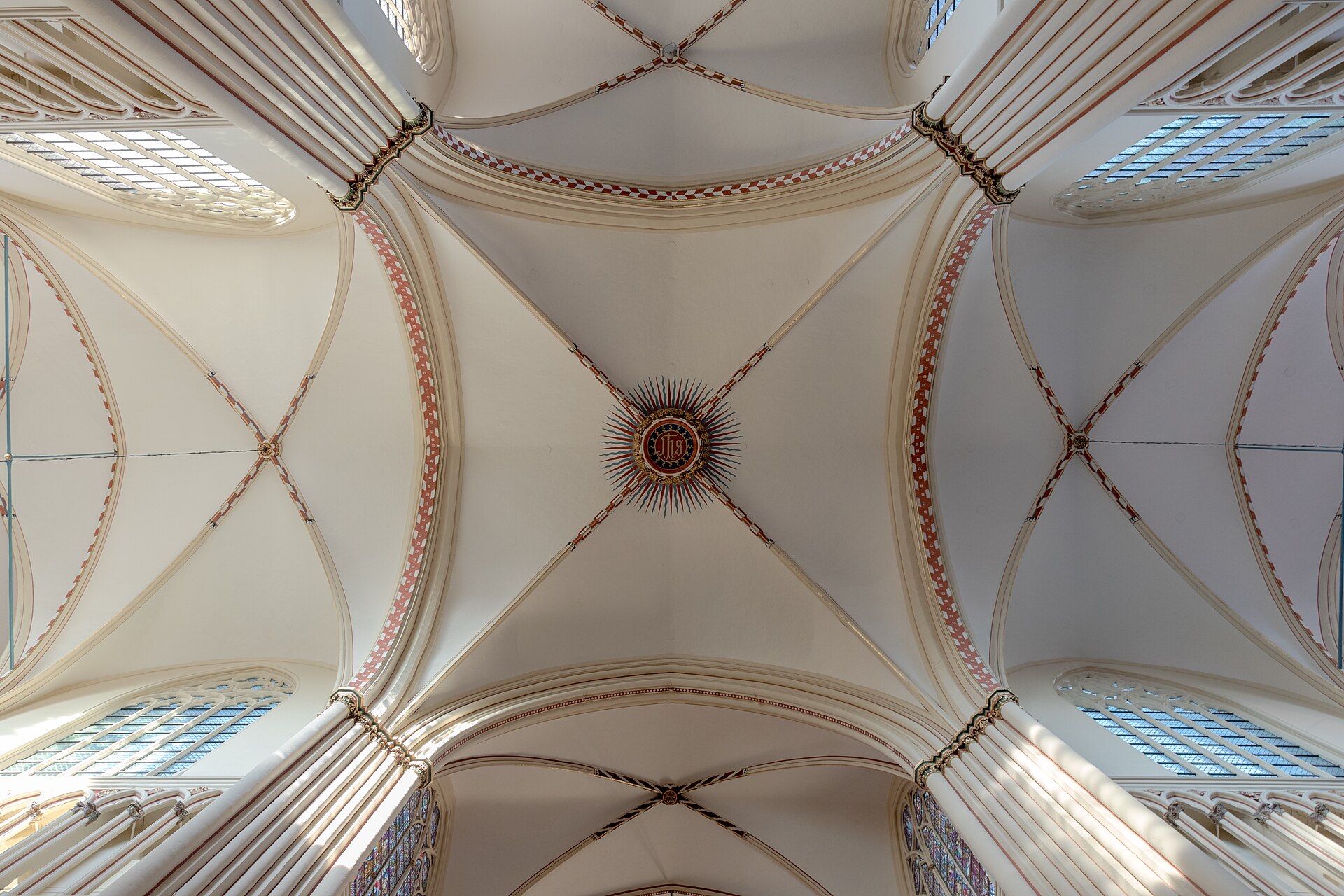
This is the oldest church in Bruges, with traces dating back to the 10th century, and for most of its life it was not a cathedral at all. Sint-Salvator was a common parish church for eight hundred years, overshadowed by the grander Sint-Donaas Cathedral on the Burg square. Then, after Belgian independence in 1830, a new bishop was installed in Bruges and needed a seat. The old cathedral had been demolished during the French Revolutionary period, so Sint-Salvator was promoted — a parish church elevated to cathedral status essentially because the competition had been bulldozed. The fortress-like neo-Romanesque west tower rises 99 metres and gives the building a military rather than spiritual appearance. That militant look is partly the work of English architect Robert Chantrell, who was brought in to restore the building after the roof collapsed in a fire in 1839. Chantrell, famous for his neo-Gothic restorations of English churches, added the crown of the tower in a style that looks more Yorkshire than Flanders. The interior stretches 101 metres long and houses a remarkable collection of art, much of it rescued from the demolished Sint-Donaas Cathedral. The wall tapestries near the entrance were manufactured in Brussels by Jasper van der Borcht in 1731, and the church contains paintings by major Flemish artists. The cathedral treasury holds medieval manuscripts, church silver, and the brass tomb of Bishop Robert de Torote from the 13th century. What makes Sint-Salvator interesting is not that it is the most beautiful church in Bruges — the Church of Our Lady arguably holds that title — but that it is the most resilient. It has survived fires, demolition, neglect, and the awkward promotion from parish church to seat of a bishop. Every scar has been patched, and every patch tells a story.
Staminee De Garre
De Garre 1, 8000 Brugge
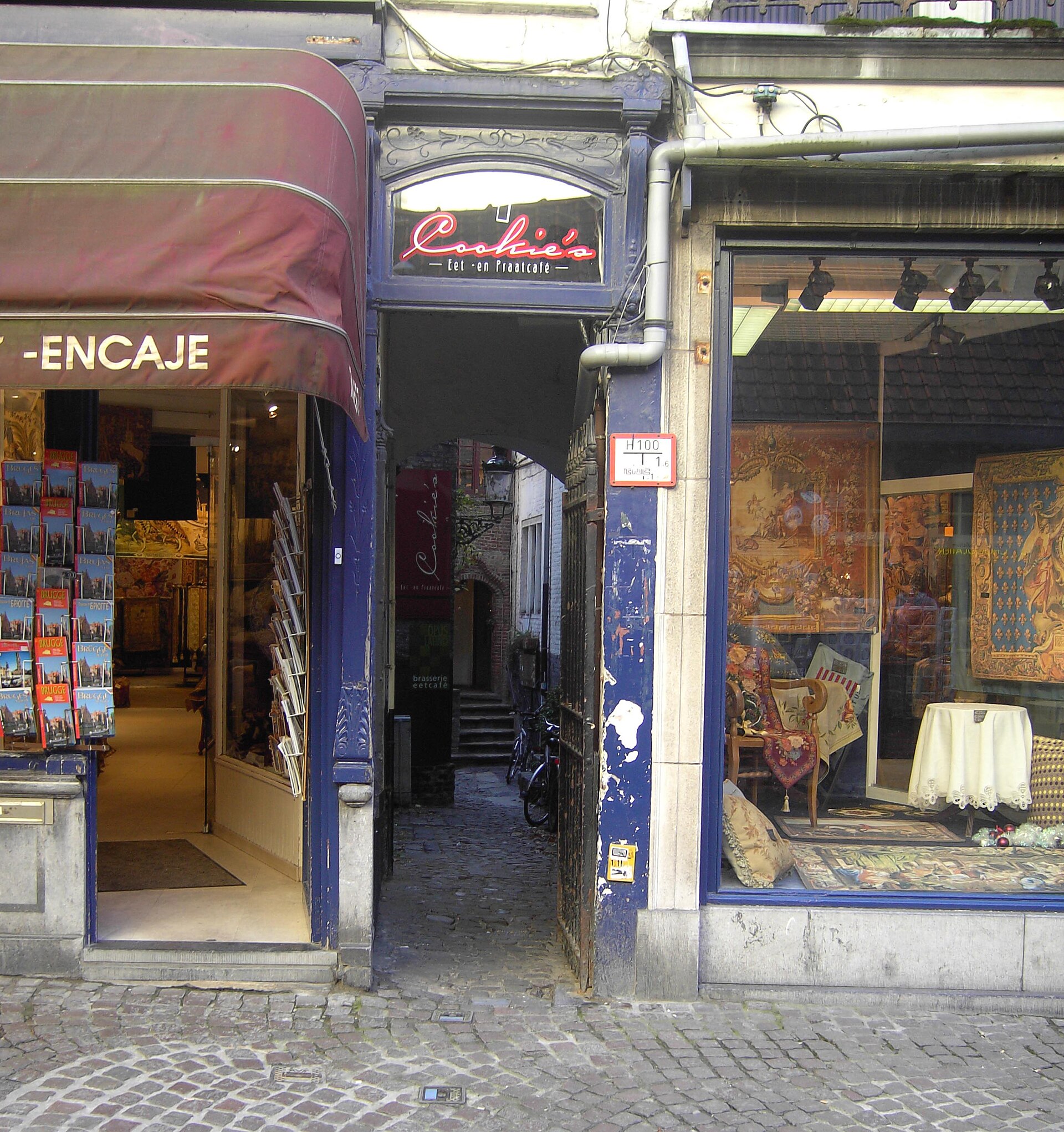
The entrance to this bar is an alley so narrow it barely qualifies as one — a crack between two buildings off a busy pedestrian street, with no sign visible from the road. The name "De Garre" means "the crevice" in West Flemish, and finding it for the first time feels like discovering a secret passage. A narrow stone corridor leads to a set of stairs ascending to an unmarked brick doorway. Push it open and you're in one of the most celebrated beer bars in Belgium, which is saying something in a country with over 1,500 distinct beer varieties. The bar opened on April 21, 1984, and the current owner, Carl Ascoop, took over in 1997. Inside, wood-panelled walls, candlelight, and a collection of over 200 Belgian beers create an atmosphere that feels like stepping into someone's very well-stocked living room. But the reason people seek out De Garre is the house beer: Tripel van De Garre, an 11% golden ale brewed exclusively for the bar by Brouwerij Van Steenberge. It uses twice as much malt as a standard Tripel, creating a deceptively smooth, spicy beer that makes you forget you are drinking something stronger than most wines. The bar limits customers to three glasses. This is not a marketing gimmick — it is a public safety measure. At 11%, three glasses of Tripel van De Garre is equivalent to roughly a bottle of wine, and the steep medieval stairs you arrived on need to be navigated on the way back down. Each glass is served with a small dish of cheese cubes, because the Belgians understand that drinking without eating is a character flaw, not a virtue. De Garre has no music, no television, and no pretension. It is the platonic ideal of a Bruges bar: hidden, excellent, and slightly dangerous.