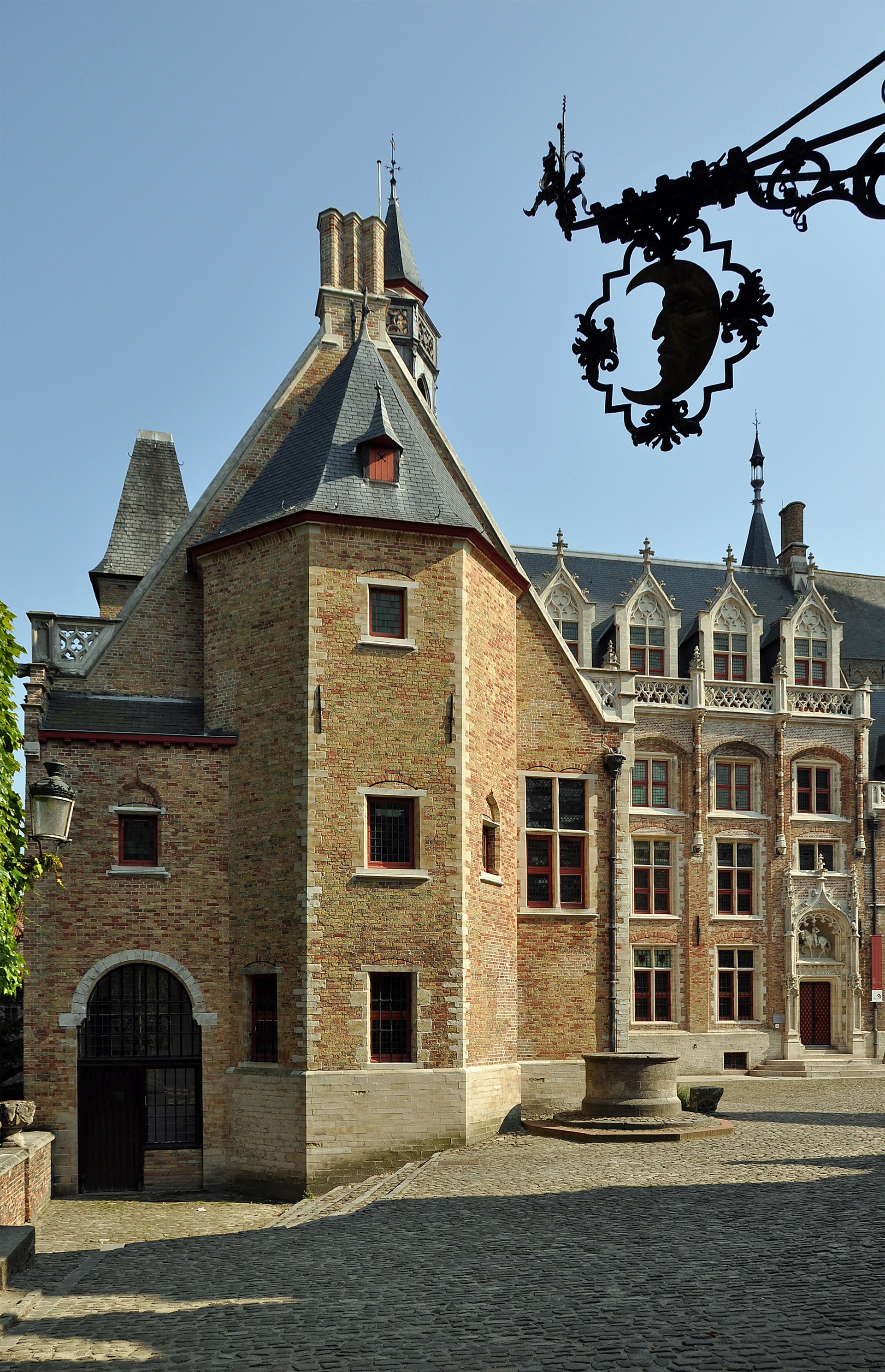
The name tells you everything you need to know about how this family made its fortune: gruut. Before hops became the standard bittering agent in beer, brewers used a mixture of dried plants and flowers called gruut to flavour their brew. The family that lived in this palace held the monopoly on gruut sales in Bruges, and even when brewers switched to hops, the family retained the right to levy a tax on virtually all beer brewed in or imported to the city. They literally taxed beer. In medieval Flanders, this made them spectacularly wealthy.
The most famous resident was Louis de Gruuthuse, a nobleman and senior adviser to three successive Burgundian dukes in the 15th century. He expanded the palace, adding a second wing and in 1472 a private chapel — an oratory that connects directly to the choir of the neighbouring Church of Our Lady, allowing Louis to attend Mass without leaving his house. This architectural flexing — building a private bridge to the church next door — tells you more about wealth and power in 15th-century Bruges than any history book.
The city of Bruges purchased the building in 1875, and architect Louis Delacenserie conducted a thorough restoration between 1883 and 1895. After a major renovation completed in 2019, the museum now tells the 500-year history of Bruges through some 600 objects across a series of beautifully restored rooms. The collection includes tapestries, ceramics, weapons, and furniture, but the building itself — with its timber-beamed ceilings, Gothic fireplaces, and that remarkable oratory — is the star.
Before the Gruuthuse family, the building served as the gruut storage warehouse in the 13th century. Before that, it was just a prime piece of real estate next to the most important church in town. Some locations are simply destined for wealth.
Verified Facts
The family held the monopoly on gruut — a mixture of dried plants used to flavour beer before hops
Louis de Gruuthuse built a private oratory in 1472 connecting directly to the Church of Our Lady
The city bought the building in 1875 and Louis Delacenserie restored it between 1883 and 1895
After a major renovation completed in 2019, the museum displays 500 years of Bruges history through 600 objects
Get walking directions
Dijver 17c, 8000 Brugge