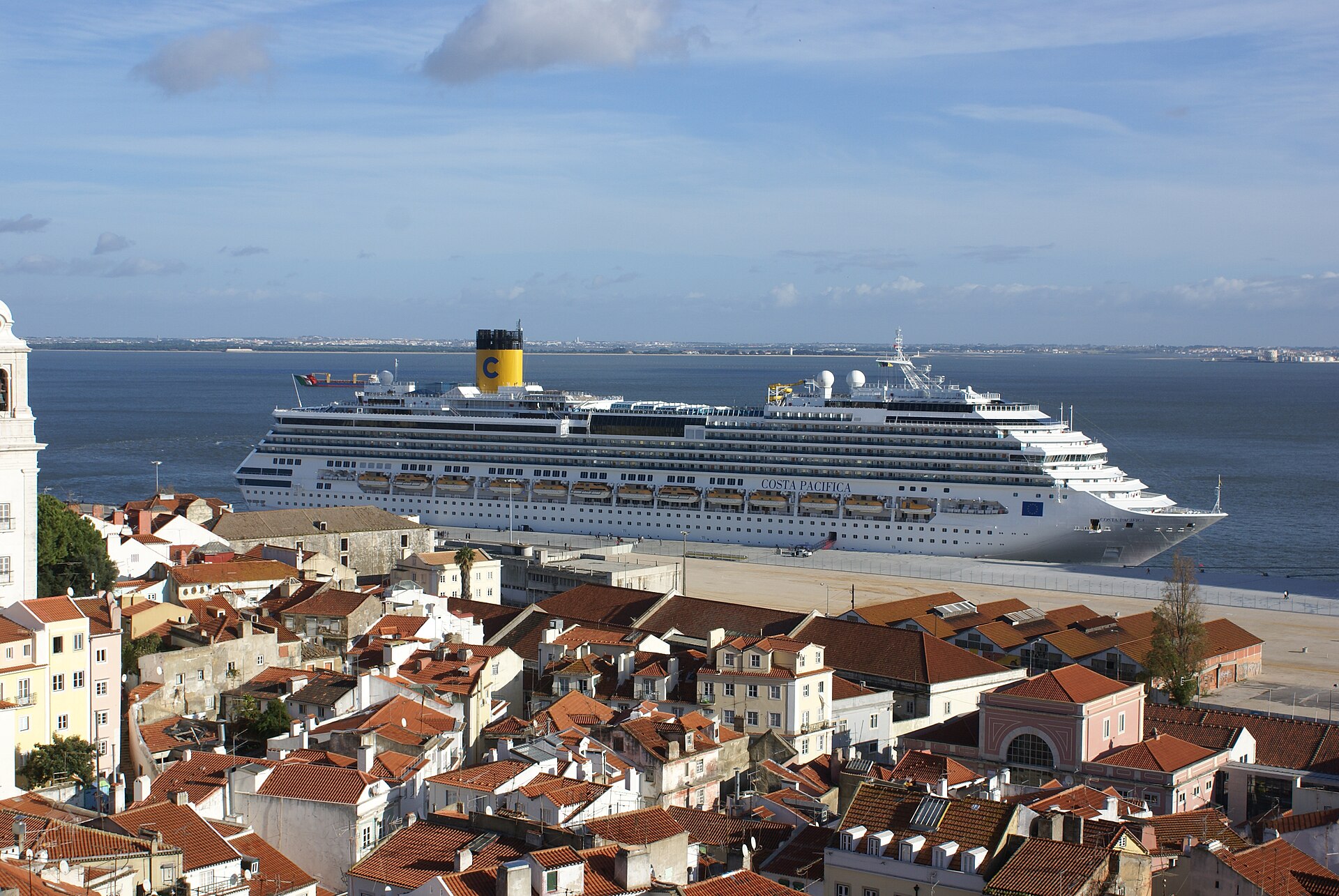
Alfama is the neighborhood that refused to die. When the 1755 earthquake flattened most of Lisbon, this tangled labyrinth of alleys clinging to the hillside below the castle barely flinched — its foundations were anchored directly into bedrock, and the narrow streets acted as natural firebreaks. So while the rest of the city was rebuilt on an Enlightenment grid, Alfama kept its medieval Moorish street plan. The name itself comes from the Arabic "al-hamma," meaning hot springs or baths, a reminder that this was once the heart of Moorish Lisbon, home to the city's wealthiest residents. After the Christian reconquest, the rich moved out and fishermen moved in. Alfama became a working-class village within a city.
Walking through Alfama today is an exercise in productive disorientation. Streets dead-end into staircases, staircases lead to hidden courtyards, and every other doorway seems to leak the sound of fado — that mournful, Portuguese genre of music that was literally born in these streets. The neighborhood was once so notorious for crime and poverty that respectable Lisboetas wouldn't set foot here. Amália Rodrigues, the queen of fado, grew up in Alfama selling fruit on the street before becoming one of the most celebrated singers in Portuguese history. Her voice echoed through these alleys before it echoed through concert halls.
Every June, Alfama transforms into the epicenter of the Santos Populares festivals, particularly the Festa de Santo António on the night of June 12th. Residents string sardine-scented bunting between buildings, set up grills on every corner, and the entire neighborhood becomes an open-air party fueled by cheap wine and charcoal-grilled sardines. It's one of the last genuine neighborhood festivals in a European capital — though gentrification and Airbnb are testing that claim year by year. The Feira da Ladra flea market has operated nearby since the 13th century, making it one of the oldest continuously running markets in Europe.
Verified Facts
Alfama survived the 1755 earthquake largely intact because its foundations sit on bedrock and narrow streets acted as firebreaks.
The name Alfama derives from the Arabic "al-hamma" meaning hot springs or baths.
Fado queen Amália Rodrigues grew up in Alfama selling fruit on the streets before her singing career.
The nearby Feira da Ladra flea market has operated since the 13th century, making it one of Europe's oldest continuously running markets.
Get walking directions
Alfama, Lisboa