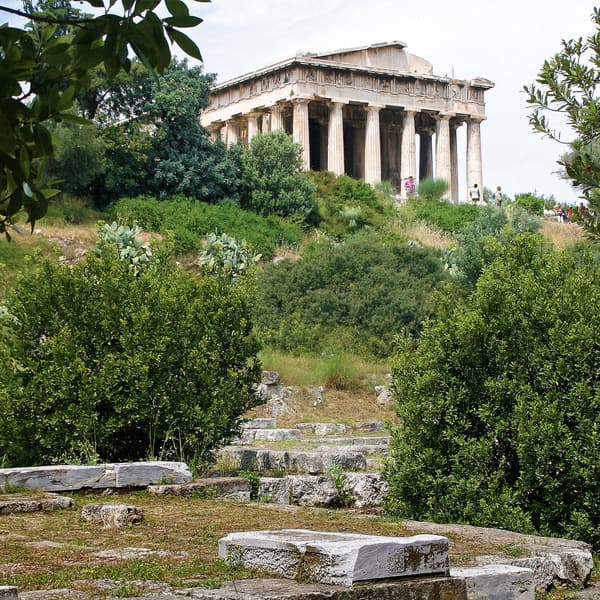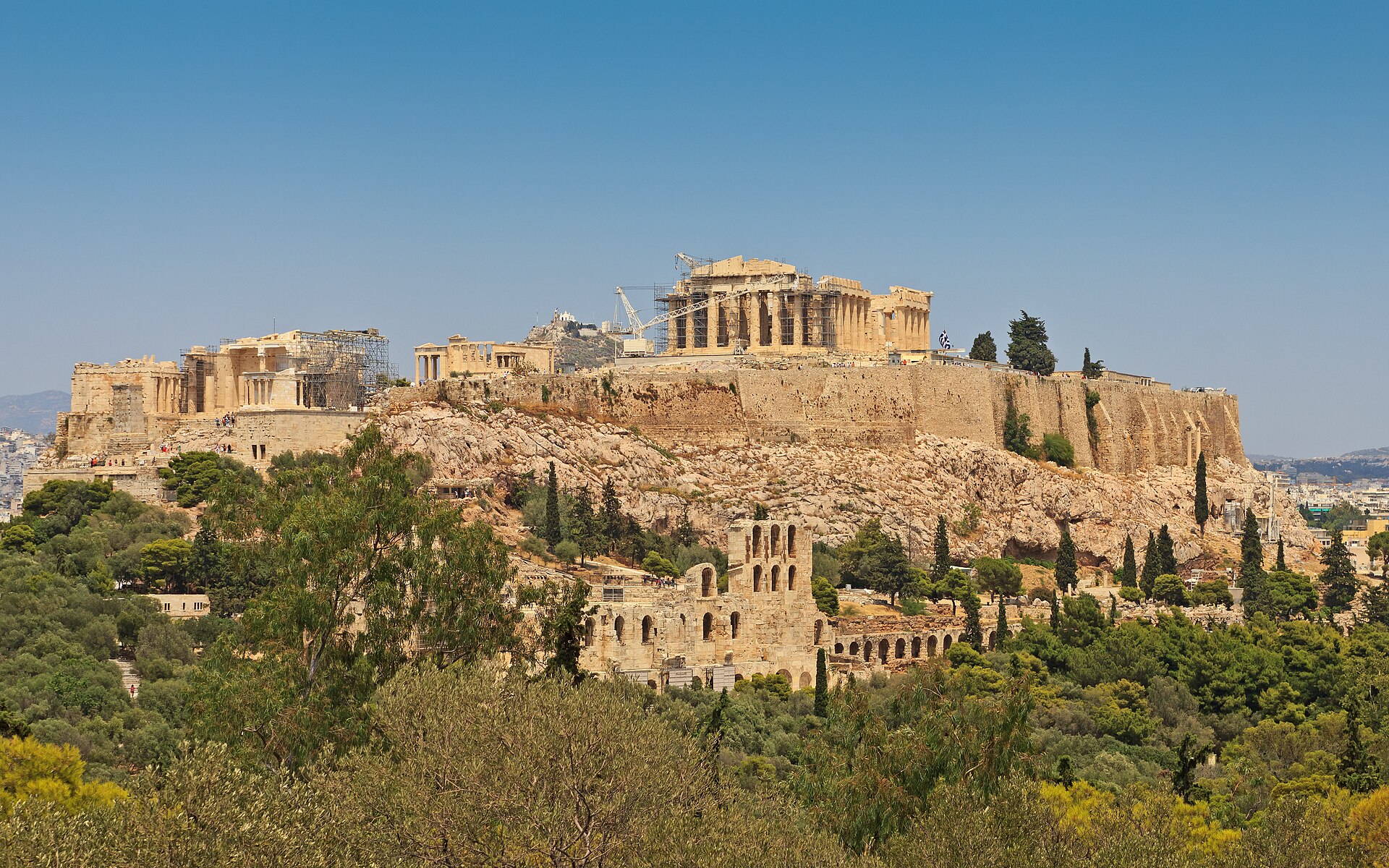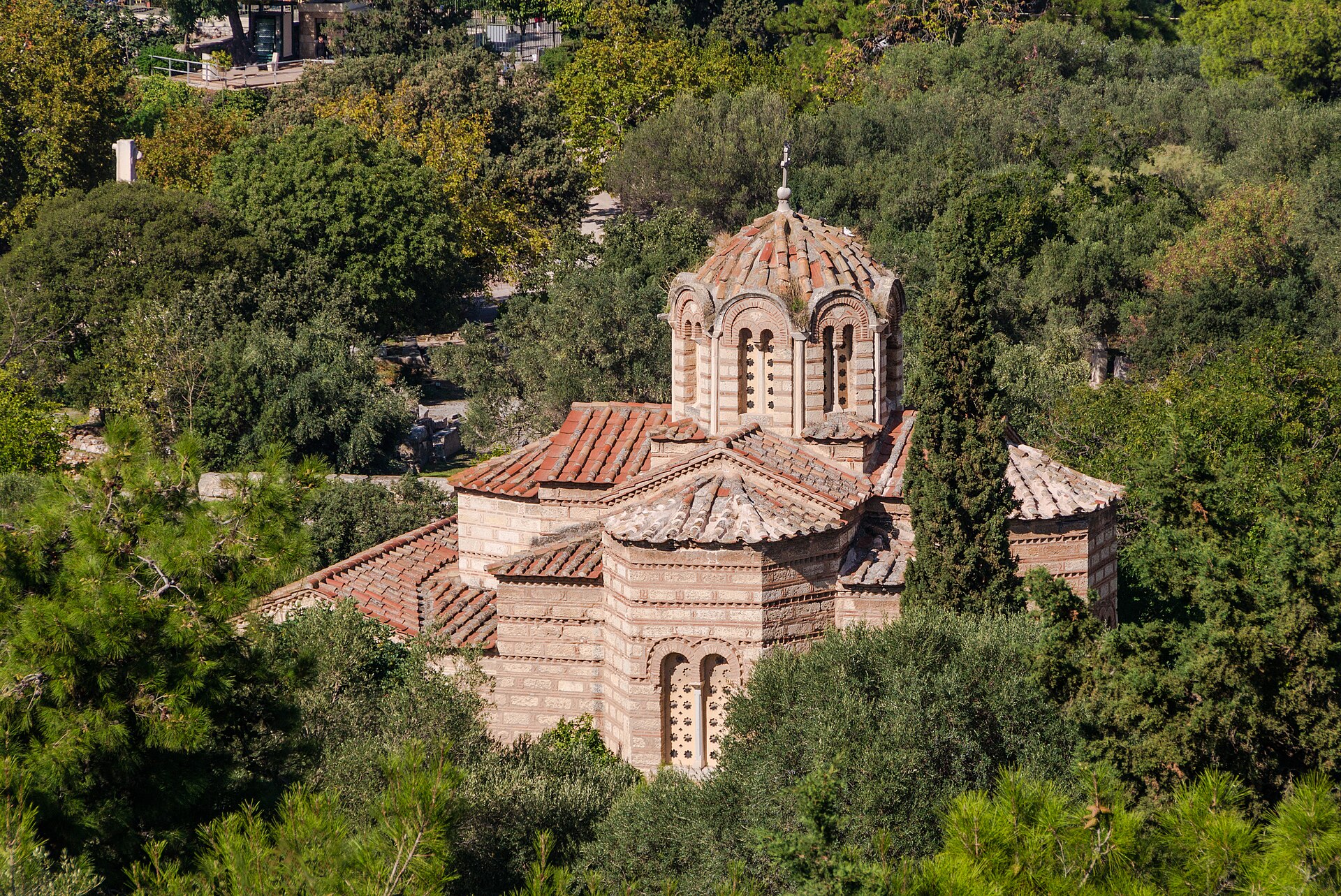
This is where democracy was invented — not in some grand palace, but in an open-air marketplace where anyone could shout at a politician. The Ancient Agora was Athens' civic center for over a thousand years, serving as marketplace, courtroom, voting place, philosophical salon, and social hub all at once. Socrates argued here. Pericles campaigned here. The random citizens who decided to ostracize troublesome politicians scratched their votes onto broken pottery shards (ostraka) right on this ground — thousands of which have been found by archaeologists.
The site was first used as a public gathering place in the sixth century BC, and it eventually grew to include temples, law courts, government buildings, commercial stalls, and covered walkways called stoas where philosophers held court. The Painted Stoa (Stoa Poikile) gave the Stoic school of philosophy its name — Zeno of Citium taught there around 300 BC, and his followers became known as "those of the stoa." The Tholos, a round building near the center, housed the 50 prytaneis who governed Athens on a rotating basis. They ate and slept there during their 35-day shift, and a third of them had to stay in the building at all times in case of emergency.
The Agora was devastated during the Herulian sack of Athens in 267 AD and never fully recovered its ancient function. For centuries it was buried under medieval and Ottoman neighborhoods. Excavation only began in earnest in the 1930s when the American School of Classical Studies demolished nearly 400 modern buildings to uncover what lay beneath.
Walk through today and you're walking the same paths as Aristotle, who strolled here teaching his students in what became known as the Peripatetic school — literally, the "walking-around" school.
Verified Facts
The Painted Stoa (Stoa Poikile) in the Agora gave the Stoic school of philosophy its name, after Zeno of Citium taught there around 300 BC
Excavation of the Agora by the American School of Classical Studies required demolishing nearly 400 modern buildings starting in the 1930s
Thousands of ostraka (pottery shards used for ostracism votes) have been found at the site by archaeologists
The Tholos housed 50 rotating prytaneis who governed Athens, with a third required to remain in the building at all times for emergencies
Get walking directions
24 Adrianou, 1st Municipal Community, Athens, 105 55, Greece