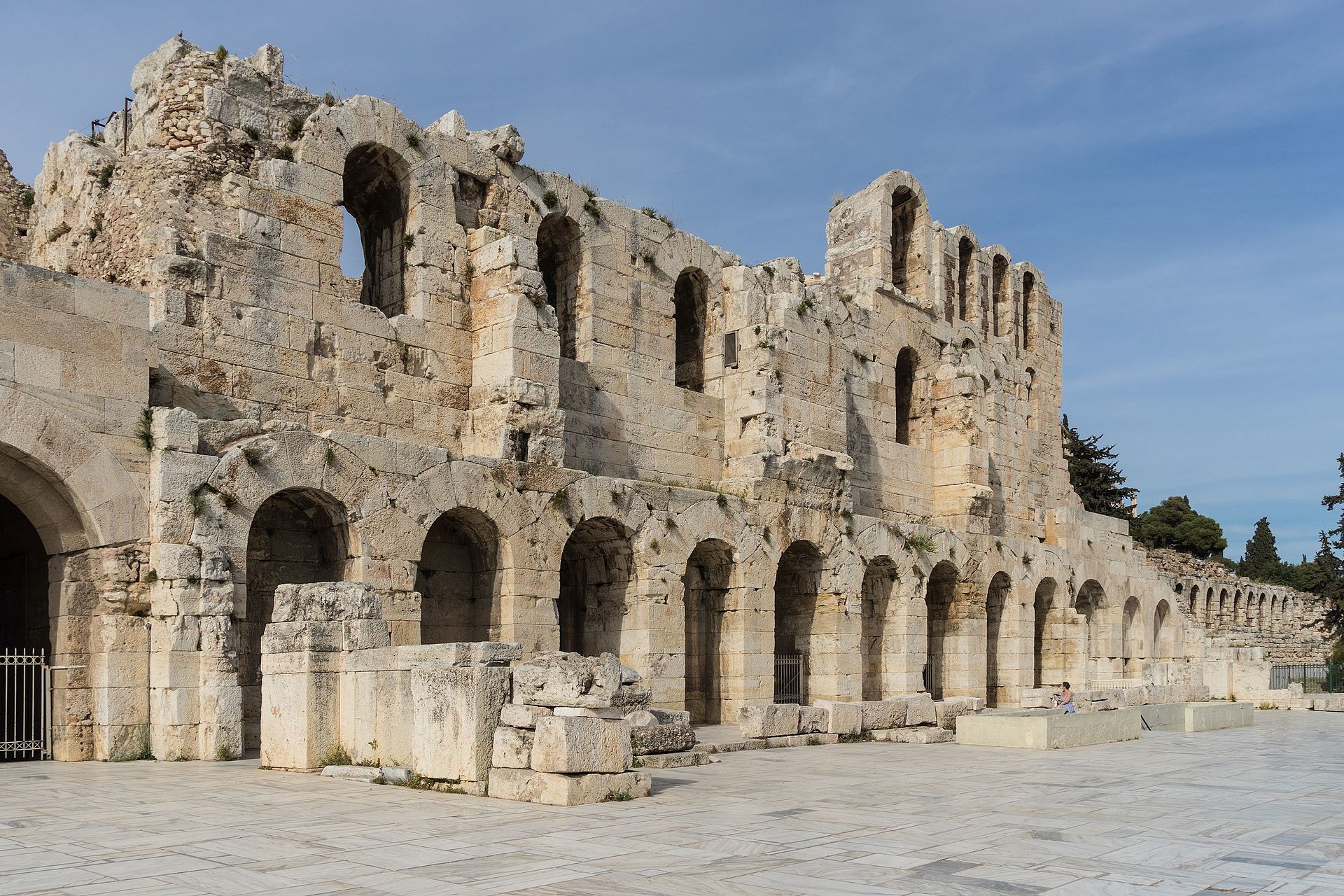
Odeon of Herodes Atticus
A Roman billionaire built this theater as a monument to grief. In 161 AD, Herodes Atticus — an Athenian senator, orator, and one of the wealthiest men in the Roman Empire — commissioned this stone odeon in memory of his wife Aspasia Annia Regilla, who had died under mysterious circumstances. (Some ancient sources hint that Herodes may have had her killed, which makes the memorial either deeply moving or deeply disturbing, depending on which gossip you believe.)
The theater was carved into the southwest slope of the Acropolis with 33 rows of marble seating for 5,000 spectators. Its most remarkable feature was the three-story stone front wall, 28 meters high, with niches for statues and a now-vanished roof of expensive cedar of Lebanon timber. When the ancient traveler Pausanias visited, he described it as "the finest building of its type." It functioned for about a century before the Heruli sacked Athens in 267 AD and burned the wooden roof, leaving the structure as a roofless shell for nearly 1,700 years.
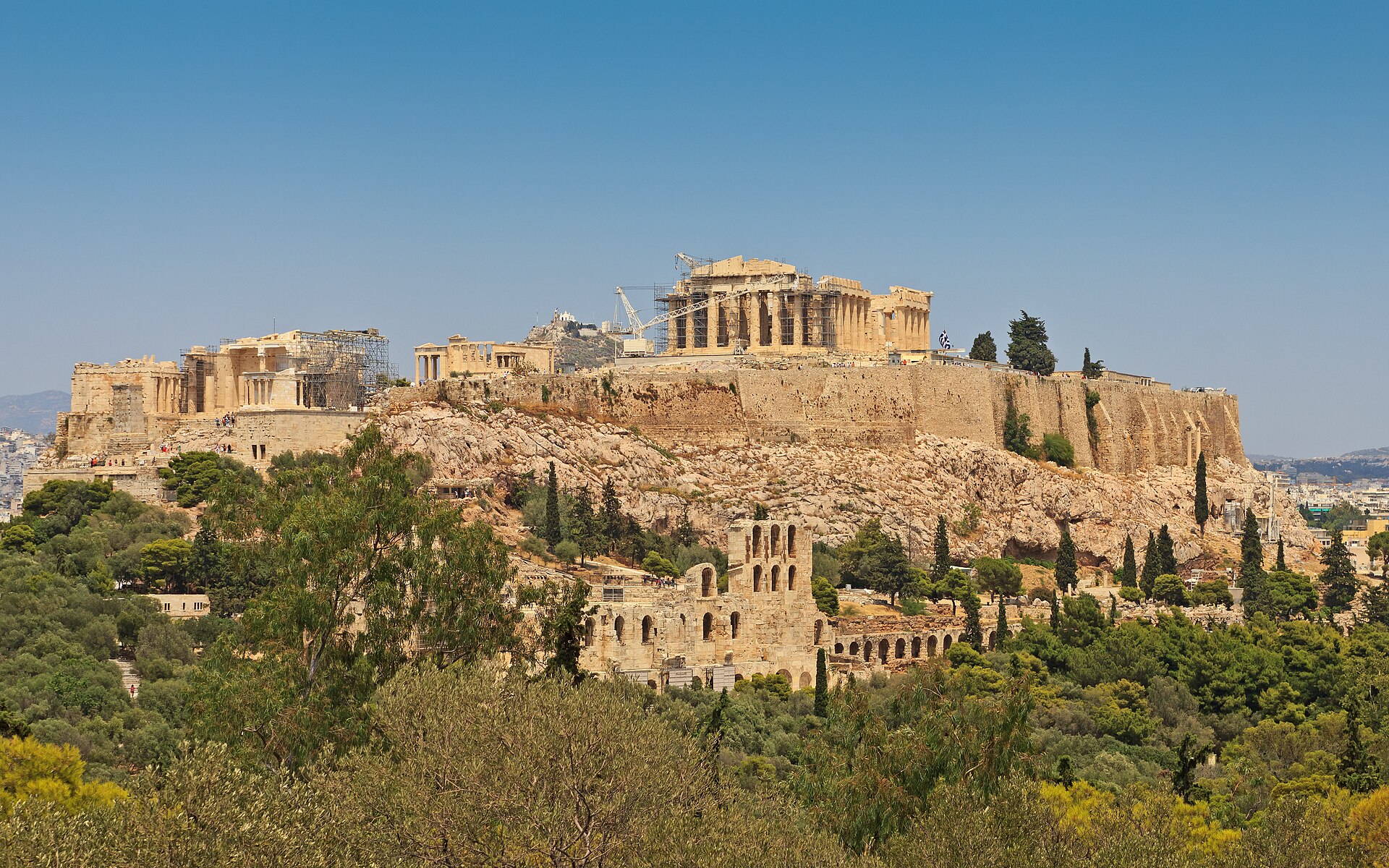
The seats and orchestra were restored with Pentelic marble in the 1950s, and since then the Odeon has served as the principal venue of the Athens Festival, running May through October each year. Maria Callas performed here. Luciano Pavarotti sang here. Frank Sinatra, Elton John, and Björk have all played under the Acropolis walls.
Attending a performance here on a summer evening — with the flood-lit Parthenon glowing above and the stars overhead where the cedar roof once was — ranks as one of the great cultural experiences in Europe. The acoustics, designed for unamplifed Roman oratory, remain extraordinary: a whisper on stage reaches the back row.
Verified Facts
Built in 161 AD by the wealthy Roman senator Herodes Atticus in memory of his wife Aspasia Annia Regilla
The theater seats 5,000 spectators across 33 rows of marble and originally had a cedar of Lebanon timber roof
The theater was destroyed by the Heruli invasion in 267 AD and remained roofless until its seats were restored in the 1950s
The ancient traveler Pausanias described the Odeon as "the finest building of its type" during his 2nd-century AD visit
Get walking directions
Dionysiou tou Areopagitou, 1st Municipal Community, Athens, 117 42, Greece