This gate has been stolen from, shot at, walled off, and danced on. It's survived Napoleon, two world wars, and twenty-eight years of serving as the backdrop to the most famous dead-end in history.
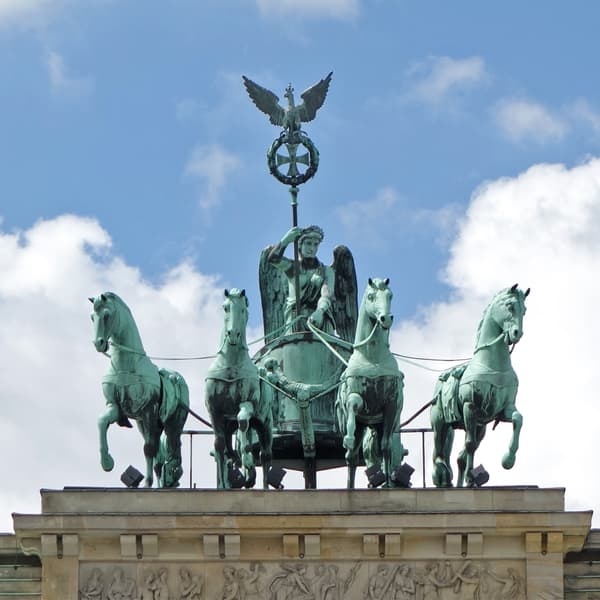
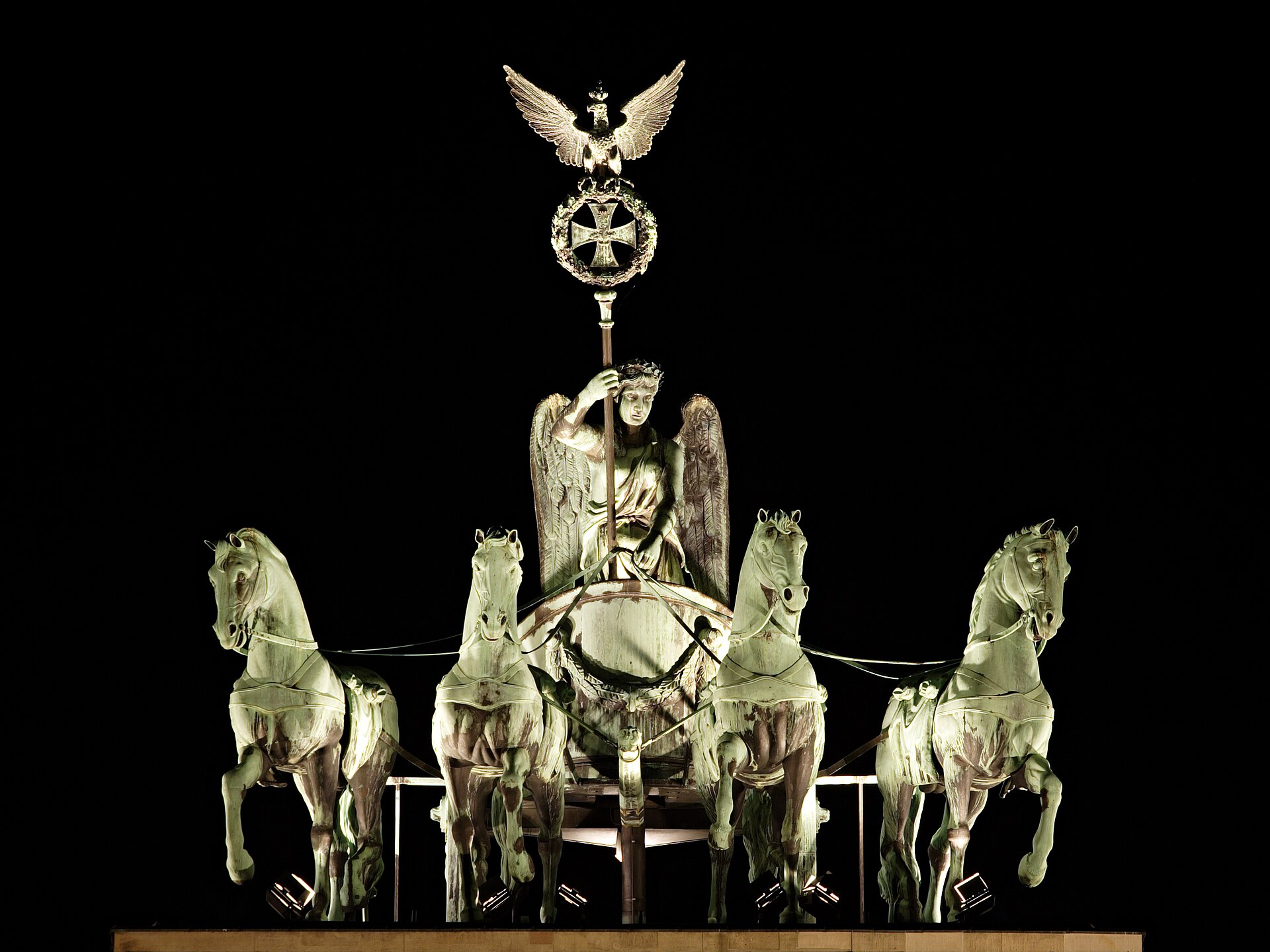
Carl Gotthard Langhans designed it in 1791, modelling it on the Propylaea gateway to the Athenian Acropolis. The four-horse chariot on top — the Quadriga, driven by the goddess of Victory — has had the most dramatic life of any sculpture in Europe. Napoleon stole it in 1806 and shipped it to Paris as a war trophy. When the Prussians recaptured Paris eight years later, they brought it back and gave Victory an iron cross and a Prussian eagle to carry, just to make a point.
During the Cold War, the gate sat in no man's land, inaccessible from either side. When Kennedy gave his 'Ich bin ein Berliner' speech in 1963, he couldn't even see it — the Soviets had hung red banners to block the view. Reagan stood here in 1987 and demanded Gorbachev tear down the wall. Two years later, people were dancing on that wall, right in front of this gate.
There's a detail most people miss: tucked inside the north wing is the Room of Silence, created in 1994. It's a small, bare meditation space open to anyone, regardless of faith. No symbols, no decoration. In a city defined by its divisions, someone decided to put a room for quiet contemplation inside its most famous symbol of reunification.
Verified Facts
Napoleon had the Quadriga dismantled and shipped to Paris in 1806 as a war trophy
The Room of Silence in the north wing was created in 1994 as a non-denominational meditation space
The gate was designed by Carl Gotthard Langhans and completed in 1791, modelled on the Propylaea in Athens
During the Cold War, the gate stood in no man's land between East and West Berlin, inaccessible from either side
Get walking directions
Pariser Platz, City Centre, Berlin, 10117, Germany