Charlottenburg Palace
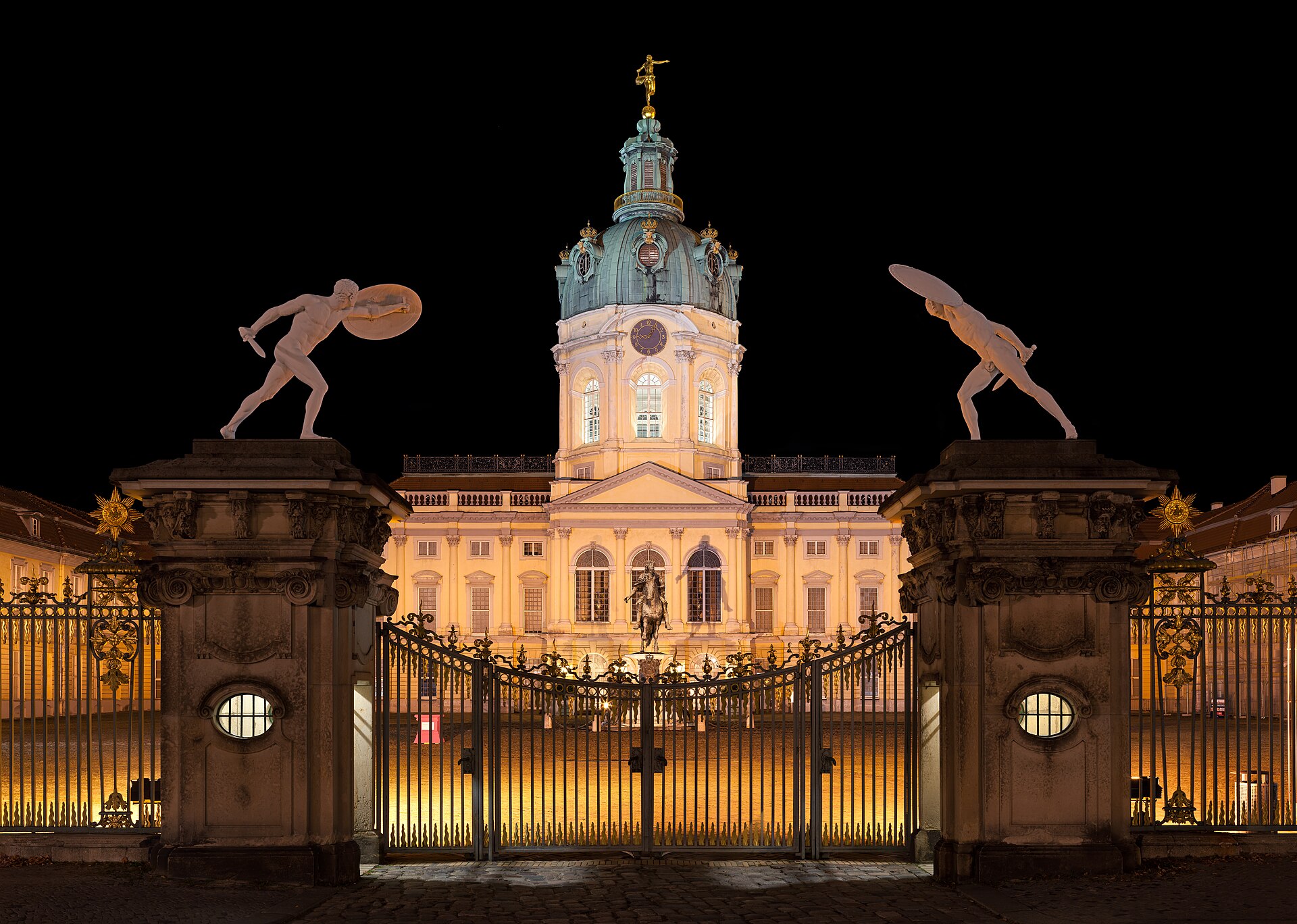
This is the largest surviving palace in Berlin, and it started as a summer house. Elector Friedrich III built it in 1699 as a modest country retreat for his wife, Sophie Charlotte. Then he became King Friedrich I of Prussia and decided modest wasn't good enough. Extensions continued for over a century, turning a summer cottage into a sprawling Baroque and Rococo palace with 160 rooms.
Sophie Charlotte was remarkable — she was a philosopher, musician, and close friend of Gottfried Wilhelm Leibniz, who called her 'the philosophising queen.' When she died at 36, Friedrich renamed the palace and the surrounding settlement in her memory. Charlottenburg the district gets its name from a seventeenth-century queen who preferred intellectual conversation to court protocol.
The palace gardens are free to enter and combine formal French parterre gardens with an English landscape park. The Belvedere tea house at the far end contains one of the finest collections of Berlin porcelain. The New Wing houses Friedrich the Great's collection of French eighteenth-century painting — Watteau, Chardin, Boucher — which is world-class and consistently overlooked because everyone goes to Museum Island instead.
During World War II, the palace was heavily damaged. The dome was destroyed and rebuilt. Much of the interior decoration was saved by having been evacuated before the bombing, then painstakingly reinstalled over decades of restoration.
Verified Facts
Originally built in 1699 as a summer house for Sophie Charlotte, wife of Elector Friedrich III
Sophie Charlotte was a philosopher and close friend of Gottfried Wilhelm Leibniz
The palace is the largest surviving royal palace in Berlin with 160 rooms
The district of Charlottenburg was named after Sophie Charlotte after her death at age 36
Get walking directions
10-22 Spandauer Damm, Charlottenburg-Wilmersdorf, Berlin, 14059, Germany