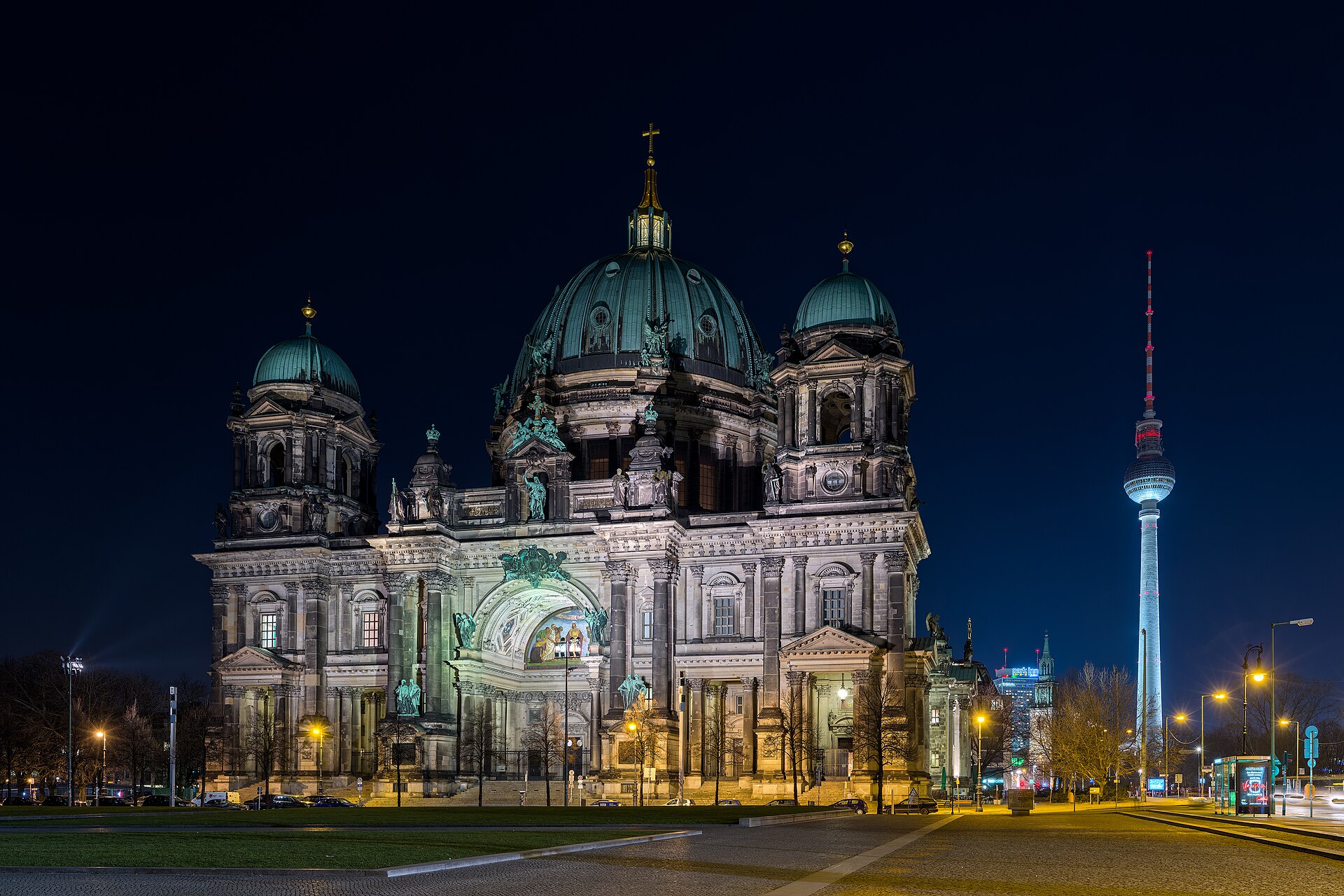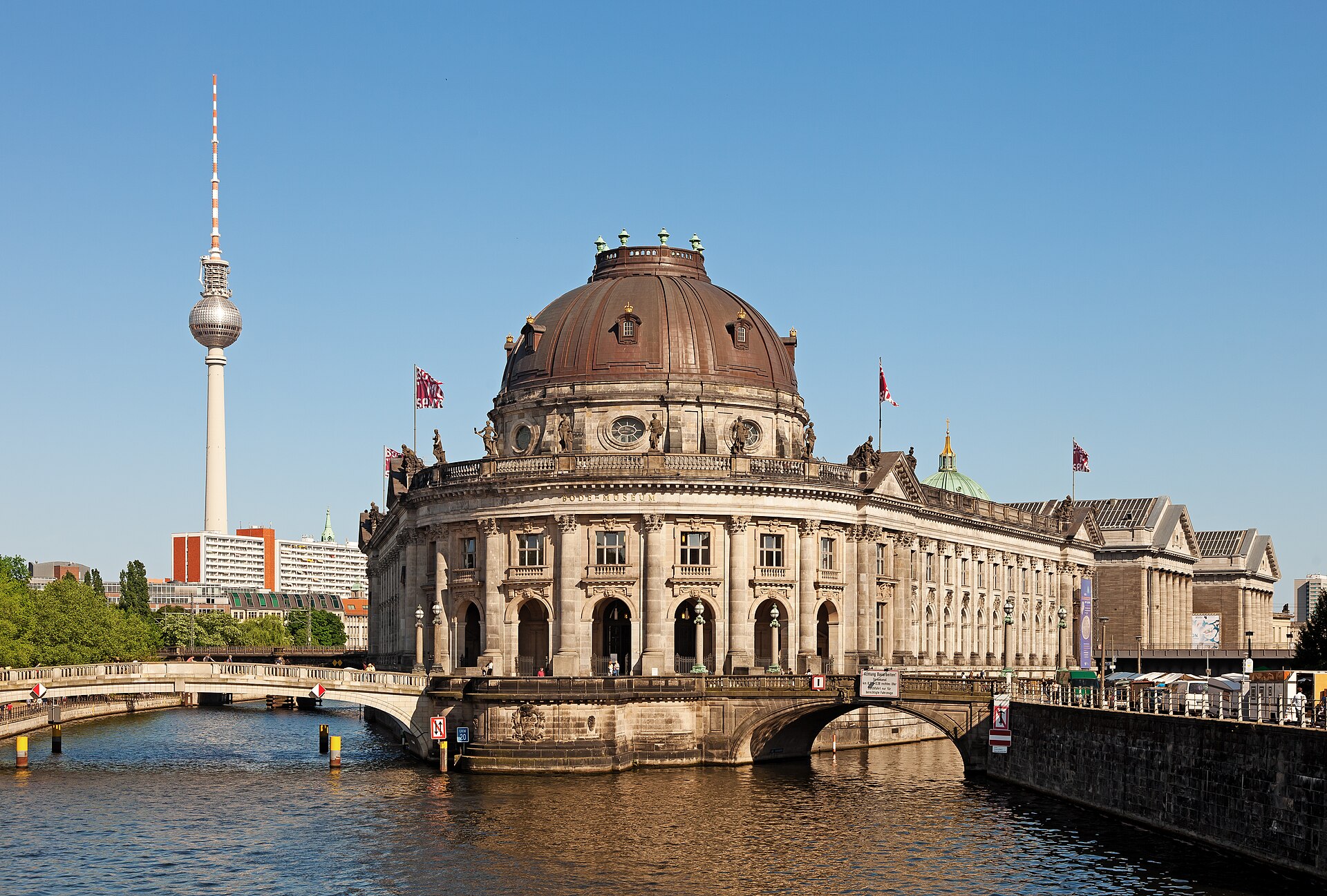
Five world-class museums on a single island in the middle of the Spree river. UNESCO gave it World Heritage status in 1999, calling it 'a unique ensemble of museum buildings' that illustrates 'the evolution of approaches to museum design over more than a century.' That's the formal language. The informal version: this is one of the most concentrated collections of human civilization on Earth.
The Pergamon Museum contains the Ishtar Gate of Babylon — the actual gate, reconstructed from glazed bricks excavated in modern-day Iraq. It's fifteen metres tall and covered in reliefs of bulls and dragons in blue and gold. The Neues Museum houses the bust of Nefertiti, arguably the most famous portrait sculpture in the world, carved around 1345 BC. The Alte Nationalgalerie looks like a Greek temple and holds Caspar David Friedrich's 'Wanderer above the Sea of Fog.' The Bode Museum sits at the tip of the island and contains Byzantine art. The Altes Museum, the oldest of the five, was designed by Karl Friedrich Schinkel in 1830.
The island was originally a residential area. King Friedrich Wilhelm III started the transformation in the early nineteenth century, inspired by the idea that art and education could elevate the public. Each museum was built by a different architect across different eras, which is why the island reads like a timeline of architectural thought — from Schinkel's neoclassicism to Alfred Messel's stripped-down modernism.
Verified Facts
Museum Island received UNESCO World Heritage status in 1999
The Ishtar Gate of Babylon in the Pergamon Museum is approximately 15 metres tall
The bust of Nefertiti in the Neues Museum was carved around 1345 BC
The Altes Museum, designed by Karl Friedrich Schinkel, opened in 1830 as the first museum on the island
Get walking directions
3 Bodestraße, City Centre, Berlin, 10117, Germany