Neue Synagoge (New Synagogue)
The golden dome of the Neue Synagoge is one of Berlin's most striking sights, but the building behind it is a ghost. What you see today is a facade and a dome — the interior was never rebuilt after being destroyed in the war. It's a memorial now, not a functioning synagogue.
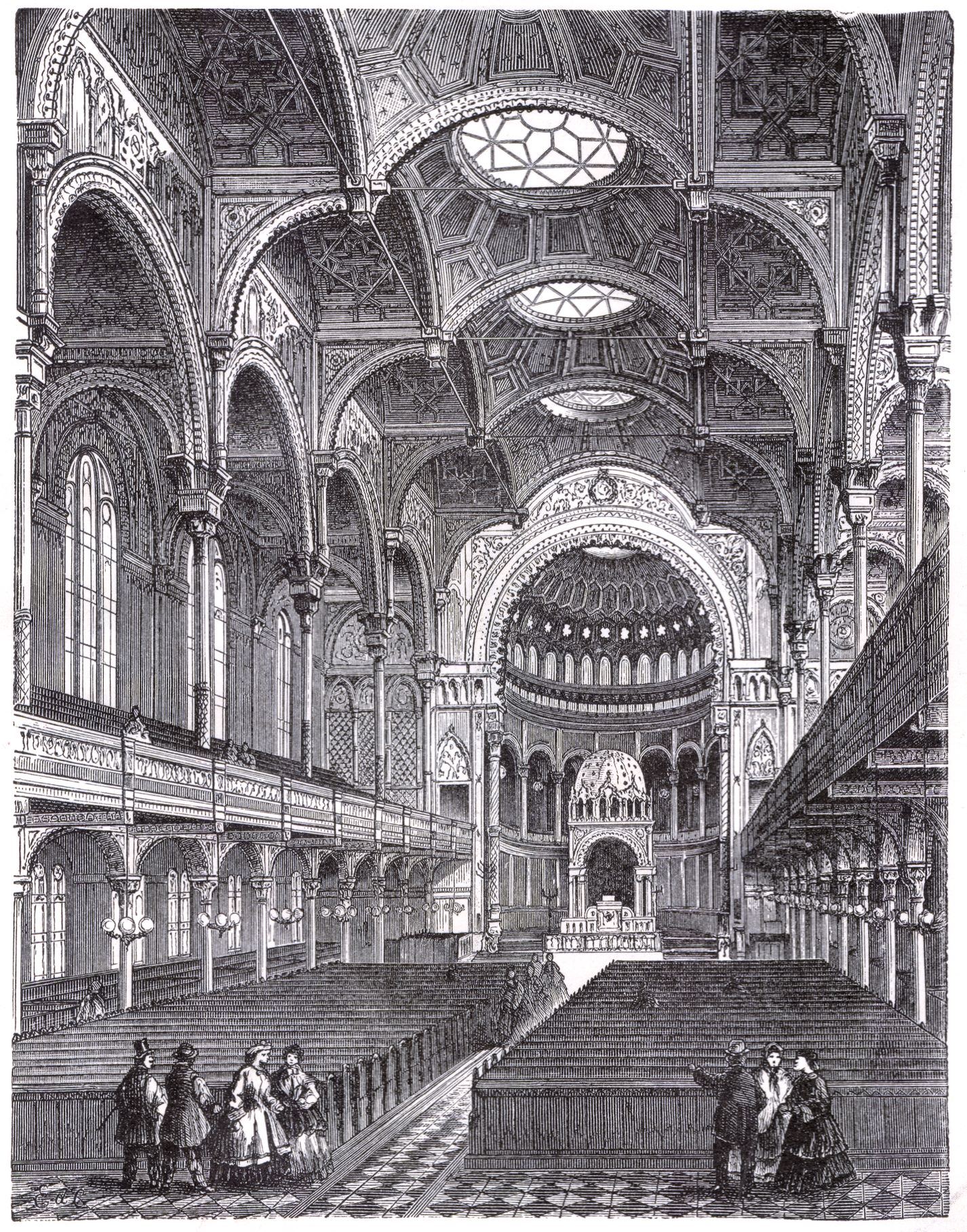
The original synagogue opened in 1866 and was the largest in Germany, seating 3,200 people. The Moorish Revival architecture — horseshoe arches, gilded domes, intricate brickwork — was influenced by the Alhambra in Granada. It was a deliberate statement of confidence: Berlin's Jewish community building their most important religious space in a style that announced permanence and belonging.
On Kristallnacht — November 9, 1938 — the Nazis set the building on fire. What happened next is extraordinary: a local police officer named Wilhelm Krützfeld drew his pistol and ordered the SA brownshirts to stop, citing heritage protection laws. He called the fire brigade, who extinguished the flames. The synagogue survived Kristallnacht. Krützfeld was later transferred and reprimanded, but his act of defiance saved the building — temporarily. Allied bombing in 1943 destroyed what the Nazis had failed to burn.
The reconstructed facade and dome, completed in 1995, house a museum documenting the history of the building and the Jewish community of Berlin. The empty space where the main sanctuary once stood is left deliberately void.
Verified Facts
The original 1866 synagogue was the largest in Germany, seating 3,200 people
Police officer Wilhelm Krützfeld intervened during Kristallnacht to stop the burning of the synagogue
The building was ultimately destroyed by Allied bombing in 1943, not during Kristallnacht
The current reconstructed facade and dome were completed in 1995
Get walking directions
28 Oranienburger Straße, City Centre, Berlin, 10117, Germany