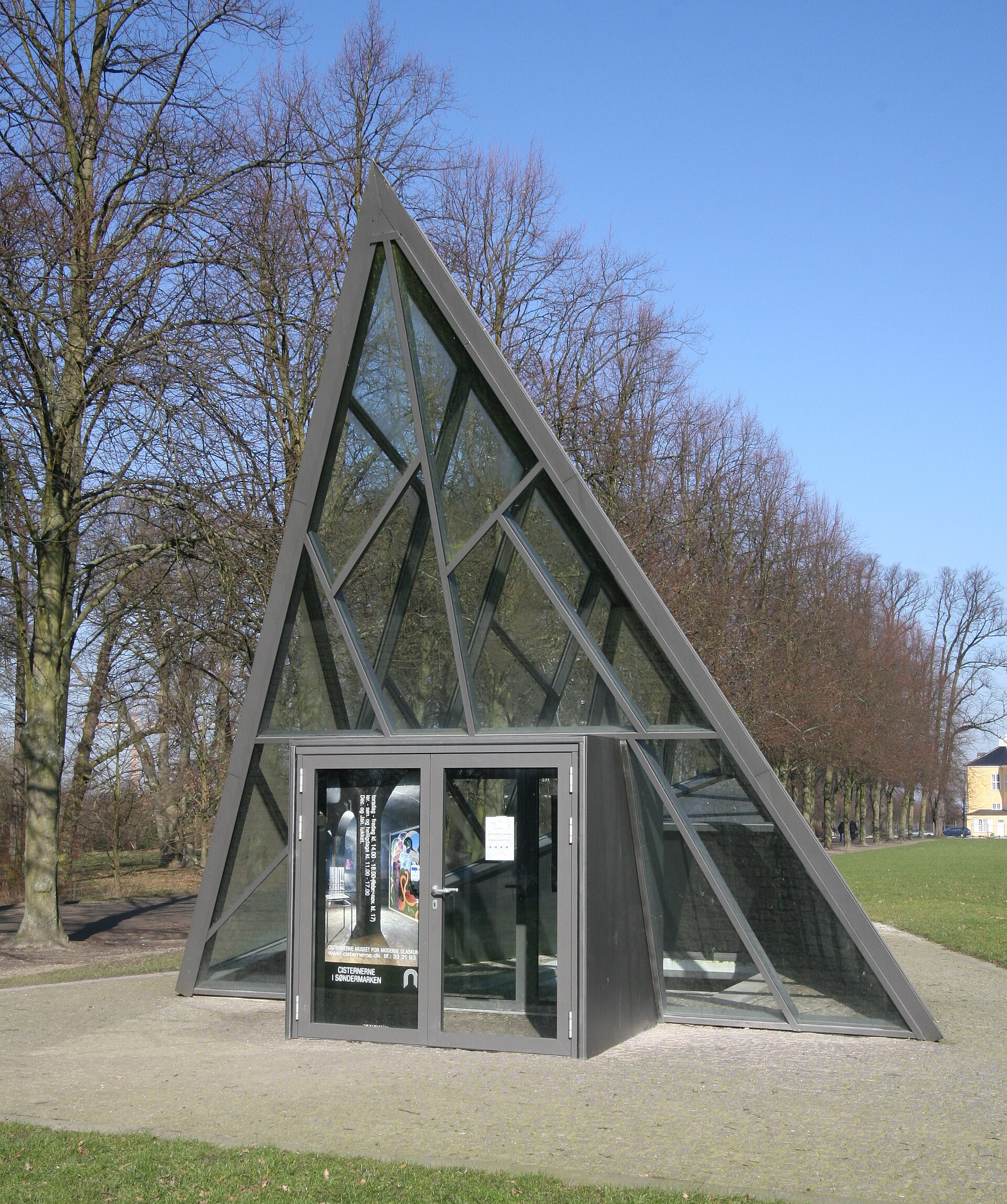
Beneath a gentle hill in Søndermarken Park lies Denmark's only dripstone cave — except it is not a cave at all. It is a 4,320-square-metre underground water reservoir that supplied drinking water to all of Copenhagen from the 1850s until 1933, and then sat full of stagnant water for nearly fifty years before anyone thought to empty it. When they finally drained it in 1981, they discovered that decades of mineral-rich water dripping from the ceiling had created natural stalactites and stalagmites on the concrete surfaces. An industrial cistern had accidentally become a geological formation.
Excavation began in 1856 under Frederiksberg Hill, and when the three enormous rooms were completed three years later, they solved Copenhagen's chronic water supply problems. Each room has ceilings 4.2 metres high, and at maximum capacity, the reservoir held 16 million litres of water. The cisterns also served as a reflection pool for nearby Frederiksberg Castle, which sat elegantly on the hill above, blissfully unaware of the vast plumbing infrastructure beneath its gardens.
In 1996, during Copenhagen's year as European City of Culture, the cisterns were first used as an exhibition space. Gallery owner Max Seidenfaden ran them as a museum of modern glass art from 2001 to 2013, which was a fitting use for a space defined by water, light, and transparency. Since 2013, Cisternerne has been part of the Frederiksberg Museums and invites internationally recognised artists to create large-scale site-specific installations each year.
The experience of visiting is genuinely surreal. The humidity is permanently near 100 percent, the temperature swings between 4 and 16 degrees Celsius depending on the season, and the stalactites — ranging from delicate needles to thick mineral columns — create an atmosphere that feels more like exploring a cave system than visiting a gallery. This is one of Copenhagen's strangest and most rewarding hidden gems.
Verified Facts
An underground reservoir built 1856-1859 that supplied Copenhagen's drinking water until 1933
The reservoir covers 4,320 square metres in three rooms and could hold 16 million litres of water
Natural stalactites formed on the concrete after decades submerged; it is Denmark's only dripstone cave
First used as exhibition space in 1996 during Copenhagen's year as European City of Culture
Get walking directions
Frederiksberg, Denmark