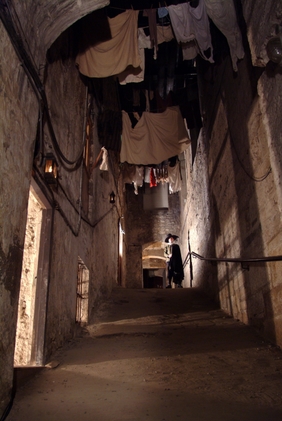
Beneath the Royal Mile, a seventeenth-century street is frozen in time. Mary King's Close was a bustling residential lane where hundreds of people lived in tenements up to seven storeys high, sharing narrow winding passages with no sewers — waste was simply thrown from upper windows into the street below. When the Royal Exchange was built on top in the eighteenth century, the close was sealed and largely forgotten. The last resident left in 1902. In 2003, after careful preservation, the underground warren reopened as a heritage attraction, and visitors now walk through rooms where the original stone walls, fireplaces, and even seventeenth-century graffiti survive.
The close is named after Mary King, a fabric merchant who built her business in the 1630s after her husband's death — an unusual achievement for a woman in Restoration Edinburgh. In 1645, the city's worst outbreak of bubonic plague swept through these overcrowded lanes. Contrary to the persistent myth that city officials sealed the residents inside to die, the town council actually managed the outbreak with surprising compassion: sick families unable to move put white flags in their windows so that food and coal could be delivered to their doors. Healthy residents were relocated to Burgh Muir.
The plague doctor George Rae walked these closes in leather from head to toe, wearing the famous bird-shaped mask stuffed with herbs. The leather kept fleas from biting him, and he survived the outbreak — which is more than can be said for roughly half of Mary King's Close's residents. The plague killed hundreds in the immediate area alone.
One of Edinburgh's most popular ghost stories lives here: a ten-year-old girl named Annie, said to have died of plague, whose spirit supposedly haunts a small room in the close. Visitors leave toys, dolls, and sweets for her, creating a strange and moving shrine in the underground dark.
Verified Facts
The close was named after Mary King, a fabric merchant active in the 1630s, and the last resident left in 1902
The close was buried beneath the Royal Exchange and reopened as a heritage attraction in 2003
During the 1645 plague outbreak, the town council delivered food and coal to quarantined families who displayed white flags
Plague doctor George Rae survived the outbreak by wearing full leather clothing and a bird-shaped mask that prevented flea bites
Get walking directions
2 Warriston's Close, High Street, Edinburgh EH1 1PG