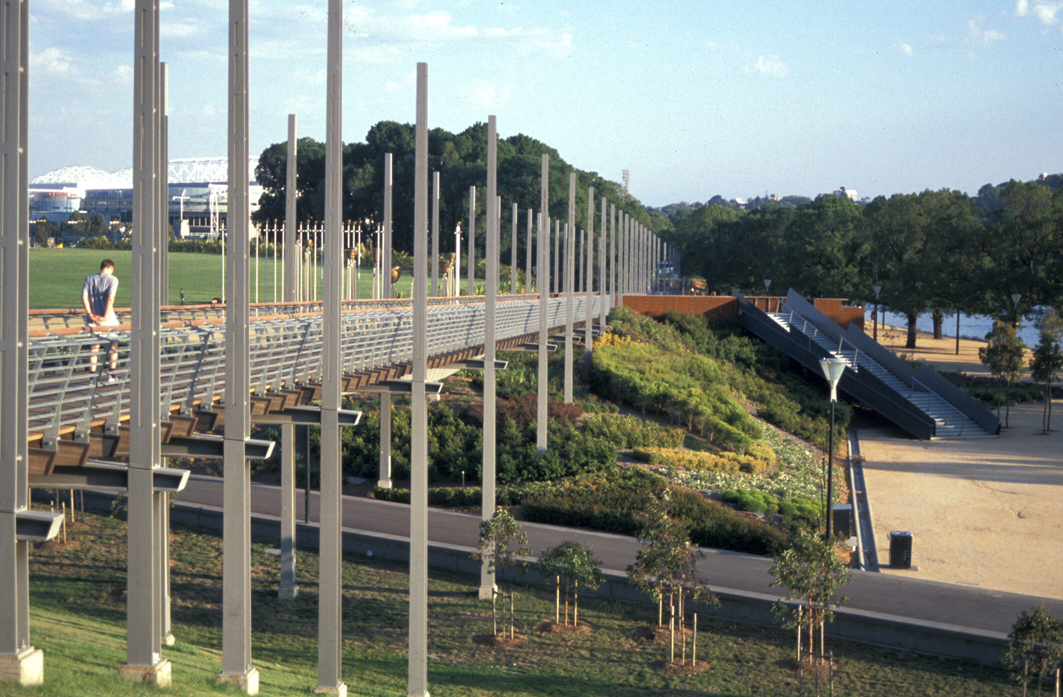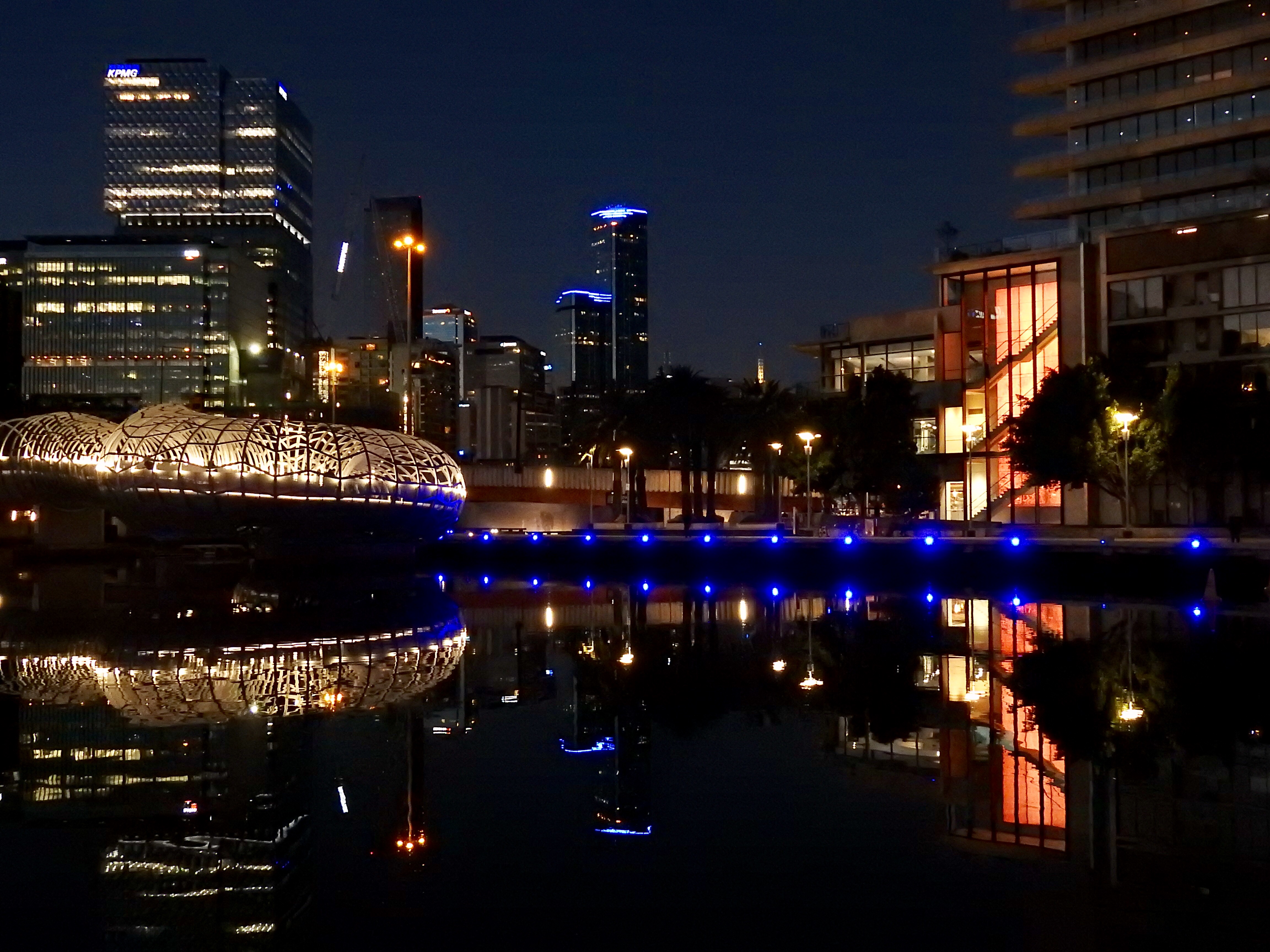
This is not just a bridge. It is an act of reconciliation shaped like a fishing trap. Webb Bridge, a pedestrian and cycling crossing over the Yarra in Docklands, was designed as a collaboration between architects Denton Corker Marshall and artist Robert Owen, and its most striking feature is the sculptural steel web that arches over the walkway. Those undulating curves are modelled on the traditional eel traps used by the Koorie people of this region for thousands of years.
The Wurundjeri and Boonwurrung people were sophisticated aquaculturalists who engineered complex eel-trapping systems across Victoria. The most famous example is the Budj Bim eel traps in western Victoria, a six-thousand-year-old aquaculture system now recognised as a UNESCO World Heritage Site. Webb Bridge references that tradition, placing the shape of a woven eel basket at the end of a linear concrete deck, a symbolic acknowledgement that this waterway was a food source and meeting place long before the Docklands development arrived.
The steel elements are connected to each other to form the eel trap shape, and the laser-cut perforated metal panels create patterns of light and shadow as you walk through. At night, the bridge is illuminated, and those perforations create a constellation effect on the path below. The design grew out of a desire for what the architects called a symbolic and poetic demonstration of reconciliation. In a precinct that is otherwise defined by corporate towers and apartment blocks, Webb Bridge is a reminder that the story of this waterfront stretches back thousands of years before the first apartment was sold off the plan.
Verified Facts
Designed by Denton Corker Marshall and artist Robert Owen
Sculptural form based on traditional Koorie eel traps
Laser-cut perforated metal panels create light patterns
Design intended as symbolic demonstration of reconciliation
References Budj Bim eel trap tradition, now UNESCO World Heritage
Get walking directions
Capital City Trail, Docklands