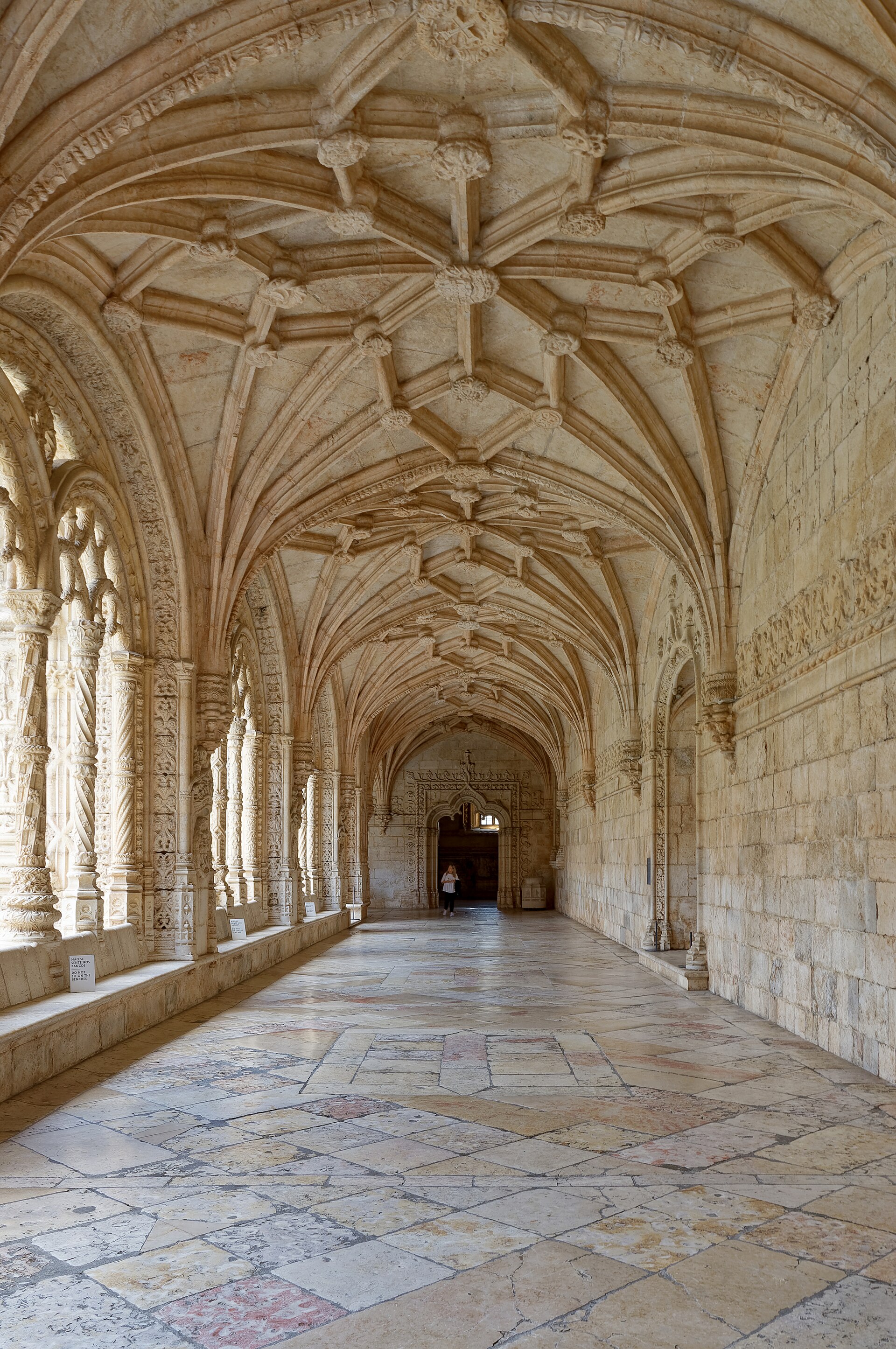
If Portugal had a trophy case, this monastery would be the centerpiece. Commissioned by King Manuel I in 1501 to celebrate Vasco da Gama's successful voyage to India, the Jerónimos Monastery took nearly a hundred years to complete — and it shows, in the best possible way. The building is a masterclass in Manueline architecture, that uniquely Portuguese style where Gothic ambition collides with nautical obsession. Every surface is carved with ropes, anchors, coral, and exotic plants that the explorers brought back from distant shores. It's as if the entire Age of Discovery was compressed into limestone.
The money came from spices. Specifically, a 5% tax on all the pepper, cinnamon, and cloves pouring into Lisbon from the East. At the height of the spice trade, this represented such absurd wealth that Manuel could afford to employ master builder Diogo de Boitaca and later the brilliant João de Castilho, who turned the south portal into what many consider the finest piece of stone carving in all of Europe. Inside, the church shelters the tombs of Vasco da Gama and Luís de Camões, Portugal's national poet — placed on opposite sides of the nave in a symbolic embrace of action and art that the Portuguese find deeply meaningful.
The monastery survived the 1755 earthquake almost completely intact, which locals took as a divine sign. While most of Lisbon crumbled, the monks here barely felt a tremor. The cloisters are staggering — two levels of impossible lacework carved in warm golden stone, where no two columns are exactly alike. After the dissolution of the monasteries in 1833, the building served as an orphanage and a school before Portugal finally recognized it as its most important monument. Today it shares its UNESCO status with the Torre de Belém, forming the twin anchors of Lisbon's golden age on the waterfront.
Verified Facts
Construction was funded by a 5% tax on spices imported from the East, particularly pepper, cinnamon, and cloves.
The monastery survived the devastating 1755 Lisbon earthquake almost completely intact while much of the city was destroyed.
The tombs of Vasco da Gama and national poet Luís de Camões are housed on opposite sides of the nave.
Construction began in 1501 and took nearly 100 years to complete, employing master builders Diogo de Boitaca and João de Castilho.
Get walking directions
Praça do Império, Belém, Lisboa, 1400-206, Portugal