Museu Nacional do Azulejo
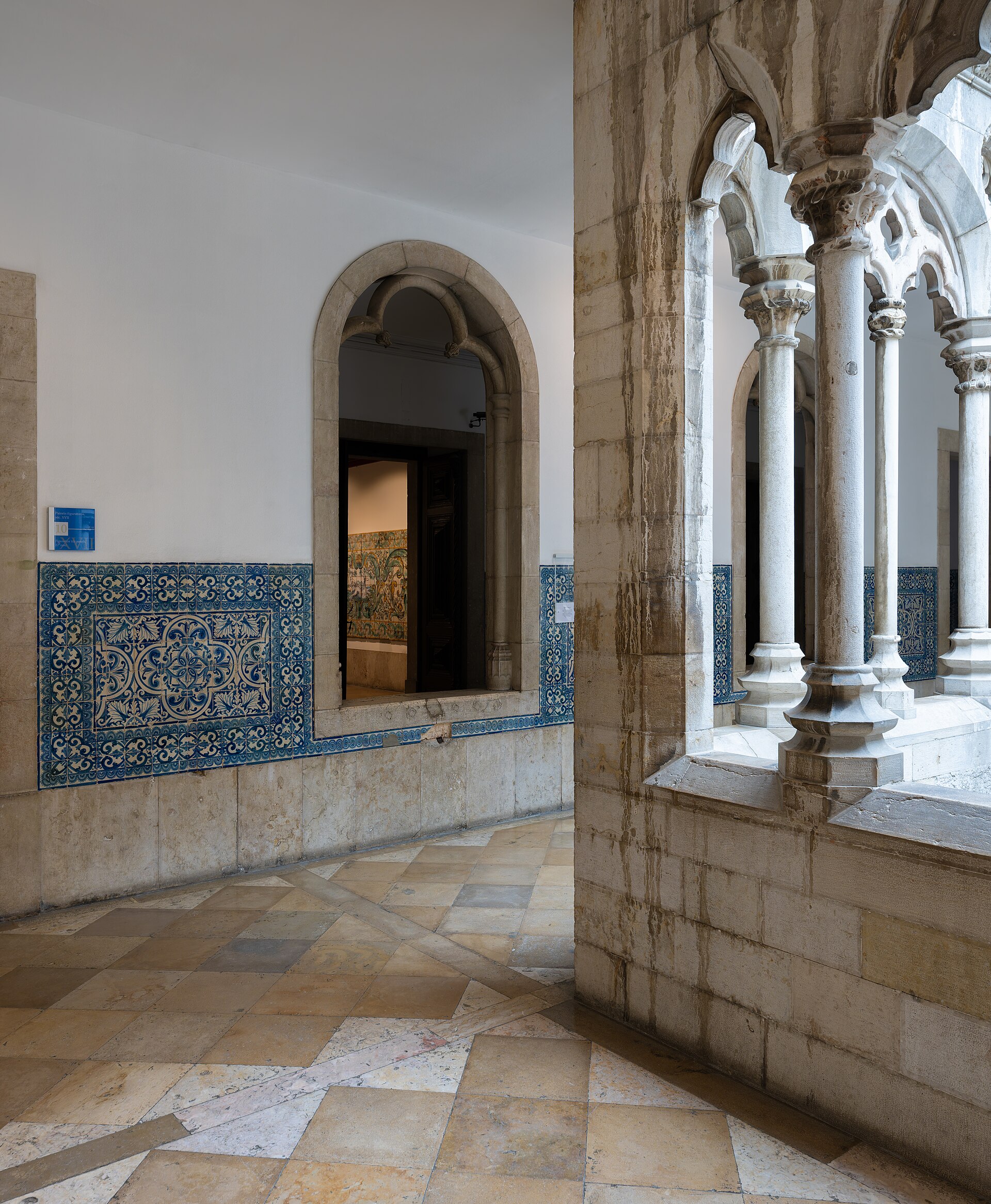
Portugal's love affair with tiles is so deep that an entire museum barely scratches the surface. The Museu Nacional do Azulejo occupies the beautifully preserved Madre de Deus Convent, founded in 1509, and houses the world's largest collection of azulejos — the painted ceramic tiles that cover seemingly every surface in Portugal, from train stations to butcher shops to the bottom of swimming pools. The word "azulejo" doesn't come from "azul" (blue), as most people assume, but from the Arabic "az-zulayj," meaning polished stone. The Moors brought tile-making to Iberia, but the Portuguese took it to levels of obsession that nobody else attempted.
The museum's showpiece is a 23-meter-long panoramic tile panel depicting Lisbon's waterfront before the 1755 earthquake. Created around 1700, it's one of the only detailed visual records of what the city looked like before the disaster erased it. You can see the old Ribeira Palace, the customs house, the ships in the harbor — an entire lost city preserved in blue and white ceramic. The panel survived because it was safely inside the convent, far from the earthquake's worst destruction. In a room nearby, you'll find the oldest azulejos in the collection, 15th-century Moorish geometric pieces from Seville that predate any Portuguese production.
The convent itself is half the reason to visit. The church is covered floor-to-ceiling in gold leaf and blue-and-white tiles, and the Manueline cloister is a quiet gem that most visitors to Lisbon never see because the museum sits in the unfashionable eastern part of the city, a 15-minute taxi ride from the center. This remoteness is its superpower — while the Jerónimos Monastery drowns in tour groups, the Azulejo Museum offers the same quality of Portuguese craftsmanship in near solitude. The café serves decent coffee in, naturally, tiled surroundings.
Verified Facts
The word azulejo comes from the Arabic "az-zulayj" meaning polished stone, not from the Portuguese word "azul" (blue).
The museum houses a 23-meter-long tile panel depicting Lisbon's waterfront before the 1755 earthquake, one of the few visual records of the pre-disaster city.
The museum is housed in the Madre de Deus Convent, founded in 1509.
The collection includes 15th-century Moorish geometric tiles from Seville that predate Portuguese tile production.
Get walking directions
4 Rua da Madre de Deus, Penha de França, Lisboa, 1900-312, Portugal