When aerial photos of this development first circulated, someone pointed out that the row of high-rises looked like an electronic barcode. The nickname stuck, and it's now the official name for one of the most controversial construction projects in Oslo's history. A 2007 petition against it gathered 30,000 signatures. An Aftenposten survey that same year showed 71 percent of Oslo's population opposed it. They built it anyway.
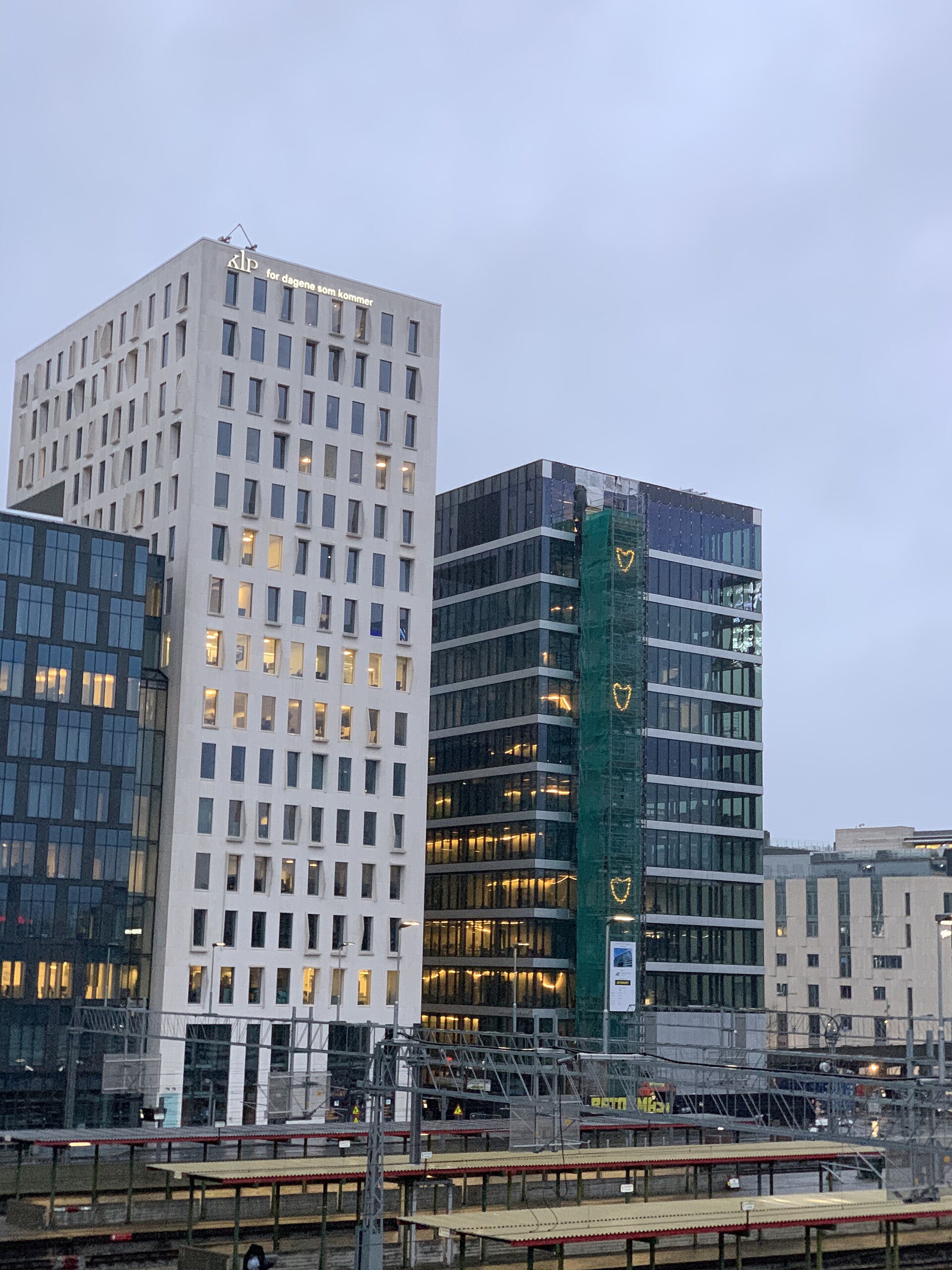
The Barcode is a row of high-rise buildings in Bjørvika, the former docklands district, completed in 2016. Each building was designed by a different architecture firm — Snøhetta, MVRDV, Dark Arkitekter, a-lab, Solheim & Jacobsen — creating a deliberate visual rhythm of varying heights, widths, and façade materials. The gaps between buildings must be at least twelve meters wide to preserve sight lines from the city to the fjord. The tallest reaches a hundred meters. In total: 145,000 square meters of office space, 380 apartments, and a ground level of shops and restaurants.
What nobody expected was what construction workers would find underground. Digging the foundations unearthed at least nine shipwrecks — up to eighteen meters long, dating to the first half of the sixteenth century. It's the largest collection of historical shipwrecks ever found in Norway. They also found approximately 1,100 clay pipes and Chinese porcelain, evidence of the harbor trade that once dominated this waterfront.
Critics called the Barcode a barrier between the city and its fjord. Supporters called it Oslo's transformation into a modern capital. A decade later, the debate has cooled. The buildings are there, the restaurants are full, and the shipwrecks are in a museum. Oslo's relationship with its waterfront has always been complicated. The Barcode just made it vertical.
Verified Facts
A 2007 Aftenposten survey showed 71% of Oslo's population opposed the project, and a petition gathered 30,000 signatures
Construction unearthed at least 9 shipwrecks from the 16th century — the largest collection ever found in Norway
Each building was designed by a different architecture firm including Snøhetta and MVRDV
Gaps between buildings must be at least 12 meters wide to preserve sight lines to the fjord
Get walking directions
Dronning Eufemias gate, Gamle Oslo, Oslo, 0191, Norway