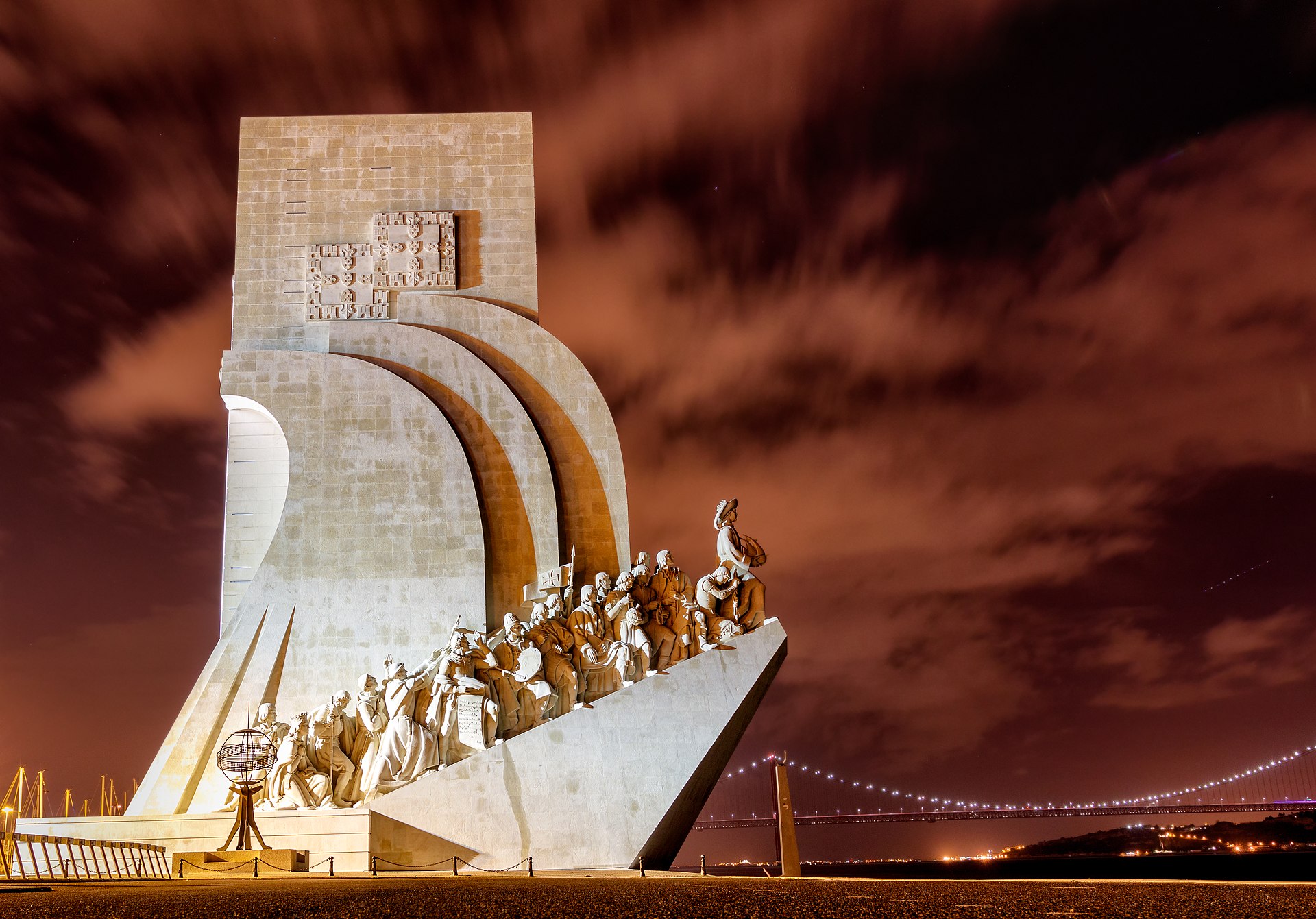
This 52-meter concrete prow, jutting out over the Tagus like the bow of a ship frozen mid-launch, is either a triumphant celebration of human exploration or a monument to colonialism, depending on who you ask. The Monument to the Discoveries was originally built in 1940 for the Portuguese World Exhibition under the Salazar dictatorship — a temporary structure made of perishable materials, designed to glorify Portugal's maritime empire. It was rebuilt in permanent concrete and stone in 1960 to mark the 500th anniversary of the death of Henry the Navigator, who stands at the prow with a small caravel in his hands.
Behind Henry, 32 figures line both sides of the monument like passengers on the world's most ambitious boat: Vasco da Gama, Magellan, Pedro Álvares Cabral (who stumbled upon Brazil), and various cartographers, missionaries, and poets. Notably, it also includes Philippa of Lancaster, an English princess who married into Portuguese royalty and is credited with encouraging her sons' seafaring ambitions — making her arguably the godmother of the Age of Discovery. She's the only woman on the monument, which tells its own story about how history gets remembered.
On the ground in front of the monument, a massive compass rose mosaic made of colored stone was a gift from South Africa in 1960 — a detail that adds another uncomfortable layer to the colonial narrative. An elevator takes you to the top for sweeping views of the Tagus and the Belém waterfront. The monument has become a flashpoint for contemporary debate about Portugal's relationship with its imperial past, with periodic calls to add context or counternarratives. For now, it stands as it was built: confident, unapologetic, and increasingly complicated. The best time to visit is late afternoon, when the setting sun silhouettes the figures against the river.
Verified Facts
Originally built as a temporary structure from perishable materials for the 1940 Portuguese World Exhibition under the Salazar regime.
Rebuilt in permanent concrete and stone in 1960 for the 500th anniversary of Henry the Navigator's death.
The compass rose mosaic on the ground was a gift from South Africa in 1960.
Philippa of Lancaster is the only woman among the 33 figures depicted on the monument.
Get walking directions
Avenida de Brasília, Belém, Lisboa, 1400-298, Portugal