Before Prague Castle existed, there was Vysehrad. Or so the legends say. Czech mythology places Princess Libuse on this rocky cliff above the Vltava, prophesying the founding of a great city: "I see a great city whose glory will touch the stars." The archaeological truth is less dramatic — the fortress dates to the mid-10th century — but the myth has been retold so many times that Vysehrad's identity is inseparable from it.
The real history is dramatic enough. In the 11th century, King Vratislaus II moved the royal seat here from Prague Castle, making Vysehrad the most powerful fortress in Bohemia. Czech kings began their coronation processions at its gates, walking the Royal Road through Old Town to Prague Castle. Then the Hussite Wars of the 15th century reduced the fortress to rubble, and it never fully recovered its former glory. The Habsburgs rebuilt it as a Baroque military citadel in the 17th century — the star-shaped brick ramparts you see today are their work.
What draws most visitors now is the Slavin Cemetery, established in 1869 during the Czech National Revival. Antonin Dvorak, Bedrich Smetana, Alphonse Mucha, Karel Capek — nearly 600 of the most important figures in Czech culture are buried here, making it a kind of open-air pantheon of national greatness. The graves are beautifully maintained and surprisingly moving, even if you don't recognize every name.
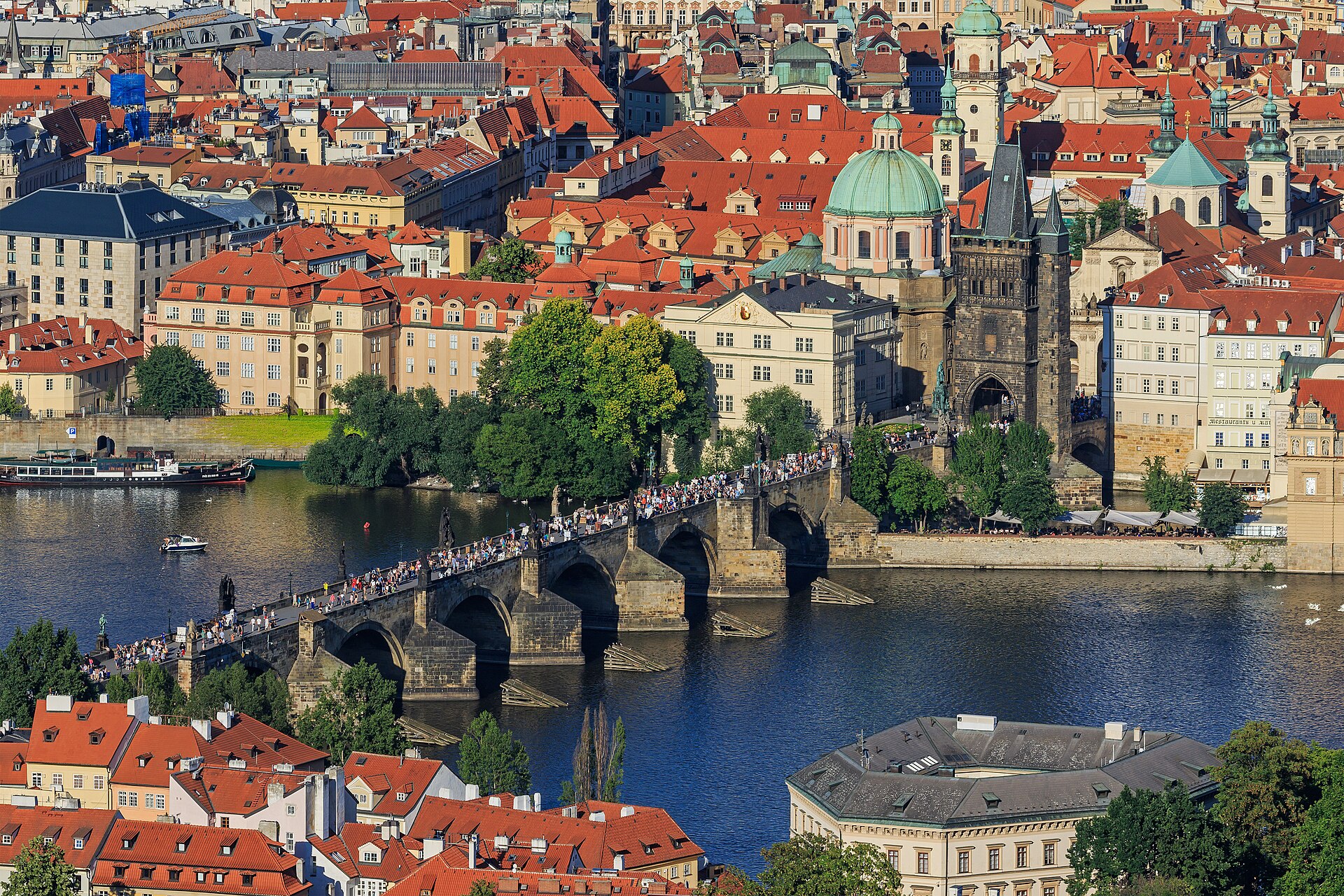
But the best part of Vysehrad is the view. Stand on the ramparts at sunset and look north: the Vltava bends below you, the spires of the Old Town rise in the middle distance, and Prague Castle glows on the far hilltop. This is the best panorama in the city, and almost nobody knows about it.
Verified Facts
The fortress dates to the mid-10th century, when coins were minted here under Boleslaus II
King Vratislaus II moved the royal seat from Prague Castle to Vysehrad in the 11th century
The Slavin Cemetery was established in 1869 and holds the graves of Dvorak, Smetana, Mucha, Capek, and nearly 600 other notable Czechs
The current Baroque fortifications were built by the Habsburgs after 1650 under Ferdinand III in a pentagram shape with six bastions
Get walking directions
V Pevnosti 159/5b, 128 00 Prague 2