Walking Tours in Prague
Prague City Walk
A 18-stop walking tour through the heart of Czech Republic. Visit National Museum, Walking Wenceslas Square, Velvet Revolution, and Lucerna Arcade — with narrated stories at every stop.
Prague: Castle Quarter & Malá Strana
Downhill from Strahov Monastery — cursed crown jewels, the Defenestration window, Kafka writing studio, Lennon Wall, and crawling babies.
Prague: Clocks, Castles & the Bohemian Soul
Watch the Astronomical Clock strike the hour, cross Charles Bridge past thirty baroque saints, climb to Prague Castle and St. Vitus Cathedral, walk the Golden Lane where Franz Kafka's sister lived, and descend through the medieval Jewish Quarter that survived everything the twentieth century threw at it.
Prague: Old Town & Charles Bridge
The 27 crosses, the blinded clockmaker, the Golem in the attic, 12 layers of graves, and the saint they threw off the bridge.
30 Landmarks in Prague
Charles Bridge
Karluv most, 110 00 Prague 1
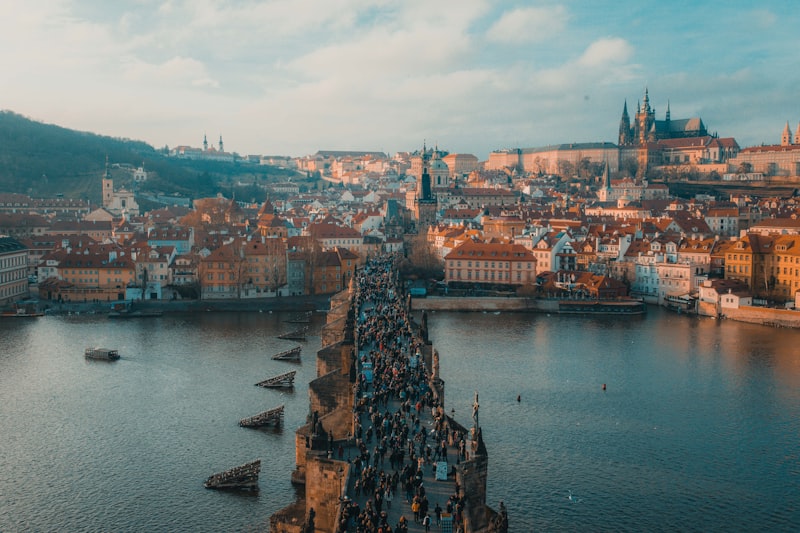
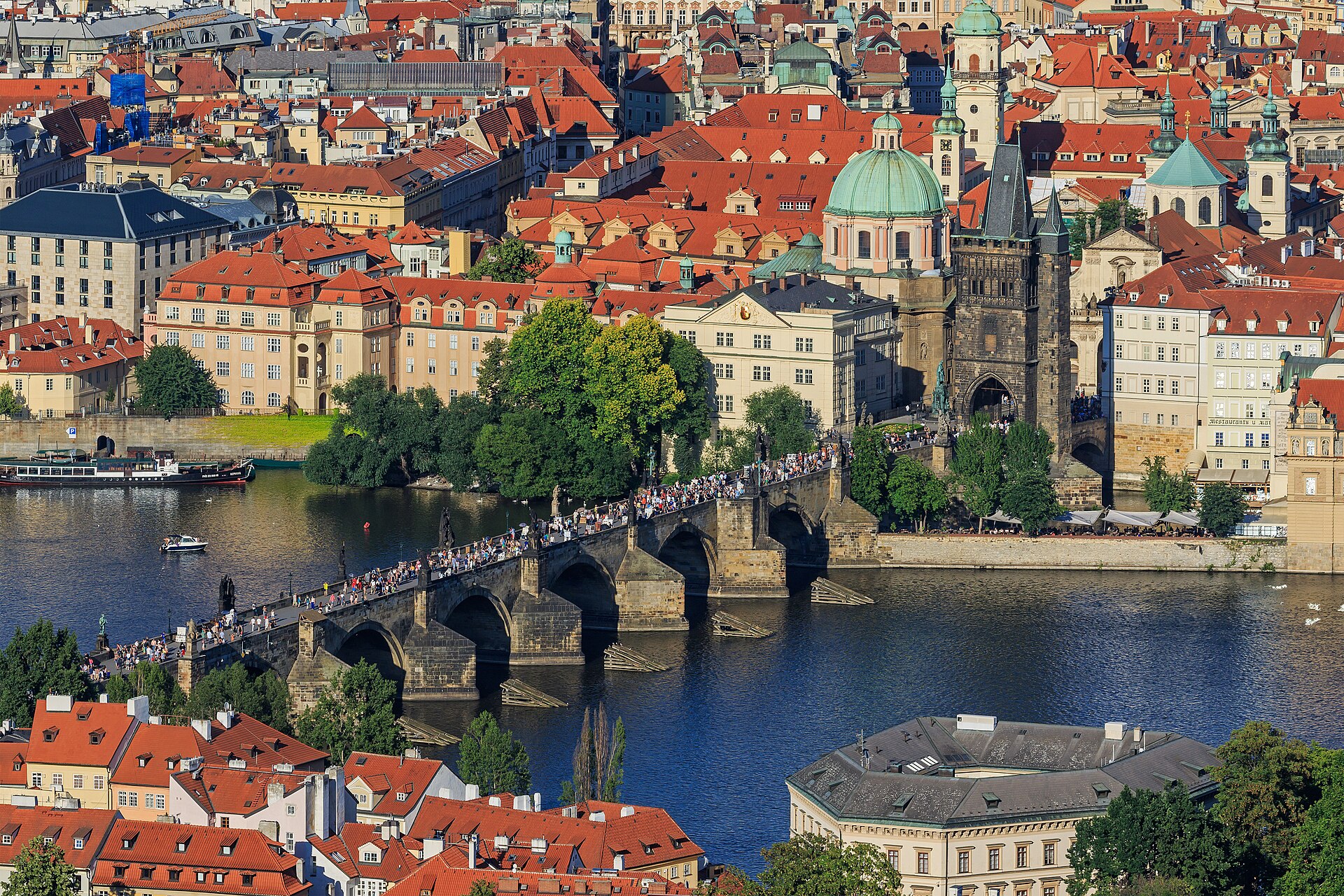
Construction began at 5:31 AM on July 9, 1357 — and that exact time wasn't an accident. Emperor Charles IV was obsessed with numerology, and the moment was chosen because it forms a palindrome: 1-3-5-7-9-7-5-3-1. He believed this numerical symmetry would make the bridge indestructible. Six and a half centuries later, it's still standing, so maybe the old mystic was onto something. The bridge replaced the earlier Judith Bridge, which had been swept away by a catastrophic flood in 1342. Charles IV hired the brilliant young architect Petr Parlér — the same man building St. Vitus Cathedral — and the result was a 516-meter stone crossing with 16 arches that became the only bridge over the Vltava for nearly 500 years, until 1841. The thirty Baroque statues lining both sides weren't part of the original plan. They started appearing in the mid-17th century, turning what was essentially a medieval highway into an open-air gallery. The most famous is St. John of Nepomuk, who was allegedly thrown from this very bridge in 1393 on the orders of King Wenceslas IV. Touch the bronze plaque at the base of his statue and legend says you'll return to Prague — which explains why it's been rubbed to a golden shine by millions of hands. The bridge survived wars, floods, and even a tank crossing during the 1968 Soviet invasion. Vehicular traffic was finally banned in 1965, and today it belongs entirely to pedestrians, portrait artists, jazz musicians, and the inevitable crowds. Come at dawn if you want it to yourself.
Church of Our Lady before Tyn
Staromestske nam., 110 00 Prague 1
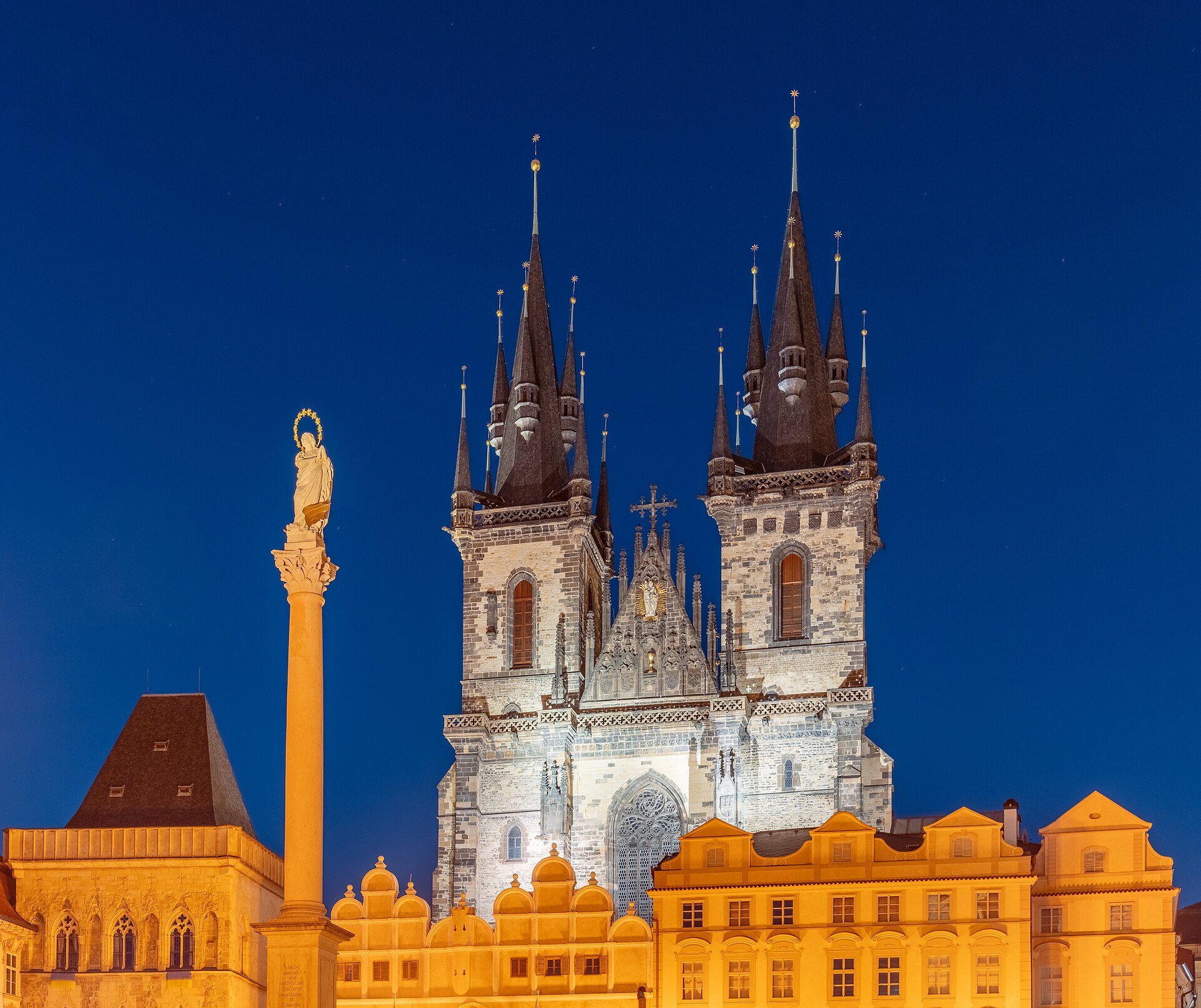
Those twin spires — 80 meters of blackened Gothic stone bristling with subsidiary pinnacles — dominate the Old Town Square skyline and have done so since the 14th century. The Church of Our Lady before Tyn is Prague's most dramatic silhouette, a building that looks almost menacing from certain angles, especially when storm clouds gather behind its towers. "Before Tyn" refers to the medieval Tyn Courtyard behind it, where foreign merchants were taxed and housed. The church has been a religious battleground for most of its existence. During the Hussite Wars of the 15th century, it became the main Hussite church in Prague — the radical reformers who rejected Catholic authority a century before Martin Luther. The great Hussite chalice, symbol of the communion cup the reformers demanded for laypeople, was mounted in gold on the church's facade. When the Catholics retook Prague after the Battle of White Mountain in 1620, they melted down the golden chalice and recast it as a golden image of the Virgin Mary, which still adorns the church today. History written in metal. Inside, you'll find the tomb of Tycho Brahe, the Danish astronomer who served as imperial mathematician to Rudolf II. Brahe died in Prague in 1601 under famously mysterious circumstances — legend says he died of a burst bladder because court etiquette prevented him from leaving a royal banquet to use the toilet. Modern analysis suggests mercury poisoning, though self-administered or otherwise remains debated. The church is oddly difficult to photograph from ground level because buildings crowd right up to its base, hiding the entrance. You have to enter through an alleyway between shops — an approach that's either charmingly secretive or deeply annoying, depending on your mood.
Church of Our Lady Victorious (Infant Jesus)
Karmelitská 9, 118 00 Prague 1
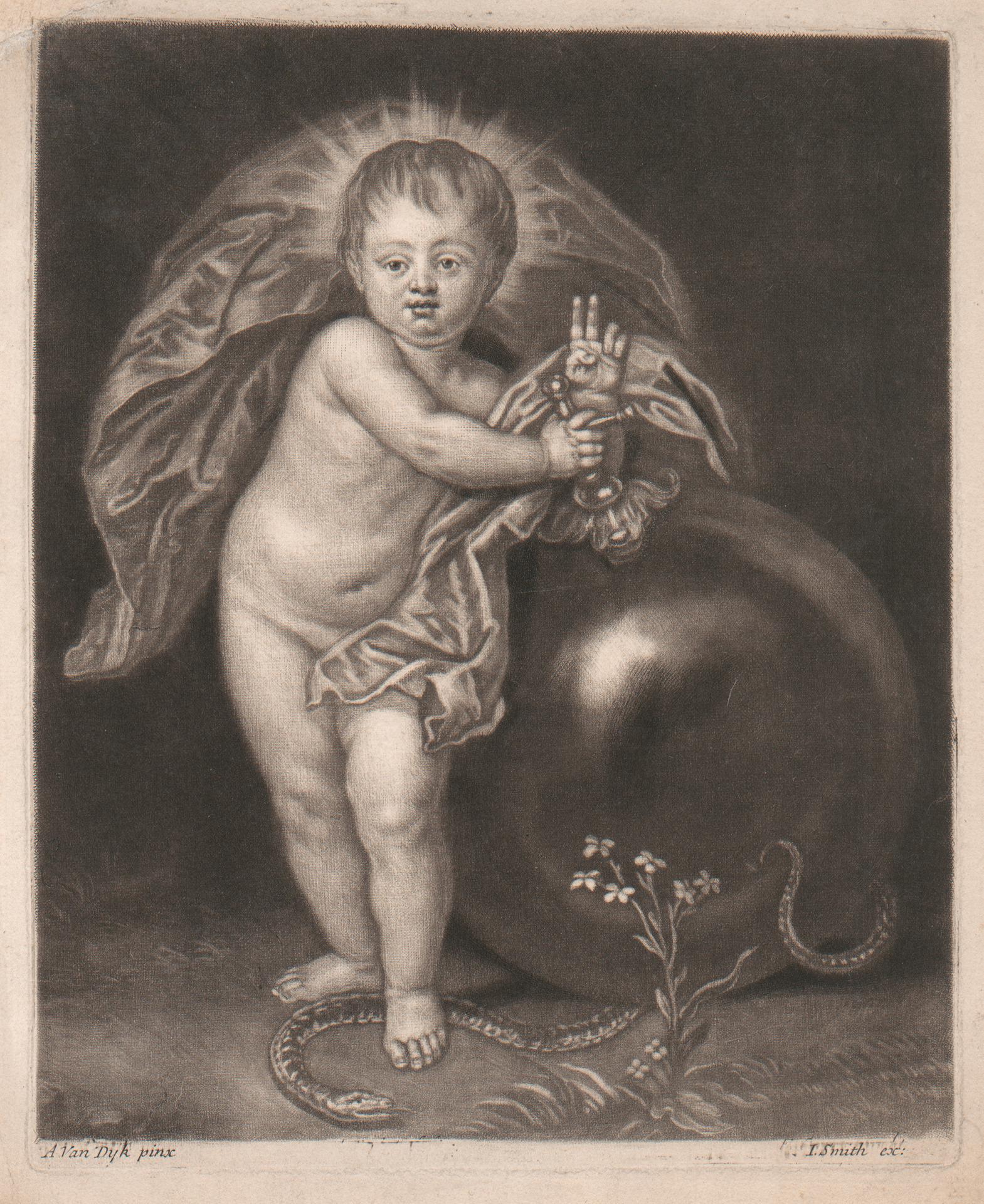
This small Baroque church in Mala Strana contains one of the most venerated Catholic objects in the world: a 45-centimeter wax statue of the infant Christ that has been credited with miracles since the 17th century and is worshipped by millions of Catholics from Spain to the Philippines. The Infant Jesus of Prague is essentially a religious celebrity — it has its own wardrobe of approximately 46 robes, changed about ten times a year according to the liturgical calendar, and its own pair of golden crowns. The statue arrived in Bohemia in the mid-16th century, brought from Spain as a wedding gift. It eventually ended up in the hands of Polyxena of Lobkowicz, who donated it to the Carmelite friars in 1628. During the Thirty Years' War, the statue was lost, found behind an altar in 1638 with its hands broken off, and restored. The miraculous reputation grew from there, and by the 18th century, pilgrims were arriving from across Europe. The church itself has its own interesting history. It was originally built by German Lutherans in 1611-12 and dedicated to the Holy Trinity. After the Catholic Habsburgs crushed the Bohemian Protestants at the Battle of White Mountain in 1620, the Lutherans were expelled, and the Carmelites took over in 1624. They renamed it Our Lady Victorious — a pointed celebration of Catholic triumph. The building is easy to miss from the street. It sits along busy Karmelitska street without much fanfare, which makes the contrast more striking when you step inside and find a globally significant pilgrimage site packed with devoted visitors from Latin America, the Philippines, and southern Europe.
Clementinum
Mariánské nám. 5, 110 00 Prague 1
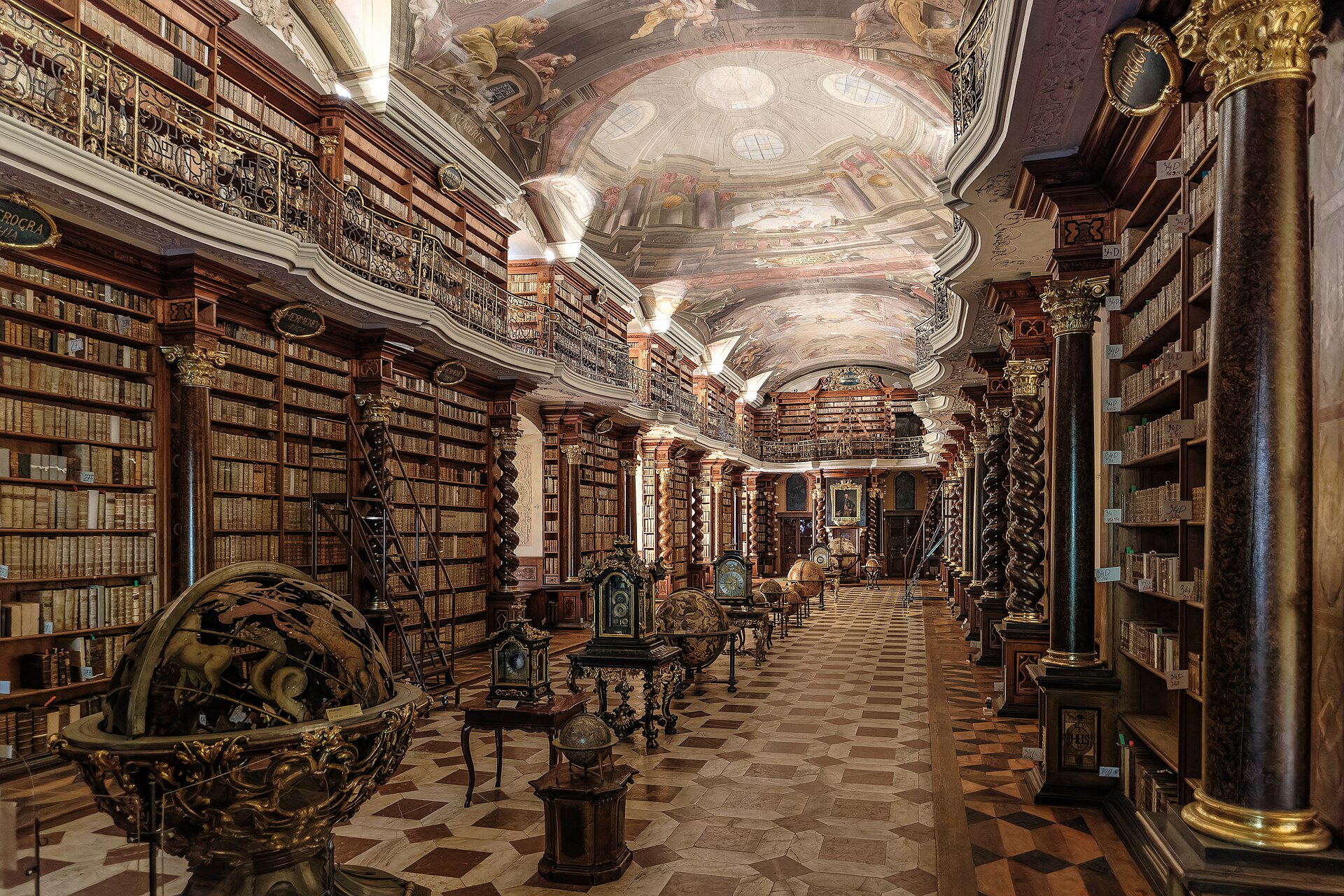
The Clementinum is the second-largest complex of buildings in Prague after the castle, and most people walk past it without realizing what's inside. This sprawling compound — once a Jesuit college, now the Czech National Library — covers two hectares in the heart of the Old Town and contains a Baroque library hall so beautiful that photographs of it routinely go viral with captions like "the most beautiful library in the world." The Jesuits arrived in Prague in 1556 and spent the next two centuries transforming a medieval Dominican monastery into an educational and intellectual powerhouse. By the time the Jesuit order was dissolved in 1773, the Clementinum had swallowed up 32 houses, three churches, and two gardens. In 1622, they absorbed the library of Charles University — one of the oldest universities in the world, founded in 1348 — and never gave it back. The Baroque Library Hall, built in 1722 by Kilian Ignac Dientzenhofer, is the showstopper. The ceiling frescoes by Johann Hiebel glorify science and art, the shelves hold 20,000 theological volumes, and the collection of antique globes is mesmerizing. You can only view the hall from the doorway — no walking inside — which somehow makes it more tantalizing. But the Clementinum's greatest hidden treasure might be its astronomical tower. Since 1775, scientists here have been recording daily meteorological measurements without interruption — the longest continuous weather data series in Europe. For 250 years, someone has climbed that tower every single day and written down the temperature, barometric pressure, and sky conditions. That unbroken chain of data is invaluable to climate science.
Dancing House
Jiráskovo nám. 1981/6, 120 00 Prague 2
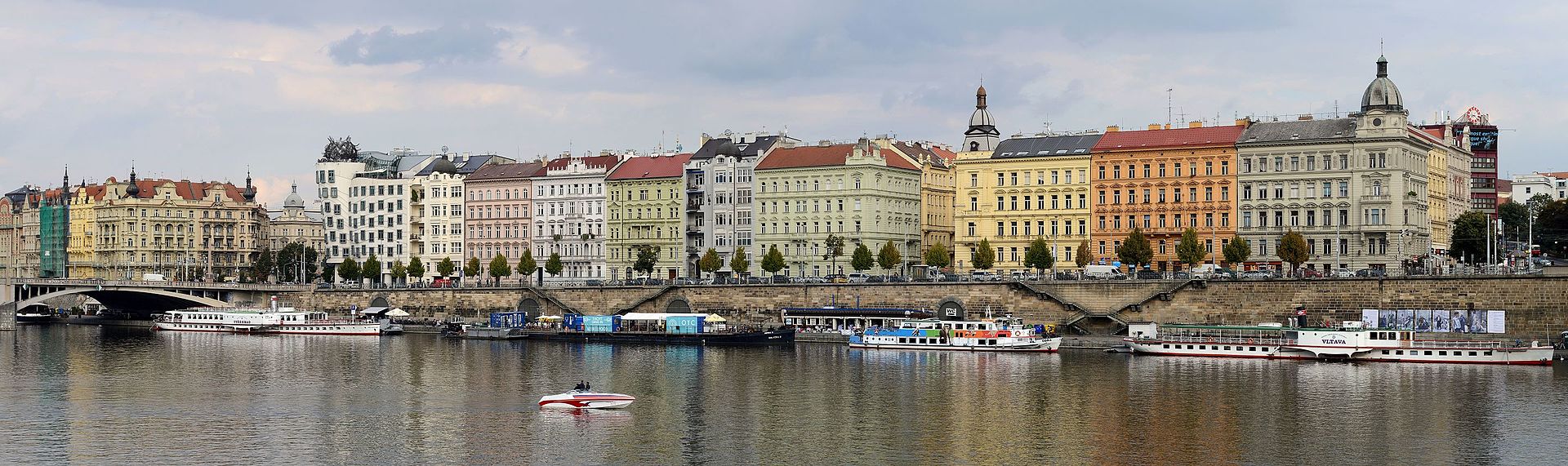
The site where the Dancing House stands was empty for fifty years before anyone built on it. The original building was destroyed by a US air raid in 1945 — one of the last acts of the war in Prague. The vacant lot sat next door to the childhood home of Vaclav Havel, who grew up dreaming of building a cultural center there. When Havel became president after the Velvet Revolution, he hired Croatian-Czech architect Vlado Milunic to make it happen. Milunic brought in Frank Gehry, and what emerged in 1996 was the most controversial building in Prague. The two towers are nicknamed Fred and Ginger, after Fred Astaire and Ginger Rogers. The taller glass tower, with its twisted, swaying silhouette, represents Ginger in mid-dance; the solid stone tower is Fred, leaning into her. The whole thing looks like a couple caught in a tango — playful, a little drunk, and completely out of step with the sober Baroque and Art Nouveau buildings lining the rest of the Vltava embankment. Prague's architectural establishment hated it. Critics called it an insult to the city's historic character. But Time magazine named it Design of the Year in 1997, and two decades on, it's become as much a part of Prague's identity as any Gothic spire. Gehry himself said he'd do anything for the country that gave the world hockey player Jaromir Jagr — which tells you something about how seriously he took the project. The rooftop bar, Ginger & Fred, offers one of the best views in Prague: the Vltava, the castle, and a panorama of the spires that the Dancing House was designed to disrupt.
Estates Theatre
Železná 540/1, 110 00 Prague 1
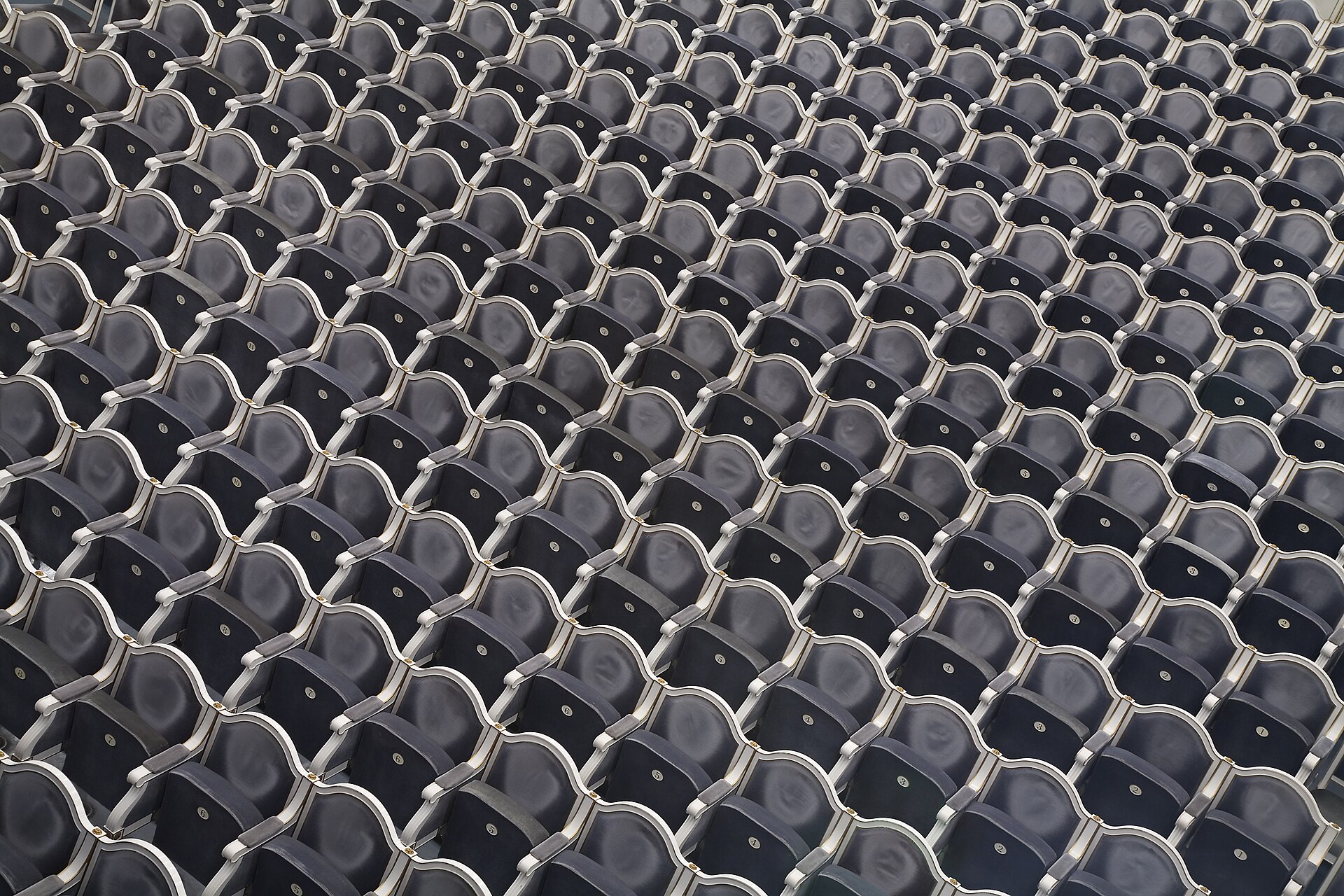
On October 29, 1787, Wolfgang Amadeus Mozart stood in this theatre and conducted the world premiere of "Don Giovanni." He had written the overture the night before — the ink was barely dry, and the orchestra was sight-reading — but the audience erupted. Prague loved Mozart in a way that Vienna never quite did, and he loved Prague right back, famously declaring: "My Praguers understand me." The Estates Theatre is one of the few surviving 18th-century theatres in Europe where you can still attend performances in the original building. Built in 1783 by Count Nostitz, it was designed in the Neoclassical style and originally called the Nostitz Theatre. The pale green and cream interior has been meticulously maintained — sit in the balcony and you're seeing roughly what Mozart's audience saw, minus the powdered wigs. Mozart's connection to the building goes deeper than Don Giovanni. His "La Clemenza di Tito" also premiered here in 1791, commissioned for the coronation of Leopold II as King of Bohemia. And when Milos Forman filmed "Amadeus" in 1984, he chose this theatre for the opera scenes — it was the only building in the world that looked exactly as it would have in Mozart's time, because it essentially was. The building also played a role in Czech national awakening. On December 21, 1834, the first Czech-language opera performance took place here — Frantisek Skroup's "Fidlovacka," which contained the melody that would later become the Czech national anthem. A theatre that gave the world Don Giovanni and a national anthem isn't doing badly for a building built by a count.
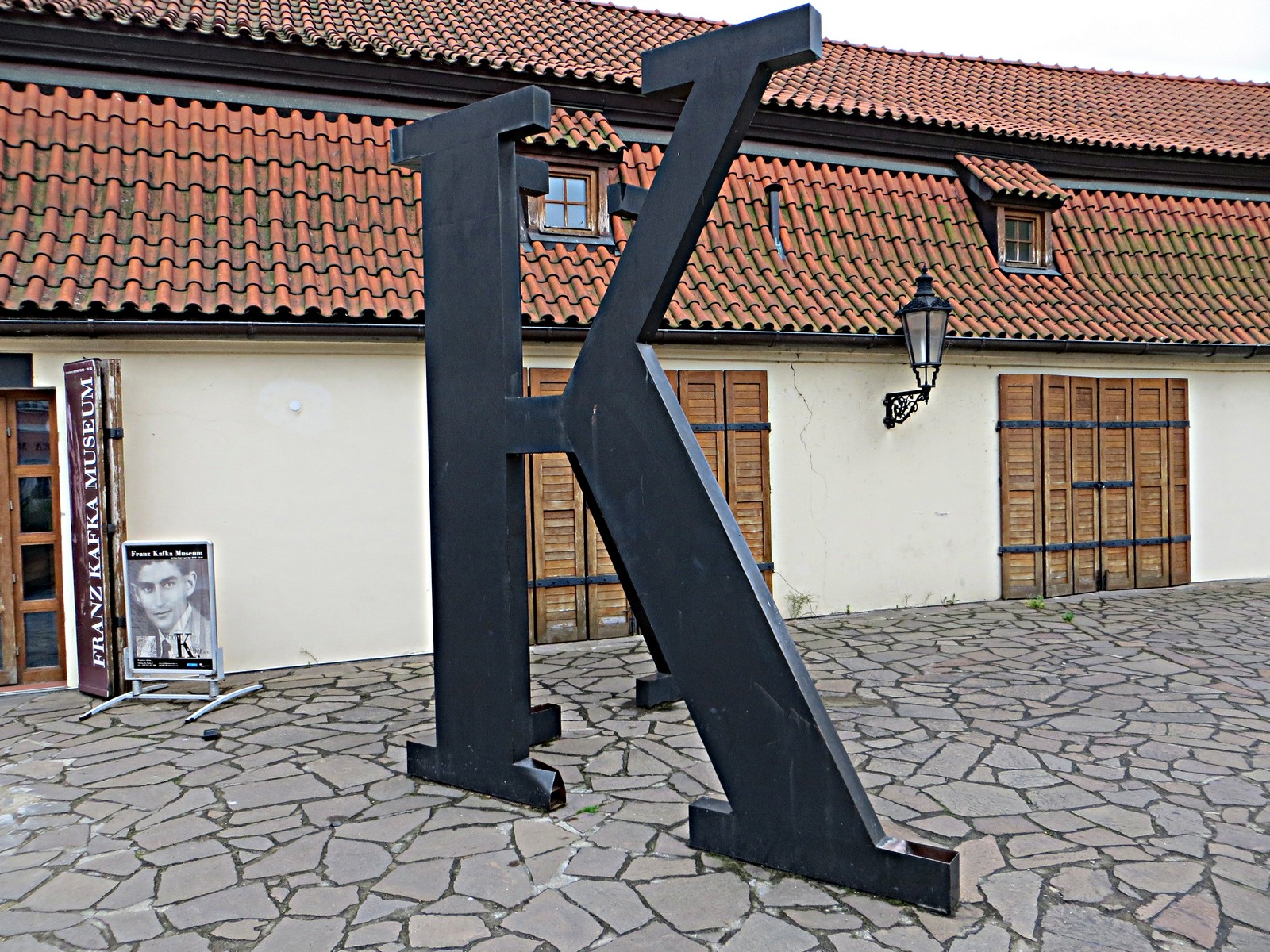
Franz Kafka Museum
Cihelná 2b, 118 00 Prague 1
Franz Kafka was born in Prague on July 3, 1883, lived almost his entire life within a single square kilometer of the Old Town, wrote some of the most unsettling fiction of the 20th century, and asked his friend Max Brod to burn every word of it after he died. Brod ignored the request, and the world got "The Trial," "The Castle," and "The Metamorphosis" — works so distinctive that "Kafkaesque" became an adjective in dozens of languages. Prague was Kafka's raw material: its labyrinthine bureaucracy, its claustrophobic streets, its overbearing authority figures. The museum sits in a converted brick building — the former Hergetova cihelna — on the Lesser Town bank of the Vltava, and it opened in 2005. The permanent exhibition is split into two halves: "Existential Space" and "Imaginary Topography." The first documents Kafka's actual life through manuscripts, diaries, letters, and photographs. The second recreates the atmosphere of his fiction through disorienting audiovisual installations — dark corridors, looping sounds, and projections that make you feel like you've wandered into one of his stories. Outside, the museum's courtyard features David Cerny's sculpture of two men urinating into a pool shaped like the Czech Republic. The figures move mechanically, and you can text a phone number to make them spell out messages. It's provocative, absurd, and weirdly perfect for a museum dedicated to a man who wrote about people turning into insects. Kafka moved constantly but never left Prague for long. His birthplace near Old Town Square is marked by a plaque, and he spent time writing at No. 22 Golden Lane inside Prague Castle. The city absorbed him, and he absorbed the city.
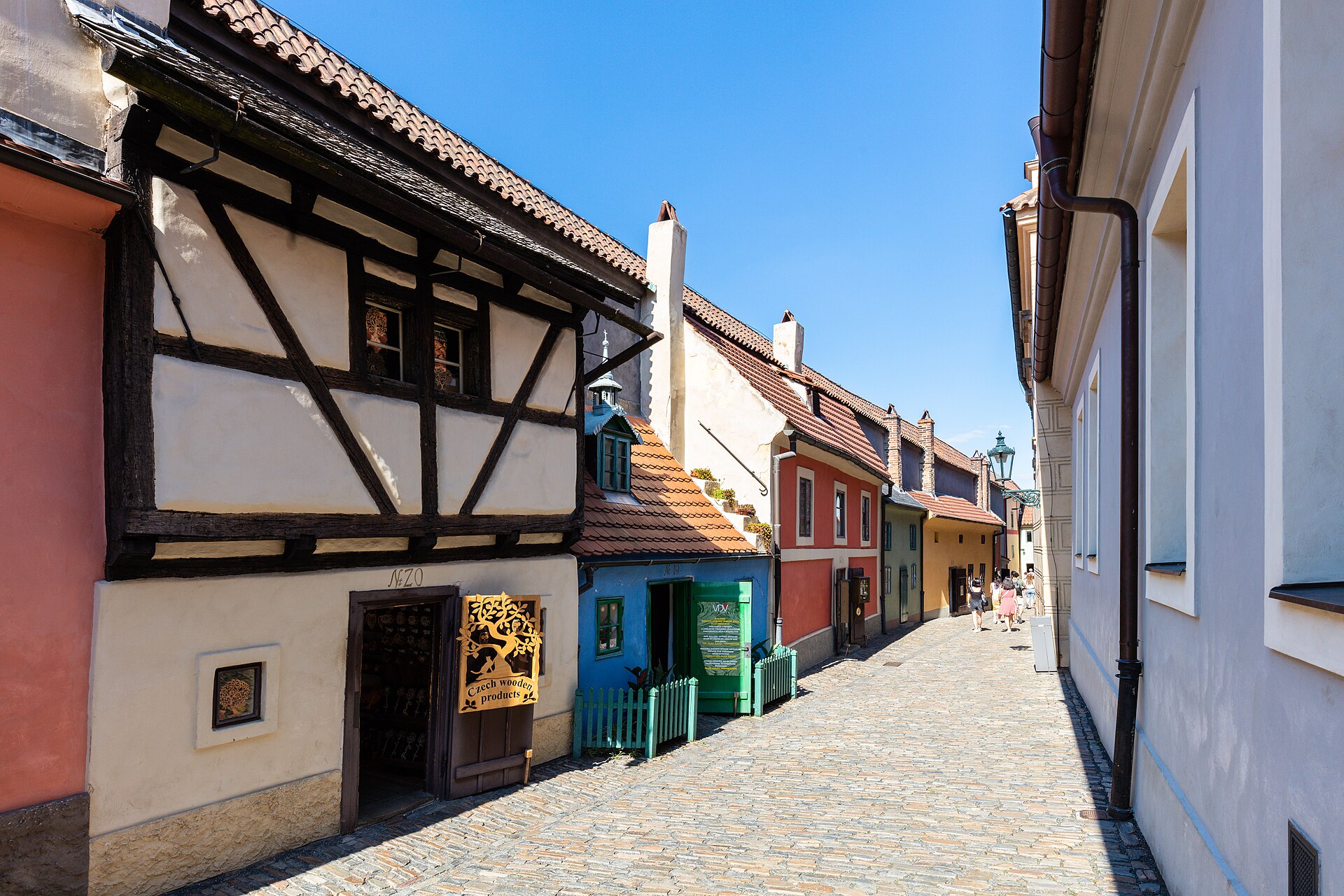
Golden Lane
Zlatá ulička, 119 00 Prague 1
The houses on Golden Lane look like they were designed for elves. These tiny, brightly painted cottages — barely two meters wide in places — are wedged into the arches of Prague Castle's northern fortification wall, and they've been here since the late 16th century. Emperor Rudolf II had them built to house the 24 castle guards who patrolled the ramparts. Space was so tight that the houses were essentially one-room shacks squeezed between stone walls. The street gets its name from the goldsmiths who lived here in the 17th century, though the far more exciting myth is that Rudolf II's court alchemists worked in these cramped quarters, trying to turn base metals into gold. Exhibitions inside the houses play up this legend, and you'll find an alchemist's workshop recreated in the nearby White Tower. In truth, the alchemists never actually lived on Golden Lane — they had better quarters elsewhere in the castle — but the story has stuck for four centuries because it's too good to let go. The lane's most famous resident was Franz Kafka, who stayed at his sister Ottla's house at No. 22 from 1916 to 1917. The tiny blue cottage gave him the quiet he craved, and he allegedly used the time to write "The Castle" — a novel about a man trying to gain access to an impenetrable castle bureaucracy. The irony of writing that particular book inside Prague Castle was presumably not lost on him. Over the centuries, Golden Lane has housed guards, goldsmiths, dressmakers, fortune tellers, and a legendary filmmaker. Today it's a museum street with exhibitions in nine of the sixteen houses, documenting five centuries of life in miniature.
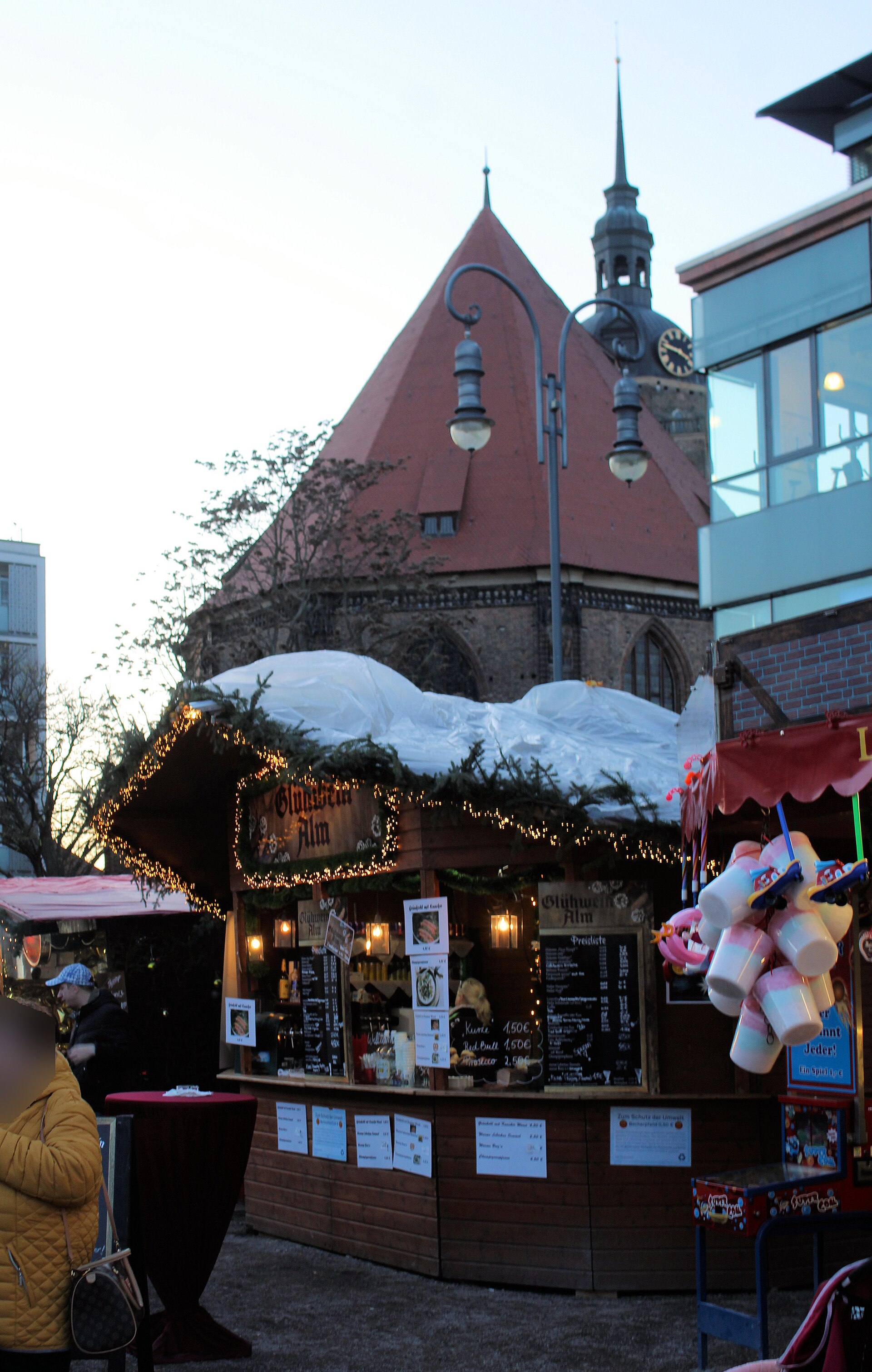
Havel's Market
Havelská, 110 00 Prague 1
This open-air market has been operating since 1232 — that's nearly eight hundred years of continuous trading on the same street. Havel's Market is one of the oldest permanent markets in Europe, predating the founding of most European nations. When it started, the Holy Roman Empire was in full swing, the Crusades were still happening, and Prague was establishing itself as one of the great trading cities of Central Europe. The market was originally known as the St. Gall's Market, named after a nearby church. It sits on Havelska street, a narrow lane between Old Town Square and the Estates Theatre, and has operated without interruption through floods, fires, wars, occupations, and regime changes. The communist government tried to shut it down in the 1950s but gave up — some things are apparently older than ideology. Today the market runs daily and sells two things: seasonal fruit, vegetables, and flowers on one end; tourist souvenirs and crafts on the other. The produce side is the interesting bit — Czech farmers sell fresh herbs, wild mushrooms in season, honey, dried fruit, and garlic braids alongside bins of seasonal berries and stone fruit. The prices are reasonable by Prague standards, and the quality is genuine. Come in the morning for the best selection. The flower vendors are particularly good — Czech grandmothers buying modest bouquets of seasonal flowers is one of Prague's most underrated street scenes. In December, the market becomes a smaller, less chaotic alternative to the Old Town Square Christmas market.
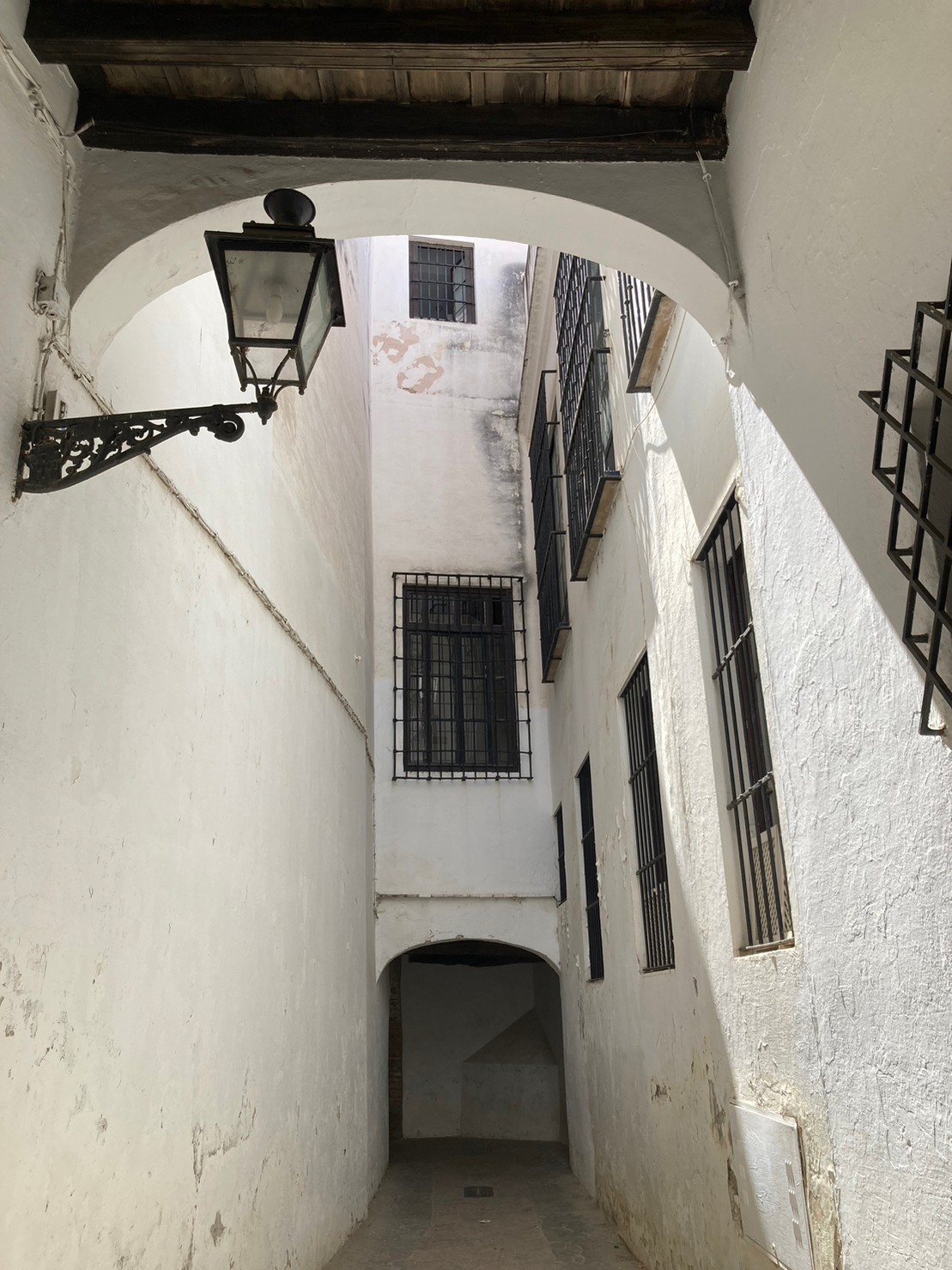
Jewish Quarter (Josefov)
Josefov, 110 00 Prague 1
Prague's Jewish Quarter is the remains of a world that was deliberately erased — twice. Jews settled here as early as the 10th century, and by the 13th century they were confined within a walled ghetto. For six hundred years, this tiny enclave produced scholars, rabbis, merchants, and legends. Then, between 1893 and 1913, the city demolished most of it in a misguided modernization campaign modeled on Haussmann's Paris. Of the original ghetto, only six synagogues, the Old Jewish Cemetery, and the Town Hall survived. The second erasure was far more devastating. The Nazis murdered approximately 80,000 Czech and Moravian Jews during the Holocaust. In a cruel twist, Hitler ordered the quarter's artifacts preserved — he wanted to create a "museum of an extinct race." The result is that Josefov's synagogues now house one of the world's most important collections of Judaica, saved by the very regime that murdered the community that created them. The Old-New Synagogue, built around 1270, is the oldest functioning synagogue in Europe. Its steep Gothic gable has sheltered continuous Jewish worship for over 750 years. According to legend, the attic holds the remains of the Golem — a clay creature brought to life by Rabbi Loew in the 16th century to protect the Jewish community from persecution. The Old Jewish Cemetery is unlike anything else in Europe. Because Jews were forbidden from burying their dead outside the ghetto walls, bodies were stacked up to twelve layers deep over three centuries. Around 12,000 headstones jostle for space above ground, tilting at wild angles — the visible tip of an estimated 100,000 burials beneath.
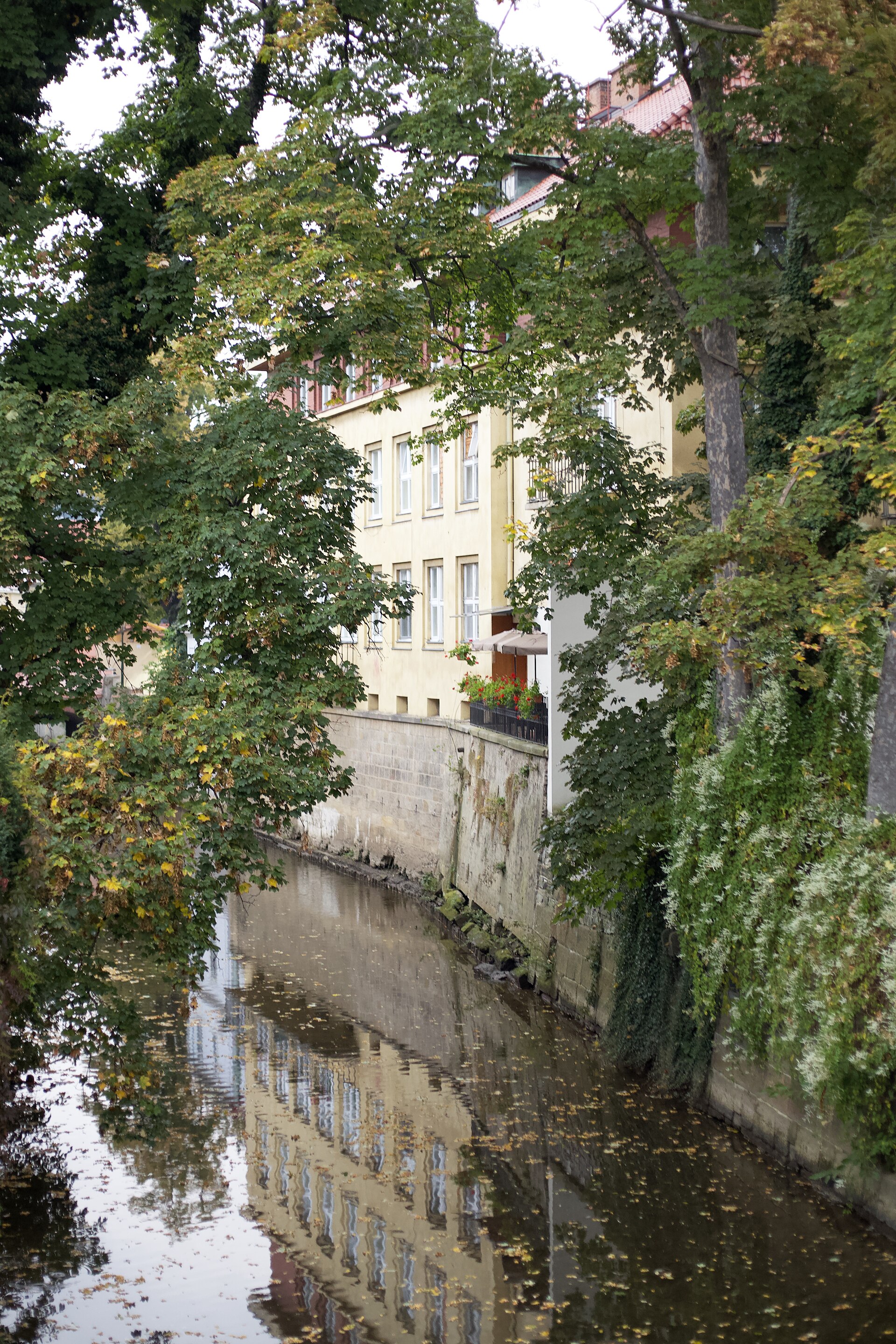
Kampa Island
Kampa, 118 00 Prague 1
Most visitors cross Charles Bridge without realizing there's an island directly beneath them. Kampa Island is separated from Mala Strana by a narrow channel called the Certovka — the Devil's Stream — supposedly named after a temperamental washerwoman who lived nearby. The channel powered water mills for centuries, and the last surviving mill wheel still turns lazily in the current, making it one of Prague's most photographed spots. The island has two distinct personalities. The northern half, closest to Charles Bridge, is a tangle of narrow lanes, old houses, and the Lennon Wall's backyard. The southern half opens into a sweeping park along the riverbank — one of the most romantic green spaces in the city, with views across the Vltava to the Old Town. On warm evenings, Praguers spread blankets on the grass and watch the sun set behind the castle. The Kampa Museum of Modern Art, housed in a renovated waterfront mill, holds an excellent collection of Central European art from the 20th century, including works by Czech sculptor Otto Gutfreund and Slovak painter Ludovit Fulla. Outside, David Cerny's three giant bronze babies crawl across the grass — 800 kilograms each, with barcode faces — siblings of the ones climbing the Zizkov Tower. Kampa floods. Badly. The devastating 2002 flood submerged most of the island and caused massive damage. High-water marks on buildings throughout the area show just how deep the water rose. But the island recovered, the museum reopened, and Kampa continues to be Prague's quiet escape — a place where the noise of the tourist crowds fades to a murmur and the only sounds are the river and the creaking mill wheel.
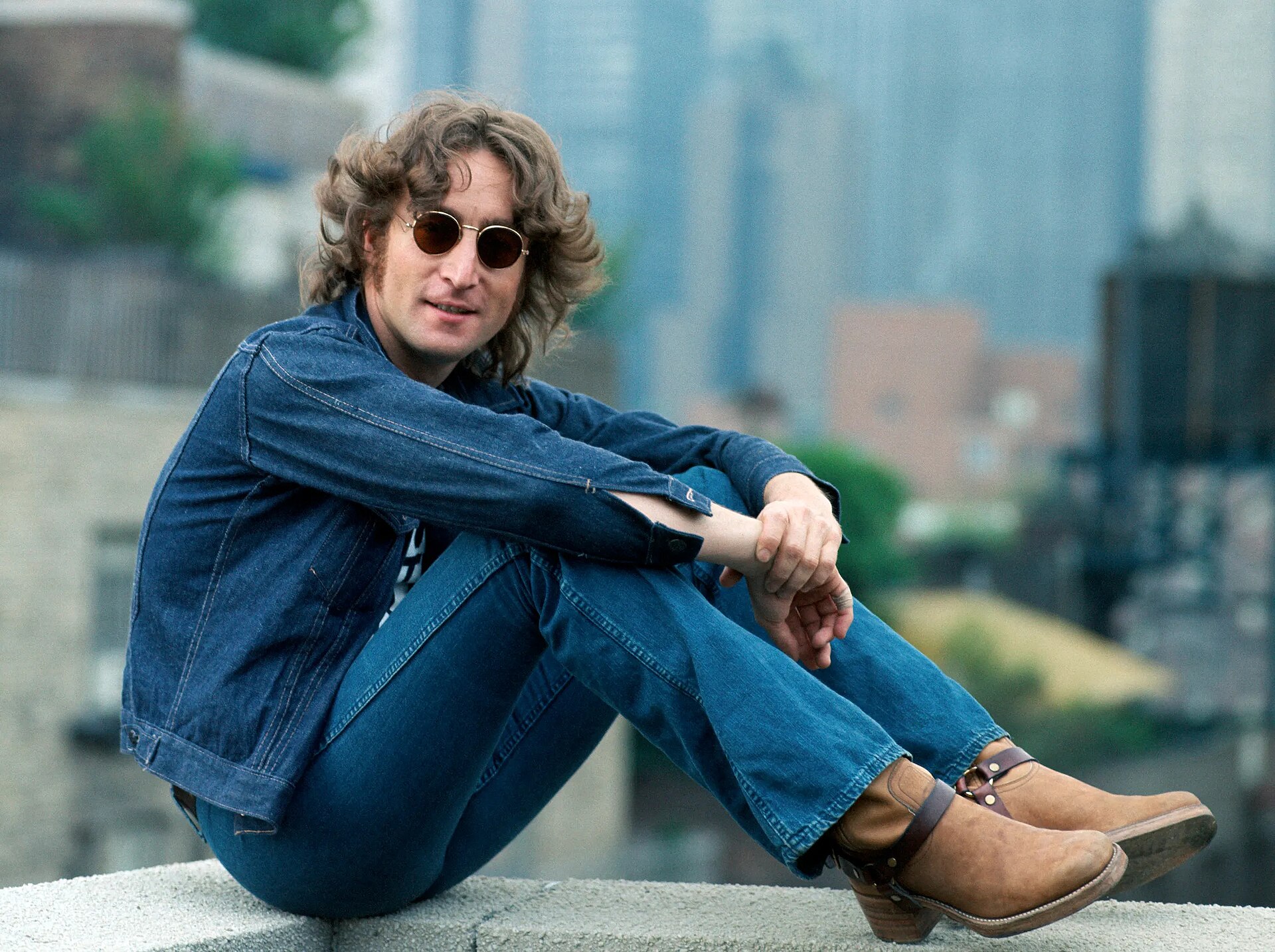
Lennon Wall
Velkopřevorské nám., 100 00 Prague 1
John Lennon never visited Prague. He had no particular connection to Czech culture. But after his murder in December 1980, someone painted his portrait on a wall in Mala Strana, and the wall became a revolution. Under communist rule, Western music was effectively banned — you couldn't buy Beatles records in stores, and listening to them could get you in trouble. Lennon, the peace activist who sang "Imagine" and "Give Peace a Chance," became an underground symbol of resistance for Czech youth who had no legal outlet for their frustration. The secret police kept painting over it. Every time they did, new graffiti appeared overnight — Lennon lyrics, peace signs, political messages, love poems. The authorities called the participants "alcoholics, mentally deranged, sociopathic, and agents of Western capitalism." The kids called themselves Lennonists and kept painting. It became a cat-and-mouse game that lasted nearly a decade. When the Velvet Revolution swept away the communist government in November 1989, the wall was already famous. It had become a symbol of peaceful resistance, creativity triumphing over authoritarianism. After the revolution, it evolved into a broader canvas for anyone with a spray can and something to say — messages of love, protest, hope, and the occasional marriage proposal now cover every square centimeter. The wall belongs to the Knights of Malta, whose priory sits just behind it on Kampa Island. They've never objected. Today the wall changes constantly — every layer of paint covers another, creating a living palimpsest of forty years of rebellion and romance. Nothing on it is permanent, and that's the point.
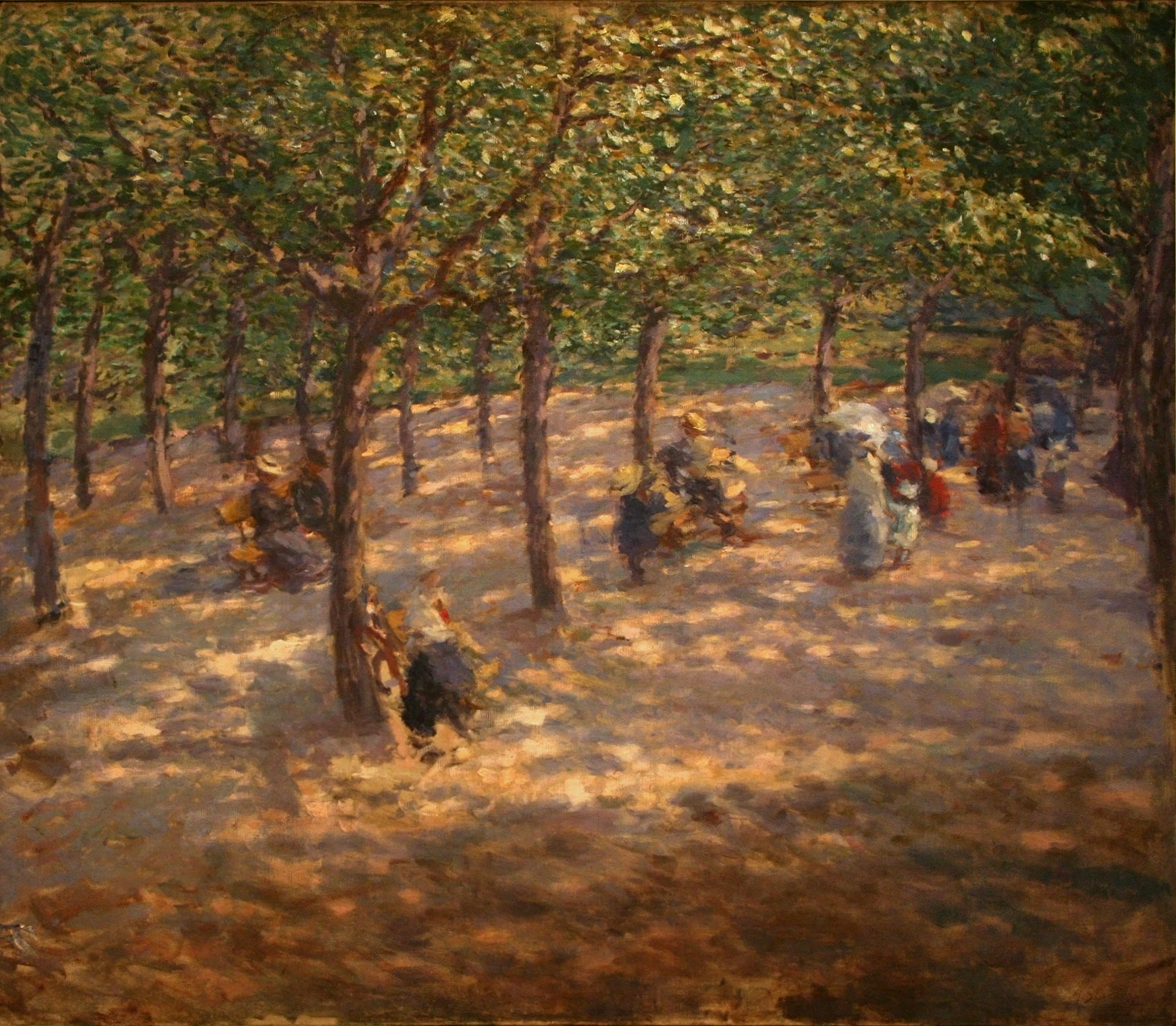
Letna Park
Letenské sady, 170 00 Prague 7
The most famous thing in Letna Park is something that isn't there anymore. From 1955 to 1962, the largest Stalin monument in the world stood on the park's western bluff overlooking the Vltava — a 15.5-meter granite sculpture of Stalin leading a procession of workers and soldiers. It took 600 workers two years to build and cost the equivalent of a small hospital. Then, after Khrushchev's denunciation of Stalin, the Czechoslovak government dynamited it in 1962. Today, a giant metronome by artist Vratislav Novak ticks on the empty pedestal — a commentary on the passage of time and the impermanence of political monuments. The park itself is Prague's favorite hilltop escape. A long plateau of mature trees, beer gardens, and winding paths stretches above the river, offering what might be the single best panoramic view of Prague's bridges. Stand at the western viewpoint and you can count five bridges spanning the Vltava below you in a single glance, with the Old Town skyline rising behind them. Letna Beer Garden — a simple open-air operation with plastic chairs and cold Gambrinus on tap — is one of the great unpretentious drinking spots in Europe. No table service, no cocktails, no nonsense. Just cheap Czech beer and a billion-dollar view. Locals come here after work, on weekends, and on any evening when the weather is halfway decent. The park also played a starring role in the Velvet Revolution. On November 25, 1989, an estimated 750,000 people gathered on the Letna Plain for the largest demonstration in Czechoslovak history. Two weeks later, the communist government fell. The park has been a symbol of freedom ever since.
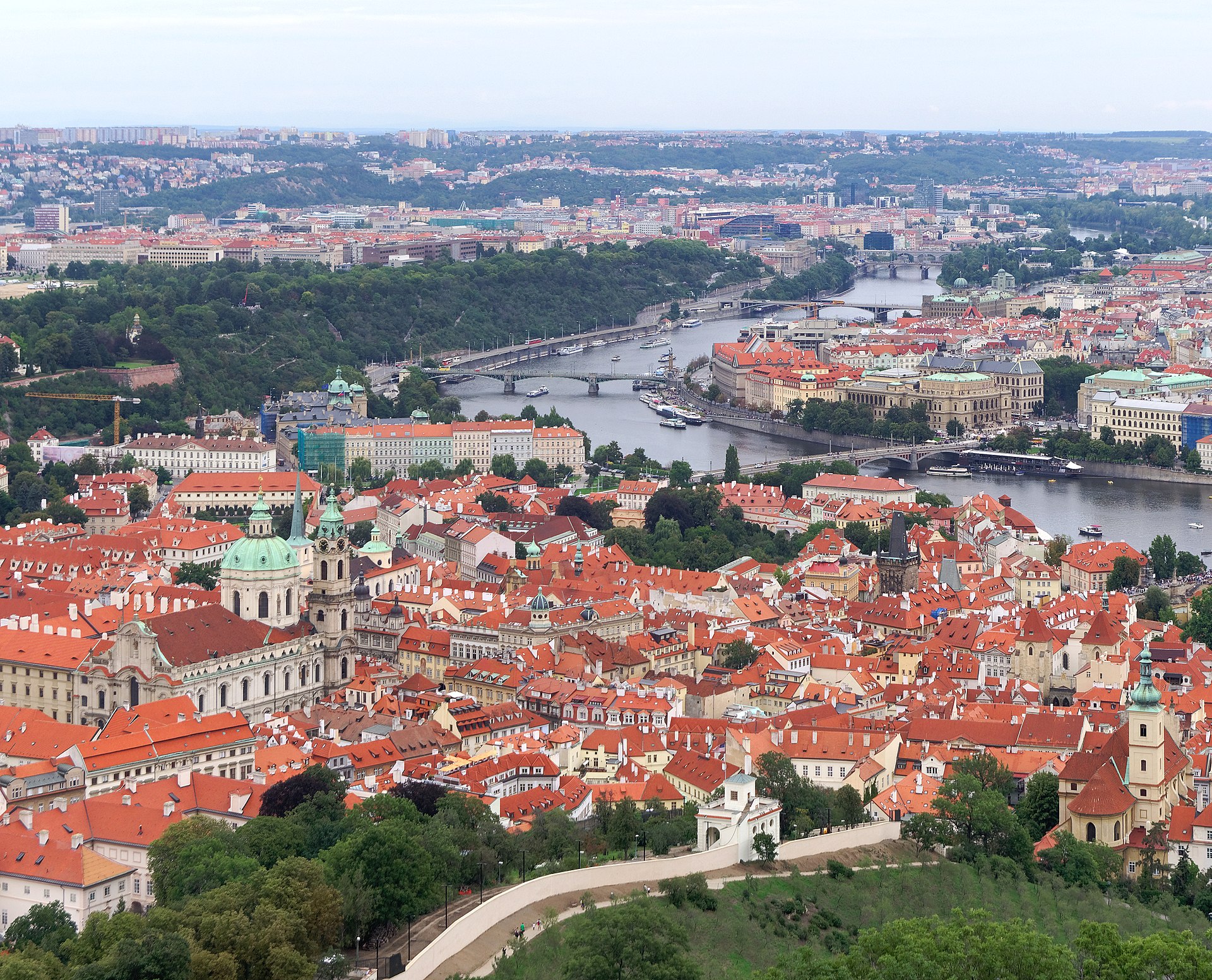
Mala Strana (Lesser Town)
Malá Strana, 118 00 Prague 1
Mala Strana is Prague's most beautiful neighborhood, and the reason it looks the way it does is catastrophe. In 1541, a massive fire swept through the district, destroying most of the medieval buildings on the slope between Prague Castle and the river. What replaced them — over the next two centuries — was an extraordinary collection of Baroque palaces, churches, and townhouses that gave Mala Strana its nickname: the Baroque Pearl of Prague. King Ottokar II of Bohemia founded the district in 1257 as the "New Town beneath Prague Castle," settling it largely with German colonists. When Charles IV established his New Town on the opposite bank in 1348, this older new town became the "Lesser Town" — a diminutive name for a neighborhood that is anything but small in character. The narrow streets twist and climb the hillside, opening unexpectedly into hidden courtyards, pocket gardens, and stairways that lead to views you didn't know existed. The centerpiece is St. Nicholas Church, a High Baroque masterpiece built by the father-and-son architects Christoph and Kilian Ignaz Dientzenhofer. The interior is overwhelming — a riot of frescoes, gilding, and marble that makes most Baroque churches look restrained by comparison. Mozart played the organ here in 1787 during his stay in Prague, and the church's acoustics still draw musicians for evening concerts. Mala Strana is where Prague's diplomats live — embassies occupy many of the grand palaces — and where evening light hits the cobblestones at an angle that makes photographers weep. Come after dinner, when the tour groups have gone and the streets belong to the cats and the lamplighters.
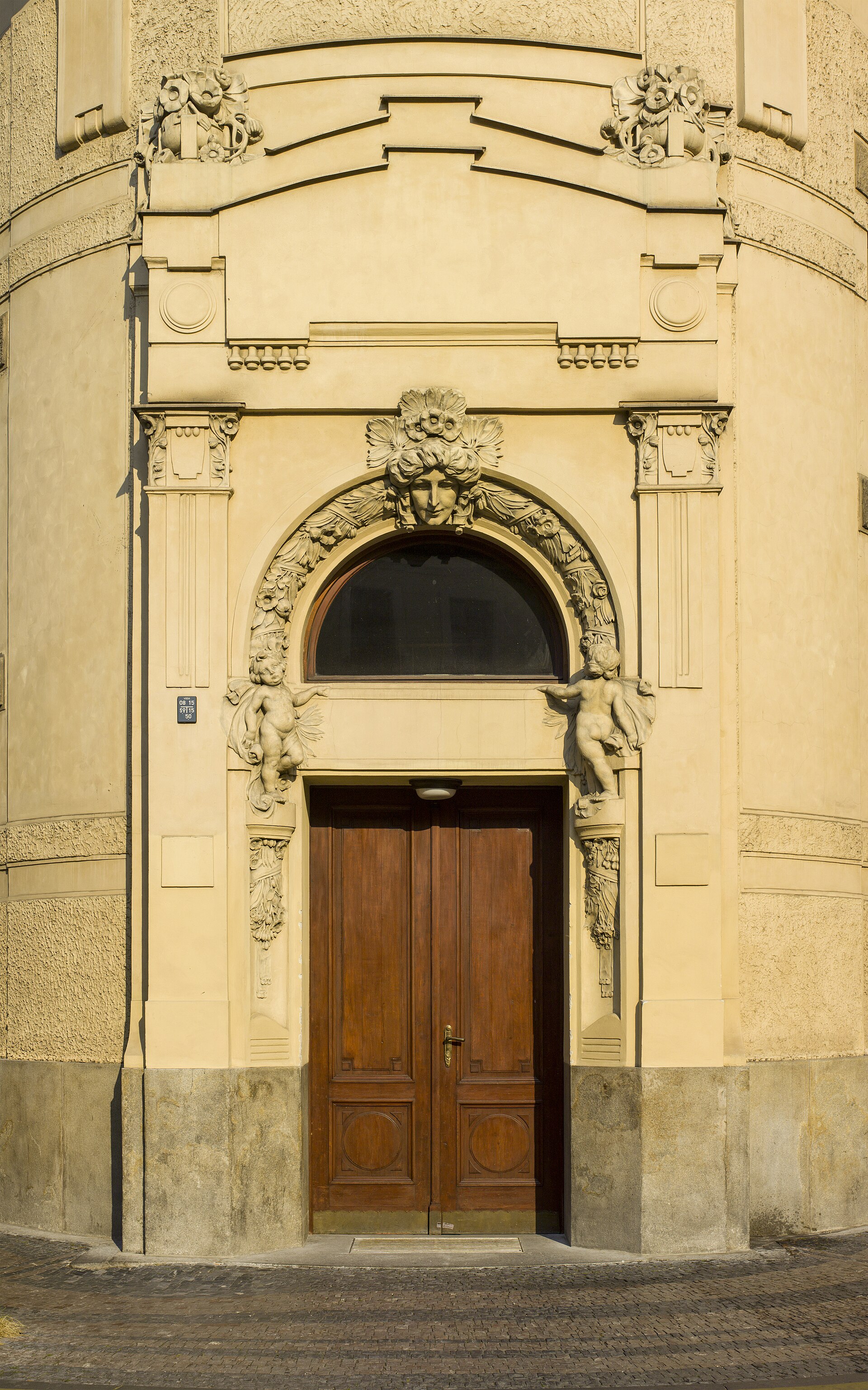
Municipal House
nám. Republiky 5, 111 21 Prague 1
If you want to understand what Art Nouveau looks like when an entire nation throws its best artists at a single building, the Municipal House is your answer. Built between 1905 and 1912, it was designed as the cultural heart of Czech civic life — a concert hall, gallery, and gathering place that would showcase Czech artistic talent in the most spectacular way possible. Every surface drips with decoration: mosaics, stained glass, metalwork, paintings, and sculptural detail by the greatest Czech artists of the era. The building stands on the site of the former Royal Court, where Bohemian kings lived from 1383 to 1485 before moving back to Prague Castle. When the medieval buildings were demolished, the city decided to replace them with something that would make a statement about Czech national identity. Alphonse Mucha — yes, the same Mucha whose Art Nouveau posters are on tote bags worldwide — painted the Lord Mayor's Hall with allegorical scenes of Czech virtues and Slavic mythology. It's arguably his greatest work in any medium. The Smetana Hall, the main concert venue inside, seats 1,200 and is home to the Prague Symphony Orchestra. Its acoustics and decoration rival the great concert halls of Vienna and Budapest. The Prague Spring International Music Festival opens here every year on May 12, the anniversary of Smetana's death, with a performance of his "Ma Vlast" — "My Homeland." On October 28, 1918, Czechoslovak independence was proclaimed from this building. The cafe on the ground floor serves coffee and cake in an interior so lavish that you feel like you should be wearing a hat and gloves. It's the most beautiful cafe in Prague, and that's saying something.
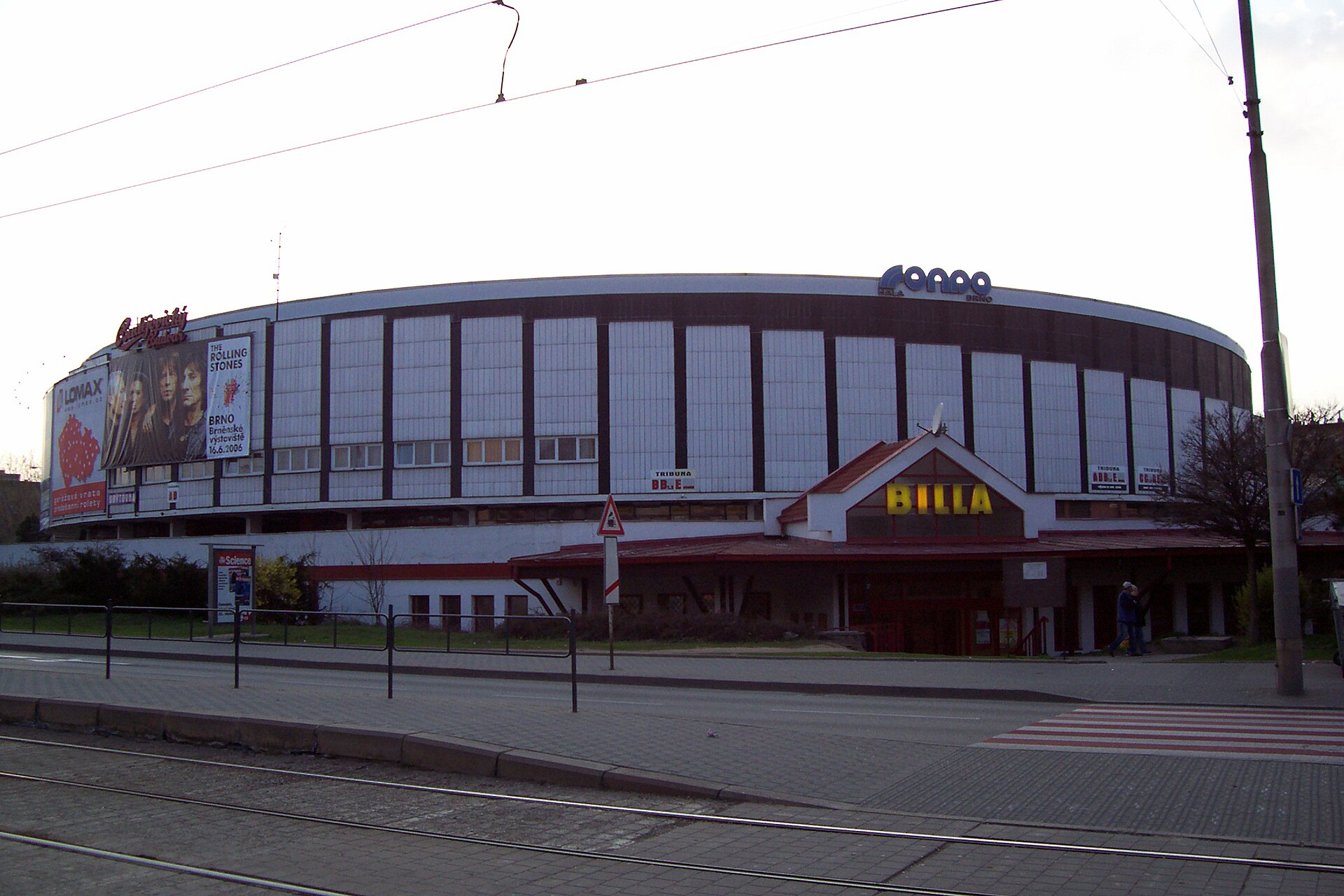
Naplavka Riverbank
Náplavka, 120 00 Prague 2
If you want to find where actual Praguers spend their weekends, skip the castle and head to Naplavka. This stretch of riverbank embankment along the Vltava — running roughly from Palacky Square to the Vytoñ railway bridge — has become Prague's favorite outdoor social space: part farmers' market, part waterfront bar, part urban beach, and entirely local. The embankment was originally built in the 19th century as a functional river wall — the name "naplavka" means something like "washed-up bank." For decades it served as a loading dock and was largely ignored by the public. Then, in the 2000s, Praguers rediscovered it. Boats moored along the wall were converted into floating bars and cafes. Food vendors set up stalls on weekends. Someone started a farmers' market on Saturday mornings that quickly became the best in the city, selling everything from local cheeses and Moravian wines to smoked meats and fresh-baked trdelnik. On summer evenings, the entire embankment comes alive. People sit on the stone walls with their feet dangling over the water, drinking Czech pilsner from plastic cups and watching the swans. The sunset views across the river to Prague Castle are spectacular, and unlike anywhere in the Old Town, there's room to breathe. Naplavka is also where Prague's cultural underground surfaces — outdoor film screenings, vinyl DJ sets, yoga classes, and food festivals happen throughout the warm months. When the river floods, everything retreats. When it doesn't, this is the closest Prague gets to a European waterfront scene, except grittier, cheaper, and with better beer.
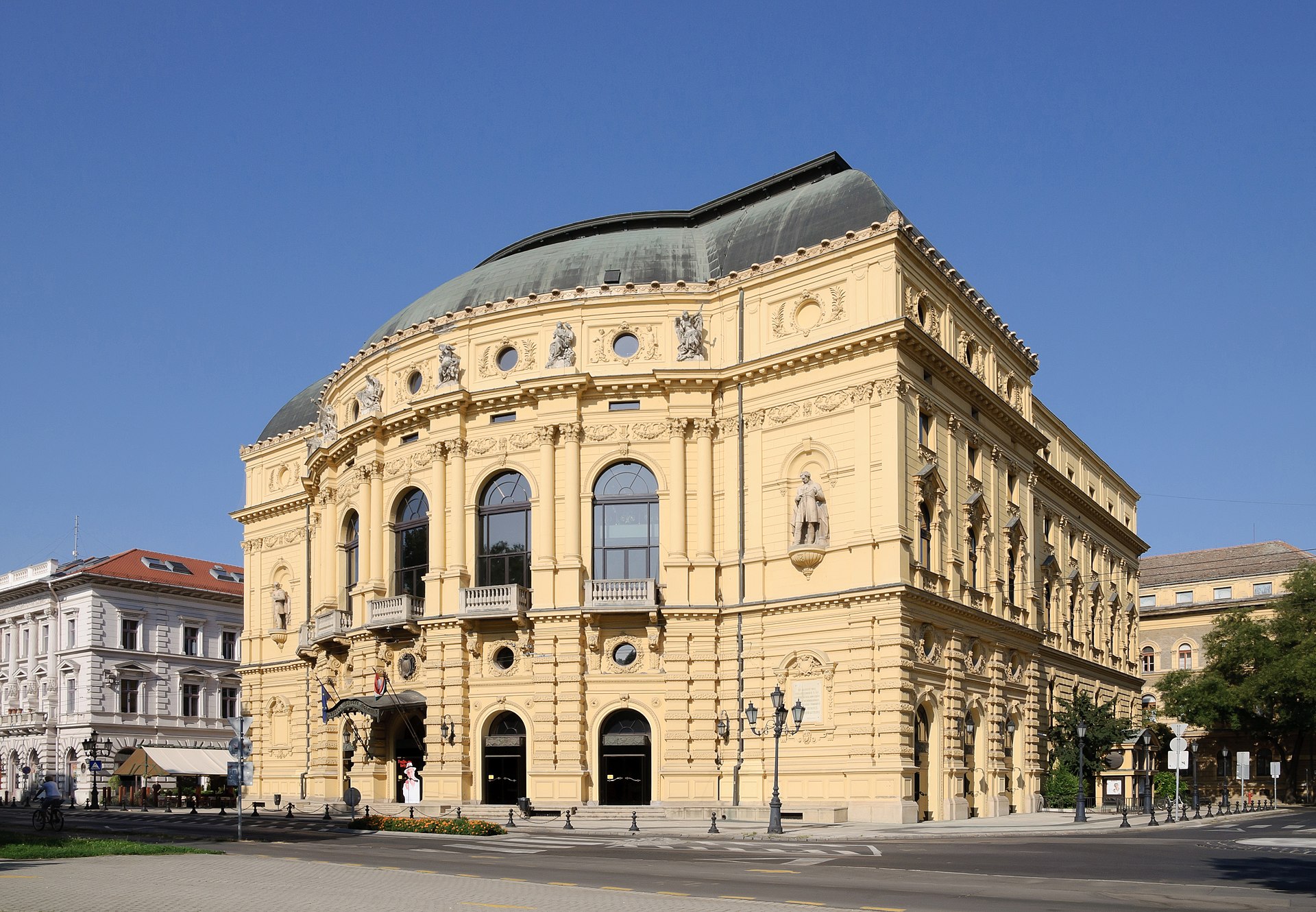
National Theatre
Narodni 2, 110 00 Prague 1
The Czechs crowdfunded this building before crowdfunding was a word. In the 1860s, the idea of a National Theatre — a grand stage for Czech-language opera and drama, separate from the German-speaking institutions that dominated Prague — became a patriotic cause. Ordinary citizens donated whatever they could. Foundation stones were gathered from historically significant sites across Bohemia. The whole nation chipped in, and the motto "Narod sobe" — "The nation to itself" — was carved above the proscenium. The theatre opened triumphantly on June 11, 1881, with the world premiere of Bedrich Smetana's opera "Libuse." It was the proudest moment in Czech cultural history. Then, exactly two months later, on August 12, plumbers finishing work on lightning rods dumped hot coals into a gutter. The coals ignited gas lines, and the copper dome, auditorium, and stage were destroyed by fire. The nation was devastated. What happened next was extraordinary. Within 47 days, citizens raised one million florins to rebuild. Architect Josef Schulz took over from the original designer Josef Zitek — who was wrongly blamed for neglecting fire prevention and resigned in bitterness — and the theatre reopened on November 18, 1883, again with "Libuse." The rebuilt theatre was even grander than the original, featuring early electric lighting and a steel stage structure. The National Theatre remains the most important performing arts venue in the Czech Republic. Its golden roof gleams along the Vltava embankment, and the interior — decorated by a generation of Czech artists known as the "National Theatre Generation" — is itself a masterpiece worth seeing even if you skip the show.
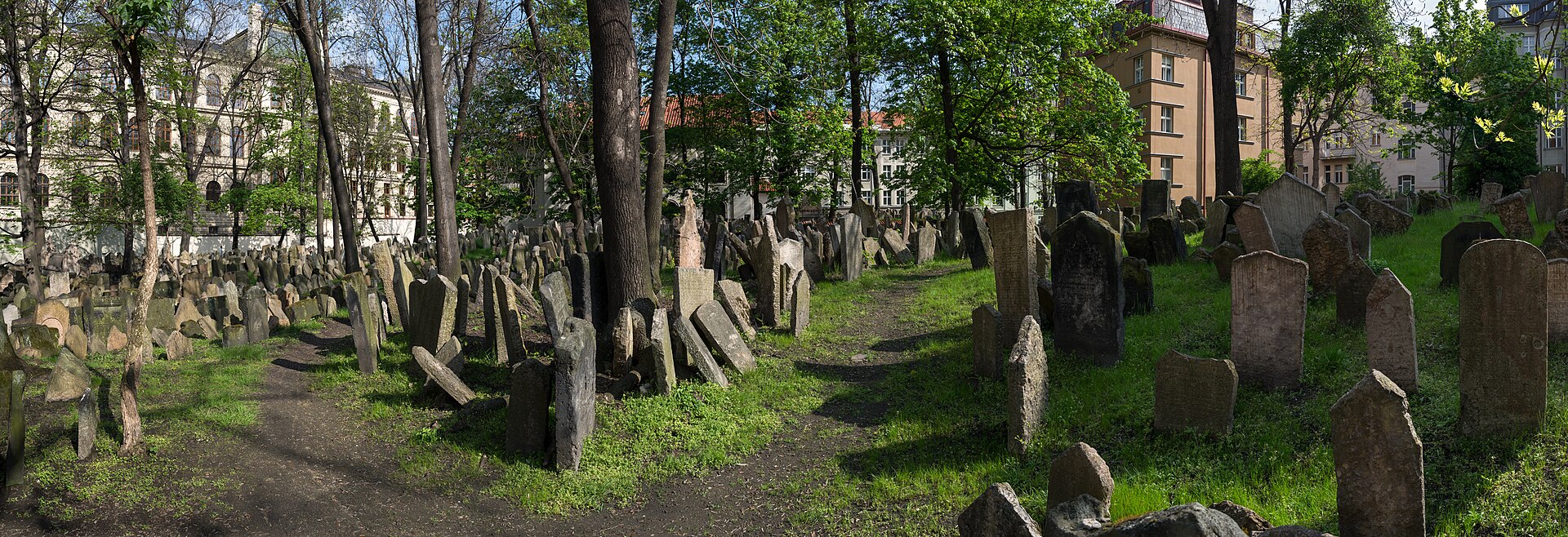
Old Jewish Cemetery
Siroka 3, 110 00 Prague 1
There is no place in Europe quite like this. Around 12,000 headstones crowd together at impossible angles across a space barely the size of a city block, leaning against each other like drunk friends at closing time. Beneath them, bodies are stacked up to twelve layers deep — an estimated 100,000 burials compressed into a plot that was never large enough, because for three and a half centuries, this was the only place Prague's Jews were allowed to bury their dead. The cemetery was established around 1439 and remained in active use until 1787. For 348 years, every Jewish funeral in Prague ended here. When the surface filled up, the community simply added another layer of soil and buried the next generation on top of the last. The oldest surviving gravestone belongs to Rabbi Avigdor Kara, dated 1439, who witnessed the terrible Easter pogrom of 1389 in which over 3,000 Jews were massacred. The most famous grave belongs to Rabbi Judah Loew ben Bezalel — Rabbi Loew — who died in 1609 and is legendary as the creator of the Golem. According to the myth, Loew sculpted a clay figure and brought it to life through mystical incantations to protect Prague's Jews from persecution. Visitors still leave pebbles and written wishes on his gravestone, a tradition that has been going on for centuries. Walking through the cemetery is a disorienting experience. The ground heaves and buckles, headstones tilt at angles that suggest the earth beneath is still settling. Elder trees filter the light. The sounds of the surrounding city fade. It feels less like a graveyard and more like a forest of stone — the accumulated grief of an entire community pressed into one impossibly small space.
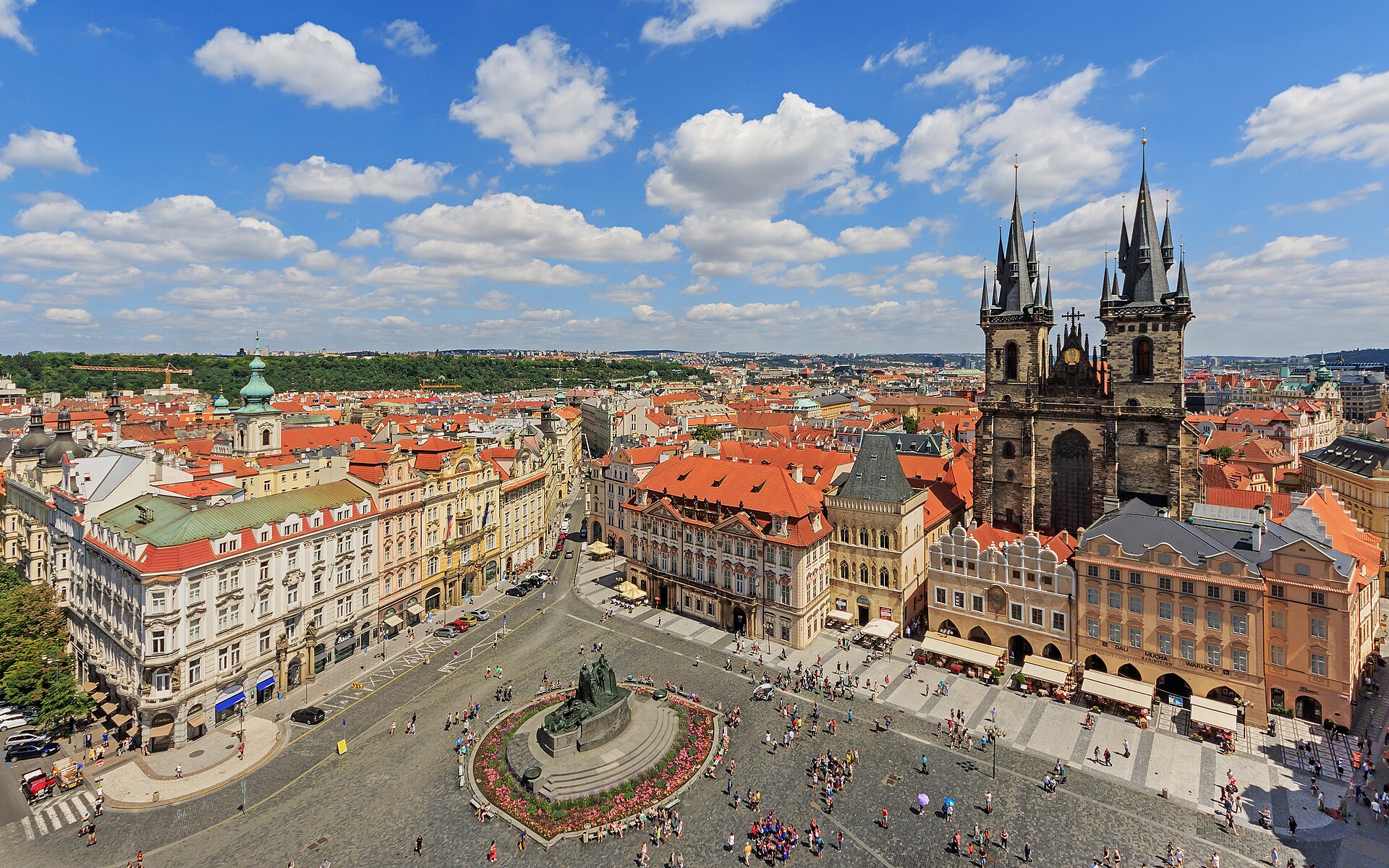
Old Town Square
Staromestske nam., 110 00 Prague 1
Every revolution, every invasion, every moment that mattered in Czech history — someone was standing in this square when it happened. Old Town Square has been the beating heart of Prague since the 12th century, when it served as a central marketplace at the crossroads of European trade routes. Merchants from all over the continent hauled their goods here, and the square grew rich on the traffic between East and West. But this isn't just a pretty postcard. In 1621, twenty-seven Czech Protestant leaders were executed right here on the cobblestones after the failed Bohemian Revolt against the Habsburgs. Twenty-seven crosses are set into the pavement near the Old Town Hall to mark the spot. Three centuries later, in 1945, the Nazis set fire to the Old Town Hall's entire eastern wing during the Prague Uprising — it was never rebuilt, which is why the building looks oddly truncated today. The square is framed by an almost absurd concentration of architectural styles: the Gothic spires of Tyn Church, the creamy Baroque facade of St. Nicholas Church, the pastel Rococo of the Kinsky Palace, and the medieval astronomical clock ticking away on the Old Town Hall tower. Stand in the center and you're surrounded by a thousand years of building, burning, and rebuilding. In winter, the square hosts one of Europe's best Christmas markets. In summer, it's a sea of tourists and buskers. But at six in the morning, before the crowds arrive, you can stand here alone with the cobblestones and feel the weight of the place.
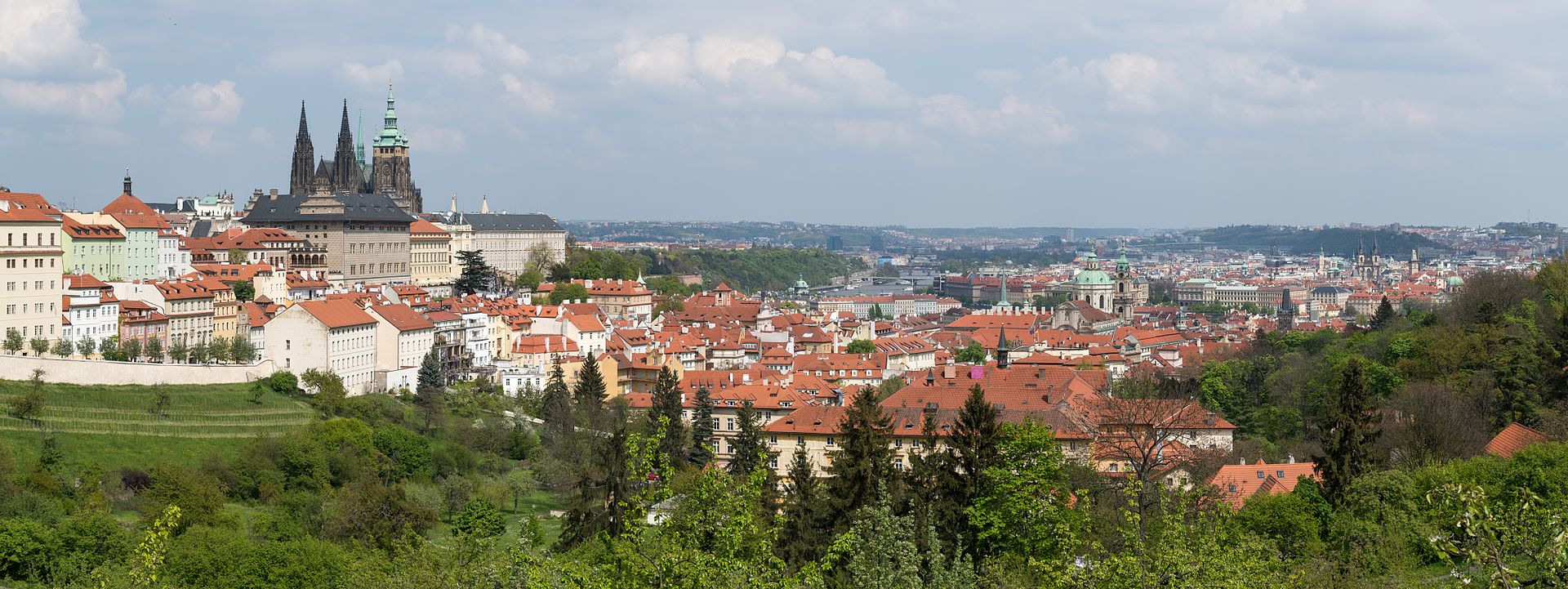
Petrin Hill & Tower
Petřínské sady, 118 00 Prague 1
In 1889, a group of Czech tourists visited the World Exhibition in Paris, saw the Eiffel Tower, and thought: we need one of those. Two years later, Prague had its own version — a 63.5-meter steel lattice tower perched on top of Petrin Hill, built in just four months for the 1891 Jubilee Exhibition. It's a fraction of the Eiffel Tower's height, but because it sits on a 327-meter hill, the viewing platform is actually higher above sea level than the top of its Parisian inspiration. The tower was supposed to be temporary. A hundred and thirty years later, it's still here, and climbing its 299 steps has become one of Prague's essential rituals. On a clear day, you can see over 100 kilometers from the top — allegedly all the way to the Snezka peak in the Krkonose Mountains, though you'd need binoculars and extraordinary luck with the weather. Petrin Hill itself is Prague's green lung: a wooded hillside laced with walking paths, orchards, gardens, and the remnants of the medieval Hunger Wall, built by Charles IV in 1362. The name "Hunger Wall" isn't metaphorical — Charles commissioned it as a public works project specifically to employ Prague's poor and starving during a famine. It's one of the few medieval public welfare projects still standing in Europe. Take the funicular railway up and walk down. The gardens are gorgeous in spring, the hilltop observatory is quietly excellent, and there's a mirror maze near the tower that has been delighting children and confusing adults since 1891. Petrin is Prague's antidote to the crowds below.
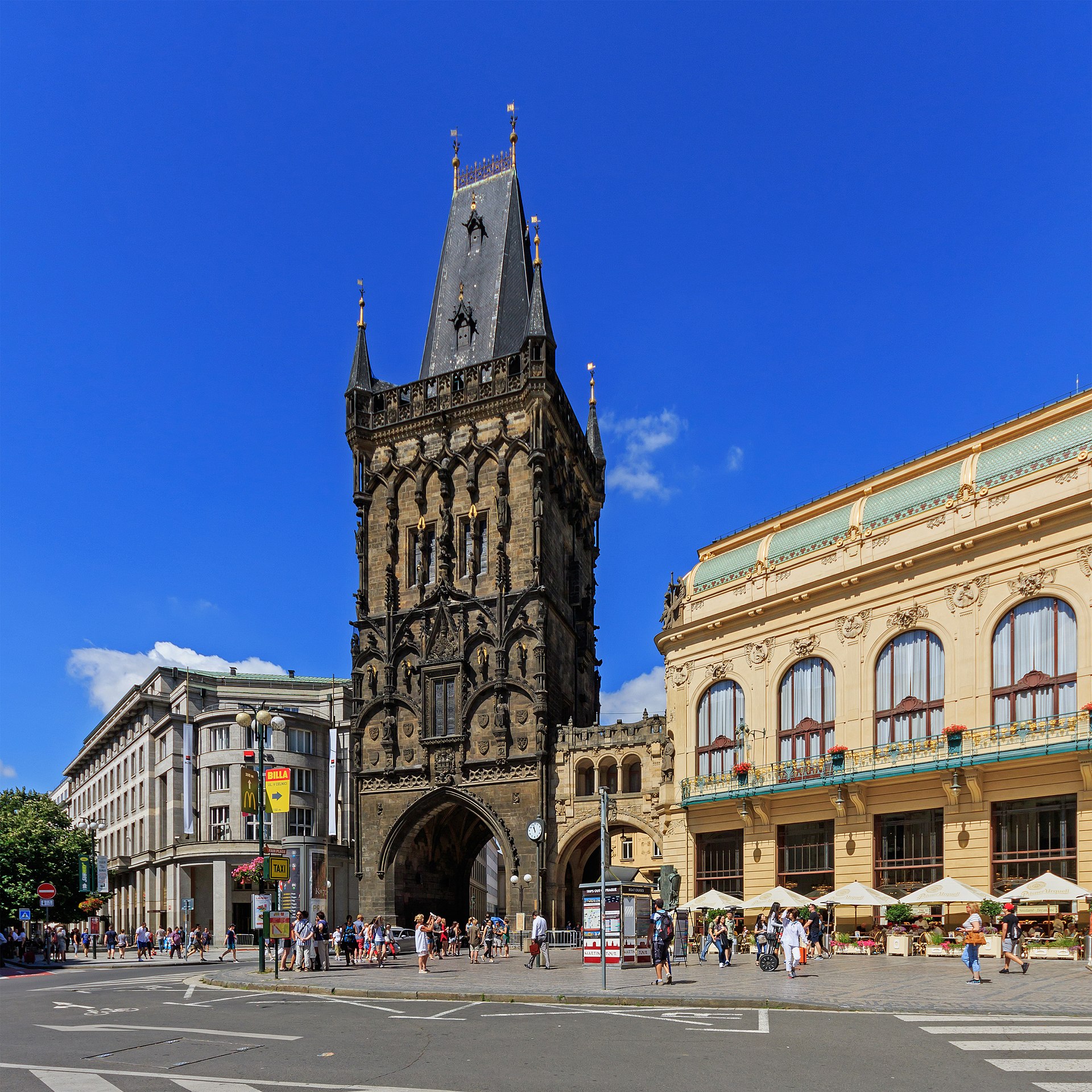
Powder Tower
nám. Republiky 5, 110 00 Prague 1
The name is misleading on two counts. First, despite being called the Powder Tower, gunpowder was never actually stored here during the tower's original use. Second, it looks medieval but its current appearance is mostly Victorian — the neo-Gothic makeover by architect Josef Mocker between 1875 and 1886 gave the tower its spiky, ornate facade. The original 1475 structure was considerably plainer. The tower was built as a ceremonial entrance to the Old Town, replacing one of the original 13 city gates dating to the 13th century. Its foundation stone was laid in 1475 by builder Vaclav, with elaborate sculptural decoration added by Matej Rejsek from 1478 onwards. The intention was never defensive — it was a monumental gateway designed to impress anyone entering Prague along the trade route from Kutna Hora, where the royal silver mines financed the kingdom. This was the starting point of the Royal Road — the coronation route that Bohemian kings walked from here through Old Town, across Charles Bridge, and up to Prague Castle. Every king who claimed the Bohemian crown passed through this gate, making it one of the most symbolically loaded doorways in Europe. Construction halted abruptly in 1488 when the royal residence moved back to Prague Castle, leaving the tower unfinished for over a century. It finally got a roof in the 1590s. During the Prussian siege of 1757, it suffered significant damage, and then Mocker rebuilt it in the 19th century. At 65 meters tall, its observation gallery offers excellent views over the Old Town and the Municipal House next door.
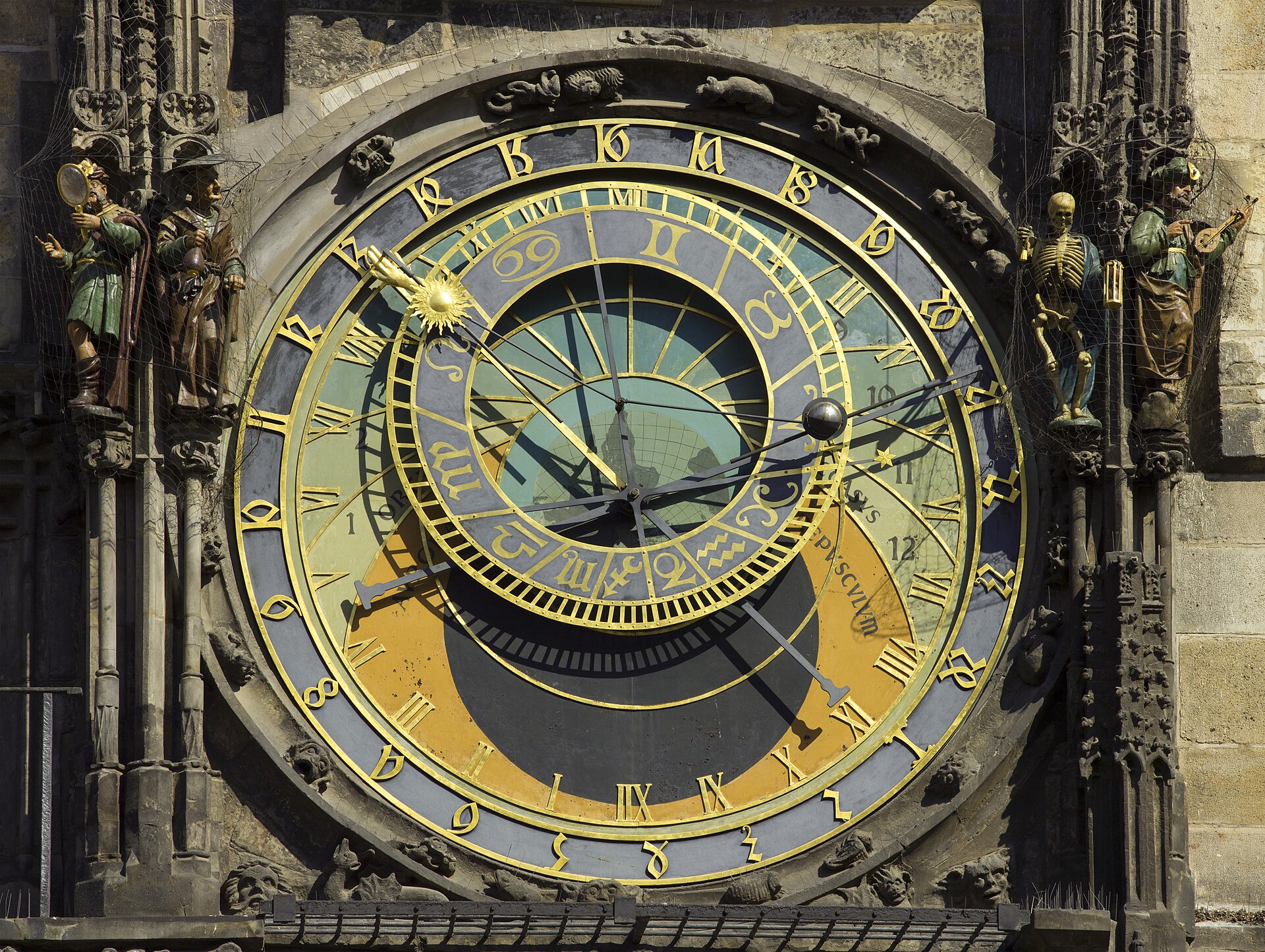
Prague Astronomical Clock
Staromestske nam. 1, 110 00 Prague 1
Every hour, a skeleton pulls a rope, twelve apostles parade past two tiny windows, a rooster crows, and hundreds of tourists crane their necks upward in unison. The Prague Astronomical Clock — the Orloj — has been performing this macabre little show since 1410, making it the oldest astronomical clock still in operation anywhere in the world. The clock was built by clockmaker Mikulás of Kadan and mathematician Jan Sindel, though legend tells a darker story. According to Prague folklore, the city councillors had the clockmaker blinded so he could never build anything to rival it. Driven mad, he supposedly reached into the mechanism and sabotaged it, cursing the clock and the city. The blinding story is almost certainly myth, but it's been repeated for six centuries because Prague loves a good curse. What most people miss while watching the apostles is the clock face itself, which is genuinely extraordinary. It tracks Old Czech Time, Central European Time, the position of the sun and moon, the zodiac, and the current phase of the moon — all on a single medieval dial. The outer ring even shows the months and their corresponding agricultural activities, painted by Josef Manes in 1865. The clock nearly died in May 1945, when German forces set fire to the Old Town Hall during the Prague Uprising. The wooden apostle figures and the calendar dial were badly damaged. The restoration took years, but the Orloj came back. Its most recent overhaul ran from January to September 2018, when the 1948 electric mechanism was swapped for an original 1860s mechanism — a deliberate step backward in time.
Prague Castle
Hradcany, 119 08 Prague 1
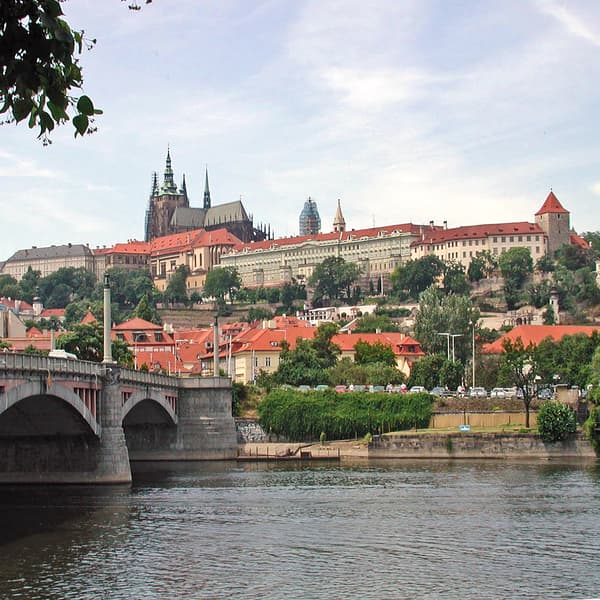
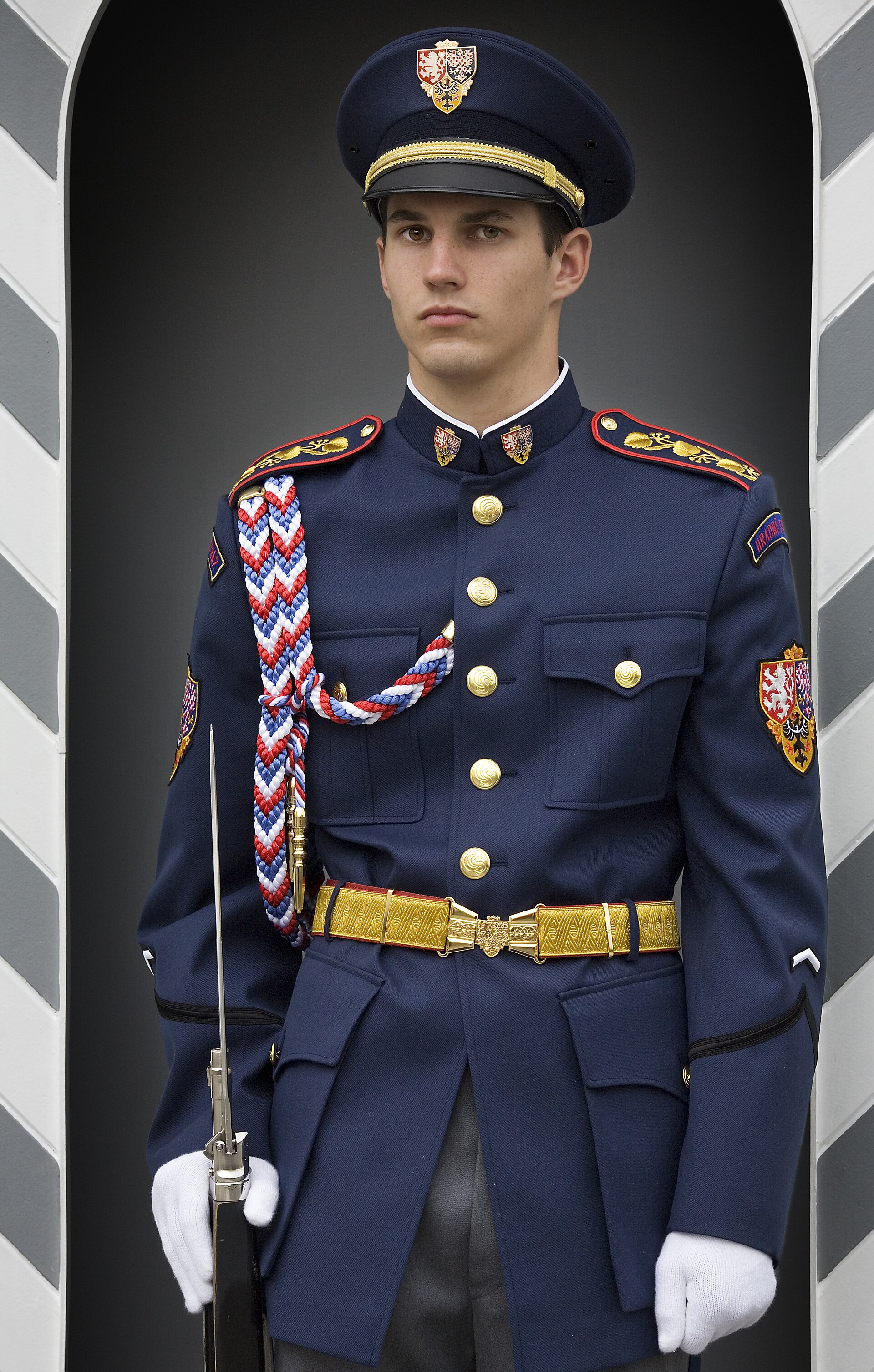
The Guinness Book of Records calls it the largest ancient castle in the world, and the numbers back that up: nearly 70,000 square meters, 570 meters long, and more than eleven centuries of continuous use as a seat of power. Czech princes, Bohemian kings, Holy Roman Emperors, Nazi Reichsprotektors, and modern presidents have all governed from this hilltop. The castle has changed hands, changed styles, and changed purpose more times than any building in Europe, but it has never stopped being the center of Czech authority. Prince Borivoj of the Premyslid dynasty founded the castle around 880 AD, and almost every century since has added something. The Romanesque Basilica of St. George dates to 920. The Gothic cathedral took 600 years to finish. The Renaissance gardens were planted by the Habsburgs. The Baroque additions came later. Walk through the complex and you're essentially walking through an architectural history textbook, one courtyard at a time. The castle's most dramatic chapter might be the Second Defenestration of Prague in 1618, when Protestant nobles threw two Catholic governors and their secretary out of the castle windows. They survived the 21-meter fall — Catholics claimed angels caught them; Protestants said they landed in a dung heap — but the act sparked the Thirty Years' War, which killed eight million people across Europe. Today the castle is the official residence of the Czech president, and the changing of the guard at noon draws crowds daily. But the real treasure is inside: the Crown Jewels of Bohemia, locked behind a door that requires seven keys held by seven different people to open.
Sedlec Ossuary (Bone Church)
Zámecká 127, 284 03 Kutná Hora
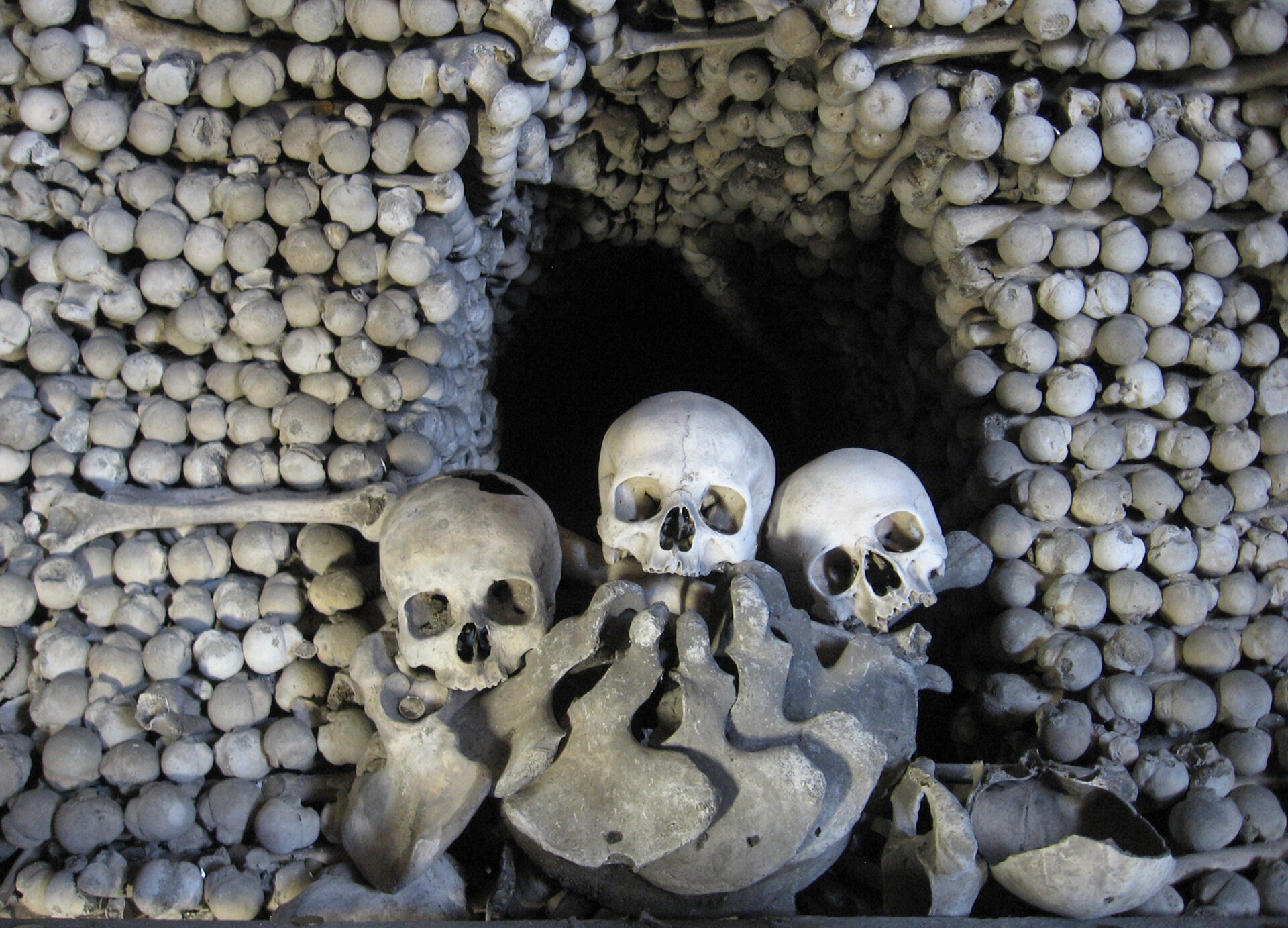
Somewhere between 40,000 and 70,000 dead people are decorating this chapel, and the effect is equal parts horrifying and beautiful. The Sedlec Ossuary — the "Bone Church" — sits beneath the Cemetery Church of All Saints in Kutna Hora, about an hour east of Prague. Every surface is covered in human remains arranged with a craftsmanship that borders on the devotional: garlands of skulls drape from the ceiling, a chandelier contains at least one of every bone in the human body, and the Schwarzenberg coat of arms is rendered entirely in skeletal parts, complete with a raven pecking at a skull. The bones started accumulating in 1278, when the Abbot of Sedlec returned from a pilgrimage to the Holy Land and sprinkled soil from Golgotha over the cemetery. Word spread that this was now sacred ground, and suddenly everyone in Central Europe wanted to be buried here. The Black Death in the 14th century and the Hussite Wars in the 15th century delivered tens of thousands more bodies. By the 1400s, the cemetery was overflowing, and a Gothic chapel was built to house the exhumed remains. For centuries, the bones just sat in piles. Then, in 1870, the Schwarzenberg family hired a woodcarver named Frantisek Rint to bring some order to the chaos. What Rint created was a masterpiece of macabre art — he bleached and arranged every bone with obsessive precision, signing his work with his name spelled out in bones near the entrance. It's a day trip from Prague, but Kutna Hora itself — a UNESCO World Heritage Site built on medieval silver mines — is worth the detour. The ossuary draws over 200,000 visitors a year, making it one of the most popular tourist attractions in the Czech Republic.
St. Vitus Cathedral
III. nadvori 48/2, 119 01 Prague 1
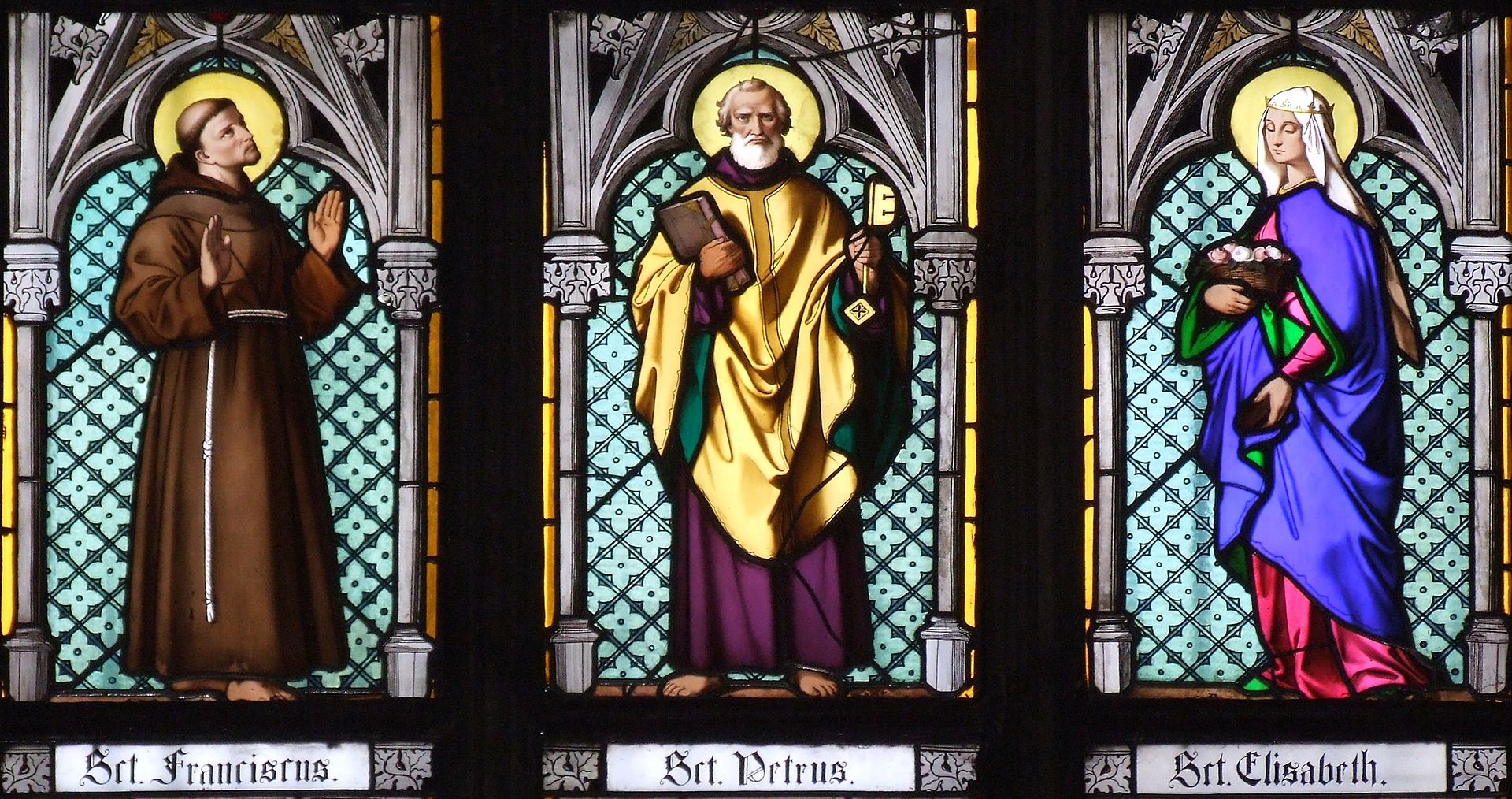
They started building this cathedral in 1344 and didn't finish until 1929 — nearly six hundred years of construction, which has to be some kind of European record for a building that nobody could agree was done. The first architect, Matthias of Arras, died in 1352 with only the foundations and lower walls completed. His successor, a 23-year-old prodigy named Petr Parlér, took over and gave the cathedral its soaring Gothic vaults before dying in 1399. Then the Hussite Wars erupted and construction ground to a halt for centuries. For most of its existence, the cathedral was essentially half-finished — a magnificent Gothic choir attached to a temporary wall where the nave should have been. Generation after generation of Czechs grew up seeing this glorious ruin and shrugging. It wasn't until the 1870s that the Union for the Completion of St. Vitus Cathedral finally rallied enough money and national pride to finish the job, completing the western facade in a neo-Gothic style that blends almost seamlessly with the 14th-century original. Inside, the cathedral is a treasury of Czech history. The St. Wenceslas Chapel, encrusted with over 1,300 semi-precious stones and medieval frescoes, guards the entrance to the Crown Chamber. Bohemian kings and Holy Roman Emperors are buried in the Royal Crypt beneath the floor. And the enormous stained-glass window by Alphonse Mucha — yes, the Art Nouveau poster artist — glows with a jewel-like intensity that stops even the most jaded tourist in their tracks. The cathedral dominates Prague's skyline from nearly every angle. It's the largest and most important church in the country, and those 600 years of effort show in every flying buttress and gargoyle.
Strahov Library
Strahovske nadvori 1/132, 118 00 Prague 1
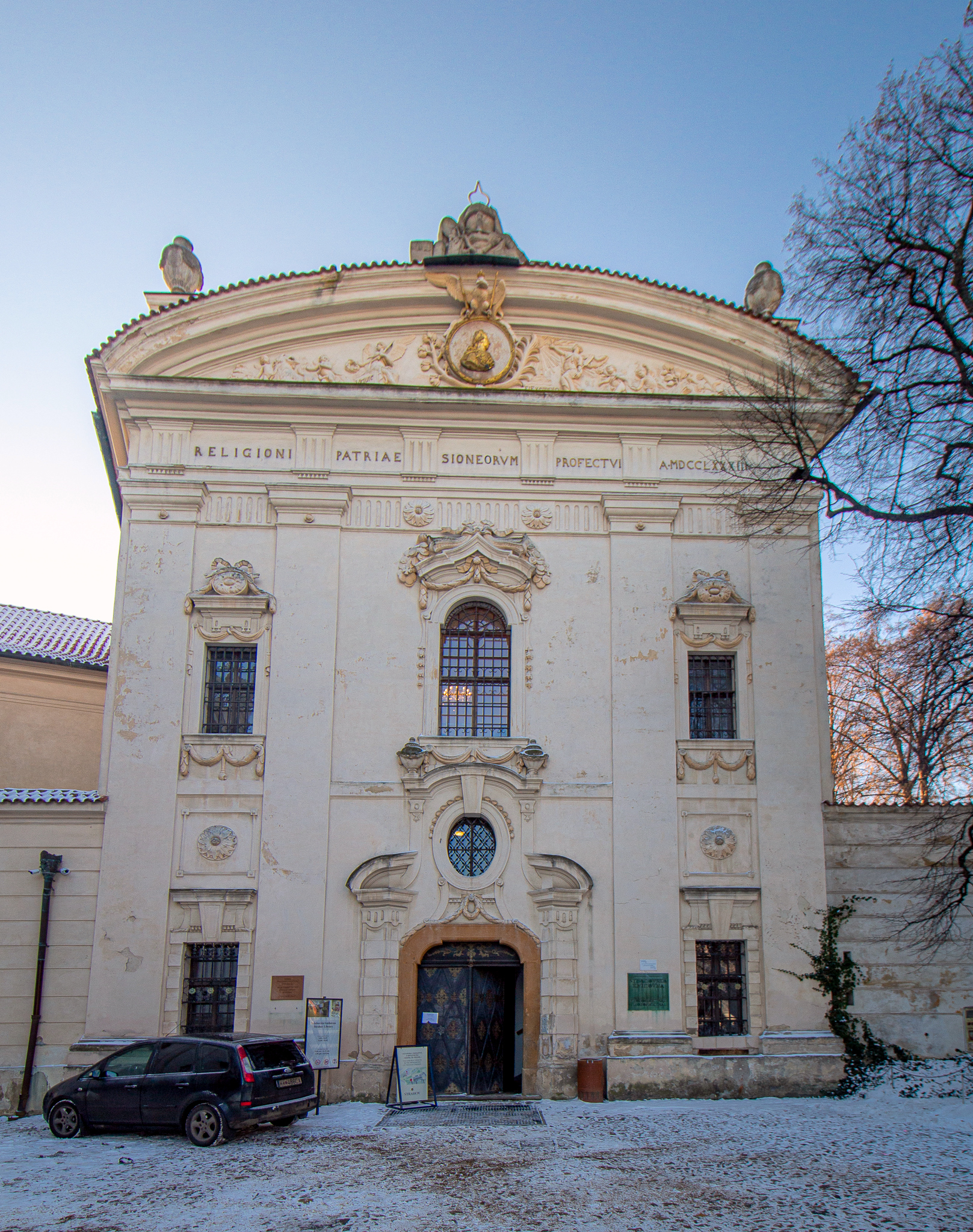
Two rooms. That's all it takes for Strahov to blow your mind. The Theological Hall and the Philosophical Hall of the Strahov Monastery Library are among the most beautiful rooms in the world, and they've been hiding up here on the hill above Prague Castle since the 17th and 18th centuries, quietly holding 200,000 volumes while tourists rush past on their way to the castle gates. The Theological Hall came first, built between 1671 and 1674 with its Baroque ceiling frescoes painted by Siard Nosecky, a Premonstratensian monk who lived in the monastery. Every panel illustrates humanity's relationship with books and learning, accompanied by Latin quotations from the Bible. The stucco work is extraordinary, the walnut bookcases are original, and the collection of globes scattered between the shelves includes several that are centuries old. The Philosophical Hall is even more staggering. Built between 1791 and 1797, it rises two stories high and is crowned by a ceiling fresco that took painter Anton Maulbertsch just six months to complete in 1794. The painting — "The Spiritual Development of Humanity" — traces the progress of science and philosophy from the ancient world to the Enlightenment across a vast, vertiginous surface. The walnut shelving was actually salvaged from a dissolved monastery in Moravia and rebuilt here piece by piece. The Premonstratensians have been here since 1143, making Strahov one of the oldest continuously operating monasteries in Europe. The monks still brew beer in the monastery brewery — the St. Norbert microbrewery — which means you can follow up one of Europe's greatest libraries with one of Prague's best pints.
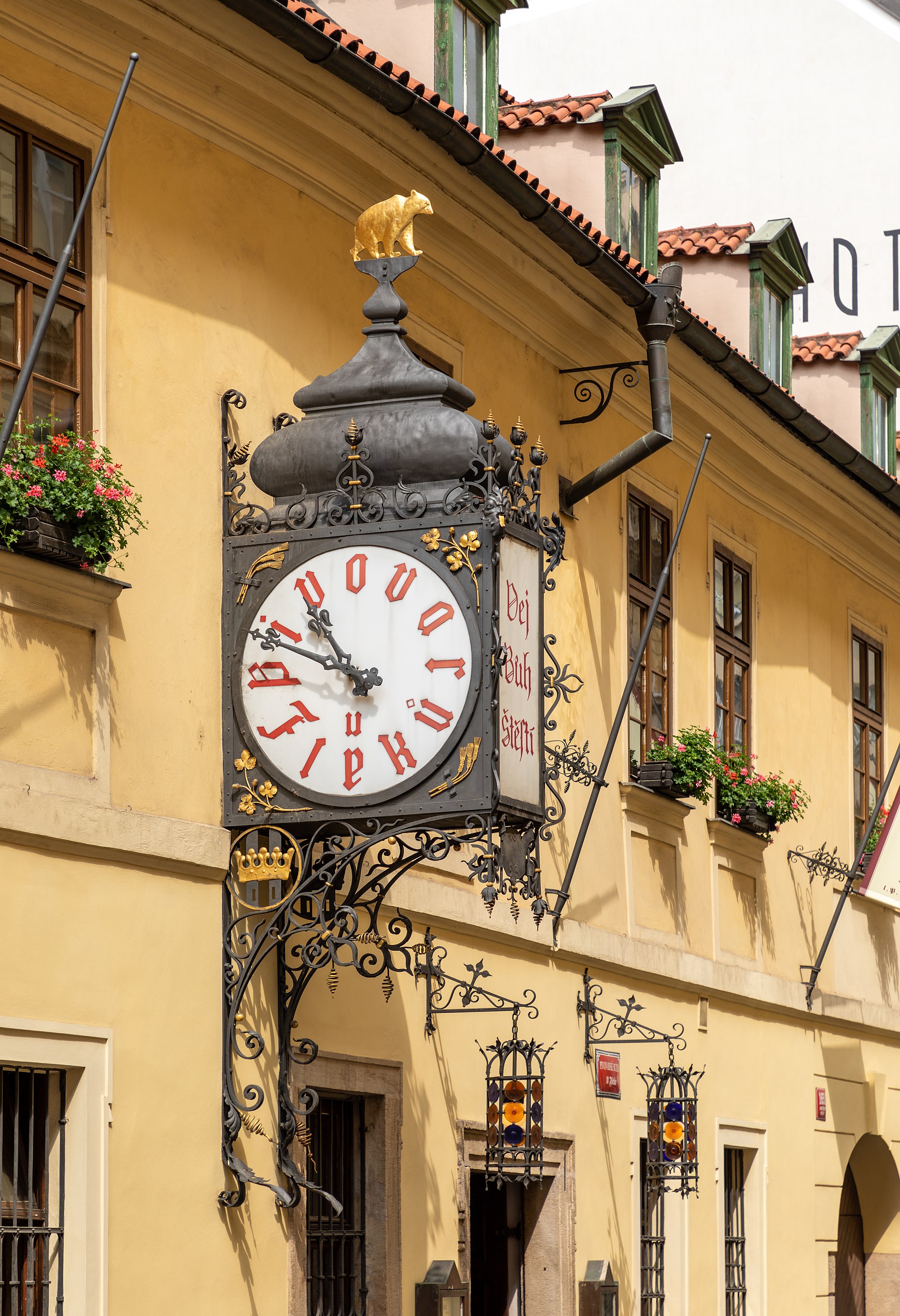
U Fleku Brewery
Kremencova 11, 110 00 Prague 1
Beer has been brewed on this exact spot since 1499, making U Fleku the only brewery in Central Europe where production has never stopped for more than five centuries. When Vit Skrmenec purchased the house in 1499 and started brewing, Columbus had only just reached the Americas and the printing press was barely fifty years old. The beer outlasted empires. U Fleku brews exactly one beer: a 13-degree dark lager, unfiltered, made according to a recipe that hasn't fundamentally changed in two hundred years. The brewing process takes six weeks using century-old equipment, and the beer is never exported, bottled, or sold anywhere else. The only way to taste it is to walk through the door and sit down. In a world of craft beer hype and rotating tap lists, there's something magnificently stubborn about a brewery that has been making the same beer in the same building since the late medieval period. The complex occupies what were originally one Gothic and two Renaissance houses, and it has grown into the Czech Republic's largest restaurant, seating 1,200 people across multiple halls, a courtyard beer garden, and a small cabaret theatre. The interiors are dark, wooden, and atmospheric — barrel-vaulted ceilings, stained glass, and the kind of patina that comes only from five centuries of beer fumes. Yes, it's touristy. The accordion player will find you. A waiter might try to put a shot of Becherovka on your table uninvited. But beneath the tourist veneer, this is the real thing — a genuine medieval brewery still doing what it was built to do. Order the dark lager, ignore the souvenir shop, and raise a glass to 500 years of continuity.
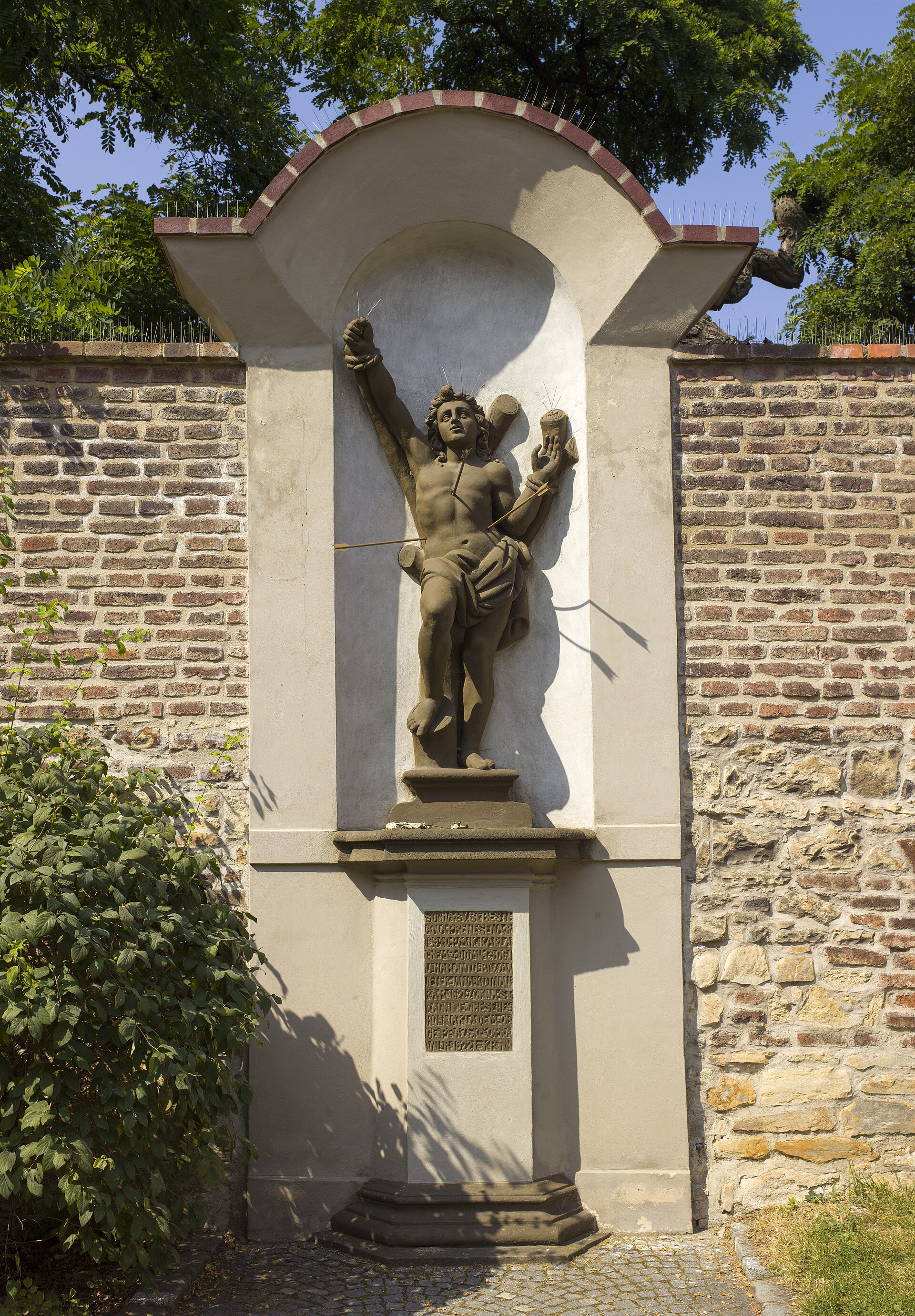
Vysehrad
V Pevnosti 159/5b, 128 00 Prague 2
Before Prague Castle existed, there was Vysehrad. Or so the legends say. Czech mythology places Princess Libuse on this rocky cliff above the Vltava, prophesying the founding of a great city: "I see a great city whose glory will touch the stars." The archaeological truth is less dramatic — the fortress dates to the mid-10th century — but the myth has been retold so many times that Vysehrad's identity is inseparable from it. The real history is dramatic enough. In the 11th century, King Vratislaus II moved the royal seat here from Prague Castle, making Vysehrad the most powerful fortress in Bohemia. Czech kings began their coronation processions at its gates, walking the Royal Road through Old Town to Prague Castle. Then the Hussite Wars of the 15th century reduced the fortress to rubble, and it never fully recovered its former glory. The Habsburgs rebuilt it as a Baroque military citadel in the 17th century — the star-shaped brick ramparts you see today are their work. What draws most visitors now is the Slavin Cemetery, established in 1869 during the Czech National Revival. Antonin Dvorak, Bedrich Smetana, Alphonse Mucha, Karel Capek — nearly 600 of the most important figures in Czech culture are buried here, making it a kind of open-air pantheon of national greatness. The graves are beautifully maintained and surprisingly moving, even if you don't recognize every name. But the best part of Vysehrad is the view. Stand on the ramparts at sunset and look north: the Vltava bends below you, the spires of the Old Town rise in the middle distance, and Prague Castle glows on the far hilltop. This is the best panorama in the city, and almost nobody knows about it.
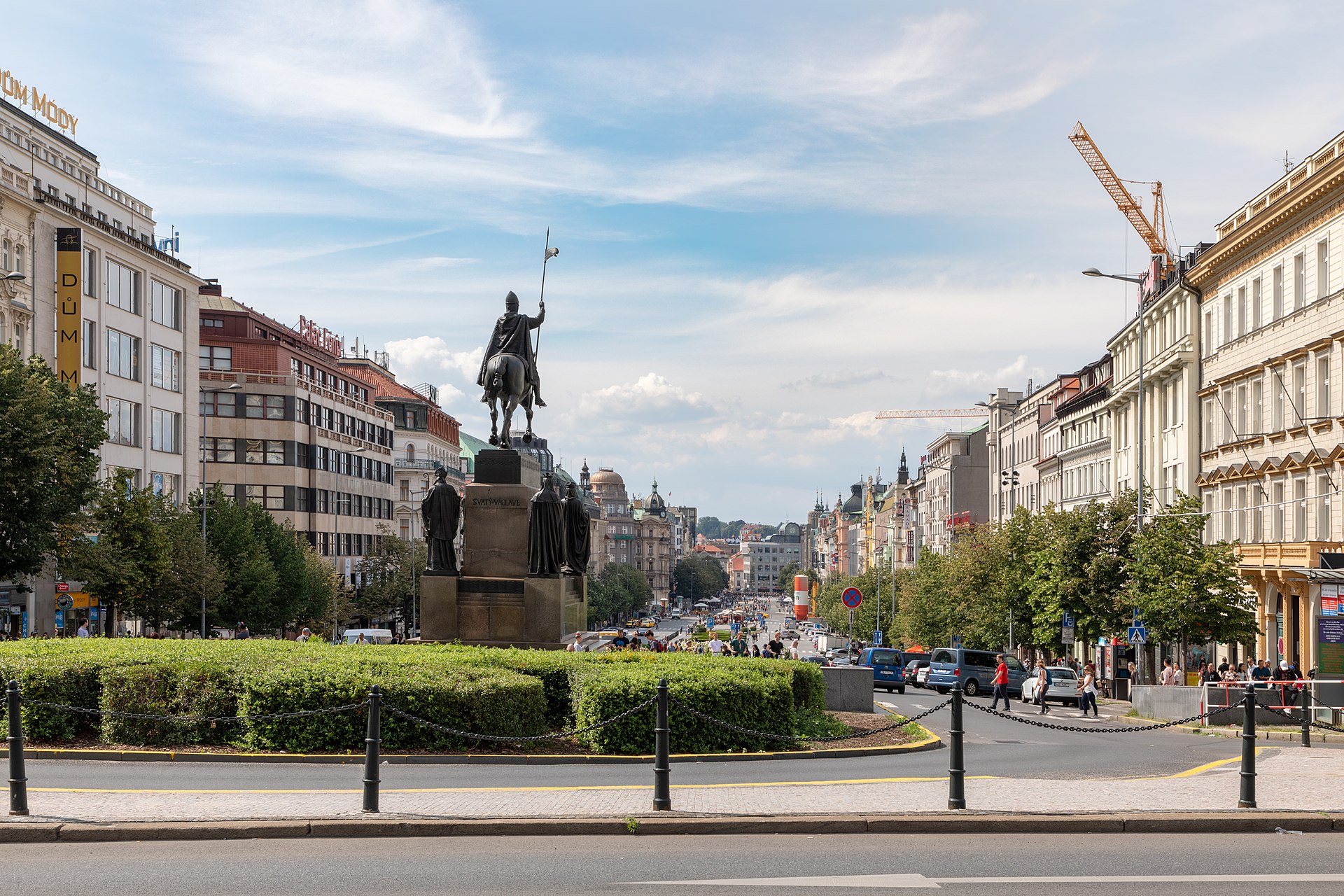
Wenceslas Square
Vaclavske nam., 110 00 Prague 1
It looks like a boulevard, not a square — 750 meters long and 60 meters wide, more Champs-Elysees than piazza. For centuries it was called the Horse Market, because that's literally what happened here: people bought and sold horses. In 1848, during the revolutionary fever sweeping Europe, the market was renamed after the patron saint of Bohemia, and Wenceslas Square became the stage for Czech history's biggest moments. This is where Czechoslovak independence was proclaimed on October 28, 1918. This is where Soviet tanks rolled in to crush the Prague Spring on August 21, 1968. And this is where, in January 1969, a 20-year-old student named Jan Palach set himself on fire to protest the Soviet occupation. His self-immolation shocked the world and made him a martyr — a small memorial cross marks the spot near the National Museum where he fell. Twenty years later, in November 1989, half a million people packed Wenceslas Square during the Velvet Revolution. Vaclav Havel stood on a balcony overlooking the crowd, jangling his keys in the air — a gesture that became the symbol of Czechoslovakia's peaceful overthrow of communism. Within weeks, Havel went from dissident playwright to president. The protesters were giving flowers to riot police and playing guitars. They called it the Velvet Revolution because it was that smooth. Today the square is lined with hotels, shops, and the imposing National Museum at its southeastern end. It's more commercial than historical on the surface, but the ghosts of 1918, 1968, and 1989 are everywhere if you know where to look.
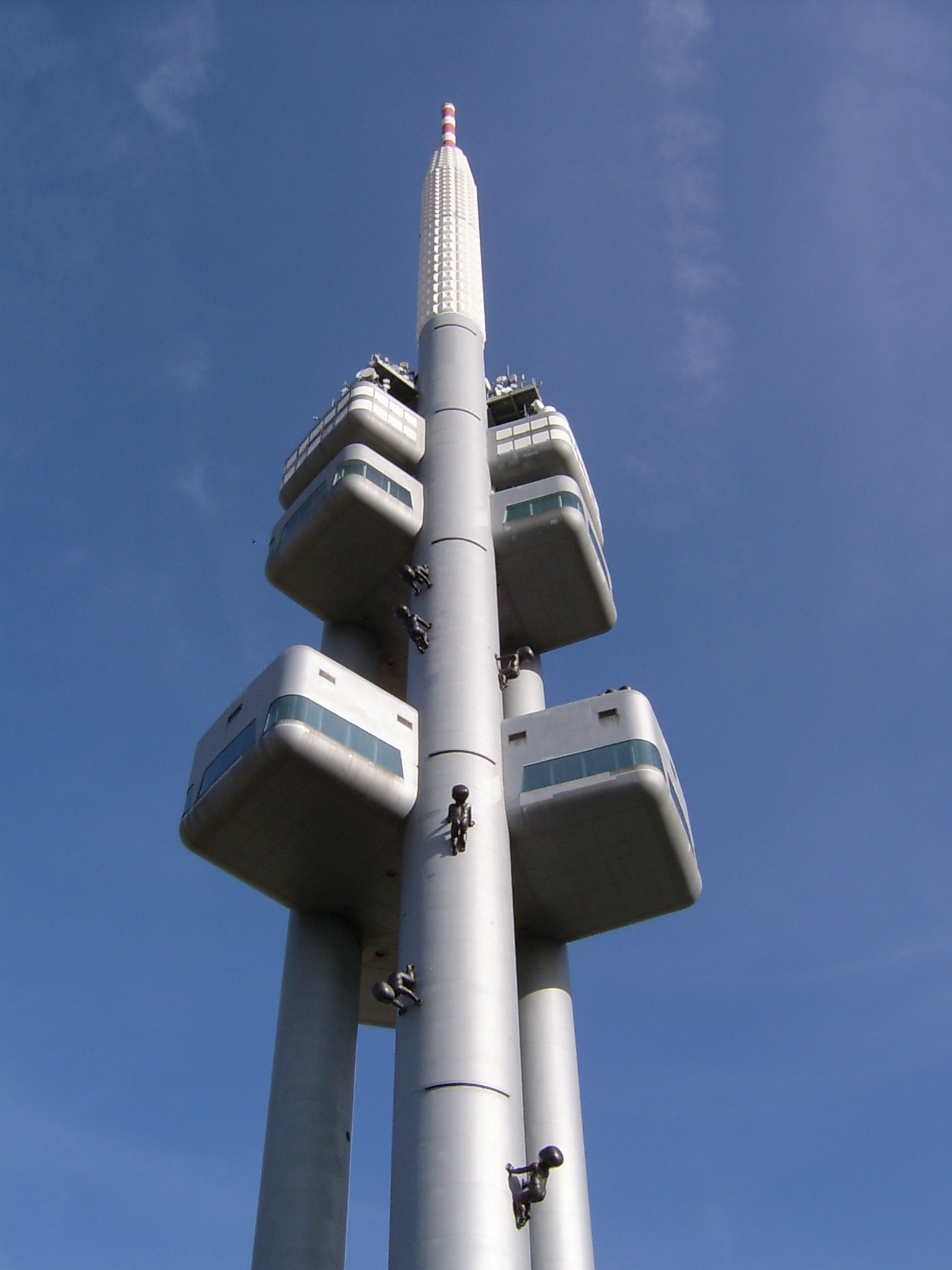
Zizkov Television Tower
Mahlerovy sady 1, 130 00 Prague 3
Praguers have been arguing about this tower since it was built in the 1980s, and three decades later, they still haven't reached a consensus. The Zizkov Television Tower is 216 meters of Brutalist reinforced concrete that shoots up from a residential neighborhood like a rocket that forgot to launch. When it was completed in 1992, it was instantly voted one of the ugliest buildings in the world by multiple publications. Locals were furious. Some people are still furious. The tower was designed by architect Vaclav Aulicky and engineer Jiri Kozak, and it was built between 1985 and 1992 — straddling the fall of communism, which means construction started under one political system and finished under another. A persistent urban legend claims the Soviets used the tower for signal jamming against Radio Free Europe, though this has never been officially confirmed. Then David Cerny got involved. In 2000, the provocative Czech sculptor attached ten giant fiberglass babies to the tower's exterior as a temporary art installation for Prague's European Capital of Culture celebrations. The babies are 3.5 meters long, faceless — their features replaced by barcodes — and they appear to be crawling up and down the tower like enormous insects. The public loved them so much they became permanent in 2001, and suddenly the ugliest building in Prague became one of its most photographed. The observation deck at 93 meters offers a 360-degree view of Prague that's arguably better than the one from Prague Castle, since from up here you can actually see Prague Castle. There's also a one-room luxury hotel suite at 70 meters, if you want to sleep inside Prague's most controversial building.