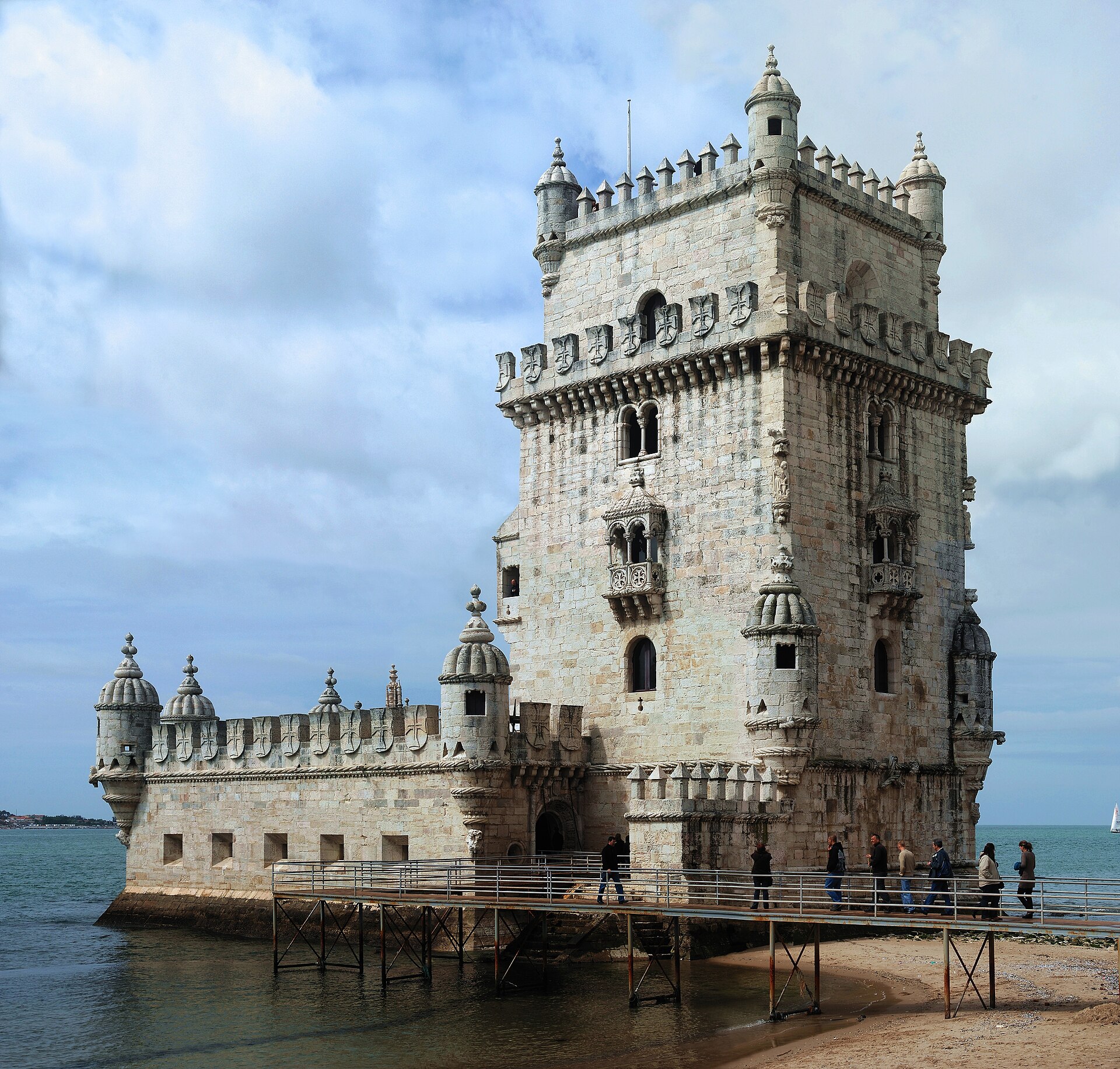
This stubby little fortress sitting in the Tagus looks like it was designed by someone who couldn't decide between a castle and a wedding cake. Built between 1514 and 1520, the Torre de Belém was originally positioned in the middle of the river — not on the shoreline where you see it today. The devastating 1755 earthquake shifted the riverbed so dramatically that what was once a mid-channel guardpost ended up practically on dry land. It's one of the great visual tricks of Lisbon: a building that looks like it hasn't moved in five centuries, but the entire world rearranged itself around it.
The tower was the last thing Portuguese sailors saw when they departed for the unknown, and King Manuel I wanted it to be suitably dramatic. The architect, Francisco de Arruda, had worked on fortresses in Morocco, and you can see North African influence everywhere — from the Moorish-style watchtowers to the carved stone "rope" that wraps around the building like nautical rigging frozen in limestone. Look closely at the western façade and you'll spot one of the earliest European stone carvings of a rhinoceros, inspired by a real rhino that arrived in Lisbon in 1515 as a diplomatic gift from India. The poor animal later drowned in a shipwreck en route to the Pope.
Below the pretty Manueline balconies lies a very different story. The lower floors served as a political prison for centuries, with dungeons that would flood at high tide — prisoners literally watched the water rise around them. The casemated gun battery was state-of-the-art for its era, designed so cannon smoke would vent through openings rather than suffocating the gunners. Today UNESCO calls it a masterpiece, but for a long time locals just called it the old customs house. It took the Romantic movement of the 1800s to remind Portugal that this crumbling river fort might actually be worth saving.
Verified Facts
The Torre de Belém was originally built in the middle of the Tagus River between 1514-1520 and ended up on the shoreline after the 1755 earthquake shifted the riverbed.
The western façade features one of the earliest European stone carvings of a rhinoceros, inspired by a real Indian rhinoceros that arrived in Lisbon in 1515.
The tower's lower floors were used as political prison dungeons that would flood at high tide.
Architect Francisco de Arruda incorporated Moorish design elements from his experience building fortresses in Morocco.
Get walking directions
Avenida de Brasília, Belém, Lisboa, 1400-072, Portugal