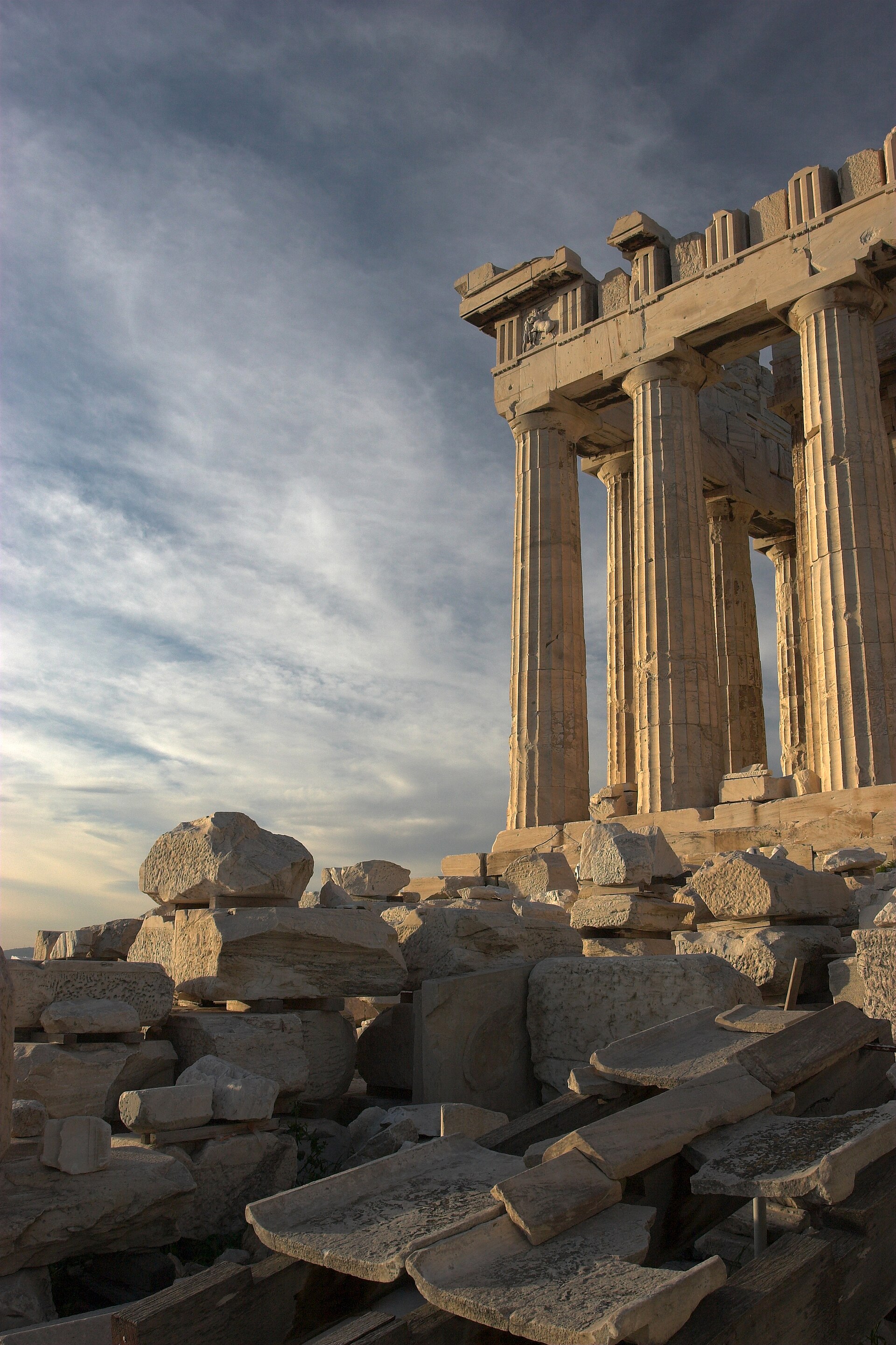
The Parthenon was never really a temple in the way most people think. It had no altar for sacrifices, no congregation space, and no regular religious ceremonies. Its primary purpose was as a treasury and a showpiece — a giant marble flex by Athens to remind every Greek city-state who was running the show. The 12-meter-tall gold-and-ivory statue of Athena inside, crafted by Phidias, used over a thousand kilograms of gold. When Athens needed emergency funds, they could literally peel the gold off their goddess.
Built between 447 and 432 BC, it took just nine years to construct — astonishingly fast for a building made entirely of Pentelic marble quarried 16 kilometers away on Mount Pentelicus. The architects Ictinus and Callicrates achieved something that wouldn't be replicated for two millennia: they built a structure with virtually no straight lines. The stylobate curves upward, the columns lean inward, and each column diameter varies. These "refinements" were so subtle and expensive that later civilizations assumed they were accidental until modern surveyors proved they were deliberate.
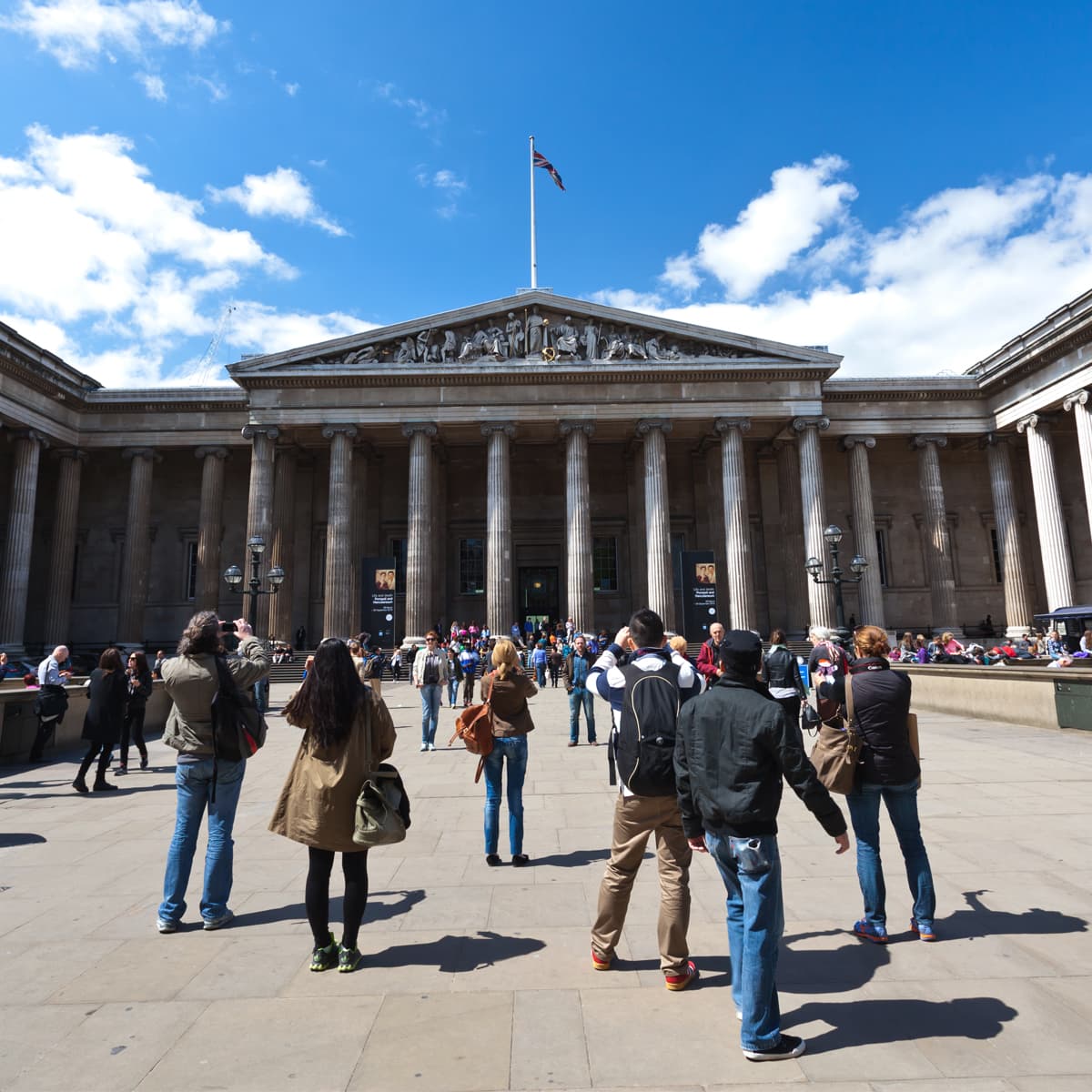
The sculpted frieze that once wrapped around the building depicted 378 human and 245 animal figures — the largest sculptural program in the Greek world. About half the surviving sculptures are in the British Museum (the "Elgin Marbles"), and Greece has been asking for them back since 1832. The debate over their return remains one of the longest-running cultural disputes in history.
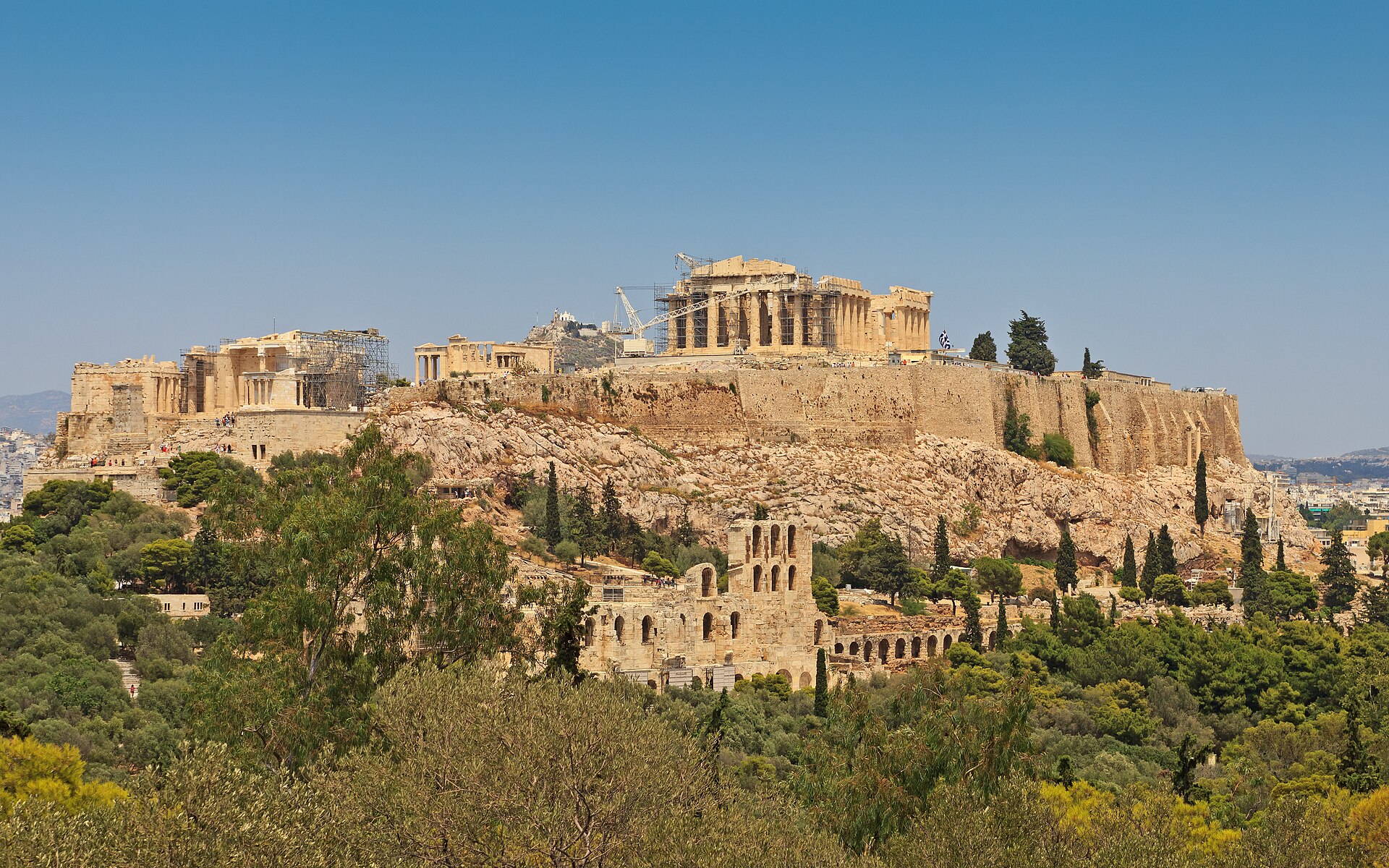
After 2,500 years as temple, church, mosque, and ruin, the Parthenon is currently undergoing its most ambitious restoration ever — a project that's been running since 1975 and uses titanium dowels instead of the iron ones that rusted and cracked the original marble.
Verified Facts
The Parthenon was built between 447 and 432 BC by architects Ictinus and Callicrates under the supervision of sculptor Phidias
The chryselephantine statue of Athena Parthenos by Phidias stood approximately 12 meters tall and was covered in over 1,000 kg of gold
The building contains virtually no straight lines — the floor curves upward, columns lean inward, and column diameters vary to correct optical distortions
Lord Elgin removed a large portion of the surviving sculptures between 1801 and 1812, now displayed in the British Museum as the Elgin Marbles
Get walking directions
Acropolis, Athens 105 58