This square has seen more political violence per square meter than almost anywhere in Europe. In 1478, conspirators from the Pazzi family were hanged from the windows of the Palazzo Vecchio after their failed attempt to assassinate Lorenzo de' Medici — some corpses were dragged naked through the streets and thrown into the Arno. In 1498, the fire-and-brimstone preacher Savonarola, who'd briefly turned Florence into a theocracy and burned paintings and books in his "Bonfires of the Vanities," was himself hanged and burned on a pyre right here. A bronze plaque in the pavement marks the spot.
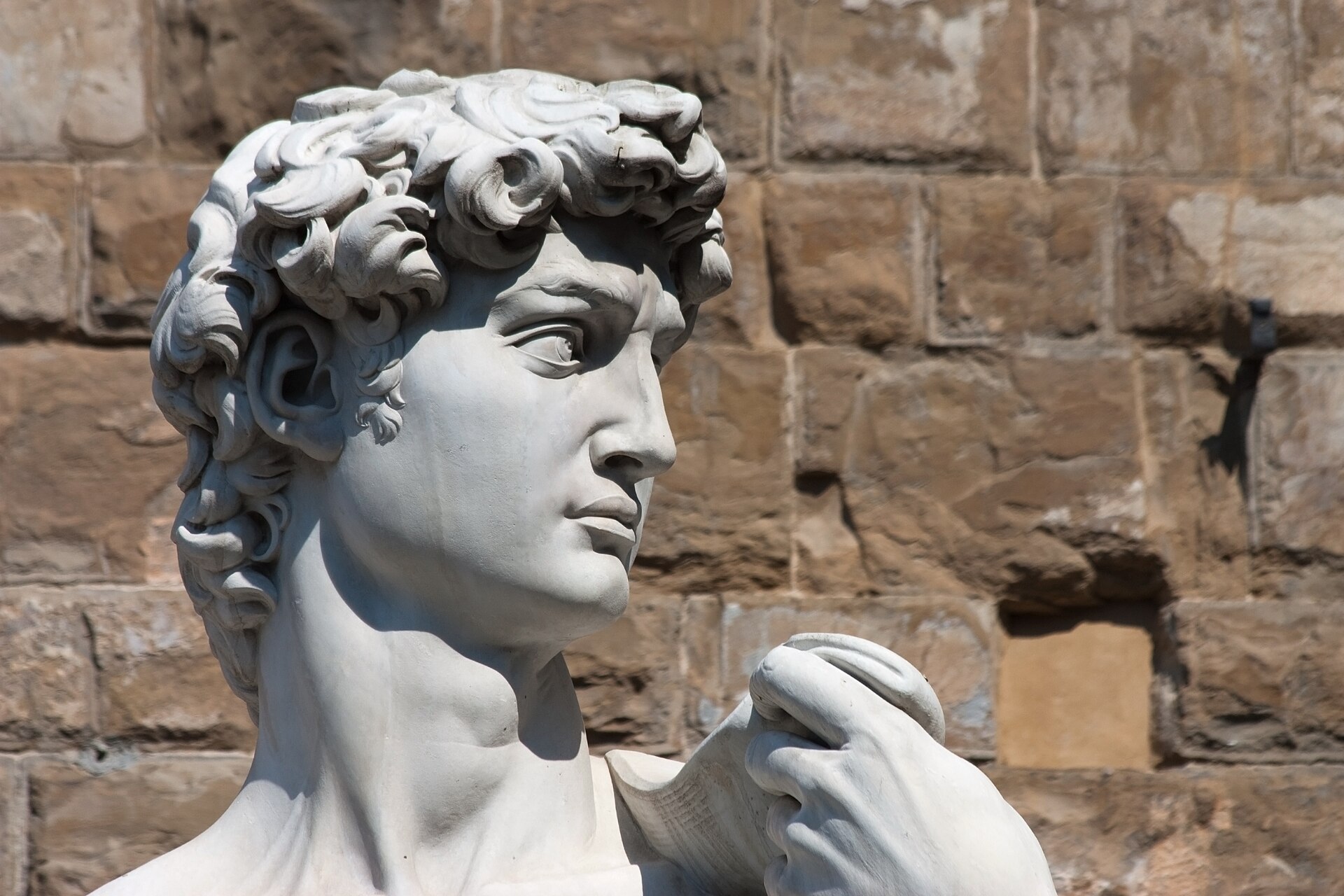
But the piazza is also an open-air sculpture gallery of extraordinary quality. The Loggia dei Lanzi, a graceful arched structure on the south side, shelters Cellini's Perseus holding Medusa's severed head and Giambologna's spiraling Rape of the Sabine Women — both masterpieces you'd need a museum ticket for anywhere else. A copy of Michelangelo's David stands where the original guarded the palazzo entrance from 1504 to 1873. Ammanati's massive Neptune Fountain anchors the square, though Michelangelo supposedly said it was a waste of good marble.
The entire piazza sits atop the ruins of a Roman theater from the first century AD, which you can visit in the underground archaeological area beneath the Palazzo Vecchio. Layers of history compressed into one space — Roman foundations holding up medieval towers holding up Renaissance art.
This was Florence's living room, where citizens gathered for celebrations and executions alike, and where political power was publicly performed. Stand in the center and you can feel six centuries of ambition, betrayal, and genius radiating from the stones.
Verified Facts
In 1478, Pazzi conspirators were hanged from the windows of Palazzo Vecchio after their failed assassination of Lorenzo de' Medici
Girolamo Savonarola was hanged and burned at the stake here on May 23, 1498
The piazza sits atop the ruins of a Roman theater from the first century AD, visible in the underground archaeological area
The original Michelangelo David stood here from 1504 until 1873 when it was moved to the Accademia
Get walking directions
Piazza della Signoria, 50122 Firenze