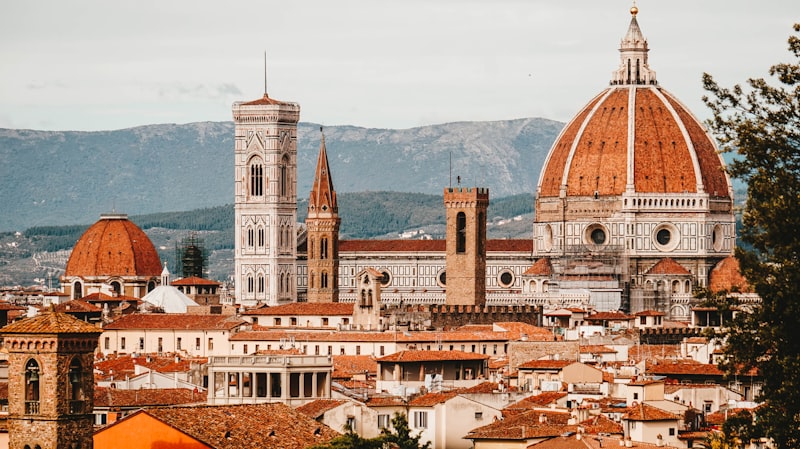
Walking Tours in Florence
Florence — A Renaissance Walk
A 14-stop walking tour through the heart of Italy. Visit Florence: A Renaissance Walk, Bell Tower, Brunelleschi’s Dome, and Baptistery, Ghiberti’s Bronze Doors — with narrated stories at every stop.
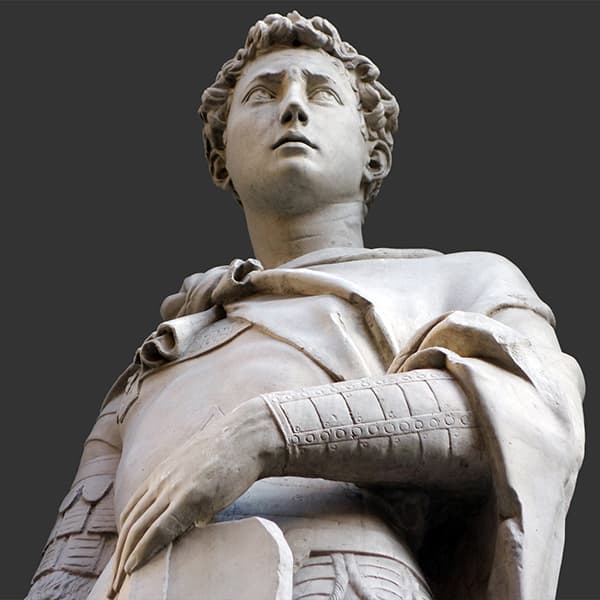
Florence — Bargello Museum
A guided tour of Florence — Bargello Museum in Italy with 13 stops. Highlights include The Bargello Museum, Bacchus: Michelangelo, and Pitti Tondo: Michelangelo.
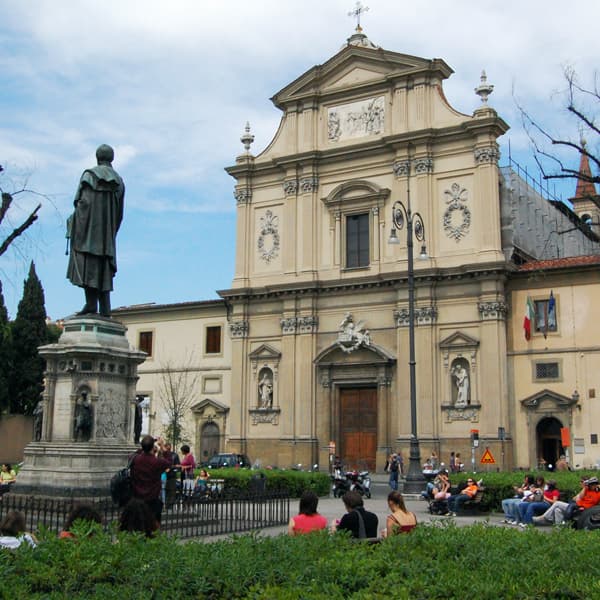
Florence — Museum of San Marco
A guided tour of Florence — Museum of San Marco in Italy with 19 stops. Highlights include The Museum of San Marco, Deposition from the Cross, and Triptych of St. Peter Martyr.
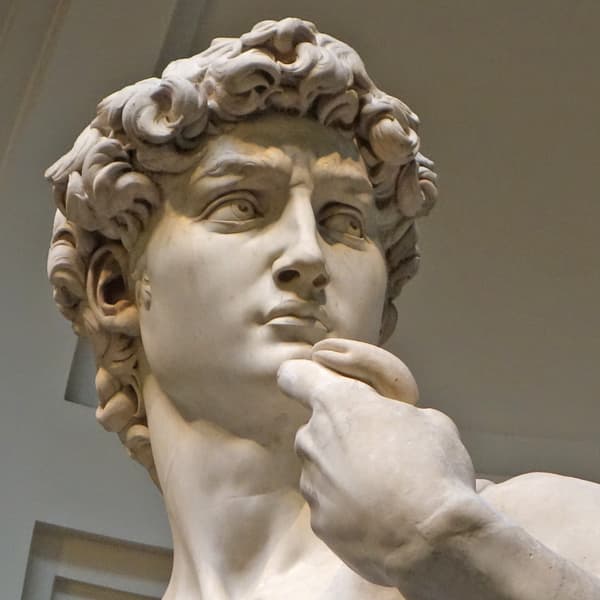
Florence — The Accademia: Michelangelo's David
A 7-stop walking tour through the heart of Italy. Visit The Accademia, Bust of Michelangelo, The Prisoners, and Lesser Sights near David — with narrated stories at every stop.
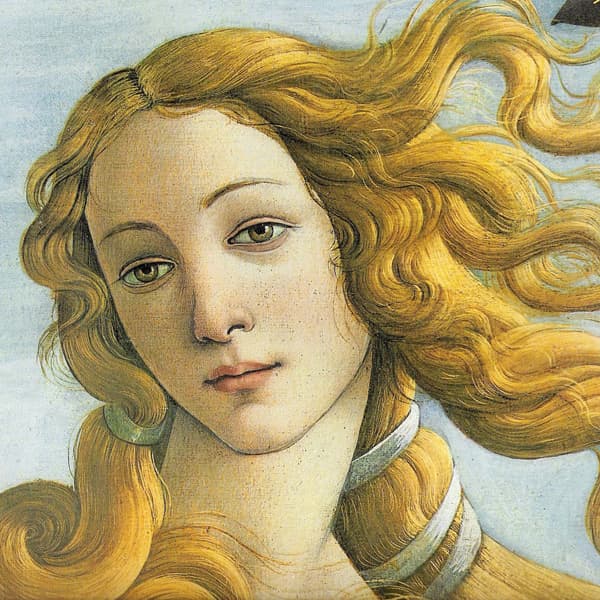
Florence — Uffizi Gallery Tour
A 20-stop walking tour through the heart of Italy. Visit The Uffizi Gallery, Giotto: Madonna and Child, Simone Martini: Annunciation, and Gentile da Fabriano: Adoration of Magi — with narrated stories at every stop.
Florence: Duomo to Ponte Vecchio — The Renaissance Mile
The essential Florence walk — lampredotto at the market, how Brunelleschi built the dome without scaffolding, the square where Savonarola burned, and why butchers were kicked off the bridge.
Florence: Oltrarno — The Artisan Side
Cross the bridge to the real Florence — plague-era wine windows, an arsenic murder in a palazzo, teenage Michelangelo's crucifix, and Gregorian chant at sunset on the hill.
Florence: The Renaissance Circuit
Walk through the cradle of the Renaissance — from Brunelleschi's dome to the Uffizi, across the Ponte Vecchio, and into the artisan Oltrarno.
30 Landmarks in Florence
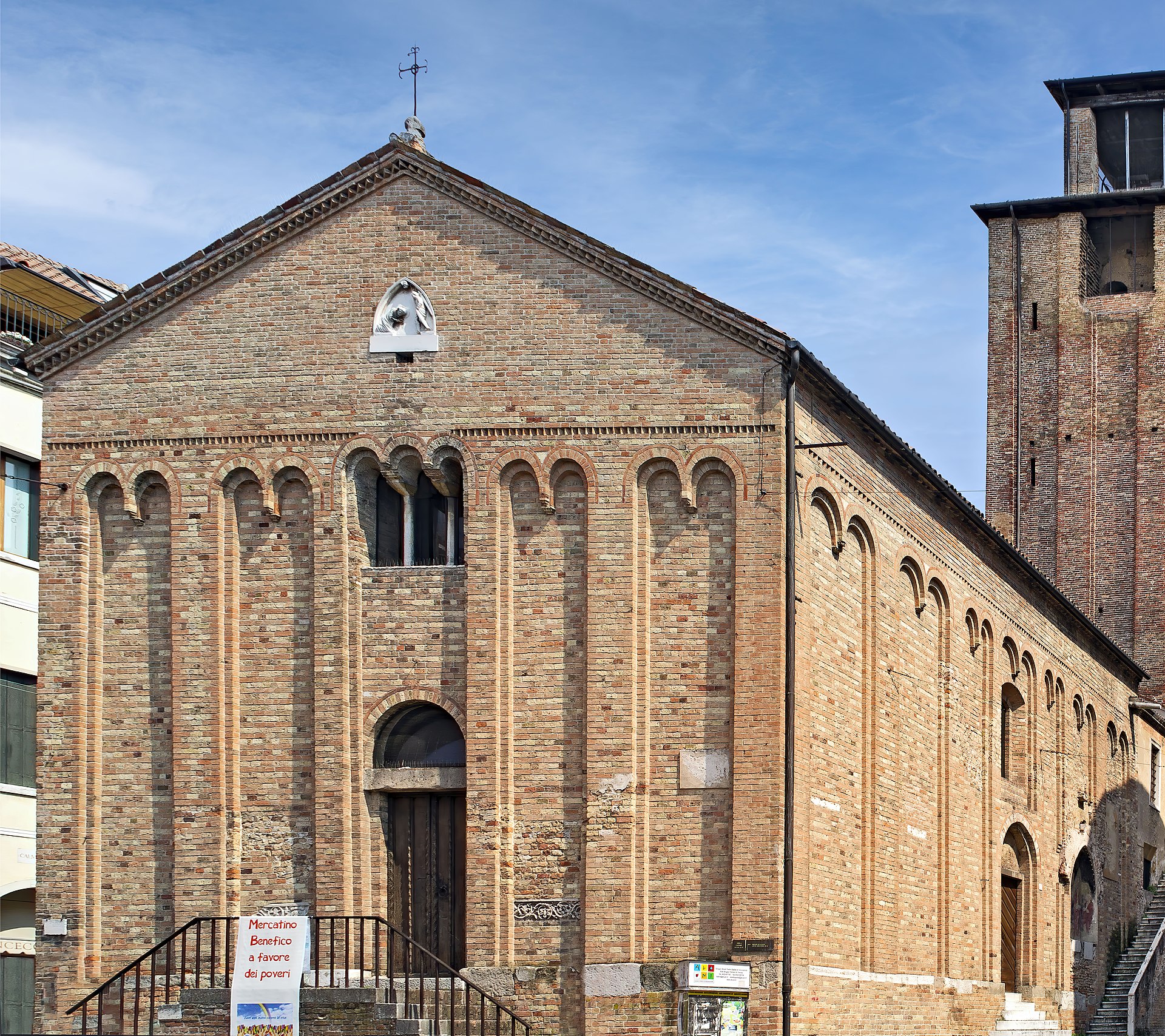
Baptistery of San Giovanni
Piazza di San Giovanni, Centro Storico, Florence, 50123, Italy
Dante was baptized here. So was every other Florentine born between the eleventh century and the nineteenth. For nearly a thousand years, this octagonal building was the sole baptismal church of the city — if you were Florentine, your life began at its font. The structure dates to at least the fifth century, possibly earlier, and medieval Florentines genuinely believed it had been a Roman temple to Mars. The real stars are the doors. Lorenzo Ghiberti spent 27 years on the east doors — from 1425 to 1452 — creating ten gilded bronze panels depicting Old Testament scenes. He used 34,000 pounds of bronze and the project cost 22,000 florins. When Michelangelo saw them, he reportedly declared them worthy of being the "Gates of Paradise," and the name stuck. The 17-foot-tall doors weigh four and a half tons. What you see on the building now are replicas — the originals were moved to the Museo dell'Opera del Duomo for preservation. The north doors are also by Ghiberti, commissioned after he won a famous competition in 1401 against Brunelleschi. That competition is often cited as the starting gun of the Renaissance — two young artists battling over who could better depict the sacrifice of Isaac, and the loser going off to study Roman architecture and eventually inventing the dome across the square. Step inside and look up. The ceiling is covered in Byzantine-style mosaics from the thirteenth century depicting the Last Judgment, with a terrifying 8-meter-tall Christ in the center. Dante saw these mosaics as a child, and scholars believe they influenced his vision of Hell in the Divine Comedy.
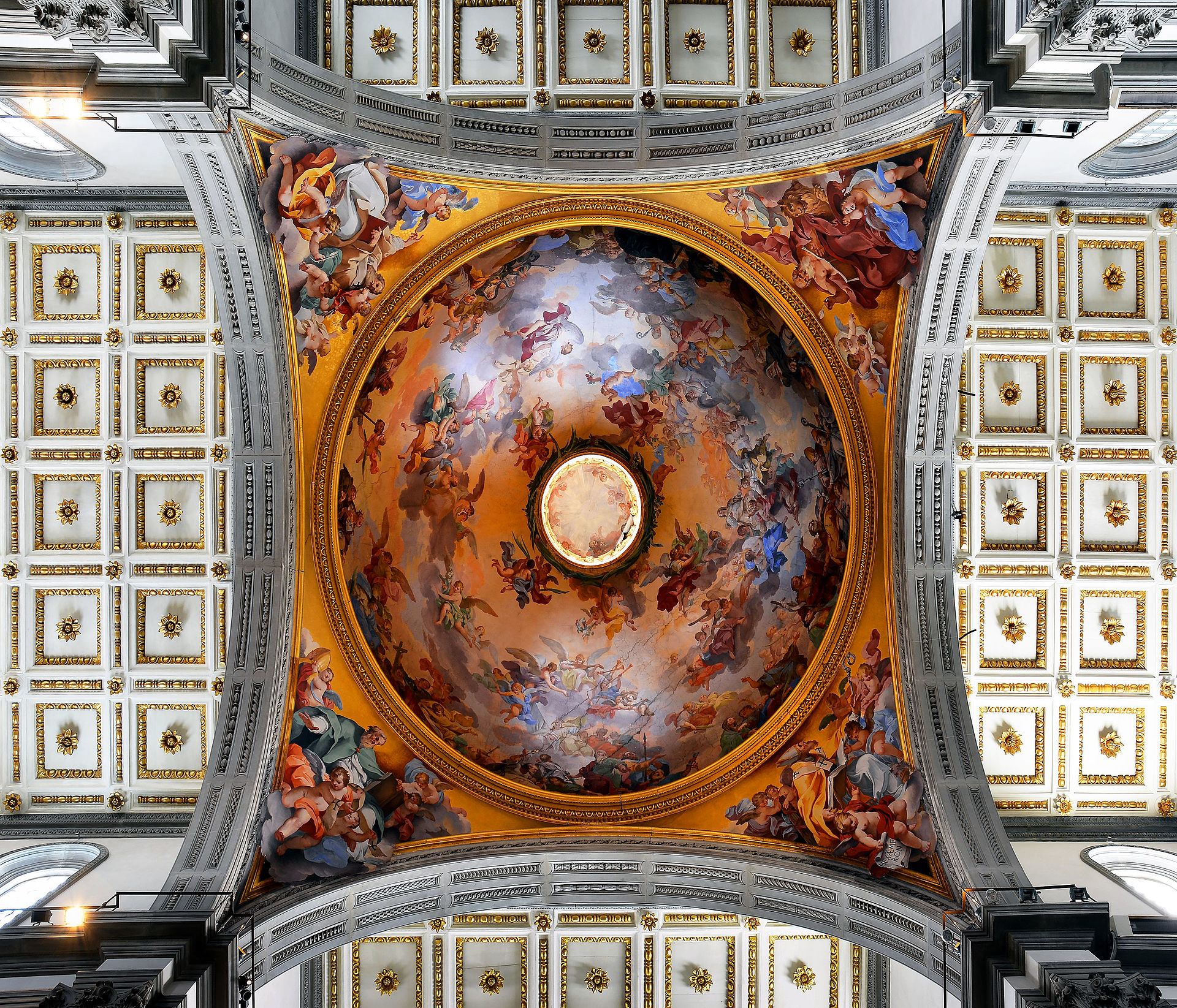
Basilica of San Lorenzo
9 Piazza di San Lorenzo, Centro Storico, Florence, 50123, Italy
The Medici family's parish church has an unfinished brick facade, and that's one of the most fascinating things about it. Michelangelo designed a grand marble front in the 1510s, but it was never built — the rough, exposed brick that greets you today has been "temporary" for five hundred years. Pope Leo X (himself a Medici) commissioned the design, and Michelangelo even went to the Carrara quarries to select the marble, but the project collapsed amid cost overruns and political upheaval. Inside is a completely different story. Brunelleschi redesigned the church between 1421 and 1442 in his signature style — grey pietra serena stone against white plaster, perfect proportions, classical columns — creating one of the purest expressions of Renaissance architecture in existence. The Medici paid for everything, and they made sure everyone knew it: the family pew, the family tombs, and eventually the entire Medici Chapel complex grew from this building like a marble tumor of dynastic ambition. The Old Sacristy, also by Brunelleschi, contains a small astronomical dome that accurately depicts the night sky over Florence on July 4, 1442 — the date is debated, but it's one of the oldest accurate representations of the heavens in art. Donatello contributed the bronze pulpits in the nave, his last works, so expressive and raw that some panels were left unfinished at his death. The Laurentian Library above, designed by Michelangelo with its revolutionary staircase, is a masterwork of Mannerist architecture. San Lorenzo is where the Medici story begins and ends — their first patronage of Brunelleschi, their final tombs in the chapels behind. No single building tells their story more completely.
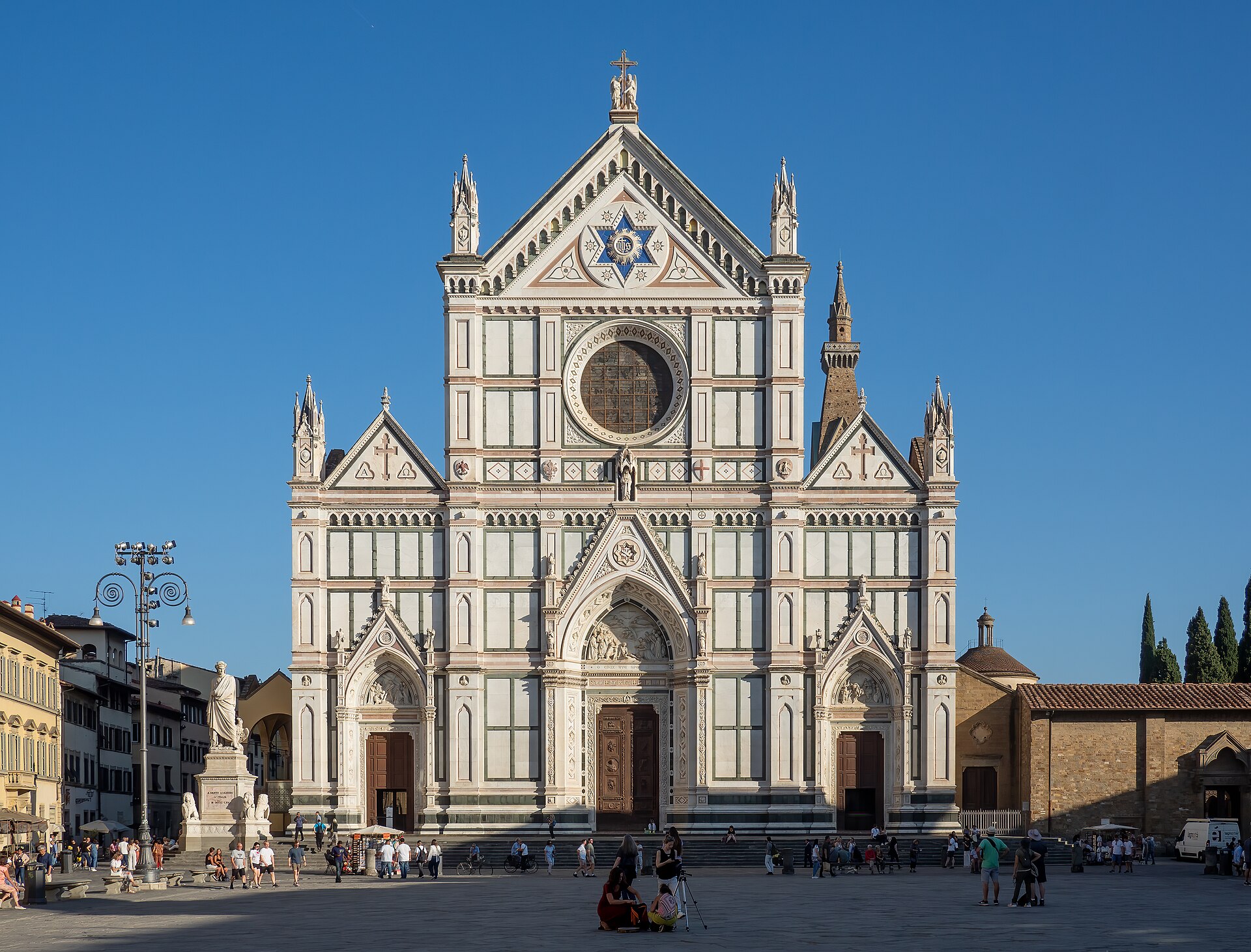
Basilica of Santa Croce
16 Piazza di Santa Croce, Centro Storico, Florence, 50122, Italy
They call it the Temple of Italian Glories, which sounds grandiose until you realize Michelangelo, Galileo, Machiavelli, and Rossini are all buried here, in the same building, steps from each other. The largest Franciscan church in the world has nearly 300 tombs spanning five centuries, making it less a place of worship and more an Italian Hall of Fame carved in marble. Galileo's tomb tells its own story of power and pettiness. When he died in 1642, the Catholic Church — still fuming about the whole Earth-goes-around-the-Sun thing — refused him a Christian burial. His body was stashed in a small room next to the novices' chapel for 95 years. It wasn't until 1737 that admirers were finally allowed to move him to a proper monument in the nave. During the transfer, someone snapped off three of his fingers and a tooth as souvenirs. His middle finger is now displayed, pointing skyward, in the Galileo Museum across town. Opposite Galileo's tomb sits Michelangelo's. He died in Rome, but Florence essentially kidnapped his body — his nephew smuggled the corpse out of Rome in a bale of merchandise so that the city of his birth could claim him. Machiavelli's monument was added much later, in 1787, after his political theories came back into fashion. The church also contains important frescoes by Giotto in the Bardi and Peruzzi Chapels — some of the earliest masterpieces of Western art. The square outside, Piazza Santa Croce, hosts Florence's violent annual calcio storico, a no-rules football game played in Renaissance costume that makes rugby look like a tea party.
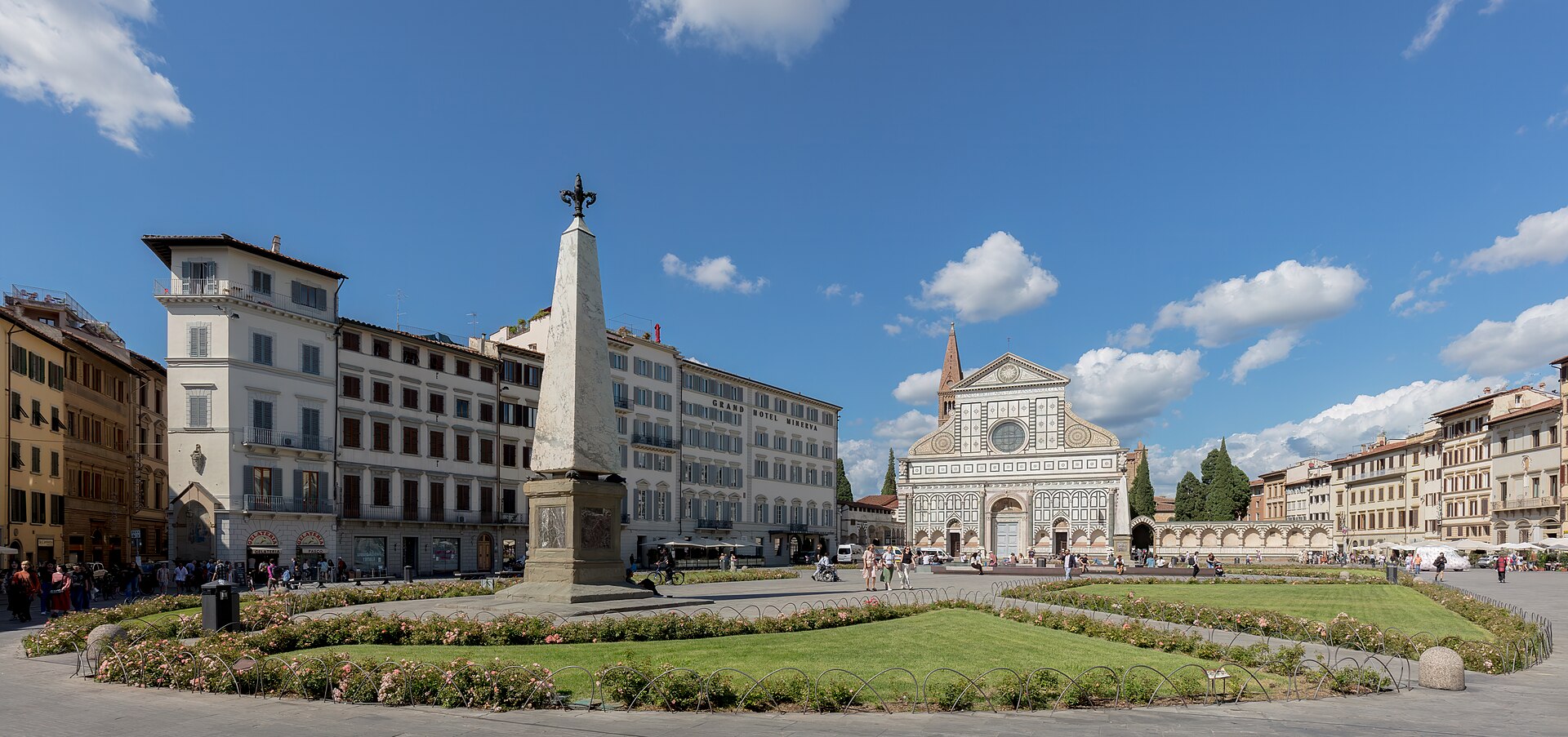
Basilica of Santa Maria Novella
18 Piazza di Santa Maria Novella, Centro Storico, Florence, 50123, Italy
The facade of Santa Maria Novella is a Renaissance geometry lesson in green and white marble, designed by Leon Battista Alberti in the 1450s and so mathematically precise that art historians have spent centuries measuring its proportional ratios. It was the first major church facade to apply classical architectural principles to a Gothic structure, and its elegant scrolls connecting the upper and lower stories became one of the most copied design elements in European architecture. Inside is darker, stranger, and more interesting. Masaccio's Holy Trinity fresco, painted around 1427, was the first artwork to use precise one-point linear perspective — stand at the right spot and the painted barrel vault recedes into the wall so convincingly that Vasari wrote it looked like "a hole in the wall." This single fresco essentially invented the visual language of Western painting. The Spanish Chapel, originally the chapter house, has frescoes by Andrea di Bonaiuto from the 1360s that are so densely packed with theological symbolism that scholars are still decoding them. Ghirlandaio's frescoes in the Tornabuoni Chapel document everyday Florentine life in the 1480s with photographic precision — the clothing, the hairstyles, the architecture — while ostensibly depicting the lives of the Virgin Mary and John the Baptist. Giovanni Boccaccio set the opening of The Decameron in this church — it's where his fictional characters gather to flee Florence during the Black Death of 1348. The church also sits right next to the train station named after it, making it the first Renaissance masterpiece most visitors see arriving in Florence, whether they realize it or not.
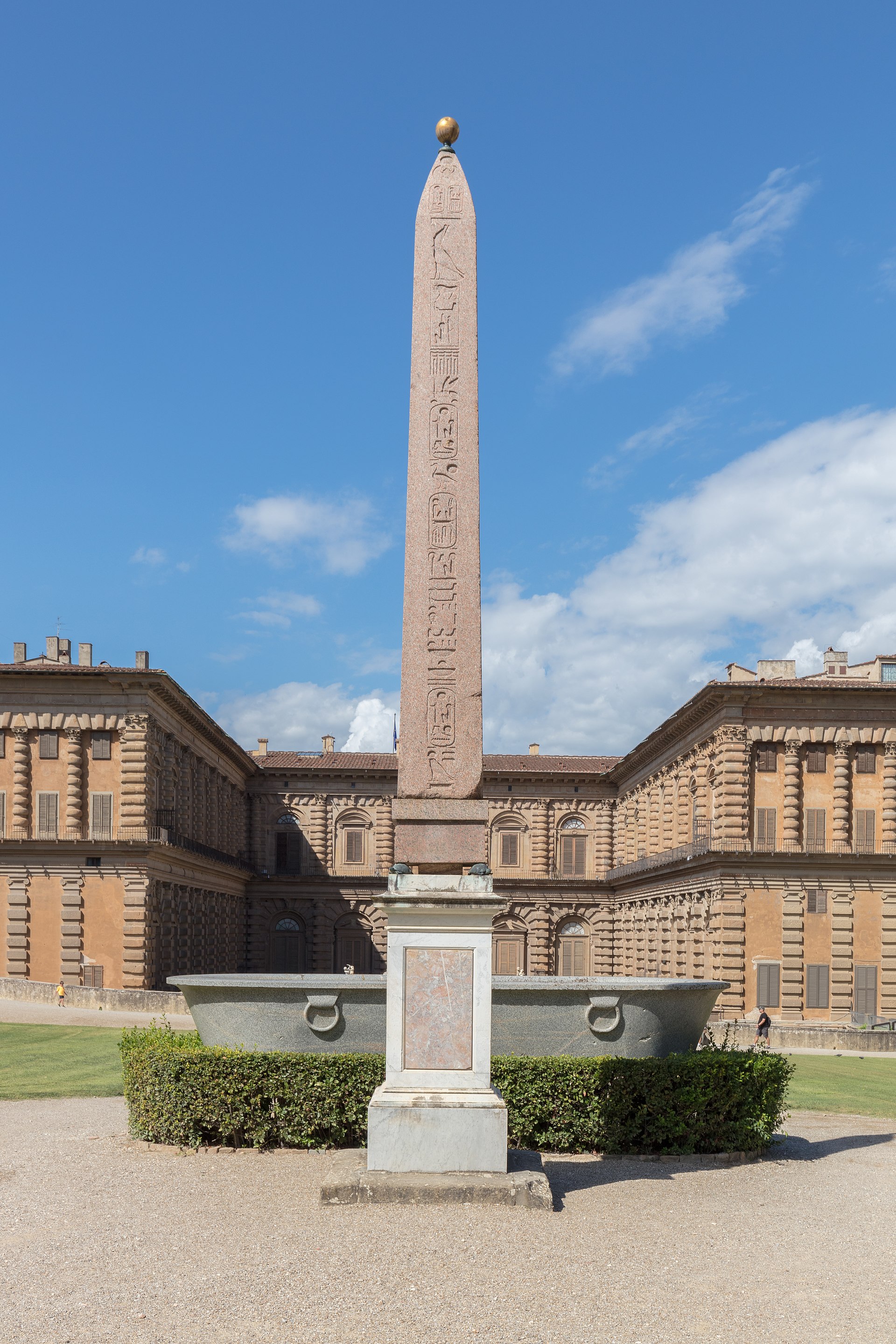
Boboli Gardens
1 Piazza dei Pitti, Centro Storico, Florence, 50125, Italy
Behind the Palazzo Pitti, the Medici carved an entire hillside into one of the first and most influential formal gardens in European history. Every manicured garden at Versailles, Schonbrunn, and Hampton Court owes a debt to this place — the Boboli was the prototype for the Italian garden style that swept the continent in the sixteenth and seventeenth centuries. The gardens cover 45,000 square meters and opened to the public in 1766, though they'd been private Medici pleasure grounds for two centuries before that. The oldest section directly behind the palace is pure Renaissance geometry — symmetrical hedges, classical statues, and gravel paths radiating from a central axis. Further up the hill, the gardens become wilder and more romantic, reflecting the later Baroque additions. The real treasures are the hidden grottos. The Buontalenti Grotto, built between 1536 and 1608, is a fever dream of stalactites, pumice, and painted walls where nature and artifice blur completely. It once held Michelangelo's unfinished Prisoners — now in the Accademia — with the rough stone of the sculptures blending into the faux-cave walls. The Grotto of Madama, also by Buontalenti, is covered in seashells and colored glass mosaics. Climb to the top and you reach the Cavaliere Garden, a walled terrace with a view over the Tuscan hills that will stop you in your tracks. Below, the Isolotto — a miniature island in an oval pond — features Giambologna's Ocean Fountain surrounded by rose bushes. In spring, the gardens explode with wisteria, iris, and jasmine. This is where Florentines come to escape Florence, and it works.
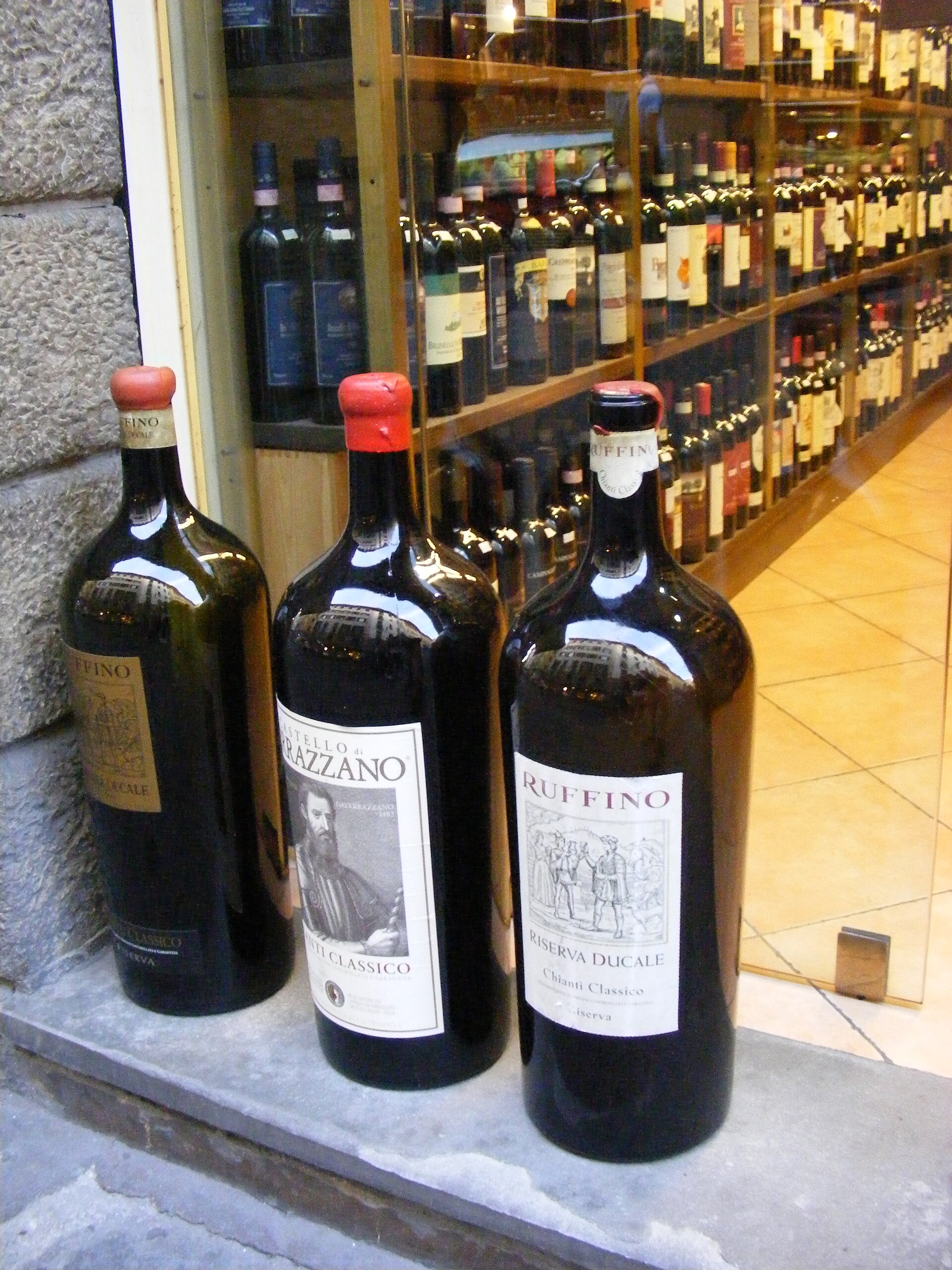
Buchette del Vino (Wine Windows)
Via del Sole, Centro Storico, Florence, 50123, Italy
Scattered across Florence's palazzi, at about knee height, you'll find small arched openings roughly the size of a wine bottle — because that's exactly what they were for. These are the buchette del vino, or wine windows, and they represent perhaps the most charming intersection of commerce, plague, and architecture you'll find anywhere. In 1559, Cosimo I de' Medici decreed that noble families could sell excess wine from their country vineyards directly from their city palazzi. Openings were cut into the thick stone walls — about 30 by 20 centimeters, just large enough to pass a flask through. The customer knocked, slid their money through, and a servant passed back the wine. No shop, no middleman, no tax. At their peak, there were hundreds of these windows across the city. Then came the plague. During Florence's devastating outbreaks in the 1630s, the wine windows became an early form of contactless commerce. A 1634 account by scholar Francesco Rondinelli describes sellers using the holes to avoid any physical contact with customers, even wiping coins with vinegar to prevent contagion. Four hundred years later, during COVID-19, several enterprising Florentine businesses reopened their wine windows to serve glasses of wine, coffee, and gelato — history repeating itself with an espresso twist. Around 150 wine windows survive today, mostly in the historic center and Oltrarno. Look for them along Via delle Belle Donne, Via del Sole, Via Santo Spirito, and Borgo San Jacopo. Most are sealed shut, but a handful have been revived and actually serve drinks. The Wine Window Association catalogs and protects them — proof that Florence takes even its smallest architectural details seriously.
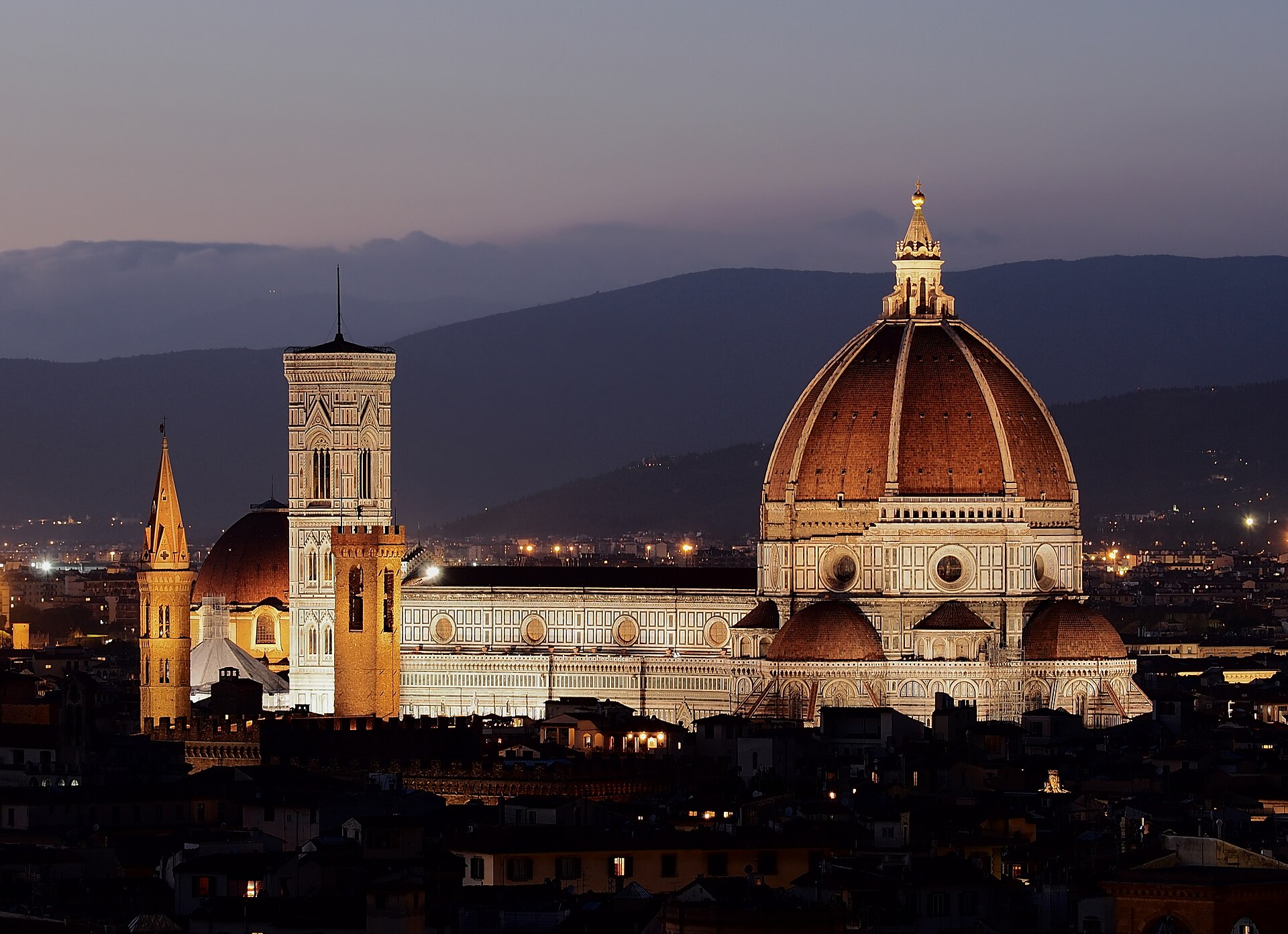
Cathedral of Santa Maria del Fiore
Piazza del Duomo, Centro Storico, Florence, 50122, Italy
Here's the thing about Brunelleschi's dome: nobody thought it could be built. When Florence decided to cap their cathedral with the largest dome since the Pantheon, they had no idea how to actually do it. The hole sat open to the rain for decades. Then Filippo Brunelleschi — a goldsmith with no formal architecture training — proposed building it without scaffolding or centering, and everyone thought he'd lost his mind. He won the commission anyway, partly because nobody else had a better idea. What Brunelleschi invented was essentially a self-supporting structure using a herringbone brick pattern that locked each layer into the one below. He designed custom hoisting machines, including an ox-driven crane that could reverse direction without unhitching the animals. The dome rose over sixteen years, from 1418 to 1434, using over four million bricks and weighing roughly 25,000 tons. It remains the largest masonry dome ever constructed. Inside, Giorgio Vasari and Federico Zuccari covered the dome's interior with a massive Last Judgment fresco — 3,600 square meters of apocalyptic imagery hovering above the nave. The cathedral itself took 140 years to complete, from 1296 to 1436, and could hold 30,000 worshippers. When it was consecrated, it was the largest church in the world. Stand outside and look up. That dome has dominated Florence's skyline for nearly six centuries. Brunelleschi is buried in the crypt below — one of only a handful of people granted that honor — and his tomb was only discovered in 1972.
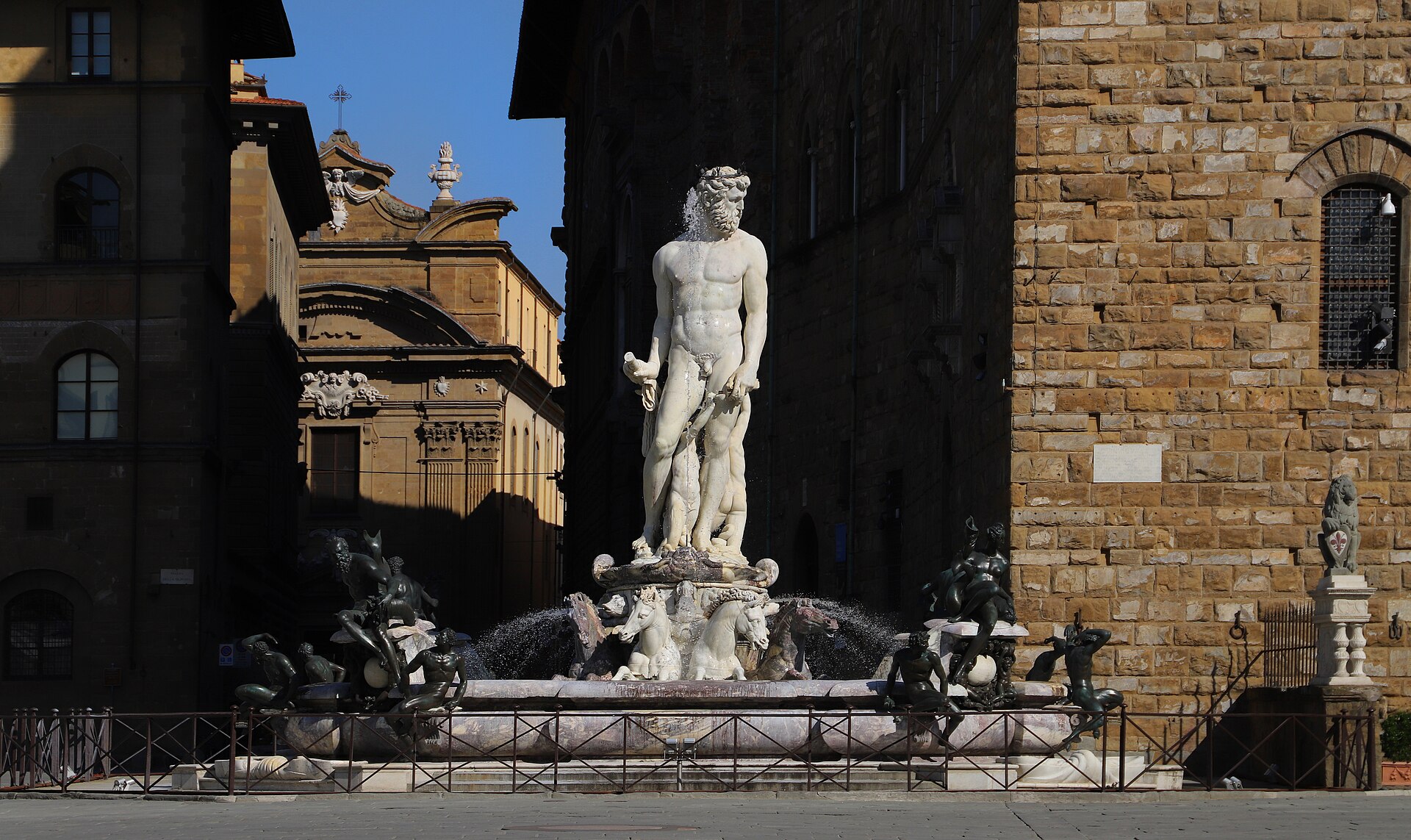
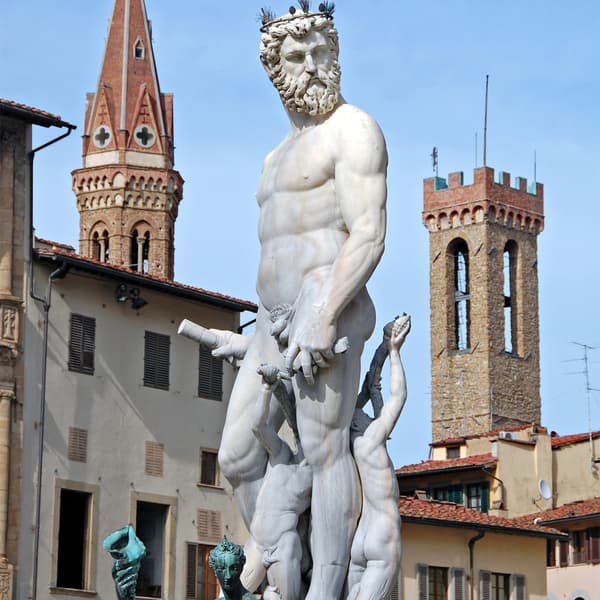
Fountain of Neptune
Piazza della Signoria, 50122 Firenze
Michelangelo looked at this fountain and reportedly said, "Ammannato, Ammannato, what beautiful marble you have ruined." It's one of the most famous insults in art history, and the big white Neptune standing in the center of the basin has been enduring critical abuse ever since. Florentines nicknamed him "Il Biancone" — the Big White One — and the mockery stuck for five centuries. But here's the thing: the fountain was a technical marvel. Completed by Bartolomeo Ammanati in 1575 to celebrate Cosimo I's naval ambitions and Florence's new aqueduct, it was the first major public fountain in Florence. The octagonal basin's bronze figures — satyrs, nymphs, and sea horses by Giambologna and workshop — are genuinely superb, and art historians have been quietly arguing for decades that the surrounding bronzes are better than most people realize while the central Neptune unfairly takes all the blame. The fountain has had a rough life beyond the insults. In 1580, Florentine youths used it as a public bath during summer festivals. Vandals have attacked it periodically — in 2005, a drunk man climbed it and broke Neptune's hand. During festivals and football celebrations, it's served as the city's communal bathing pool, much to the horror of conservators. Despite everything, it commands the piazza. Neptune stands nearly six meters tall, trident raised, water cascading around his feet, with the Palazzo Vecchio looming behind. Michelangelo may have been uncharitable, but Ammanati got the location right — you can't not look at it.
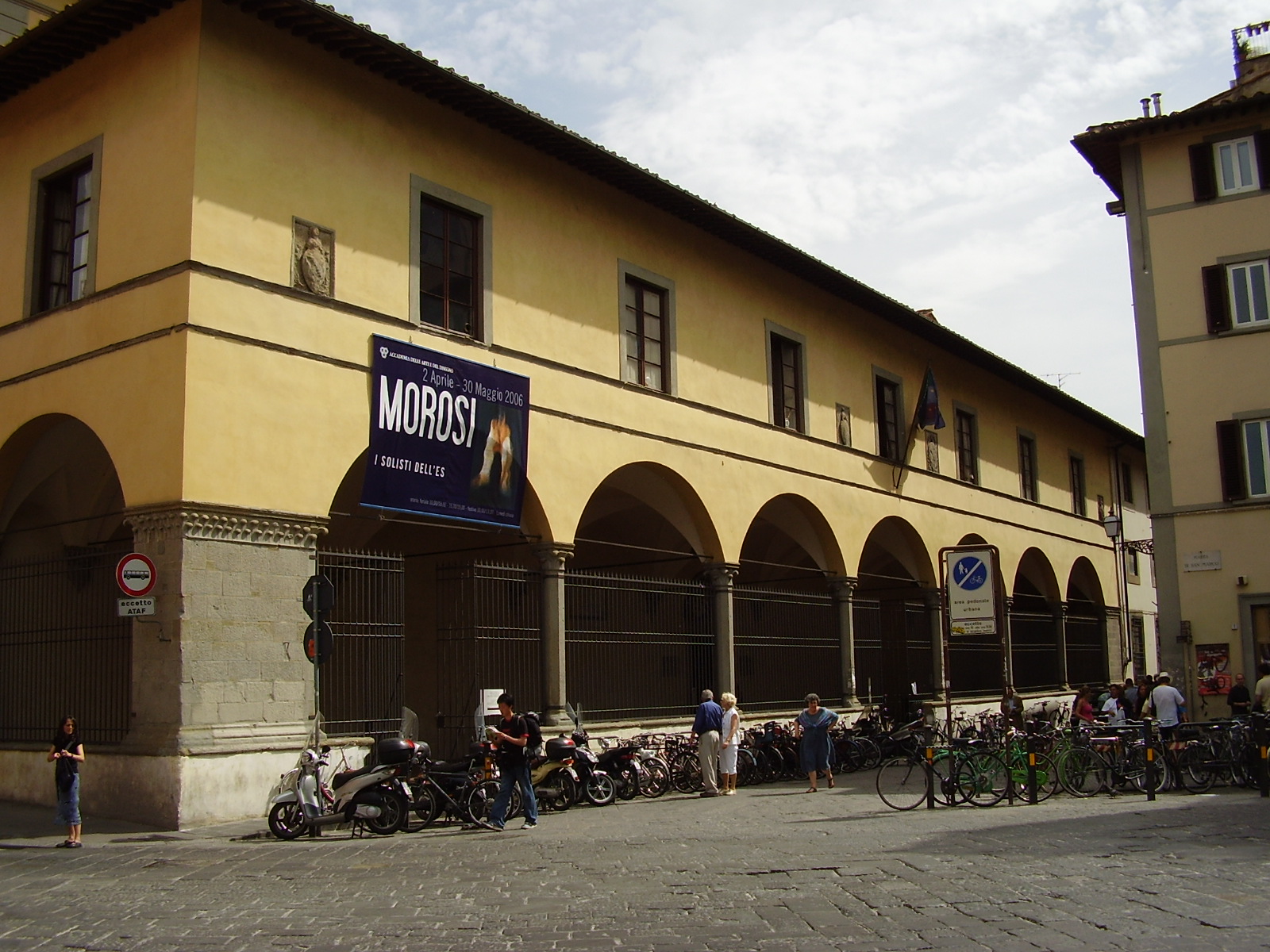
Galleria dell'Accademia
Via Ricasoli 58/60, 50122 Firenze
The block of marble that became David had been sitting around for 35 years, and nobody wanted it. Two previous sculptors had started working on it and given up. The stone was tall, thin, and full of imperfections — the Opera del Duomo had basically written it off. Then in 1501, a 26-year-old Michelangelo Buonarroti said he could make something of it. He spent the next three years carving in secret, behind a wooden screen, and when the statue was unveiled in September 1504, Florence went silent, then erupted. The David stands 5.17 meters tall and weighs over six tons. Michelangelo chose to depict the moment before the fight — David sizing up Goliath, his brow furrowed, veins bulging in his right hand. It was a political statement as much as an artwork: Florence as the small republic standing defiant against larger, more powerful enemies. Originally, parts of the statue were gilded — a garland on his head, the tree trunk, and the sling all had gold leaf that's since worn away. The statue stood in Piazza della Signoria for 369 years before being moved to the Accademia in 1873 to protect it from weather damage. Architect Emilio De Fabris designed the tribune specifically for the David — a vaulted exedra bathed in natural light from a skylight above, making the marble almost glow. A replica was placed in the original outdoor spot. Nearly 1.5 million visitors come through these doors every year — about 4,000 per day — almost exclusively to see one thing. The Accademia also houses Michelangelo's unfinished Prisoners, four figures that look like they're struggling to free themselves from the raw stone, which Michelangelo believed was their natural state.
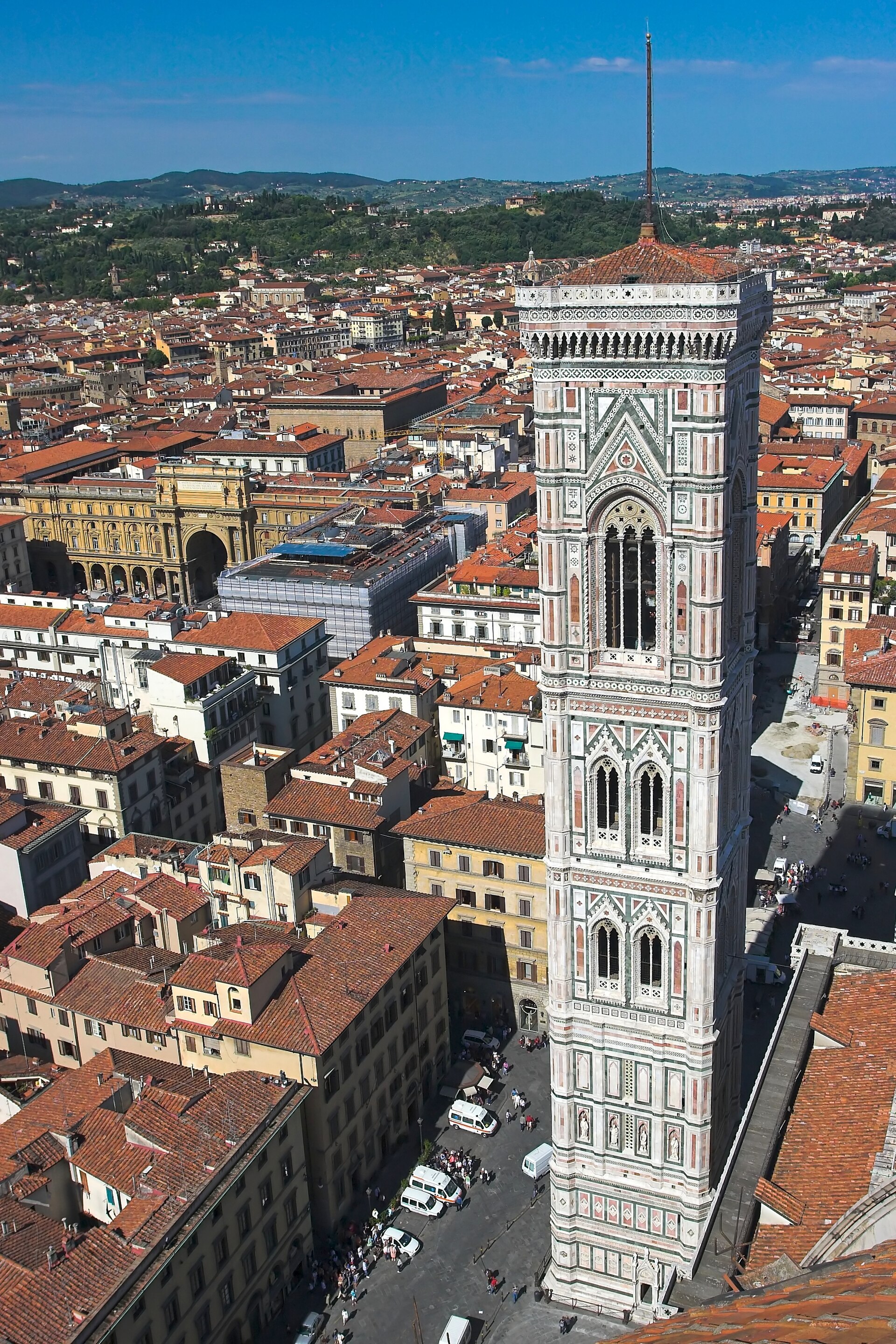
Giotto's Bell Tower
Piazza del Duomo, 50122 Firenze
Giotto di Bondone was seventy years old and at the peak of his fame when he was appointed chief architect of the cathedral complex in 1334. His first task was this bell tower, and he attacked it with the ambition of a man who knew he was running out of time. He designed a tower sheathed in pink, white, and green marble with hexagonal relief panels at the base depicting the story of human civilization — from the Creation of Adam to navigation, agriculture, weaving, and astronomy. Then he died in 1337, with only the bottom section finished. Andrea Pisano and Francesco Talenti completed the tower over the next two decades, reaching 84.7 meters. They wisely kept Giotto's decorative scheme but added more structural strength — Giotto's original design was reportedly too thin to support its own weight at full height. The 414 steps to the top are claustrophobic, steep, and absolutely worth it: the view from the summit puts you eye-level with Brunelleschi's dome, close enough to study the herringbone brickwork that holds the whole thing together. The relief panels on the lower levels are extraordinary in their own right. The originals — sculpted by Andrea Pisano and workshop — are now in the Museo dell'Opera del Duomo, replaced by copies on the tower. They form an encyclopedia of medieval knowledge: the seven planets, the seven virtues, the seven sacraments, the liberal arts. It's a 14th-century syllabus carved in marble. Unlike the dome climb, which involves a walk between the inner and outer shells, the campanile climb is a straight vertical ascent through narrow stone staircases. You'll earn every step of that panorama.
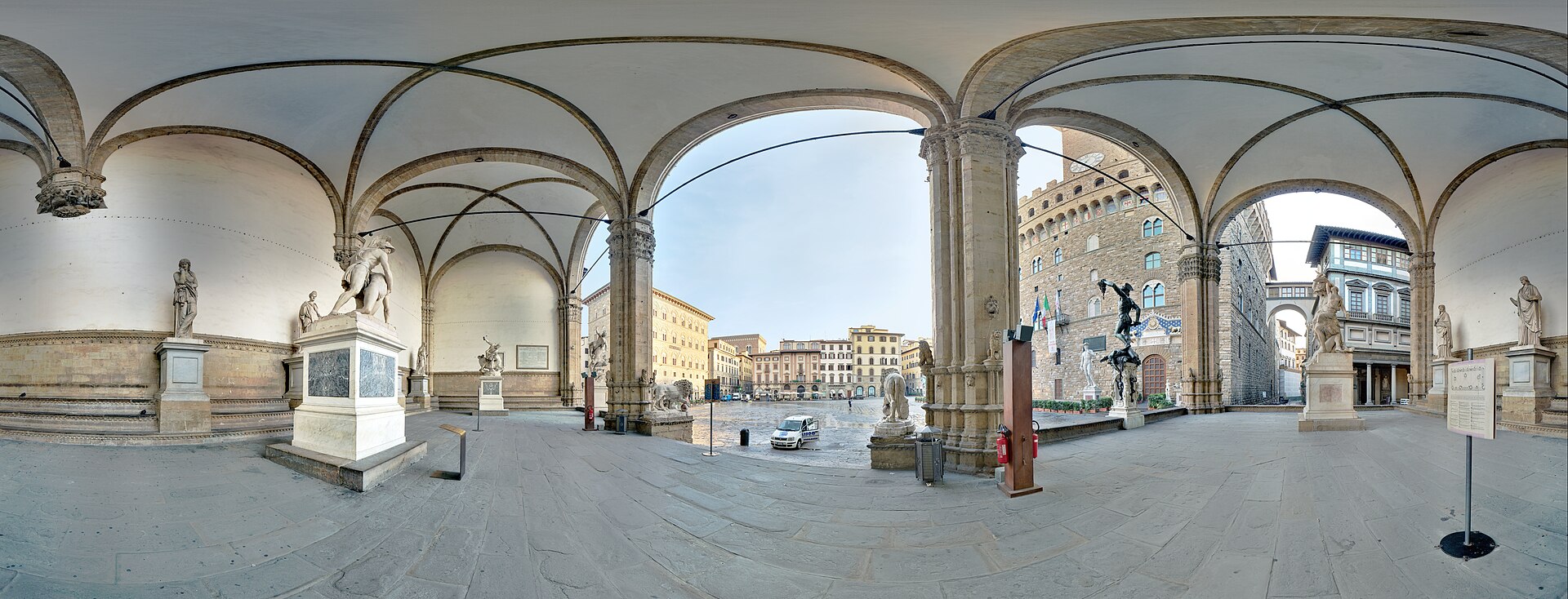
Loggia dei Lanzi
Piazza della Signoria, 50122 Firenze
This is an open-air sculpture museum with no walls, no ticket, and no closing time. The Loggia dei Lanzi sits on the edge of Piazza della Signoria, a graceful three-arched structure built between 1376 and 1382 that was originally designed as a covered space for public ceremonies and government speeches. It gets its name from the Landsknechte — the German mercenary lancers who were stationed here by Cosimo I in the sixteenth century. But you come for the sculpture. Benvenuto Cellini's Perseus holds the severed head of Medusa aloft, blood streaming from the neck in cast-bronze perfection. Cellini nearly destroyed his house casting this piece — he ran out of metal mid-pour and threw his household pewter into the furnace to finish the job. It's been standing here since 1554, exposed to the elements for nearly five hundred years, and it's still one of the most technically brilliant bronzes ever made. Giambologna's Rape of the Sabine Women, carved from a single block of flawed marble in 1583, spirals upward in three intertwined figures — it was the first sculpture designed to be viewed from every angle, with no single "front." Giambologna claimed he made it purely as a technical exercise and only named it after the fact when critics demanded a title. Behind it, the ancient Roman sarcophagus relief and classical lions add depth that spans millennia. Sit on the loggia steps at dusk and watch the piazza empty out. The sculptures don't need an audience — they've been performing for free in this same spot since the Renaissance, rain or shine, no reservation required.
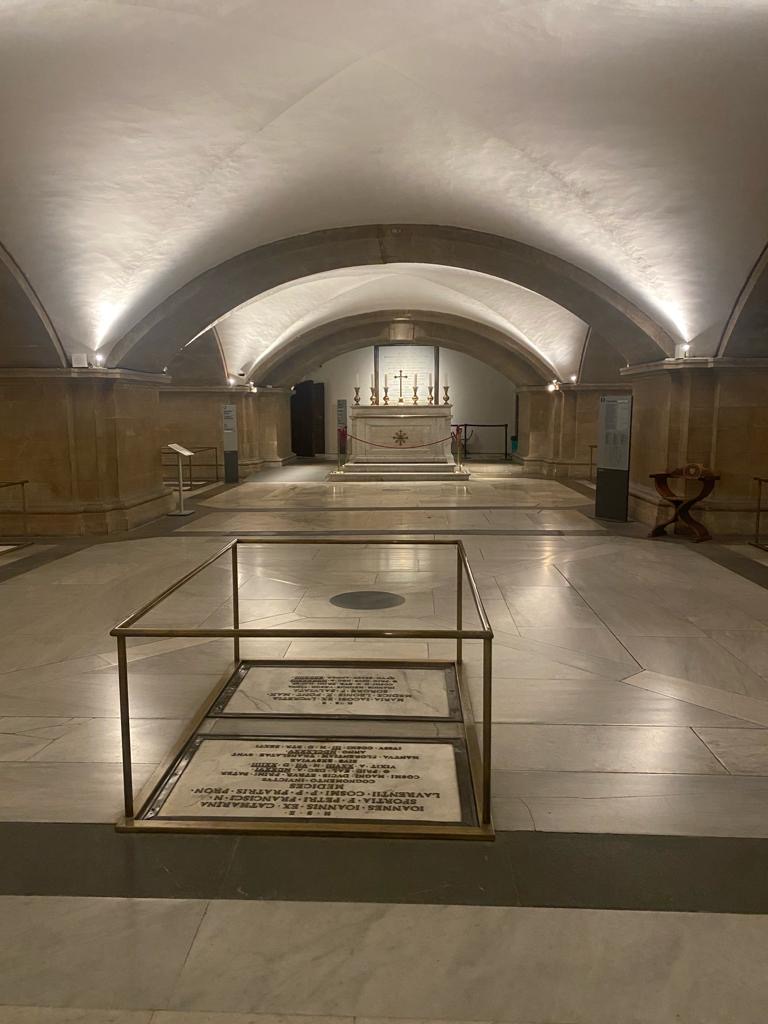
Medici Chapels
6 Piazza di Madonna degli Aldobrandini, Centro Storico, Florence, 50123, Italy
The Medici didn't just run Florence — they made sure everyone would remember them forever. These chapels, attached to the Basilica of San Lorenzo, are the family mausoleum, and they're split between two very different aesthetics. The Chapel of the Princes is a Baroque explosion of colored marble, semi-precious stones, and gilded excess — a room so aggressively luxurious it took from 1604 to the late 1800s to complete. It's taste at its most debatable, but the craftsmanship is undeniable. Then there's the New Sacristy, and everything changes. This was Michelangelo's first architectural project, designed in the 1520s, and it's a masterclass in restrained power. He sculpted the figures of Dawn, Dusk, Day, and Night as allegories of time's passage, draped across the tombs of Lorenzo and Giuliano de' Medici. These aren't the famous Medici — not Lorenzo the Magnificent or Cosimo the Elder — but lesser relatives elevated to immortality by the quality of their tombstones. Night is particularly stunning: a muscular female figure with an owl at her feet, her body tense even in sleep. In 1975, workers discovered a small room beneath the chapel where Michelangelo had hidden for two months in 1530 to escape Medici persecution. The walls were covered in charcoal drawings — preliminary sketches attributed to Michelangelo himself. This secret room opened to the public in November 2023 after decades of restricted access. Above it all, the Chapel of the Princes' dome — second largest in Florence after Brunelleschi's — dominates the San Lorenzo skyline. The Medici built their own heaven, and they filled it with themselves.
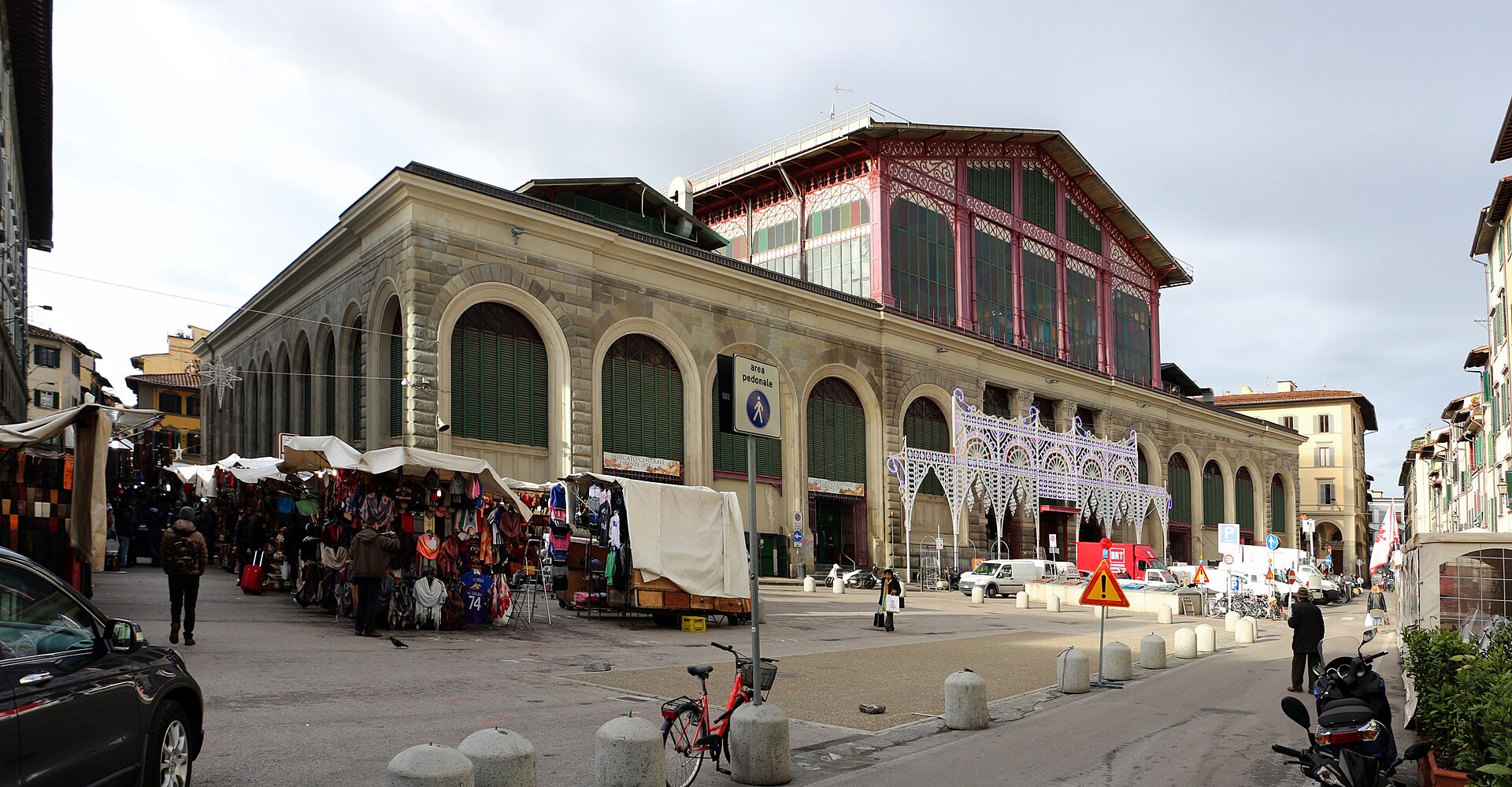
Mercato Centrale
Piazza del Mercato Centrale, Centro Storico, Florence, 50123, Italy
The man who designed Milan's famous Galleria Vittorio Emanuele II — that grand glass-roofed shopping arcade — also designed this market hall. Giovanni Mengoni brought the same iron-and-glass ambition to Florence in 1874, creating a soaring two-story structure in the San Lorenzo district, an area that was then considered one of the unhealthiest parts of the city, full of cramped alleyways and crumbling buildings. The ground floor is where Florence feeds itself. Butchers, fishmongers, fruit vendors, and bread sellers have operated from these stalls for 150 years, and the energy hasn't dimmed. This is not a tourist market wearing vintage clothes — it's a working market where Florentine nonnas squeeze tomatoes and argue over the price of tripe. Speaking of tripe: lampredotto, a tripe sandwich stewed in broth and slathered with salsa verde, is Florence's signature street food and this is ground zero for it. The stalls outside in the surrounding streets sell leather goods, scarves, and souvenirs — that's the San Lorenzo street market, which surrounds the Basilica of San Lorenzo like a retail moat. In 2014, the upper floor was reimagined as a modern food hall celebrating the market's 140th anniversary. Artisan food stalls serve everything from wood-fired pizza to fresh pasta to gelato, open until midnight. It's a clever evolution: the ground floor stays old Florence, the upper floor becomes new Florence, and both work. The building itself is beautiful — the iron framework painted soft green, light flooding through glass panels in the roof. In a city drowning in Renaissance marble, this Victorian industrial structure is a reminder that Florence didn't stop innovating after the fifteenth century.
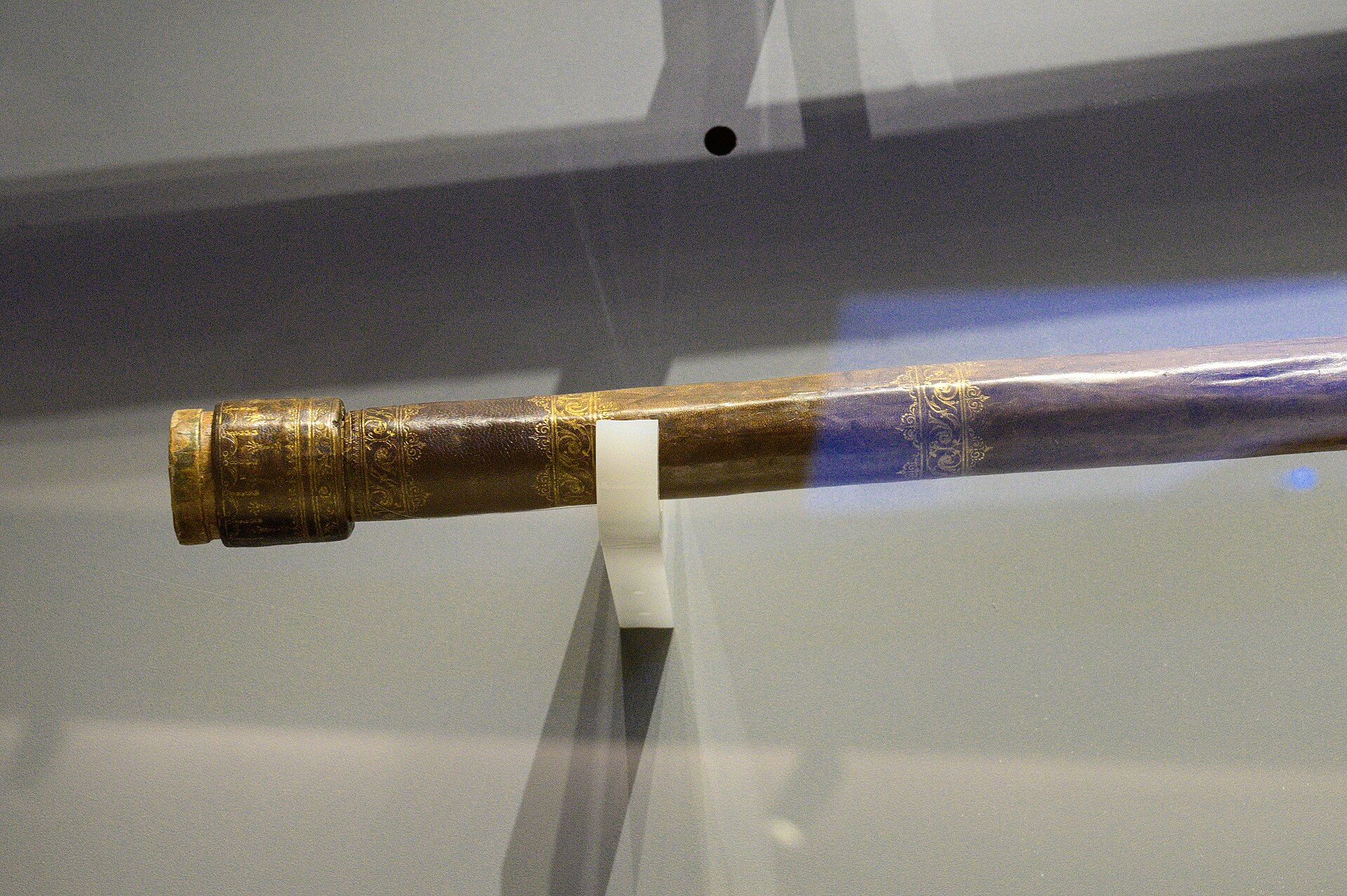
Museo Galileo
1 Piazza dei Giudici, Centro Storico, Florence, 50122, Italy
In a glass egg-shaped reliquary on the second floor, a bony finger points permanently toward the heavens. It's Galileo Galilei's actual middle finger, removed from his corpse when his body was transferred to its grand tomb in Santa Croce in 1737 — ninety-five years after his death, because the Church had refused him a proper burial for the crime of being right about the solar system. That someone kept his middle finger, of all digits, has not been lost on anyone. But the finger is just the hook. The Museo Galileo houses one of the world's most important collections of scientific instruments — over 1,000 objects spanning the Medici and Lorraine collections from the 16th to 19th centuries. Galileo's own telescopes are here, including the lens he used in 1610 to discover Jupiter's moons. There are astrolabes of breathtaking beauty, celestial globes, armillary spheres, and early thermometers. The Grand Dukes collected scientific instruments with the same obsessive connoisseurship they applied to paintings. The museum is housed in the 11th-century Palazzo Castellani, right on the Arno. It sits in the shadow of the Uffizi, which is both its problem and its charm — the art tourists go left, and you go right into a building that's essentially empty. You can spend an unhurried hour examining instruments that literally changed our understanding of the universe. Florence is rightly famous as the birthplace of the artistic Renaissance, but this museum makes the case that it was equally the birthplace of modern science. Galileo, after all, was a Florentine. His middle finger still makes the point.
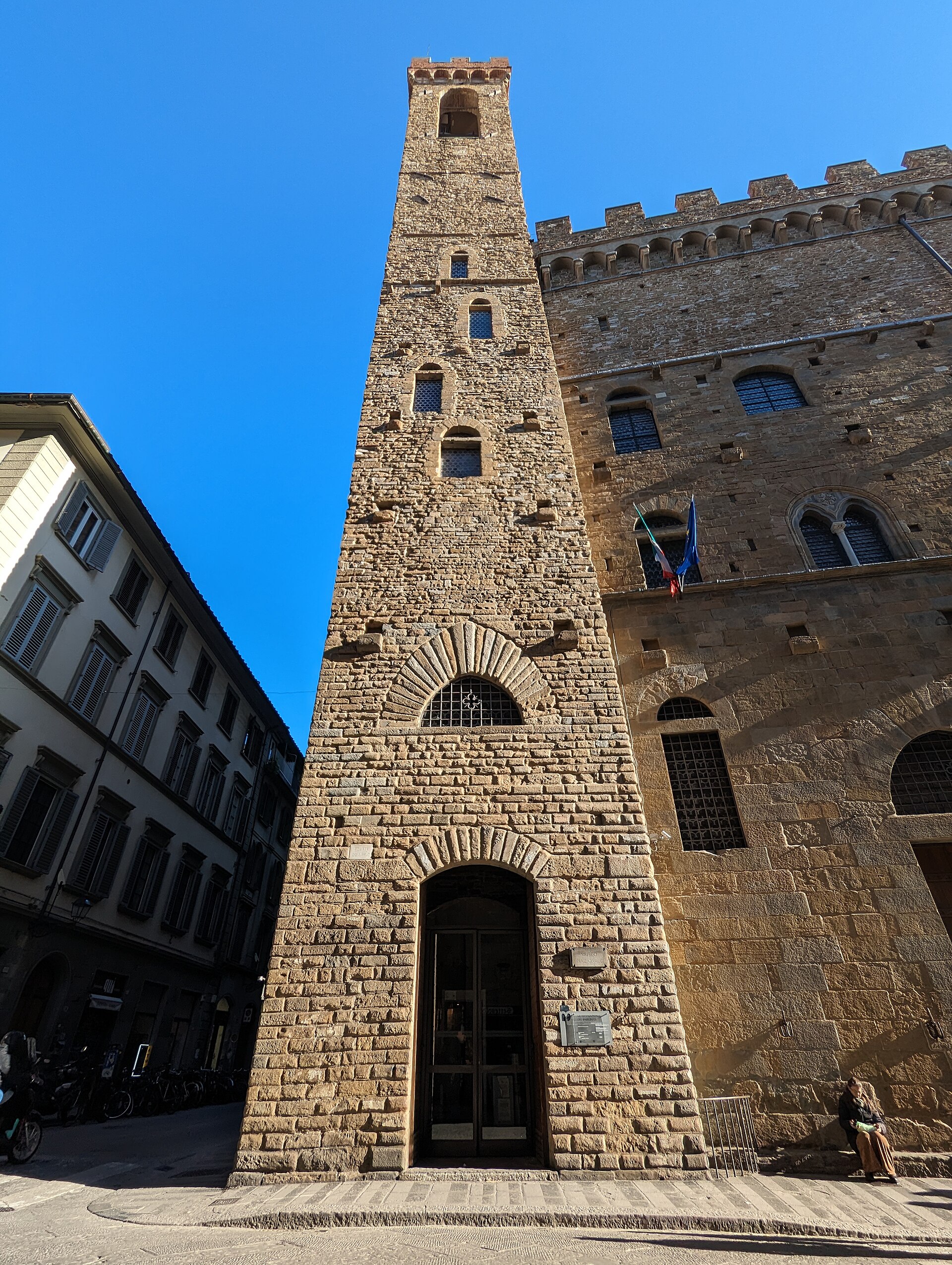
Museo Nazionale del Bargello
4 Via del Proconsolo, Centro Storico, Florence, 50122, Italy
Before this building held some of the world's finest Renaissance sculptures, it held prisoners. Built in 1255 as Florence's first public government building, the Bargello spent centuries as a police headquarters and jail, complete with a courtyard where executions were carried out. The walls of the upper loggia were once painted with portraits of hanged traitors — painted by Botticelli, no less, who apparently had no qualms about the commission. Those frescoes are long gone, whitewashed over when the building became a museum in 1865. The Bargello was Italy's first national museum, opened the same year Florence briefly became the capital of the newly unified Kingdom of Italy. Today it holds the world's most important collection of Italian Renaissance sculpture, and yet receives a fraction of the visitors who flood the Uffizi or the Accademia. This is the Florentine insider's secret: the crowds aren't here. The main hall upstairs houses nine works by Donatello alone, including his revolutionary bronze David — the first free-standing nude male sculpture since antiquity, cast around 1440. It's a very different David from Michelangelo's: younger, almost androgynous, standing on Goliath's severed head wearing nothing but boots and a hat. Nearby, Donatello's Saint George radiates coiled tension despite being carved for a guild of armormakers who originally displayed it on the exterior of Orsanmichele. The courtyard itself is worth the visit — a medieval cloister that was once a place of terror, now filled with heraldic sculptures and dappled sunlight. It's one of the most atmospheric spaces in all of Florence, and you might have it entirely to yourself.
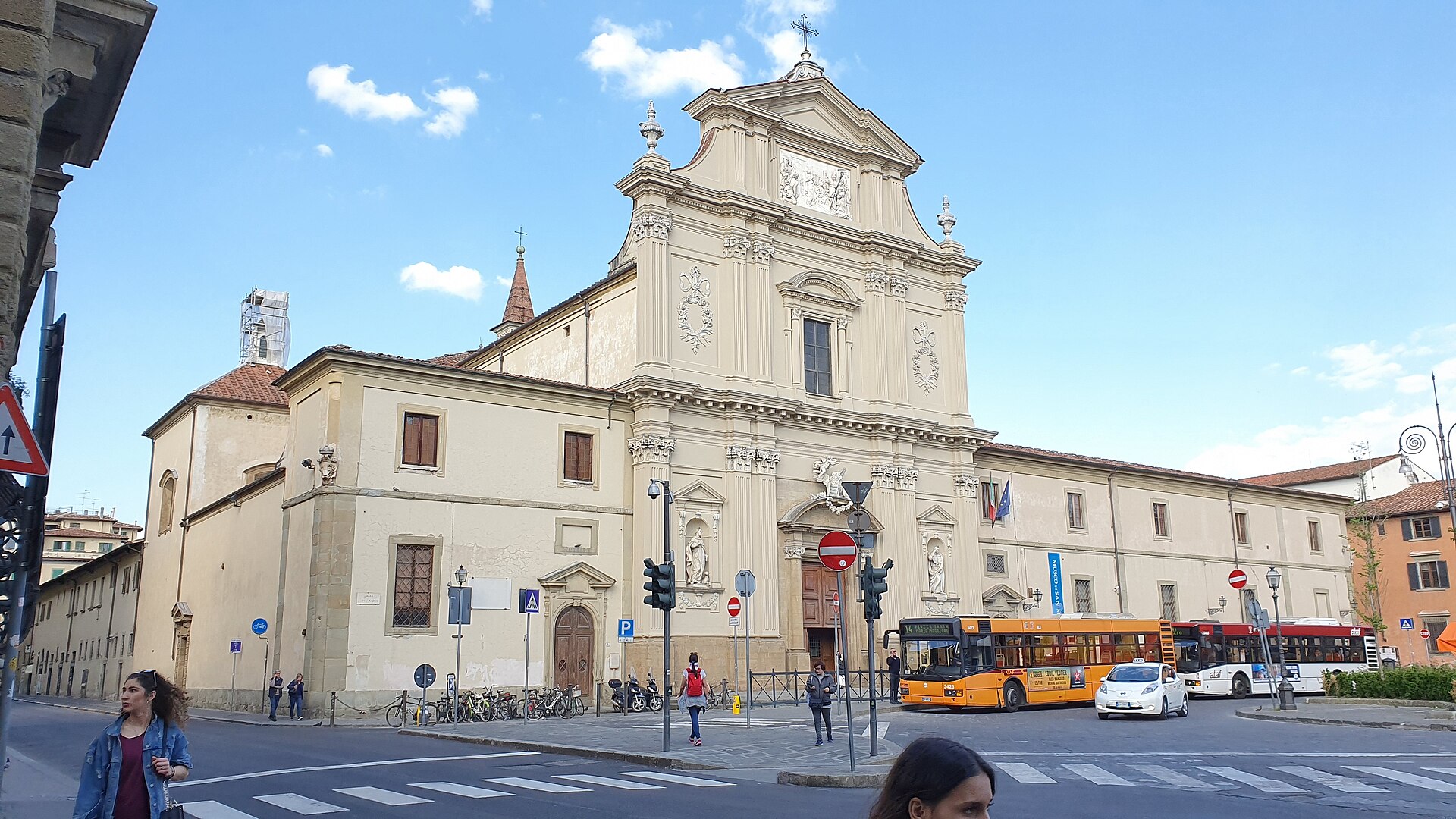
Museum of San Marco
3 Piazza di San Marco, Centro Storico, Florence, 50121, Italy
This monastery tells two completely opposite stories. In the 1440s, a Dominican friar named Fra Angelico painted some of the most serene, luminous religious images ever created — one in each monk's cell, meant as private devotional aids for meditation. Walking the upstairs corridor and peering into cell after cell of quiet, exquisite Annunciations and Crucifixions is one of the most intimate art experiences in Florence. The Annunciation at the top of the stairs — all pale pinks and golds — might be the single most beautiful fresco in Italy. Then there's the other story. Half a century later, this same monastery produced Girolamo Savonarola, a charismatic friar who turned Florence upside down. Arriving in 1489, Savonarola gave such terrifying sermons about sin and corruption that he essentially seized control of the city, expelled the Medici, and organized the infamous "Bonfires of the Vanities" where Florentines burned cosmetics, mirrors, fine dresses, and paintings in Piazza della Signoria. His cell is preserved here — small, bare, exactly as austere as you'd expect from a man who tried to purge beauty from the most beautiful city on earth. He was excommunicated and burned at the stake in 1498. The monastery was rebuilt by Michelozzo at Cosimo de' Medici's expense between 1436 and 1446 — the same Cosimo who founded what was Europe's first public library in a wing of this building. Fra Angelico was canonized by Pope John Paul II in 1983, making him the patron saint of artists. Two monks, same building, utterly different visions. One saw God in color and light. The other saw God in fire.
Officina Profumo-Farmaceutica di Santa Maria Novella
16 Via della Scala, Centro Storico, Florence, 50123, Italy
The world's oldest pharmacy has been in continuous operation since 1221, which means Dominican monks were mixing herbal remedies here before Dante was born, before the Renaissance started, and about 300 years before anyone thought to put shops on the Ponte Vecchio. What began as a monastic apothecary — friars growing medicinal herbs in the convent garden — evolved into one of the most extraordinary commercial enterprises in European history. The pharmacy made its name during the plague. In 1381, the monks were already producing rose water as a disinfectant. When the Black Death ravaged Florence in the 1340s and returned repeatedly over the next centuries, the friars' distillations became desperately sought-after. But their biggest celebrity moment came in 1533, when Catherine de' Medici was betrothed to the future King of France and asked the monks to create a scent that captured Florence. They invented Acqua della Regina — "The Queen's Water" — and revolutionized perfumery by using alcohol as a base instead of olive oil or vinegar, which eventually went rancid. Walking into the shop today is like entering a Renaissance palace that happens to sell soap. Vaulted ceilings, frescoed walls, glass cabinets filled with centuries-old ceramic jars. The formulas haven't changed much — they still make potpourri from a 16th-century recipe and rose water from the original medieval method. The sales room occupies what was once the chapel, and the scent that hits you when you walk through the door is worth the visit alone. It opened to the public in 1612 and has been a functioning retail space ever since — over four hundred years of uninterrupted commerce from the same address.
Orsanmichele
1 Via dell'Arte della Lana, Centro Storico, Florence, 50123, Italy
This is the strangest church in Florence, and that's because it wasn't built as a church at all. Orsanmichele started life in 1336 as a grain market — an open loggia where Florence stored and traded its most vital commodity. The arches were walled up between 1380 and 1404 to convert it into a church, but the building never lost its boxy, warehouse-like exterior. It looks nothing like a church from the outside, which is exactly why most tourists walk past it without a second glance. Their loss. The exterior walls became an extraordinary public sculpture gallery when the city's powerful trade guilds were each assigned a niche to fill with a statue of their patron saint. The wool merchants got Ghiberti to cast Saint Stephen; the linen makers hired Donatello for Saint Mark; the armorers got Donatello's electrifying Saint George. Each guild tried to outdo the others, and the richest — wool, banking, silk — chose expensive bronze over marble, spending ten times as much to demonstrate their wealth. The result was a competitive masterclass that pushed Renaissance sculpture forward in real time. The original statues have mostly been moved inside to the museum on the upper floors, but the niches still tell the story of a city run by craftsmen and merchants, not kings. The interior houses a magnificent Gothic tabernacle by Andrea Orcagna, encrusted with lapis lazuli, gold, and colored glass, built to house a miraculous painting of the Madonna. The upper floors, which served as the city's emergency grain storage, offer some of the best views in Florence — and far fewer crowds than any comparable viewpoint.
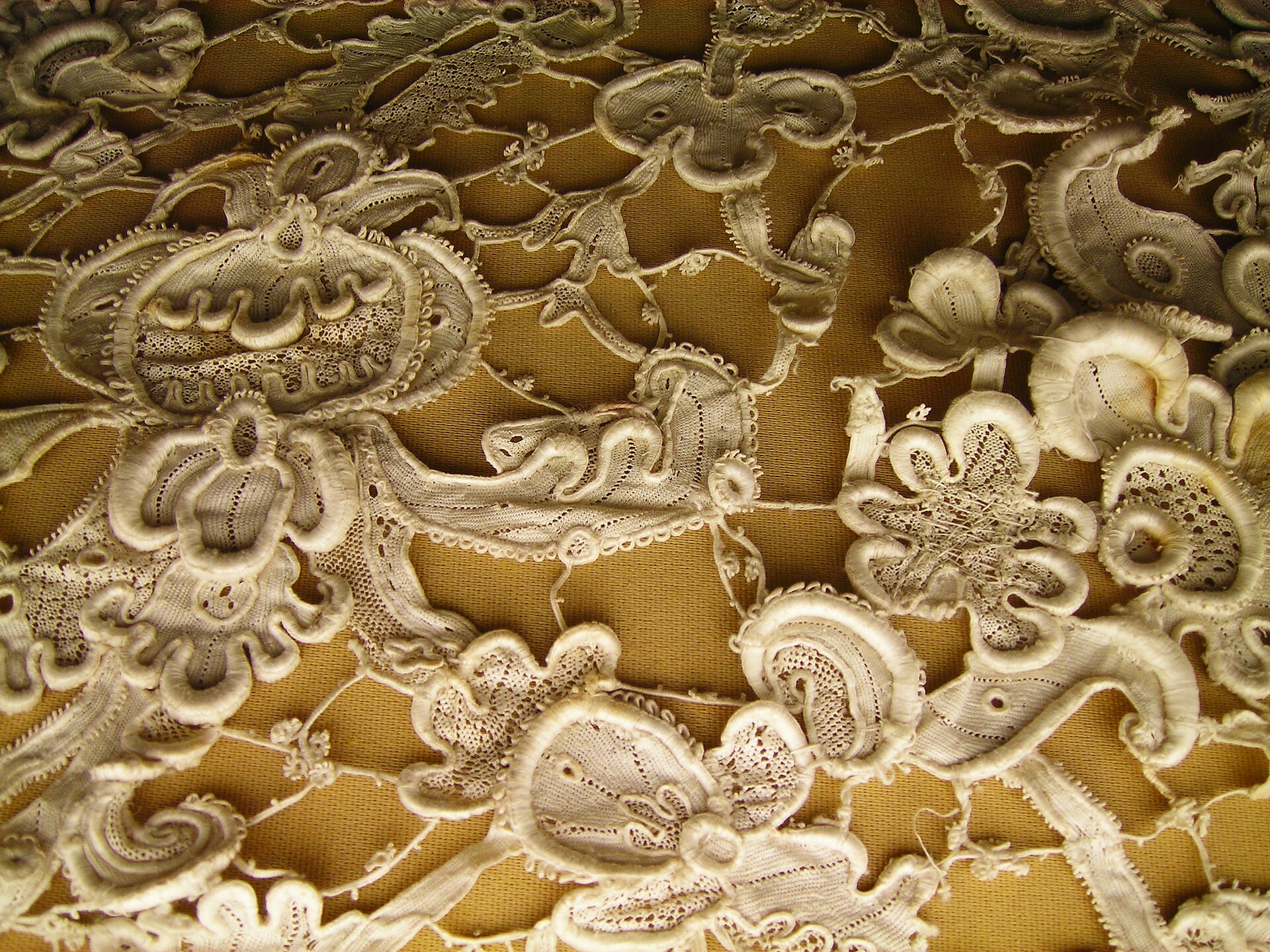
Palazzo Davanzati
13 Via Porta Rossa, Centro Storico, Florence, 50123, Italy
Want to know how a wealthy Florentine family actually lived in the fourteenth century? Not in a palazzo stuffed with Renaissance masterpieces, but in a house with painted parrots on the bedroom walls, a toilet on every floor, and an internal well system that brought water to each story — luxuries that most European nobles wouldn't enjoy for another two hundred years. Palazzo Davanzati was built around 1350 for the Davizzi family, then purchased by the Davanzati family in 1578. It was restored in the early 1900s and opened as a museum of Florentine domestic life, preserving the rooms exactly as they would have looked in medieval and early Renaissance Florence. The Sala dei Pappagalli — the Hall of Parrots — has frescoes of colorful birds perched in geometric gardens, painted directly on the walls as a kind of medieval wallpaper. The Sala dei Pavoni — the Hall of Peacocks — is equally vivid. The house is a time machine. The kitchen sits on the top floor, not the ground floor, because heat rises and medieval Florentines wanted cooking smells and fire danger as far from the living quarters as possible. The ceilings are painted wood, the floors are terracotta tile, and the furnishings — heavy wooden chests, wrought-iron candelabras, woven textiles — are all period-appropriate. Most visitors to Florence are so blinded by the Renaissance that they forget the city existed before Brunelleschi. This palazzo is the corrective: a detailed, intimate look at the medieval world that the Renaissance grew out of, hidden on a side street that the crowds never find.
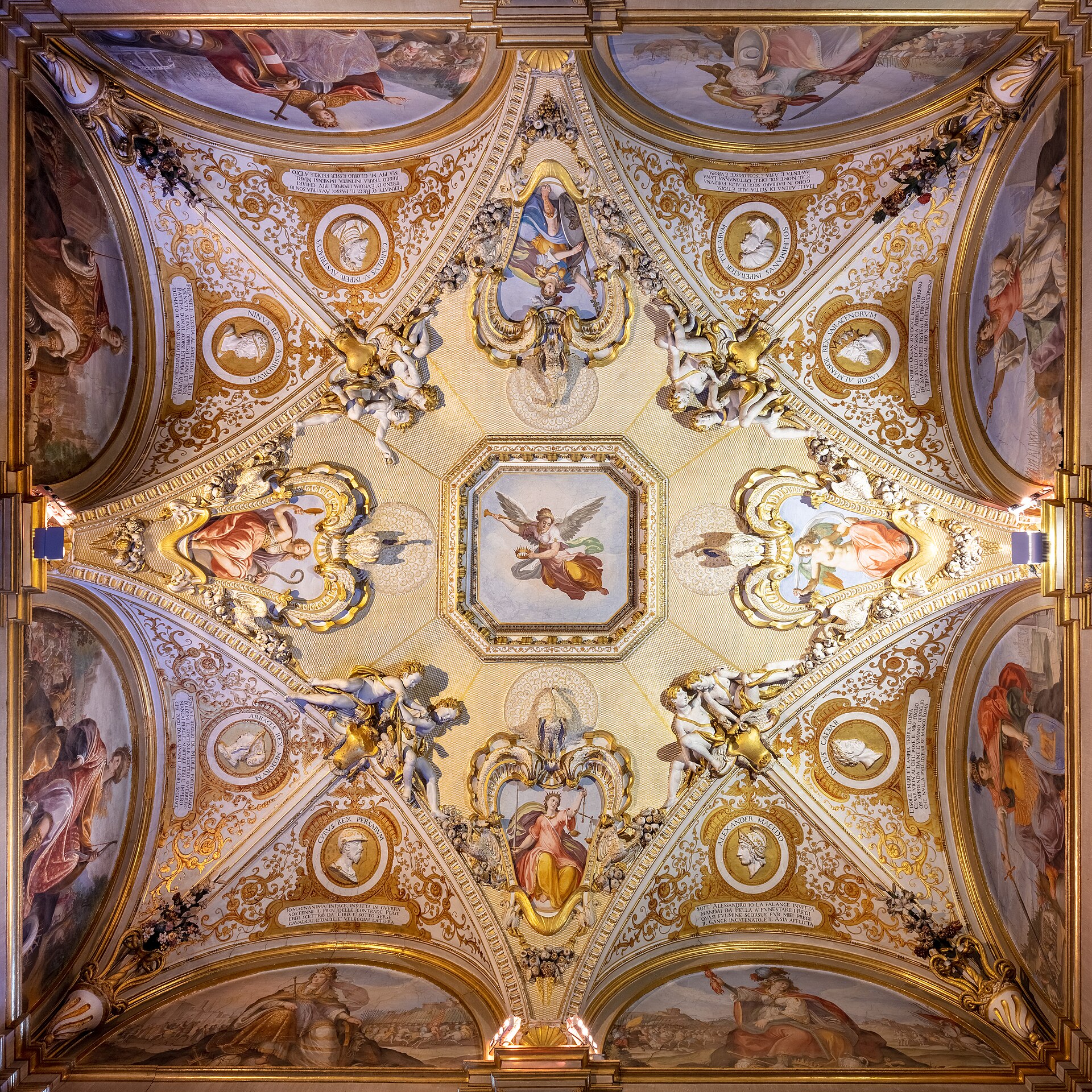
Palazzo Pitti
1 Piazza dei Pitti, Centro Storico, Florence, 50125, Italy
Luca Pitti wanted the biggest palace in Florence, and he wanted it bigger than anything the Medici had. The ambitious banker commissioned this massive rusticated stone facade in 1458, reportedly insisting the windows be larger than the doors of the Medici palazzo. He nearly bankrupted himself in the process, and the irony is exquisite: the Medici bought the unfinished building in 1549 for a fraction of what it cost to build. Under the Medici, and later the Habsburg-Lorraine dynasty, the Pitti became the grandest residence in Tuscany. Napoleon used it as his Florentine power base during his Italian campaigns. When Italy unified, it briefly served as the royal palace of the new kingdom — King Victor Emmanuel III didn't hand it over to the nation until 1919. The horseshoe amphitheater in the courtyard behind the palace sits in the exact spot where the hill was quarried for the building stone — they literally dug the palace out of the ground it sits on. Today it contains five separate museums, including the Palatine Gallery with works by Raphael, Titian, and Caravaggio hung in the ornate style of the original collection — floor to ceiling, frame touching frame, the way aristocrats displayed art before museums invented white walls and spot lighting. The Gallery of Modern Art upstairs holds Italian Impressionist works that most visitors never reach because they're exhausted from the Palatine rooms below. The palace opens directly onto the Boboli Gardens behind, making the entire complex a small city unto itself. From Pitti's windows, the Medici could survey their garden, their corridor to the Uffizi, and their entire city beyond — the view of absolute power made architectural.
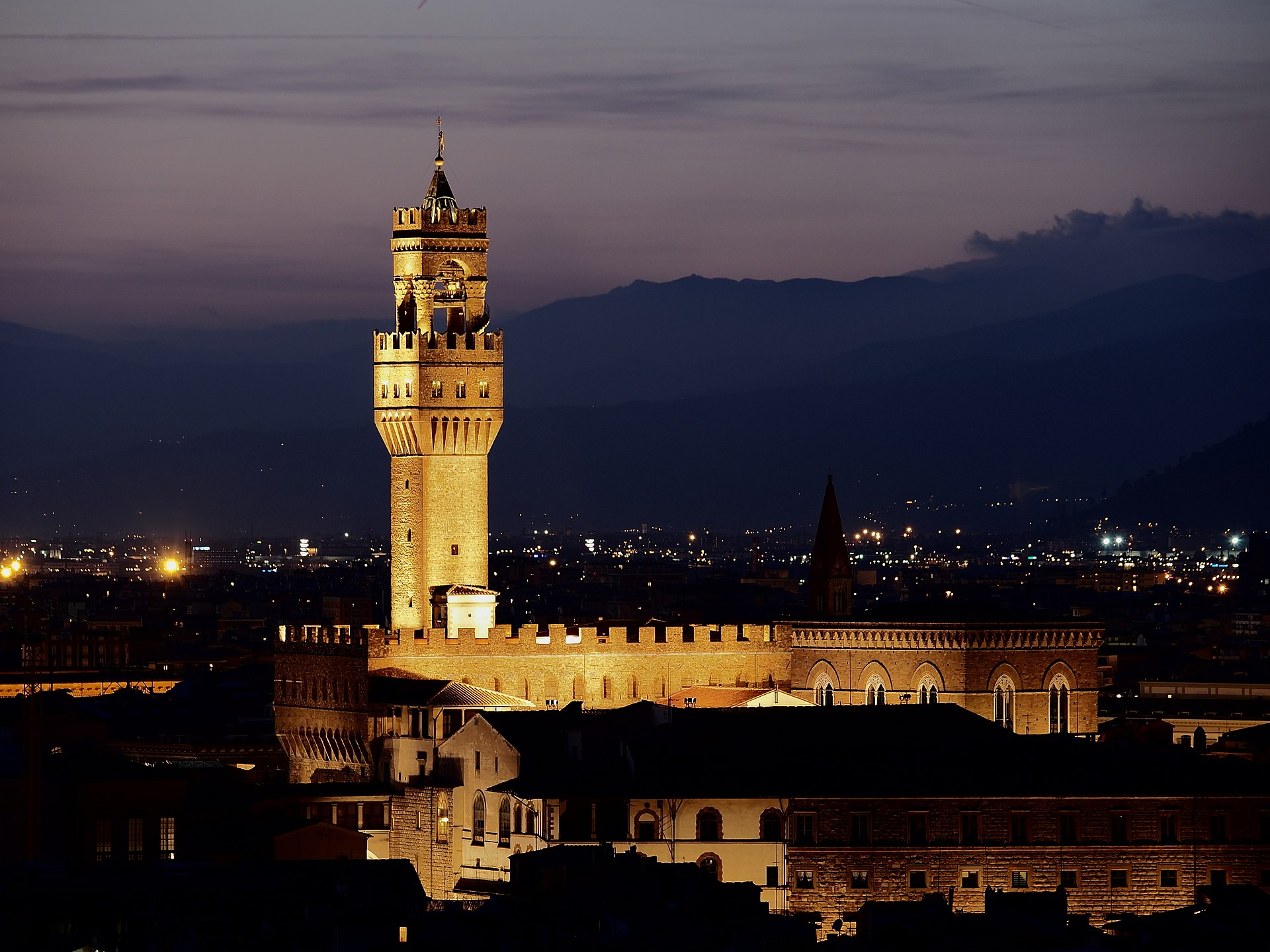
Palazzo Vecchio
Piazza della Signoria, 50122 Firenze
Florence's town hall has been in continuous operation since 1299, making it one of the oldest functioning government buildings in the world. When the Florentines decided to build it, they had a peculiar requirement: the building could not sit on land once owned by the defeated Ghibelline faction. This is why the palazzo is slightly off-center from the piazza — the architect Arnolfo di Cambio had to work around property lines of political enemies. The 94-meter Arnolfo Tower that juts from the roofline was both a watchtower and a power statement, visible from every approach to the city. In its cells, Cosimo de' Medici was briefly imprisoned before his exile in 1433, and Savonarola was tortured here before his execution. Niccolò Machiavelli worked in the building as Second Chancellor from 1498 to 1512, in a modest office that still exists — the man who wrote The Prince spent his days handling Florence's military correspondence from this very room. Inside, the Salone dei Cinquecento is a jaw-dropper — a 54-meter-long hall commissioned by Savonarola to hold his 500-member council, later redecorated by Vasari with enormous battle paintings. Behind one of those paintings, art historians believe, may lurk a lost Leonardo da Vinci mural — the Battle of Anghiari. Vasari left a cryptic clue painted on a flag in his own work: "Cerca trova" — "Seek and you shall find." The entire building sits on top of a first-century Roman theater, whose stone seating you can walk through in the underground excavations. Seven centuries of Florentine power, built on Roman ruins, still running the city today.
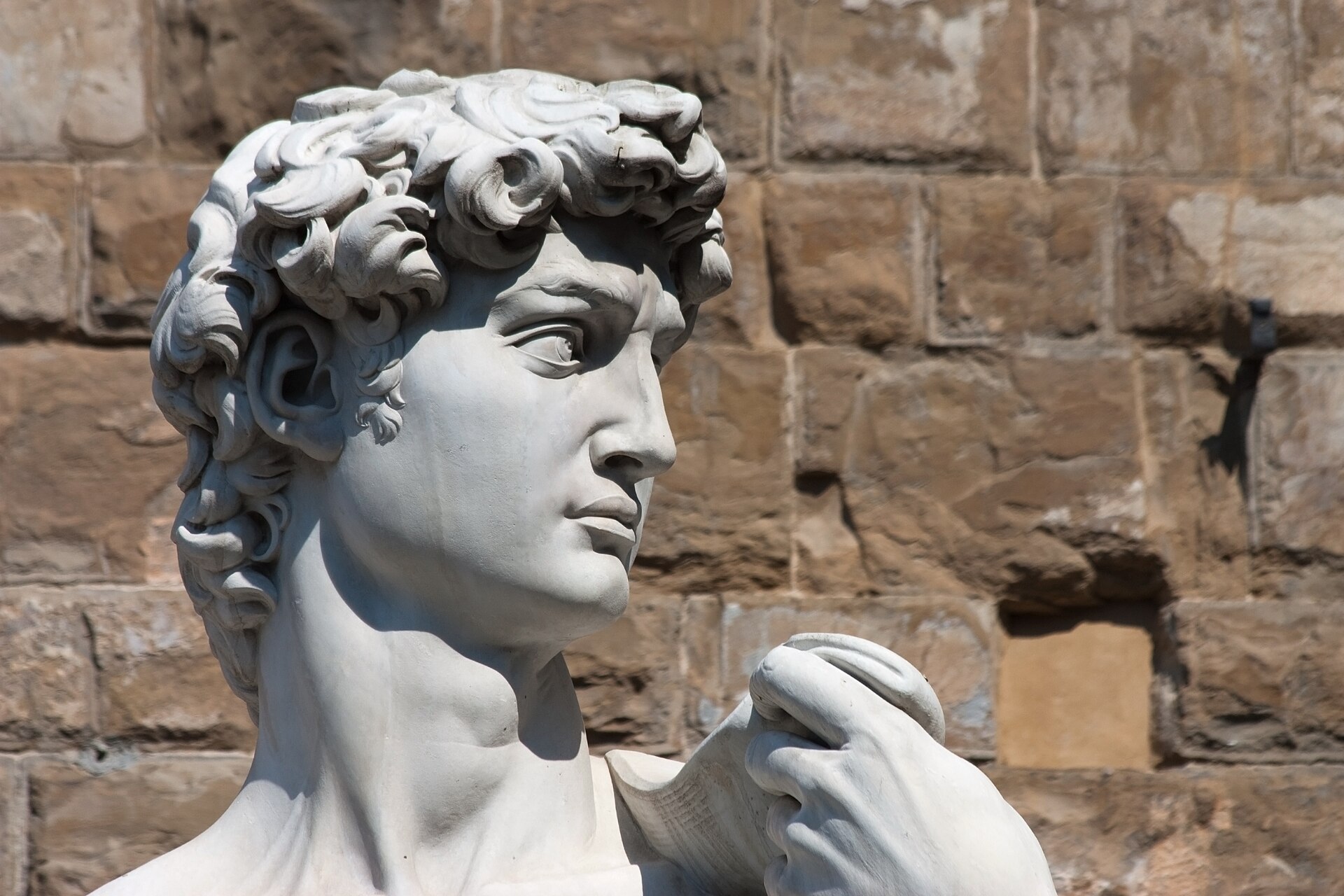
Piazza della Signoria
Piazza della Signoria, 50122 Firenze
This square has seen more political violence per square meter than almost anywhere in Europe. In 1478, conspirators from the Pazzi family were hanged from the windows of the Palazzo Vecchio after their failed attempt to assassinate Lorenzo de' Medici — some corpses were dragged naked through the streets and thrown into the Arno. In 1498, the fire-and-brimstone preacher Savonarola, who'd briefly turned Florence into a theocracy and burned paintings and books in his "Bonfires of the Vanities," was himself hanged and burned on a pyre right here. A bronze plaque in the pavement marks the spot. But the piazza is also an open-air sculpture gallery of extraordinary quality. The Loggia dei Lanzi, a graceful arched structure on the south side, shelters Cellini's Perseus holding Medusa's severed head and Giambologna's spiraling Rape of the Sabine Women — both masterpieces you'd need a museum ticket for anywhere else. A copy of Michelangelo's David stands where the original guarded the palazzo entrance from 1504 to 1873. Ammanati's massive Neptune Fountain anchors the square, though Michelangelo supposedly said it was a waste of good marble. The entire piazza sits atop the ruins of a Roman theater from the first century AD, which you can visit in the underground archaeological area beneath the Palazzo Vecchio. Layers of history compressed into one space — Roman foundations holding up medieval towers holding up Renaissance art. This was Florence's living room, where citizens gathered for celebrations and executions alike, and where political power was publicly performed. Stand in the center and you can feel six centuries of ambition, betrayal, and genius radiating from the stones.
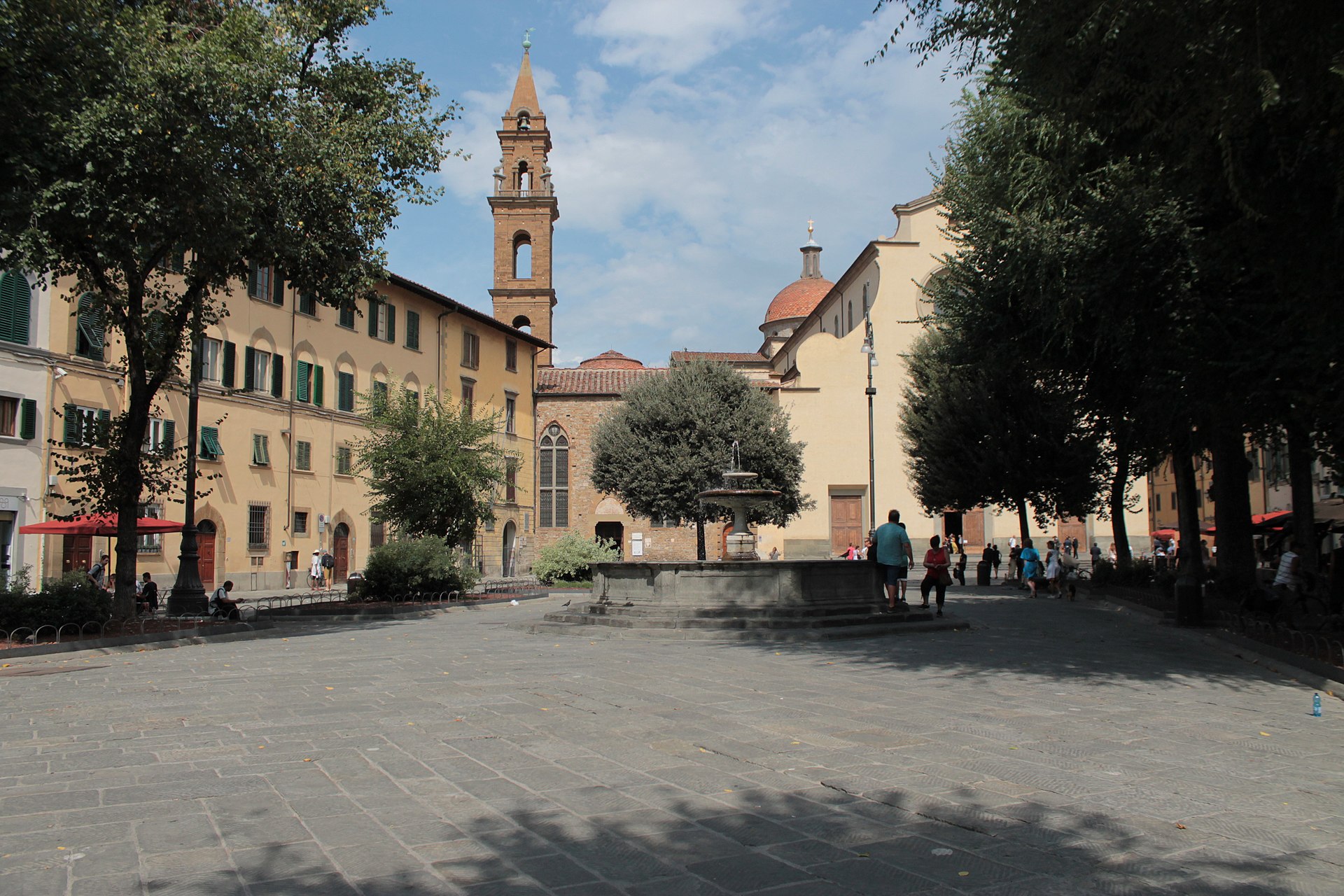
Piazza Santo Spirito & Oltrarno
Piazza Santo Spirito, Centro Storico, Florence, 50125, Italy
Cross the Arno and Florence changes completely. The Oltrarno — literally "beyond the Arno" — is where the artisans live, the prices drop, and the aperitivo culture genuinely thrives. While the north bank drowns in tour groups, this side of the river keeps the rhythm of a real neighborhood: craftsmen restoring antique furniture in ground-floor workshops, leather workers hand-stitching bags, and papermakers creating marbled sheets using techniques unchanged for centuries. Piazza Santo Spirito is the heart of it all, a lived-in square dominated by the Basilica of Santo Spirito — Brunelleschi's last masterpiece, designed in 1444. The deliberately plain facade hides one of the most harmoniously proportioned church interiors in Florence, all cool grey pietra serena columns and mathematical precision. When Michelangelo was seventeen, the Augustinian monks let him study anatomy on corpses from the convent hospital. In exchange, he carved a wooden crucifix for the church — it still hangs in the octagonal sacristy. The piazza itself runs a morning market most weekdays and an antiques fair on the second Sunday of every month. By evening, the bars spill tables onto the square and Florentines take over — university students, artists, old men arguing over football. The surrounding streets — Via Maggio, Borgo San Frediano, Via Santo Spirito — are lined with artisan workshops where you can watch bookbinders, engravers, and goldsmiths at work. This is the Florence that existed before Instagram. No selfie sticks, no two-hour museum queues — just a neighborhood doing what it's done for five hundred years, with better wine and later hours.
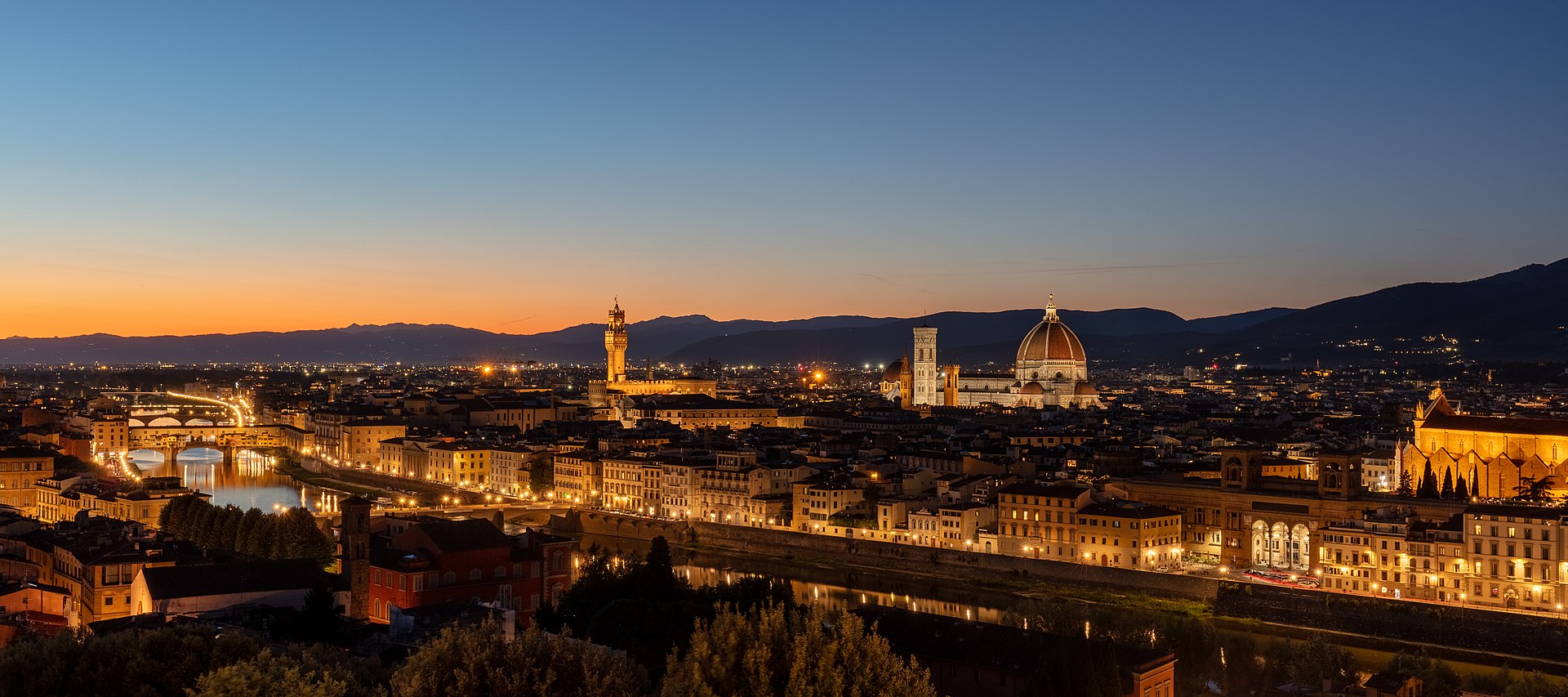
Piazzale Michelangelo
Viale Michelangelo, Centro Storico, Florence, 50125, Italy
Every postcard of Florence was shot from here. This broad terrace on the south bank hilltop offers the definitive panorama: the Duomo's dome, the Palazzo Vecchio's tower, the Arno's bridges, and the rolling Tuscan hills beyond — all in one frame. At sunset, when the city turns a deep gold and the sky goes pink behind the hills, it might be the most beautiful urban view in Europe. The piazzale was built between 1873 and 1875 by architect Giuseppe Poggi as part of a massive urban renewal project when Florence served briefly as Italy's capital. Poggi conceived it as a monument to Michelangelo, and a bronze cast of the David stands at the center (Florence's second copy, after the one in Piazza della Signoria). Poggi originally planned a proper museum here dedicated to Michelangelo's work, but that never materialized — instead the loggia became a restaurant. The walk up is part of the experience. From the Oltrarno, you climb through the old San Niccolo gate and up a winding road lined with olive trees and cypress, passing the medieval Porta San Niccolo — one of the few remaining towers from Florence's original city walls, still at its full original height because it was protected by the hill behind it. Come twice: once at sunset for the golden-hour panorama and the street musicians, and once early morning when the tour buses haven't arrived and you can have the entire Renaissance skyline to yourself. Both versions of Florence are worth seeing from up here — the theatrical evening version and the quiet dawn one.
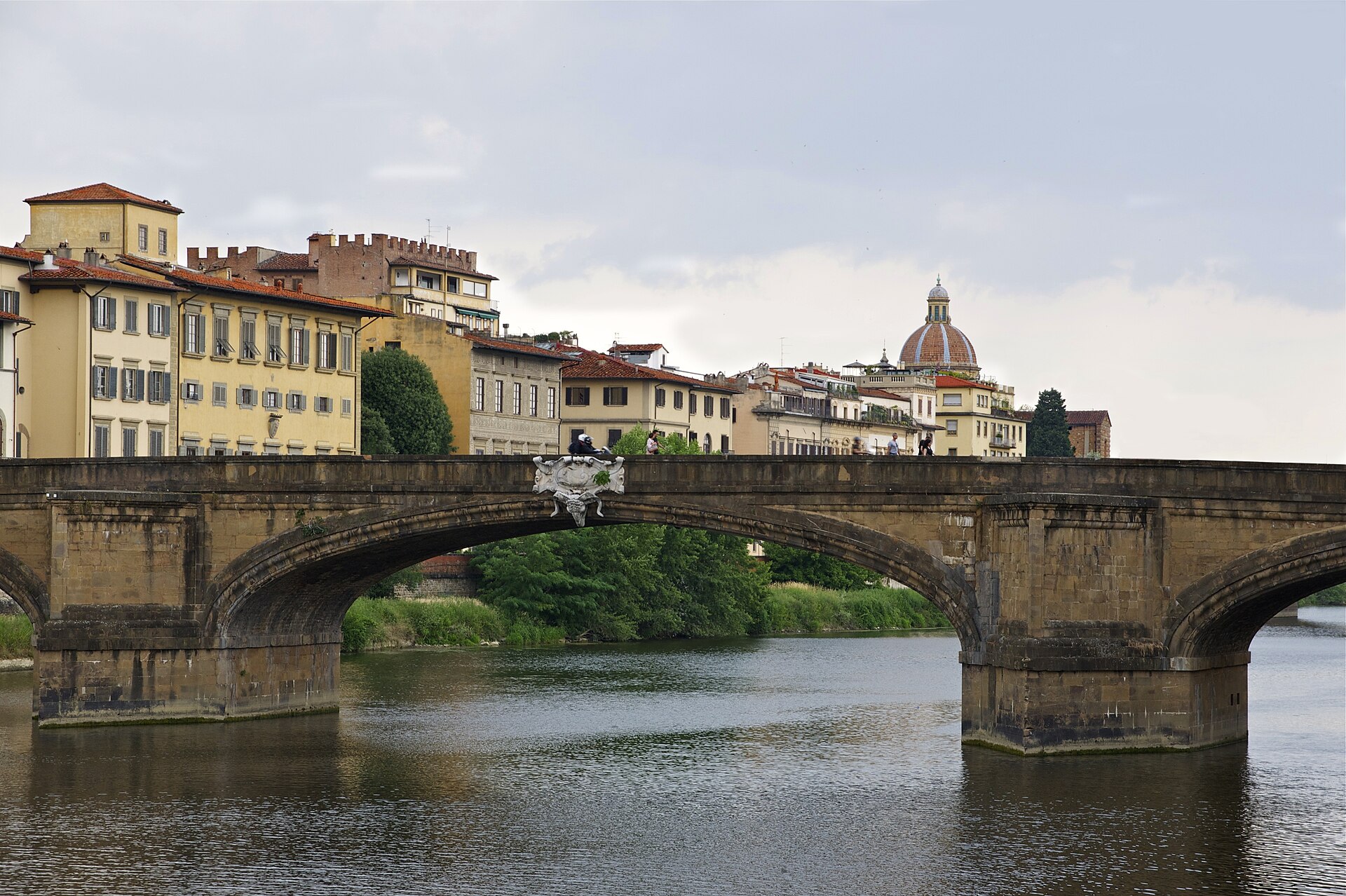
Ponte Santa Trinita
Ponte Santa Trinita, Centro Storico, Florence, 50125, Italy
The most beautiful bridge in Florence isn't the Ponte Vecchio — it's this one, fifty meters upstream. Ponte Santa Trinita's three elliptical arches are so graceful that Renaissance architects debated for centuries how Bartolomeo Ammanati achieved their curve. Some credited Michelangelo with secretly providing the design. The mathematical answer — they're not semicircles but sections of an ellipse — wasn't confirmed until modern computer analysis. The original bridge was built in 1252 and rebuilt multiple times after flood damage. Ammanati's version, completed in 1569, stood for nearly four centuries until August 1944, when retreating German forces blew it up along with every other bridge in Florence except the Ponte Vecchio. The Florentines were devastated — not by the military loss, but by the aesthetic one. After the war, the city made the remarkable decision to rebuild it exactly as it was, using the original technique: pietra forte sandstone from the same quarries, no reinforced concrete, authentic Renaissance construction methods. Fragments of the original bridge were painstakingly fished from the Arno. The rebuilding was completed in 1958, but a crucial piece was missing — the original head of the statue of Primavera (Spring) that decorated one of the bridge piers had been lost in the river. It wasn't found until 1961, when a dredger pulled it from the mud. The statue was made whole and the bridge was finally complete — sixteen years after its destruction. Stand in the middle at sunset and look downriver toward the Ponte Vecchio. This is the view that appears on every postcard and in every movie set in Florence, and you're standing on the engineering that makes the photograph possible.
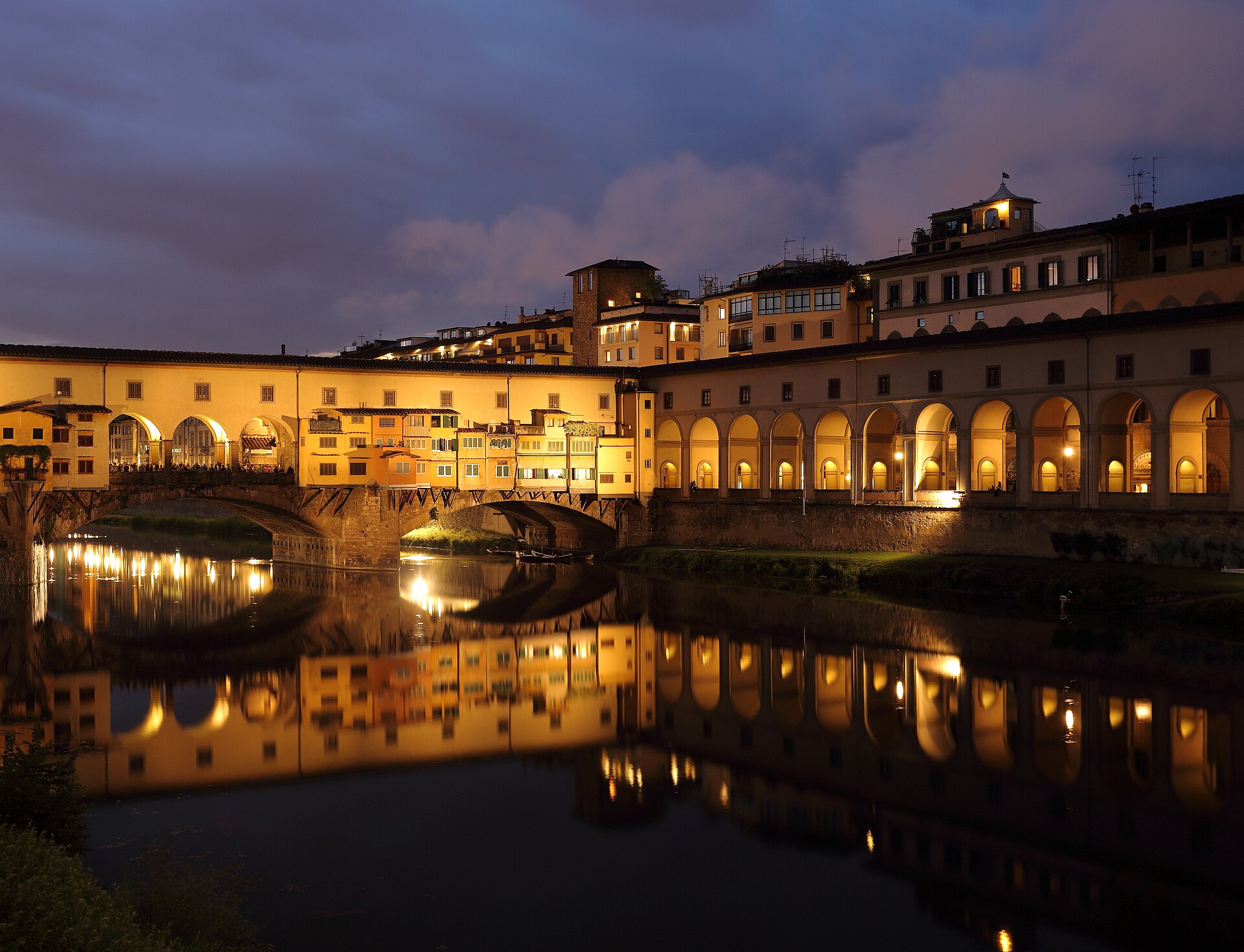
Ponte Vecchio
Ponte Vecchio, Centro Storico, Florence, 50125, Italy
For centuries, this bridge stank. Butchers, fishmongers, and tanners lined both sides, dumping animal waste straight into the Arno below. Then in 1565, Cosimo I de' Medici commissioned Giorgio Vasari to build a private corridor above the bridge connecting the Palazzo Vecchio to the Palazzo Pitti. The Grand Duke took one walk through his new elevated passageway, got a noseful of rotting meat, and in 1593 issued a decree: all butchers out, only goldsmiths and jewelers allowed. The bridge has glittered with gold ever since. A bridge has stood at this narrow point of the Arno since Roman times. The current structure dates to around 1345, rebuilt after a catastrophic flood. It's the only bridge in Florence that survived World War II — in August 1944, retreating German forces demolished every other crossing to slow the Allied advance. Whether the Ponte Vecchio was spared on Hitler's direct orders (he'd visited in 1938 and reportedly admired it) or simply because it was too narrow for tanks remains debated. The Germans did destroy the medieval buildings at both ends to create rubble barriers instead. Today roughly forty jewelry shops occupy the bridge, many still owned by descendants of the original artisans assigned spaces by Cosimo himself. The back rooms of these shops hang over the river on wooden brackets called sporti, giving the bridge its famously irregular, cluttered silhouette. Above it all runs the Vasari Corridor — a 750-meter enclosed walkway that once held the world's largest collection of artist self-portraits. Come at sunset, when the Arno turns copper and the bridge looks like it's floating on liquid metal. That view has barely changed in seven centuries.
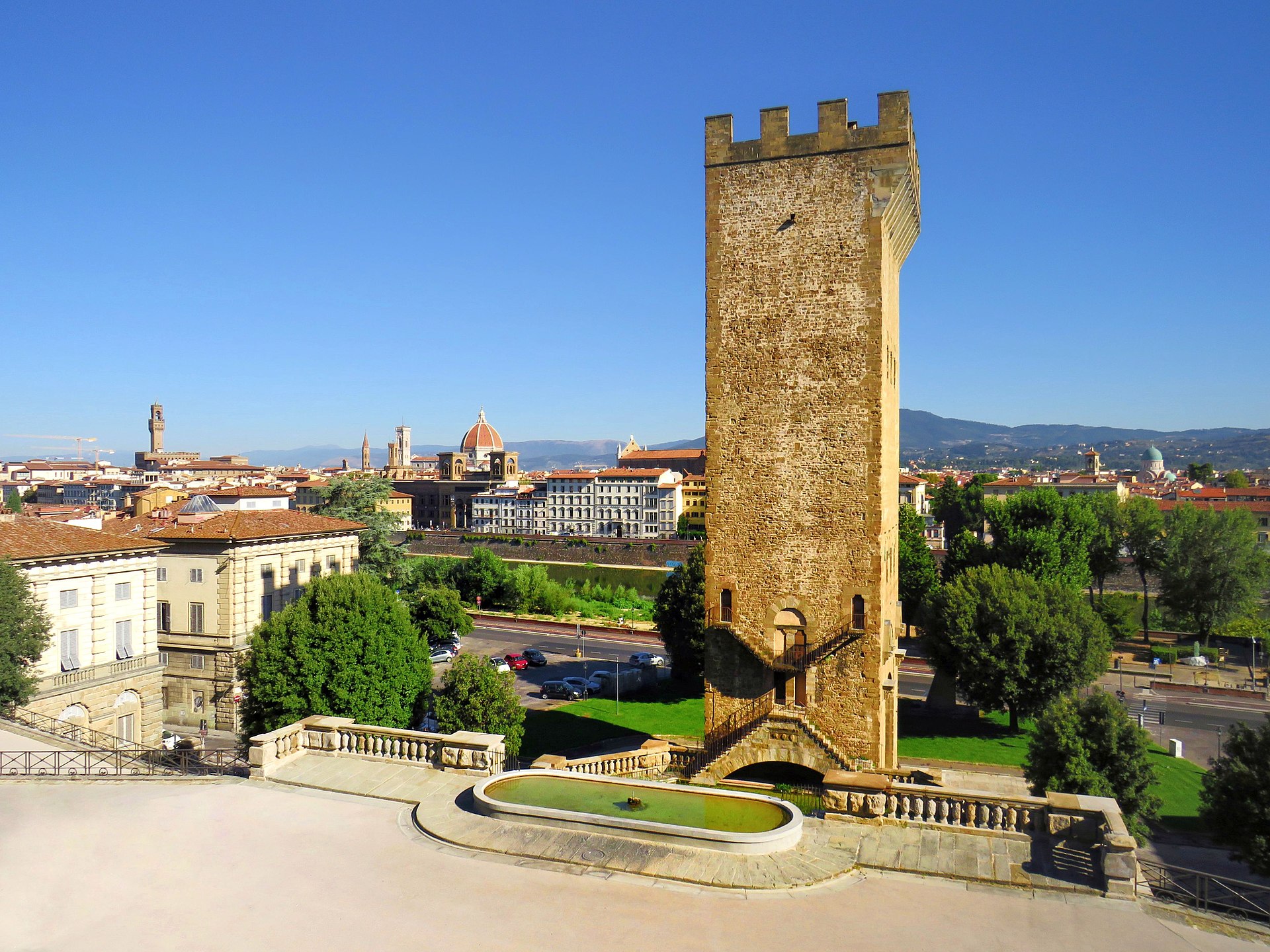
Porta San Niccolo
Piazza Giuseppe Poggi, Centro Storico, Florence, 50125, Italy
Of the original medieval gates that pierced Florence's city walls, this is the only one that still stands at its full original height. Every other gate was cut down in the nineteenth century when the walls were demolished, but Porta San Niccolo survived because the hill behind it served as a natural protective buttress, making demolition unnecessary. The result is a 30-meter stone tower that looks exactly as it did in the fourteenth century — a genuine piece of medieval military architecture in a city that tore most of its medieval layer away. The gate was built in the 1320s as part of Florence's third set of walls, which enclosed an area so large that the city didn't fully fill it until the nineteenth century. The walls were a statement of ambition as much as defense. Porta San Niccolo guarded the southeastern approach to the city, where the road climbed from the Arno toward the hilltop churches. Today the tower serves as the starting point for the walk up to Piazzale Michelangelo. The route winds through olive groves and past garden walls, climbing steadily above the terracotta rooftops of the San Niccolo quarter — one of the most atmospheric neighborhoods in the Oltrarno. San Niccolo still feels like a village: small family restaurants, a single bar that serves as the neighborhood living room, workshop doors open to the street. The tower occasionally opens for guided visits that let you climb to the top for a view that predates Piazzale Michelangelo by five centuries. But even from the ground, standing in the shadow of this intact medieval gate while modern Florence buzzes around you, the time travel effect is powerful.
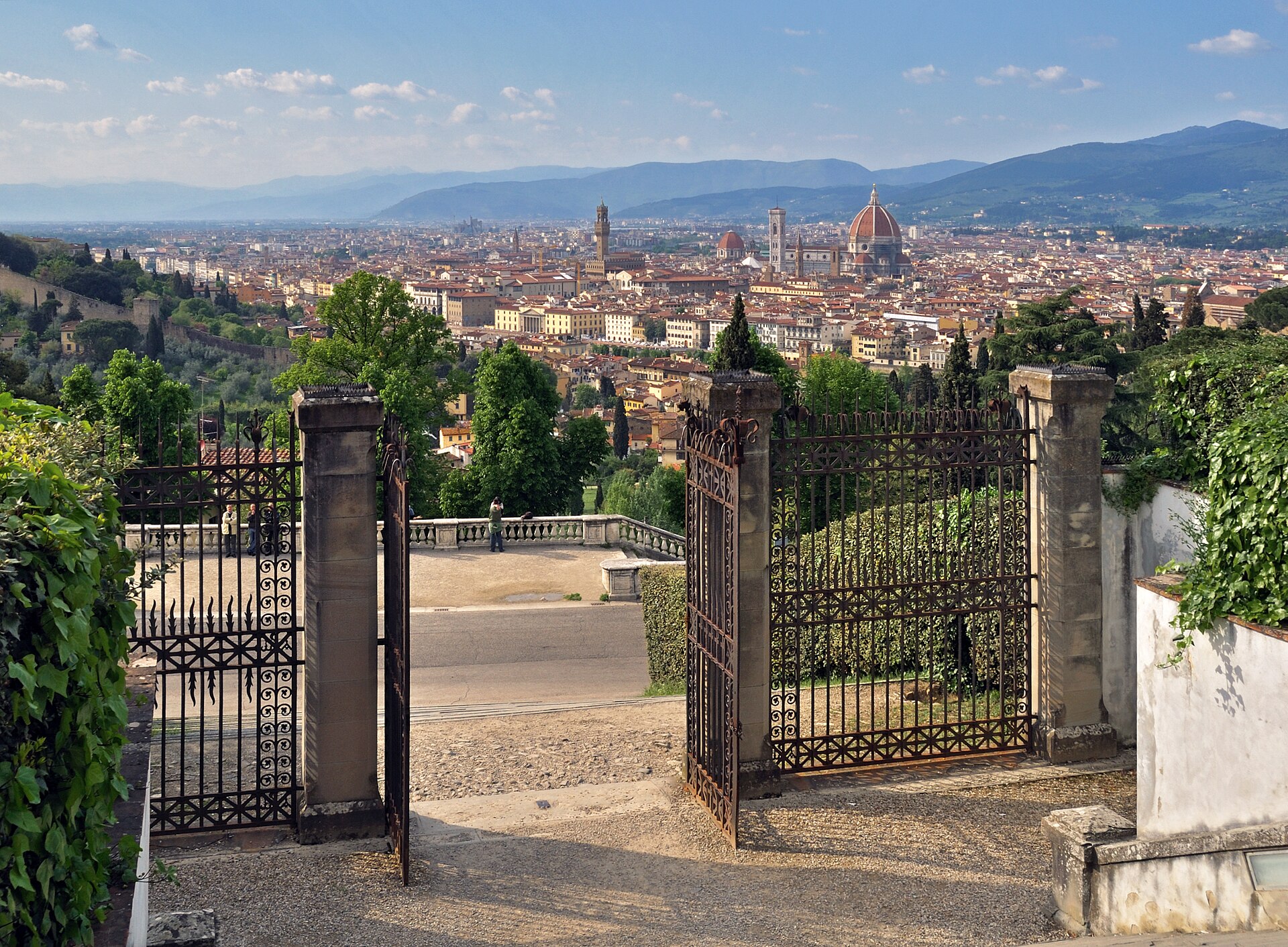
San Miniato al Monte
34 Via delle Porte Sante, Centro Storico, Florence, 50125, Italy
If Piazzale Michelangelo gives you the postcard view, San Miniato al Monte — perched just above it — gives you the spiritual one. This Romanesque basilica, its green-and-white marble facade gleaming on the hilltop, is one of the finest medieval churches in Italy and one of the most undervisited. Most tourists get their photos from the piazzale below and never climb the extra five minutes to discover what locals consider the most beautiful church in Florence. San Miniato was a third-century Christian martyr — an Armenian prince, according to legend, who was beheaded during the persecutions of Emperor Decius. The story goes that he picked up his severed head, walked across the Arno, and climbed this hill to his hermitage before finally lying down to die. A chapel was built on the site around the eighth century, and the current church dates to 1013, making it one of the oldest in Florence. The interior is extraordinary. The marble floor has zodiac symbols and animals inlaid in opus sectile dating to 1207. The wooden ceiling is painted in Renaissance patterns but the overall feel is solidly medieval — no Baroque additions, no Renaissance renovations. The elevated choir sits above a Romanesque crypt supported by 36 columns, each with a different carved capital. Benedictine monks have maintained the church for centuries, and they still sell honey, herbal liqueurs, and tisanes from the monastery shop. Come for Vespers at 5:30 PM. The monks sing Gregorian chant in a church that was built to amplify exactly this kind of sound. The acoustics are otherworldly. Then step outside and watch the sun set over Florence from the churchyard — higher, quieter, and more moving than the crowded piazzale below.
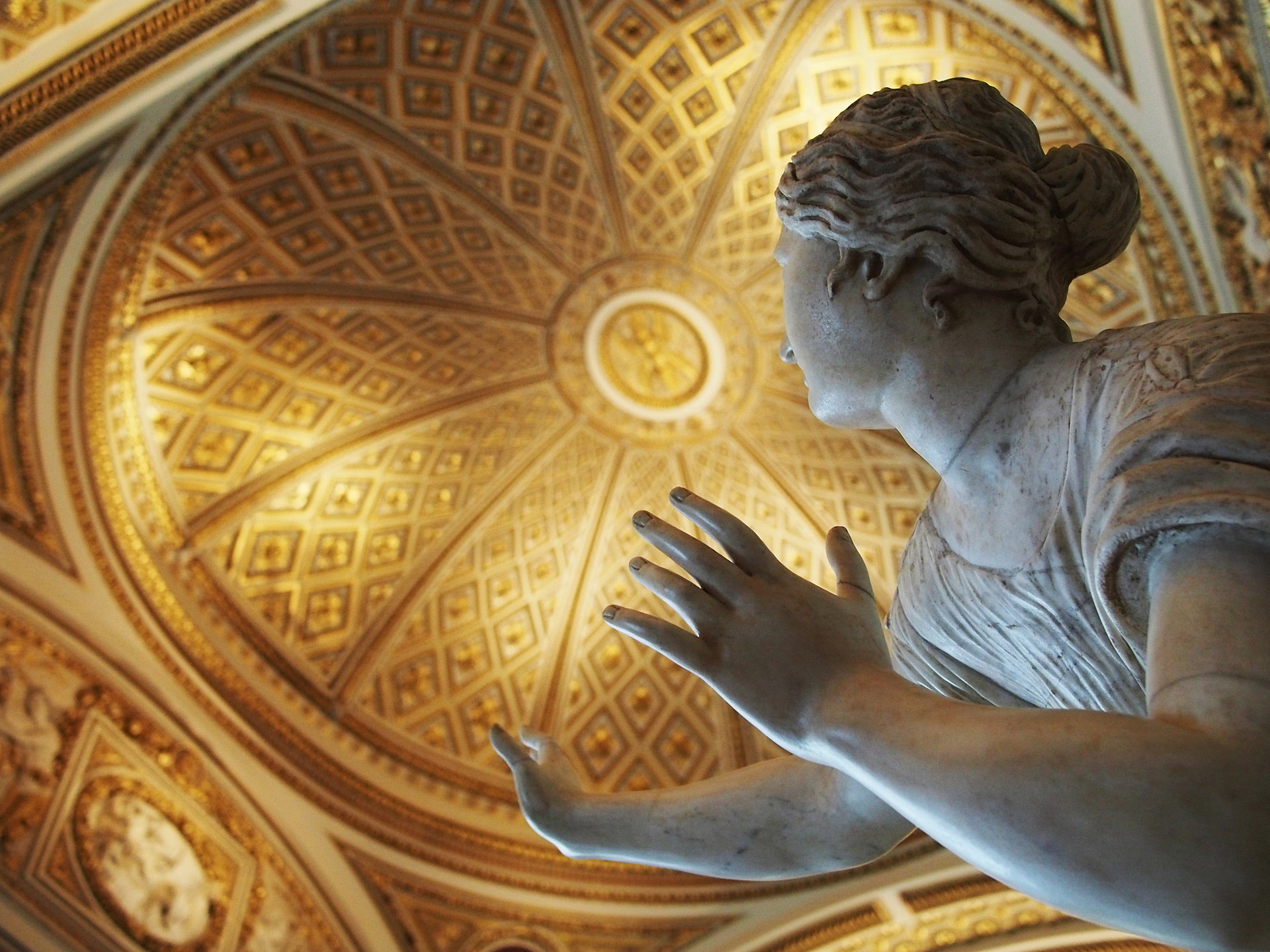
Uffizi Gallery
6 Piazzale degli Uffizi, Centro Storico, Florence, 50122, Italy
The name literally means "offices," which is the most spectacularly underselling name in art history. When Cosimo I de' Medici commissioned Giorgio Vasari in 1560 to build administrative headquarters for Florence's magistrates, he got something far grander than a bureaucratic filing cabinet. Vasari designed a U-shaped building with a secret corridor running above the rooftops to connect the Uffizi to the Palazzo Pitti across the river — so the Medici could commute home without exposing themselves to assassins or angry crowds. It was Cosimo's son Francesco I who really changed the game. More interested in art and alchemy than politics, he converted the top floor into a gallery space in 1581, creating what many consider the world's first modern art museum. The Medici family spent generations stuffing it with masterpieces — Botticelli's Birth of Venus, Caravaggio's Medusa, Titian's Venus of Urbino. When the last Medici heir, Anna Maria Luisa, died in 1743, she left the entire collection to Florence on one condition: none of it could ever leave the city. That clause, known as the Patto di Famiglia, is the reason this collection still exists in Florence today instead of scattered across European royal courts. The gallery was opened to visitors by request in the sixteenth century and became officially public in 1769. Today it houses over 2,500 works spanning from the Gothic period through the Baroque. Walking through the Uffizi is essentially walking through the birth of the Renaissance in chronological order — from the flat, gold-leafed saints of Cimabue to the revolutionary depth and emotion of Giotto, and onwards to the explosive genius of Leonardo, Raphael, and Michelangelo.
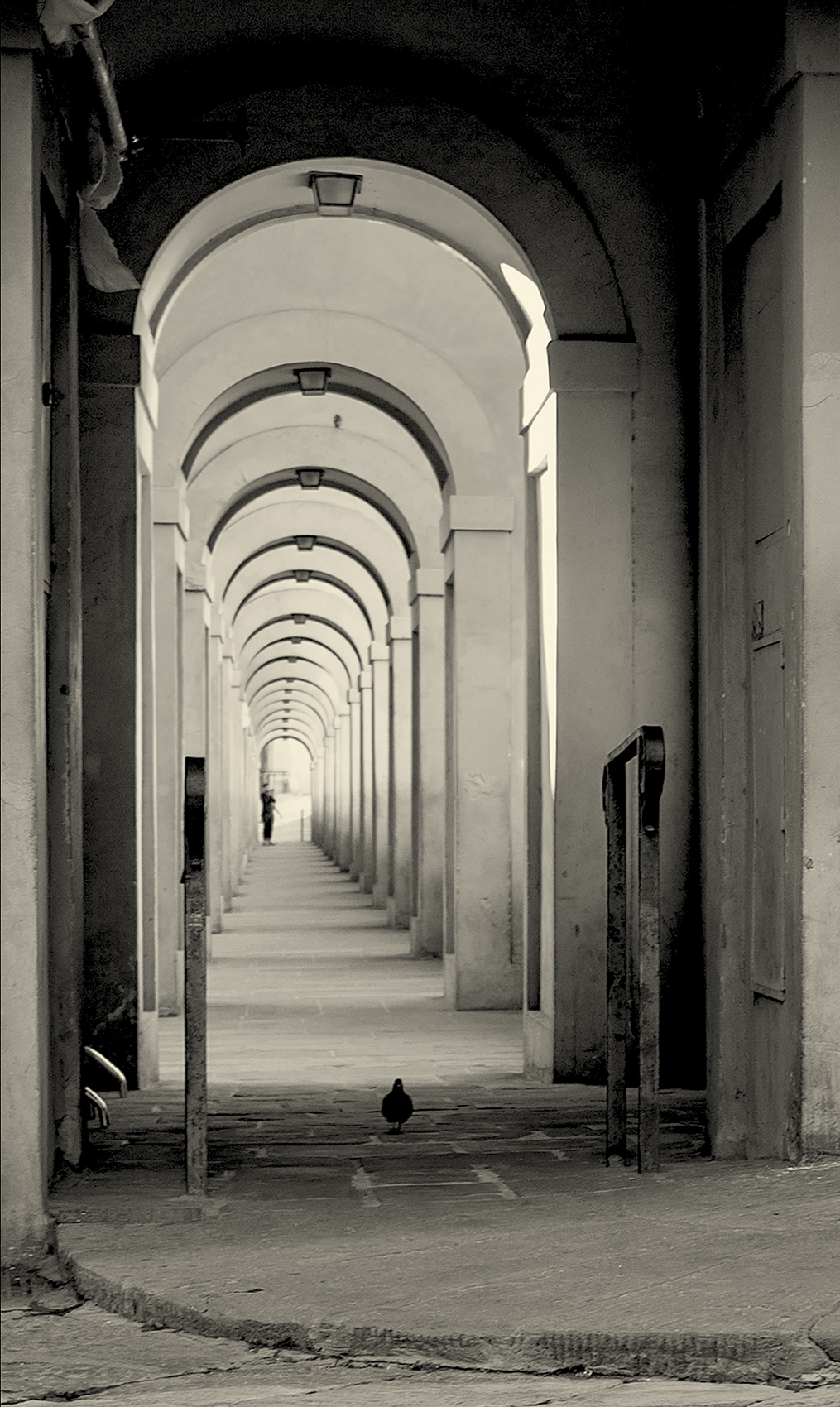
Vasari Corridor
Centro Storico, Florence, Italy
In 1565, Cosimo I de' Medici wanted to walk from his government offices in the Uffizi to his private residence at the Palazzo Pitti without ever setting foot on the street. The reason was practical: assassination was a genuine occupational hazard for Florentine rulers. He gave Giorgio Vasari five months to build a solution, and Vasari delivered a 750-meter enclosed corridor that runs above the shops of the Ponte Vecchio, through church walls, and over rooftops — essentially an elevated private highway connecting the two palaces. The corridor crosses above the Ponte Vecchio, curves around the medieval Torre dei Mannelli (whose owners refused to let Vasari demolish it, forcing him to build bracket supports around it instead), passes through the facade of the church of Santa Felicita where the Medici could attend Mass from a private balcony without mixing with commoners, and ends at the Boboli Gardens. Five months. In the sixteenth century. Without power tools. For centuries, the corridor housed the world's largest collection of artist self-portraits — over 700 works spanning from Raphael to Chagall. The passage was famously difficult to access, requiring special permits and connections. After years of closure for restoration, the corridor has been gradually reopening to limited visitor groups, making it one of the most exclusive art walks in the world. The corridor is also the reason the Ponte Vecchio has gold shops instead of butchers — when Cosimo walked overhead and smelled the meat markets below, his descendant Ferdinando I ordered the butchers replaced with goldsmiths. Royal nose, permanent consequences.